Reading view

In first, California city overwhelmingly votes to permanently ban datacenters

While many US city councils have passed moratoriums, Monterey Park is first where residents have voted on a ban

Residents in Monterey Park, California, became the first in the US to vote on a permanent ban on datacenters on Tuesday, and early results indicate a resounding victory for the prohibition.

While many cities and counties have already passed temporary or indefinite moratoriums via their local governments, Monterey Park would be the first to do so through a ballot initiative.

Continue reading...

© Photograph: Steven Kung

© Photograph: Steven Kung

© Photograph: Steven Kung

  •  

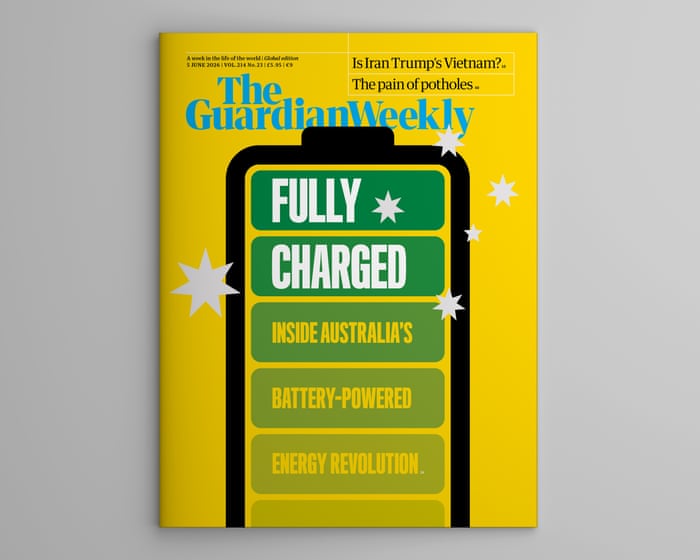
Australia’s battery-powered revolution: inside the 5 June Guardian Weekly

How to change the energy market from within. Plus: Is Iran Trump’s Vietnam?

Get the Guardian Weekly delivered to your home address

Last week, as the war in Iran continued to choke global oil supplies, the UK government announced a 13% increase in the cap on energy prices. But it was another related story on the other side of the world that caught my eye.

In Australia, the energy minister announced a fall of up to 10% in the benchmark electricity price in parts of the country, driven by record levels of renewables and batteries in the power grid.

Continue reading...

© Illustration: Guardian Design

© Illustration: Guardian Design

© Illustration: Guardian Design

  •  

There are thousands of dirty old drill sites in Colorado. The state gave oil firms a $1bn pass

Investigation reveals regulator let firms off the hook on cleanup bonds despite backlog that will take decades to clear

When Christiaan van Woudenberg moved to Erie, Colorado, in 2007, he never imagined he would become an anti-fracking activist. He simply thought he was buying his dream home – a four-bedroom with a panoramic mountain view, 30 minutes north of downtown Denver.

Then, in 2014, the drilling started. Oil and gas rigs sprang up, some just 800ft (240m) from his bedroom window. The dream turned to nightmare: loud noises rumbled all night long, and the air stank like exhaust. Neighbors started getting headaches and nosebleeds, and Van Woudenberg developed new respiratory issues. He kept his windows shut and worried about his daughters going outside.

Continue reading...

© Composite: Rita Liu/The Guardian/Getty Images/Civitas/Chevron/OXY

© Composite: Rita Liu/The Guardian/Getty Images/Civitas/Chevron/OXY

© Composite: Rita Liu/The Guardian/Getty Images/Civitas/Chevron/OXY

  •  

Exclusive: Leaked documents show BHP’s climate backtrack - podcast

Nour Haydar speaks with Christopher Knaus about the BHP files – the cache of internal documents leaked to the Guardian and the ABC’s Four Corners – which show that the world’s biggest miner has war-gamed ways to massively delay decarbonisation

Additional audio in this episode was sourced by Financial Times Live

Read more:

Continue reading...

© Composite: Victoria Hart/Guardian

© Composite: Victoria Hart/Guardian

© Composite: Victoria Hart/Guardian

  •  

BHP defies its own climate strategy to spend hundreds of millions on polluting diesel trucks in Pilbara

Exclusive: Mining giant says technology is not yet advanced enough to run a fully electrified fleet but experts say it is hooked on federal fuel tax credits

BHP has continued to spend hundreds of millions of dollars buying diesel trucks in the Pilbara despite internal documents suggesting it would increase emissions and be “misaligned” with its decarbonisation goals.

The mining giant is Australia’s biggest consumer of diesel and trucks are its biggest single source of diesel emissions. Replacing the fleet with battery-electric trucks is considered a critical step in the multinational’s efforts to decarbonise.

Continue reading...

© Composite: Guardian

© Composite: Guardian

© Composite: Guardian

  •  

Local government could also do more to help with the cost of living | Letter

Cllr Lucy Shaw says councils could take up many policies to help, including more support for rooftop solar installations

Your editorial is right that the government could be doing more to help with the cost of living (The Guardian view on Britain’s coming energy shock: mini-measures won’t suffice, 22 May). That extends to local government, too. Renewable energy projects, from the industrial scale right down to rooftops, can be scuppered locally even if there is national support. The wealthiest borough in the entire country, Kensington and Chelsea, has the nation’s lowest rooftop solar installation rate, at just 0.6% of households according to the MCS installer database. This is despite touting groundbreaking policies to make it easier to build solar in conservation areas.

There are so many local policies that would help. Coordinating solar installations by street could lead to material cost savings, as would simpler permitting rules, and installations on council-owned rooftops. When 80% of cars in the borough are parked on the street, cost-effective public charging is essential to ensure that drivers can make the switch, like offering discounted charging when grid power is cheapest. Partnering with housing associations, charities, and energy suppliers to help people access energy efficiency services and government capital grants, or negotiate payment plans for their bills could go a long way to making people feel more secure.

Continue reading...

© Photograph: Justin Paget/Getty Images

© Photograph: Justin Paget/Getty Images

© Photograph: Justin Paget/Getty Images

  •  

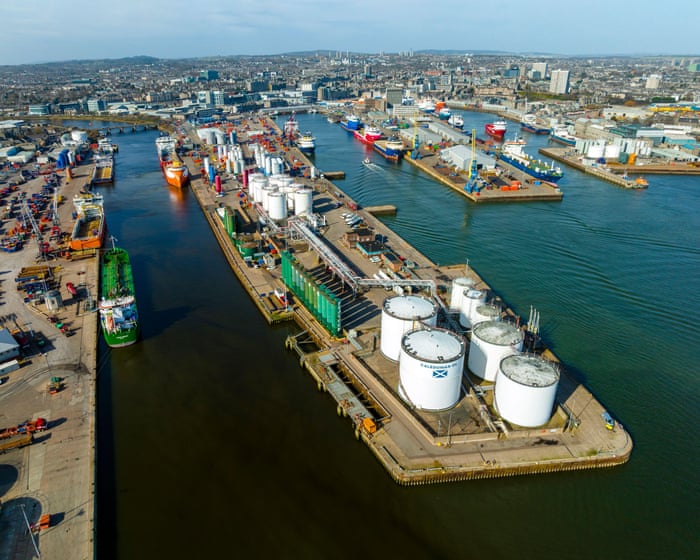
The Guardian view on the Aberdeen South byelection: the politics of energy take centre stage | Editorial

While Westminster’s attention is focused on Andy Burnham and Makerfield, another pivotal byelection is taking place in Scotland’s north-east

The coming byelection in Makerfield, from where Andy Burnham aspires to make rapid progress towards Downing Street, is perhaps the most consequential in British political history. But the decision by the Scottish National party’s former Westminster leader, Stephen Flynn, to relocate to Holyrood means that another pivotal contest is taking place more than 350 miles to the north. If Makerfield is a test case for Mr Burnham and Labour’s ability to see off Reform UK, Mr Flynn’s old constituency of Aberdeen South is on the frontline of the increasingly fraught politics of North Sea oil.

Labour, despite finishing second in the 2024 general election thanks largely to anti-Tory tactical voting, will not be expecting much this time round. The ramifications of Donald Trump’s reckless war in Iran have exposed Britain’s ongoing vulnerability to fossil-fuel-related energy shocks, highlighting the practical benefits of moving to a green economy. But the knock-on effects of the closure of the strait of Hormuz have also been a gift for the Scottish Conservatives and Reform, who are framing the byelection as a local referendum on reviving oil and gas production beyond Westminster-imposed limits.

Continue reading...

© Photograph: Iain Masterton/Alamy

© Photograph: Iain Masterton/Alamy

© Photograph: Iain Masterton/Alamy

  •  

Gas usage has peaked and is now in structural decline across Australia, report says

Grattan Institute calls on Labor to set policies that will further reduce the use of gas in order to meet net zero targets

After more than a half a century of growth, the use of gas in Australia has peaked in all sectors and entered a “structural decline”. But use will need to fall fast to meet climate targets, according to new research from an influential thinktank.

The Grattan Institute warned the government had failed to acknowledge the decline and instead needed policies to further reduce gas use and avoid the need for expensive carbon capture technologies to meet net zero targets.

Sign up to get climate and environment editor Adam Morton’s Clear Air column as a free newsletter

Continue reading...

© Photograph: Manfred Gottschalk/Getty Images

© Photograph: Manfred Gottschalk/Getty Images

© Photograph: Manfred Gottschalk/Getty Images

  •  

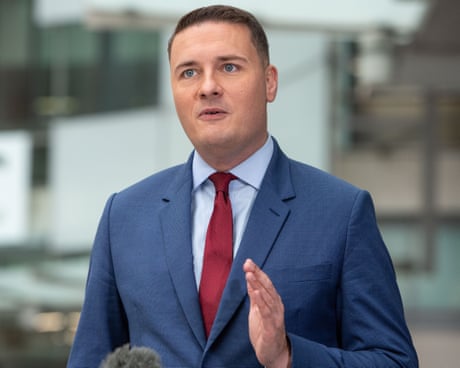
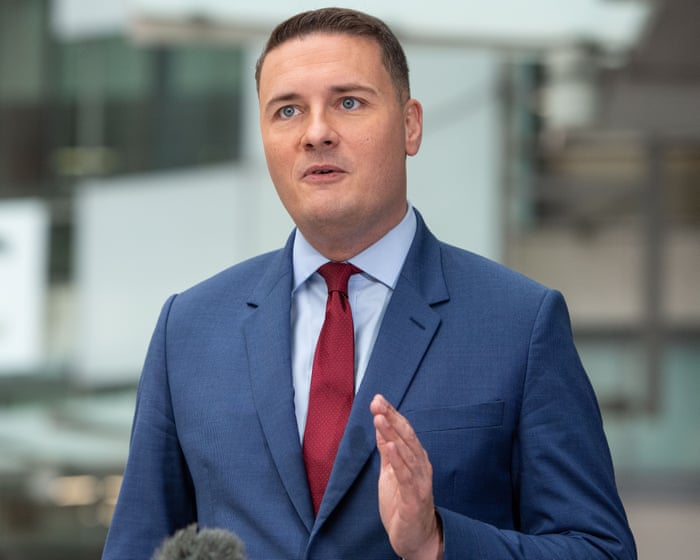
Wes Streeting backs calls for national insurance cut and North Sea drilling

Labour leadership hopeful says NI reduction for firms could ‘incentivise’ hiring, particularly of younger people

Wes Streeting has backed calls for national insurance cuts for businesses, and for the government to drill for oil and gas in the North Sea.

The former health secretary and potential Labour leadership candidate told the Sunday Times there should be a “targeted reduction” of employers’ national insurance contribution as a way to “actively incentivise” hiring, particularly of young people.

Continue reading...

© Photograph: Thomas Krych/Zuma Press Wire/Rex/Shutterstock

© Photograph: Thomas Krych/Zuma Press Wire/Rex/Shutterstock

© Photograph: Thomas Krych/Zuma Press Wire/Rex/Shutterstock

  •  

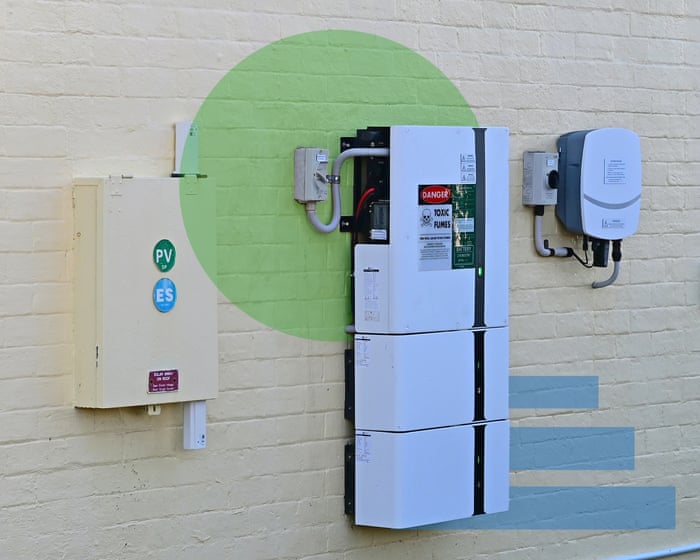
The household battery revolution that could change energy bills … and the world

Australia is pioneering a revolution in home renewables and battery use, proving what is possible with the right policies


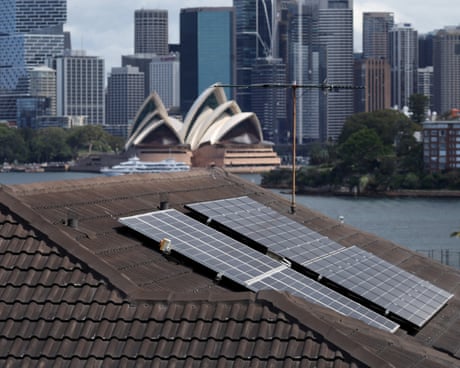
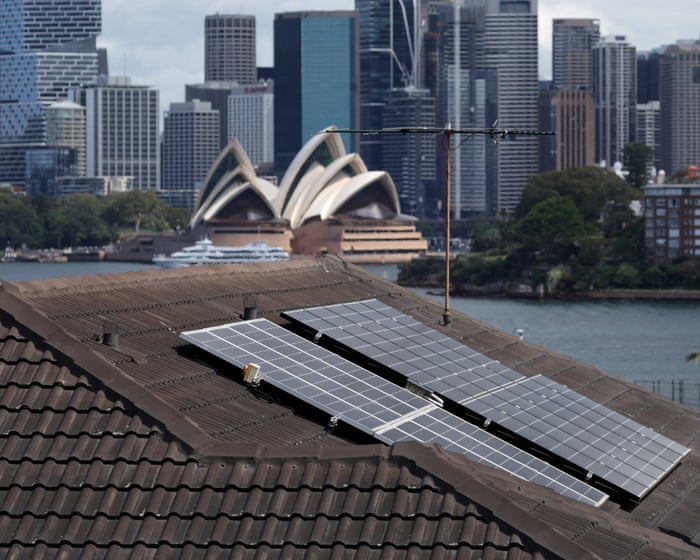
The timing was rich with symbolism. As intense heatwaves pummelled Europe and Asia, and oil markets around the world leapt and sputtered, the two big chimneys of one of Australia’s largest power stations were being demolished. Meanwhile, the Australian energy minister was holding a media conference to hail a fall of up to 10% in the benchmark electricity price in parts of the country.

Quietly, and with surprisingly little fanfare from the rest of the world, Australia is pioneering a revolution in home renewables and battery use, proving what is possible with the right policies. The country was already one of the global leaders in domestic solar power, with panels on one in three homes. It also remains, however, a major contributor to the climate crisis through its vast fossil fuel exports. But it is batteries that are giving Australia a new burst of speed.

Continue reading...

© Photograph: Hollie Adams/Reuters

© Photograph: Hollie Adams/Reuters

© Photograph: Hollie Adams/Reuters

  •  

Why $1bn in Balkans energy contracts are going to an obscure company connected to Donald Trump

Guardian investigation shows how US presidency blurs line between policy and enrichment of American ruling family and those around it

On a graffitied Sarajevo backstreet, a path leads past an overgrown patch of garden to a white door. Beyond is the registered office of a company that is on the brink of winning contracts worth more than $1bn.

AAFS Infrastructure and Energy is close to securing a concession to build and operate a pipeline across the Balkans to allow fossil gas shipped from the US to replace supplies that come from Russia. “This could be the most important infrastructure project ever in Bosnia and Herzegovina,” says one of the country’s top officials, who, like others, asks to remain anonymous to discuss sensitive negotiations.

Continue reading...

© Photograph: AFP/Getty Images

© Photograph: AFP/Getty Images

© Photograph: AFP/Getty Images

  •  

Power play: what to consider when installing a home battery in Australia

More than 400,000 batteries have been installed under the cheaper home batteries scheme. Here’s how to get the best bang for your buck

  • Change by degrees offers life hacks and sustainable living tips each Saturday to help reduce your household’s carbon footprint

  • Got a question or tip for reducing household emissions? Email us at changebydegrees@theguardian.com

If Australians love solar, they are head over heels for home batteries. More than 400,000 batteries have been installed under the government’s subsidy scheme.

Here’s what you need to consider if you’re looking at getting one installed.

Continue reading...

© Composite: Getty Images

© Composite: Getty Images

© Composite: Getty Images

  •  

The Guardian view on energy shocks: winter is coming – and Labour needs a plan | Editorial

Clean power remains essential. But until it arrives, Britain must stop LNG made scarce by the Iran war setting gas and electricity prices

The US-Israel war on Iran will drive household energy costs in Britain to their highest level in two years over the summer. This has given fresh impetus to calls for the energy secretary, Ed Miliband, to change course. The cabinet minister is vulnerable because he promised cheaper bills if Britain embraced his clean, green power plan.

Critics, including Labour’s former prime minister Sir Tony Blair, are circling. Yet Mr Miliband ought to ignore the naysayers. Until global carbon emissions, including Britain’s, are reduced to net zero, the planet will continue to fry and temperature records will continue to be broken.

Do you have an opinion on the issues raised in this article? If you would like to submit a response of up to 300 words by email to be considered for publication in our letters section, please click here.

Continue reading...

© Photograph: Loop Images Ltd/Alamy

© Photograph: Loop Images Ltd/Alamy

© Photograph: Loop Images Ltd/Alamy

  •  

Should I get air conditioning in the UK – and can it be green?

As summers become hotter, air conditioner sales are booming. If you’re looking to invest, here’s what to consider

When a heatwave struck the UK this week, Jon Connorton, a software developer, began monitoring temperatures inside his east Hampshire terrace house. With some rooms reaching close to 40C, it was time to deploy the air conditioner. “We just wheel it out in emergencies,” he said. “We were having trouble sleeping.”

Connorton and his wife have a portable air conditioner. These plug-in devices cool interior air by removing heat from it and blowing that heat outside, typically via a large hose slung from a window or door.

Continue reading...

© Photograph: LeoPatrizi/Getty Images

© Photograph: LeoPatrizi/Getty Images

© Photograph: LeoPatrizi/Getty Images

  •  

‘Hidden datacentre tax’ costing Irish households millions, report says

Datacentres used 22% of country’s electricity last year, pushing up household bills, study suggests

Energy demand by datacentres in Ireland has added hundreds of euros to household electricity bills in a pattern that could be replicated across Europe, according to a report.

Ireland’s growing number of datacentres last year used 22% of the country’s electricity, more than all urban homes combined, according to the Central Statistics Office. The equivalent figure in the US and UK is 6%.

Continue reading...

© Photograph: Sergio Azenha/Alamy

© Photograph: Sergio Azenha/Alamy

© Photograph: Sergio Azenha/Alamy

  •  

Blair’s fossil fuel ideas ‘bizarre’ in face of energy and climate crises, experts say

Energy specialists say abandoning net zero and increasing oil and gas drilling would cause more instability for Britons

Abandoning net zero and drilling for more oil and gas in the North Sea would be a massive setback for the UK and would not help the economy, leading experts have said in response to claims by the former prime minister Tony Blair.

“This is a bizarre intervention to make during the worst May heatwave on record and when the Iran crisis is providing yet more evidence of the enormous costs of oil and gas,” said Ed Matthew, the UK programme director at the E3G thinktank. “Clean energy is cheaper energy – it protects our bills from prices skyrocketing, its running costs are virtually zero, and it doesn’t cause climate change which threatens economic collapse ... The government should ignore Blair’s ideological nonsense and focus on what works.”

Continue reading...

© Photograph: Christopher Furlong/Getty Images

© Photograph: Christopher Furlong/Getty Images

© Photograph: Christopher Furlong/Getty Images

  •  

The race for oil: will Jamaica be the next country to drill and what does that mean for its green pledges?

With early tests suggesting the presence of crude oil, the Caribbean island has begun to debate whether it could justify becoming a producer

Jamaica is closer than ever to drilling for oil. Tests on samples from the seabed off the Caribbean island’s south coast earlier this year identified hydrocarbons, which suggest the presence of crude oil below ground.

Jamaica imports all its fuel, which costs about $1.5-2bn (£1.1bn-1.5bn) annually, depending on global oil prices. It is a persistent drag on an economy that generated $4.3bn from tourism, its biggest earner, in 2024.

Continue reading...

© Illustration: Eleanor Shakespeare

© Illustration: Eleanor Shakespeare

© Illustration: Eleanor Shakespeare

  •  

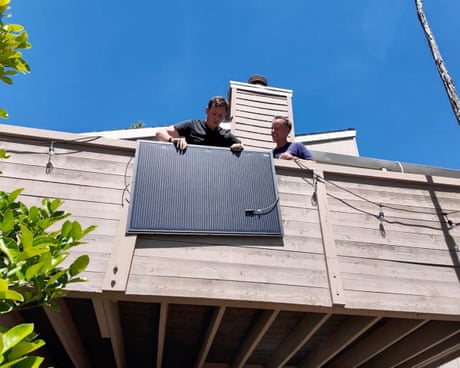
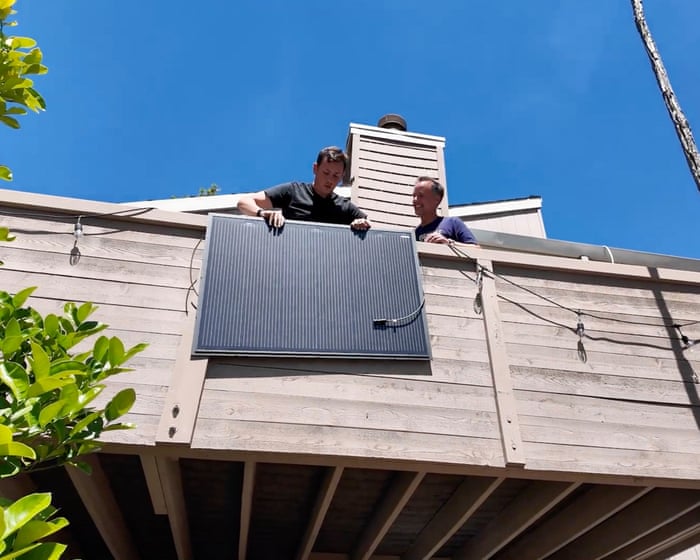
Power to the people: how ‘balcony solar’ could help fight rising US utility costs

More Americans are using small solar panels in their back yards or balconies as a clean way to cut their electric bills

If you feel like your electricity bill just keeps climbing, you aren’t imagining it. Since 2020, US residential energy prices have surged by about 30%, making power the largest household energy expense behind gasoline, according to the US Energy Information Administration.

But for residents like Alex Curtis, the days of feeling powerless against rising costs are coming to an end. Curtis is waging a war on his electric bill, and his new weapon of choice is a lightweight, thin-film solar panel.

Continue reading...

© Photograph: Climate Central

© Photograph: Climate Central

© Photograph: Climate Central

  •  

Landlord inaction on energy upgrades stops renters saving $20bn on power bills in a decade

Property owners’ lack of motivation due to ‘split incentive’ is main reason rental properties are missing out on energy upgrades, research finds

Renters make up nearly a third of Australian households yet many are missing out on energy upgrades – such as insulation, appliances and rooftop solar – that could slash their power bills and improve home comfort.

The problem, according to the Institute for Energy Economics and Financial Analysis (IEEFA), is landlords’ lack of motivation.

Continue reading...

© Photograph: David Mariuz/AAP

© Photograph: David Mariuz/AAP

© Photograph: David Mariuz/AAP

  •  

Ofgem should tell it straight: electricity prices are set to stay high for years | Nils Pratley

Regulator could do us all a favour with clear multi-year forecasts and breakdowns of electricity pricing

It is easy to predict where the energy regulator will set the next quarterly price cap on Wednesday. It’s just a matter of tracking wholesale prices in Ofgem’s relevant backward-looking “observation period”. Energy consultant Cornwall Insight thinks the typical household bill be £1,850, an increase of £209 from the previous quarter. It will be surprising if it is out by more than a few quid.

One can also make a fair guess at the regulator’s messaging. It will talk about the unavoidable impact from the surge in energy prices that followed the closure of the strait of Hormuz. It may also say the increase would be even greater than 13% without the additional wind and solar generation on the system these days. Fair enough. Gas sets the wholesale price of electricity only 60% of the time now, down from 90% not long ago.

Continue reading...

© Photograph: Murdo MacLeod/The Guardian

© Photograph: Murdo MacLeod/The Guardian

© Photograph: Murdo MacLeod/The Guardian

  •  
❌