❌

Reading view

EcoFlow’s new TITAN batteries can keep your central air running through a blackout

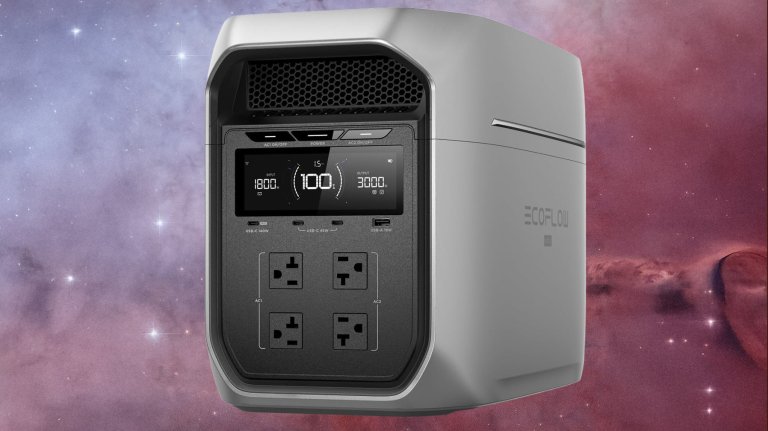
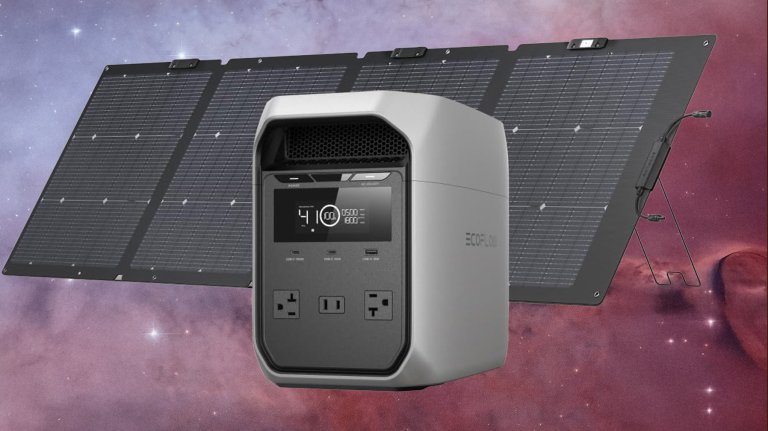
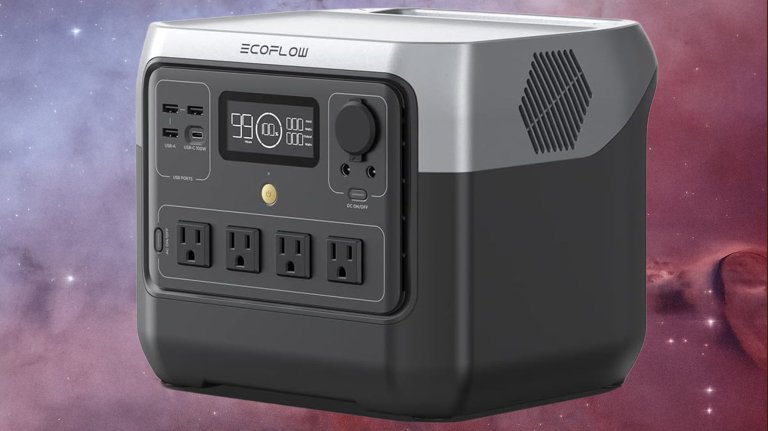
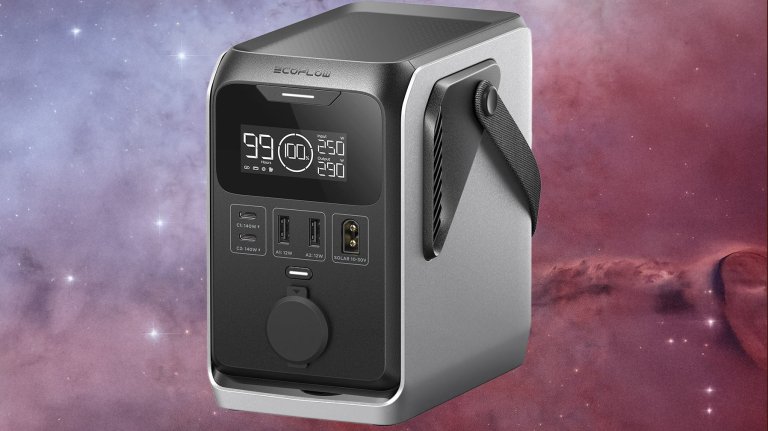
A central air system is the final boss for home battery backup systems. The AC’s compressor pulls a big surge of current at startup, which trips many battery inverters. EcoFlow says its new TITAN Series flagship, the TITAN 5000 Plus, can start and run a compatible 3-ton central AC unit without extra hardware, using a single 5kWh battery.

All three TITAN models are available to reserve at Early Bird pricing starting today through EcoFlow’s website. Standalone units land in the $2,000 to $3,000 range, and EcoFlow says exact prices arrive November 3. It’s a big step up from portable power stations like the EcoFlow DELTA 3 series we tried last year, with a wall-mounted transfer panel and room for up to 30kWh of storage.

EcoFlow TITAN 5000 Plus

See It
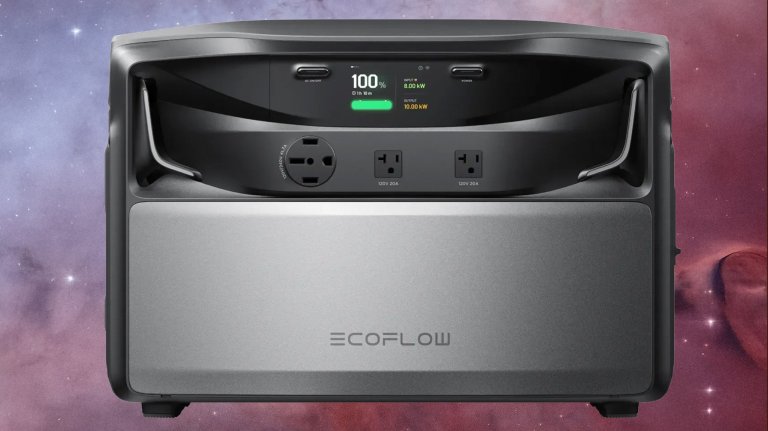
Rooftop solar owners get the most out of this one. Its two charge controllers accept up to 8kW of panels, and PV Boost lifts output from 7.2kW to 10kW while the sun is out. It’s also the model EcoFlow rates to start a 3-ton central air conditioner without a soft starter, and it’s the only TITAN with a 50-amp L14-50 outlet.

How a 5kWh battery puts out 7.2kW

Home batteries typically sell on capacity, the kilowatt-hours that decide how long the lights stay on. Output, the kilowatts that decide what can run at once, tends to scale with it, so a household that needs a well pump and an AC unit running together often ends up paying for more storage than it would use. TITAN separates the two.

The TITAN 5000 and TITAN 5000 Plus each hold about 5kWh and are rated for 7,200 watts of continuous 120/240V output. EcoFlow credits its 40160 lithium iron phosphate cells, which are large cylindrical cells rated at 2C. That means each cell can discharge its full capacity in half an hour, and that headroom is what lets a modest pack swallow a compressor’s startup spike.

On the Plus, a feature EcoFlow calls PV Boost raises output to 10kW while solar panels are feeding the system. Capacity grows in 5kWh steps with stackable TITAN batteries, each about 83 pounds, to a maximum of 30kWh per unit. That ceiling is roughly what the average US home buys from the grid in a day.

A transfer panel that skips the main panel swap

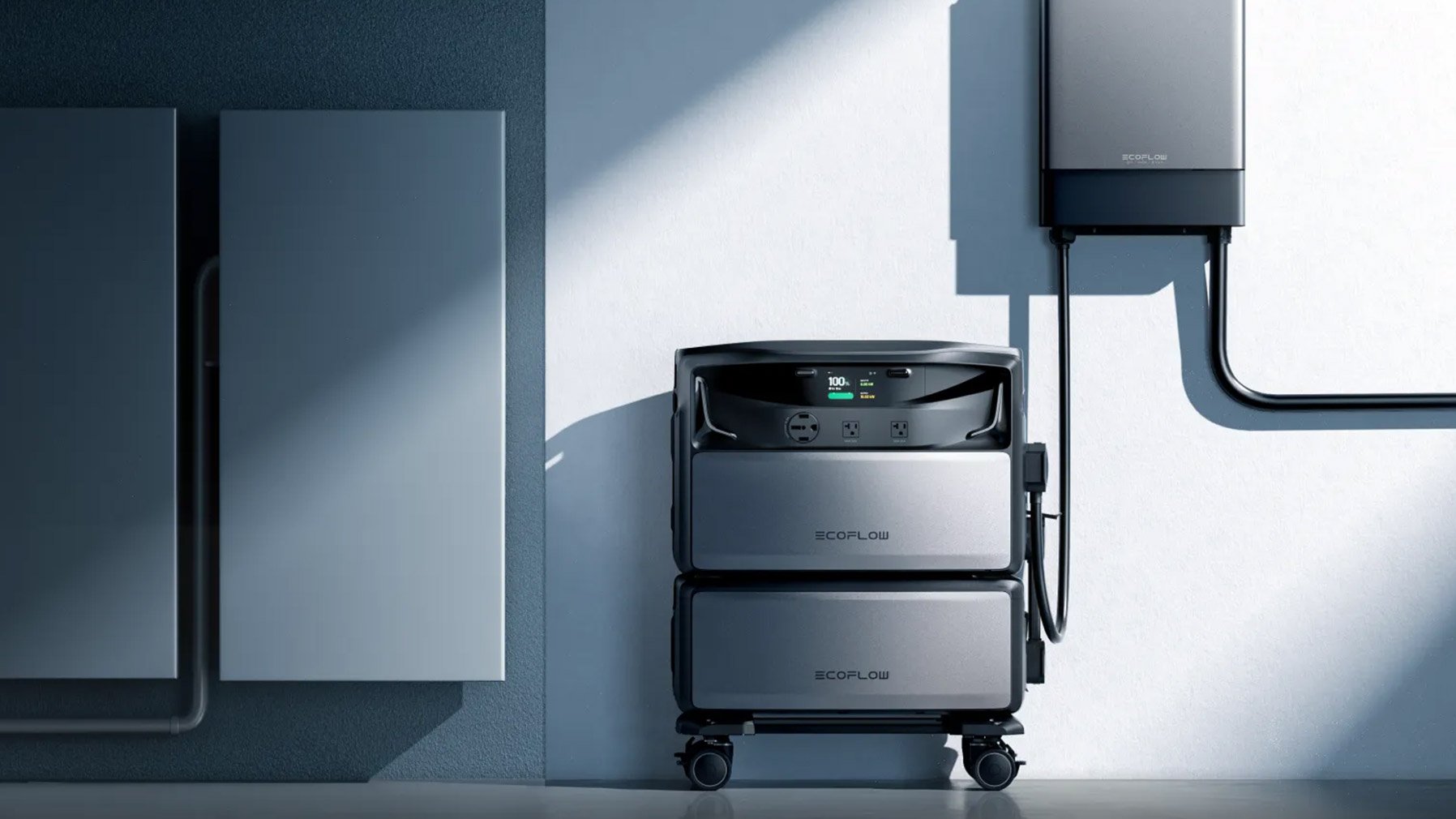
Each TITAN pairs with EcoFlow’s Smart Home Panel 10, a wall-mounted box that sits alongside your existing breaker panel and any rooftop solar you already have. It backs up 10 selected circuits at up to 50 amps. EcoFlow says it flips to battery within 20 milliseconds, though it tells owners of medical equipment to check that device’s own backup requirements.

Installation is where EcoFlow is pushing hardest. The company pre-wires the panel and installs the breakers at the factory, and it claims that cuts on-site labor by up to 80 percent, to about two hours of work. The seven-day install it advertises comes with an asterisk, since EcoFlow counts business days starting after permits are approved and limits the service to certain ZIP codes.

Day to day, EcoFlow’s OASIS 3.0 software charges the batteries when time-of-use rates are low and draws them down during peak pricing. The TITAN 5000 spec sheet lists its grid connection as no-export, so it won’t sell power back to the utility. Any savings come from buying less peak-rate electricity, and EcoFlow’s own savings estimate assumes a 15kWh system, 4kW of solar, and a San Diego rate plan.

TITAN 5000 Plus vs. TITAN 5000 vs. Classic

The Plus and the standard TITAN 5000 share the 7.2kW output and 5kWh battery, and the difference is solar. The Plus takes up to 8kW of panels across two charge controllers, double the standard model’s 4kW, and it adds PV Boost and a 50-amp L14-50 outlet. Both pair with the 240V version of Smart Home Panel 10.

The TITAN 5000 Classic is the budget model, and its limits matter more than its price. It puts out 4kW at 120V only, takes 3.2kW of solar, and pairs with a 120V version of the panel. Central air conditioners, electric dryers, and many well pumps run on 240V, so the Classic is better suited to keeping the fridge, lights, and outlets going.

The bigger TITANs also undercut EcoFlow’s own DELTA Pro Ultra, which pairs the same 7,200-watt output with 6kWh of storage and lists at $5,799 for an inverter and one battery. EcoFlow had that bundle marked down to $4,199 and it sold out as of October 13. The TITAN 5000 gives up about 1kWh of storage and lands in the $3,000 range.

How to reserve an EcoFlow TITAN

EcoFlow is taking reservations now with a $50 coupon that knocks 5 percent off eligible TITAN gear and adds two free 220W portable solar panels during the launch sale. The purchase has to go through by December 31, or EcoFlow refunds the $50. Shipping is free everywhere except Alaska, Hawaii, and Puerto Rico.

Bundles with the Smart Home Panel 10 and professional installation run in the $7,000 range for the TITAN 5000 and TITAN 5000 Plus, and in the $5,000 range for the Classic. EcoFlow says final prices for every configuration, including the add-on batteries, post on November 3.

EcoFlow TITAN 5000

See It
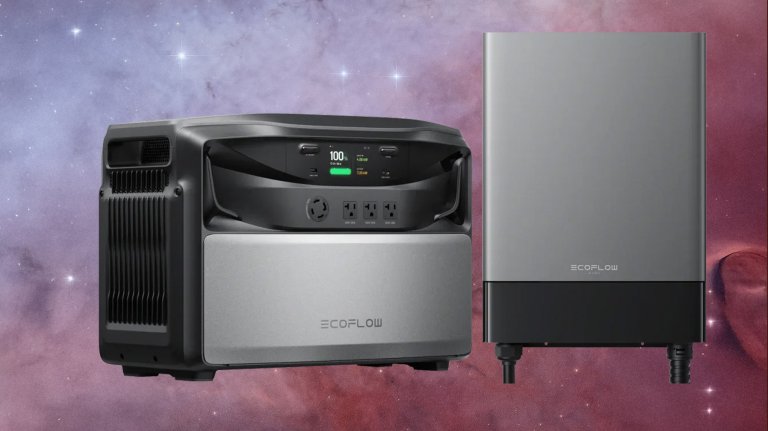

Think of the standard TITAN 5000 as the Plus with half the solar input. It keeps the 7.2kW of 120/240V output and the 5kWh battery, takes up to 4kW of panels through one charge controller, and adds USB-C and USB-A ports that EcoFlow doesn’t list on the Plus. Its IP20 rating means it belongs indoors or in a garage, not out in the weather.

EcoFlow TITAN 5000 Classic

See It
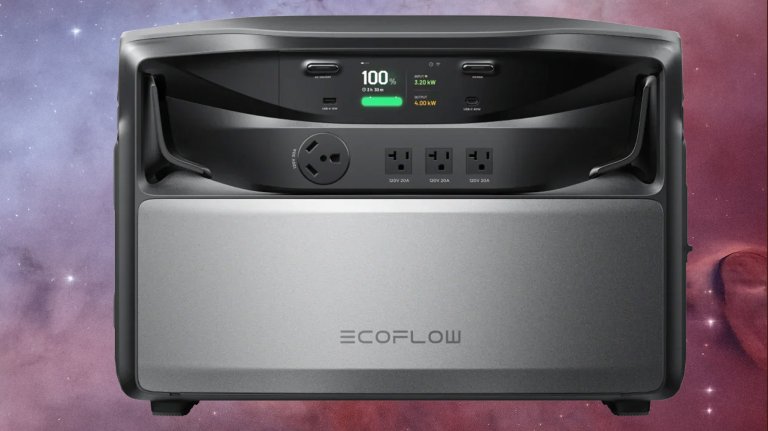

Households that mostly care about the fridge, the router, and the furnace blower during an outage can drop a price tier here. The Classic puts out 4kW at 120V, takes 3.2kW of solar, and pairs with a 120V version of Smart Home Panel 10, so 240V appliances stay dark. It still expands to 30kWh with the same add-on batteries as its siblings.

The post EcoFlow’s new TITAN batteries can keep your central air running through a blackout appeared first on Popular Science.
  •  

Your dusty Nest and Home speakers just got a surprise firmware lifeline

What you need to know

  • Google is updating older Nest speakers with firmware version 3.79.550760, which is being tested through the Home Preview Program.
  • The original Google Home, Home Mini, Nest Mini, and Nest Audio are eligible for the update.
  • Google expects to release the update more broadly over the next few weeks, but it hasn’t announced an exact date.

Some love is coming to a few of Google's older Nest speakers in the form of updates designed to make them more useful around the house — but don't expect a dramatic transformation from hardware that has been around for years.

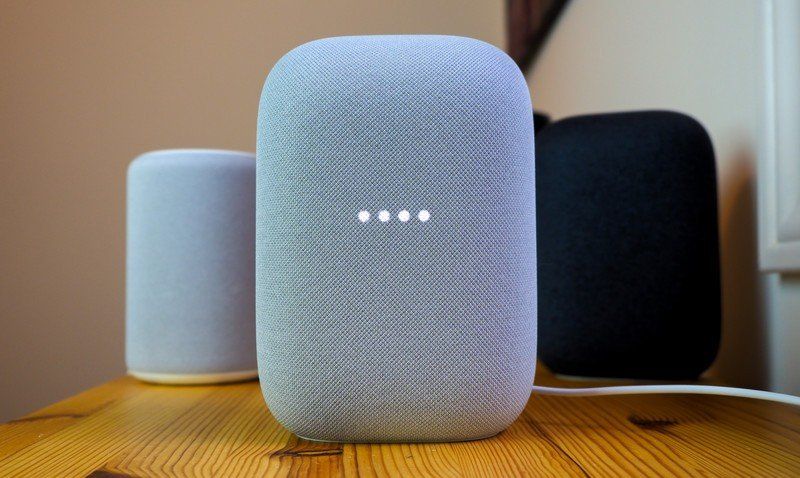
The update, version 3.79.550760, is now in testing through Google's Home Preview Program. This includes the original Google Home from 2016, Home Mini, Nest Mini and Nest Audio. The Google Home Max isn’t included in this testing round.

The release comes as Google continues to refine its smart home experience, where voice commands and connected devices are supposed to work together without users having to fight their setup. It’s especially the case for older smart speakers, which still have utility for basic tasks as Google’s newer hardware and software evolve.

The original Home Mini was released in 2017, followed by the Nest Mini in 2019 and Nest Audio in 2020. These speakers can still handle everyday requests, but their age means they’re not necessarily getting the same attention as Google’s newer products. That said, better software can extend their usefulness.

For owners, the bigger question is whether these changes will just keep existing speakers ticking over or make them more reliable and convenient. Smart speakers are only as good as the assistants inside them, and Google’s software updates could help older Nest speakers remain useful, even as newer hardware and features arrive.

But software updates can only go so far. Older speakers can still manage basic smart home tasks and play audio; in other words, anyone expecting a major upgrade should temper their expectations.

Google’s latest moves prove it hasn’t totally forgotten about its older Nest lineup. That’s good news for those who would rather keep a perfectly functional speaker than replace it just to stay “current.”

Owners can join the preview

Owners who want to give it a try can go to the Google Home app, tap on their speaker, go to Settings > Device information > Preview program, and sign up if they are eligible. The firmware will install automatically overnight. Google expects to roll it out more widely over the next few weeks but hasn’t given a specific date.

There’s a separate October Google Home update too, improving Gemini for Home conversations, voice commands, weather responses and device controls in the app.

  •  

Apple just overhauled its smart-home lineup with a $299 HomeView smart display and speaker

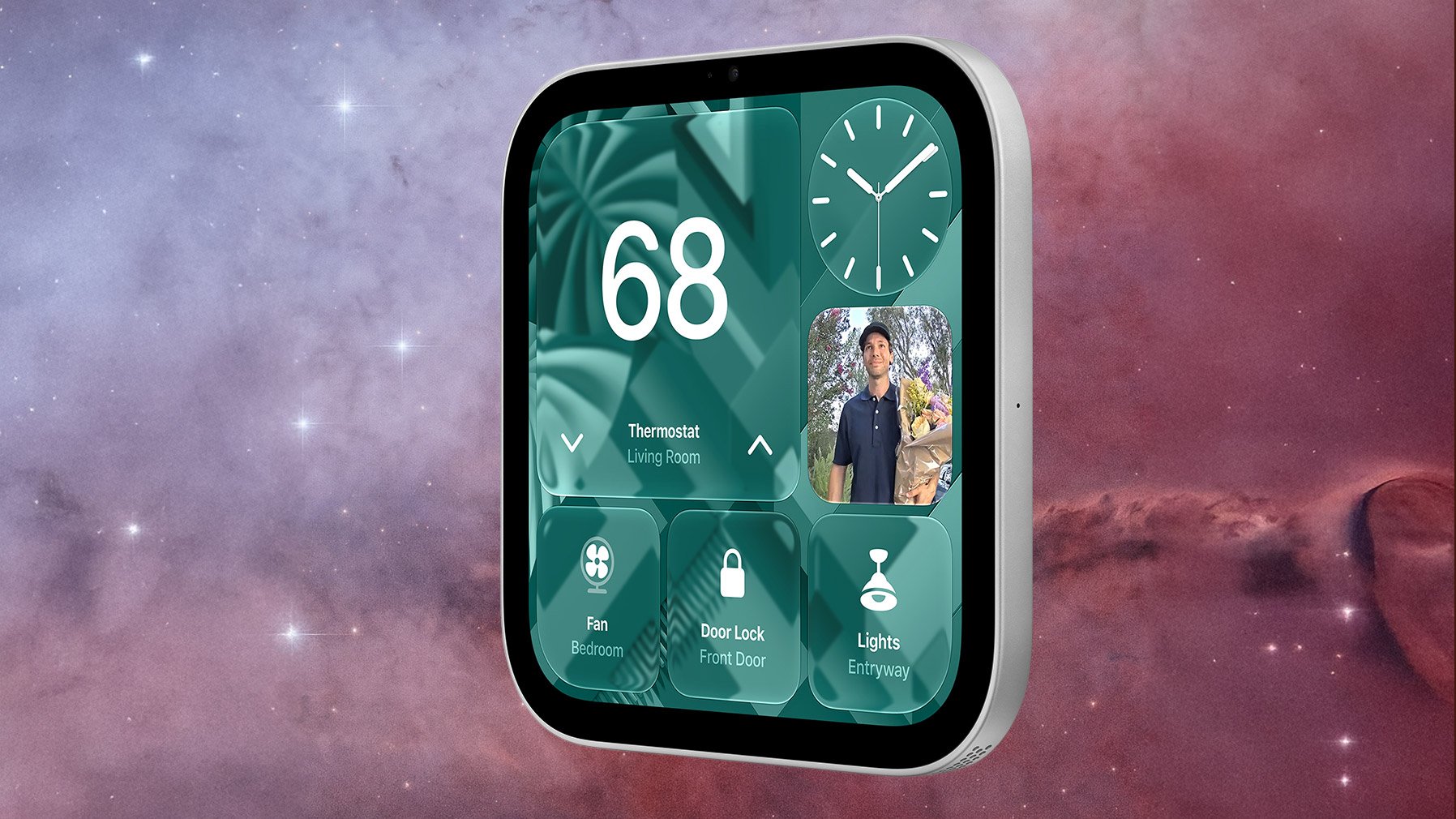
My home runs on Apple’s smart-home platform, but it’s cobbled together like an automated Frankenstein’s monster. The brains live in an Apple TV and a HomePod on a shelf. The cameras, locks, and thermostats came from whoever bothered to support HomeKit. Apple HomeView is the company’s own answer: a $299 smart display with a square 7-inch screen, an A18 chip, and a camera that recognizes up to six people in the house by face.

Three other announcements came with it. A fourth-generation Apple TV 4K moves to an A19 chip at $299; HomePod mini 2 gets an S10 chip and a glowing top at $149; and the new Apple Home Collection puts cameras, a smart lock, and thermostats built by LG and Schneider Electric on Apple’s store shelves in December. Apple now sells something for nearly every spot in the house where smart-home devices usually go.

ProductStarting priceOn sale
Apple HomeView$299Nov. 13
Apple HomeView (Wall Mounted)$299, plus mount from $59.95Nov. 13
Apple TV 4K (4th generation)$299Nov. 13
HomePod mini 2$149Oct. 30
Apple Home Collection$39.95 to $399.95Starting December
Prices are U.S. list.

1. Apple HomeView is a speaker with a square screen on a hinge

The tabletop HomeView sits on a domed speaker base, with the display attached by a stainless steel hinge that tilts it toward whoever’s looking. Overall, it’s giving miniaturized iMac G4. For a more contemporary reference, the face looks like a giant Apple Watch or a real-world embodiment of an iOS widget. The 7-inch Liquid Retina panel runs 1,088 by 1,088 pixels at 220 ppi. That square shape suits photo albums, camera feeds, and widgets better than movies. Brightness drops as low as 0.3 nits, so it shouldn’t light up a dark bedroom at night.

Two full-range drivers sit in the display, while the base holds a down-firing woofer and two force-canceling passive radiators, and the whole setup supports Spatial Audio. The tabletop model weighs 2.1 pounds and needs wired power from the included 30W adapter. It’s a kitchen-counter fixture like a typical smart screen.

HomeView (Wall Mounted) costs the same $299, drops the base, and weighs 286 grams. It uses two drivers tuned for wall placement and hangs from one of three Schneider Home power mounts, all sold separately: a plug-in USB-C wall connector from $59.95, a hardwired AC version from $79.95, and a hardwired Power over Ethernet version for $129.95 that arrives in early 2027. Unlike the tabletop model, it doesn’t come with a USB-C cable or power adapter, and Apple calls for an adapter of at least 20W, so the real price lands well above $299.

The 12MP Center Stage camera is what separates HomeView from a HomePod with a screen bolted on. It recognizes up to six people by face and gives each a personal Home Screen with their own apps and widgets, while shared photo albums and music stay open to everyone, guests included. When nobody’s using it, the screen shows one of Apple’s faces, including Calendar, Weather, a Home Camera face that streams up to nine live feeds, and a Snoopy face whose animations follow the weather, sports, and holidays.

2. HomeView’s Siri AI shows personal info only when your iPhone is nearby

Apple HomeView
Apple

HomeView ships with Siri AI, the rebuilt Siri that holds a conversation and understands what’s on the screen, as a beta in HomeView software 27.2. Anyone in the house can use it for general questions and music discovery. Personal requests, like checking a calendar or reading a text, require a paired iPhone or iPad that supports Apple Intelligence.

The privacy rules warrant a close read if a camera in the kitchen has kept you away from smart displays. HomeView surfaces personal content from apps like Messages and Calendar when it recognizes an enrolled face and that person’s paired iPhone or iPad is on the same Wi-Fi network and was recently unlocked. Apple’s fine print carves out one exception, for a phone that recently dropped off the home Wi-Fi but stays on cellular in the same location. The A18 handles camera and microphone data inside Secure Exclaves, which Apple says isolate that data from the rest of the system.

As a home controller, HomeView runs cameras, thermostats, lights, locks, and blinds by touch or voice, and it listens for smoke and carbon monoxide alarms and sends an alert when one goes off. With a supported iCloud+ plan and compatible cameras, it can identify faces, pets, packages, and vehicles in camera footage. Apple won’t sell HomeView in the European Union because Siri AI isn’t available in iOS there.

3. Apple TV 4K (4th generation) adds an A19 chip and far-field mics at $299

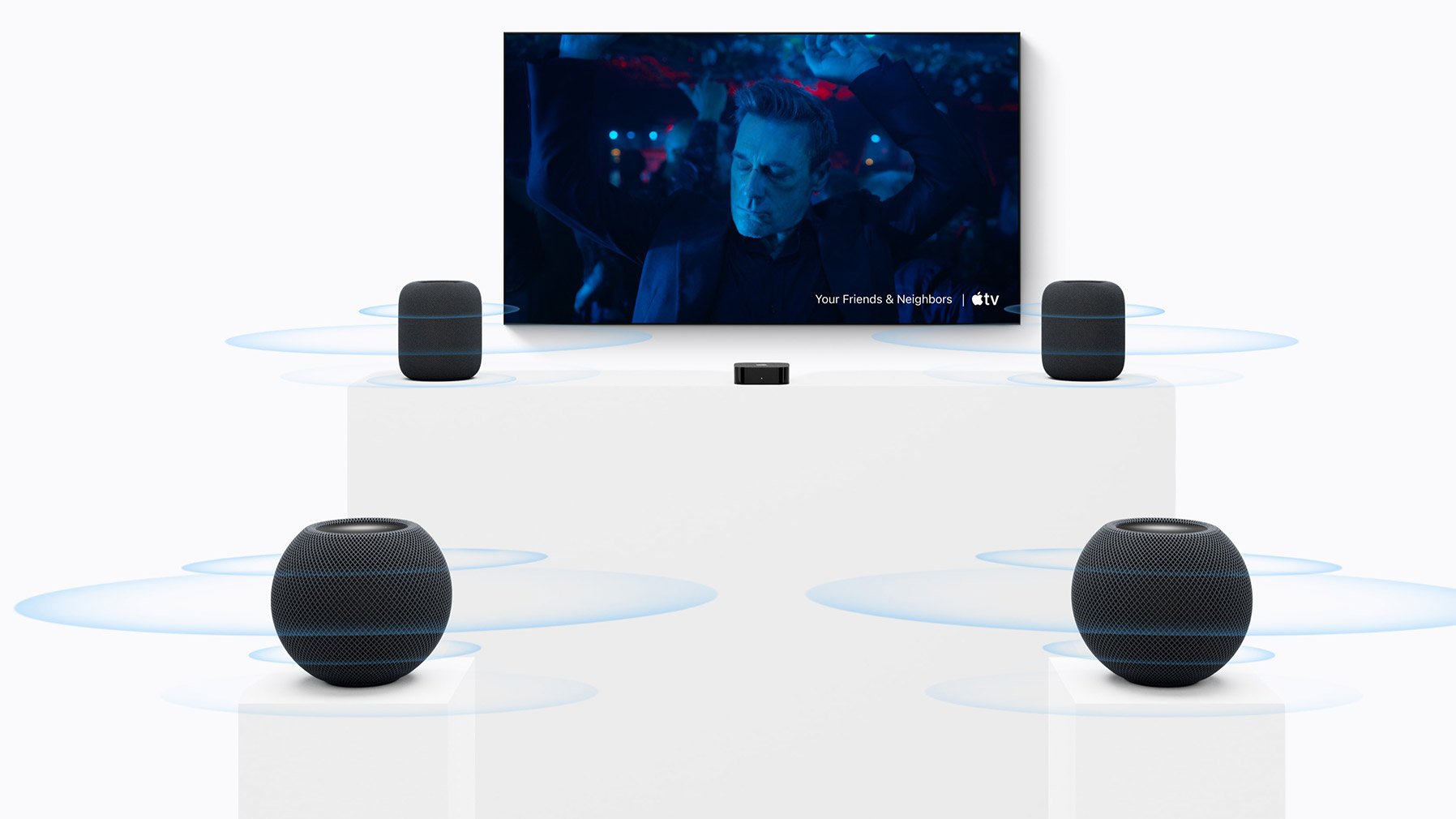
Apple TV with HomePod surround sound
Apple

The new Apple TV 4K listens without the remote. Three far-field microphones with echo cancellation handle hands-free “Hey Siri,” which helps when a movie is playing loud and the remote is somewhere in the couch. Apple rates the A19 chip at up to 50 percent faster CPU performance and up to 2x faster GPU performance than the previous generation, and it adds an AV1 decoder for the efficient video codec more streaming services are adopting.

Pair two HomePod mini 2 or HomePod (2nd generation) speakers up front and two more in back, with each pair made of matching speakers, and Apple TV 4K runs four-speaker surround sound. There’s just one available configuration for the Apple TV, with 128GB of storage, Wi-Fi 7, Gigabit Ethernet, and a Thread radio. The outgoing lineup’s cheaper model left Ethernet and Thread off, so every new unit can serve as a full home hub.

The new Siri Remote charges over USB-C and works with Find My, including Precision Finding with a supported recent iPhone. It also works with Apple TV HD and earlier Apple TV 4K models, and it’s sold separately. You don’t need new hardware for Siri AI, which arrives as a beta on Apple TV 4K models back to the second generation. Searching for something to watch opens a full-screen Siri interface, and questions asked mid-show get answered in a compact overlay on top of what’s playing.

The price has gone up. Apple TV 4K launched at $129 in 2022, and Apple raised that starting price to $199 in June amid a memory chip shortage. The 128GB model with Ethernet, the closer match to the new box, went from $149 to $249 at the same time. At $299, the new model costs about twice as much as the Google TV Streamer, which went to $149.99 on August 31.

4. HomePod mini 2 gets an S10 chip and a top that glows with the music

The original HomePod mini launched at $99 in 2020 and stayed largely the same for six years, aside from new colors and a temperature and humidity sensor Apple switched on with a 2023 software update. HomePod mini 2 moves to Apple’s S10 chip, which runs computational audio that adjusts dynamic range and loudness to the music in real time.

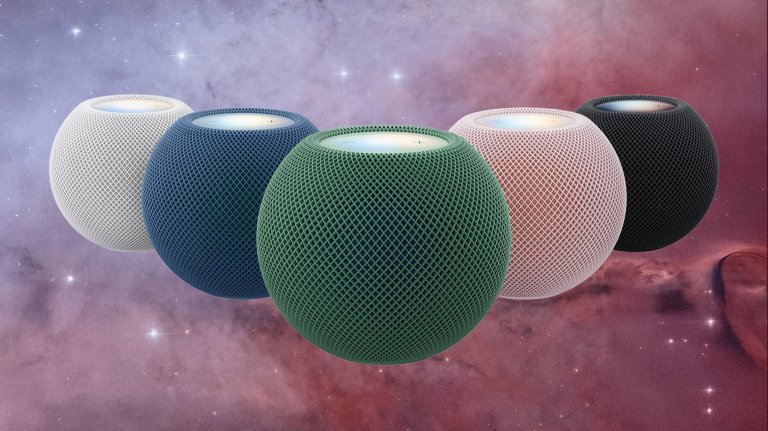
The visible change is Sound Glow. The top of the speaker pulses in time with bass and treble using colors pulled from the album art, and it can play ambient soundscapes like rain. HomePod mini 2 comes in pink, green, blue, white, and midnight, stands 3.3 inches tall, and weighs 335 grams.

Persistent low-latency Wi-Fi 6E, Thread, and an Ultra Wideband chip make HomePod mini 2 a capable home hub, and one or two can serve as the default speaker(s) for a Mac with Wi-Fi 6E or later. Four of them make a surround system with the new Apple TV 4K, with automatic calibration based on where each speaker sits. Apple’s comparison chart lists Spatial Audio and room sensing only for the full-size HomePod (2nd generation), so those stay on the bigger speaker, though you can match a pair of those with a pair of the mini 2 for your home theater.

Siri AI comes to HomePod mini 2 in a future software update rather than at launch, and it will recognize up to six household voices. At $149, HomePod mini 2 costs $50 more than the original did at launch and $20 more than Apple charged for the original after its June price increase.

5. Apple Home Collection brings LG and Schneider cameras, locks, and thermostats to Apple Stores

Apple HomeKit smart home hardware
Apple

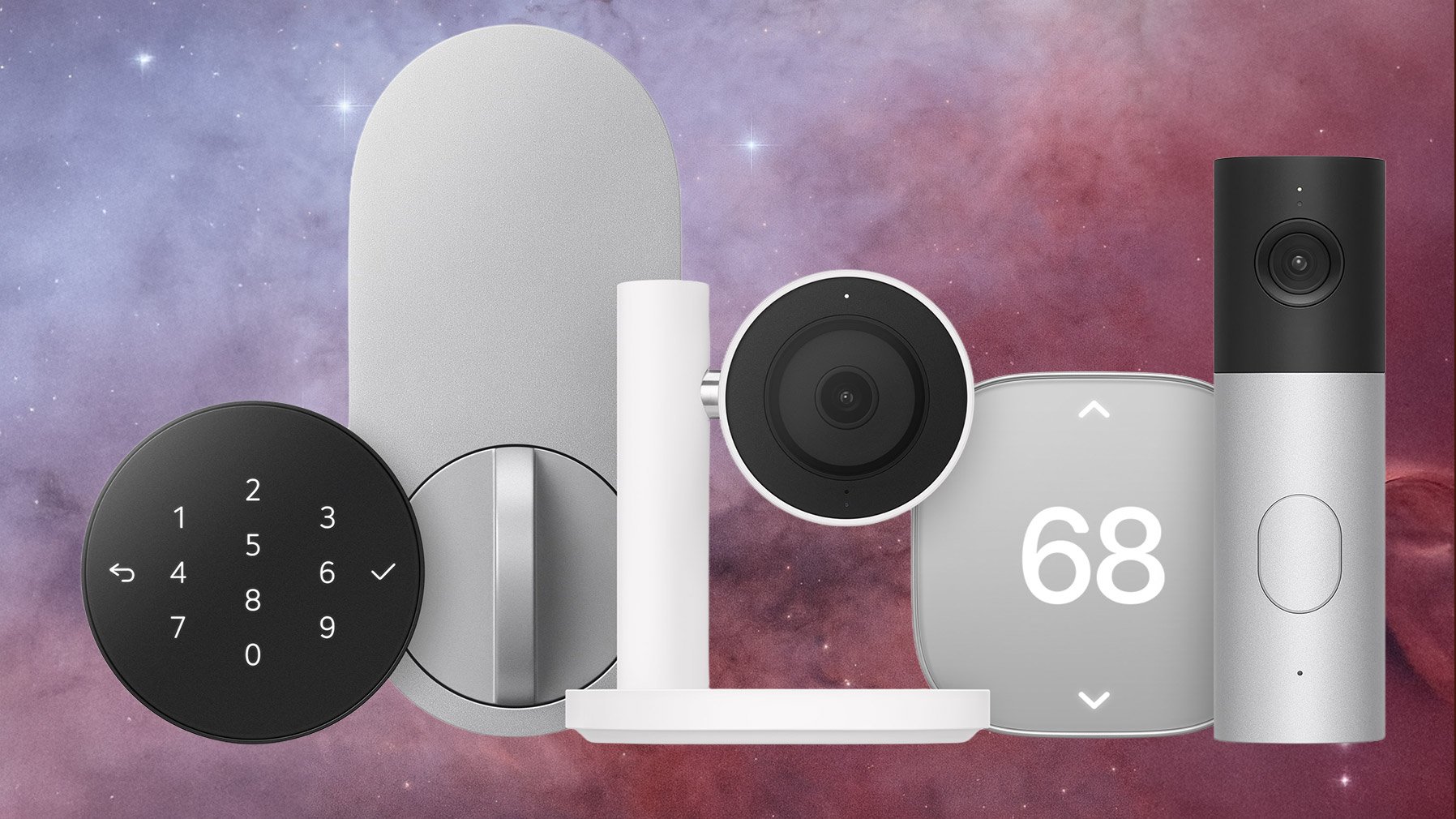
LG Electronics and Schneider Electric make the Apple Home Collection hardware, designed in collaboration with Apple, and Apple sells it on apple.com, in the Apple Store app, and in its stores. Every device sets up with one tap on an iPhone and runs in the Home app with no separate app or account, which skips the step where a new doorbell asks you to make yet another login.

Apple Home Collection devicePrice
LG Video Doorbell Wired$249.95
LG Floodlight Cam$399.95
LG Outdoor Cam Plug-In$299.95
LG Indoor Cam Plug-In$199.95
LG Smart Deadbolt Lock$349.95
LG Smart Thermostat$199.95
LG Temperature Sensor$39.95
Schneider Home Smart Thermostat$199.95
Schneider Home Room Sensor$39.95
Prices are U.S. list. C-wire power adapters ($24.95) and a Schneider Home trim plate ($14.95) are sold separately.

The LG Smart Deadbolt Lock unlocks over Ultra Wideband as you walk up with an iPhone, supports Matter and the Aliro door-access standard, and keeps working without an internet connection. A PIN pad and a backup key slot cover a dead phone. The LG Video Doorbell Wired pairs a 2.5K front camera with a second, full HD camera on the bottom of the unit, plus a built-in spotlight and chime.

Every device in the Home Collection runs on Thread, and the cameras keep recording to built-in storage if the Wi-Fi drops. Video history requires iCloud+, which keeps 10 days of events. The 50GB plan covers one camera, 200GB covers up to five, and 2TB covers unlimited cameras. Some features also need a home hub, which can be HomeView, a HomePod, a HomePod mini, or an Apple TV 4K.

Apple Home Collection availability begins in December, and select accessories follow in early 2027, though Apple hasn’t said which ones. Apple Retail also offers professional installation from ADT in the U.S. starting this fall, for an extra charge.

6. Where to preorder Apple HomeView, Apple TV 4K, and HomePod mini 2

Apple HomeView, HomeView (Wall Mounted), and Apple TV 4K (4th generation) are $299 apiece; preorders are open now at apple.com and in the Apple Store app, and they arrive November 13. HomePod mini 2 is $149 and reaches stores October 30. The Apple Home Collection doesn’t take preorders yet. Availability begins in December, with select accessories following in early 2027.

Apple HomeView $299

See It


Start with the base, which holds a down-firing woofer and two force-canceling passive radiators under the screen. The square 7-inch screen, 12MP Center Stage camera, and A18 chip recognize six people by face and give each one a personal Home Screen. It comes in silver, starlight, rose pink, and space gray, and the $299 Wall Mounted version comes in silver and space gray with mounts sold separately.

Apple TV 4K (4th generation) $299

See It


Hands-free “Hey Siri” through three far-field microphones is the change you’ll notice first, and the A19 chip is the one you won’t see. Every unit ships with 128GB of storage, Wi-Fi 7, Gigabit Ethernet, and Thread, so there’s no stripped-down model to accidentally buy. The included Siri Remote charges over USB-C and shows up in Find My, which should end the search through the couch cushions.

Apple HomePod mini 2 $149

See It


Watch the top of this one. Sound Glow pulses with the music in colors pulled from the album art, while the S10 chip tunes dynamic range and loudness in real time. It doubles as a Thread and Wi-Fi 6E home hub with a temperature and humidity sensor, and four of them build a surround system around the new Apple TV 4K. Siri AI arrives in a later software update.

The post Apple just overhauled its smart-home lineup with a $299 HomeView smart display and speaker appeared first on Popular Science.
  •  

Amazon is blowing out Greenworks electric yard tools for clearance prices just in time for fall cleanup

Top Greenworks deals still live after Prime Big Deal Days

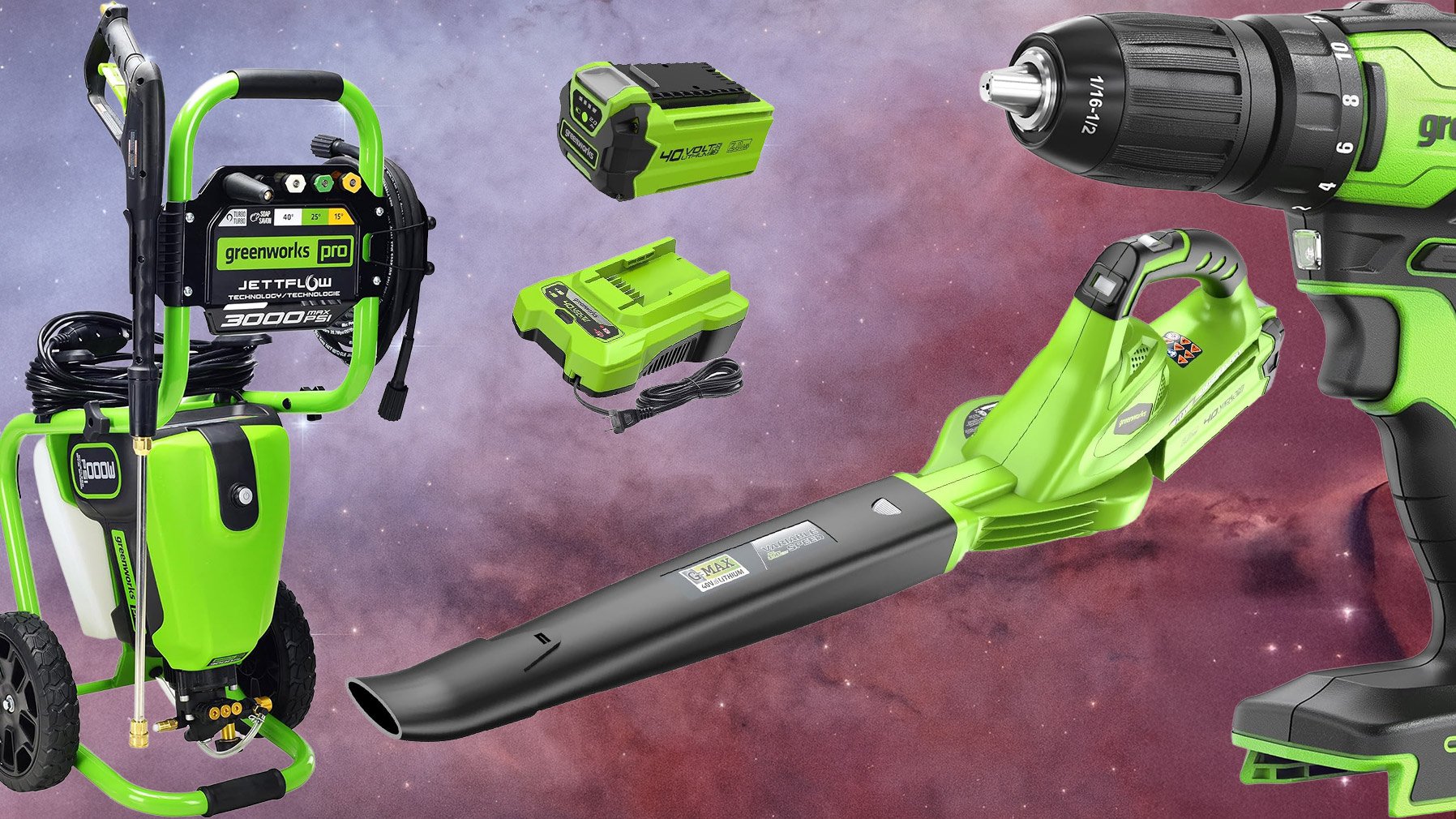
Amazon’s Prime Big Deal Days sale ended last week, but Greenworks has kept a big batch of its battery-powered yard tools marked down with some discounts even eclipsing the shopping holiday’s savings. The best of the bunch for most yards is the Greenworks 40V 135 CFM leaf blower at $74.99, its lowest price of 2026 on Amazon’s price chart. The Greenworks 24V brushless drill is down to $49.99, the lowest it has sold for in the past year, and the Greenworks 24V pole saw is at the lowest price camelcamelcamel has on record for it. We checked 52 Greenworks deals on Amazon Monday morning, October 12, from that $49.99 drill to a $529.99 self-propelled mower, and every one is sold by Amazon.

Greenworks 40V 135 CFM Cordless Leaf Blower: $74.99 (was $149.99)

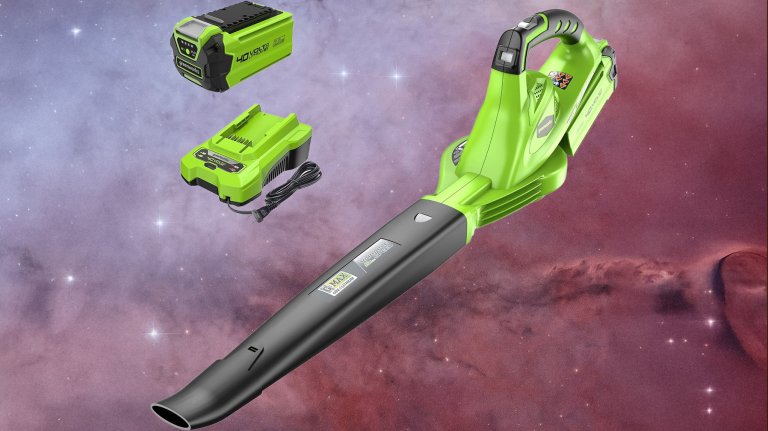
Greenworks 40V 135 CFM Cordless Leaf Blower $74.99 (was $149.99)

135 CFM sweeper blower kit, lowest price of 2026

See It

The Greenworks 40V 135 CFM leaf blower on sale for $74.99 is a compact sweeper for porches, decks, patios, and short driveways. Greenworks rates it at 150 mph, and a variable speed dial turns the airflow down when you get close to flower beds. The kit includes a 2.0Ah battery and a charger. It isn’t built for a whole lawn of wet leaves, so bigger yards should look at the 48V and 80V blowers further down.

Greenworks 24V 8-Inch Cordless Pole Saw: $99.99 (was $159.99)

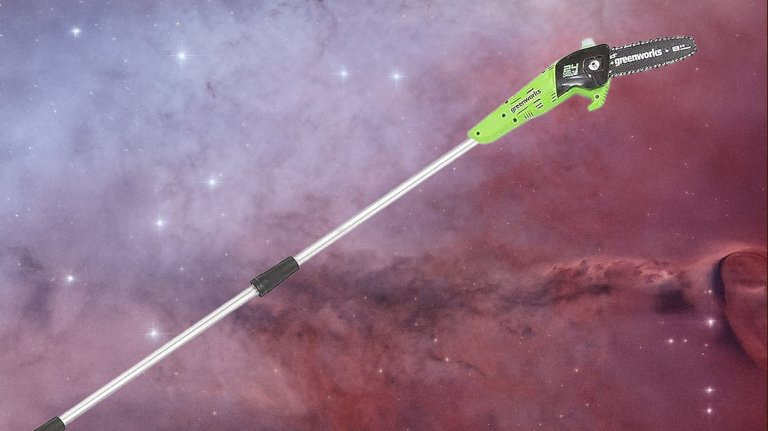
Greenworks 24V 8-Inch Cordless Pole Saw $99.99 (was $159.99)

8-inch pole saw with about 11 feet of reach, 38% off

See It

At $99.99, the Greenworks 24V 8-inch pole saw is at the lowest price camelcamelcamel has recorded for it. Its three-piece aluminum shaft extends to 9 feet, and Greenworks says that works out to about 11 feet of reach from the ground. An automatic oiler keeps the bar and chain lubricated. The included 2.0Ah battery also runs Greenworks’s other 24V tools.

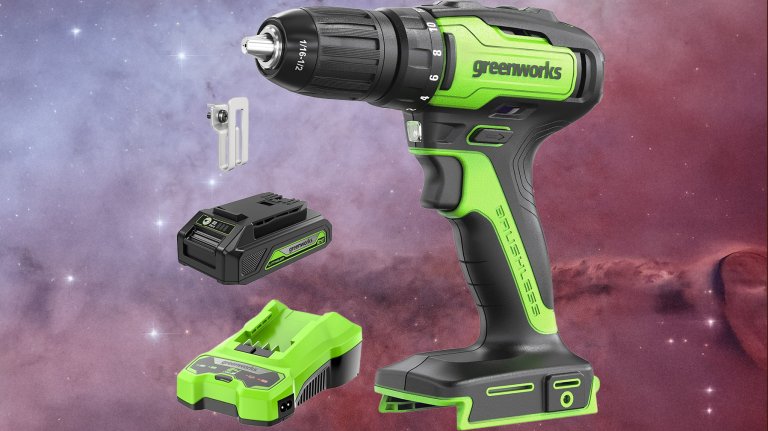
Greenworks 24V Brushless Drill/Driver Kit: $49.99 (was $119.99)

Greenworks 24V Brushless Drill/Driver Kit $49.99 (was $119.99)

310 in-lb brushless drill kit, lowest price in a year

See It

The Greenworks 24V brushless drill/driver sat around $80 for most of 2026, according to Amazon’s price chart, and it’s down to $49.99, its lowest price in the past year. Greenworks lists 310 inch-pounds of torque, two speeds, and an 18-position clutch, which covers furniture assembly, shelves, and pilot holes. A 2.0Ah battery and charger come in the box. For $5 more, the newer Greenworks 24V 400 inch-pound drill adds torque and a battery that charges over USB-C.

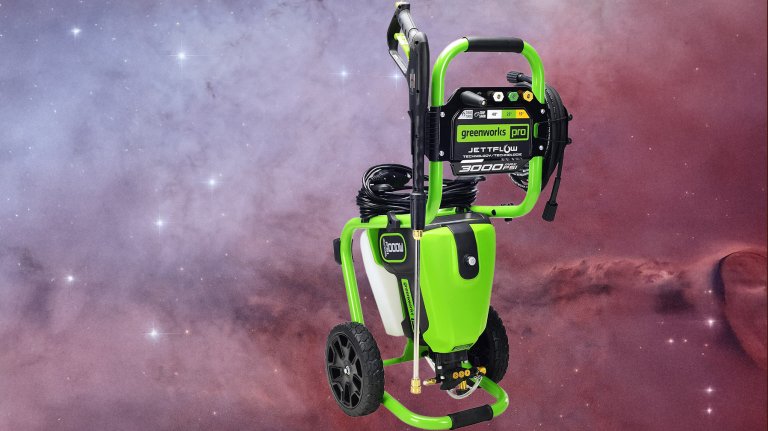
Greenworks 3000 PSI Brushless Electric Pressure Washer: $309.99 (was $499.99)

Greenworks 3000 PSI Brushless Electric Pressure Washer $309.99 (was $499.99)

3,000 PSI brushless washer, lowest price in a year

See It

The Greenworks 3000 PSI brushless pressure washer costs $309.99, which is $20 less than it did in September and the lowest price on Amazon’s chart for the past year. Greenworks says an independent lab tested its 3,000 PSI and 2.0 GPM ratings for the Pressure Washer Manufacturers’ Association. It comes with a metal spray gun, a 25-foot kink-resistant hose, and five nozzles. That’s enough to clean a deck, siding, or a driveway before winter.

Best Greenworks leaf blower deals

The 40V 135 CFM blower is covered above. The 48V 600 CFM blower runs on two 24V batteries at once and is at its lowest price since it showed up on Amazon in February. Our guide to the best battery-powered leaf blowers explains how much airflow your yard needs.

Best Greenworks string trimmer and hedge trimmer deals

These run on Greenworks’ 24V, 40V, 60V, 80V, and 82V batteries, so match the voltage to any tools you already own. Our guide to the best weed whackers covers the basics of picking a string trimmer.

Best Greenworks chainsaw and pole saw deals

The 24V pole saw is covered above. The 24V 10-inch chainsaw is at its lowest price since it showed up on Amazon in February, and it’s sized for storm limbs and small firewood rounds.

Best Greenworks lawn mower and tiller deals

The 60V 25-inch self-propelled mower is $70 less than it was in September and in line with the lowest price it hit over the past year. Our guide to the best electric lawn mowers explains which deck size fits your yard.

Best Greenworks pressure washer deals

The 3000 PSI model is covered above. Our guide to the best electric pressure washers explains how PSI and GPM affect cleaning.

Best Greenworks power tool and battery deals

The 24V brushless drill is covered above. Most of these run on Greenworks’ 24V batteries, the same packs that power the brand’s smaller yard tools.

The post Amazon is blowing out Greenworks electric yard tools for clearance prices just in time for fall cleanup appeared first on Popular Science.

  •  

These EF EcoFlow deals on portable power stations and solar generators are still live for a limited time

Top EcoFlow deals still live after Prime Big Deal Days

Amazon’s Prime Big Deal Days sale shut off at 2:59am ET this morning, but EcoFlow is keeping the party going by extending its deals. The best of the bunch is the EcoFlow DELTA 3 Max Plus at $1,149, $750 under its $1,899 list price, and EcoFlow says it and its other Amazon markdowns run through Wednesday, October 14. It’s a 2,048Wh station sized for home backup, and at 39% off it’s the deepest cut of the lot. We checked 16 EcoFlow deals on Amazon Thursday afternoon, October 8, from the $149 TRAIL 300 DC to a $5,099 DELTA Pro Ultra solar kit. Four of them are Prime member prices.

EcoFlow DELTA 3 Max Plus Portable Power Station: $1,149 (was $1,899)

EcoFlow DELTA 3 Max Plus Portable Power Station $1,149 (was $1,899)

2,048Wh home backup power station, 39% off

See It

The EcoFlow DELTA 3 Max Plus on sale for $1,149 is a home-backup station with 2,048Wh of storage and 3,000W of AC output. EcoFlow says it switches to battery in under 10 milliseconds when the power cuts out, so a desktop PC or router plugged into it stays on through the switch. It refills to 80% from a wall outlet in 43 minutes, according to EcoFlow. If 2,048Wh turns out to be too little, the listing says EcoFlow’s extra batteries can take it as high as 10kWh.

EcoFlow DELTA 3 Classic Solar Generator with 220W Solar Panel: $699 (was $1,099)

EcoFlow DELTA 3 Classic Solar Generator with 220W Solar Panel $699 (was $1,099)

1,024Wh power station plus a 220W panel, 36% off

See It

A power station is only as good as its last charge once the grid goes down for days, and a solar panel is how you top it back up. This EcoFlow DELTA 3 Classic and 220W solar panel bundle is $699, which is only $200 more than the DELTA 3 Classic by itself costs today. The station holds 1,024Wh with 1,800W of AC output, which EcoFlow says covers a refrigerator or microwave, and the company says the bifacial panel can refill it in 5.8 hours of sun.

EcoFlow RIVER 2 Pro Portable Power Station: $389 (was $429)

EcoFlow RIVER 2 Pro Portable Power Station $389 (was $429)

768Wh camping power station, Prime member price

See It

At 17.2 pounds, according to the listing, the EcoFlow RIVER 2 Pro is light enough to carry by its built-in handle from the car to a campsite. Prime members get it for $389. It stores 768Wh and has 11 outlets, with 800W of AC output for laptops, lights and camera chargers at the same time. EcoFlow says a wall outlet refills it in 70 minutes, and it rates the LFP battery for 3,000 charge cycles before capacity drops to 80%.

EcoFlow TRAIL 300 DC Power Station: $149 (was $199)

EcoFlow TRAIL 300 DC Power Station $149 (was $199)

288Wh DC-only power station, 25% off

See It

Check your gear before you buy the EcoFlow TRAIL 300 DC, because it has no AC outlets at all. What it does have is a 288Wh battery for $149, two 140W USB-C ports, two USB-A ports and a 12V car socket, which covers phones, laptops and a 12V electric cooler for a tailgate. It recharges from a car, a solar panel or its own USB-C ports, and EcoFlow says the dual USB-C route reaches 80% in 85 minutes. Bring your own USB-C cable, since the listing says one isn’t included.

Best EcoFlow DELTA power station deals

The DELTA 3 Max Plus is covered above. These are the rest of EcoFlow’s standalone DELTA stations on sale, and our guide to the best portable power stations explains how much capacity you actually need.

Best EcoFlow solar generator bundle deals

The DELTA 3 Classic bundle is covered above. Each of these pairs a power station with one or two EcoFlow panels, and our best solar generators guide covers how panel wattage affects recharge time.

Best EcoFlow portable air conditioner deal

The TRAIL 300 DC and RIVER 2 Pro are covered above. More camping and tailgate gear is in our Prime Big Deal Days roundup.

The post These EF EcoFlow deals on portable power stations and solar generators are still live for a limited time appeared first on Popular Science.

  •  

Stihl built its first battery-powered snow thrower to offer plenty of power with minimal maintenance

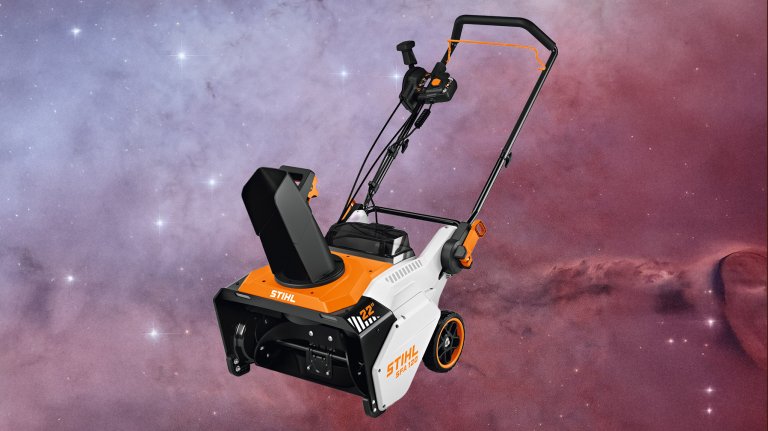
A gas snow blower spends most of the year parked, so the first storm tends to start with stale fuel and a shoulder injury from yanking the cord. The Stihl SFA 120 is the company’s first battery-powered snow thrower. Stihl says it goes on sale November 1 at $699.99 as a bare tool or $899.99 with a battery and charger.

It runs on the same AP batteries as more than 60 Stihl yard tools, and the kit’s battery comes from the new ALLPRO system that won best cordless tool battery system in our 2026 Home of the Future awards. Rubber paddles on a steel auger do the scraping, and a handlebar control swings the chute through 180 degrees without stopping.

Why Stihl went with a rubber auger

Stihl SFA 120 snow thrower
Two battery bays, zero pull cords. Stihl Stihl

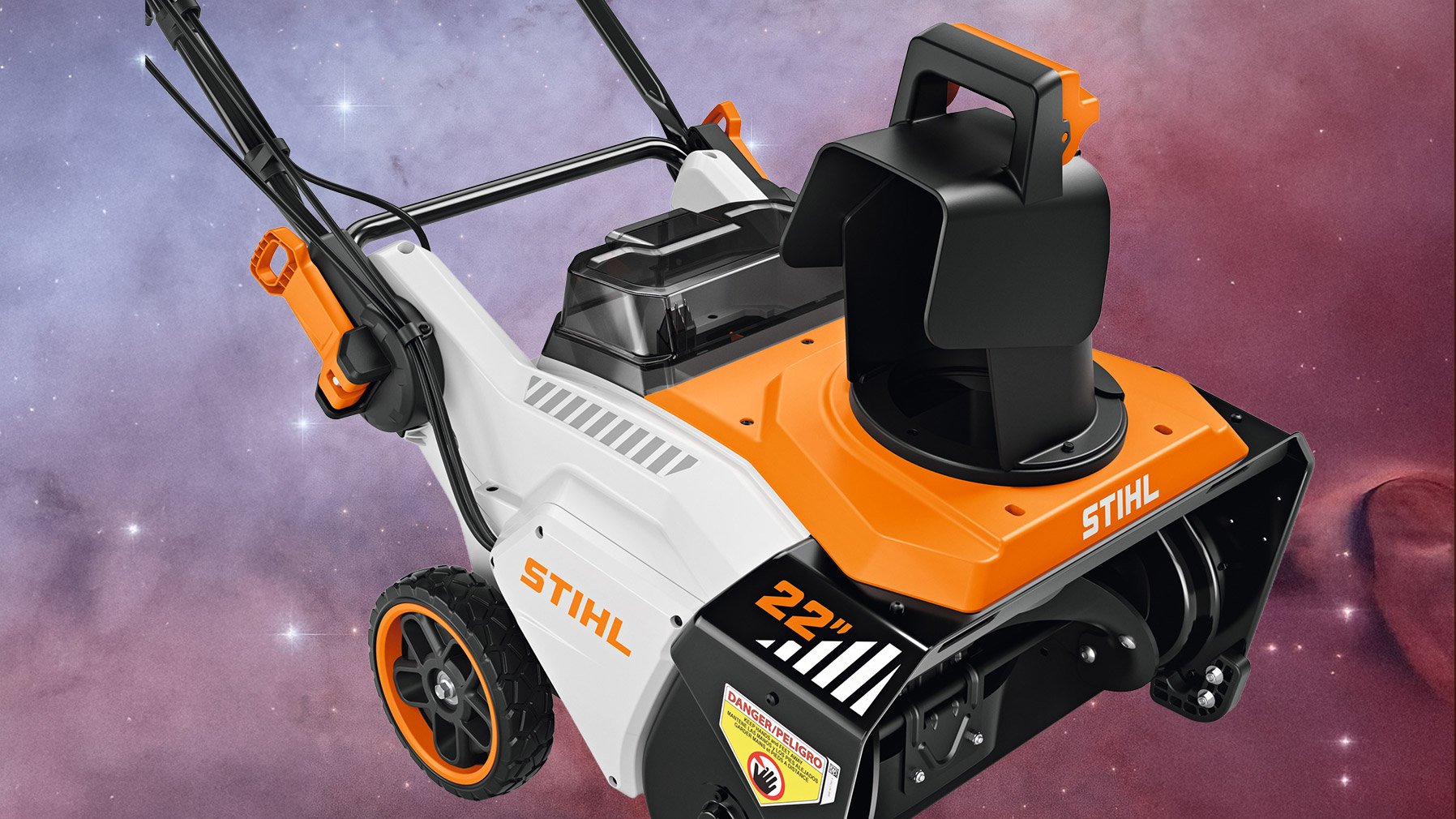
The SFA 120 is a single-stage machine, so one auger scoops up the snow and throws it through the chute. Stihl’s auger is a steel frame with rubber paddles. Louis Danet, Stihl’s product manager for push mowers and snow equipment, says the rubber absorbs the impacts a driveway hands out, which takes stress off the auger. They also reduce noise compared to the steel competition. And because the rubber paddles are designed to be easily replaced, it cuts down on degraded performance over time without requiring a trip to the repair shop.

Those paddles clear a 22-inch path, an inch wider than the 21-inch swath common on battery single-stages. The extra width means fewer passes on a two-car driveway, but every inch is more snow to lift and throw, and that load lands on the battery. Danet says depth and density swing the work so much that Stihl rates the SFA 120 in driveways cleared rather than minutes.

The scraper bar underneath and the two polymer skid shoes on the sides are replaceable too. Past those, there’s no oil to change, no spark plug, and no carburetor to gum up over the summer. Getting the SFA 120 ready for a storm means unfolding the handlebar and sliding in a battery.

A chute you can aim without stopping

The chute rotates through 180 degrees, and the control sits on the handlebar, so you can move the stream from one side of the driveway to the other without stopping or walking around to the front of the machine. Vertical angle is still set by hand, with a quick-release lever on the chute itself.

Two LED headlights point ahead of the auger for clearing before sunrise. When the season ends, the handlebar folds nearly flat, and Danet says the machine can be tipped up on end to take up less floor space. A tool that runs a handful of times a winter shouldn’t eat a parking spot the other nine months.

Two battery bays that take turns

The brushless motor draws from a single battery at a time from a dual-battery bay. When the first pack runs down, it switches to the second on its own, and a single battery works in either slot. Danet says Stihl skipped drawing from both packs at once because that approach is mostly about peak power for commercial machines, and it adds cost. That’s a running theme with this machine, as it’s meant for the consumer market. It intentionally eschews overkill features and power levels that often cost users money they spend for features they don’t need.

Stihl rates the SFA 120 to clear a 7-car driveway in wet, heavy snow or a 10-car driveway in 2.75 inches of fresh snow. Both figures assume two AP 300.0 P batteries, and the $899.99 kit includes one. A second AP 300.0 P costs $329.99 on Stihl’s site as of early October.

Because of the more reasonable power level, this machine isn’t built for clearing a two-foot wall of snow. Instead, the company recommends a few smaller passes during the storm to keep things running smoothly and easily. That’s a better strategy, even with a gas-powered machine.

Going electric

During a Stihl product demo earlier this year, I watched the company use an extremely cold ALLPRO battery with no issue. That may seem like a pedestrian feat, but temperature can have a profound effect on rechargeable batteries. That’s an obvious challenge for a snow thrower, which only gets used in frigid temps.

Lithium-ion cells slow down in the cold. Ions move more sluggishly through the electrolyte, internal resistance climbs, and the pack can’t push out power as quickly, which shows up as a tool that bogs down or quits early on a charge that read full in the garage. Charging a frozen pack is worse, since lithium can plate onto the anode and permanently cut capacity. Danet says finding a battery that holds up in those temperatures was the number one challenge in developing the SFA 120, and that the fridge test I saw is close to what Stihl runs internally. The company doesn’t publish a minimum operating temperature for the ALLPRO packs, so I’m looking forward to getting real world experience during our review.

Stihl SFA 120

Stihl SFA 120 Snow Thrower

See It


If there’s already a Stihl trimmer or blower in the garage, this is the version to get. The bare SFA 120 takes the AP batteries you own, with bays for two, and a single pack works in either slot. You get the same 22-inch rubber-paddle auger, handlebar chute control, and LED headlights, just no battery or charger in the box. One AP 300.0 P battery and an AL 301.1 charger come in the box, about $248 less than buying them separately. The AP 300.0 P is the 333Wh pack from Stihl’s new ALLPRO line, and Stihl’s 7-to-10-car driveway rating assumes you have two of them. We have an SFA 120 coming in for testing once the snow shows up.

The post Stihl built its first battery-powered snow thrower to offer plenty of power with minimal maintenance appeared first on Popular Science.
  •  
❌