Nothing is quite as joyful as watching a dog get caught up in a bout of “zoomies,” zipping around a living room or backyard in a burst of energy. But our canine pals aren’t the only animals subject to these hyperactive displays.
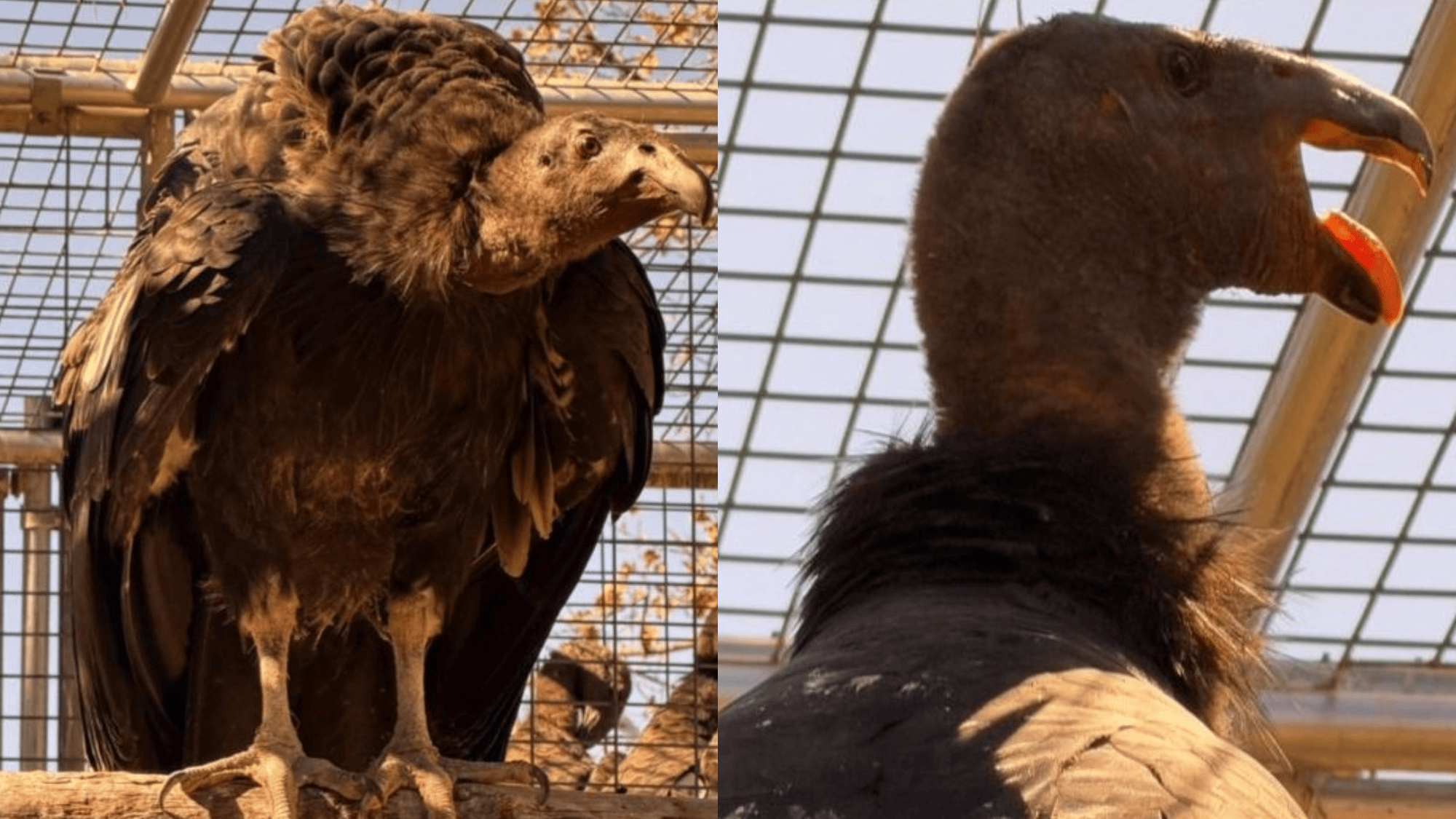
Young condors can also engage in zoomies, as demonstrated in a recent Facebook post from the Ventana Wildlife Society in California. The video shows clips of two young California condors (Gymnogyps californianus), Chert and Pumice, seemingly having a blast in their release pen.
“We observe the zoomies in both captive and wild condors. It’s just a sudden expression of pure excitement for young condors and very fun to watch,” Joe Burnett, California Condor Recovery Program Manager at the wildlife society, tells Popular Science. “Zoomies come out of nowhere and they just can’t contain themselves and totally let loose. They hop, run in circles, or flap around, or all the above! It’s just pure fun!”
It’s not just about the fun, however. Zoomies allow the young condors to release energy and grow stronger, as well as help them figure out their wings, according to the team.
The two zoomie condors are 1.5-year-old males who were raised in zoos before arriving at Ventana Wildlife Society’s San Simeon release pen in early September. It’s called a release pen because Chert, Pumice, and three other captive condors will be kept in the pen to acclimate until their release on October 24 at 10 a.m. The release will also be livestreamed.
The quintet will become a part of the wild condor population of central California, which today includes 104 individuals. But it won’t be a total goodbye. Scientists will be able to keep an eye on Pumice and Chert’s locations via wing-mounted radio & GPS transmitters and ID tags.
California condors are North America’s largest land bird. They measure 9.5 feet from wing tip to wing tip. But their size didn’t spare them from a precipitous population drop. In 1982 there were only 23 condors left in the world. All wild condors were captured and included in a captive breeding program.
“Condor releases are critical to achieving our ultimate goal- to reestablish a self-sustaining condor population in the wild,” Burnett concludes.
At the end of 2025, there were 607 California condors. We’d say Pumice and Chert earned their right to party.
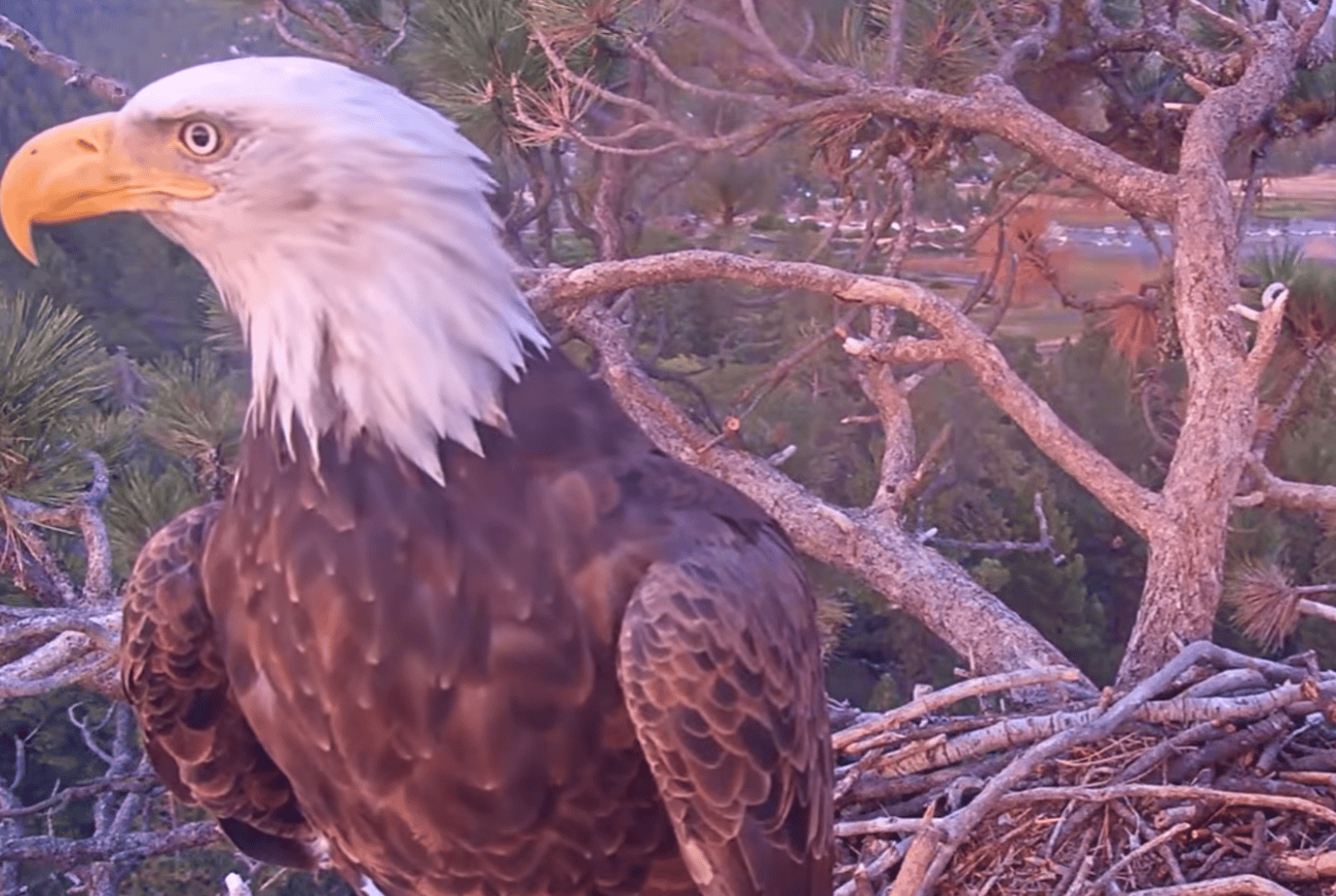
The Ojai Raptor Center released the final necropsy results for Jackie, an internet-famous bald eagle mother who was in their care this summer. Jackie was brought into the bird rehabilitation center weak and dehydrated following an altercation with another eagle in July.
Officially designated as Patient 26-519, Jackie’s necropsy revealed a “complex and unusual disease process involving severe, chronic inflammation and ulceration of the stomach, persistent internal bleeding, anemia and secondary bacterial sepsis.” She was also diagnosed with Highly Pathogenic Avian Influenza (HPAI) commonly called bird flu, which was behind severe stomach ulceration. Raptors (eagles, hawks, falcons, owls, etc.) are highly susceptible to the virus
All of these medical complications developed over time and ultimately contributed to her death on August 10.
“These findings have helped connect many of the pieces we were seeing throughout her hospitalization and provided a better understanding of the challenges she faced,” the Ojai Raptor Center wrote. “We are grateful to the many veterinary specialists, laboratories, wildlife agencies and partner organizations who worked alongside our team to understand her illness and provide her with the best possible care. Caring for her was an extraordinary privilege for our entire team.”
The full report can be read in Jackie’s veterinary medical journal. The necropsy was preformed by veterinary pathologists at the San Diego Zoo Wildlife Alliance.
Friends of Big Bear Valley (FOBBV), the non-profit organization that runs the live cameras where viewers from all over the world watched Jackie and her partner Shadow, said that they will follow up with their thoughts once their team has had time to process the report.
“The story of the Big Bear bald eagle reflects the powerful connection people feel to these iconic birds,” California Department of Fish and Wildlife Director Meghan Hertel added. “We’re grateful to everyone who cared for her and worked to support her well-being. Understanding the results of these tests is an important part of learning from this case and can help inform the care and treatment of other eagles and wildlife in the future.”
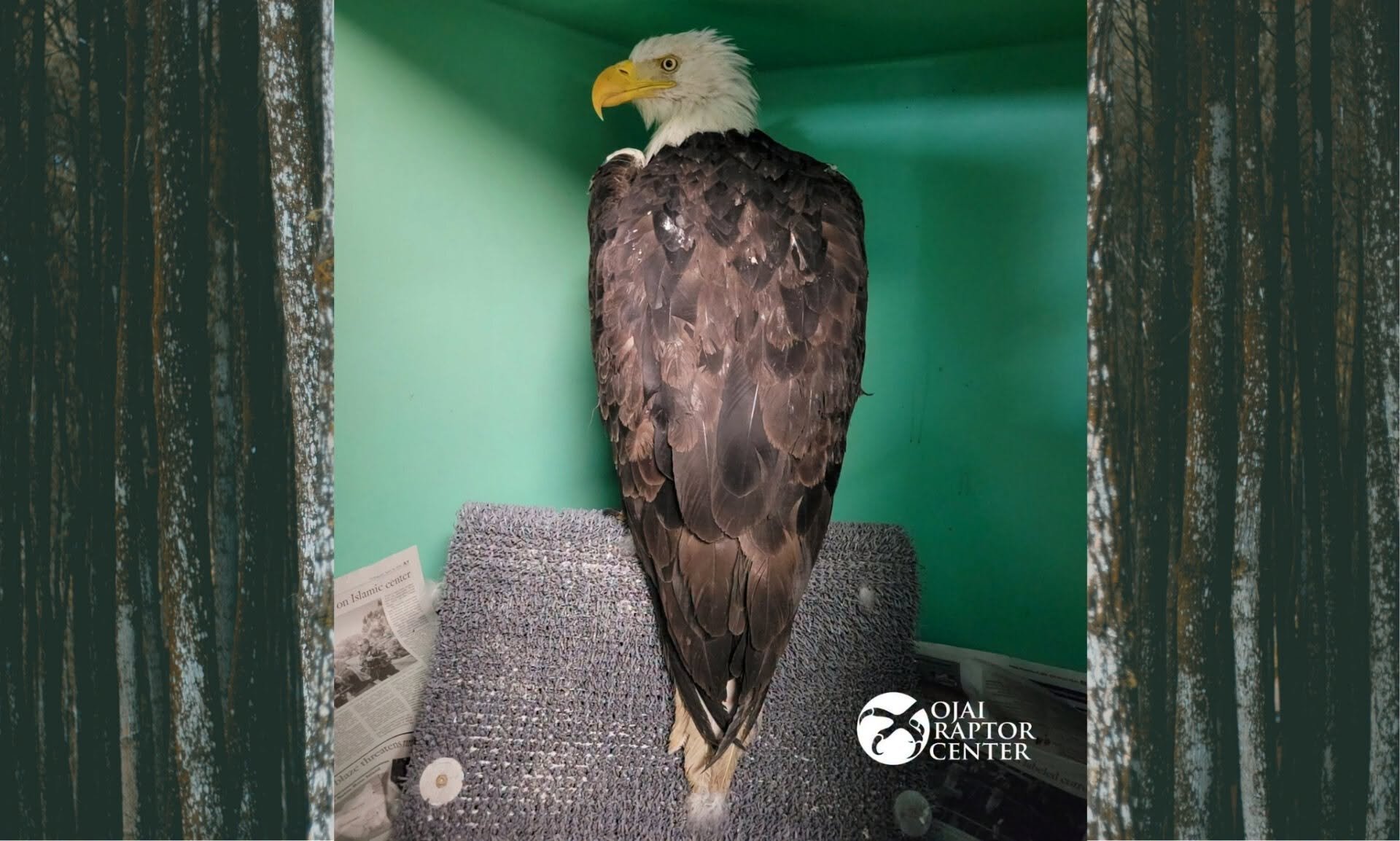
Jackie on a perch at the Ojai Raptor Center in July. Image: Ojai Raptor Center.
Jackie’s story
Jackie was born, raised, and lived in Big Bear Valley in Southern California. Prior to the 2011-2012 nesting season, no bald eagle chicks were known to have ever hatched in Big Bear Valley. Then came Jackie, named after a forest ranger and born to parents Ricky and Lucy in 2012.
During the 2016-2017 nesting season, Jackie took over a nest where Friends of Big Bear Valley (FOBBV) had a camera stationed. In 2018, she had two chicks named Stormy and Big Bear Baby (or BBB) with her first mate, Mr. B.
Her long-time partner Shadow entered the picture in summer 2018. He showed up at the nest and would not leave. FOBBV called the new male Shadow because he appeared so determined to stay in the nest, and the team initially believed he was one of Jackie’s siblings, also named Shadow. The eagle’s plumage indicated he was one year older than the other Shadow and not Jackie’s sibling, but the name stuck.
Shadow continued to hold his ground and Mr. B gave up and eventually left. Jackie then accepted Shadow as her new mate.
Wildlife cameras documented Jackie and Shadow’s life together, offering viewers a direct look into the brutality and beauty of nature. The pair successfully raised chicks in 2019 (Cookie and Simba) and 2022 (Spirit). The pair’s eggs failed to hatch in 2023 and 2024. In 2025, Jackie laid three eggs that all hatched in early March. However, a strong snowstorm dumped up to two feet of snow and battered the nest with strong wind and only two of the chicks (Sunny and Gizmo) survived.
In January, Jackie laid two eggs in the nest, but ravens destroyed them. She later laid two more eggs that hatched in April and named Luna and Sandy. The name Sandy is in honor of FOBBV’s former executive director Sandy Steers who died from cancer in February.
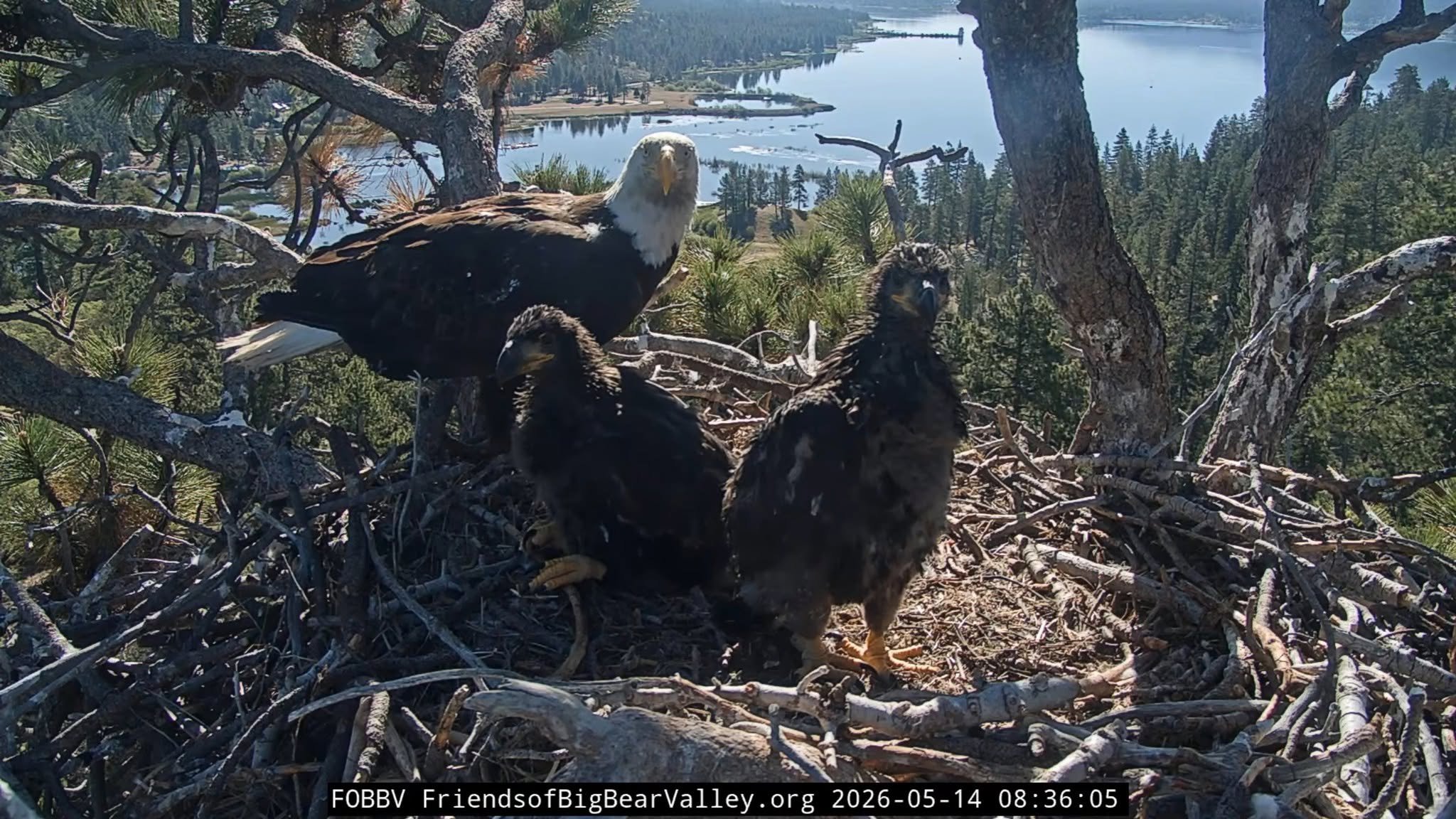
Jackie, Luna, and Sandy on their nest in May 2026. Image: Friends of Big Bear Valley.
Jackie’s injury and death
On July 17, Jackie was found injured on the ground near Dana Point Park, California. Cell phone video from a witness confirmed that she had an altercation with two other subadult eagles. She successfully fended off the other eagles by turning over and using her talons, but could not fly far away.
She was transferred to the Ojai Raptor Center, where she was diagnosed with severe anemia. Her anemia worsened during the first week of August, the Ojai Raptor Center said that she was in unstable condition on August 9. Her packed cell volume (PCV) fell below percent, before rising to nine percent.
On July 17, Jackie was found injured on the ground near Dana Point Park, California. Cell phone video from a witness confirmed that she had an altercation with two other subadult eagles. She successfully fended off the other eagles by turning over and using her talons, but could not fly far away.
She was transferred to the Ojai Raptor Center for care, where she was diagnosed with severe anemia. Her anemia worsened during the first week of August, the Ojai Raptor Center said that she was in unstable condition on August 9. Her packed cell volume (PCV) fell below percent, before rising to nine percent.
Jackie died early in the morning on August 10. The necropsy did not reveal a single cause of death, and instead pointed to several factors including severe anemia, blood clots in her wing and one kidney, and liver and lung abnormalities.
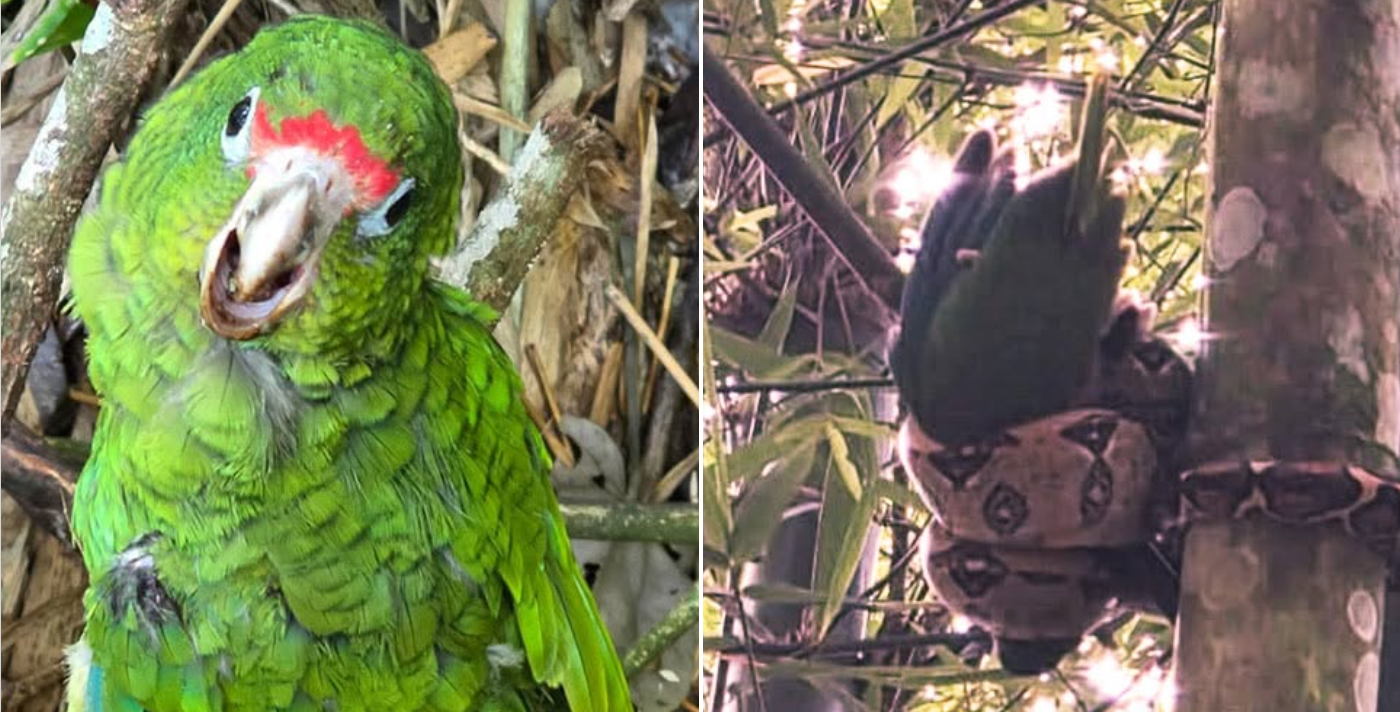
In the Maricao State Forest on the western end of Puerto Rico, a biologist encountered a flock of parrots in a panic. Raúl Correa of the U.S. Fish and Wildlife Service followed the chaotic squawks and found a young bird in the grips of a red-tailed boa (Boa constrictor).
The snake had trapped a juvenile Puerto Rican parrot (Amazona vittata) on a bamboo stalk. Correa quickly sliced the bamboo, causing the snake to lose its grip and release the bird. USFWS observed the parrot after the incident to ensure it didn’t suffer any lingering injuries. Just a day later, the bird returned to flying with its flock.
Red-tailed boas are considered an invasive species in Puerto Rico. Native to South America, they came to the island in the 1990s through the illegal exotic pet trade. Without anything above it in the food chain, the snakes spread rapidly and have caused widespread damage to native wildlife populations, including the critically endangered Puerto Rican parrot.
Puerto Rico is also home to a native boa (Chilabothrus inornatus) that is smaller in size. The native Puerto Rican Boa can grow up to 7 feet long. By contrast the invasive red-tailed boa can grow over 10 feet and has introduced viruses to native snake populations on the island, according to a 2023 study.
“Experience has shown that island ecosystems are particularly vulnerable to snake invasions, and unfortunately Puerto Rico has no natural predators that can keep the numbers of these prolific, snakes in check,” said USGS Director Marcia McNutt. “Humans were responsible for introducing this scourge to the island, and are the only hope for mitigating the problem before it is too late for the native species.”
Different places have deployed a variety of tactics to remove invasive snakes species, including Florida that hosts an annual Python Hunt. The contest allows both amateur and professional hunters to kill invasive Burmese pythons (Python bivittatus) for prize money.
Ecuador’s Galapagos Islands are home to an incredible array of wildlife. Amid landscapes of black lava fields, scattered prickly pear cacti, lush highlands, and green mangrove fringes, you’ll spot lumbering land iguanas in striking shades of yellow, orange, and red, comical blue-footed boobies, and some of the pinkest flamingos around. But it turns out that these magnificent creatures aren’t born with their vibrant hues. They actually have to work for them!
To find out why some wildlife changes color according to their diets, and what these various tones and tints mean for survival,Popular Science turned to Jorge Alex Gutierrez Guerrero, an expedition leader on the Galapagos Islands’ Yacht Isabela II. Guerrero says it all comes down to naturally occurring pigments that play a major role in an animal’s immune system. They can even change the color of your skin!
What are carotenoids?
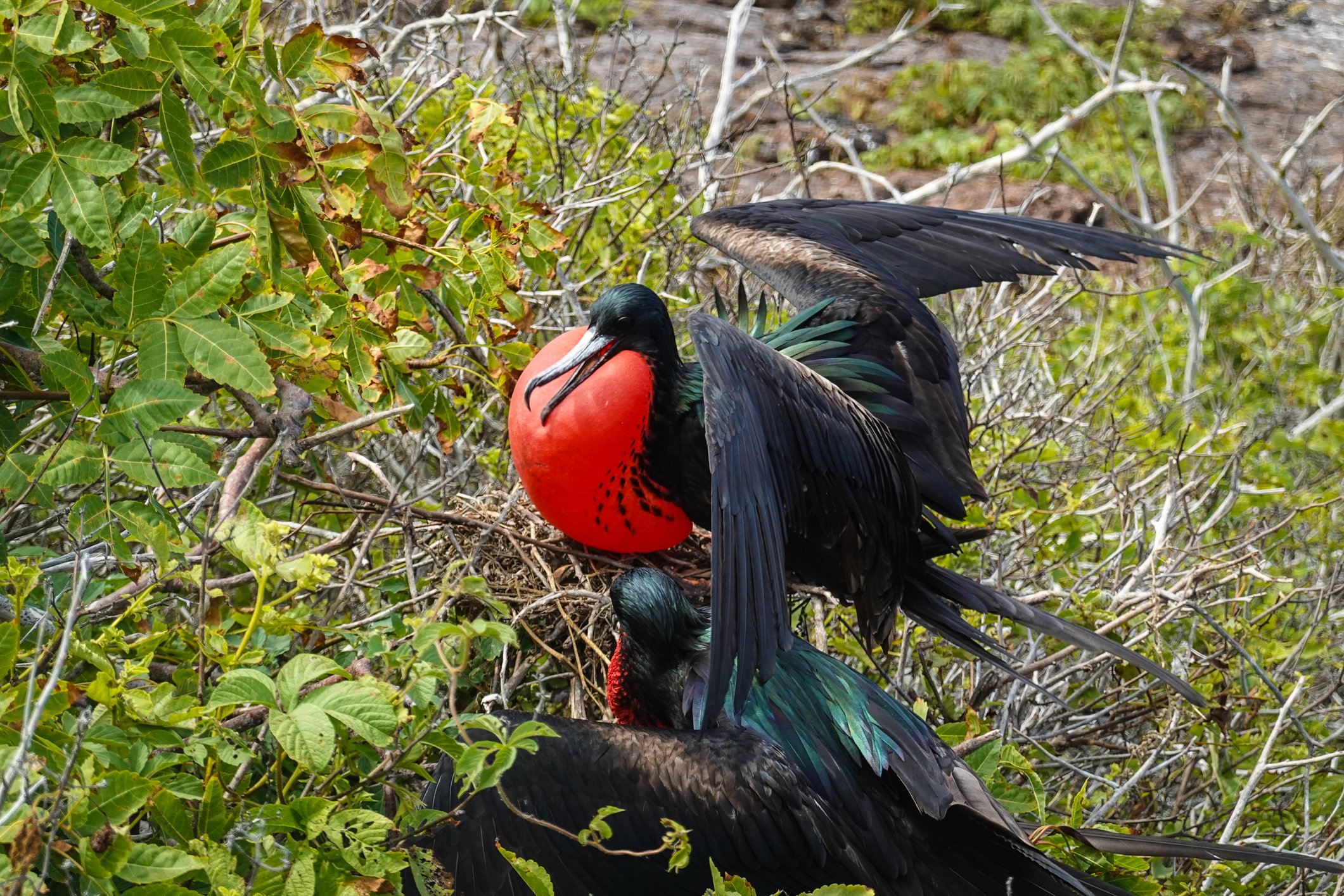
The colorful displays of Galapagos wildlife, including the bright cyan feet of blue-footed boobies and the impressive red throat pouch of magnificent frigatebirds that they inflate during courtship, are a direct result of their diet. Specifically, they result from the digestion of nature’s own punchy dyes known as carotenoids.
“Basically, carotenoids are natural pigments produced by plants, algae, and phytoplankton,” says Gutierrez. These organic chemical compounds play a vital role in nature. They help capture light for photosynthesis, which is how plants use sunlight to make their own food. They act as powerful antioxidants that can protect cells from damage. And they provide the vibrant colors that many animals, birds, and fish need to survive.
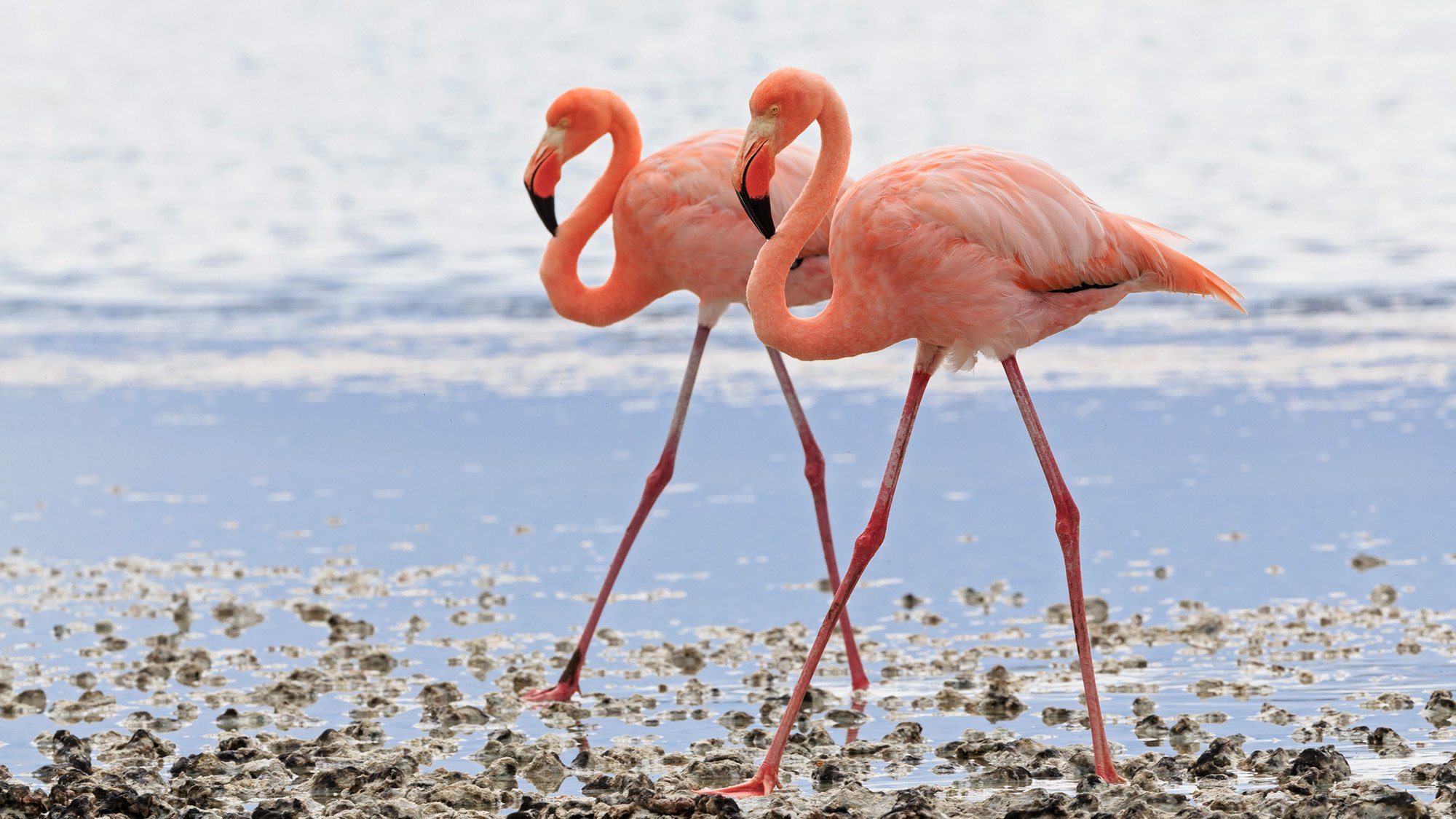
For instance, flamingos gradually lose their red pigmentation when their diet lacks carotenoids. According to Gutierrez, this is a perfect example of the “direct relationship between dietary carotenoids and coloration.”
Frigatebird with its inflated bright red pouch on the Genovesa island in the Galapagos. Image: @ Didier Marti / Getty Images Didier Marti
How Galapagos animals get their colors
Wildlife in the Galapagos gets carotenoids primarily through their diets, since these are pigments that they can’t produce naturally. The archipelago’s land iguanas eat cactus flowers and leaves to obtain carotenoids, while blue-footed boobies consume fresh fish like sardines and anchovies to acquire them. Pink flamingos get their fill of carotenoids through algae and brine shrimp.
Once the wildlife digests and metabolizes these natural pigments, the colors of carotenoids, which primarily produce shades of red, orange, and yellow, begin to show in everything from skin and shells to feet and feathers. In many cases, the more brilliant the shades, the healthier the creature. While carotenoids don’t naturally create the color blue, the archipelago’s iconic blue-footed boobies get their turquoise feet from a mix of yellow carotenoid pigments and the collagen structure of their skin.
How other animals get their vibrant hues
Examples of the power of carotenoids even exist in our own backyards.
The sunny yellow coloring of an American goldfinch is a direct result of its carotenoid-rich diet of summer weeds and sunflowers, while northern cardinals get their brilliant red hue through carotenoid-heavy foods such as honeysuckle, hackberries, and seeds.
Why do animals need carotenoids?
Carotenoids aren’t a core nutritional necessity. However, they are an important source of vitamin A, a key component in reproductive health, good vision, and a strong immune system.
While the bulk of birds and animals get carotenoids through their diets, a few rare invertebrates, like spider mites and gall gnats, can create their own carotenoids. They do so through a rare genetic accident, likely caused by a virus or parasite. An ancestor of the spider mite and an ancestor of the gall gnat had close encounters with ancient fungi, causing a horizontal gene transfer. Essentially, horizontal gene transfer is the transmission of DNA between different organisms—and, in this case, species.
Every animal processes these pigments slightly differently. For some animals, carotenoids completely change the color of their features. Others simply absorb carotenoids without changing color at all.
But all animals use carotenoids to fight off disease, such as boosting immune cells to destroy any harmful bacteria. Only healthy wildlife can spare excess carotenoids for bright skin, beaks, or feathers. So the more vibrantly hued birds, reptiles, and fish are, the healthier their immune system. They have enough carotenoids to spare for flashy colors.
For instance, blue-footed boobies with electric, turquoise-blue feet tend to be healthiest. In fact, boobies that go without food for a couple of days can end up with dull-colored feet. When animals get sick, they also lose their hue. First, their bodies divert carotenoids away from exterior features, like skin and feathers, and use them for fighting illness. Second, absorbing nutrients such as carotenoids becomes more difficult. Without carotenoids, an animal’s bright pigments will quickly fade.
Bright colors also come in handy during mating rituals
Carotenoids also play vital roles in mating rituals. When it comes to blue-footed boobies, “It’s very important for a female to find a male with the brightest blue feet, because she is choosing the best provider” for her offspring, says Gutierrez.
It’s a feature that these marine birds show off frequently in their oh-so-quirky mating dance, which includes an elaborate high-step strut. The bluer the feet, the more attractive males appear to their female counterparts.
Male blue-footed boobies do an elaborate mating dance for the ladies to show off their bright blue feet. Maybe there’s a reason Elvis sings about his blue suede shoes? Video: The Blue Footed Boobies Mating Dance | Wild Love, Nat Geo Animals
What’s more, a famous 2006 scientific study on blue-footed boobies showed that females lay smaller eggs for males with duller feet. Basically, a female will put in less reproductive investment if her male isn’t up to par.
Why are animals in the Galapagos so colorful?
“Carotenoids are prominent all over the world,” says Gutierrez. “But they’re especially visible among wildlife in the Galapagos, because it’s a limited environment where the ecosystems are well-marked.” What Gutierrez means is that the archipelago is so geographically isolated and far from the coast of Ecuador, many species—like marine iguanas—have nowhere else to go. Even within the Galapagos, a large percentage of wildlife stick closely to their specific islands.
Another reason the animals here are so colorful? Because an overall lack of predators has allowed the wildlife to evolve without needing dull or camouflage coats to protect them.
Most of the archipelago’s carotenoids come from the ocean, or in the case of land iguanas and yellow-beaked Darwin’s finches, through cactus nectar and pollen.
Further afield, the iconic pink-orange flesh of Pacific Northwest salmon is a direct result of their carotenoid-rich diet—in their case, chowing down on krill and small shrimp. Roseate spoonbills, found across the mangrove swamps, mudflats, and wetlands of the U.S. Gulf Coast, get their rosy pink sheen from dining on crustaceans, crabs, and crayfish.
The best known example comes from consuming carrots. These vegetables are loaded with a red-orange carotenoid called beta-carotene, which our bodies convert into vitamin A.
But when we consume more beta-carotene than we need, the excess pigment starts circulating in our bloodstream and leads to a yellow or orange glow. “It’s mostly visible in your palms,” says Gutierrez.
Still, he says, don’t worry if you have a penchant for sardines and anchovies—the main diet of blue-footed boobies. Since humans process and metabolize these compounds differently, “you’re not going to turn blue, too.”
In Ask Us Anything, Popular Science answers your most outlandish, mind-burning questions, from the everyday things you’ve always wondered to the bizarre things you never thought to ask. Have something you’ve always wanted to know? Ask us.
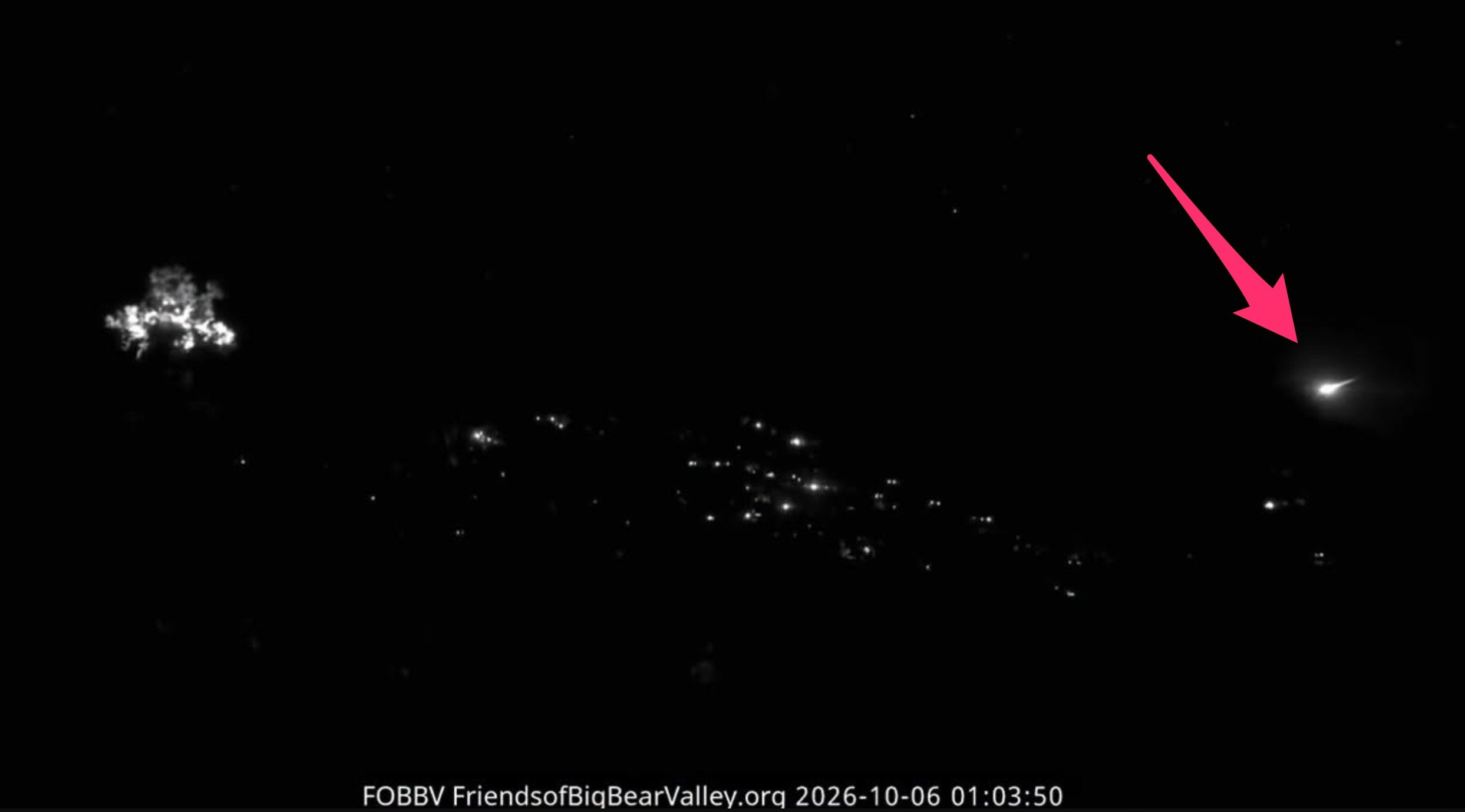
During the still night above California’s Big Bear Valley, a meteor recently soared across the sky. Cameras stationed to document the lives of the area’s bald eagles captured an image of the fireball on its journey.
“This morning in the wee hours, a quiet meteor flashed across the night sky. It moved at incredible speed, vanishing in the blink of an eye while the inhabitants of the valley slept,” FOBBV wrote. “This is another reminder of the beautiful land that our eagles and friends inhabit. Nature surrounds us everywhere; in the skies, in the trees, and beyond.”
This year has been an eventful year for Big Bear Valley’s bald eagles. In January, bald eagle mom Jackie laid two eggs that ravens attacked and consumed. She later laid a second clutch of two eggs that both hatched in April. Tens of thousands of fans followed the chicks’ journey as Jackie and her longtime partner Shadow raised the pair. All seemed well on the nest in July when it Jackie disappeared from the cameras’ views.
The meteor lit up the dark skies for a brief moment. Image: FOBBV
On July 17, Jackie was found injured on the ground near Dana Point Park, California. Cell phone video from a witness confirmed that she endured a scuffle with two subadult eagles. After being transferred to the Ojai Raptor Center for care, she was diagnosed with severe anemia. Her anemia worsened during the first week of August, and the Ojai Raptor Center reported that she was in unstable condition on August 9. Jackie died early in the morning on August 10. A memorial for Jackie was held this past weekend at Bear Mountain Ski Resort in Big Bear Lake, California.
Shadow and Kaydee were not in the nest when the meteor passed overhead. Without eggs or chicks to care for, most bald eagles sleep in other trees like the nearby Roost Tree. According to FOBBV, the pair spent the morning moving from the Roost Tree to the Lookout Tree before settling to perch on the Twin Pines that afternoon.
It’s not clear what will happen between Shadow and Kaydee, but after an eventful year in Big Bear Valley, a moment of peace under a celestial light show is a welcome pause.
Tune into FOBBV’s livecams for glimpses of the duo.

 Login