Login

Porsche’s electric Macan Turbo is an automotive existential crisis
The 2026 Porsche Macan Turbo EV is a two-row crossover with 630 horsepower and a 100-kilowatt-hour battery.

Tough times can fuel innovation, and battle-hardened Ukraine has demonstrated that fact of life more than most places in recent years. Since Russia’s invasion in February 2022, the country has utilized drones and robotics in ways not before seen in large-scale warfare. More recently, Ukraine has introduced a variety of remotely controlled ground vehicles tasked with entering contested territory and resupplying areas or even evacuating wounded troops. But while those wheeled robots help keep soldiers off the front lines, they are also vulnerable. Their air-filled tires are particularly vulnerable, since they can be shot at or break when rolling over barbed wire, shrapnel or even rugged debris. To solve that issue, engineers from a pair of Ukrainian companies developed a new type of 3D-printable tire that doesn’t require any air at all. And it’s already being deployed on front lines.
The airless wheel is the result of a collaboration between two Print&Live UA, and iSCALE 3D. Their design is proposed to be built for Uncrewed Ground Vehicles (UGV) that come in various shapes and sizes depending on their task. Instead of a rubber casing filled with pressurized air, these new wheels are 3D printed around a lightweight internal lattice made from durable elastomers and composite polymers. The lattice flexes and springs back over rough terrain, essentially doing the cushioning work that air pressure does in conventional tires, but without the risk of a sudden debilitating puncture.
The tires also feature a rounded tread and enclosed sidewalls which are meant to keep mud, stones and ice from packing in. According to Print&Live UA and iSCALE 3D, the result is a wheel set far lighter than Western airless alternatives and that keeps working even after taking some damage. Fewer blown out tires, they say, could mean more lives saved.
“The most important mission of a UGV is not spectacular—it is bringing a wounded person back, or water, medicine and supplies forward,” the companies write on their websites. “Every immobilized vehicle puts people at risk. That is the real purpose of this development.”
“One puncture and the mission ends where the machine stops,” they add.
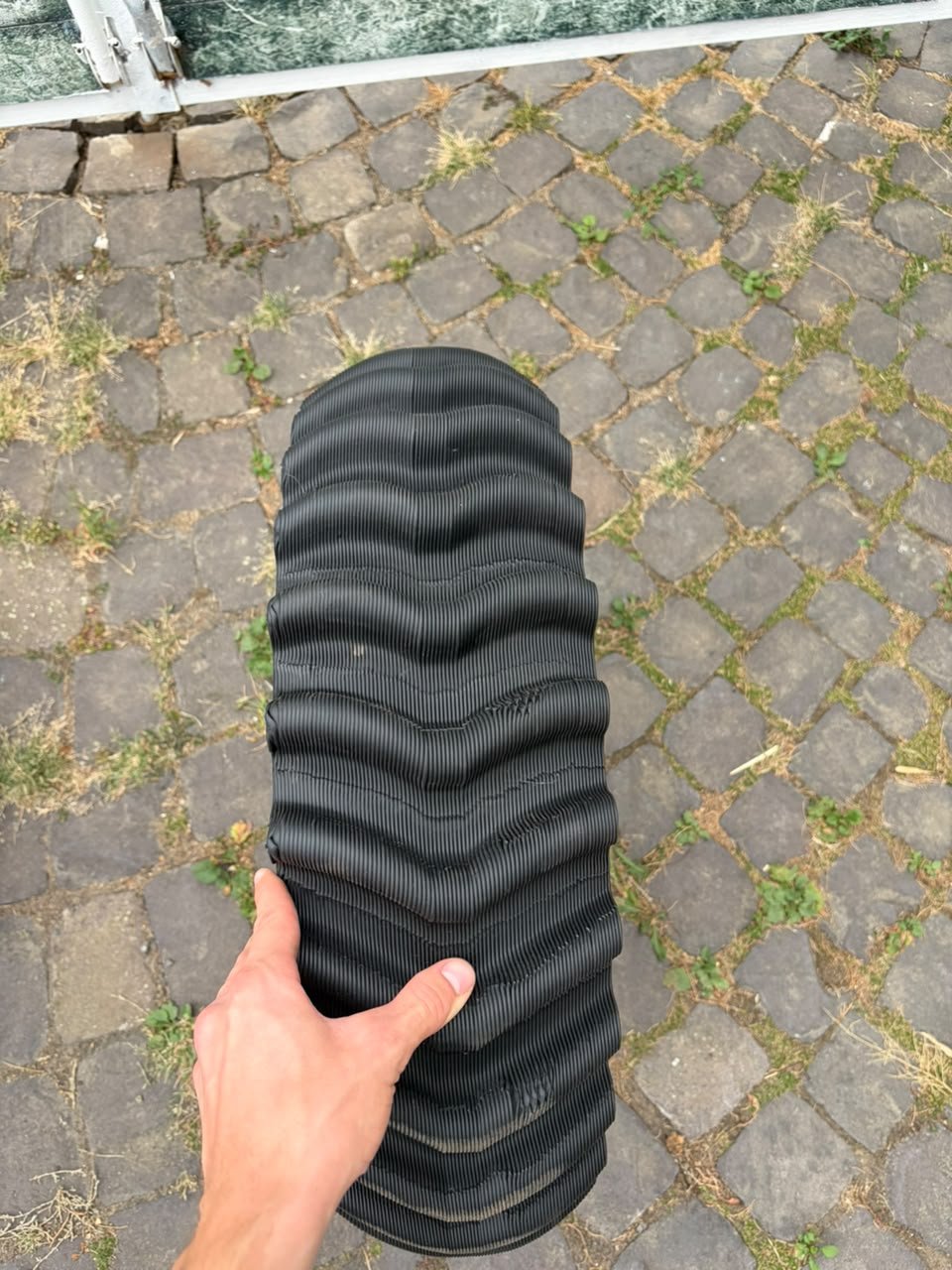
In addition to the airless design, the 3D printing process makes the new wheels more adaptable. Each set can be tinkered with and adjusted to best suit the type of vehicle they will be equipped on, as well as for the specific mission type they might engage in. Stiffness, shock absorption, and overall geometry can all be tweaked on a computer. The process requires large, industrial-scale printers most hobbyists won’t have in their garage, but it’s still a much smaller, nimbler approach than an entire factory built to roll out one specific product.
“Because the geometry is digital, stiffness and damping are programmed for each UGV type and payload, and a design upgrade is nothing more than a new file,” the companies write.
The engineers also designed these wheels with the chaos of a battlefield in mind. Each two-piece rim set lets soldiers swap out a damaged tire without the tire-changing machines or presses a conventional repair would need. That flexibility means soldiers can repair or swap tires with simple hand tools in battlefield areas where full workshops aren’t available.
Airless UGV wheels are just the latest in a growing list of creative fixes forced by the Russia-Ukraine war. The constant need for better drones and robots has turbocharged the country’s tech sector, which has grown from a handful of defense companies before the invasion to hundreds today. Most of the companies building out the new hardware are Ukrainian, but the war has also attracted a number of American defense startups that have set up shop there, drawn in by the change to their designs in the real world. The country’s capital city has attracted so much tech sector interest that some have even ascribed it the moniker: “Mil-Tech Valley.”
The post Ukraine’s military robots are getting tires that can’t go flat appeared first on Popular Science.

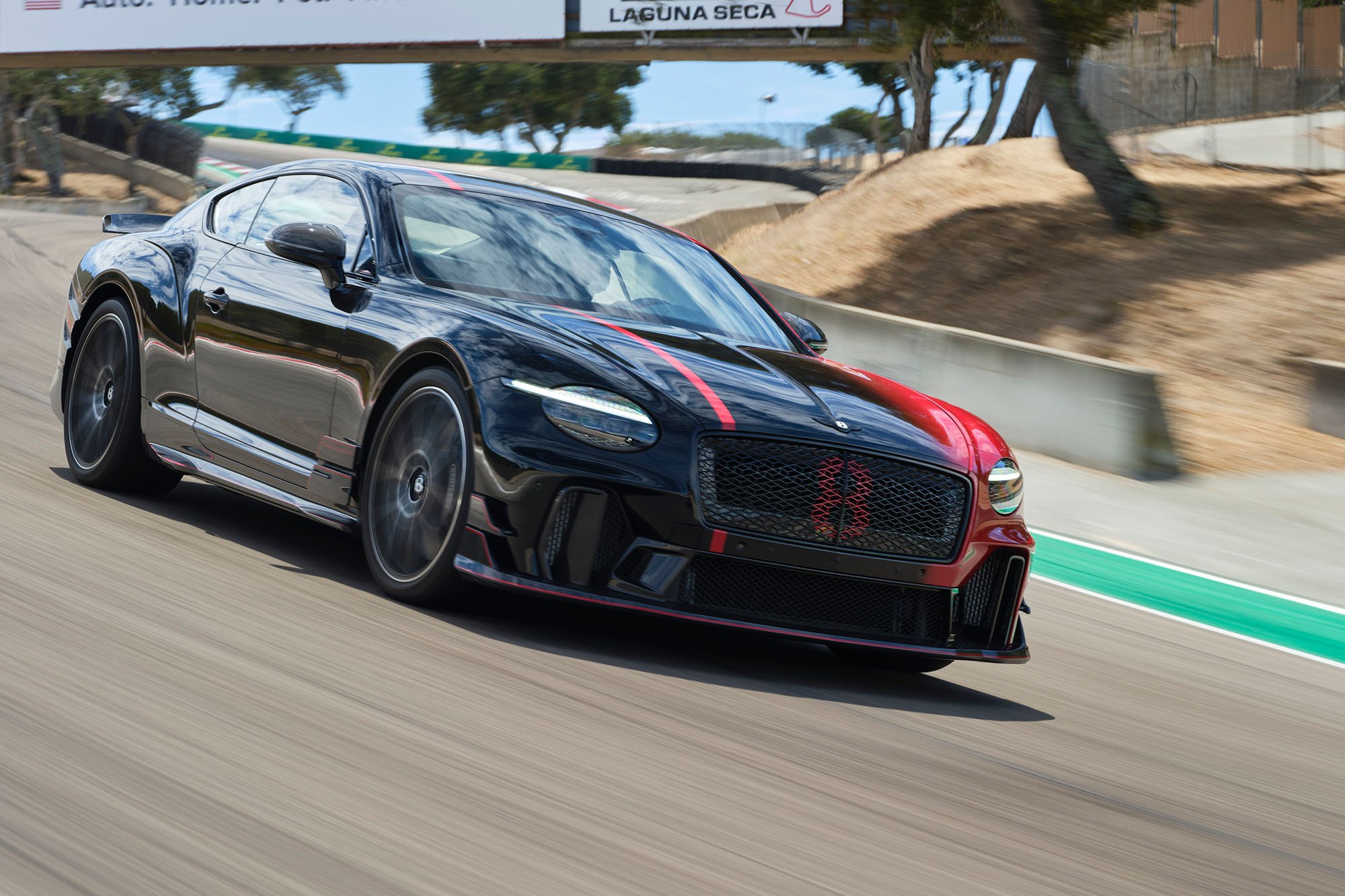
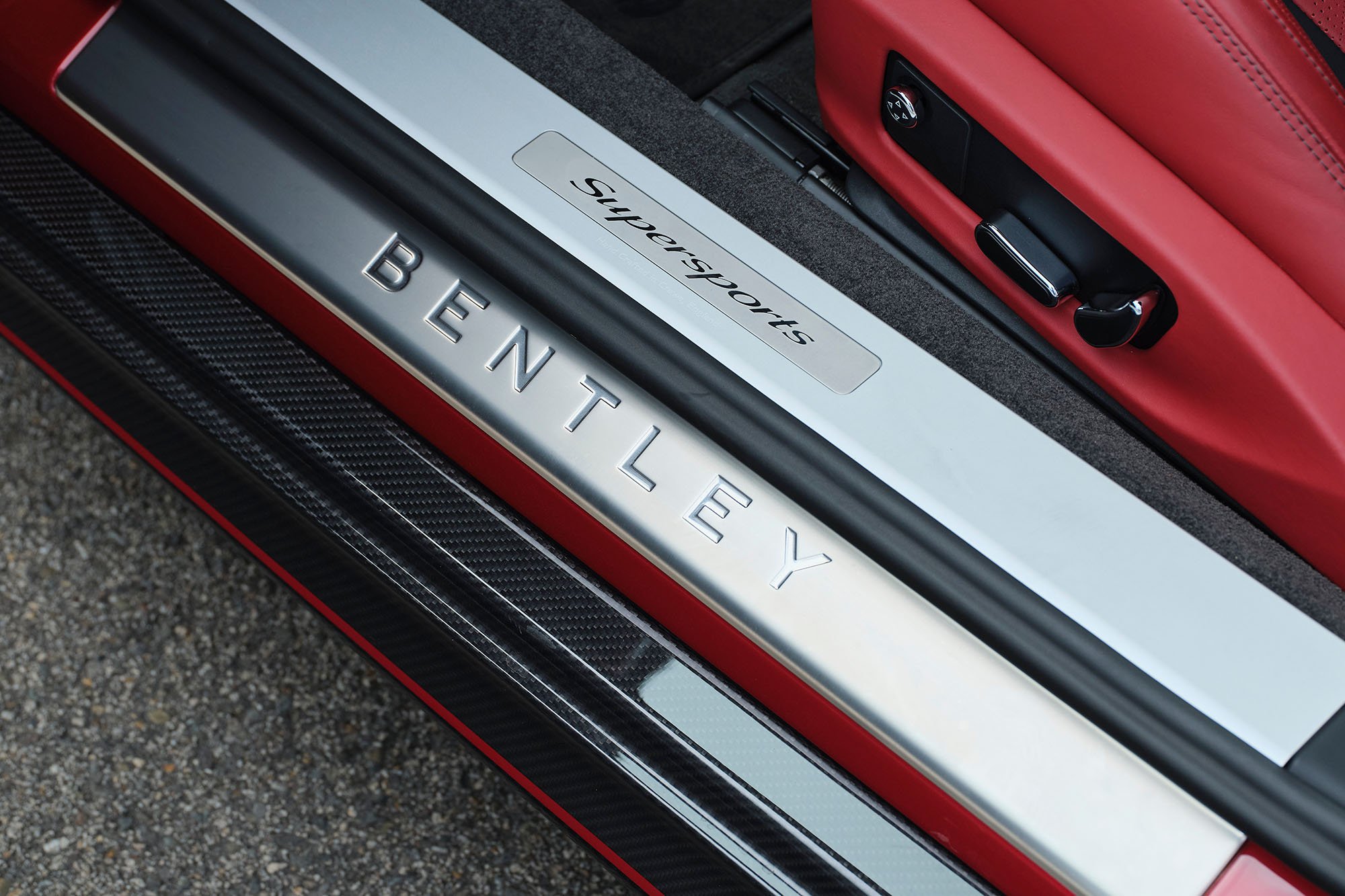
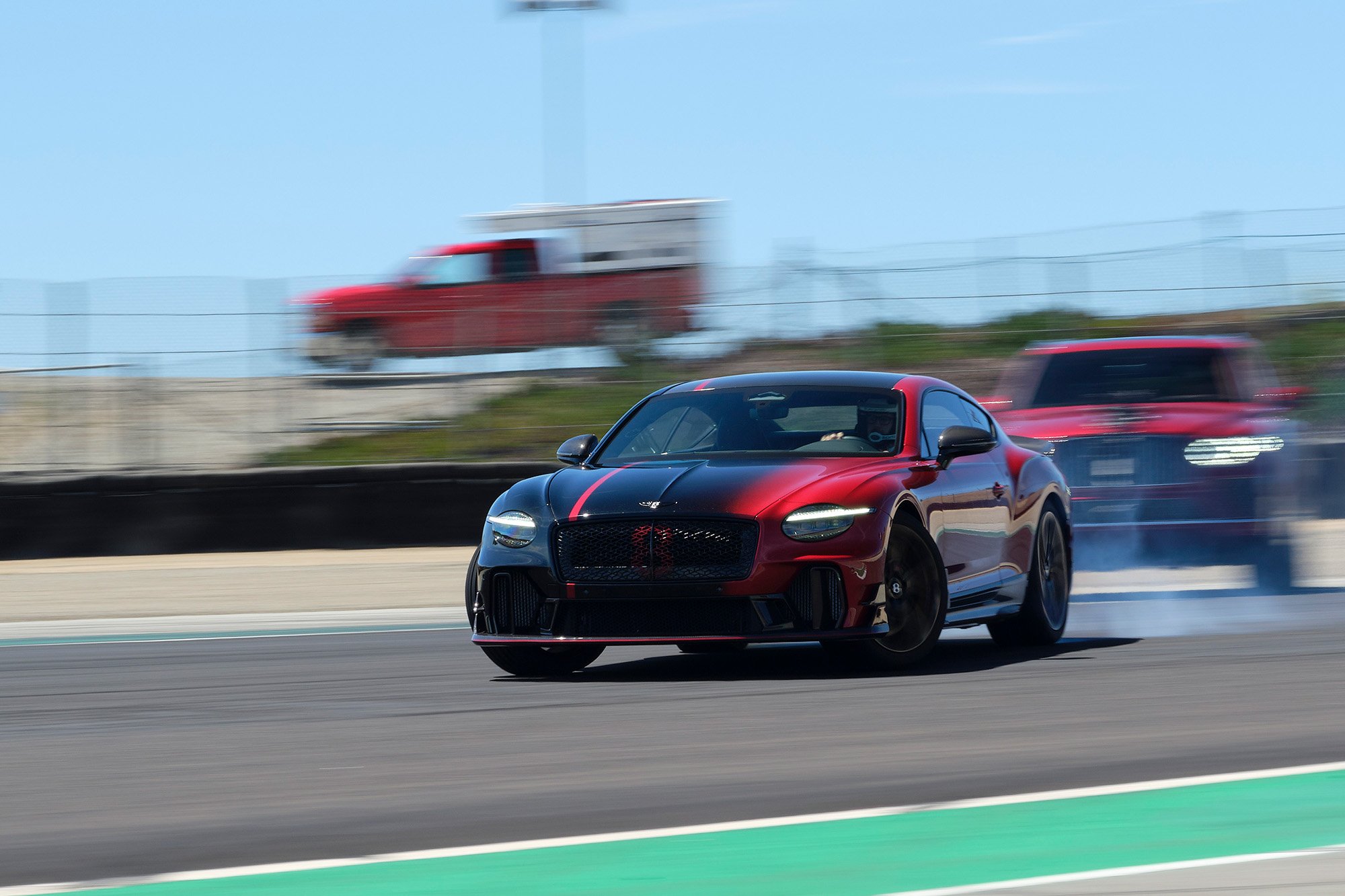
“Less is more” may seem a curious phrase when applied to a half-million-dollar, 199-mph, 657-horsepower twin-turbocharged V8 brute. But in the context of the posh luxury barges we expect from British automotive manufacturer Bentley, it’s applicable to the 2026 Bentley Supersports.
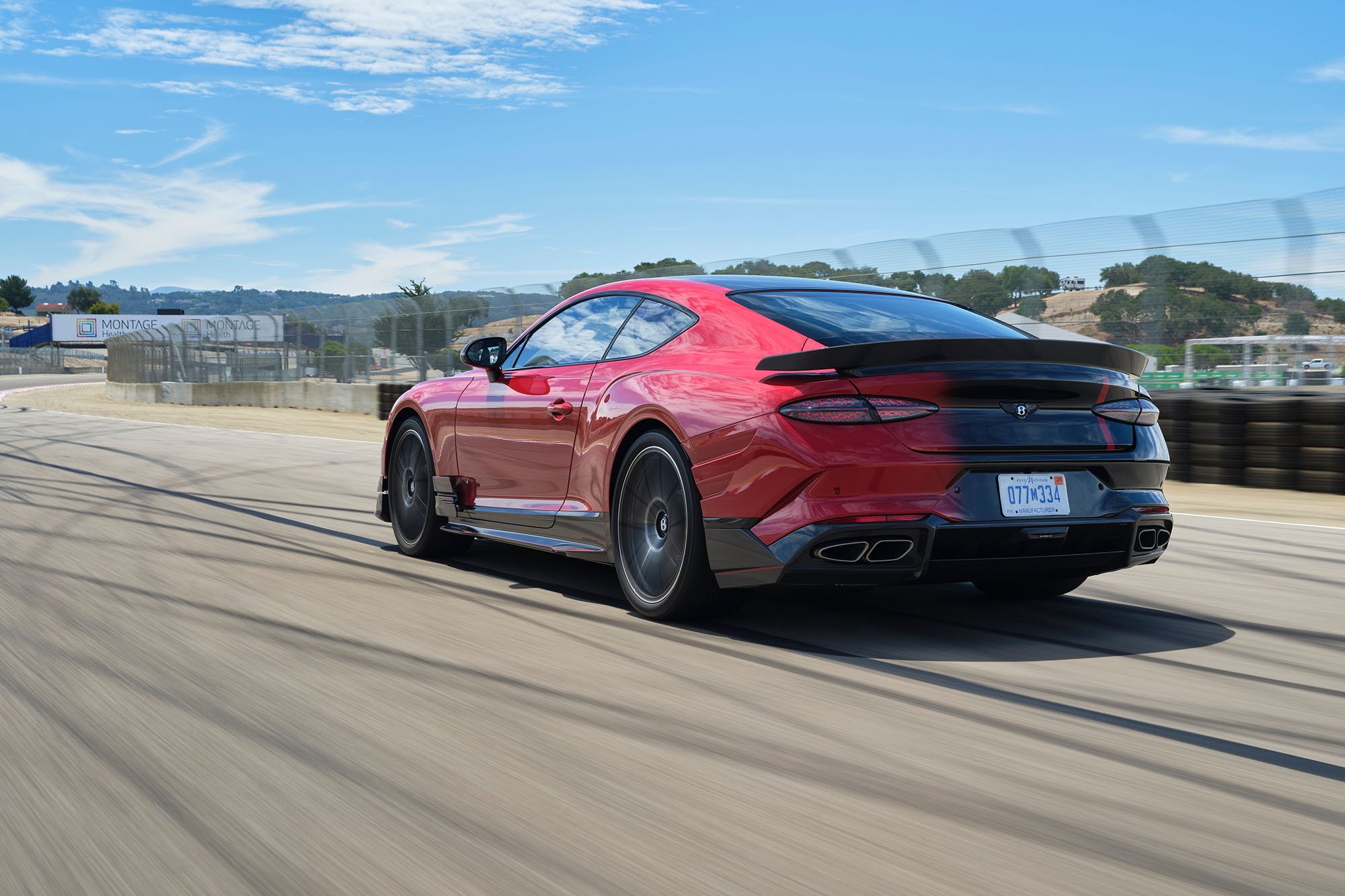
That is because this car is as notable for what it lacks as for what it has. The Supersports is a rear-drive, combustion-only version of the Bentley Continental GT. But where that car has always employed all-wheel drive, and the current generation uses a hybrid-electric powertrain, the Supersports is the result of a “what-if” project by Bentley engineers.
They wondered what was possible if they stripped the heavy all-wheel-drive and hybrid systems from the Continental GT and built a purely combustion-powered rear-drive car with track driving in mind. The answer is the Supersports.
“Half-million dollars” is an approximation. The official starting price in the US is $486,600, but Bentley has already sold the entire production run, and every car has been customized, ensuring none of the cars actually sold for the list price.
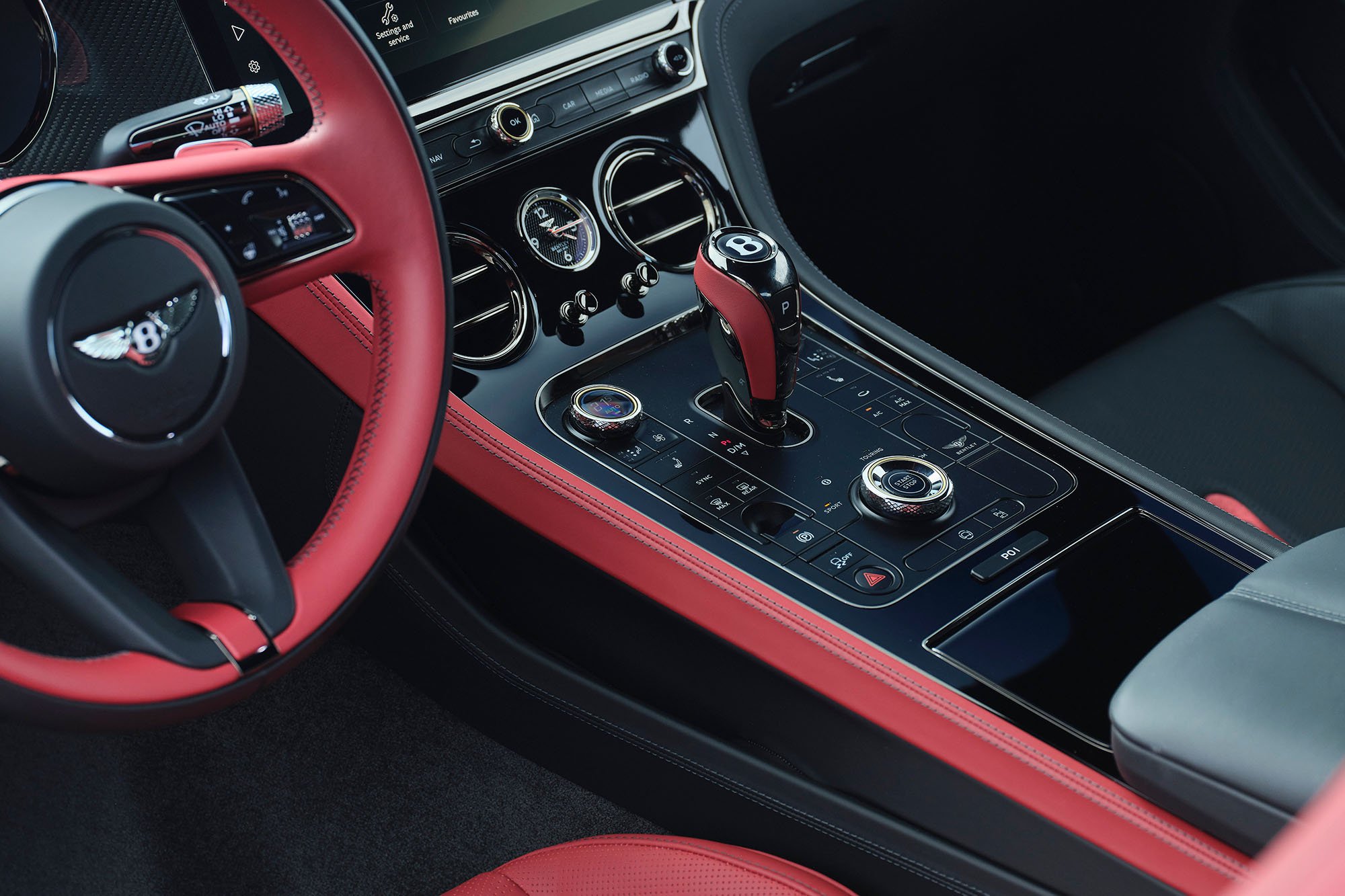
“Each client that has ordered a car has worked with our Mulliner division [which provides personalization] on co-creation,” said Rocco. Even while confirming that less is more, it doesn’t hurt to add a few extra goodies.

The same hybrid-electric system that contributed to the tranquility of the Continental GT Speed we tested previously also adds mass that is detrimental to on-track performance. Similarly, that car’s all-wheel-drive system provides security during trips to the ski chalet, but induces understeer in spirited track driving.
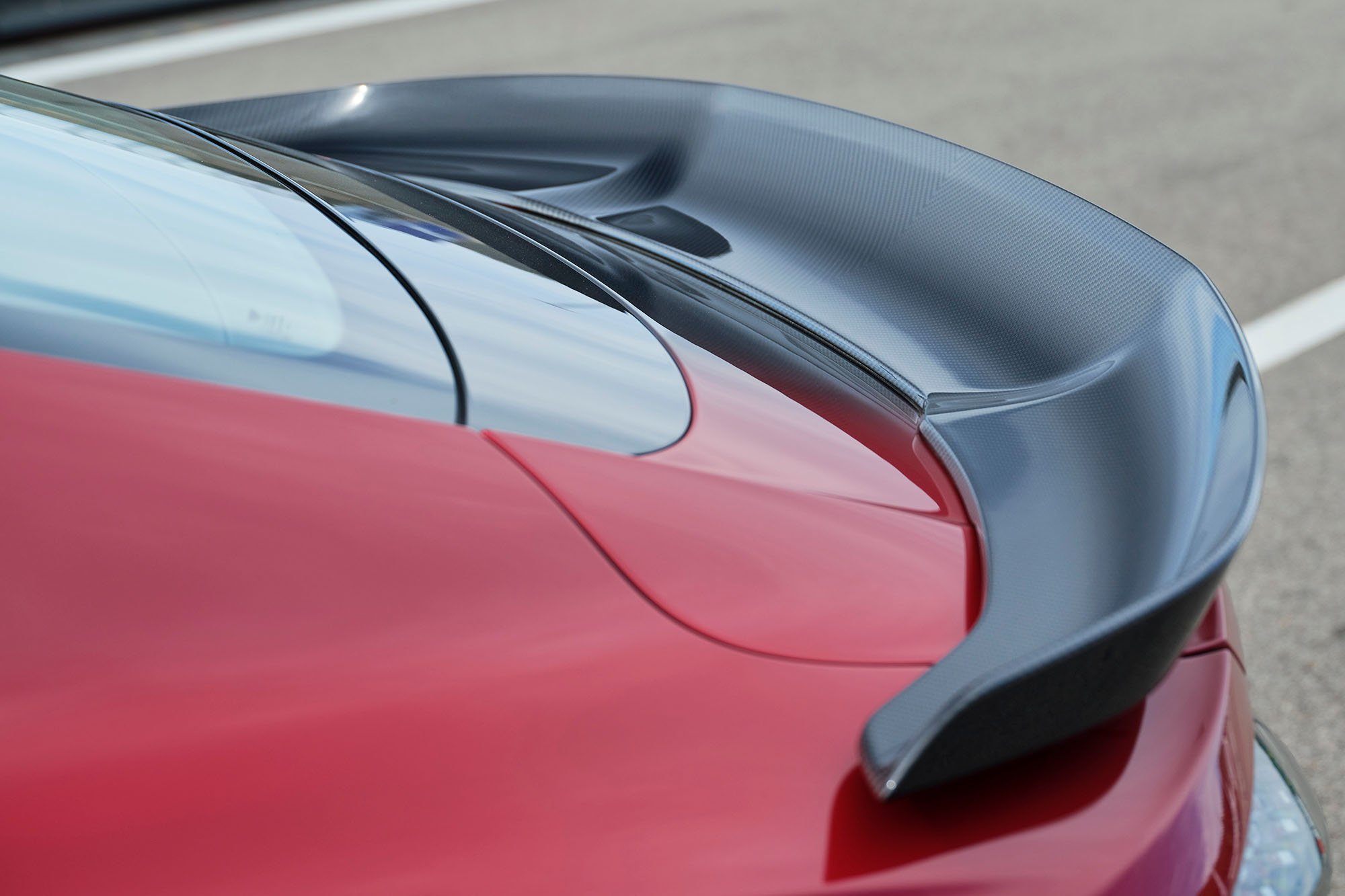
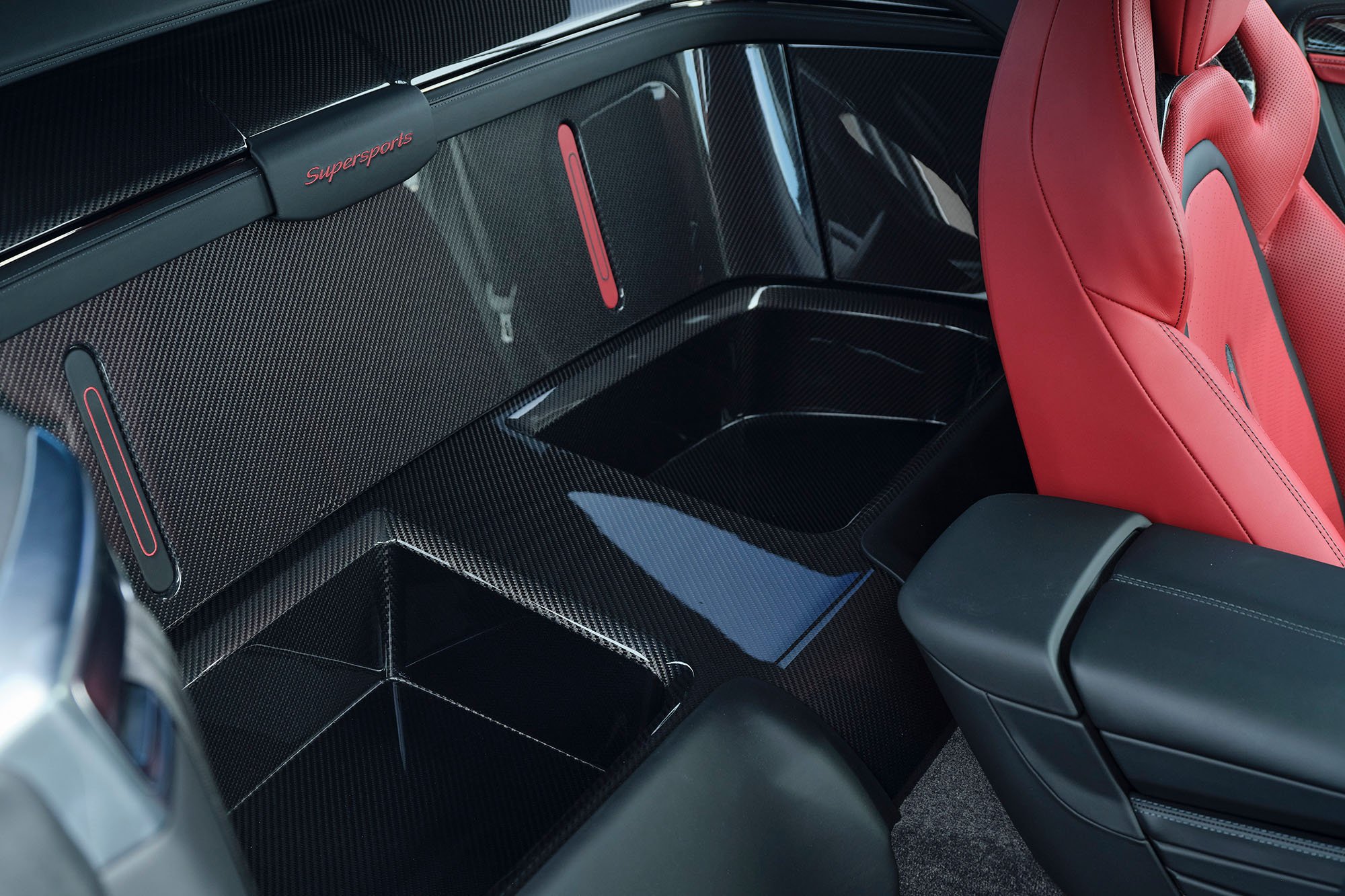
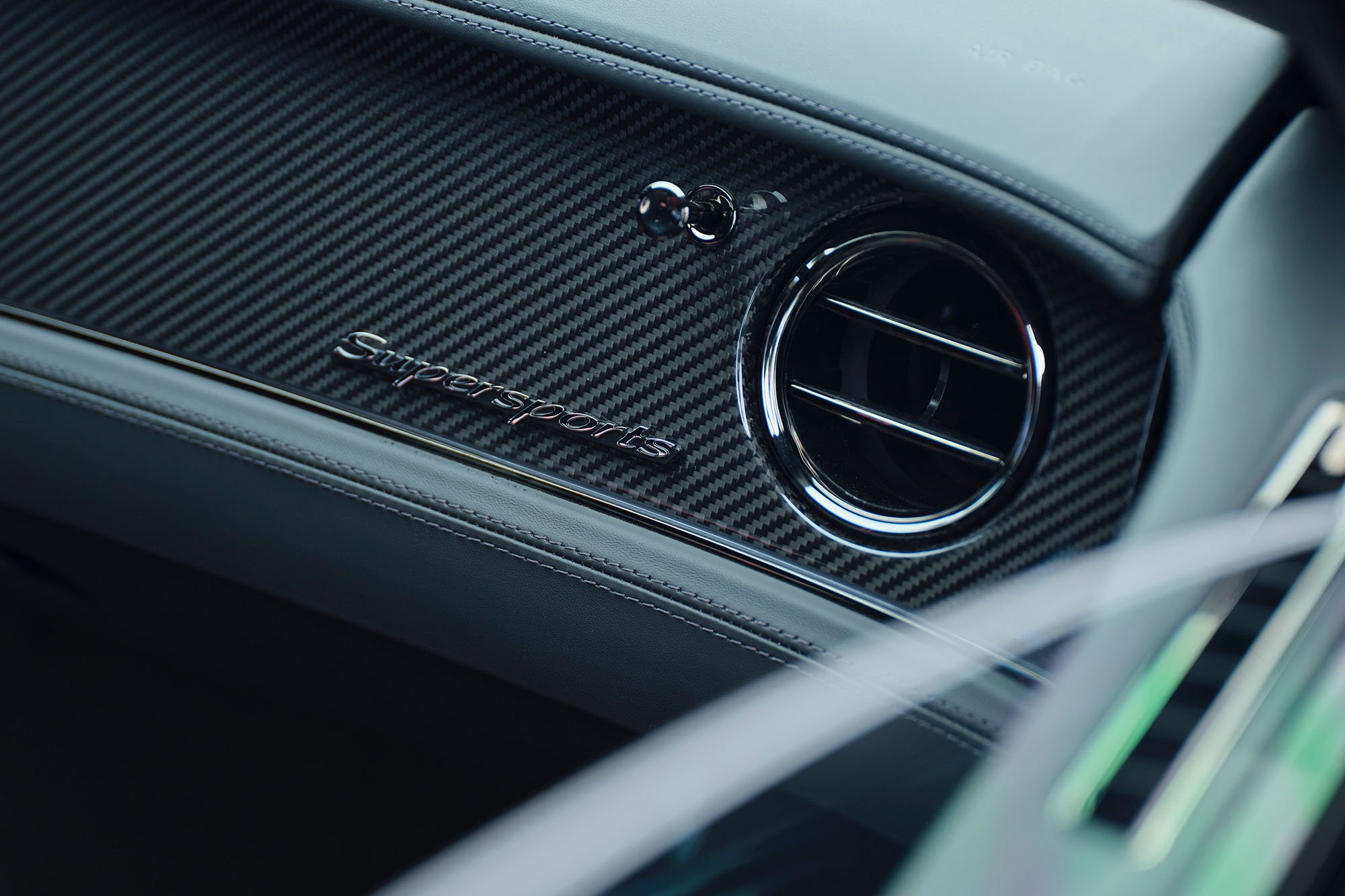
Eliminating those components not only creates a purer sports car, but it also eliminates an incredible 1,000 lbs. of mass. Carbon-fiber bodywork, lightweight forged aluminum wheels, and a titanium exhaust system also contributed to the Supersports’ diet. “If you look at the carbon fiber on the side of the car, it is all purposeful; it is for downforce and to help the wind clear and cool the car as it’s being driven,” explained Bentley Americas President and CEO Mike Rocco.
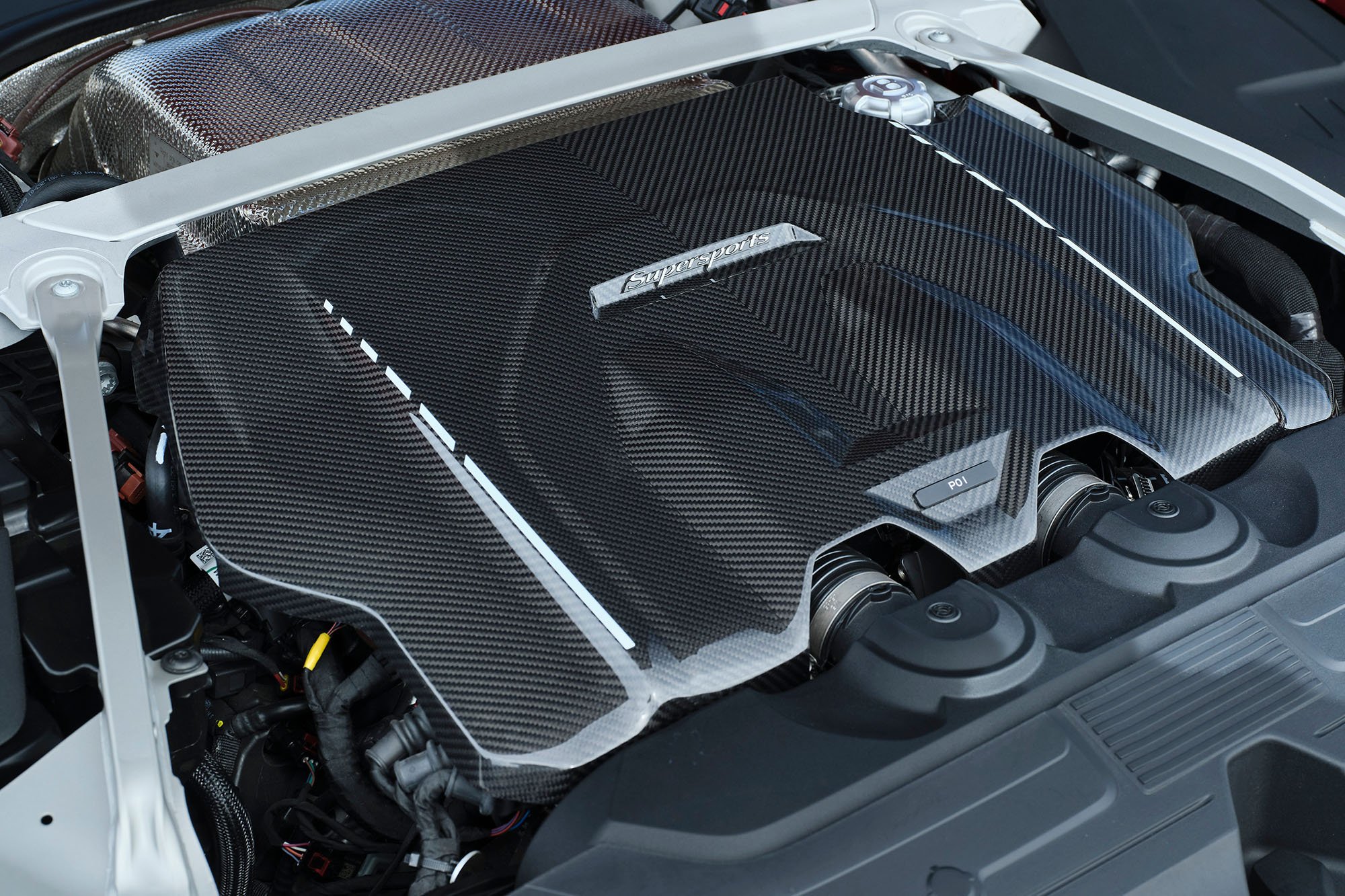
A souped-up version of the Continental GT’s twin-turbo 4.0-liter V8 delivers 657 hp and 590 lb.-ft. of torque without the aid of an electric motor and battery pack. The engine’s new parts include larger-diameter single-scroll turbochargers and a dual-mass flywheel.
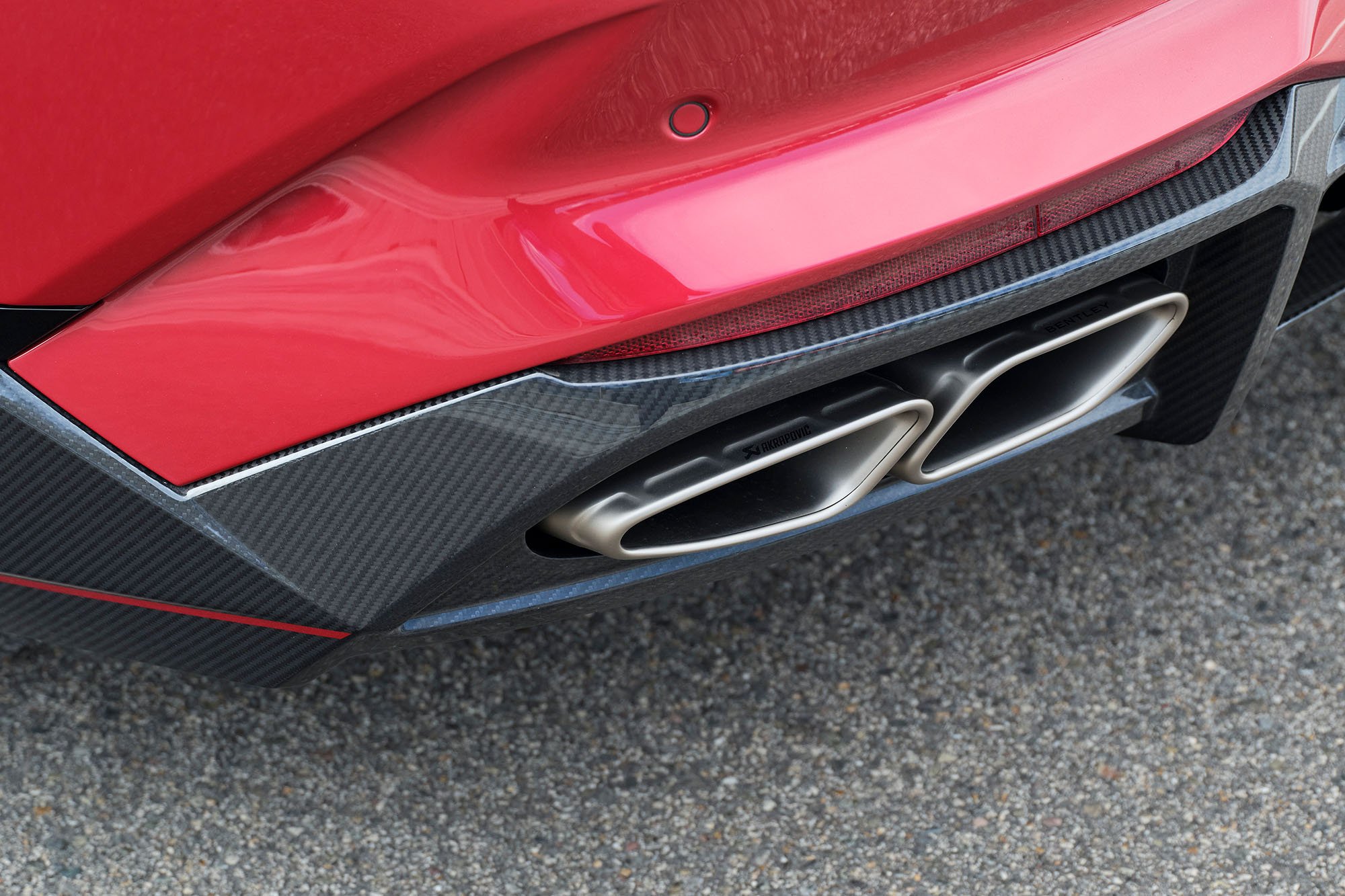
The engine’s lovely, energetic exhaust note comes through an Akrapovič titanium active exhaust system, so when you’re at the race track and want to hear it, you can turn up the volume. And when you’re leaving home for the gym at 6 am on a Monday morning, you can dial down the volume and let your neighbors sleep.
The V8 powers the rear wheels through a ZF-supplied 8-speed dual-clutch transmission that delivers instantaneous, seamless gear changes, either automatically or through the steering wheel-mounted shift paddles. During laps around WeatherTech Raceway Laguna Seca in Monterey, Calif., the automatic programming for the transmission’s shifts was flawless, correctly clicking down through the gears under braking for the legendary Corkscrew turn and then back up again, working down the hill back toward the track’s front straight.
The torque-vectoring, electronically limited-slip differential minimizes the wheelspin and oversteer that the turbo V8, with its 590 lb.-ft. of torque, could produce accelerating out of the slower turns. But neither the differential nor the advanced electronic stability control system neuter the power, so pressing the accelerator with a little too much authority causes the Supersports’ back end to slither. It’s a good reminder to be a little gentler on the next lap! When pointed straight, the Supersports accelerates to 60 mph in 3.4 seconds.
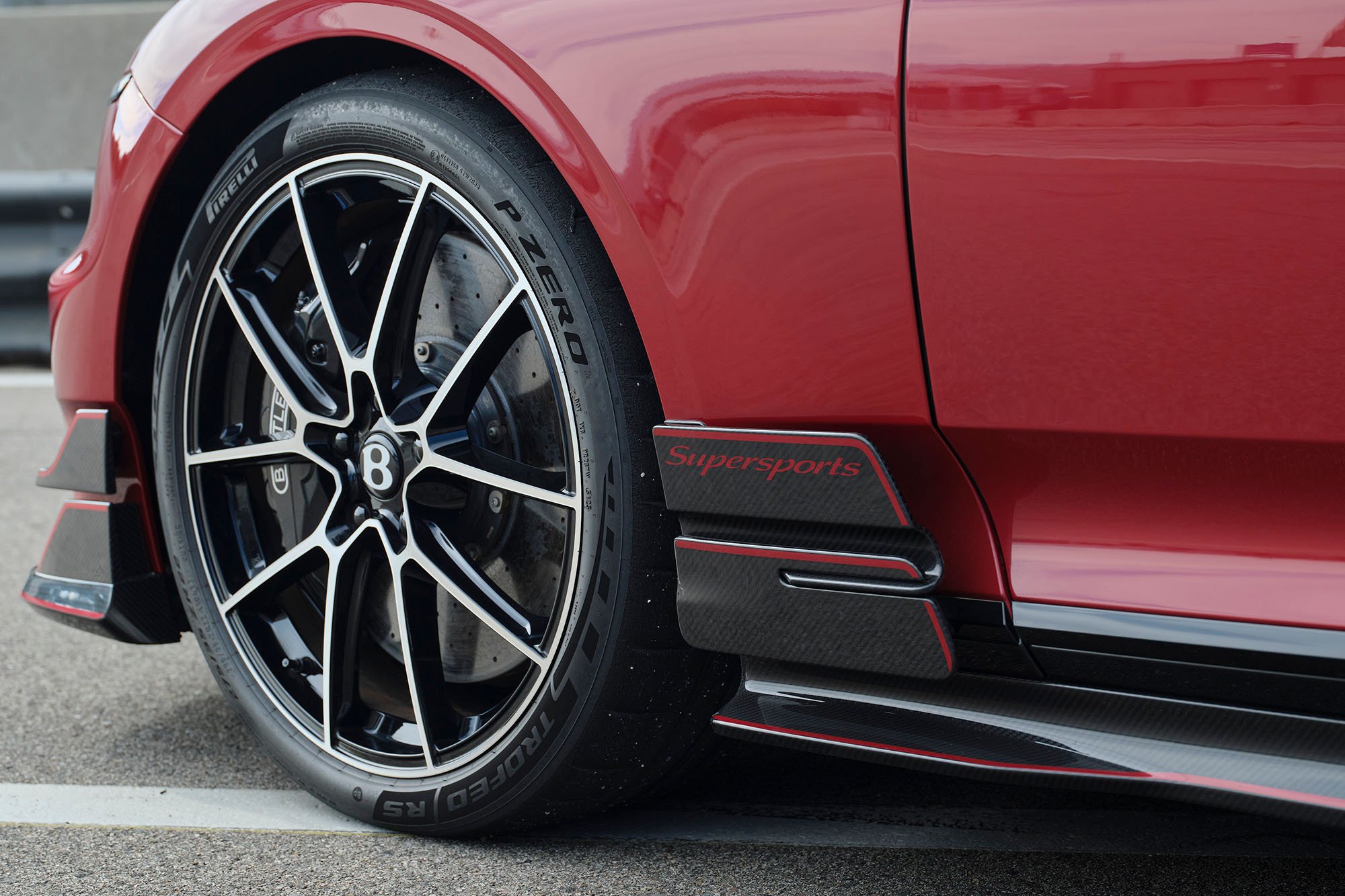
The brakes provide the necessary deceleration with 17.3-inch carbon-silicon-carbide rotors and positively massive 10-piston calipers up front. Rear brakes are a comparatively paltry 16.1-inch rotors with commonplace 4-piston calipers.
These brakes provide huge stopping power without the annoying squeal common with high-performance carbon brakes during lighter braking. Pedal feel is good, and the friction is progressive, with none of the aggressive bite of Ferrari brakes in casual driving or the mushy vagueness of Lamborghini brakes at track speeds.
The various carbon fiber spoilers, diffusers, splitters, and dive planes do their job, creating effective downforce at speed, which makes braking more effective at high speeds. So rather than easing into the brakes as you might normally, the Supersports rewards heavy initial brake application that you taper as the vehicle slows and it loses downforce.
Tires are 275/35 ZR22 front and 315/30 ZR22 rear Pirelli P Zero Trofeo RSs on 22-inch forged aluminum wheels (it seems more appropriate to pronounce it al-yoo-MIN-ee-um for a Bentley, but then we’d also have to spell the rubber “tyres”).
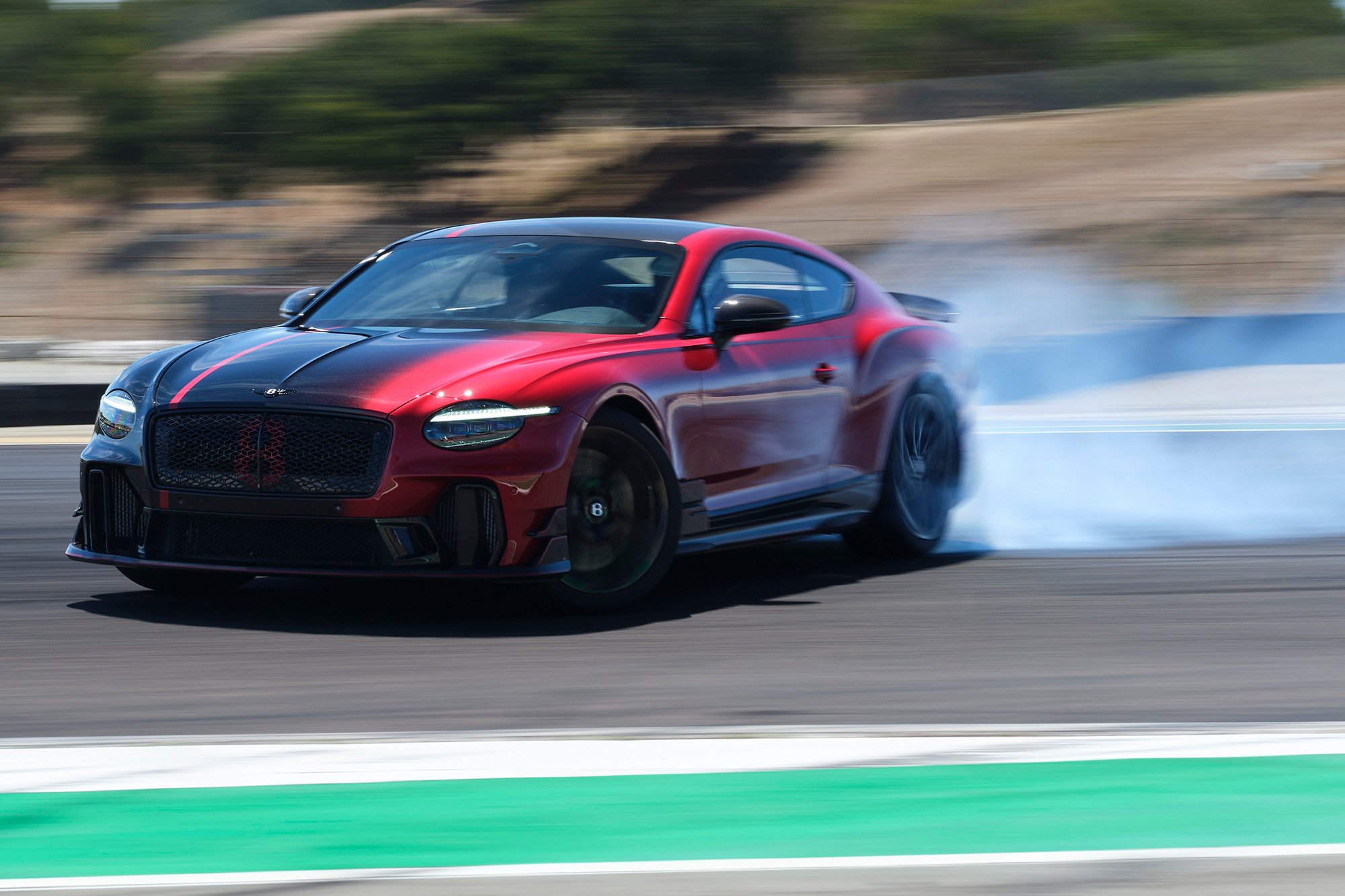
Despite the diet, the Supersports is still a heavy car, weighing more than 4,400 lbs. This makes its nimble handling all the more impressive. This agility comes courtesy of an active suspension system that uses twin-valve air springs and a 48-volt active anti-roll control system that replaces conventional passive steel anti-roll bars.
This lets the car’s suspension adapt in real time to driving conditions, keeping it stable and confidence-inspiring on the track without being punishing at lower speeds. It does an impressive job disguising the Sportsports’ weight, but the laws of physics take their inevitable toll on the tires and brakes, as they lose effectiveness with time on the track.
Alas, Bentley is building only 500 Continental GT Supersports, all spoken for. Perhaps the success of the Supersports program will convince Bentley management that additional minimalist rear-drive models would be good additions to the company’s product line. Could “less” mean more Bentley models?
The post The 2026 Bentley Supersports is what happens when you combine luxury with on-track performance appeared first on Popular Science.
Electric vehicles (EVs) use high-powered rechargeable batteries to store electrical energy that powers their motors. Most EV batteries use a specific mixture of metals to hold the battery’s charge, called nanoscale lithiated nickel manganese cobalt oxides, aka NMC materials. NMC materials can store a large amount of energy, making them ideal for batteries, but the metals themselves can be toxic in soil and water if the batteries are not properly recycled.
NMC batteries leave behind a specific combination of toxic metals, so researchers can study how bacteria respond to this waste when it enters the environment. By understanding how bacteria adapt to toxic metals, scientists hope to predict how new technologies like EV batteries will affect the environment.
In 2019, a team of researchers from the University of Minnesota reported that a common soil bacterium called Shewanella oneidensis can rapidly evolve resistance to NMC materials, but they didn’t know how. True beneficial gene evolution usually develops over thousands of generations, but Shewanella oneidensis adapted much more quickly. The team recently conducted a follow-up study to determine the genetic mechanisms behind this bacterium’s unique metal resistance.
They started by analyzing the complete DNA sequences of 33 Shewanella colonies that were resistant to either pure NMC waste or individual metals like nickel and cobalt, using a process called whole-genome sequencing. They expected to find DNA mutations in genes that control how bacteria take up and expel toxic metals that would give the resistant Shewanella an advantage in surviving NMC metal toxicity. However, they didn’t find any DNA mutations in metal-related genes. Instead, they found that a specific DNA region was duplicated 10 to 15 times in all 33 NMC-resistant or metal-resistant colonies. This result suggested to the researchers that a temporary adaptation, not true gene evolution, was responsible for the bacteria’s metal resistance.
The researchers wanted to know more about the duplicated DNA region in metal-resistant Shewanella, so they focused on 2 gene duplication mechanisms that might serve as temporary adaptations in Shewanella. The first mechanism directly duplicates DNA regions to create extra copies of a gene, via a process called gene duplication amplification. The second mechanism moves DNA segments, called mobile genetic elements, into different DNA sections to create extra copies of a gene.
To test whether either of these mechanisms was causing the gene duplication in Shewanella, the team grew the bacteria in different liquid media containing only cobalt, only nickel, or cobalt and nickel together. The researchers used a technique that measures the exact amount of DNA in a given sequence, called quantitative polymerase chain reaction (qPCR), to calculate how many duplicated DNA regions were in each genome sequence. They found that neither cobalt nor nickel alone triggered DNA duplication. But the bacteria grown in the media with cobalt and nickel together had 8 additional copies of the DNA region. This suggested that something about the combination of nickel and cobalt triggered gene duplication.
To determine whether this gene duplication only occurred with nickel and cobalt, the team substituted copper and zinc for nickel in the growth media. They exposed Shewanella cells to different combinations of these metals using a grid pattern in a 96-well plate, a technique called a checkerboard assay. Then they repeated the qPCR process to measure the duplicated DNA region. They found that no other combinations of metals triggered gene duplication, suggesting that nickel and cobalt are especially toxic together, and that the gene duplication responds to this combined toxicity.
Finally, the researchers identified the function of the duplicated DNA region. They found that one of the genes within the region turned on a special protein that pushes metal ions and other toxins out of the cell, called an efflux pump protein. The team hypothesized that this efflux pump protein was responsible for removing cobalt and nickel from the bacteria’s cells. To test this theory, they grew modified Shewanella cells without the efflux pump gene in media containing cobalt, nickel, or cobalt and nickel together. They found that the modified bacteria grew well in the nickel-only treatment, but didn’t grow in the cobalt-only or combined treatments, which indicated that the efflux pump protein is necessary for Shewanella to resist cobalt toxicity.
Based on their experiments, the team concluded that nickel and cobalt together trigger a gene duplication event in Shewanella oneidensis. This gene duplication event increases the number of efflux proteins in Shewanella that can expel cobalt and underlies its unique NMC resistance. They suggested that future researchers study temporary adaptations similar to gene duplication in bacteria to track how they respond to electronic waste and other new technologies.
The post How do bacteria adapt to toxic metal waste? appeared first on Sciworthy.