
❌

Reading view

New magnet technology promises rare-earth-free drive for US military systems
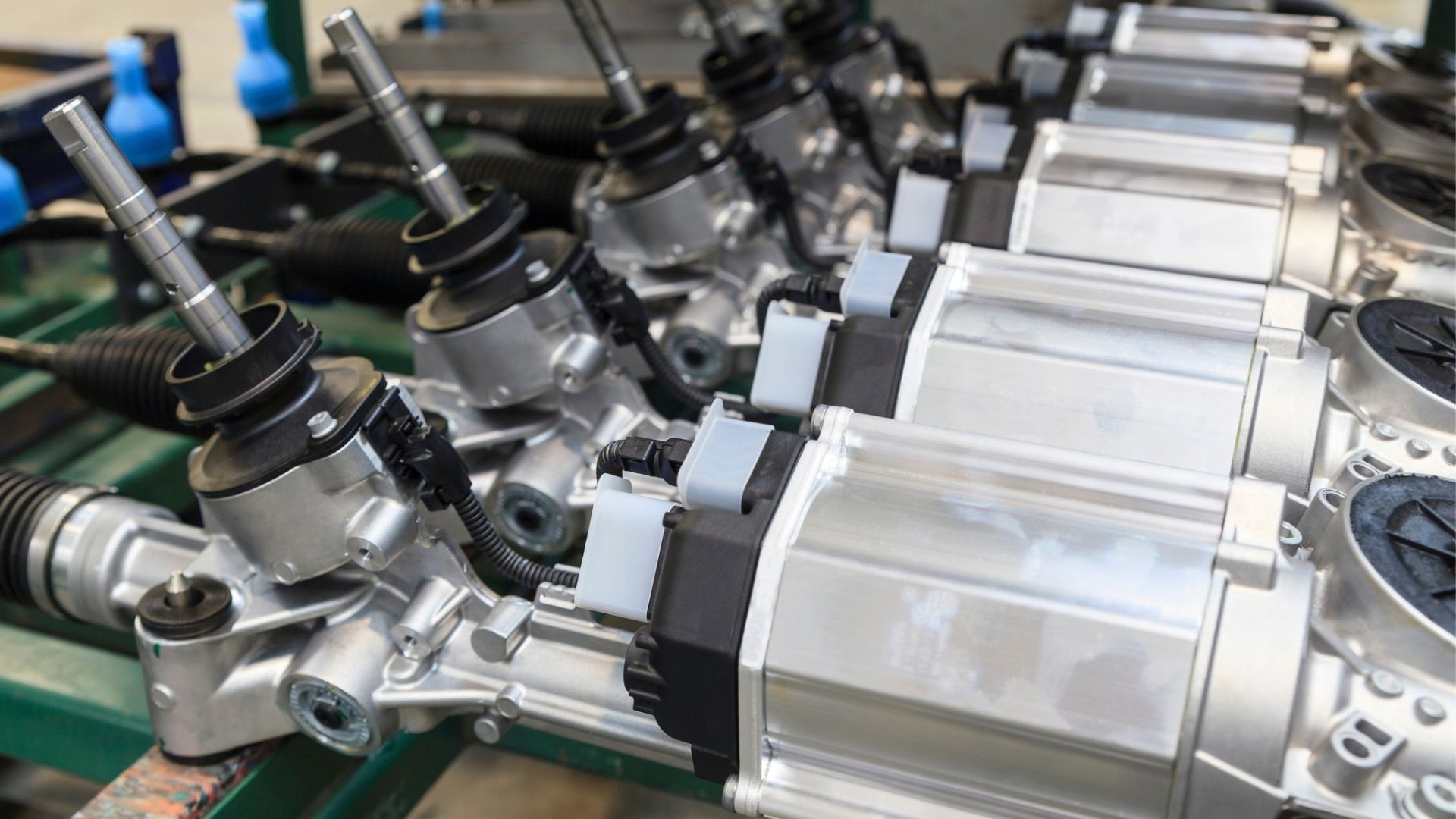
Moog and Niron Magnetics will showcase their rare-earth-free actuator solutions at the Association of the United States Army (AUSA) 2026 Annual Meeting and Exposition in Washington, D.C., in October.

At the event, the companies plan to demonstrate their work using Niron’s Iron Nitride permanent magnets, which convert electrical signals into mechanical motion. The promising technology is being tested for applications including land vehicles and guided munitions.

“The Army is transforming quickly, and the systems soldiers rely on can only move as fast as the supply chains behind them,” said Ryan Aures, Moog Land and Sea Systems engineering director, in a press release. “Our work with Niron is about making sure a disruption never stands between the warfighter and the capability they need.”

The project builds on a collaboration between Moog and Niron announced in December 2025. Moog is testing and qualifying Niron’s Iron Nitride permanent magnets in electromechanical actuators, which would reduce dependency on critical minerals – an innovative solution to a global problem.

Iron Nitride removes rare earth elements

Almost every precision system the Army depends on contains rare earth. “Today almost all of that supply runs through a single foreign source,” said Jonathan Rowntree, CEO of Niron Magnetics.

According to an October 2025 report from the Council on Foreign Relations (CFR), “China controls up to 90 percent of the world’s critical-mineral processing capacity, including more than 99 percent of processing for three rare earths needed for heat-resistant magnets,” CFR said.

Niron claims that its Iron Nitride technology can produce permanent magnets without rare earth materials–which would eliminate the problem in a world scrambling to move manufacturing to domestic soil.

Critical minerals are used in products ranging from smartphones and vehicles to advanced weapons systems including the F-35.

US moves to expand domestic magnet supply

The U.S. government has also taken steps to expand domestic rare-earth production. According to CFR, the Department of Defense took a 15 percent stake in U.S.-based rare-earth producer MP Materials for $400 million in July 2025.

The Moog-Niron project takes a different approach by developing permanent magnets that do not require rare-earth materials, which would be the ultimate shutdown response to the entire situation if the Army just eliminated the need.

According to the company’s release, Niron has been producing Iron Nitride magnets and conducting customer qualification since 2025. The company expects to begin commercial production within the next 18 months.

Niron says its magnets are already being used in applications spanning artificial intelligence infrastructure, automotive products, industrial equipment and consumer electronics.

For the defense project, Moog is testing and qualifying the magnets specifically in electromechanical actuator systems.

Technology headed to AUSA 2026

The companies will jointly present the technology at Moog’s booth during AUSA 2026. Moog and Niron plan to display Iron Nitride magnets installed in tested motor hardware. The companies said attendees can also speak with engineers about integration, qualification timelines, and supply availability.

Niron, meanwhile, is working to commercialize its Iron Nitride permanent magnets through its proprietary manufacturing platform.

💾

Moog and Niron Magnetics will be showcasing rare-earth-free actuator solutions to help the U.S. Army overcome critical supply chain issues.
  •  

Japan’s 4,800-ton hydrogen tanker: How its engine, batteries and motors work

Japan has demonstrated a coastal tanker using a hydrogen-fired, four-stroke, high-speed engine in what the project describes as a world first.

The 4,800-dwt vessel sailed approximately 20 miles in Osaka Bay during a roughly two-hour demonstration on September 25. The Nippon Foundation reported that the voyage reduced carbon dioxide emissions by approximately 1.2 tons compared with conventional fossil fuels.

The demonstration forms part of a foundation-sponsored research program supporting the decarbonization of shipping. The tanker combines a hydrogen engine, electric propulsion motors and lithium-ion batteries.

How the tanker’s propulsion system works

The tanker uses electricity generated by a hydrogen engine housed in a container mounted on deck which powers two electric propulsion motors connected to two shafts.

The vessel also carries a hybrid generator and lithium-ion batteries. The batteries smooth the load and help optimize fuel consumption.

In this configuration, the hydrogen engine generates electrical power rather than driving the propeller shafts directly. The electric motors provide propulsion through the vessel’s two shafts.

Yanmar Power Solutions designed the engine used in the project. Its first bench tests were completed in October 2024, when it successfully operated at a rated output of approximately 500 kilowatts.

During those initial tests, the engine used a small amount of diesel oil as a pilot ignition source to burn a premixed combination of hydrogen and air. Subsequent testing worked toward using hydrotreated vegetable oil, known as HVO, for pilot ignition.

The supplied account does not identify which pilot ignition fuel was used during the September demonstration.

The project called for a tanker specifically designed for hydrogen propulsion. Fukuoka Shipbuilding, a member of the project coalition, launched the vessel at its Nagasaki yard on February 14, 2025.

Measuring approximately 344 feet (105 m), the tanker was delivered to Uyeno TransTec in October 2025.

What the demonstration covered

The September 25 voyage tested the tanker’s hydrogen-fired engine while sailing in Osaka Bay. The Nippon Foundation described it as a carbon-neutral demonstration and estimated the carbon dioxide reduction at about 1.2 tons compared with conventional fossil fuels.

Beyond the engine, the project’s scope included developing the fuel supply system and hull design to obtain Approval in Principle from the classification society ClassNK.

The team also developed training and an operating manual for hydrogen-fueled vessels.

According to the foundation and the operator, the demonstration produced experience and knowledge to support hydrogen adoption in domestic coastal shipping. The project’s stated goal is to develop a model and pathway for that adoption.

“This demonstration represents a significant step towards the practical application of hydrogen-fueled zero-emission ships and is expected to contribute to the promotion of decarbonization in Japan’s shipping sector,” said Kazuma Kashiwagi, Director of the Environmental Bureau for Kobe City.

Japan has committed to achieving carbon neutrality in its domestic shipping sector by 2050.

The wider hydrogen vessel program

The Nippon Foundation launched the project in 2022. In June 2023, it assigned three consortia to develop separate demonstrations under its Zero Emission Ship 2050 program.

Alongside the tanker, one team focused on demonstrating a hydrogen fuel cell aboard an offshore wind turbine work vessel. Another worked on a hydrogen-fueled engine for the tugboat “Ten-Oh.”

The program’s first hydrogen fuel-cell demonstration took place in April 2024 aboard the 238-gross-ton passenger vessel Hanaria. Additional demonstrations were scheduled for 2026, alongside work on hydrogen stations to supply fuel.

Other hydrogen shipping projects include Norway’s liquid-hydrogen-fueled ferry MF Hydra and inland barges in Europe.

Cruise operators have also begun testing fuel cells and hydrogen systems to supply electricity for hotel operations and reduce emissions in port.

  •  
❌