❌

Reading view

The battlefield now extends all the way to the moon, U.S. military's highest-ranking officer says

The U.S. military must be ready to engage the enemy farther from home than ever before, according to its highest-ranking officer.

"Today's modern battlefield operates from the seabed to cislunar space," Gen. Dan Caine, the chairman of the Joint Chiefs of Staff, said Wednesday (Sept. 16) during a keynote address at the Air & Space Forces Association's Air, Space & Cyber Conference in National Harbor, Maryland.

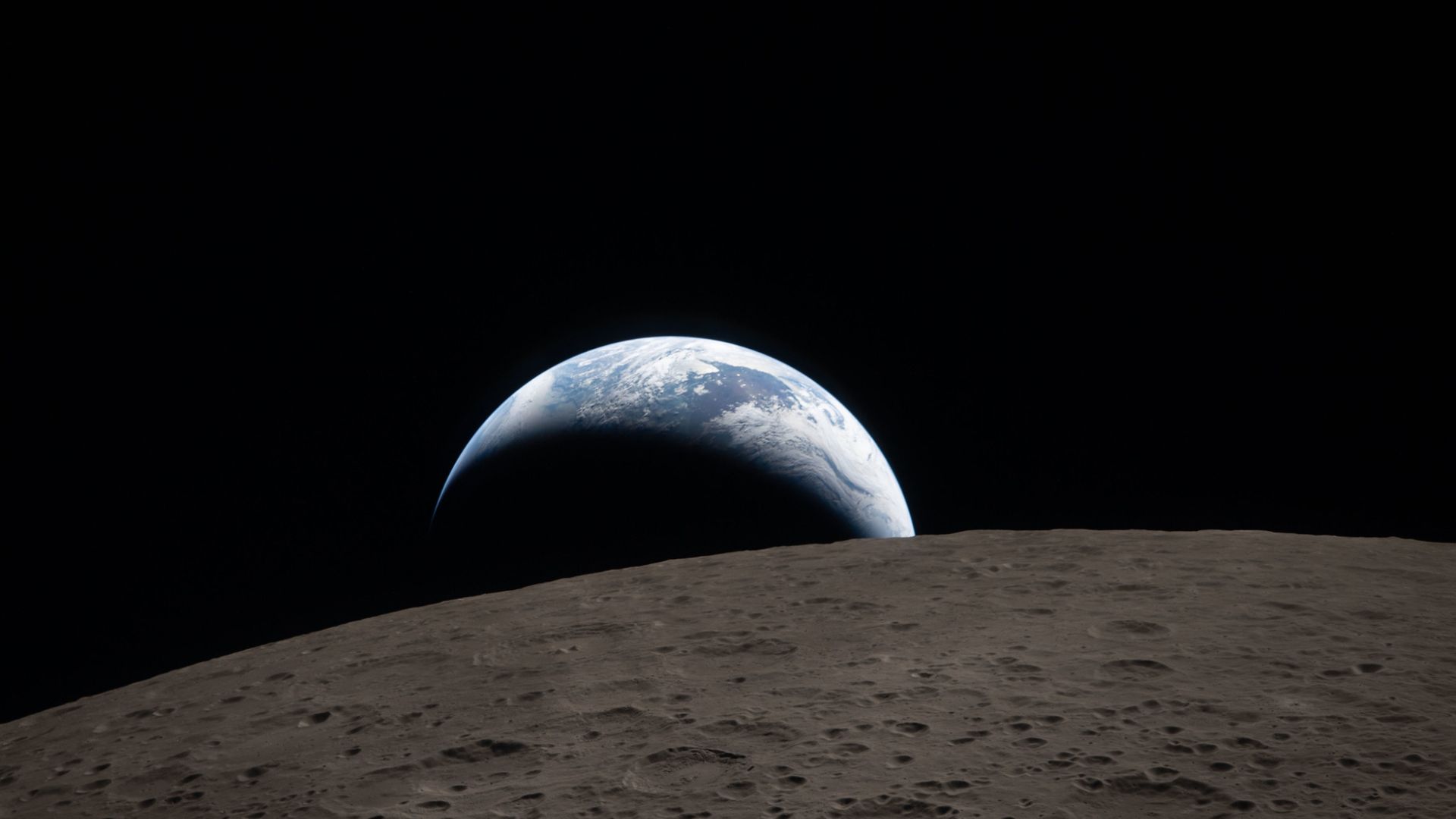
Cislunar space extends from Earth all the way out to the orbit of the moon and includes the lunar surface. For several years now, military officials have been stressing the strategic importance of this huge region, which could get quite a bit busier in the next decade or so.
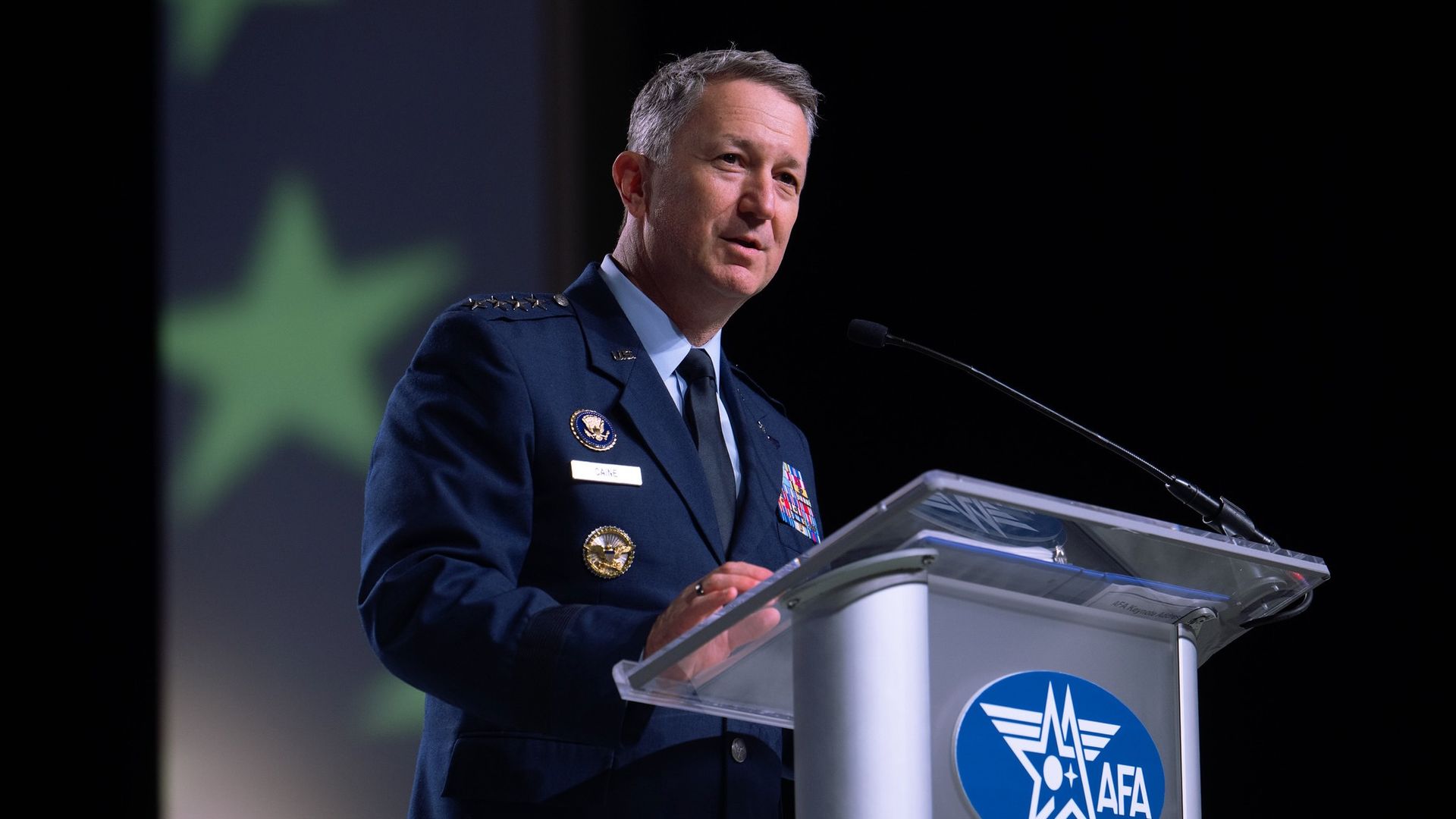
a military man in a blue uniform speaks at a silver lectern

Gen. Dan Caine, chairman of the Joint Chiefs of Staff, speaks at the Air & Space Forces Association’s Air, Space & Cyber Conference in National Harbor, Maryland, on Sept. 16, 2026. (Image credit: Craig Hudson, for Air & Space Forces Association)

For example, both the United States and China plan to build bases near the moon's south pole, which is thought to harbor large amounts of water ice. Winning this new moon race is critical, U.S. officials have stressed, because whoever does so will be able to establish norms of behavior on and around Earth's nearest neighbor.

China has already demonstrated impressive capabilities in the lunar sphere. In 2019, the nation's robotic Chang'e 4 mission pulled off the first-ever soft landing on the moon's mysterious far side. In 2024, Chang'e 6 returned far-side samples to Earth β€” another first.

Caine didn't cite such missions or even mention China by name. And he provided no details about what conflict on the cislunar battlefield might look like (though presumably it would be entirely robotic, with satellites seeking to take out adversary craft via jamming or blinding).

But he invoked the cislunar battlefield twice and noted that U.S. military branches cannot assume continued dominance of their various domains.

"Future conflicts will demand that we operate without the assumptions of uncontested access, secure rare areas or uninterrupted or uncontested sustainment," Caine said. "Our task, my friends, is to adapt right now, so the joint force is prepared to fight, endure and win in global contested environments, from the seabed to cislunar space."

The United States' long-held advantage in the final frontier will be key to securing such victories, he added.

"We must continue to ensure that the United States of America can strike anywhere on the globe at the time and place of our choosing, and sustain that force," Caine said. "Our United States Space Force must provide unrivaled space superiority and sustain the associated networks, domain awareness [and] data advantage that the joint force needs to win in space, both now and in the future."

We now know that part of the Space Force's strategy for maintaining that crucial superiority is the operation of weapons in Earth orbit. The branch's chief, Gen. Douglas Schiess, admitted as much during an address at the same conference on Tuesday (Sept. 15).

"Let me be crystal clear: Today, guardians operate on-orbit weapons that can defend the joint force against space-enabled attacks,” Schiess said during his speech. ("Guardian" is the official name for a member of the Space Force, just as members of the U.S. Navy are called sailors and members of the Army are soldiers.)

Schiess provided few details about these weapons but, later in the speech, implied that they are electromagnetic rather than kinetic in nature. That is, they're probably designed to knock out key systems of adversary satellites rather than destroy the entire spacecraft (which would create a cloud of potentially troublesome debris).

It's no surprise the U.S. possesses and employs such technology; the newsworthy bit is that a top official said it so openly. The nation's chief rivals in the space domain, China and Russia, possess advanced counterspace technologies as well. For example, both have destroyed defunct satellites with missiles and conducted close approaches of spacecraft with "inspector" vehicles.
  •  

SpaceX Falcon 9 rocket-landing team gets 1st-ever Neil Armstrong Space Prize

The winners of the first-ever Neil Armstrong Space Prize just got their hardware.

Those awardees β€” the people who developed and mastered the famous landing capability of SpaceX's Falcon 9 rocket β€” were announced in April. But they didn't actually receive the prize until Tuesday night (Sept. 15), when it was bestowed during a ceremony at the Cosmos Club in Washington, D.C.

And it was richly deserved, according to Purdue University, which created the international award and named it after perhaps its most famous alumnus. (Purdue is known as the "cradle of astronauts," because 30 of its graduates have flown in space or been selected as NASA astronaut candidates.)

"Neil Armstrong's achievement rested on extraordinary engineering, teamwork and the courage to attempt what had never been done before," Mark Lundstrom, the John A. Edwardson Dean of the College of Engineering at Purdue, said in a statement on Tuesday.

"The Falcon 9 Booster Landing Team carries that spirit forward," he added. "By making rocket reuse practical at unprecedented scale, they changed the economics of spaceflight and opened new possibilities for science, exploration and commerce. It is especially fitting that they are the first recipients of the Neil Armstrong Space Prize."

Purdue wants the annual prize to become a sort of Nobel for space science and exploration. The inaugural honorees are five SpaceX employees, who represent the much larger Falcon 9 landing team:

  • Lars Blackmore, senior principal Mars landing engineer
  • Shana Diez, senior director of Starship reliability
  • Jon Edwards, senior vice president of Falcon & Dragon projects
  • Yoshiaki Kuwata, principal guidance, navigation and control engineer
  • Eduardo Velazquez, director of Crew Starship engineering

The two-stage Falcon 9 debuted in June 2010. The rocket was always envisioned to have a reusable first stage, though making that happen took a while.

"On a simple hand calc, I thought, 'Oh, this would work,'" said Kuwata, who joined SpaceX in 2012.

"But then the difficult part is going from this hand calculation to the reality, and there are a lot of nuances that we learned on the way," he told Space.com. "And on paper, I think it would have been done in like six months. But it took like three, four years to actually get it to work."

The milestone moment occurred on Dec. 21, 2015, on the 20th Falcon 9 flight to date: The rocket's first stage came back to Earth for its first-ever vertical touchdown, landing at Florida's Cape Canaveral Air Force Station (now known as Cape Canaveral Space Force Station) after sending 11 satellites to orbit for the company Orbcomm.

The Falcon 9 ticked another big box on April 8, 2016, acing a touchdown on a SpaceX "drone ship" stationed in the Atlantic Ocean.

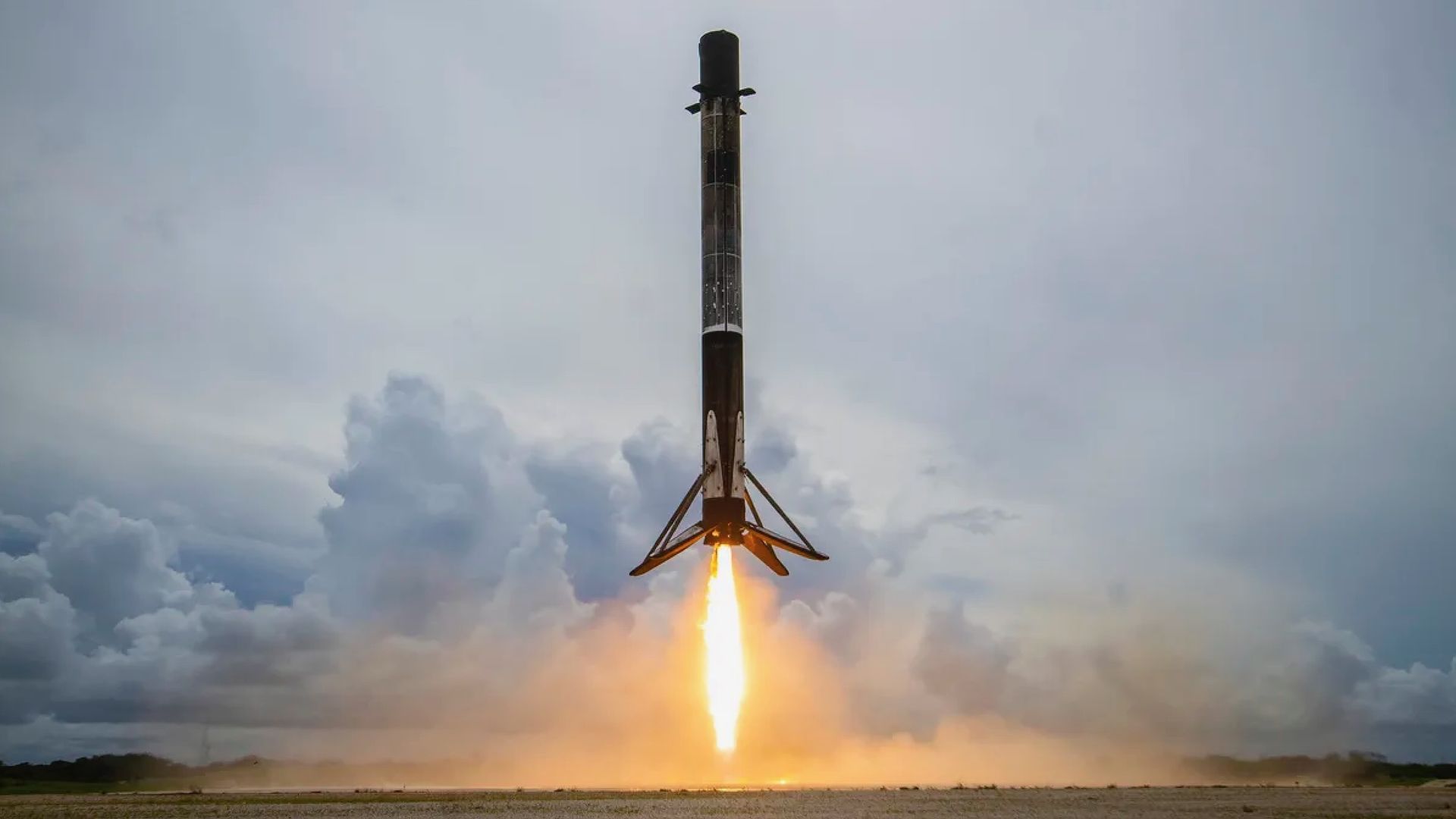
These eye-popping sights have now become commonplace; to date, SpaceX has landed boosters more than 650 times during orbital missions. And these rockets don't stay on the ground for long. Six different Falcon 9 first stages now have more than 30 launches and landings under their belt, led by Booster 1067, which has flown a whopping 37 times.

Such extensive reuse has helped make the Falcon 9 the dominant rocket flying today. In 2025, the vehicle flew 165 missions β€” about half of the global total β€” and all of them were successful.

This success has inspired copycats. For example, two different Chinese rockets have landed successfully in the past few months, one of which employs foldable landing legs just like a Falcon 9 first stage.

But the imitation doesn't bother Velazquez.

"I think this is great," he told Space.com. "I mean, we didn't start from scratch, right? If you look at a cross section of our engines and the engines from the '60s, they're all very similar. So we're all kind of cribbing from the same place. But the fact that we are able to advance the bar so that everybody else is landing first stages is just great. I think we all move forward together, and we need more entrants in the field to really have a big kind of spacefaring economy and civilization."

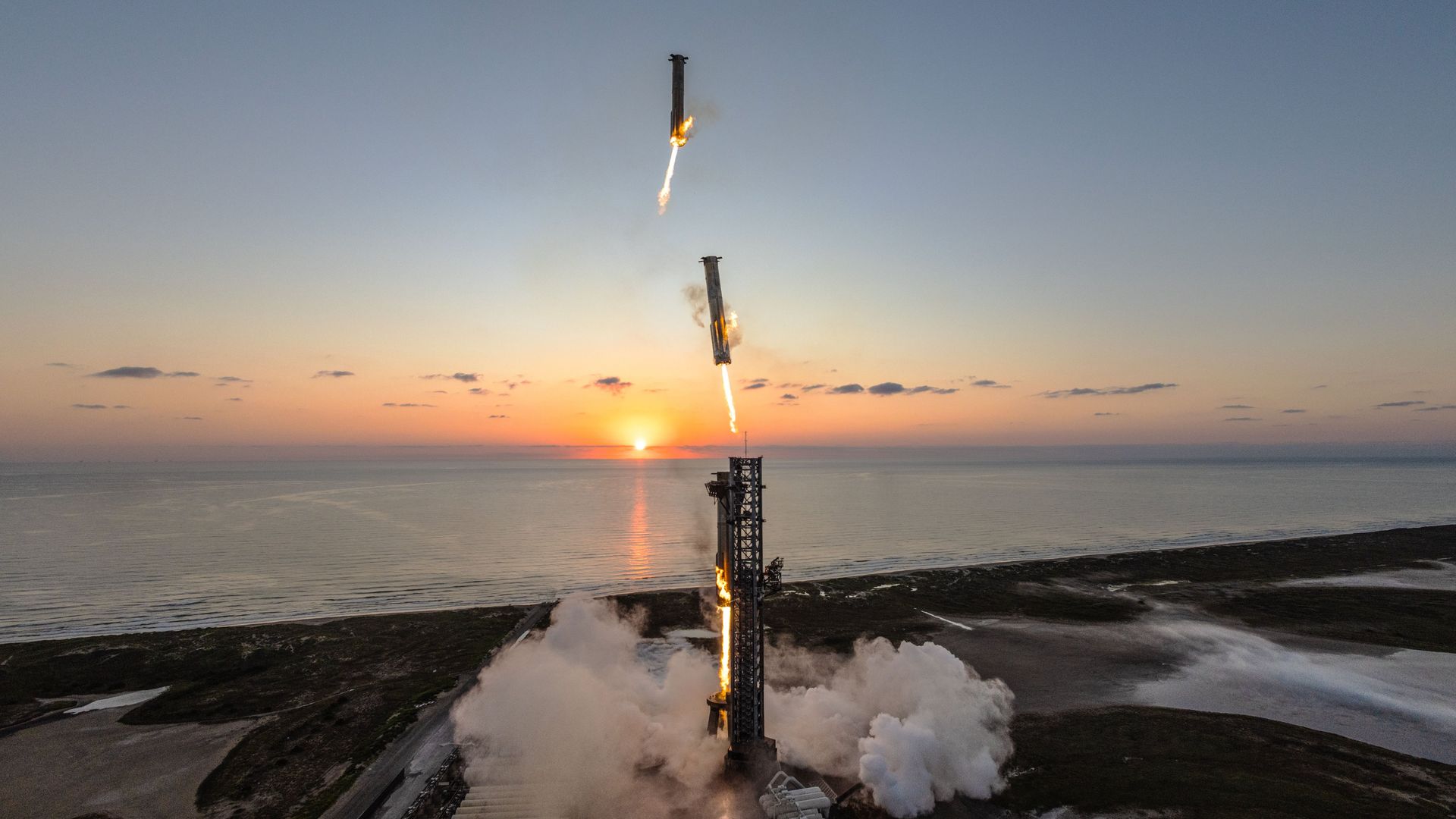
a large silver rocket comes in for a landing on its launch pad near the sea

Composite photo showing the Super Heavy booster of SpaceX's Starship megarocket coming in for a landing on the launch mount on Oct. 13, 2024. (Image credit: SpaceX via X)

SpaceX is planning to sunset the Falcon 9 in the relatively near future in favor of Starship, the fully reusable megarocket it's developing to help humanity settle the moon and Mars, among other exploration tasks.

Starship has flown 13 test flights to date, all of them suborbital. SpaceX has already successfully recovered the giant vehicle's Super Heavy first stage on three occasions, catching the booster with the "chopstick" arms of the launch tower at its Starbase site in South Texas.

Such success follows quite naturally from the experience the company built up with the Falcon 9 (and its cousin the Falcon Heavy). But landing and reflying Starship's upper stage, known as Ship, is a different animal. (Falcon upper stages are expendable.)

"The bigger step change for Starship is the stage two β€” Ship upper stage β€” reusability," Kuwata said.

"In Monte Carlo simulations, [Ship landings] work well," he added. "And then we kind of demonstrated that pinpoint landing, precision landing, on the ocean many times. But I feel we will find out more things along the way by trying many times."

"Yeah, the 'trying many times' I think is kind of key," Velazquez said. "And I think we're getting pretty close to to catching a Ship."

  •  
❌