❌

Reading view

Epstein had huge cache of child sex pics; victims sue to find out who's in them

On Tuesday, two survivors of child sex abuse accused the Justice Department of failing to notify dozens of victims found in Jeffrey Epstein’s massive collection of child sex images.

In a proposed class action, survivors explained that Epstein apparently started collecting child sex images in the 1990s, many of which the DOJ recovered after his arrest. In 2025, the FBI started reviewing β€œtens of thousands of videos” containing illegal child sexual abuse material (CSAM) and issued a memo confirming that β€œa large volume of images” seized depicted likely minors.

Some of these victims may have had contact with Epstein, as the disgraced financier kept a "modelbook" of nude photos of young girls roped into his ring. However, the FBI also identified hundreds of CSAM images in cache, which include approximately 15–20 images of known CSAM dating back to the 1990s. And so far, the DOJ has largely ignored those victims, who likely never met Epstein and have no way of knowing if he possessed, transported, or traded their images, survivors alleged.
Read full article

Comments

  •  

California may gut state net neutrality law to comply with Trump admin demand

California is on the verge of accepting $1.86 billion in federal broadband grant funds, despite the Trump administration telling states they cannot enforce net neutrality rules on any Internet service provider that gets a piece of the grant money.

When the Trump administration overhauled the $42 billion Broadband Equity, Access, and Deployment (BEAD) program last year, it ruled that states must agree not to enforce any rate regulation or net neutrality rule on ISPs that receive funding. This is particularly problematic for California, which previously won a yearslong court battle to defend its state net neutrality law.

Similar to federal net neutrality rules repealed during the first Trump administration, California's law prohibits ISPs from blocking or throttling lawful traffic and says ISPs may not require fees from websites or online services to deliver or prioritize their traffic to Internet users. While the first Trump administration lost its attempt to preempt state net neutrality laws, the second Trump administration is trying to achieve a similar result by making federal broadband money conditional on whether states agree not to enforce net neutrality.

Read full article

Comments

Β© Getty Images | Yuichiro Chino

  •  

It’s OK to tell ICE their actions will haunt them, judge rules in speech fight

It’s not illegal to send an email telling Immigration and Customs Enforcement (ICE) officials that their actions will haunt them, a federal judge ruled Tuesday, granting a preliminary injunction that blocks ICE from threatening to prosecute a critic for protected speech.

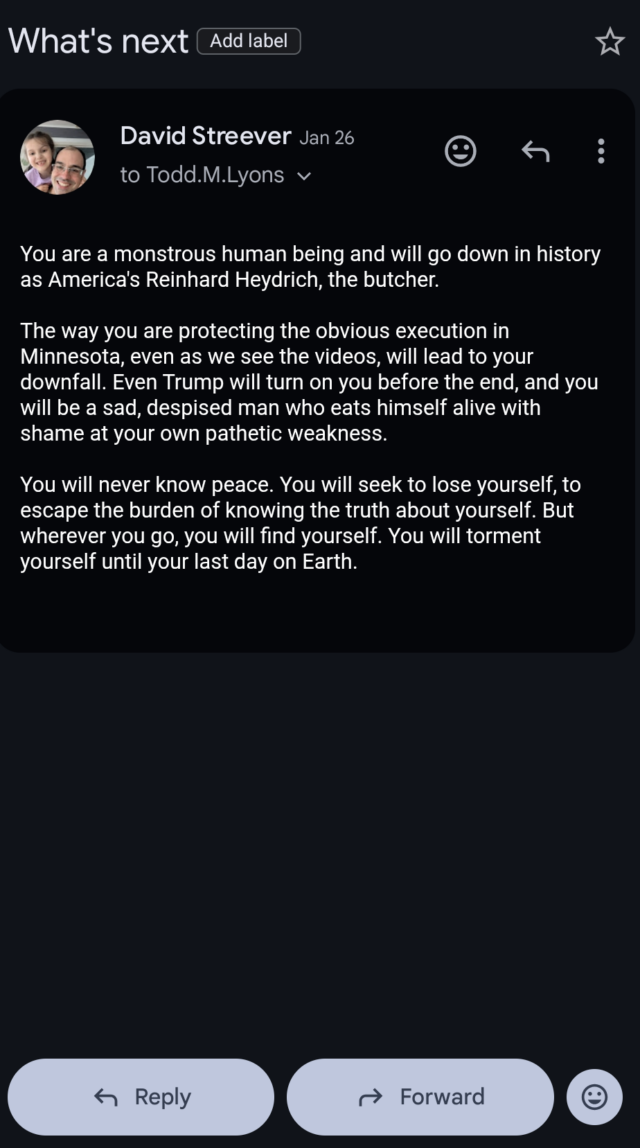
Back in January, David Streever sent a scathing three-paragraph email to then-acting director of ICE, Todd Lyons. Outraged by the killings of two Minnesota protestors against ICE, Renee Good and Alex Pretti, Streever told Lyons that he was a β€œmonstrous human being” who will eat himself β€œalive with shame” for defending officers who shot people who posed no threat and had no weapons. Comparing Lyons to an infamous high-ranking Nazi cop, Streever predicted that β€œeven Trump” would one day turn on Lyons for defending the β€œobvious” slayings of Americans.

David Streever's email to ICE. Credit: via FIRE

β€œYou are a monstrous human being and will go down in history as America’s Reinhard Heydrich, the butcher,” Streever wrote. β€œYou will never know peace. You will seek to lose yourself, to escape the burden of knowing the truth about yourself. But wherever you go, you will find yourself. You will torment yourself until your last day on Earth.”

Read full article

Comments

Β© via FIRE

  •  

Lawmakers target Flock cameras with a threat to highway funding

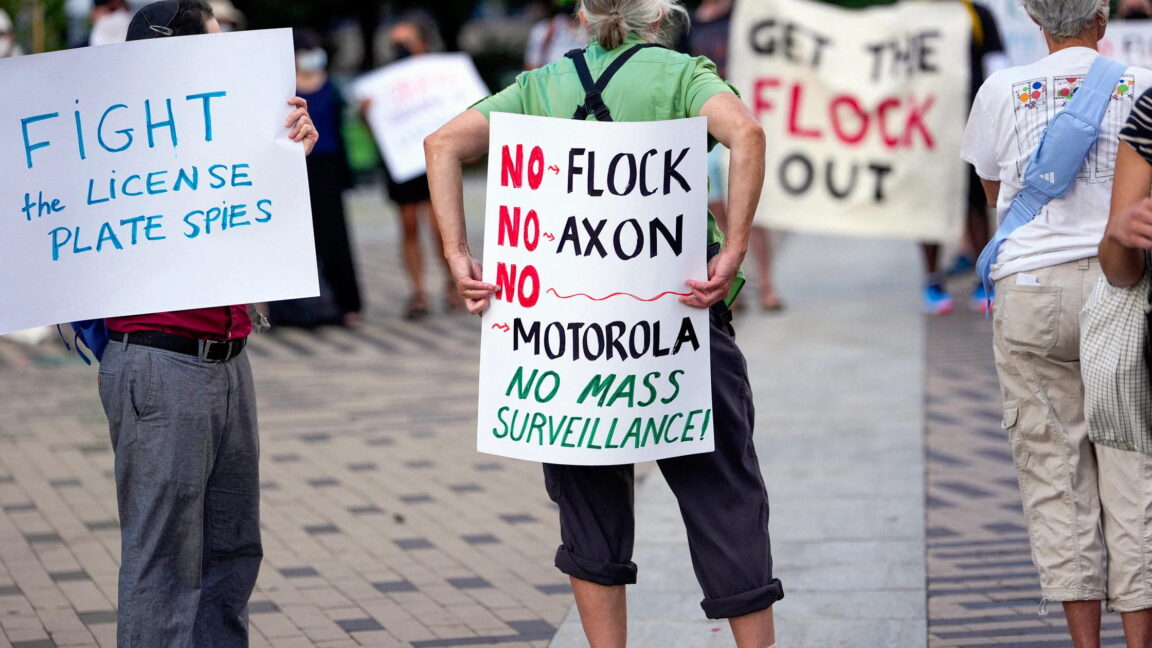
A bipartisan pair of US lawmakers tell WIRED they plan to introduce legislation today that would strip federal funding from states that fail to restrict the use of Flock cameras and other automated license plate readers. The devices, which help police track the location of vehicles tied to crimes, have become the subject of nationwide backlash in recent months over more nefarious uses by officers.

The No FLOCK Actβ€”for Federal License-Plate Observation and Camera Keepingβ€”directs the US secretary of transportation to withhold 10 percent of annual financial support due to states for highways, roads, and bridges if it fails to ban Flock and similar devices for all but five use cases. Congressmen Raja Krishnamoorthi, a Democrat representing Chicago suburbs, and Michael Cloud, a Republican whose Texas district includes Corpus Christi, are cosponsoring the bill.

The legislation says that Flock cameras could be used only for β€œenforcing toll systems, identifying stolen vehicles, missing or endangered persons, vehicles registered to persons with a warrant for a felony offense, or investigating a vehicle involved in a felony offense.” Notably absent are uses like conducting traffic studies, investigating minor drug crimes, and enforcing parking and speeding rules.

Read full article

Comments

Β© Barry Chin/Getty

  •  
❌