
❌

Reading view

A dancing dog mascot, 23 screws, 9 parts: Inside Dell's attempt to show Japanese kids how computers work and how to assemble one

  • Dell Technologies held the 14th edition of its parent-and-child PC assembly class at its Miyazaki Customer Center,
  • where children learned how to build a 14-inch Dell laptop from nine parts and 23 screws
  • Entries cost 113,275 Yen (approximately $730) and included keeping the finished laptop with a Core 5 CPU, 16GB of RAM, and a 512GB SSD, along with a year of on-site service

On the fifth floor of a building in central Miyazaki that once housed a department store, seven children spent a Saturday afternoon doing something almost no laptop owner will ever do.

They learned how to build a working Windows 11-based laptop from start to finish using spare parts on a tray that included nine different components and 23 screws.

The exercise concluded when they powered on their laptops, checked for a Wi-Fi connection, and were allowed to take the self-assembled laptops home.
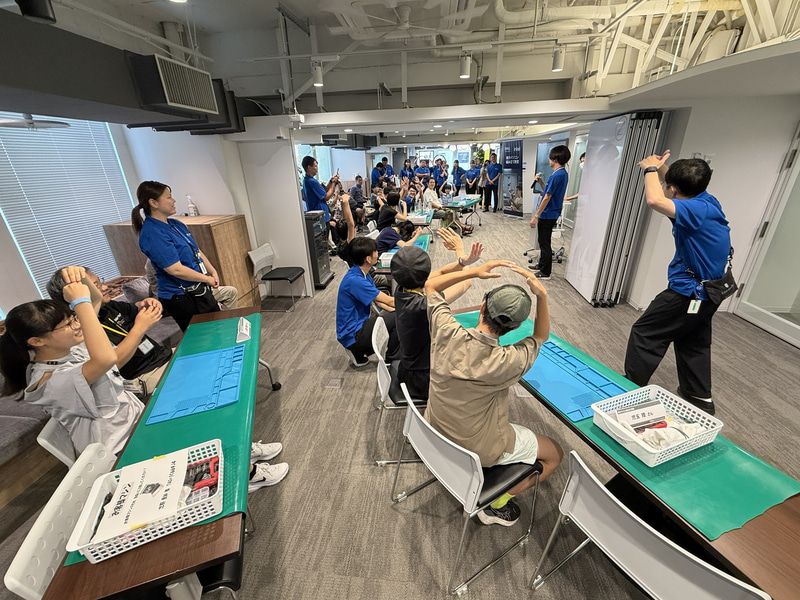
A picture from the Dell Technologies' quiz competition during the event

(Image credit: Dell/ PC Watch (Jp))

An exercise focusing on reliability, self-service and promoting Dell's brand image

The event was Dell's 14th parent-and-child PC assembly class, who were given step-by-step access to the entire process. The event, which drew 14 parents and children, was divided into 6 groups, with one group including two children.

They were tasked with assembling a 14-inch laptop (Dell 14 DC14250) with an Intel Core 5 120U CPU, 16GB of RAM, and a 512GB SSD. The event focused on understanding the underlying hardware and how it worked once assembled, while underscoring the computer giant's focus on repairability and reliability.

Masashi Hayashida, head of Dell Technologies' Miyazaki Customer Center, stated during the event (translated): "Computers can do so many things. I want people to use their finished computers until they break down and get to know them completely. If they break down, they can be fixed. Technology is constantly evolving. I hope you will look forward to the future advancements in technology."

The event included an office tour, and Hii-kun, one of the three Miyazaki-ken prefectural mascot dogs, turned up and performed a dance routine as part of the event. Participants also received a brief history of how Dell Technologies started in 1984 and grew into the monolithic giant it is today, with a presence in over 170 countries, starting with only a $1,000 investment from its founder, Michael Dell.

The exercise, a compressed version of what a Dell service technician does for a living, included plugging in memory and attaching the display, speaker, keyboard, SSD, battery, and Wi-Fi modules.

The children also received a brief overview of AI, how it is important, and that it can make mistakes and should not be given access to personal information beyond what is necessary. University interns at the center followed up by running a ten-question true-or-false quiz on Dell, Intel, and PCs.

The event also featured Yoko Oishi of Dell's advanced technical support team demonstrating how to replace a USB-C module on a Dell XPS laptop to invited members of the press.

The same company that is making record profits building AI data center racks spent a Saturday afternoon teaching children how a laptop is assembled and works, making for a nice change of pace that doubles as a great marketing and public service play for a conglomerate that still makes a significant amount of its revenue from consumer electronics, indicating that it is still committed to the 'personal' side of computing.
  •  

Huawei says its new smartphone chip is entirely free of any US-made components

  • Huawei's new Kirin 9050 Pro is being called its "most powerful" all-Chinese chip tech giant has ever made
  • Huawei is claiming a 55% density gain by 'folding' its chip in half and stacking it instead of shrinking the actual die
  • The chip still uses US hardware and foreign technology to manufacture, including ASML scanners and pre-2022 Applied Materials and Lam Research equipment

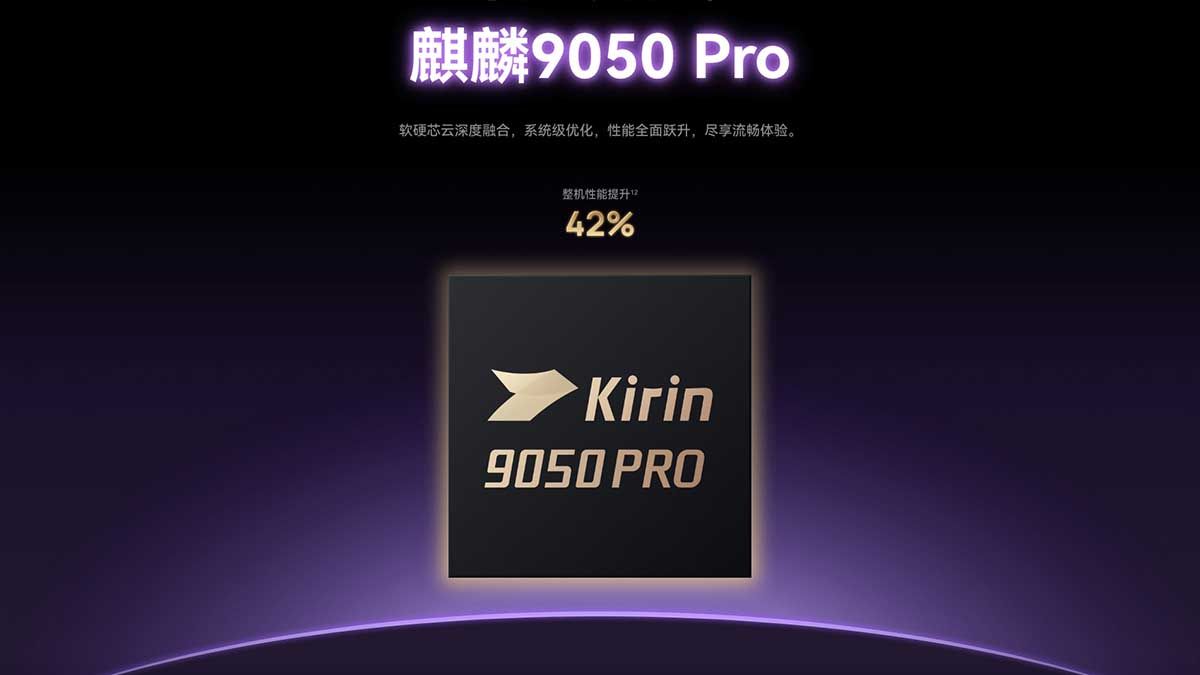
Huawei has introduced the Kirin 9050 Pro, a mobile processor that it says is fully free of American technology.

The chip powers the Mate XT 2, the third device in the company's tri-fold line, which starts at 19,999 yuan (~$2,980), and went on sale in China on September 12 2026.

The South China Morning Post noted Huawei is reducing reliance on advanced foreign semiconductor equipment, and this might be what the state-backed AI and chip giant wanted to highlight above all else, even as it refused to mention sanctions anywhere in its own press materials.

An impressive SoC that continues to indicate a shrinking technological gap

Richard Yu, chairman of Huawei's consumer business group, said on stage that the Kirin 9050 Pro is the company's "most powerful Kirin chip ever" and, based on the performance figures, touts a 42% overall improvement over the last-gen Mate XTs' Kirin 9020.

At the chip level, it claims 24% higher peak single-core and 52% better multi-core throughput against the Kirin 9030 Pro, plus a 142% jump in graphics rendering. The nine-core LinxiCore CPU peaks at 3.1GHz, the Maleoon GPU adds hardware ray tracing, and the Da Vinci NPU runs a 30-billion-parameter mixture-of-experts model on device.

The performance figures alone aren't the only interesting thing about Huawei's new silicon offering; the Kirin 9050 Pro is the first commercial silicon built on LogicFolding, a technique Huawei semiconductor chief He Tingbo presented at IEEE ISCAS in Shanghai in May and expanded on in a signed paper.

Rather than shrinking transistors, LogicFolding splits logic across two active silicon layers bonded face to face, with roughly 50 million vertical interconnects at a pitch of about 1.5 micrometers. Because signals travel shorter distances, Huawei says it could lower operating voltage while raising density.

However, all of these figures (including performance) come directly from Huawei, with no independent verification or peer-reviewed studies. More interestingly, while the Kirin is considerably less dependent on US or Western tech, it doesn't remove it from the equation entirely, and you still have to look closely at the bill of materials for receipts.

Huawei did not announce a process node for the Kirin 9050 Pro, and that silence has been deafening in more ways than one. SemiAnalysis tore down the predecessor in June 2026 and found SMIC's third-generation 7nm process, N+3, reaching about 113 million transistors per square millimeter with no extreme ultraviolet lithography anywhere in the flow.

SMIC's process, however, still leverages ASML immersion scanners. Bloomberg reported in 2024 that SMIC built the earlier Kirin 9000s using equipment acquired from Applied Materials and Lam Research before the October 2022 export rules closed that door, and the same is still in play here.

Despite this, Huawei has come a long way since its phones were declared America-free seven years ago. A UBS and Fomalhaut Techno Solutions analysis seen by the Wall Street Journal in late 2019 found the Mate 30 Pro contained no American parts, and Huawei cybersecurity officer John Suffolk told the paper that "all of our 5G is now America-free." The Kirin 990 inside that phone, however, was fabricated by TSMC on an EUV node.

Huawei's approach, backed by the Chinese state, to essentially rid itself of US influence in the fabrication end of the spectrum remains more of an ongoing struggle than one which it has already achieved, even as it continues to push ahead in certain disciplines and erode a performance gap that industry players earlier thought would take years longer than it is now projected to.

  •  
❌