❌

Reading view

World War II shell detonated on British Coast 

It’s common to find things among the sand while strolling along a beach: shells, seaglass, bits of and seaweed. But in Essex, England, a beachgoer found something quite different on the coast of Southend-On-Sea: a World War II explosive.

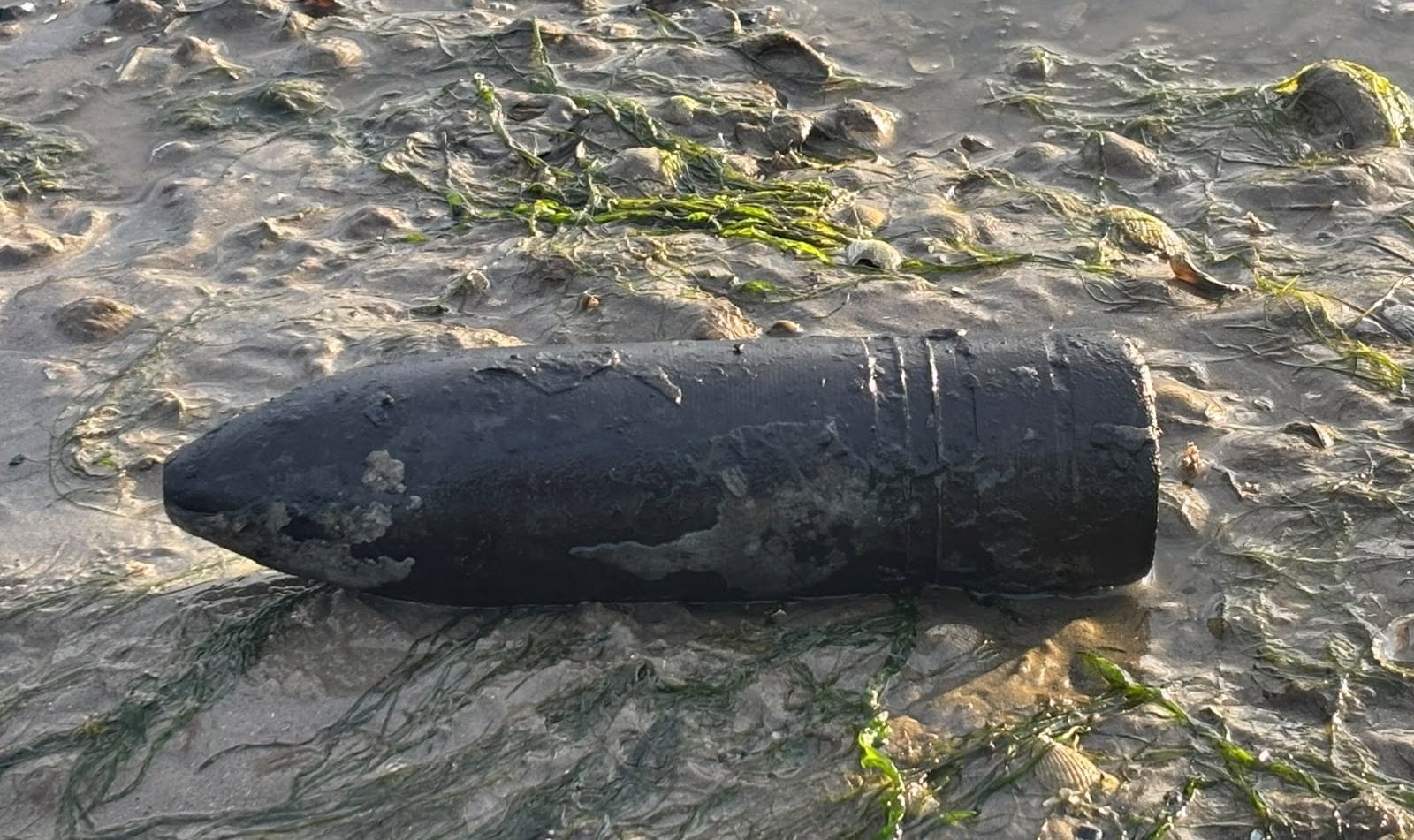
Southend-On-Sea’s HM Coastguard intervened over the weekend after someone reported a “shell-shaped object” less than half a mile south of a local monument called “The Crowstone.” The team first showed up early in the morning to locate the object and send pictures to the Army Explosive Ordnance Disposal teams. 

The Explosive Ordnance Disposal teams decided that disposal officers should remain on the scene, but that everyone should go back at low tide to identify the object and execute a plan. When they returned that evening, Southend Coastguard Rescue Officers accompanied Explosive Ordnance Disposal officers to the suspected explosive. 

“It was confirmed to be an old WWII shell that was approximately six inches in diameter,” HM Coastguard Southend On Sea explained in the social media post. “The decision was made to detonate it in situ, where it posed no risk to passing members of [the] public.”

The video in the Facebook post showcases a significant explosion in the distance, shooting a cloud of debris into the air. It’s not the first time this year that the violence of World War II makes itself known again. In the spring, experts safely detonated a 250 kilogram German explosive in Plymouth, UK. But possibly another World War II find in Indonesia had a drastically less fortunate outcome. A suspected shell killed five people when it detonated in a fishing village. 

“As these items can be so dangerous, if you ever see something suspicious or out of place on the beach or in the sea, do not touch it, move it or take it home,” the post continued. “Let the experts decide if it is safe.” 

The post World War II shell detonated on British Coast  appeared first on Popular Science.
  •  

First Diplodocus fossils found outside of United States 

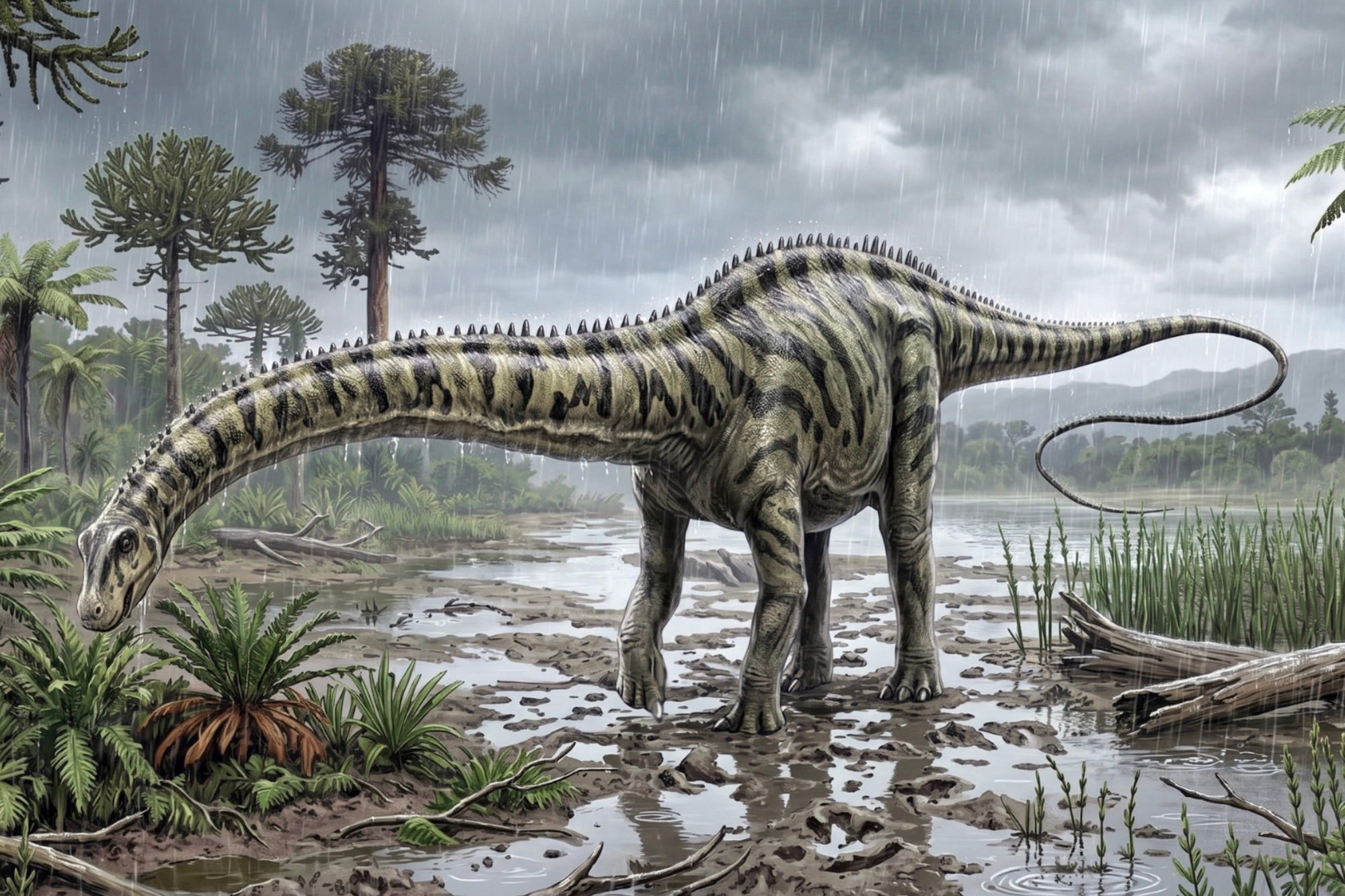
Diplodocus is a famous genus of giant sauropod dinosaurs with small heads and long, whip-like tails that lived in the Late Jurassic period (155 to 145 million years ago). Since its discovery in 1878, all confirmed Diplodocus remains have been unearthed from the Morrison Formation fossil hotspot in the western United States. Now, however, paleontologists have identified Diplodocus remains in Spain.  

The remains came to light in the El Castellar municipality of the Spanish city of Teruel, and represent the first evidence of Diplodocus beyond the borders of North America. They consist of 14 well-preserved tail vertebrae and several chevron bones (bony arches in the tail). Through traditional anatomical comparisons and advanced phylogenetic analyses, the researchers confidently categorized them as Diplodocus and a close cousin of Diplodocus hallorum. 

“As we looked more closely at the anatomy, we began to identify a combination of features characteristic of Diplodocus species. Then, as we carried out different evolutionary analyses, they kept pointing in the same direction,” Sergio Sánchez Fenollosa, lead author of the Journal of Vertebrate Paleontology study and a graduate student in biodiversity and evolutionary biology at the Joint Paleontology Foundation Teruel-Dinópolis research foundation, said in a statement. “With each new result, the picture became clearer: we were looking at a Diplodocus.” Dinópolis is a huge paleontological museum and theme park in Teruel, about 200 miles east of Madrid.

This particular individual dates back to around 150 million years ago. Its place of death indicates that during the Late Jurassic, dinosaurs could migrate from between North America and Europe, probably making use of temporary land bridges that sometimes emerged in the proto-North Atlantic Ocean. During the Jurassic (201.4 to 145 million years ago), the ancient supercontinent Pangea started pulling apart into the Laurasia and Gondwana landmasses, and the Atlantic Ocean also started forming. 

Diplodocus are a subgroup of sauropods, which were among the longest land animals to ever walk the Earth. The recent finding sheds light on Iberian Mesozoic (252 to 66 million years ago) ecosystems and sauropod dinosaur diversity in the European Jurassic, Fenollosa explained. 

“The Diplodocus from El Castellar was approximately 25 meters long [82 feet] (comparable in size to its North American relatives), making it another of the giant sauropods of the Spanish Jurassic,” said Alberto Cobos, co-author of the study and managing director of the Joint Paleontology Foundation Teruel-Dinópolis. Its remains are now on display at the Aragones Museum of Paleontology at Dinópolis.

The post First Diplodocus fossils found outside of United States  appeared first on Popular Science.

  •  

Rats make an ultrasonic sound when they eat chocolate

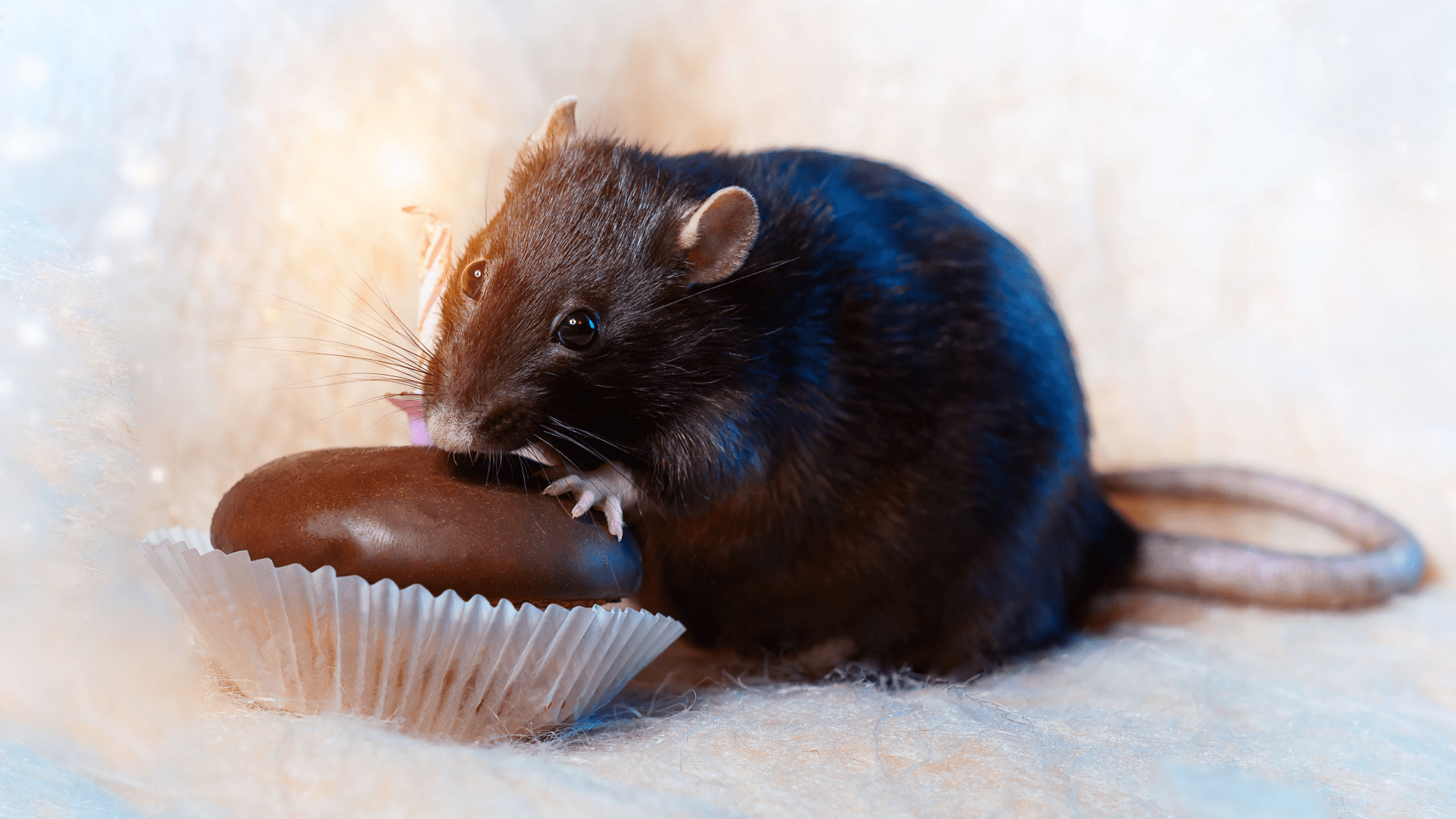
There’s nothing better than sinking your teeth into a sweet, creamy chocolate bar. Rats think so, too—and they may announce their chocolate-infused joy to the world at ultrasonic frequencies. 

Researchers have previously linked ultrasonic rat vocalizations with different emotional and motivational states in the animals, such as in reaction to rewarding stimuli. For example, the rodents vocalize in this way when eating something sweet. 

Now, a team of researchers in Japan have discovered that rats emit a particular ultrasonic vocalization while eating chocolate. Their findings are detailed in a study recently published in the journal eNeuro.

To come to this conclusion, the researchers compared ultrasonic vocalizations that rats emitted when they had access to chocolate, with those they made when they didn’t have access to the candy. The team also compared them with a chocolate-free control group of rats. Researchers then used AI to analyze the vocalizations’ acoustic features, identifying a distinct ultrasonic vocalization—officially 40 kHz inverted-U—strongly associated with chocolate snacking. 

“When rats eat something delicious such as chocolate, they emit a distinct ultrasonic call that humans cannot hear,” Koshi Murata, a study co-author and researcher at the University of Fukui, said in a statement. “This call drops sharply when the brain’s opioid ‘pleasure’ system is blocked. This suggests that rats may be vocally expressing the enjoyment of eating, offering a new window into whether animals experience pleasure as we do.”

To see if this distinct vocalization was related to the tastiness of food or just eating in general, Murata and colleagues compared chocolate-eating vocalizations with the sounds the rats produced while eating regular food. And while the rats ate similar amounts of both, they emitted significantly more 40 kHz inverted-U USVs while eating chocolate. 

In a separate food-choice test, the rats also demonstrated an obvious preference for chocolate: 15 out of 16 rats picked chocolate over the regular food (and can we blame them?). In two experiments, researchers also found that the vast majority of 40 kHz inverted-U USVs were emitted within one second of a feeding event. 

“Our discovery suggests that animal vocalizations could serve as a real-time, non-invasive readout of internal emotional states—specifically, how much an animal is enjoying its food,” said Murata. “Such a tool would allow researchers to measure ‘pleasure’ more directly than current methods permit, and could accelerate research into the brain mechanisms that generate positive emotions.” 

Understanding more about how the brain processes rewarding experiences could shed light on behaviors like overeating, as well as conditions like anhedonia, or the inability to feel pleasure and a common symptom of depression.

The post Rats make an ultrasonic sound when they eat chocolate appeared first on Popular Science.

  •  

500 snails mailed to Tahiti to reclaim their natural habitat

Staff at St. Louis Zoo in St. Louis, Missouri recently opened up a very special delivery in the mail: an overnight shipment of 500 adult Partula snails. 

Their journey began at the Detroit Zoo in Royal Oak, Michigan, and it’s not quite over yet. The small invertebrates’ final destination is Tahiti, where they will be released into the wild as part of an international effort to reestablish wild populations of Partula snails. 

“The snails are sent ‘priority overnight’ via either FedEx or UPS. The snails are carefully packed using insulating materials and special ‘phase change’ packs to stabilize the temperature inside,” Mark Vassallo, Curator of Amphibians at the Detroit Zoological Society, tells Popular Science. “Currently the Detroit Zoological Society bred snails are taking a pit-stop at St. Louis Zoo where they will be fed a special diet in order to prepare them for the wild.”

Partula snails are small, tree-dwelling native to islands in French Polynesia. In Polynesian cultural heritage, each unique Partula snail shell represents an island. When humans introduced the predatory rosy wolf snail to the region to manage another invasive snail species, it wrecked Partula snail populations. 

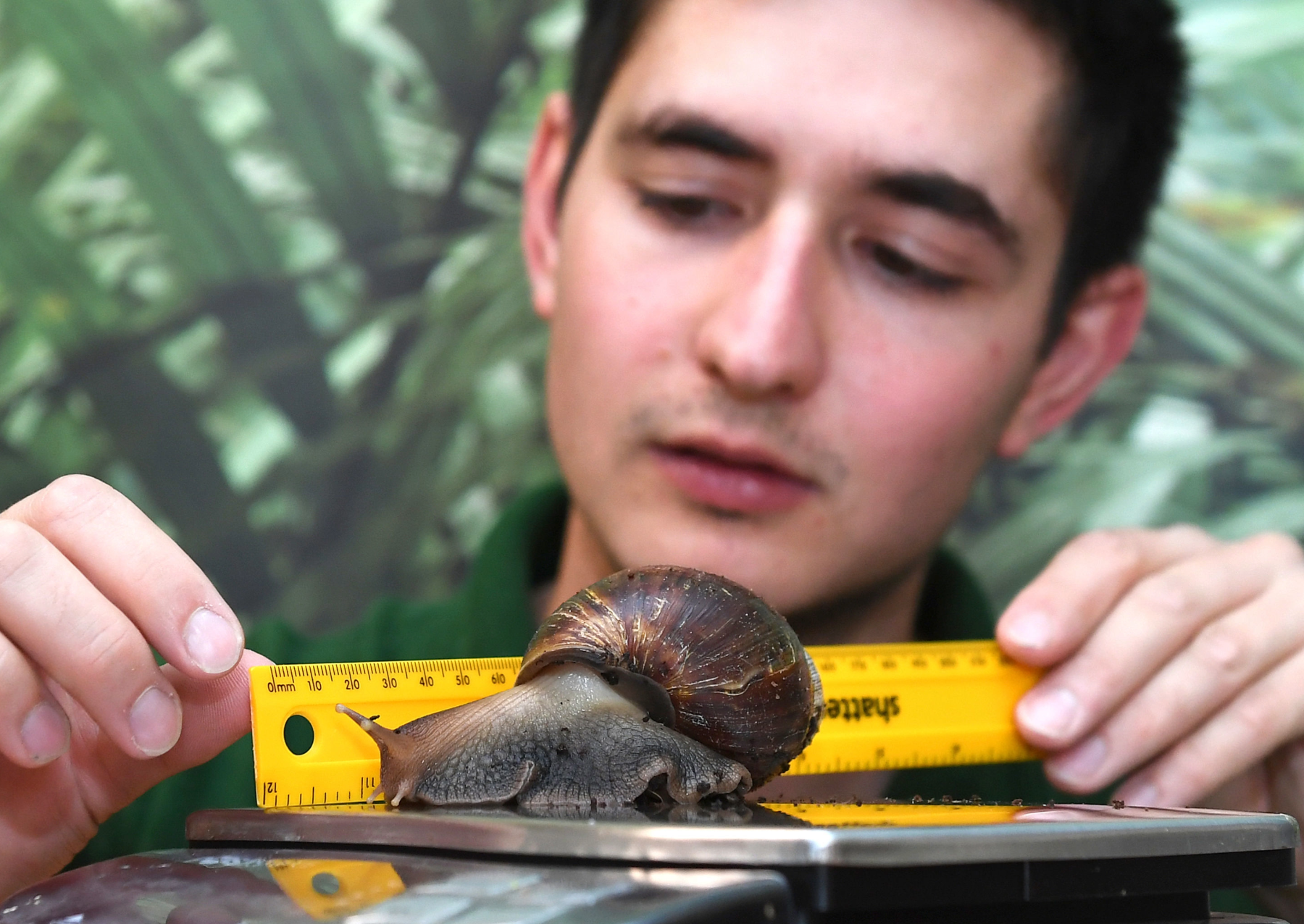
a man holds a yellow measuring tape by a large snail
A Partula snail is weighed and measured by keeper Tom Maunders, during the annual weigh-in at Whipsnade Zoo in England. Image: Joe Giddens/PA Images via Getty Images.

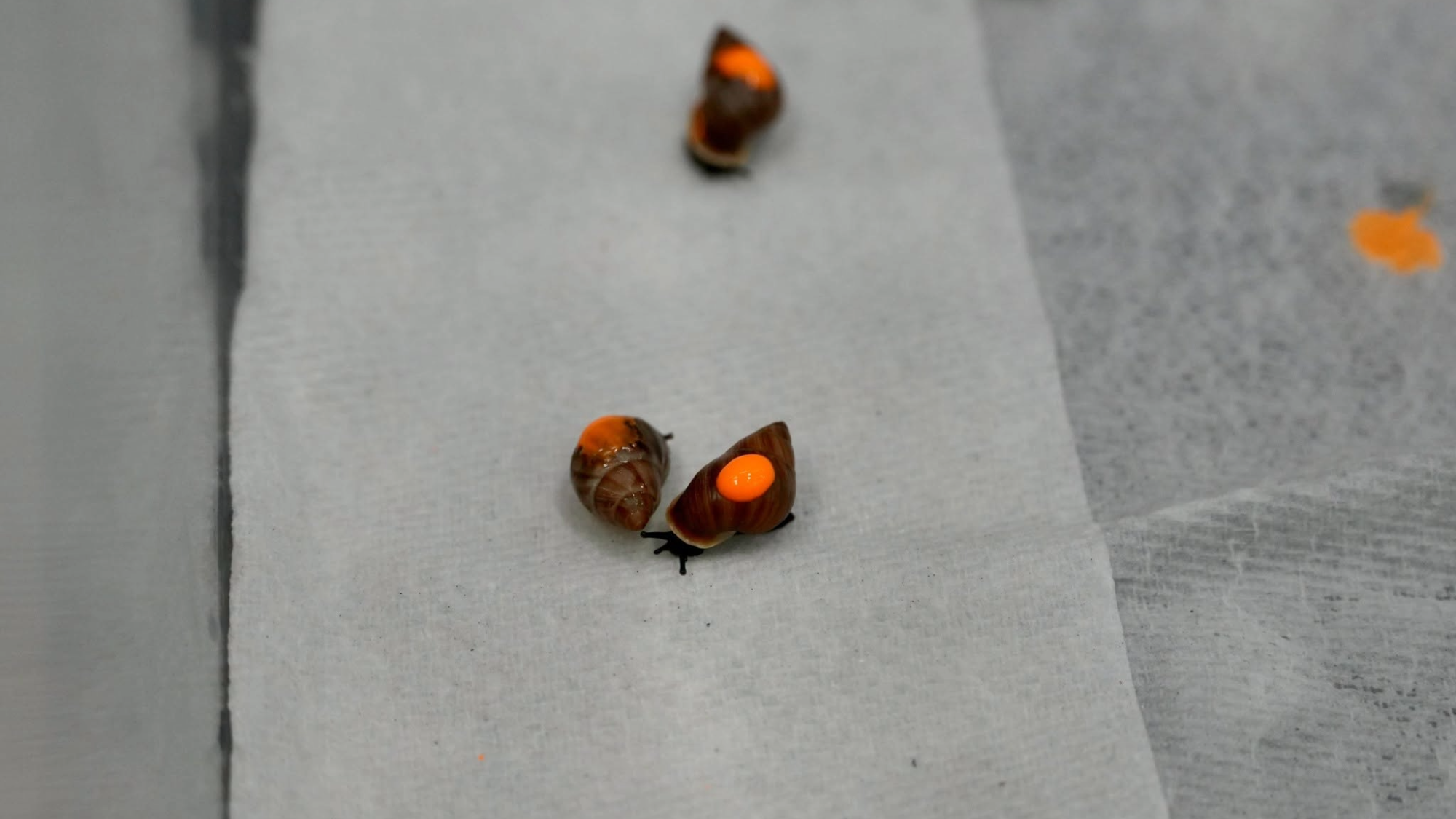
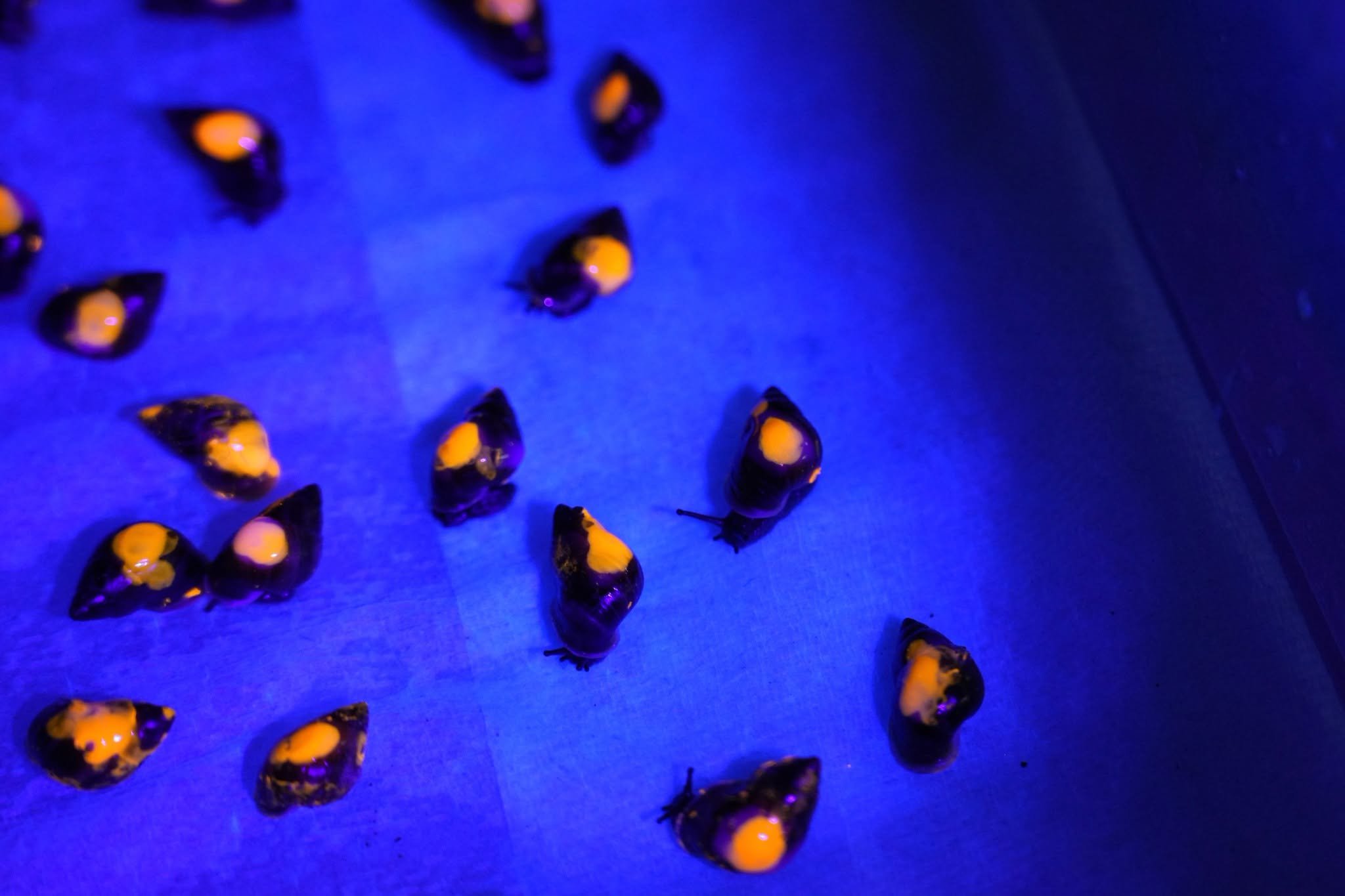
For decades, the Detroit Zoo has been breeding and raising Partula snails and helping return them to their native habitat by the thousands in Tahiti. In fact, the 500 en route right now were all bred at the zoo. Each of their shells features an orange dot of animal-safe paint that glows in UV light, which identifies them as one of the snails released in 2026. Each year has a different color, and the dots also allow conservationists to easily monitor them in their natural habitat. 

This upcoming release is part of an international recovery program that has returned 11 different Partula species formerly deemed extinct in the wild to their native environments, consisting of over 17,000 individual snails. The Audubon Nature Institute in New Orleans, Louisiana, also recently sent 200 Partula snails to Tahiti. 

snails under a blue light with orange dots on their shells
Orange markings on Partula nodosa snails bred at the Detroit Zoo glow under ultraviolet light. The markings will help researchers identify and monitor the 2026 release group after the snails are returned to the wild in Tahiti. Image: Detroit Zoo.

When asked what “success” looks like, Vassallo explains that, “Success for a conservation project can be defined in stages but ultimately, a self-sustaining population with consistent reproduction and very importantly, proper habitat that is protected to sustain that species to allow long term recovery and stabilization of that population.”

Some species of Partula snails are already extinct in the wild, such as Partula nodosa. In the wake of reintroductions of the species, however, experts were excited to observe offspring born in the wild. 

The post 500 snails mailed to Tahiti to reclaim their natural habitat appeared first on Popular Science.
  •  

Single California condor mother gets help raising her chick

Wild condor parents usually make a great parenting team. But when one female California condor (Gymnogyps californianus) in Pinnacles National Park in Central California found herself in the role of a single mother, park biologists stepped in to help.

The condor mother wasn’t able to provide sufficient care and food for her chick while on her own. Field biologists realized that when hunting for food, she returned to the nest less frequently. The chick needed more nutrition to grow and develop appropriately. 

“Based on her behavior, she had largely abandoned the nest, and the chick was unlikely to survive without intervention,” a spokesperson for the San Diego Zoo Wildlife Alliance tells Popular Science. 

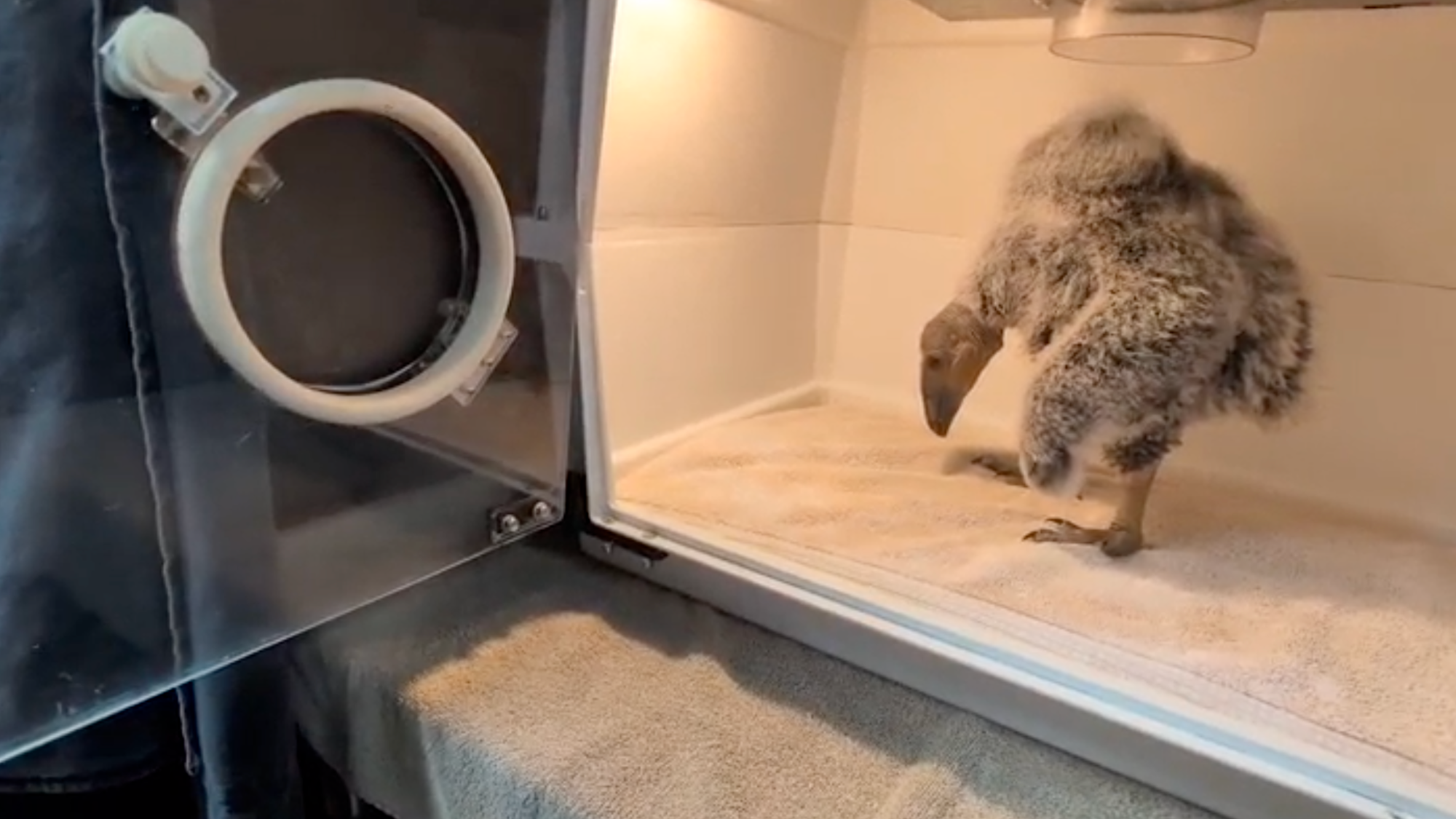
Pinnacles National Park biologists took the chick when it was around one month old and sent him to the San Diego Zoo Safari Park’s California condor breeding facility. There, he’s receiving care in a specialized puppet-rearing program. 

“The puppet-rearing program is a specialized care method used to raise young California condor chicks without allowing them to see or bond with human caretakers,” says the spokesperson. “Wildlife care specialists use hand-crafted puppets that resemble adult California condors and completely cover the caretaker’s hands and arms. Caretakers use the puppet’s beak to deliver food directly to the chick, mimicking the way an adult condor parent would feed its young in the nest.”

The chick was named Cayic (pronounced Chai-eech), meaning “strong” in the Mutsun language of the Indigenous people of California’s Central Coast. Thankfully, Cayic is demonstrating normal growth and development, and experts plan on returning him to the wild next fall.California condors are still considered critically endangered, after nearly going extinct.

As for the chick’s father, he had stopped returning to the nest and eventually died while receiving treatment for suspected lead poisoning. Lead poisoning is the greatest cause of death for California condors and a severe obstacle in the species’ recovery. The species is also threatened by the consumption of microtrash. 

California condors, or “thunderbirds” for Native Americans, are North America’s largest flying birds. Their wingspan is almost ten feet long, but their mighty reach didn’t keep them from reaching the brink of extinction. During the 1980s, there were fewer than two dozen of them in the wild. In 1986, the U.S. Fish and Wildlife Service put them all in a captive breeding and release program, including at the San Diego Zoo Safari Park. Six years later, the program had bred enough chicks to return the first condors to the wild. 

As of the end of 2025, there are 607 California condors in the world, 392 of which are in the wild. One of them is Cayic’s mom. 

“The mother may go on to pair with another male, and we hope she will have another opportunity to breed during a future breeding season,” says the spokesperson.

The post Single California condor mother gets help raising her chick appeared first on Popular Science.
  •  
❌