❌

Reading view

International Observe the Moon Night 2026 is on Sept. 19: Here's how to join in

Moon lovers rejoice! International Observe the Moon Night returns on Sept. 19. Here's everything you need to know about how to participate in the annual celebration of Earth's natural satellite both in-person and from the comfort of your home.

International Observe the Moon Night takes place around the first quarter moon in September or October, when the moon is conveniently visible in the late afternoon and evening. It's also an excellent phase for exploring features along the terminator β€” the boundary between lunar day and night β€” where long shadows help craters, mountains and other features stand out according to NASA.

The global celebration aims to raise awareness of lunar observation, science and exploration, which has intensified in recent years as NASA and its partners work to return humans to the surface of the moon as part of its Artemis program.

How can I participate?

You can join in with the International Observe the Moon Night celebrations either as part of a group or solo from the comfort of your own home!

Looking for an event near you? Search NASA's interactive global map of hundreds moongazing events from star parties organized by local astronomy groups to virtual events hosted by observatories and passionate amateurs.

Or host your own celebration. NASA has advice on how to host your own private or public event to celebrate the occasion, and you can register on the agency's map so other moon enthusiasts can join you.
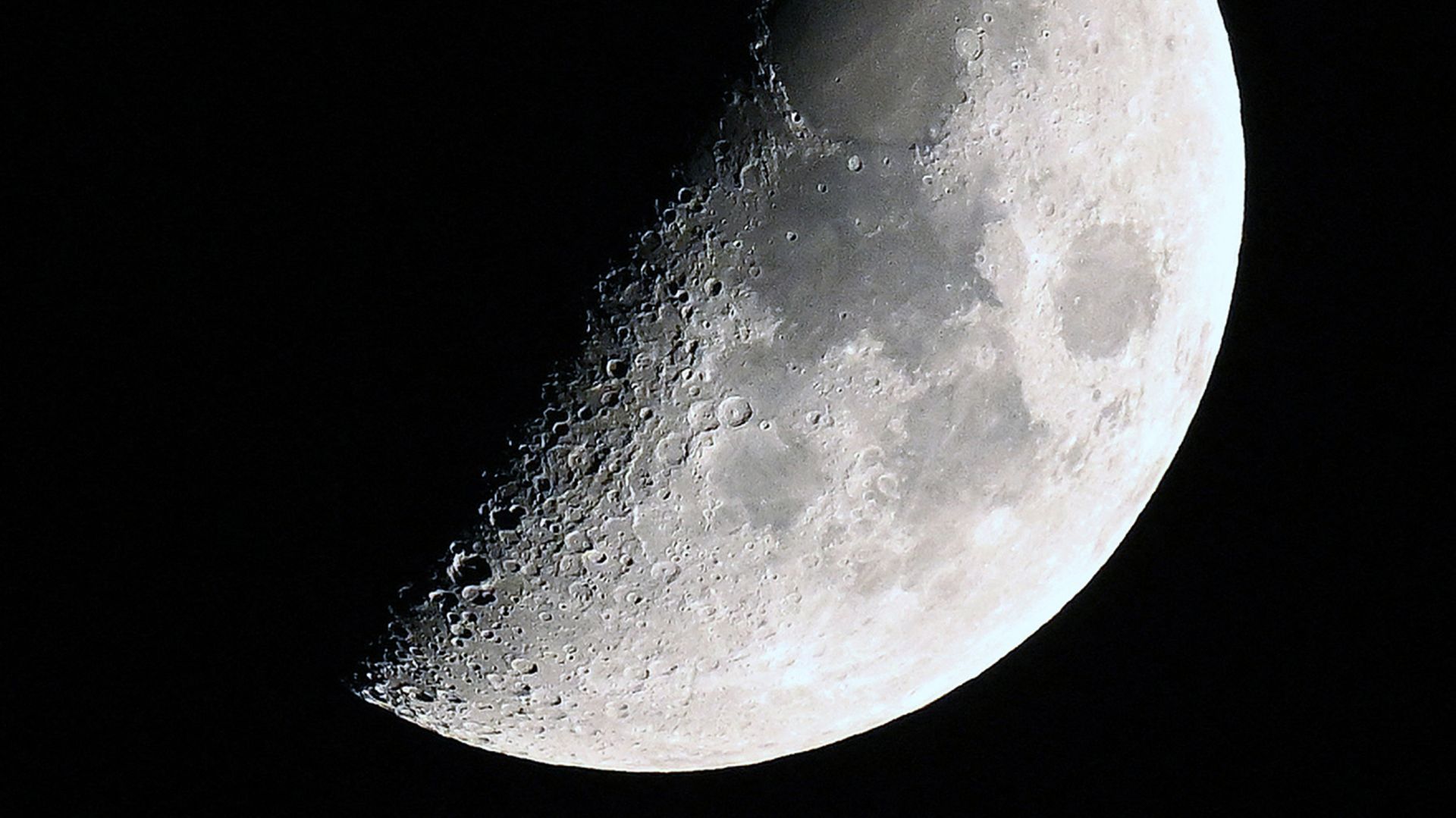
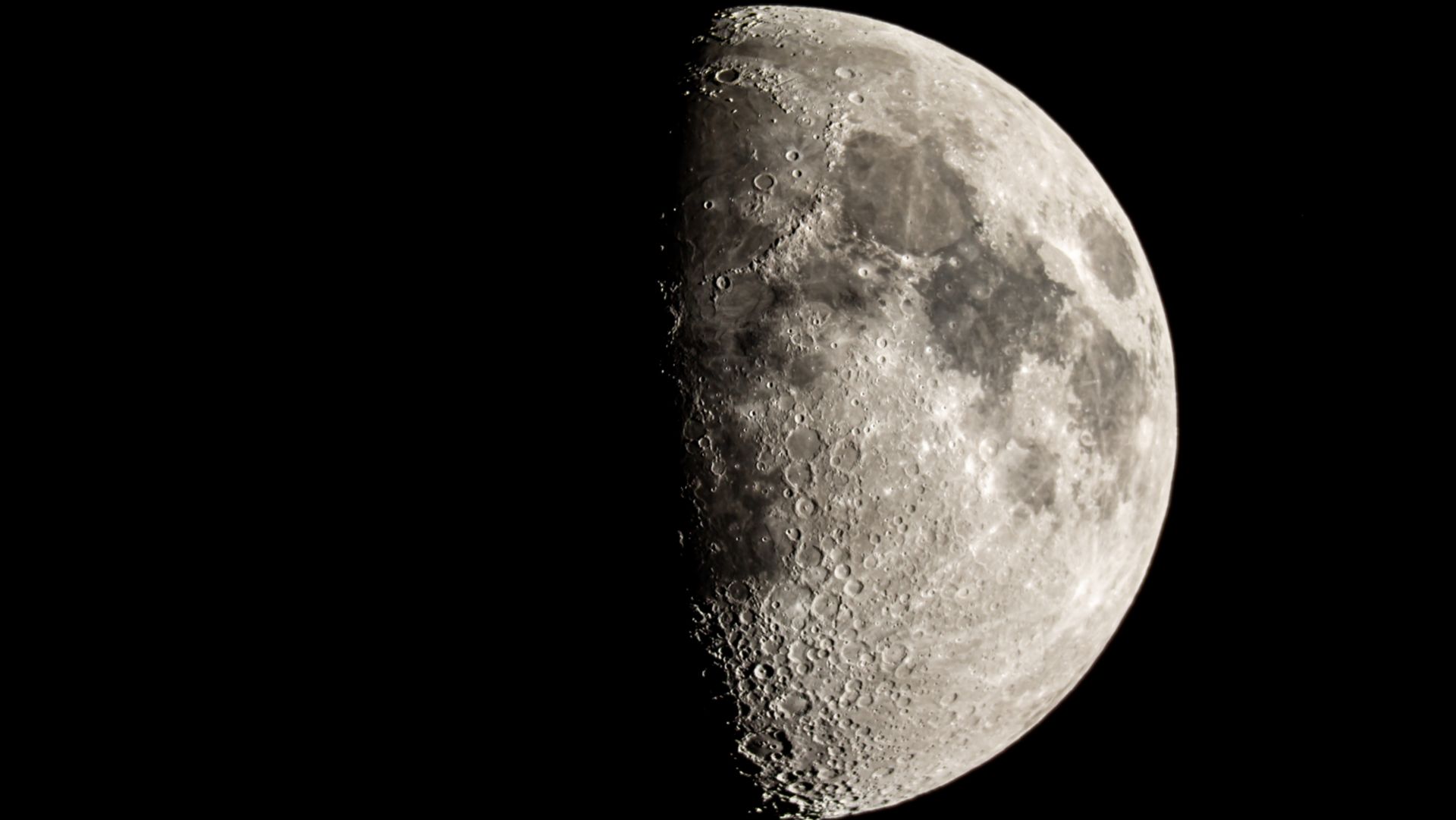
A photo of the moon with its right side lit around the first quarter phase in a black sky.

The first quarter moon shines over Kuwait City. (Image credit: Photo by YASSER AL-ZAYYAT / AFP via Getty Images)

You can also participate from the comfort of your home simply by stepping out to observe the moon with the naked eye, binoculars or a telescope. Or you can peruse hundreds of images of the moon captured by NASA's Lunar Reconnaissance Orbiter and the astronauts of Artemis II as they journeyed to the far side of Earth's moon.
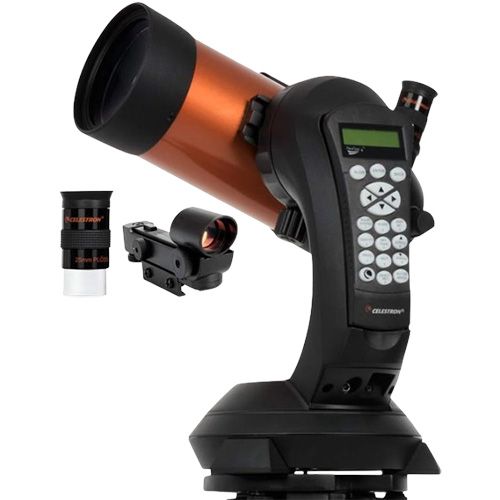
Celestron Nexstar 4SE

Celestron NexStar 4SE

(Image credit: Celestron)

This is a fantastic go-to telescope with a 4-inch aperture that'll help you get quick and steady views of the moon. For more be sure to check out our Celestron Nexstar 4SE review.

Anyone with a 3D printer can also create models of the lunar surface made from LRO data, including the landing site of the historic Apollo 11 mission, which touched down in the Sea of Tranquility in July 1969.

Space.com also has a range of fantastic lunar resources to help you get to know Earth's moon! Be sure to check out our explainer article detailing everything you need to know about the moon, along with the latest news on NASA's Artemis program to return astronauts to the lunar surface and our September full moon guide.

Read more: Apollo landing sites: An observer's guide on how to spot them on the moon.

New to stargazing? No problem! Simply check out our guide to observing the lunar disk, along with our picks of the best binoculars and telescopes that'll have you exploring the wealth of craters and lunar seas scarring the near side of the moon's surface in no time.

Editor's Note: If you would like to share your astrophotography with Space.com's readers, then please send your photo(s), comments, and your name and location to spacephotos@space.com.
  •  

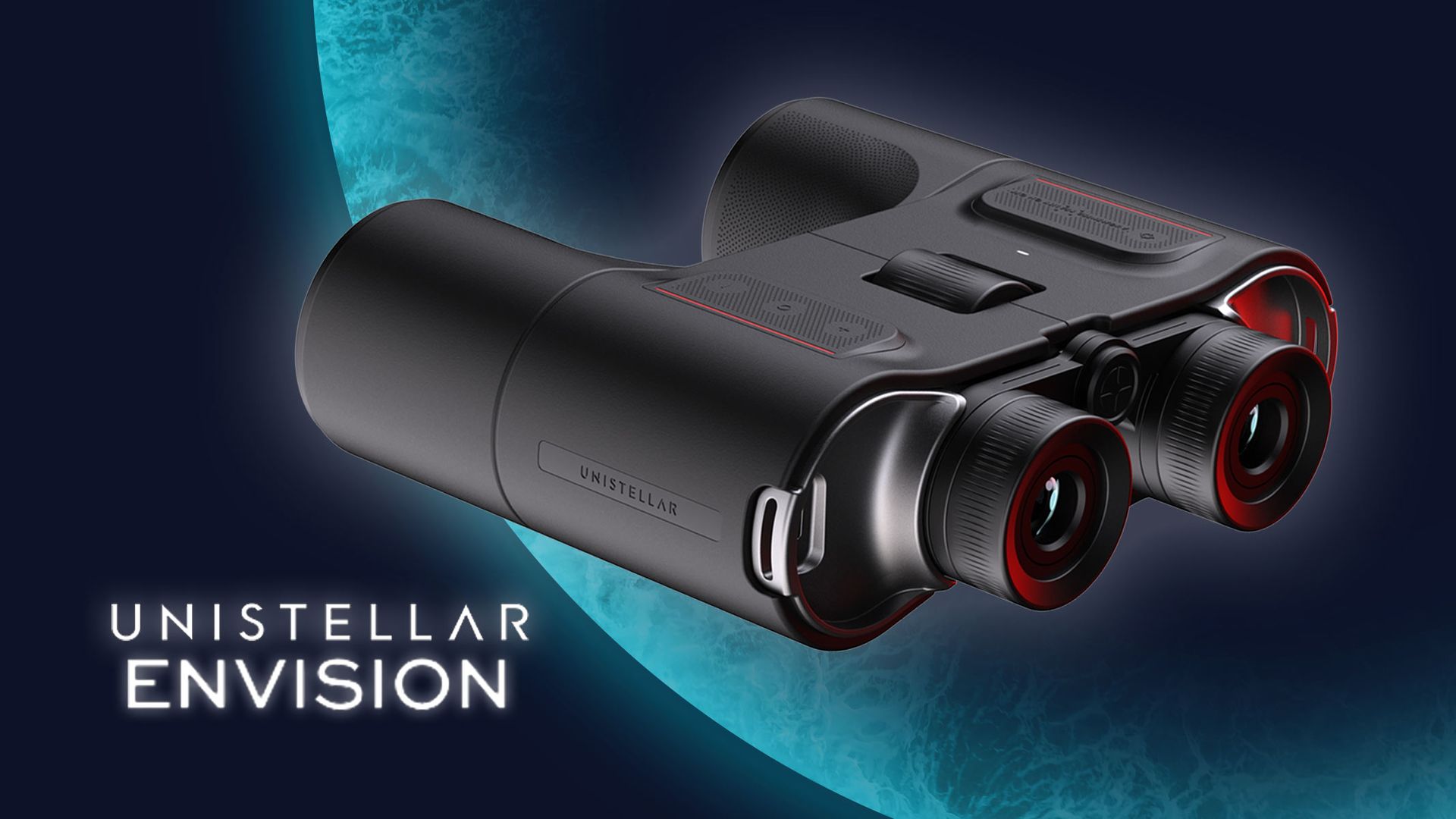
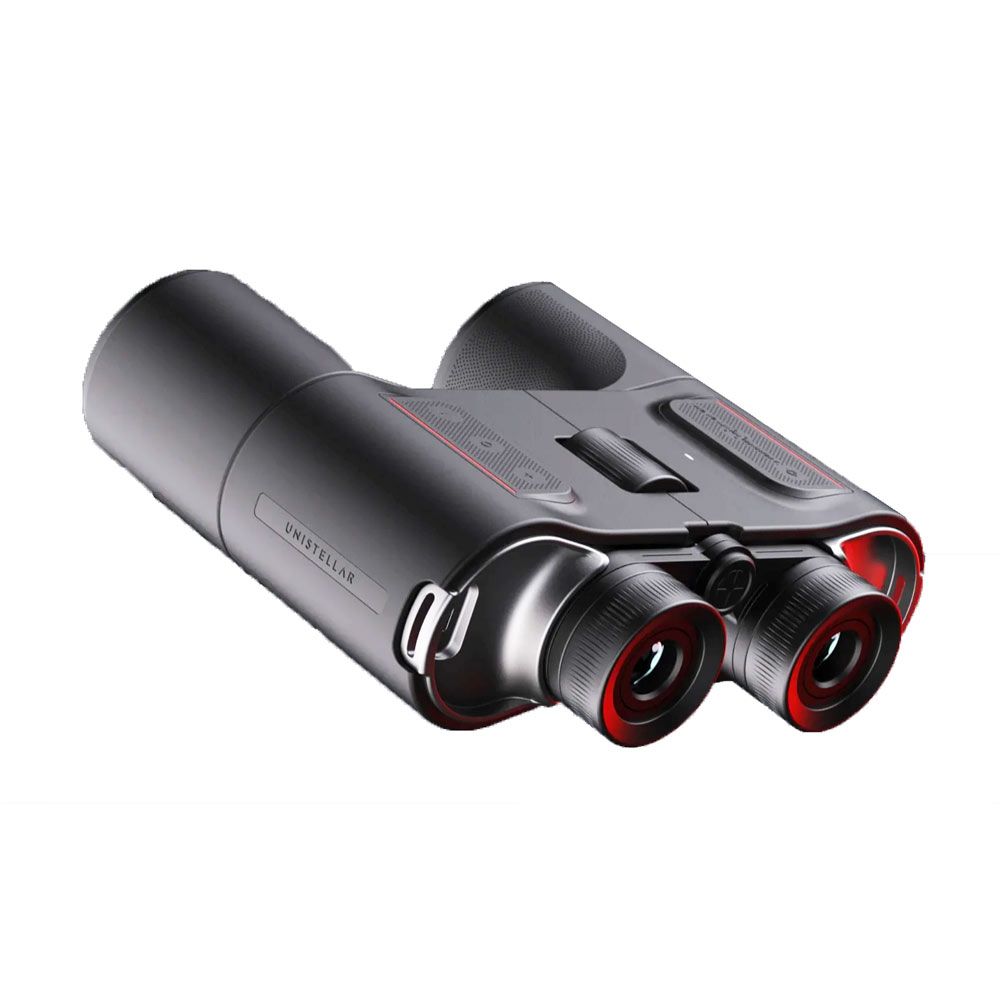
Pre-order the Unistellar Envision AR binoculars and learn about the night sky in real-time

When we had an early preview of the Unistellar Envisions last year, our editor-in-chief Tariq Malik said they felt like something out of Star Trek. I have been very excited about getting my hands on these for a long time and I can't wait to use them to identify stars and constellations in the night sky.

You can preorder the Unistellar Envision AR smart binoculars right now, available for $1499 exclusively from Unistellar.

Unistellar announced that pre-orders were opening for the highly-anticipated Envisions at this year's IFA 2026 conference in Berlin and have delivered more details on the type of functionality customers can expect. The 10x50 smart binoculars can be used with or without the augmented reality (AR) overlay which is able to recognise constellations, planets and deep-sky objects in real time, with more functionality expected to be released within the coming months.

Pre-order now for guaranteed delivery before Christmas.

The Envisions are the highly anticipated augmented reality (AR) smart binoculars from Unistellar, with night sky object recognition from a database of over 1,000 astronomical targets, shareable target lock and guided navigation mode. Functionality to identify natural landmarks, paths and shelters is expected in the coming months.

$1,499 / Β£1,299 / €1,499

A man looking through the Unistellar Envision smart binoculars with a dock in the background.
Our editor-in-chief Tariq Malik was very impressed with them during a demo and thought they felt like something from Star Trek. Tariq Malik / Future
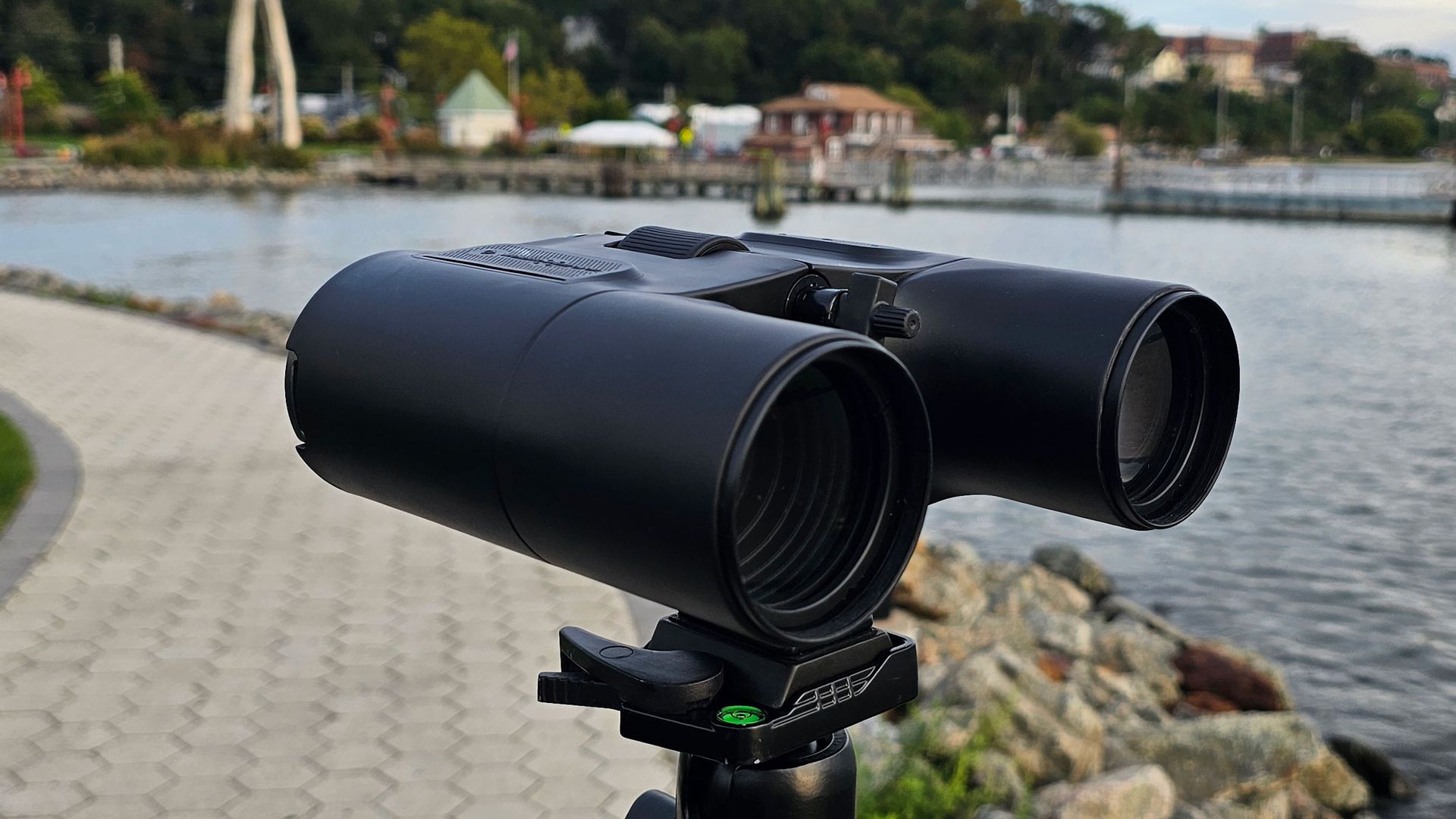
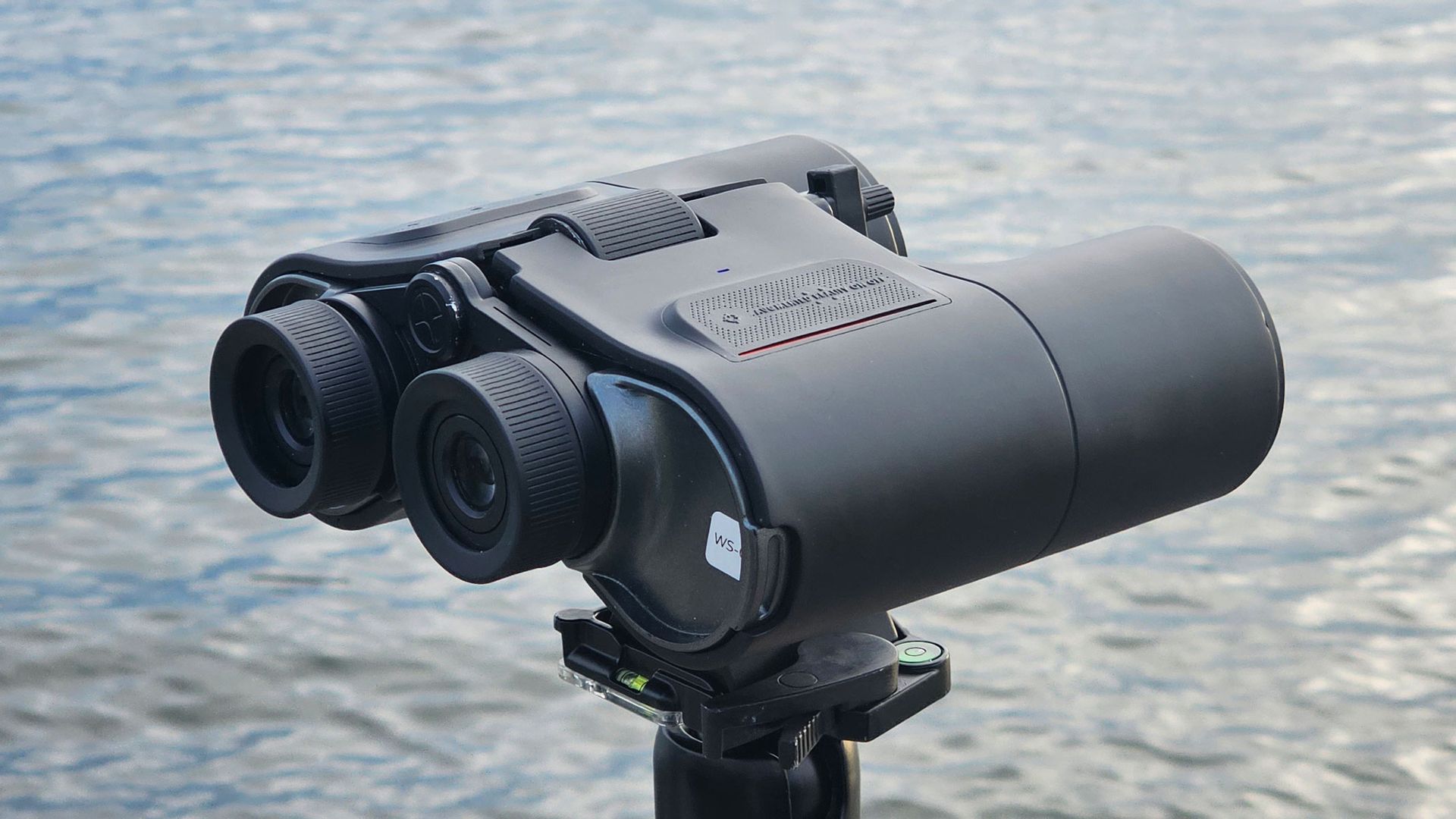
A side back view of the Unistellar Envision smart binoculars with water in the background.
Controls on the right hand side of the model allow you to activate the AR overlay or just use them as regular 10x50 binoculars.Tariq Malik / Future
A side-front view of the Unistellar Envision smart binoculars with water and houses in the background.
At 10x magnification and with 50mm objective lenses, these smart binoculars also hit the key specs for stargazing binoculars even without the augmented reality (AR) overlay.Tariq Malik / Future
A man looking up at the night sky with the Unistellar Envision smart binoculars with water in the background.
Guided navigation mode when paired with the Unistellar app helps guide you toward specific night sky objects that you want to observe.Tariq Malik / Future
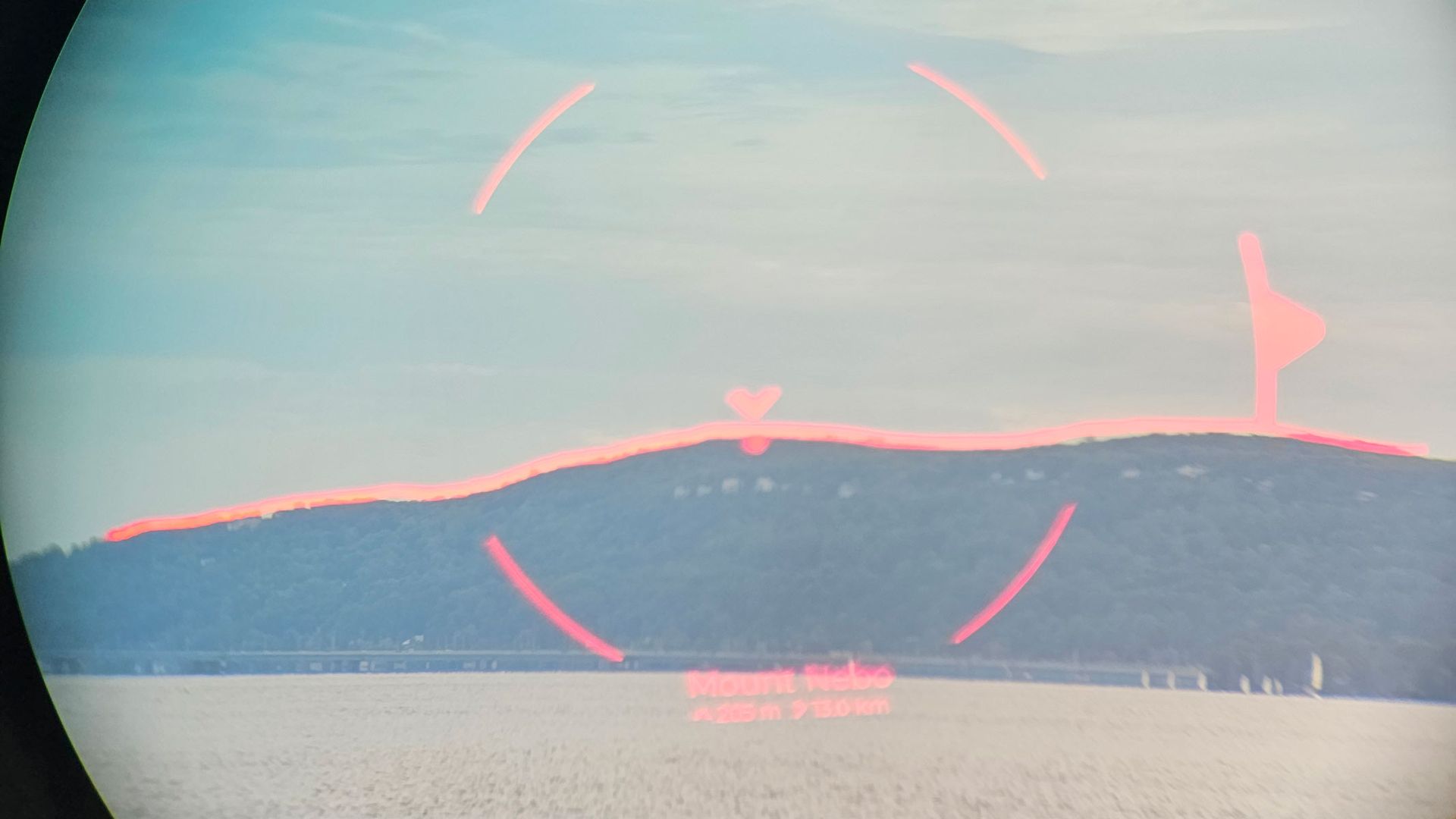
A mountain in the distance with a red AR overlay through binoculars.
On top of night sky object identification, functionality for identifying geographical features is expected to be released soon. Tariq Malik / Future
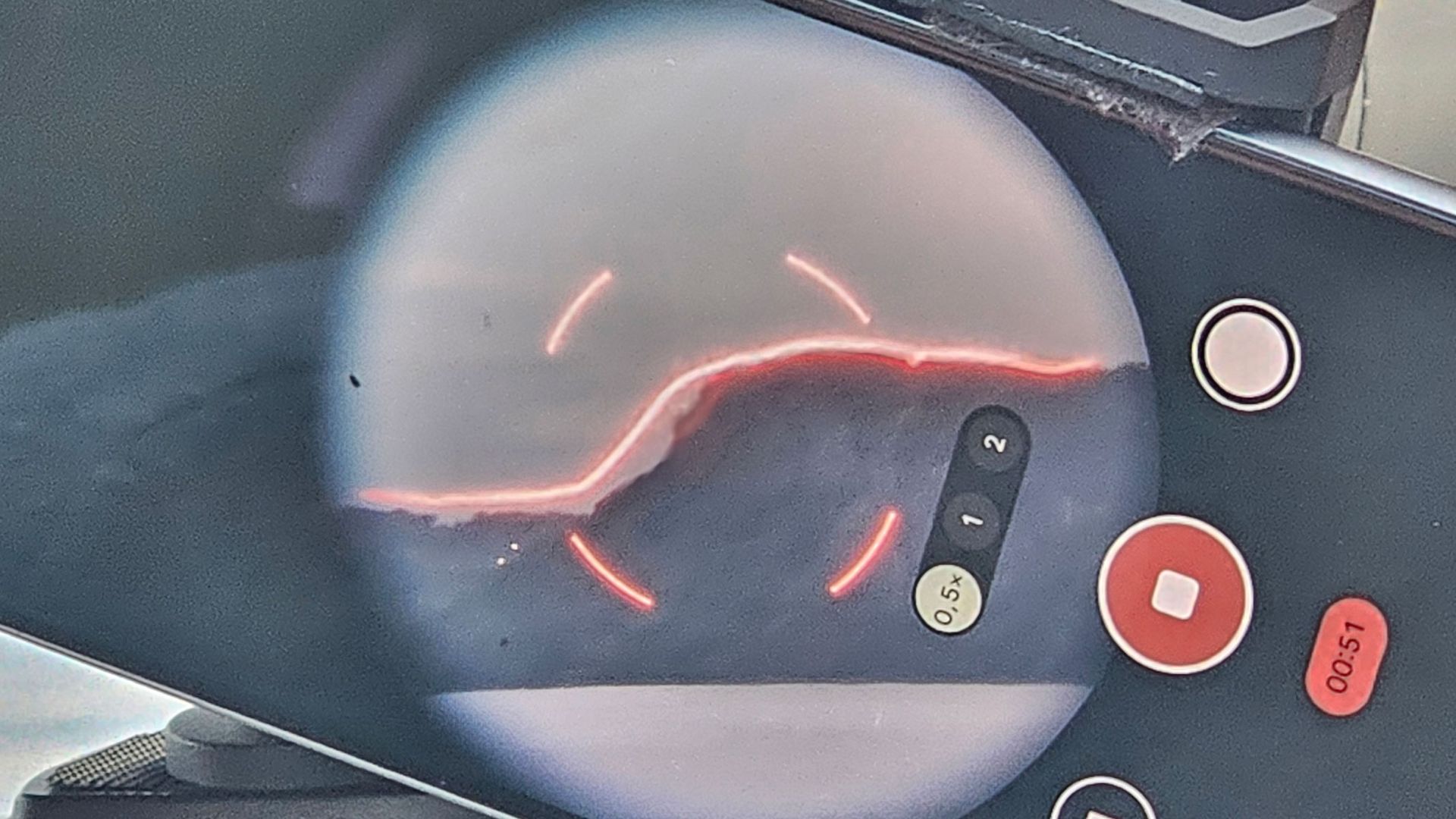
A smartphone showing the view through the Unistellar Envision binoculars with a red AR overlay of a mountain.
The red augmented reality (AR) overlay displays the name of your chosen target and helps you identify new parts of the natural world.Tariq Malik / Future

Unistellar have already shown their muscle in the smart telescope department with the Odyssey, eQuinox 2 and eVscope 2 delivering easy and professional astrophotography to beginner and intermediate stargazers alike. Now they are pushing into the world of smart binoculars with the release of the Unistellar Envision smart binoculars.

These binoculars are "smart" in a different way to the rest of Unistellar's products. They use augmented reality to help users identify constellations, stars and deep sky objects, with a red overlay displaying names and information within the 10x magnified view. Our editor-in-chief got his hands on a pair of Envisions last year and was struck by how sci-fi they felt, likening them to something from Star Trek.

Whilst connected to the Unistellar smartphone app, users can select "Guided Navigation Mode" which guides them to their chosen target. This can also be used for custom targets that the user selects and can be used during shared viewing to help others find the same target. Functionality for geographical landmark identification is expected to be released in the coming months and subsequent software updates are expected to introduce new and exciting uses.

This Unistellar Envision pre-order guarantees delivery before Christmas, so if there is a stargazing obsessed loved one in your life, these smart binoculars could be the perfect gift. They are ideal for those who love adventuring and prefer dynamic skywatching with a new tool that boasts over 1,000 astronomical targets of interest and more than 200,000 visible stars in its database.

Key features: 10x magnification, 50mm objective lenses, porro prism design, weight 2.65 lbs (1.2 kg), five-hour AR battery life, operates without battery as classic binoculars, six-degree field of view, BaK-4 fully multi-coated optics, 1,000+ astronomy targets, +1,000,000 terrestrial targets (functionality expected to be released within the coming months).

Product launched: 2025

Price history: Unistellar did offer the binoculars for $999 for those who pre-ordered them last year but the current selling price is $1,499.

Unistellar exclusive: $1,499

Reviews consensus: We tried them out before general release and were impressed with their augmented reality (AR) overlay which helped us identify stars and a geographical target.

Featured in guides: best smart binoculars

βœ… Buy it if: You want an interactive display that helps you learn about the night sky and locate targets.

❌ Don't buy it if: You need stronger than 10x magnification for long-distance viewing or features like image-stabilization or extreme waterproofing.

Check out our other guides to the best telescopes, binoculars, cameras, star projectors, drones, lego and much more.

  •  

Don't miss Venus shine beside the crescent moon at sunset tonight

Look west at sunset on Sept. 13 to see brilliant Venus shining close to the delicate arc of the crescent moon. The encounter is a prelude to an even closer meeting the following day, when the moon will pass directly in front of Venus for observers across parts of Europe, Africa and Asia.

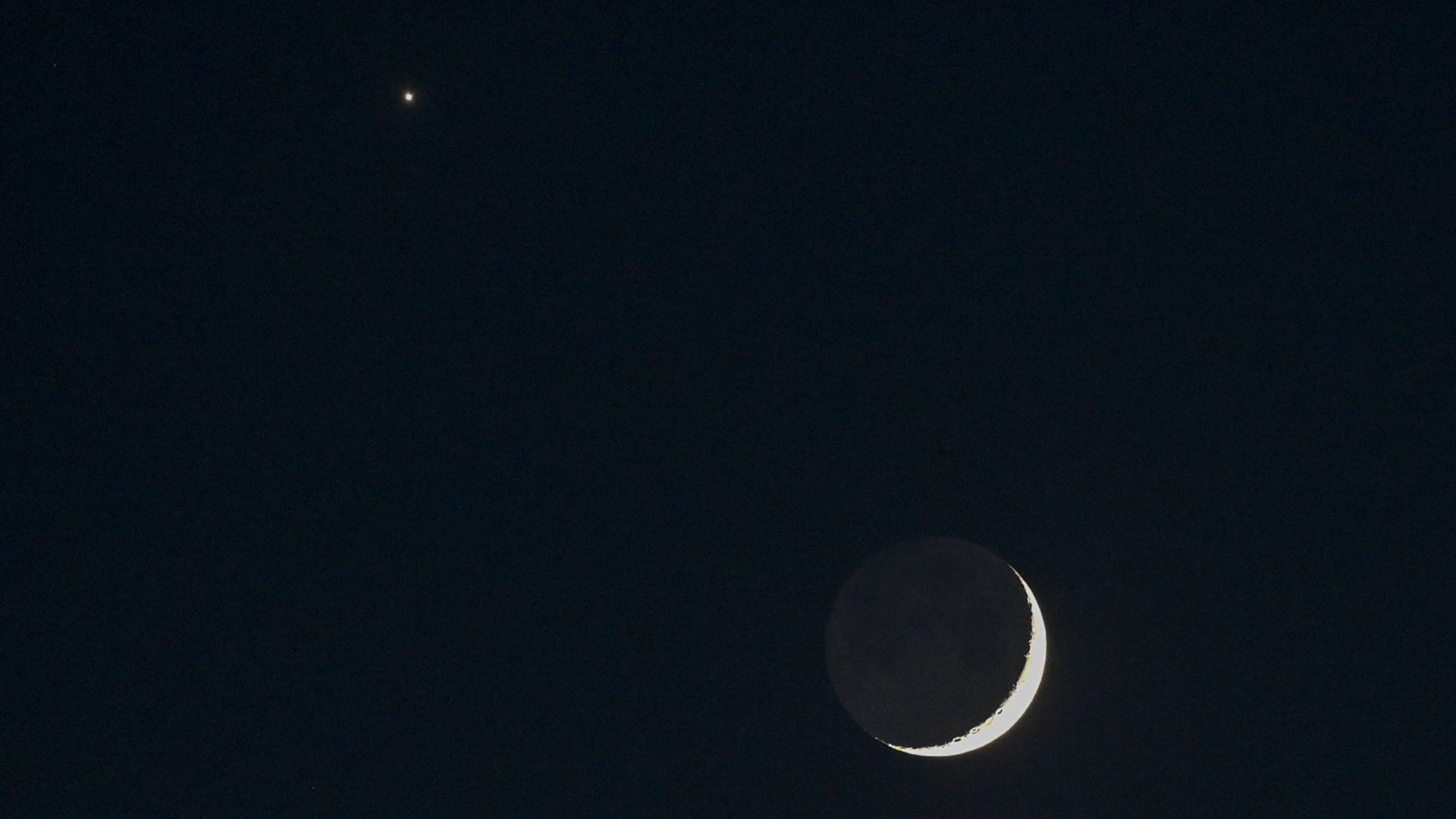
Tonight (Sept. 13), Venus will appear as a bright "Evening Star," a little over 5 degrees from the 9%-illuminated waxing moon β€” roughly the width of your three middle fingers held at arm's length against the evening sky.

Venus, often referred to as "Earth's twin" as a result of its similar size and rocky composition, will be easy to spot as a dazzling point of light in the evening sky, while the moon will be a trickier target, with its barely illuminated disk all but lost in the glare of the setting sun.

The moon and Venus will shine less than 10 degrees above the horizon at dusk, so find a spot with a clear view to the west to give yourself the best chance at catching the solar system pairing before they follow the sun out of view a little over an hour after sunset.

The moon and Venus will shine less than 10 degrees above the horizon at sunset and will be visible for less than an hour before the lunar disk follows our parent star below the late summer skyline. Find a spot with a clear view to the west and start scanning the sky as soon as the sun sets to give yourself the best chance at catching the solar system pairing. You can discover the exact timings for sunset for your location using Time and Date's sunset tracker.

Look out for earthshine brightening the unlit side of the lunar disk, as sunlight reflects off our planet to bathe the moon in a subtle glow, revealing ghostly details on the moon's otherwise unlit side. The phenomenon is best viewed on nights surrounding the new moon phase, when Earth is well positioned to bathe its natural satellite in reflected sunlight.

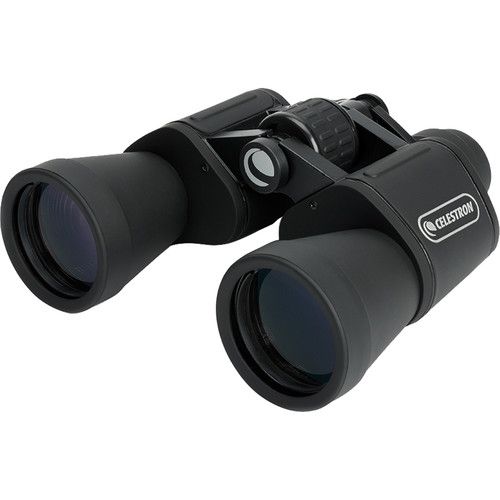
Celestron UpClose G2 10x50

Celestron UpClose G2 10x50 Binocular on a white background

(Image credit: Celestron)

For around $50 you can grab these beginner binoculars for better views of craters and seas on the lunar surface. 10x is enough for a closer look without worrying about excessive shakes during handheld observation.

_

Celestron UpClose G2 10x50 review

Millions of stargazers across parts of Europe, North Africa, the Middle East and southern India will be positioned to see the moon pass directly in front of Venus in the daytime sky starting at 5:26 a.m. EDT (0926 GMT) on Sept. 14, according to in-the-sky.org. Remember: It's never never safe to point a telescope or binoculars at the sun, as doing so can lead to permanent damage to your vision.

The moon and Venus will be below the horizon for viewers in the U.S. as the occultation takes place. By the evening of Sept. 15, the waxing crescent will appear to have leapt to the left of Venus as it nears the point of maximum brightness in its current evening apparition on Sept. 18.

Want to photograph the crescent moon near Venus for yourself? Then check out our guide to photographing the lunar surface with a DSLR or mirrorless camera, along with our roundups of the best lenses and camera bodies for astrophotography.

Editor's Note: If you would like to share your astrophotography with Space.com's readers, then please send your photo(s), comments, and your name and location to spacephotos@space.com.

  •  

Perseid meteors meet mesmerizing star trails over Egypt's Western Desert

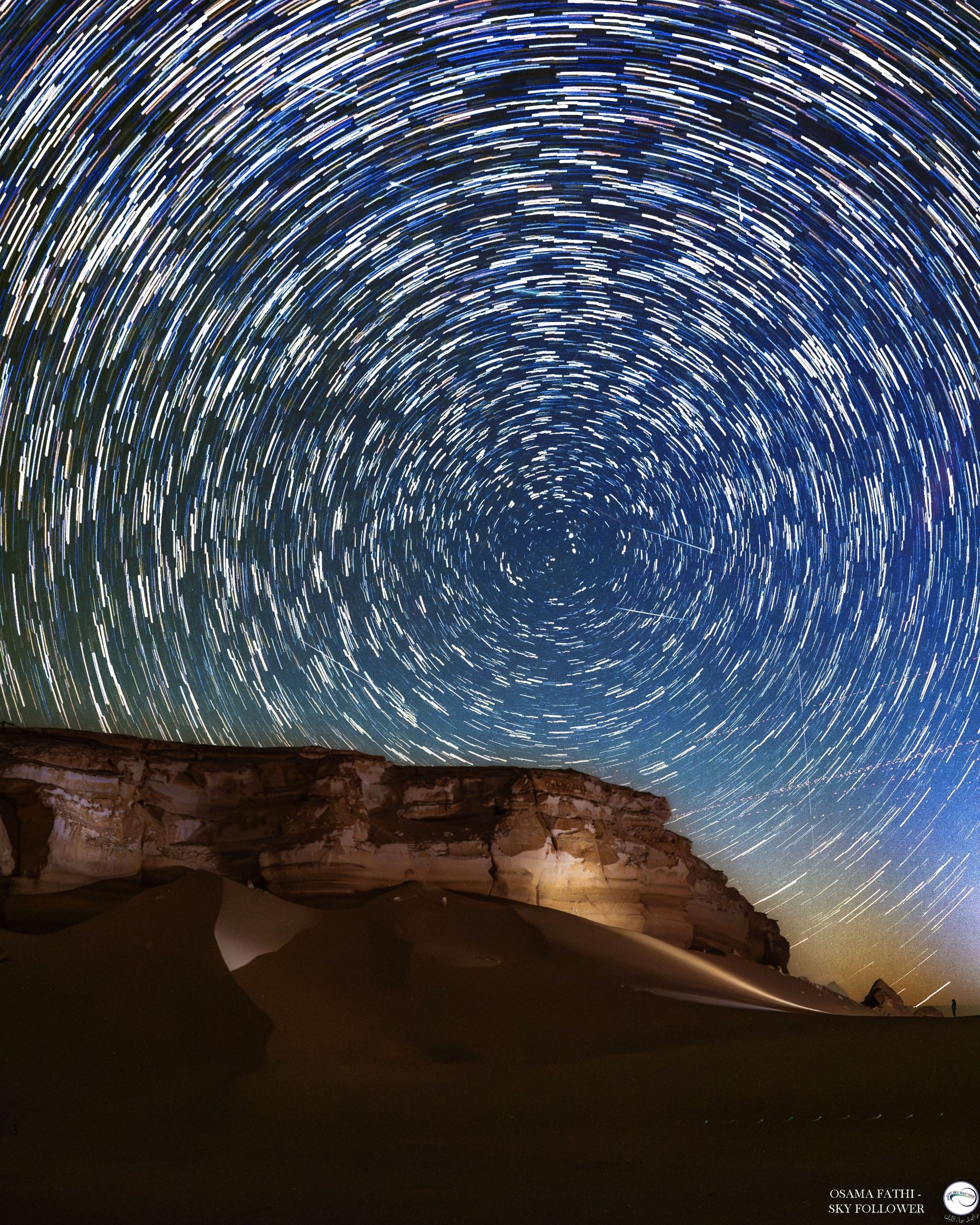
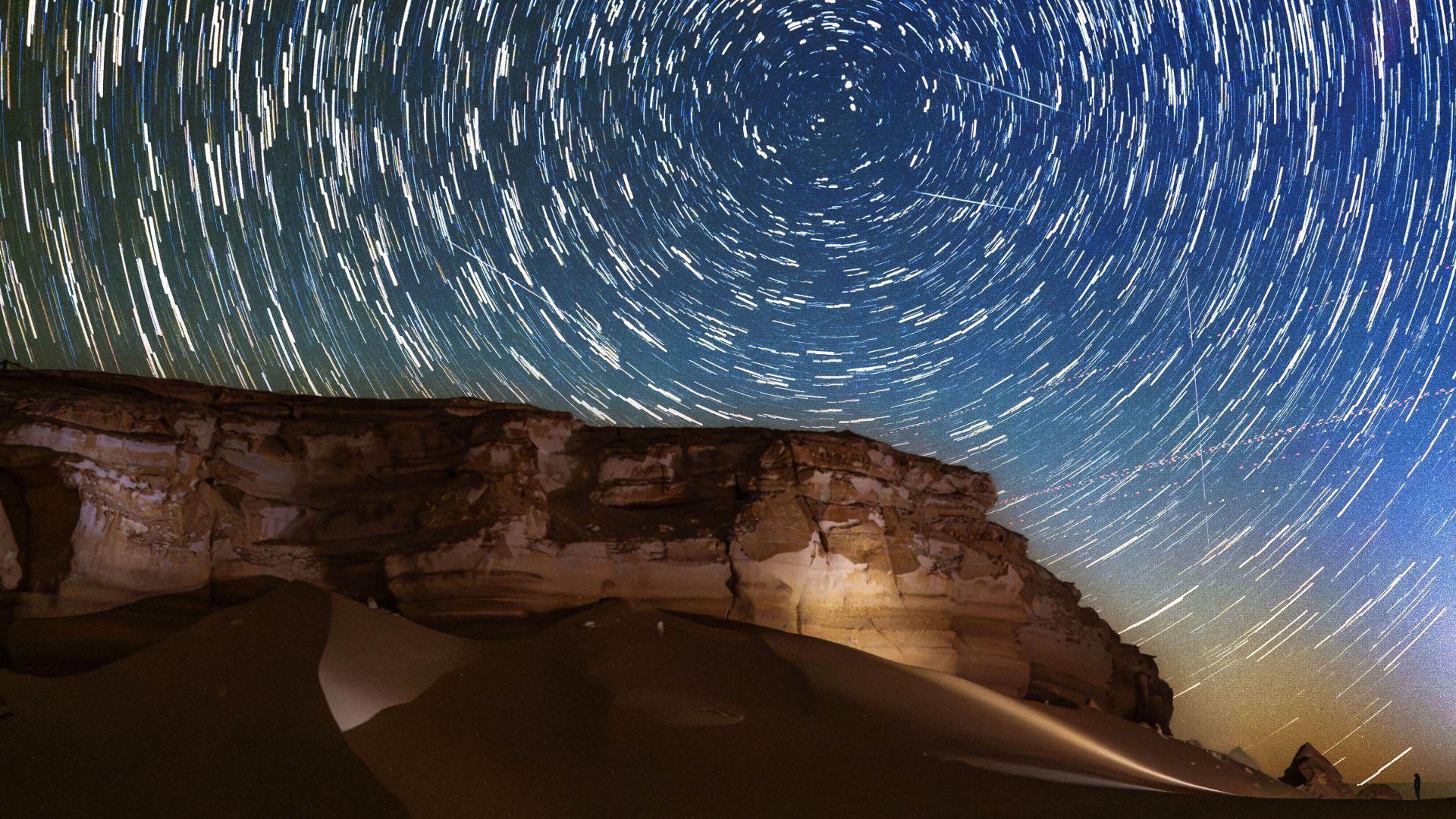
Astrophotographer Osama Fathi created this incredible view of Perseid meteors streaking through circling star trails above Egypt's Western Desert on Aug. 13-14, the night following the shower's peak under dark new-moon skies.

Fathi imaged the star trails in 240 consecutive 25-second exposures, which captured the apparent motion of the stars in Earth's sky as they seemed to circle the celestial north pole and the North Star Polaris. The length of each trail reveals how far the stars appeared to move as Fathi captured their ancient light with his Sony A7 III camera and a 16-35 mm lens during the 100-minute shoot.

But Fathi wasn't alone beneath the desert skies as he captured the scene.

"Capturing this photo in Egypt's Western Desert during the Perseids was an unforgettable experience," Fathi told Space.com in an email. "The night was exceptionally clear and I was surrounded by around 200 fellow astronomy enthusiasts sharing stories, stargazing and photographing the sky."

Star trails circle above a desert at night as meteors streak through the sky.

Perseid meteors and satellites intersect star trails in the skies over Egypt. (Image credit: Osama Fathi)

Perseid meteors appear as unbroken streaks of light, captured in a single exposure as tiny particles β€” often no larger than a grain of sand β€” burn up in Earth's atmosphere in the blink of an eye.

Dotted trails closer to the horizon depict the trajectories of satellites as they passed silently through the skies over Egypt's Western Desert. Fathi captured the landscape and starscape separately before combining, or stacking, the images into a mesmerizing image.

The result is a gorgeous nightscape that highlights the beauty of the natural landscape, the rotation of Earth and the natural light show of the Perseid meteor shower that we experience as Earth passes through the trail of debris shed by comet 109P/Swift-Tuttle.

Want to capture beautiful images of the night sky for yourself? Then be sure to read our guide to photographing star trails, along with our picks of the best cameras and lenses for astrophotography available in 2026.

Editor's Note: If you would like to share your photos of the night sky with Space.com's readers, then please send your photo(s), comments, name and location to spacephotos@space.com.
  •  

I've chased the 'false dawn' for years β€” this is the week to find and photograph it

Some stargazing feels like you know exactly what you are looking for, but you're still slightly unsure whether you are actually seeing it. Zodiacal light β€” meaning "light from the circle of animals" β€” is often like that.

I have chased this so-called "false dawn" for years, and the first few minutes are always the same. I stare toward the horizon and wonder whether the sky is genuinely brighter there, or whether I am simply seeing distant light pollution, the first hint of morning twilight, or something my eyes have invented because I badly want to see it.

However, under a genuinely dark sky β€” and particularly in a long-exposure image β€” its cone shape becomes obvious.

Zodiacal light is enormous. It appears as a broad, softly glowing pyramid rising from the horizon. It can be fainter than the Milky Way and has no hard edges, which is precisely why it is so easy to overlook.

This week is a particularly good time to try because the new moon occurs on Sept. 10-11. With no moonlight interfering with the predawn sky, the main problems become familiar ones to any skywatcher: clouds, haze and artificial light.

The phenomenon itself could hardly be more epic. Zodiacal light is sunlight scattered by dust spread through the inner solar system, concentrated broadly around the plane in which the planets orbit. From Earth, we see that dusty structure edge-on along the ecliptic β€” the path through the sky followed by the sun, moon and planets. It's home, of course, to the 12 (actually 13) constellations of the zodiac β€” from Pisces the fish to Leo the lion. This is the circle of animals.

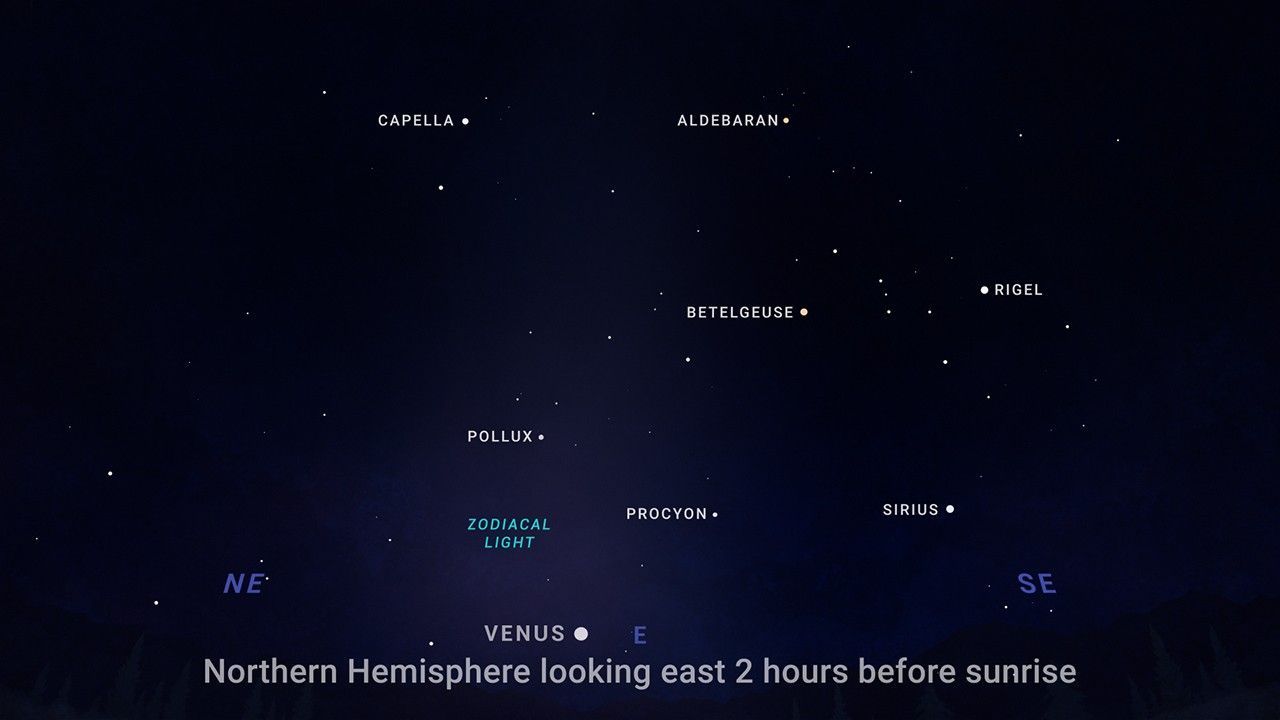
From the Northern Hemisphere around the September equinox, dust-hunting observers should look east before morning twilight, when the ecliptic rises steeply away from the horizon, and the faint glow becomes easier to separate from the murk below. It will reach about 30 to 40 degrees above the horizon.

Zodiacal light is the solar system itself made faintly visible β€” and one of the most subtle and strangest sky sights of all.

What's happening and when to look

Skywatching map showing the northern hemisphere looking east 2 hours before sunrise.

Zodiacal light is a faint pillar of brightness stretching upward from the horizon. (Image credit: NASA/JPL-Caltech)

For observers at mid-northern latitudes, September mornings offer one of the year's best windows for spotting the "false dawn" β€” but it's not easy to see. The essential ingredients are an unobstructed eastern horizon (preferably over the ocean or a large body of water) and no light pollution. You'll need to start looking before astronomical twilight begins rather than waiting until the sky is already visibly brightening, which means getting up very early in a very dark place.

Check the time astronomical twilight begins at your location and aim to be outside before then, giving your eyes at least 20 to 30 minutes to adapt to the darkness. The zodiacal light should appear as a broad triangular glow, widest and brightest close to the horizon and narrowing as it climbs.

It's easy to confuse it with a distant town, but artificial skyglow tends to form a rounded dome above one location on the horizon. In contrast, zodiacal light reaches diagonally β€” or almost vertically upward β€” along the ecliptic.

Give your eyes time and save up that one vital ingredient, a vanishing human trait any skywatcher must constantly nurture β€” patience. Zodiacal light is not something you can walk outside and instantly see. It comes only to those who work for it.

How and when I'm photographing it

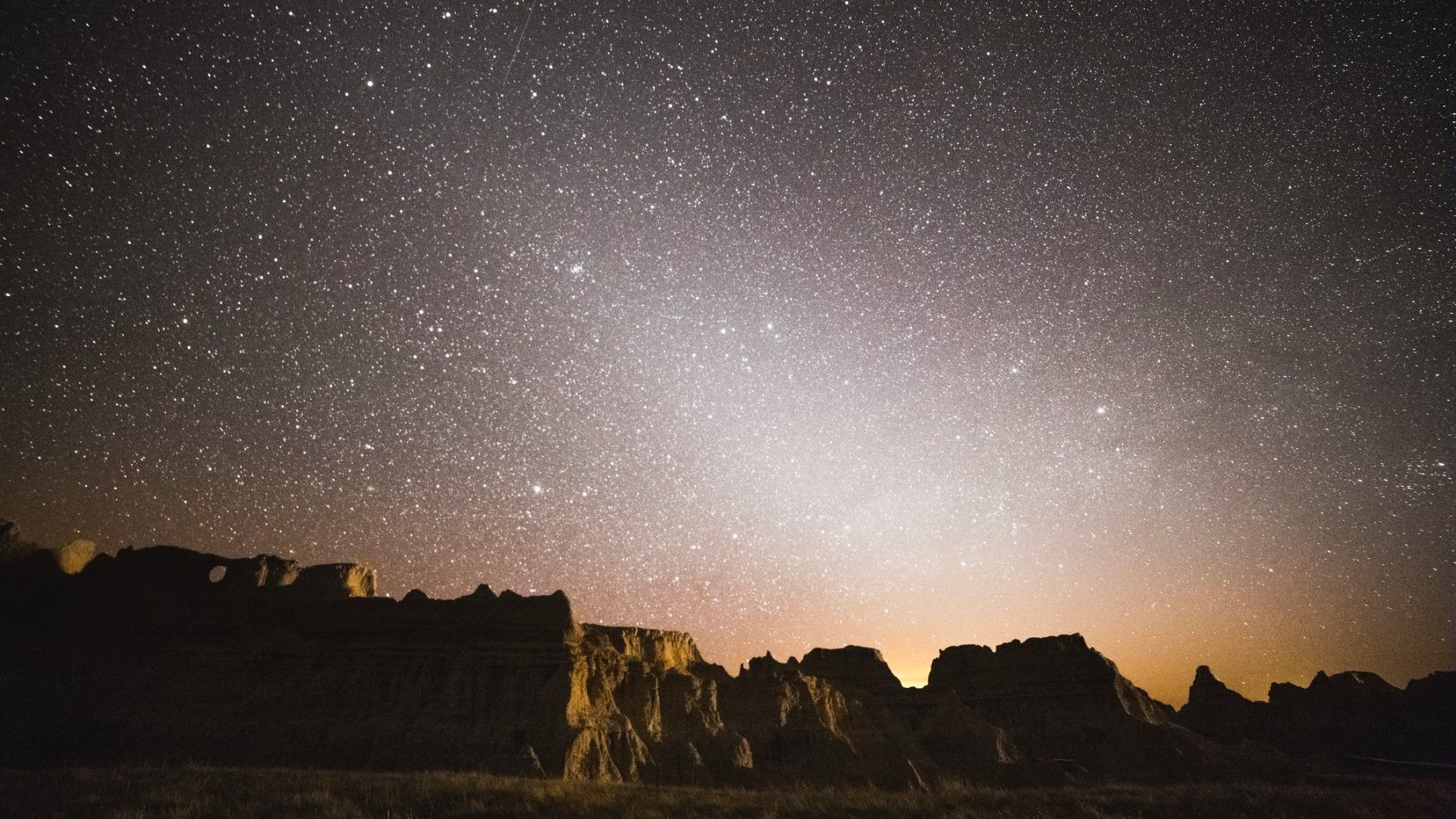
Zodiacal light rises over the Badlands of South Dakota.

Zodiacal light is a faint pillar of brightness stretching upward from the horizon. (Image credit: Mike Hollingshead via Getty Images)

A little like a faint aurora, a camera almost always detects zodiacal light before your eyes become completely convinced. The easiest way is to use a tripod and a wide-angle lens, preferably something around 14-24mm, compose with plenty of eastern sky and include a simple foreground to make the triangular shape obvious. A starting point of around f/2.8, ISO 1600, and an exposure of roughly 10-20 seconds usually puts you in useful territory, though sky brightness and lens speed change everything.

Shoot RAW, focus manually on a bright star and capture a series of images. Then, once you've photographed it, try to stop looking at the screen β€” the entire point is to see it with your own eyes.

Stargazer's corner: September 11-18, 2026

With a new moon on Sept. 10, this week sees a run of dark evenings before our natural satellite gradually returns. On Sept. 14, look shortly after sunset for a slender waxing crescent moon beside Venus, extremely low in the western twilight. By Sept. 16-17, the moon moves on towards Antares, a reddish star at the heart of Scorpius. Then Sept. 18 brings a first quarter moon (perfect for exploring with binoculars or a small telescope) and Venus at the greatest brilliancy of its current apparition as the "Evening Star."

Constellation of the week: Orion

night sky map showing the constellation Orion in the night sky.

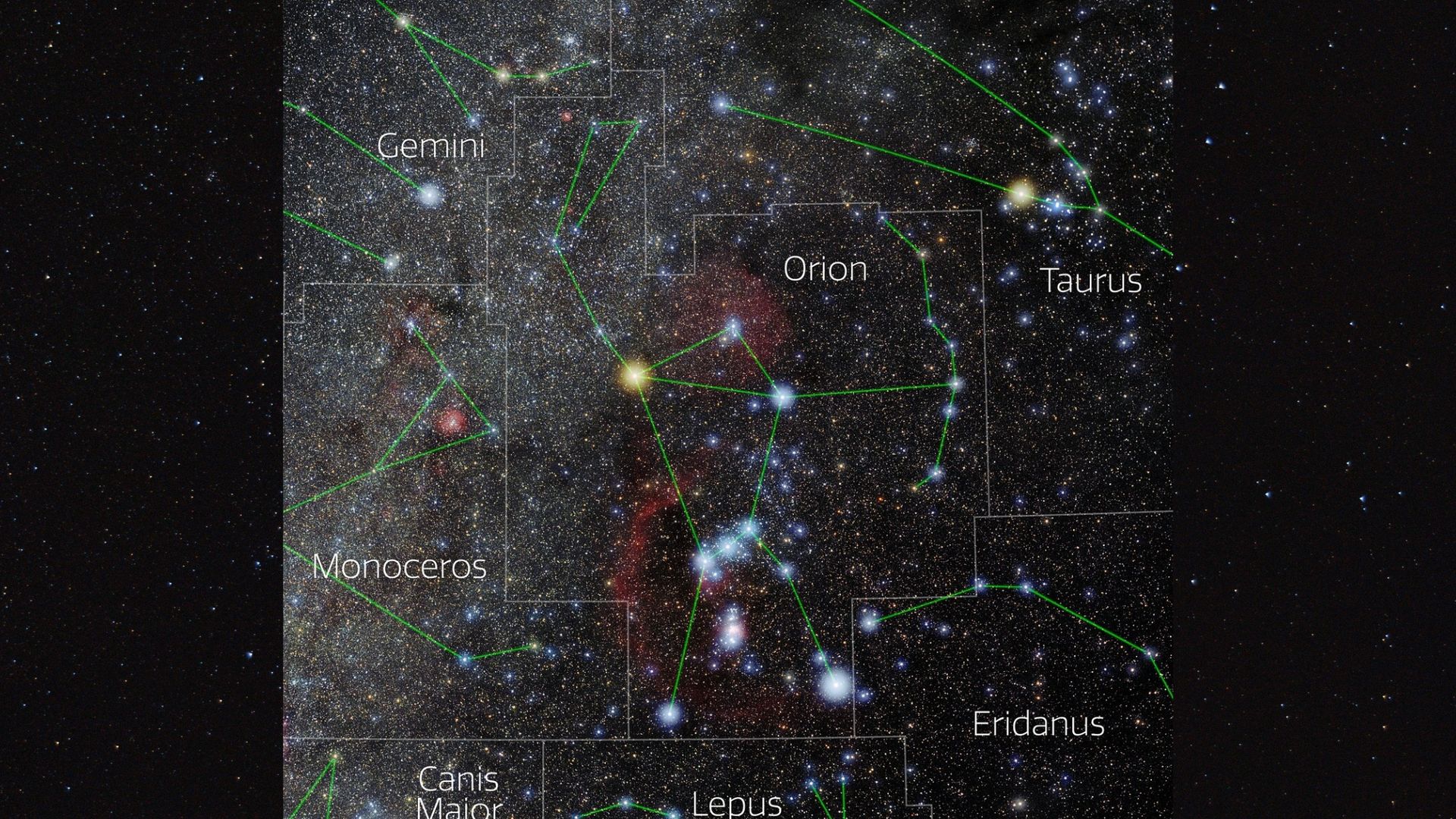
Orion, "The Hunter," is now visible in the east before sunrise. (Image credit: E. Slawik/NOIRLab/NSF/AURA/M. Zamani, background added in Canva Pro)

Orion is normally thought of as a winter constellation, so September seems an odd time to go looking for it. However, if you're venturing out to an extremely dark place to look for zodiacal light, you're going to be staring Orion in the face. In September, the Hunter is in the eastern sky before dawn, where its stars sit along the same general strip of sky occupied by the zodiacal light. Its famous belt stars will be up, as will be bright Sirius, below. This is one of the pleasures of observing before sunrise. The sky is effectively showing you a preview of another season. The constellations climbing in the September dawn are the ones Earth will face during winter evenings a few months from now. Jupiter and Mars will also be visible β€” right on the ecliptic where you'll also β€” hopefully β€” spy the "false dawn".

  •  

A star is exploding 45 million light-years away β€” here's how you can see it

An extraordinary exploding star has been spotted in a distant galaxy, and astrophotographers are racing to capture it before it fades from view.

The supernova, called SN 2026aaiv, was first seen by the ATLAS survey on Sept. 1 in NGC 7331 (also known as Caldwell 30), a spiral galaxy about 45 million light-years away in the constellation Pegasus, visible in the Northern Hemisphere and at mid-latitudes in the Southern Hemisphere.

That makes this supernova a prime target for amateur astrophotographers and astronomers worldwide to capture an image of this rare event.

Hundreds of astrophotographers have already captured it, including Andrew McCarthy, who posted his image on Instagram on Sept. 7 with the message, "As luck would have it, I happened to be in the middle of a massive project with this galaxy, and caught the supernova." He shot four hours of data, two before and two after the supernova, as part of a 100-hour project. "The final image will be EPIC!" he said.

Tom Masterson, Mountain Operations Manager at the Mount Wilson Observatory, also captured it on Sept. 10 using a 60-inch telescope.

What you'll need to find SN 2026aaiv

At magnitude 15.7 on Sept. 11, 2026, SN 2026aaiv is relatively dim, but still brightening. Many of the images posted online were captured with large professional telescopes or remote telescopes in dark regions. However, you can find and photograph SN 2026aaiv with relatively modest equipment. You'll need a telescope or large binoculars to see NGC 7331 (at magnitude 10) at all, but the supernova is dramatically more challenging visually. To have a chance of seeing SN 2026aaiv, a large telescope is recommended (observers have confirmed seeing it using a 14-inch Schmidt-Cassegrain telescope). Use the averted vision technique: look slightly to the side of the galaxy's core so the eye's more light-sensitive rod cells can reveal faint detail.

The easiest way is to use a smart telescope, which can quickly find and image the host galaxy NGC 7331. According to Seestar (Official ZWO Group) on Facebook, users of the Seestar S50 have managed to image the SN 2026aaiv with about two hours of 10-second exposures (the default mode).

How to find SN 2026aaiv

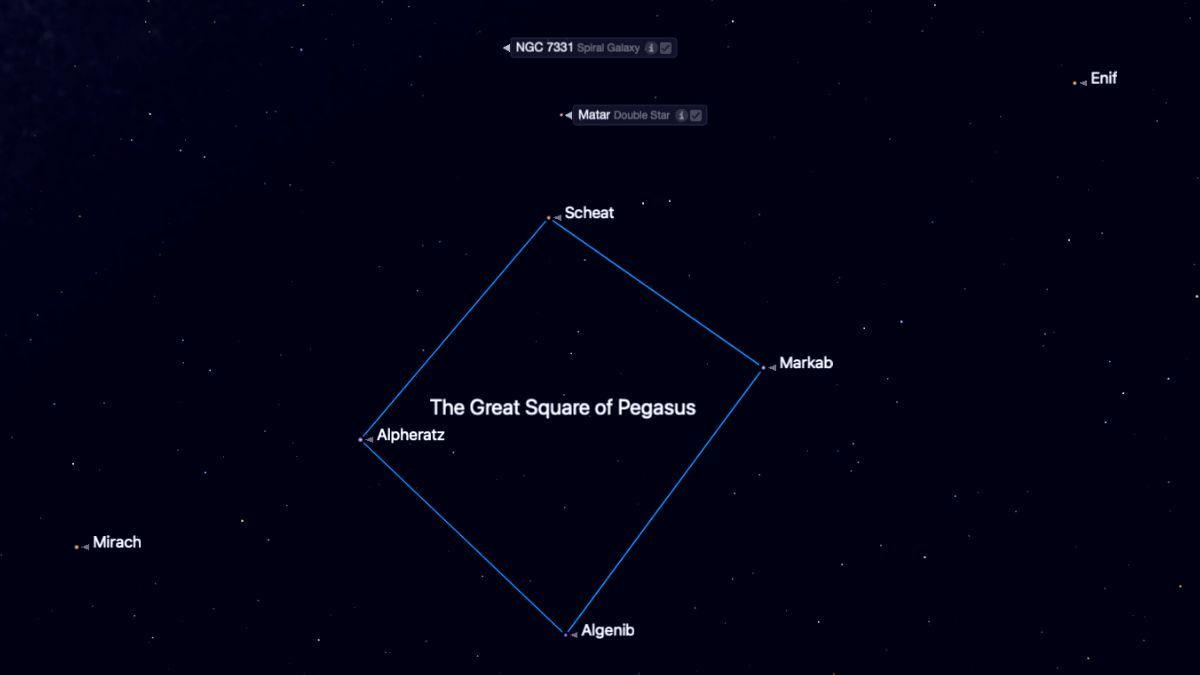
night sky graphic map showing the great square of pegasus

SN 2026aaiv can be found in NGC 7331, close to the Great Square of Pegasus, right after dark in the east from the Northern Hemisphere. (Image credit: Starry Night)

SN 2026aaiv has the coordinates RA 22h 37m 05.618s, Dec +34Β° 24β€² 35.37β€³. From the Northern Hemisphere, turn toward the east after dark, and you'll see four large, bright stars rising in a vast diamond shape. This is the Great Square of Pegasus, part of the constellation Pegasus. At the northwestern corner of the Great Square is Scheat. Just above it, outside the square, is a dimmer star called Matar. NGC 7331 is close by. In light-polluted skies, only the central core of the galaxy is visible, according to NASA. The galaxy, which we see partially edge-on, has spectacular spiral arms that swirl around a bright central region.

What we know about SN 2026aaiv

SN 2026aaiv is a Type Ia supernova, a catastrophic explosion that occurs when a white dwarf in a binary star system gains enough material from its companion to trigger a runaway thermonuclear reaction, destroying the white dwarf. Remarkably, another Type Ia supernova, SN 2025rbs, was found in the same galaxy on July 14, 2025.

NGC 7331, imaged by the Hubble Space Telescope in 2018, was first found in 1784 by British astronomer William Herschel, who cataloged over 2,500 deep-sky objects and discovered Uranus and its two largest moons. NGC 7331 is similar in size, shape and mass to the Milky Way.

  •  
❌