
❌

Reading view

Siri AI arrives with personal context, app actions, and a new privacy architecture

Siri AI is beginning its public rollout as Apple transforms its familiar assistant into a substantially more conversational system built around personal context, onscreen awareness, web knowledge, and the ability to perform actions across apps.

The beta is available first in English on compatible devices running iOS 27, iPadOS 27, macOS 27, watchOS 27, and visionOS 27. French, Japanese, Korean, Portuguese, and Spanish support is scheduled for October. Availability remains more limited in some regions, with Siri AI initially unavailable on iPhone, iPad, and Apple Watch in the European Union and unavailable in China while Apple addresses regulatory requirements.

The release follows several years of gradual Apple Intelligence expansion, but Siri AI represents a more fundamental change. Instead of handling each request largely as an isolated command, the assistant can maintain conversations, find relevant personal information, understand what is displayed on a device, and combine those capabilities to complete multistep tasks.

A smartphone lock screen shows a Safari notification: “The Brian Tran Band Tour. An update was detected on this page.” Flashlight and camera icons are visible at the bottom of the screen, highlighting how personal context and privacy architecture work together to keep your notifications secure and relevant.
Image Credit: Apple Inc.

Siri AI can connect personal context with app actions

Personal context is one of the biggest differences between Siri AI and previous versions of the assistant.

The system can search across a user’s messages, email, photos, notes, and other information when responding to a request. Apple offers an example in which someone asks what a family member suggested doing during an upcoming visit. Siri can locate the relevant conversation, find a recipe previously sent by email, and then place the ingredients into a Reminders grocery list.

That combination of retrieval and action is central to the new design. Siri AI can draft an email, edit and share photos, create calendar events, manage reminders, control media, and perform other supported actions without requiring users to manually move information between applications.

Third-party apps can participate through Apple’s App Intents architecture. Existing integrations include tasks such as messaging through WhatsApp or playing an audiobook in Audible, with Apple also previewing deeper capabilities in applications including Microsoft Outlook, Notability, and Tripsy.

Onscreen awareness adds another layer. Siri can identify information currently visible on a device and act on it. Someone viewing a sports website, for example, can ask Siri to identify upcoming home games and add them to Calendar without manually copying dates.

Apple has also expanded Siri beyond voice. On iPhone, users can invoke the assistant with the side button, voice command, or by swiping down from Dynamic Island. On iPad and Mac, Siri AI is integrated into Spotlight, while systemwide context menus can send selected files, images, or text directly to the assistant.

A tablet screen displays a document titled “Intern Onboarding” with instructions on product photography for a summer intern named Marieke. Thanks to advanced privacy architecture, the onboarding materials are tailored using personal context without compromising confidentiality. The time shown is 9:41 AM, and the date is Wed Apr 1.
Image Credit: Apple Inc.

Siri AI gets its own app and conversation history

Siri AI is no longer confined to a temporary interface that disappears once a request is complete.

Apple has introduced a dedicated Siri app where users can begin new conversations or revisit previous ones. Conversation history can sync privately through iCloud across iPhone, iPad, Mac, Apple Watch, and Apple Vision Pro, allowing a discussion started on one device to continue on another.

Follow-up questions can retain the context of an earlier answer, giving Siri a more conventional conversational interface for longer exchanges.

The assistant also has access to broad web knowledge for questions that cannot be answered through personal information or local device data. Apple says Siri can retrieve current information for topics ranging from sports results to travel planning and nearby businesses.

Visual Intelligence expands alongside the assistant. On iPhone, a dedicated Siri mode inside Camera can identify and respond to objects or information in front of the user. A concert poster, for example, can become the starting point for questions about performance times followed by the creation of Calendar events.

On iPad, Visual Intelligence is integrated with screenshots. Mac users can select content on their displays through a keyboard shortcut, while Vision Pro users can ask Siri about app windows or physical objects simply by looking at them.

Writing Tools are similarly integrated across the system. Siri can generate drafts, revise existing text from natural-language instructions, and provide writing suggestions. In Mail and Messages, Apple says it can take a user’s typical communication style with a particular recipient into account, including tone and punctuation patterns.

An iPhone and Apple Watch display colorful health and fitness data, including activity rings and assessment results, on their screens. Enhanced by Siri AI to provide insights tailored to your personal context, the devices are set against a plain light background.
Image Credit: Apple Inc.

Siri AI runs across on-device and private cloud models

Siri AI is powered by a new generation of Apple Foundation Models developed in collaboration with Google using Gemini technology, marking a notable shift in Apple’s AI infrastructure.

The architecture divides processing between models running directly on the device and larger models operating through Private Cloud Compute. Apple says requests sent to Private Cloud Compute are processed without personal data being stored or made accessible to the company.

Core resources such as the Spotlight index and Apple’s App Toolbox can remain on-device, allowing Siri to retrieve local information and perform supported actions without sending every request to a remote server.

More capable devices can also use AFM Core Advanced, Apple’s highest-performance on-device model. It powers improvements including more expressive Siri voices and advanced systemwide dictation that automatically handles capitalization, punctuation, and formatting.

Compatibility varies by feature. Apple Intelligence supports iPhone 16 models and later, iPhone 15 Pro and Pro Max, M1 or later iPads and Macs, iPad mini with A17 Pro, Apple Vision Pro, and supported Apple Watch models when paired with a nearby Apple Intelligence-enabled iPhone.

AFM Core Advanced requires newer hardware, including iPhone Duo, the iPhone 18 Pro line, iPhone Air, iPhone 17 Pro models, qualifying M4 or later iPads with at least 12GB of unified memory, M3 or later Macs with at least 12GB, and Apple Vision Pro with M5.

A virtual window displays a digital article about lotus leaves in a cozy living room, featuring diagrams and text, with modern furniture and warm lighting in the background. Integrated Siri AI enhances the experience by offering personalized suggestions while maintaining robust privacy architecture.
Image Credit: Apple Inc.

Siri AI arrives with limits as Apple expands access

The initial Siri AI release remains explicitly labeled beta, and some of the surrounding Apple Intelligence features are scheduled for later updates.

Apple also confirms that features relying on server-side models can be subject to daily usage limits. That includes Siri AI, cloud-based photo editing, Image Playground, and AFM 3 Cloud models used through Shortcuts. Limits can vary depending on the feature, request complexity, system demand, and other factors.

Apple says expanded access to server-dependent features will eventually be available for a fee, introducing a future paid layer to parts of Apple Intelligence even as the core system remains integrated into supported devices.

Apple will also expand its intelligence capabilities on Apple Watch later in 2026. Planned Audio Intelligence features on Apple Watch Series 12 and Ultra 4 include Live Rewind, which can display text representing the previous 15 seconds of a conversation, and Siri Recap, which generates high-level summaries that can be reviewed later in the Siri app.

Those functions are designed around a hardware-isolated Secure Exclave on the S11 chip, with Apple saying raw audio is processed in isolation and immediately deleted rather than stored as recordings. Live Rewind and Siri Recap are scheduled to enter beta later in 2026, making the current Siri AI launch the beginning of a staged expansion rather than the final form of Apple’s new assistant.

The post Siri AI arrives with personal context, app actions, and a new privacy architecture appeared first on AppleMagazine.
  •  

Exclusive: Paying for frontier AI models buys 4-month head start at 5x the cost

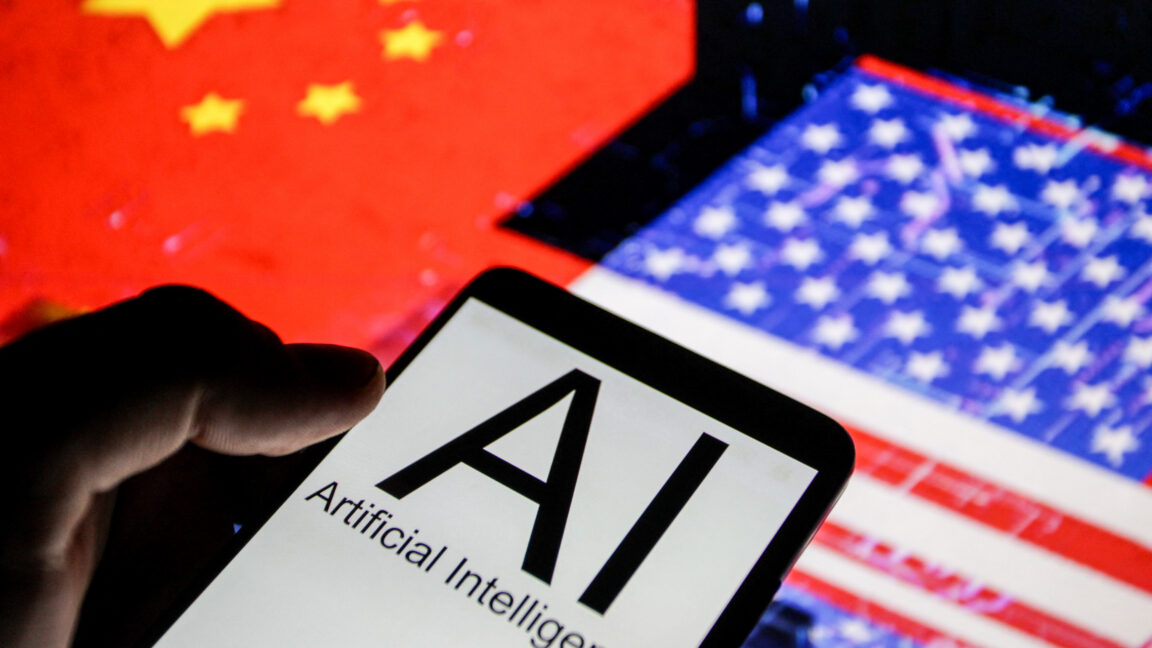
The performance gap between frontier AI models from US tech companies and the best open-weights models from Chinese companies has closed to just 4.4 months, according to a Mozilla report. That explains why many companies are shifting to the significantly cheaper open models for routine work—and helps reveal a narrow band of workloads where frontier models are worth the cost.

Most organizations should ideally be using open models as the default for the majority of their work, according to the latest State of Open Source AI report from Mozilla, published on September 15 and shared with Ars prior to publication. The report highlights how a leading open model, Moonshot AI’s Kimi K3, achieves a composite AI performance score on the Artificial Analysis Intelligence Index that is just three points behind Anthropic’s Fable 5 closed frontier model, all while costing just 30 percent of the latter.

“[A Closed model] earns its premium in a few places: expert professional work, high-intensity retrieval, and long context,” Raffi Krikorian, chief technology officer at Mozilla, said in an email to Ars. “We see the decision to pay for closed [models] as workload-specific rather than organization-specific.”

Read full article

Comments

© Imen Ben Youssef / Hans Lucas / AFP via Getty Images

  •  

Mathematician Says Relationships Have a Critical Threshold—and Crossing It Can Predict When Love Falls Apart

Equations once used to predict whether populations of rabbits would boom, stabilize, or collapse are now being applied to something potentially even more complicated: romantic relationships.

According to mathematician Laurent Pujo-Menjouet of Claude Bernard University Lyon 1, the forces that determine whether a couple survives life’s inevitable stresses can be studied much like other complex systems. Attraction can strengthen or fade, outside pressures can push a relationship away from stability, and perhaps most importantly, there may be a critical mathematical threshold beyond which recovery becomes increasingly difficult.

In his new book, Love! Valour! Equations! The Mathematics of the Couple, published by CRC Press, Pujo-Menjouet draws on mathematical ecology, psychology, literature, and even film to explore why some couples weather years of conflict, stress, children, illness, and financial hardship while others gradually drift apart.

The goal isn’t to produce an equation that predicts who will fall in love with whom. Instead, Pujo-Menjouet treats relationships as dynamical systems—systems that change over time, respond to disturbances, and can move toward either stability or decline.

“There is no mysterious enchantment or magic potion. By now, that would be known,” Pujo-Menjouet writes in the book, which draws on mathematics, psychology, literature, and film. “Is all hope lost then? Certainly not. That is precisely where everything becomes interesting.”

From Rabbits to Relationships

The mathematical models Pujo-Menjouet uses originated in ecology. His work uses Malthusian growth models and the Lotka-Volterra equations, originally developed to describe population dynamics in animals such as rabbits. He also studies the Allee effect, a phenomenon that explains how populations struggle to recover if they drop below a particular size.

Pujo-Menjouet adapts these concepts to relationships, using the idea of a critical threshold to examine when a couple may become increasingly vulnerable to separation. He also draws on the research of psychologist John Gottman, who showed that relationship behaviors can be quantified as data.

“Just as we can predict population growth or endangered species, we can model the evolution of feelings within a couple,” Pujo-Menjouet explains. “We’re not trying to predict who you’ll fall in love with, we’re trying to understand why some couples remain stable despite life’s inevitable shocks while others slowly drift apart.”

A Threshold for Falling Apart

The basic idea is simple: a relationship may have a critical threshold, or minimum level of stability needed to keep the bond intact. Pujo-Menjouet’s model considers three main forces: mutual attraction, the gradual weakening of feelings over time, and each partner’s emotional response to the other.

“If your feelings fall below this threshold and stay there, the mathematics predicts an inevitable decline toward separation,” Pujo-Menjouet says. “However, understanding this threshold gives couples a powerful tool: they can recognize danger zones and take corrective action.”

These models emphasize how couples recover from drifting apart. The key question is not whether couples experience conflict, but whether they have the resilience to restore balance afterward.

“Life will always send its wolves: stress, illness, work, children, financial difficulties,” Pujo-Menjouet says, “mathematics helps us understand how to build the brick house rather than the straw one.”

Could AI Become Love’s Early-Warning System?

Researchers such as Pujo-Menjouet are considering whether they could combine these mathematical models with artificial intelligence to create an early-warning system for relationships. Such a system could detect the signs of instability before they become apparent to the people involved.

Pujo-Menjouet compares this method to a GPS for relationships, showing where a couple currently is, where its dynamics may be heading, and the various ways they could arrive at a healthier place. Although the models don’t decide who somebody will love, they can help explain how relationships evolve and what actions might help couples maintain their connection. Early detection of problems would allow partners to make changes before reaching a stage where recovery becomes unlikely.

Why Love Resists a Formula

Pujo-Menjouet admits that present-day mathematical models have limitations. Most of these models are based on data from Western relationships. In contrast, the factors that impact whether a relationship succeeds or fails can differ from one culture, religion, or generation to another. He points out that the model must account for additional factors to be applicable everywhere.

Human behavior also introduces unpredictability that mathematical models cannot fully account for. People can change their habits, strengthen their commitment, seek therapy, or otherwise alter the dynamics of a relationship in ways the equations cannot anticipate. The equations identify tendencies rather than determine an unavoidable outcome.

“Mathematics can illuminate patterns and provide guidance,” Pujo-Menjouet says, “but ultimately, the success of a relationship depends on two people choosing, every day, to nurture their connection. The equations can show you the path, but you still have to walk it together.”

Austin Burgess is a writer and researcher with a background in sales, marketing, and data analytics. He holds an MBA, a Bachelor of Science in Business Administration, and a data analytics certification. His work focuses on breaking scientific developments, with an emphasis on emerging biology, cognitive neuroscience, and archaeological discoveries.

  •  
❌