❌

Reading view

Big boy Chunk returns ahead of Fat Bear Week 2026

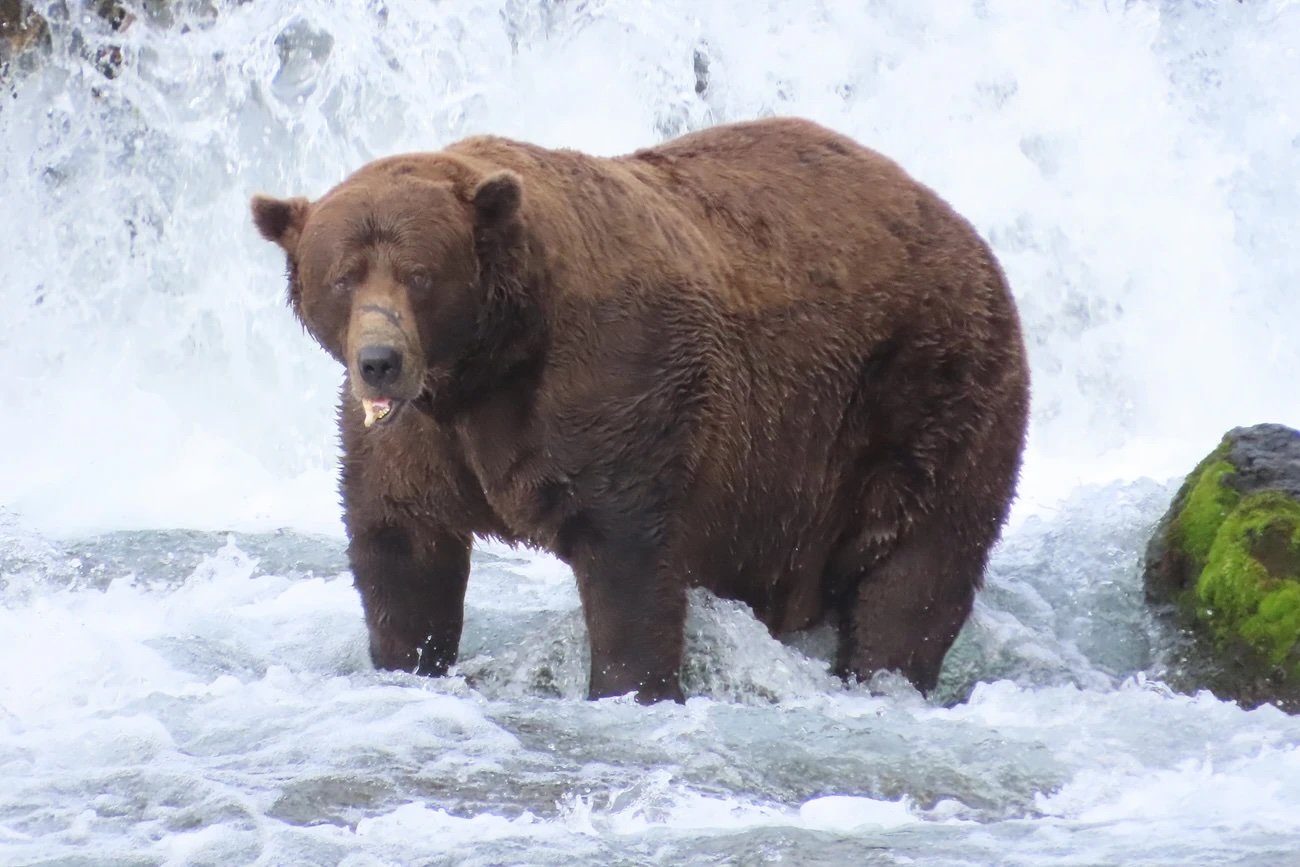
The 2025 Fat Bear Week champion is back and ready to rumble (or at least eat a lot of fish). Bear #32, better known as Chunk, returned to view this week on the explore.org live cameras stationed throughout Katmai National Park in Alaska. With the kickoff of Fat Bear Week 2026 slated for Friday, his timing couldn’t be better.

Chunk reigned supreme in 2025, racking up 96,350 votes—30,000 more than second place finisher, Bear 856. Chunk is a fan favorite for his hefty size (estimated at more than 1,200 pounds) and distinct look. In addition to his narrow-set eyes, dark brown fur, large muzzle scar, and prominent brow ridge, Chunk also has misaligned the jaw. In 2025, he emerged from slumber and made an appearance at Brooks River with a noticeably broken jaw that rangers guessed was a result of a fight with another bear.

“Chunk proved immediately adaptable,” explore.org explained. “He adjusted his behavior to avoid most direct confrontations with other large male bears. He quickly learned to eat salmon without the full use of his mandible. Additionally, his large body size still gave him easy access to many productive fishing spots. He remains one of the largest bears at Brooks River.”

Despite the potential challenges of chomping on salmon with a broken jaw, Chunk persevered. Cameras first spotted him this season all the way back in April. Bears are not seen as frequently during the spring, so the early glimpse of Chunk walking across a patch of ice was exciting. Typically, Katmai bears emerge in June when the salmon run begins at Brooks River.
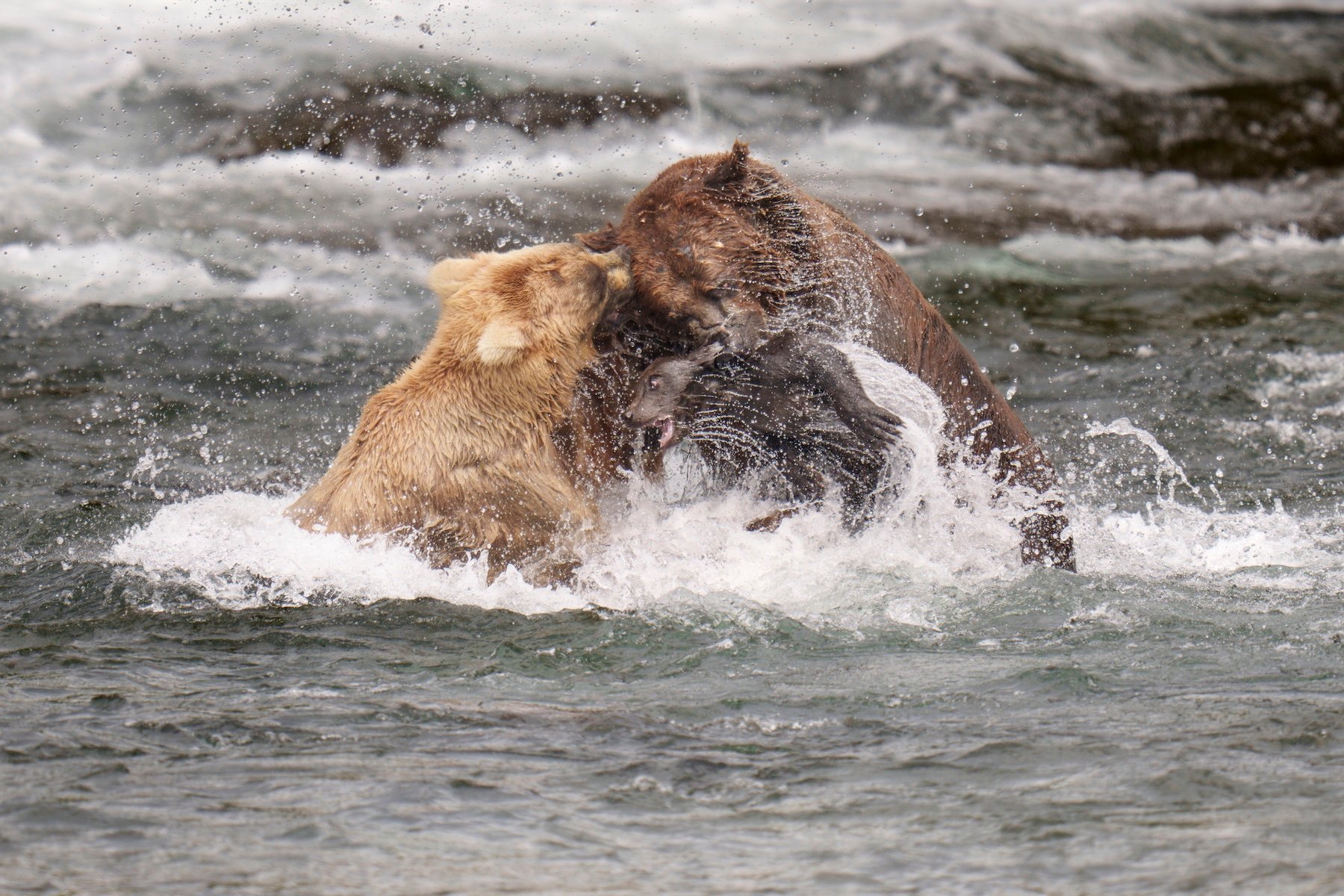
Chunk, a large boar brown bear in Katmai National Park, attacks one of Grazer's spring cubs at Brooks falls in 2024.
Chunk, a large boar brown bear in Katmai National Park, attacks one of Grazer’s spring cubs at Brooks falls in 2024. Image: Getty Images Annalise Kaylor

Chunk wasn’t always a fan favorite though. In 2024, he lost the Fat Bear Week crown for the second year in a row to mama bear Grazer. The two bears had been involved in an incident in which two of Grazer’s 2024 cubs were attacked by Chunk after falling over a waterfall. Grazer put up a fight against Chunk to defend her cubs, but one cub died after the encounter.

Tune in Friday, September 18, for the Fat Bear Week 2026 bracket reveal to see if Chunk will have the chance to defend his title. And you can always tune in to explore.org live cameras to see what our favorite chunky bears are up to.


When is Fat Bear Week 2026?

This year, Fat Bear Week begins on Tuesday, September 22, and a winner will be crowned on Tuesday, September 29. 

How can I vote?

Votes may be cast from noon to 9 p.m. EDT (9 a.m. to 6 p.m. PDT and 8 a.m. to 5 p.m. ADT)

from September 22 and 29 at fatbearweek.org.

Photographs comparing the bears from earlier in the summer and later in the summer will be shown, so voters can get an idea of just how much weight the bears put on during their salmon fest. An adult male bear can go from roughly 700 pounds in the early summer to over 1,200 pounds by fall. 

Voters are also encouraged to get familiar with each bear’s life history and the unique challenges they face to survive.

Which bears are competing this year?

The 2026 Fat Bear Week Bracket will be released on Friday, September 18. 
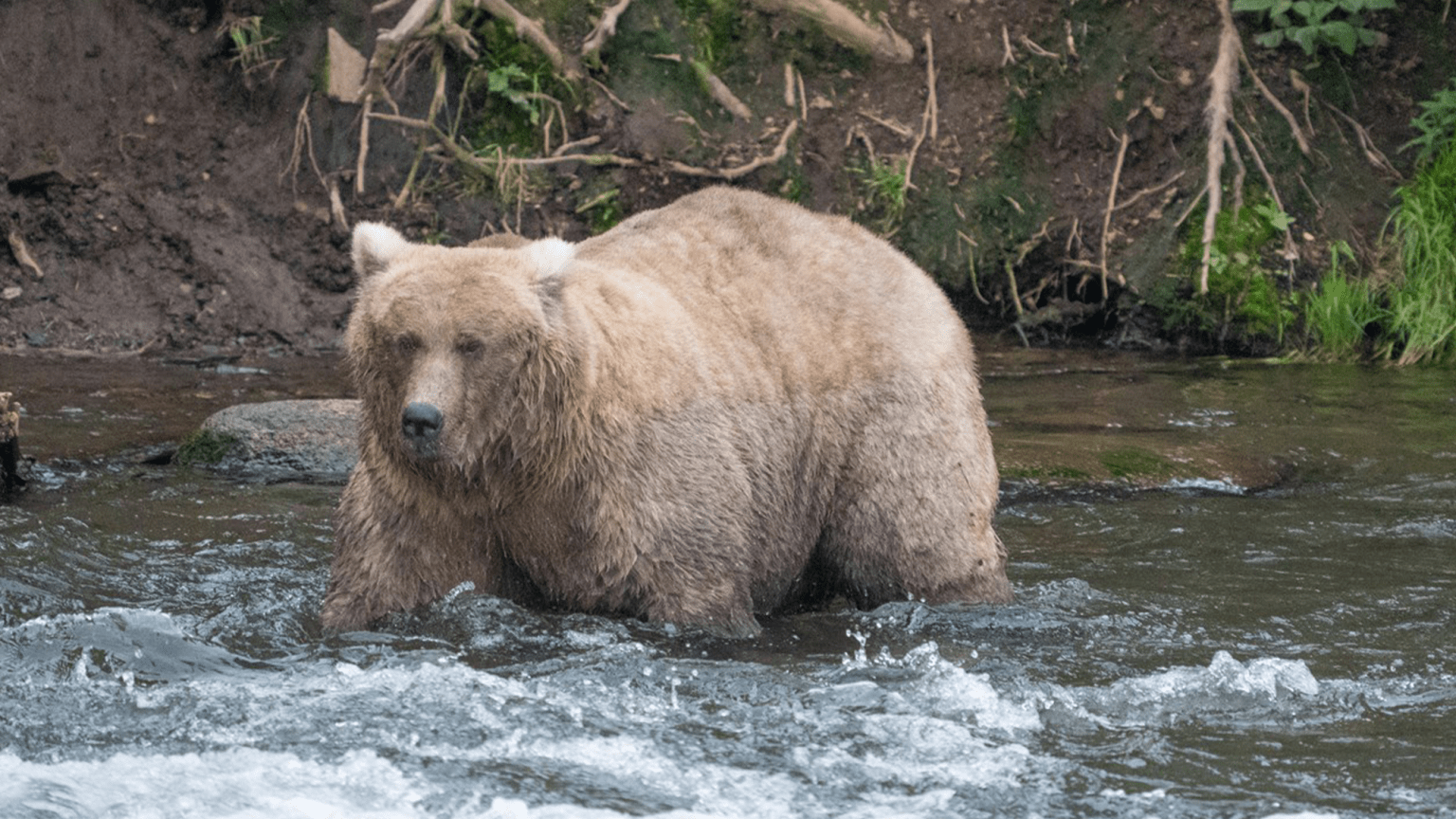
a large female brown bear in a river
Fat Bear Week 2023 and 2024 champion Grazer. Image: NPS Photo/F. Jimenez

How can I support Katmai’s bears?

Donations can be made to Katmai Conservancy’s Otis Fund. The Otis Fund is named after Bear #480 (Otis), who won four Fat Bear Week titles before his death around 2024.  All donations made between September 22 and October 3 will be matched by explore.org. 

What happened with the bears this summer?

This year’s livestream featured an example of how wild (and upsetting to humans) nature can be. On Tuesday, July 28, cameras captured a young brown bear cub being killed and eaten by an unrelated mother bear (Bear #806).  

On Sunday, August 2, one of Bear #335’s (Jolly) cubs died, after following three unrelated cubs up a tree. The mother of the cubs already in the tree attacked Bear #335’s cub, who did not survive the encounter. The identity of the mother bear who killed the spring cub was not confirmed. 

Following the first cub’s death, naturalist Mike Fitz and park rangers Christine Loberg and Sarah Bruce said this likely the first documented case occurring at Brooks River. While there is no one answer as to why mother bears are killing cubs, some experts suspect bear adoption, food scarcity, and fights for dominance all play a role. 

Additionally, this year also saw the cub with silver-hued fur, a cub who hopefully learned important lesson about porcupine quill safety, the unique fishing stylings of Bear #164 (Bucky Dent), and Bear #284’s (Electra) family who can “walk on water.”

The post Big boy Chunk returns ahead of Fat Bear Week 2026 appeared first on Popular Science.
  •  

Katmai bear cubs tumble over waterfall

A brown bear cub learns a lot in its first year of life—how to fish, how to steer clear of trouble. Two curious cubs recently learned a valuable (and wet) lesson about the strength of currents.

At Alaska’s Katmai National Park and Preserve, home to Fat Bear Week, Bear #224 took her cubs on a journey near Brooks Falls. Early in summer, Brooks Falls is a hot spot for salmon munching by the park’s resident brown bears. By September, most bears move to the lower Brooks River to eat the dead and dying salmon near the river’s mouth.

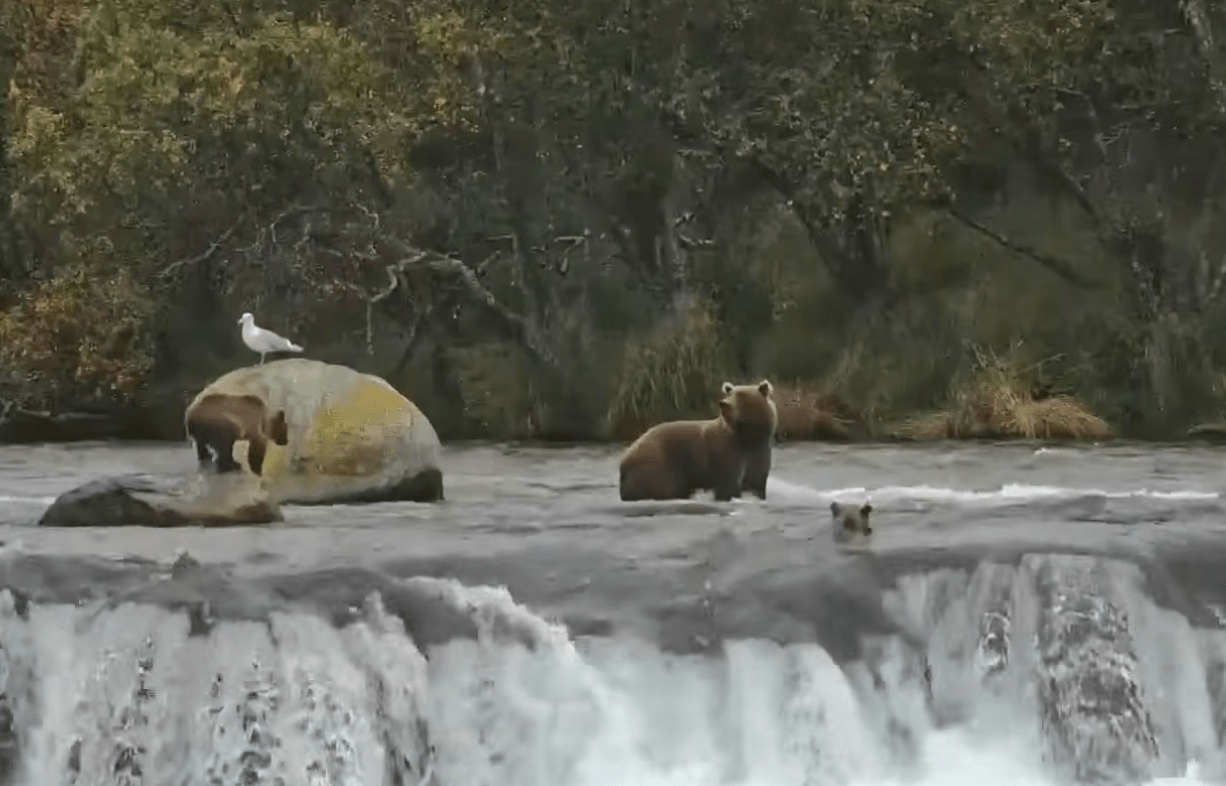
As Bear #224 navigated the upper part of the falls with her two spring cubs, the young bears toddled up a rock and each hopped off. The strength of the current pulled the bears over the waterfall, despite their best efforts to paddle upstream. No other bears were present at the falls during the incident and mama bear eventually made her way down to join her cubs and move down river to calmer waters.

Brown bears are strong swimmers, moving up to 5mph in the water, according to the Alaska Wildlife Conservation Center. They use all four legs to paddle and their body fat helps provide buoyancy. They also shake like dogs to remove excess water after a swim.

Fat Bear Week kicks off September 22. Votes may be cast from noon to 9 p.m. EDT (9 a.m. to 6 p.m. PDT and 8 a.m. to 5 p.m. ADT) from September 22 and 29 at fatbearweek.org.

The post Katmai bear cubs tumble over waterfall appeared first on Popular Science.

  •  

The cubs from Katmai’s ‘Brady Bunch’ blended family are all grown up

To the untrained eye, two female brown bears (Ursus arctos) in Alaska’s Katmai National Park and Preserve look like any other bears. But Bear #609 (Bean) and Bear #620 were raised in Katmai’s historic Brady Bunch-esque blended family.

Between mid-August and October 2022, Bear #910 blended her family with her sister Bear #909’s family. In the process, she adopted her sister’s 2.5-year-old female yearling cub (a one- to two-year-old cub still with its mother), while she herself had a spring cub (a first-year cub that was born over the winter and emerges in the spring). Adoptions like these are exceptionally rare in the wild, and it is believed to be only the second such adoption at Katmai. The behavior has also been observed in polar bears. 

The sisters were frequently seen fishing together with their cubs, teaching them how to fish throughout 2023. That same year, Bear #909’s ovulation cycle began again, and she separated from her offspring Bear #609 (Bean). A study on their family was published in the journal BioOne in 2025. 

a brown bear walking along a beach
Bear #910 walking along the beach. Image: NPS/Cory Cravatta Cory Cravatta

The adopted Bear #609 (Bean) is a female bear, with large oval-shaped ears with slight blonde tips. She has a dark coat with blonde grizzling, and has a fluffy headband by the fall. Bear #690 (Bean) won the Fat Bear Week Junior competition in 2022, and is now considered a fully independent bear.

Bear #620 is Bear #609’s biological cousin and believed to be the daughter of Bear #910 who blended their families. She is identified by a slightly upturned narrow muzzle, tall oval ears, and a semi-prominent hump on her back. During the early summer, her head and mane are a light brown with a reddish blonde and a white chin. By the fall, she sports a more fluffy grizzled fur headband around her head.

According to Katmai naturalist Mike Fitz, it is unclear how being raised with two strong maternal figures will affect their adulthood. Brown bears will often establish a home range that overlaps with their mothers, and a hierarchy in the region develops among related bears along their mother’s line. Those bears within the same matriline may have more tolerance for each other. 

“If #609 and #620 continue to make Brooks River part of their home range, then we will have a special opportunity to watch the growth and maturation of two especially social young female bears in the same place that their mothers make a living,” Fitz explained in a recent video. “Familiarity with each other and the river and other bears who make it their home as well, sharing space with their large, successful mothers, may very well prove to be keys to their survival, longevity, and success.”

We also do not know just yet if members of this historic bear family will be contestants in Fat Bear Week 2026. The bracket will be announced on Friday, September 18.

Most bear mothers generally keep their litters separated, and this year was an example of why they tend to stick to themselves. On Tuesday, July 28, the live-cams captured a young brown bear cub being killed and eaten by an unrelated mother bear (Bear #806). The deceased cub was born this spring, and was one of Bear #909’s cubs. Bear 909 started this season with two cubs, but has now lost both. 

On Sunday, August 2, one of Bear #335’s (also known as Jolly) cubs died, after following three unrelated cubs up a tree. The mother of the cubs already in the tree attacked Bear #335’s cub, who did not survive the encounter. The identity of the mother bear who killed the spring cub was not confirmed. 

Following the first cub’s death, Fitz and park rangers Christine Loberg and Sarah Bruce said that while infanticide by female adults does occur, this is likely the first documented case occurring at Brooks River. While there is no single answer as to why mother bears are killing cubs, some experts suspect bear adoption, food scarcity, and fights for dominance all play a role. 

The post The cubs from Katmai’s ‘Brady Bunch’ blended family are all grown up appeared first on Popular Science.

  •  
❌