❌

Reading view

DDR5 RAM pricing appears to be spiralling out of control even more β€” it's 5.5x pricier than before the memory crisis, and 2027 could get worse

  • DDR5 RAM has hit a new pricing high in the German market
  • It's now 544% up on the price it was before the RAM crisis began
  • This inflation backs up predictions of the memory shortage worsening, and Dell has just hiked the price of one of its popular laptops, too

If you wanted a telling example of how bad the cost of RAM is getting, the latest report on DDR5 pricing makes it crystal clear – and it reaches us as Dell moves to hike the price of its affordable XPS 13 laptop (in a roundabout way).

I'll come back to the ins-and-outs of what's happening with Dell, but first the DDR5 price jump, which has happened over in Germany.

3D Center keeps tabs on the monthly pricing of DDR5 memory in the German retail market – some 20 products are covered in this largest market in Europe – and as Wccftech flagged, the report for September shows this RAM is now 544% up on the price it was in July 2025 (the baseline level before the crisis began).

This is a big leap from 486% where the DDR5 price index sat in August, and since June, when it was at 419% having remained flat for much of the year. This obviously represents a depressingly hefty additional toll on the wallets of PC buyers or those upgrading their memory.

Meanwhile, as Mashable noticed, Dell has effectively upped the price of its XPS 13 laptop in the US, without actually increasing the baseline cost – instead of doing that, the laptop maker has introduced a new entry-level model with less storage.

So, previously the XPS 13 started from $699 in the US for the model with 8GB of RAM and 512GB of storage. What Dell has done is brought in a new model with 256GB of storage at that $699 level, so while technically the cheapest XPS 13 is still at that price, you're getting a lower spec for the money.

The old baseline model with 8GB RAM and a 512GB SSD is now $799, so it's been hiked by $100 – a pretty nasty bump in cost that moves this notebook into a distinctly less affordable price bracket.

If you want the XPS 13 with 16GB of system memory (and 512GB of storage), that's also gone up $100 so it's now at $999. Do note that these are student-targeted laptops, and students get a $100 discount on the XPS 13, so you will pay less in that case. However, while $599 (with $100 off) remains a tempting price in this climate, 256GB storage is cutting it thin.

Analysis: as predicted, 2026 is turning much nastier with RAM
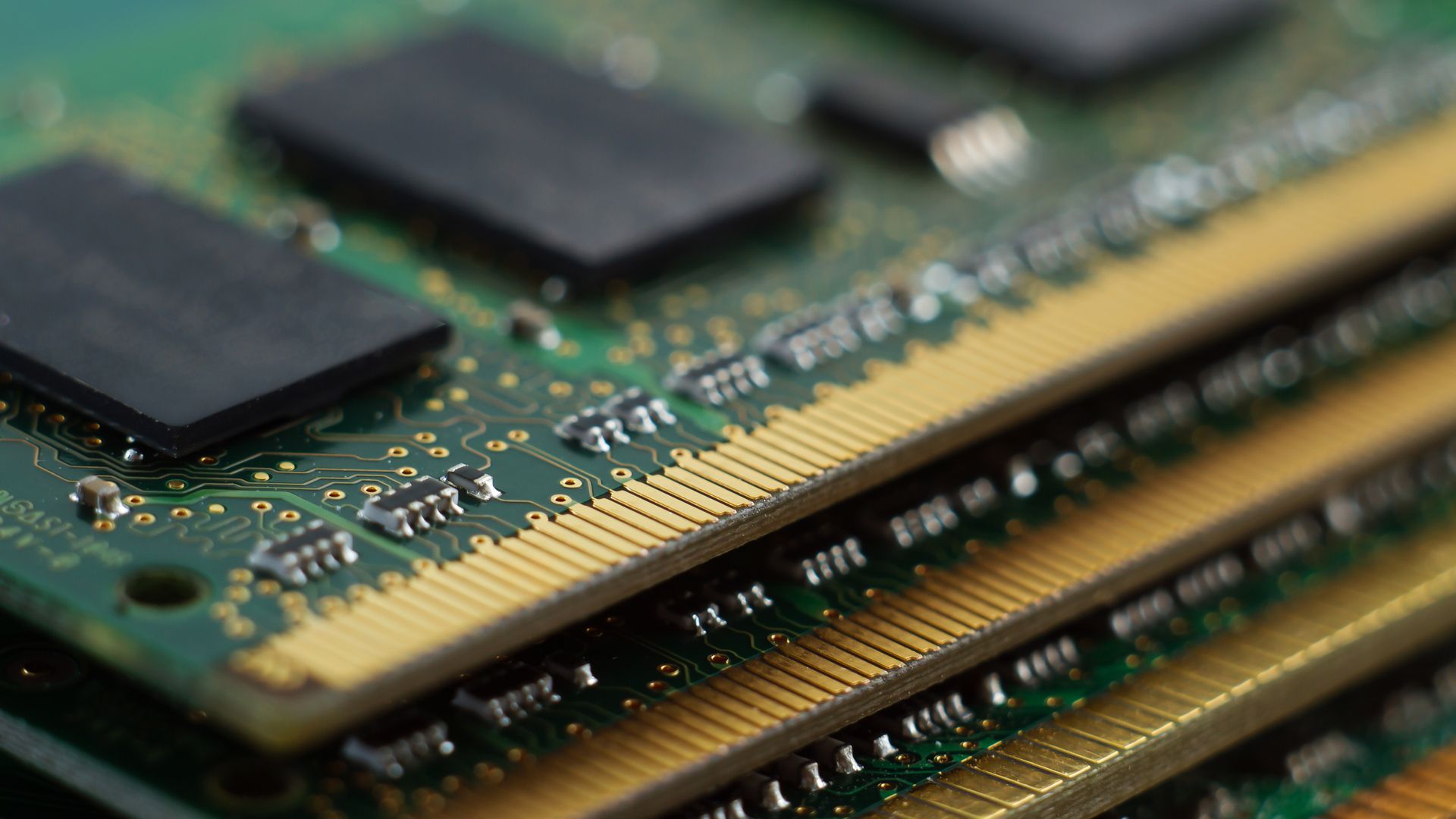
RAM sticks stacked on top of each other

(Image credit: Shutterstock)

The DDR5 price spike is truly worrying in my opinion, simply because it's an acceleration of an already worsening picture. Yes, it's only one retail market and a snapshot of the overall landscape as such, but the same pattern is seen elsewhere. Just look at Tom's Hardware's price tracker that shows 32GB of DDR5-5600 RAM in the US is now $409 (at the time of writing) compared to $72, which was the lowest price seen before the memory crisis.

That's over a 5.5x price increase in the US market (mirroring the German level of RAM inflation in this particular case). The end result is that what used to be a no-brainer of future-proofing any desktop PC – particularly a gaming rig – with 32GB of RAM is now a difficult choice to make, as sticking with 16GB is saving you $200 (or the regional equivalent). Bearing in mind that you're battling all sorts of other component inflation if you're building a new PC, too (most notably with the likes of SSDs and increasingly GPUs).

We were told that the second half of 2026 would see more RAM price misery, and these German market figures illustrate exactly that. Since June, buyers in the country have witnessed an effective 30% increase in the cost of DDR5 (when it was already hugely overinflated). It's worse than I imagined it could get, frankly, and I fear that the most pessimistic predictions – which also forecast a very rough 2027 – are very much on the money.

All these RAM price hikes are eventually reflected in the cost of laptops, of course, and the Dell XPS 13 provides an apt illustration here. Interestingly enough, I recently wrote about Dell's revelation of its new 14S laptop – which was shown off at IFA, but without any price tag being attached – saying that this made me nervous about how much the notebook might cost.

Given this XPS 13 hike, it's easy to see why Dell was hesitant, and to be fair to the company, it isn't the only manufacturer that's reticent to pin launch prices on incoming devices. This is becoming a trend because the memory shortage, and its knock-on effects, are making life difficult for all device makers.

  •  

Nvidia RTX 5090 GPU prices skyrocket to $9,000 β€” as fresh RTX 6000 rumor suggests a 2027 launch that fills me with dread

  • Nvidia's RTX 5090 is now over $9,000 in the US
  • A new rumor suggests that RTX 6000 gaming GPUs are coming in 2027, maybe in the first half of the year
  • If true, the price tag that's attached to the RTX 6090 will likely be colossal, and lower-tier GPUs could be pricey too

Nvidia's RTX 5090 flagship has hit new heights in terms of ridiculous asking prices, just as a new rumor suggests that RTX 6000 (Rubin) GPUs are coming in 2027 β€” earlier than anticipated, and to say the price of those next-gen offerings is a worry given the current climate is a huge understatement.

A Redditor pointed out the current state of RTX 5090 prices, which are close to commanding $10,000 in the US for some models. Notably, the Asus ROG Astral RTX 5090 will set you back a princely $9,659 on Newegg US, although that's not sold directly by the retailer.

Indeed, none of the big retailers have any stock of the RTX 5090 anymore, and the only graphics cards you can buy are from third-party marketplace sellers, often shipping from Asia (that ROG Astral GPU comes from Hong Kong).

You can find more expensive RTX 5090s than that if you want to get the gold-plated version (Dhahab Edition) of the ROG Astral, which is now $11,999. The very cheapest RTX 5090 that I could find at the time of writing is an MSI Ventus model that's priced at $6,549 on Newegg.

What about outside of the US? Price inflation is rampant in other countries too. If we take the UK as an example, you can pick up an RTX 5090 for around Β£4,500 on Overclockers UK, which is still an eye-watering asking price. (And those are the cheapest GPUs β€” they go up in price from there to Β£6,600 for the aforementioned Asus ROG Astral RTX 5090).

It's an alarming situation, and one that heaps worries on top of a new rumor about the RTX 6000 launch as aired by Moore's Law is Dead (MLID) on YouTube (via TweakTown).

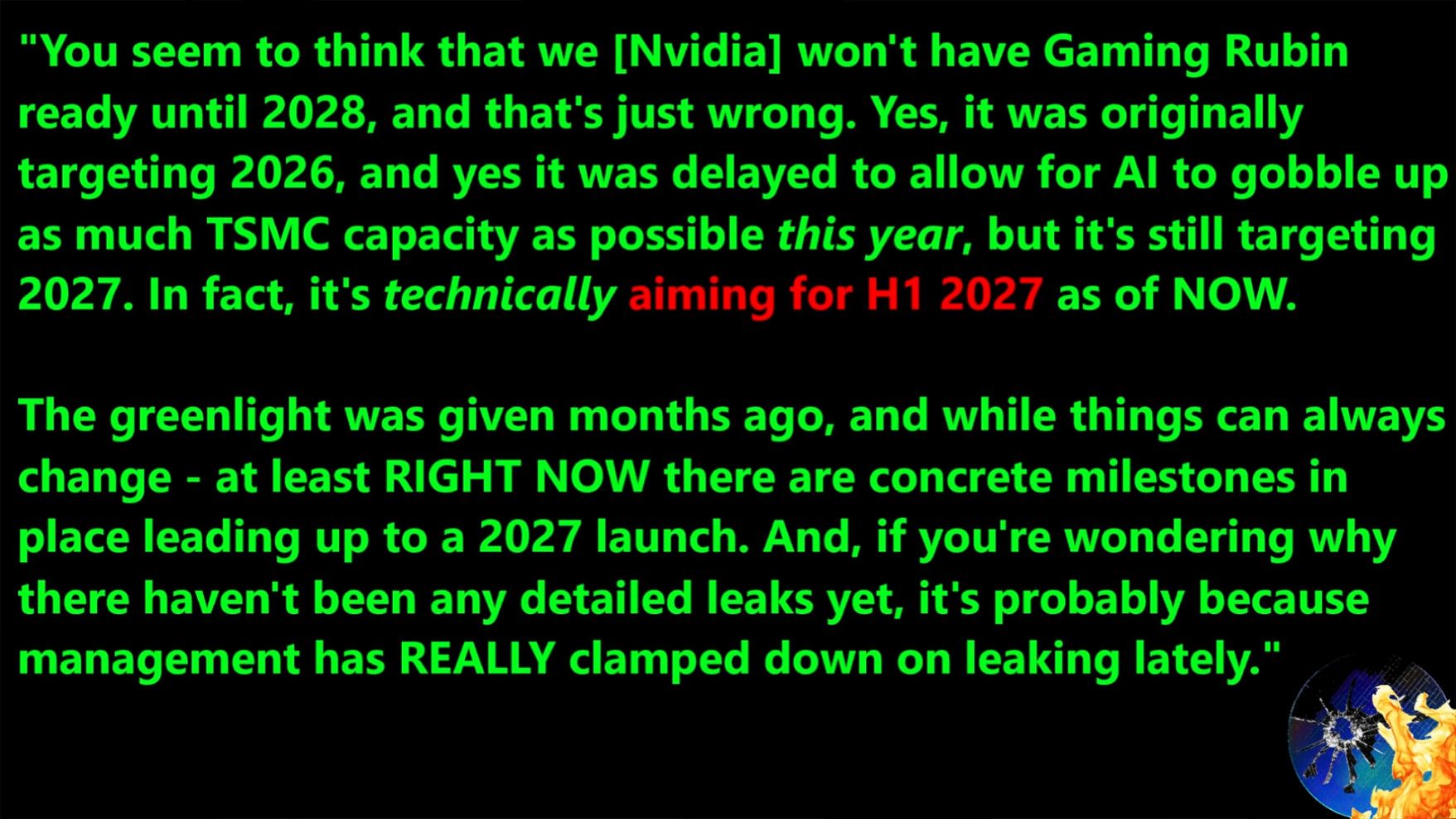
Previous rumors have contended that Nvidia's looking at 2028 for the arrival of its next-gen GeForce graphics cards, but a source at the firm told MLID that this is incorrect, and Team Green is aiming for a 2027 launch. Moreover, the current plan is still to get the RTX 6000 ball rolling for PC gamers in the first half of next year, meaning within the next nine months.

There's an obvious sticking point here, though: if the RTX 6000 generation is this close, how come we haven't had much in the way of leaks yet, and nothing of any real substance? The source claims that this is due to Nvidia's management successfully clamping down on leaks with the next-gen products.

The first offering will presumably be the RTX 6090 (or maybe an RTX 6080 as well), and it's going to have some kind of interesting spin on the design β€” though we aren't told what. It could have beefed up hardware to better cope with running DLSS 5, perhaps, as that would make sense β€” something to help deal with the performance hit of neural rendering would clearly be very welcome.

Nvidia RTX 6000 leak slide

(Image credit: Moore's Law is Dead on YouTube)

Analysis: house deposit or GPU?

There are obvious problems with a possible RTX 6000 launch next year, if we take this rumor at face value. As noted, the RTX 5090 is now being sold for beyond ridiculous prices β€” and so how much is an RTX 6090 going to run? The fiscal equivalent of an ultramarathon, presumably, and with AI demand likely coming into play with this GPU, the next-gen flagship could be 'unobtainium,' as the disgruntled gamers out there are already predicting.

When you consider that the RAM crisis is going to get worse next year, going by the more recent forecasts from analysts and industry insiders, video RAM is going to be more problematic β€” and how much of the stuff will be on an RTX 6090? β€” it all adds up to a frightening prospect for an MSRP. And the likely reality is that the price to actually buy the next-gen Rubin gaming flagship will blow well past that towering recommended cost. (The RTX 6080 won't likely be much different, either.)

For all these reasons, I find it difficult to believe that Nvidia will go ahead and launch the RTX 6000 series next year. Surely it makes sense to wait longer, although what Team Green may know is that 2028 isn't going to be any better for RAM price inflation, and so perhaps that's why next year is greenlit for next-gen GeForce graphics cards to arrive. It's a sobering thought. As one Redditor observed: "Can't wait to decide if I want a down payment on a house or an Nvidia GPU."

  •  
❌