L’iPhone 18 vient de pointer le bout de son écran, mais l’iPhone 17 Pro Max n’a pas rangé les armes. Toujours aussi musclé côté performances et photo, le smartphone Apple profite désormais d’une promotion séduisante chez Amazon.
The iPhone Duo is heavier and thicker than Android foldables, but that isn’t going to make too much of a difference in day-to-day use. The plus point is that it has IP68 ingress protection, and a build quality that’s different to anything else we’ve seen on Android. Also, the software is the biggest differentiator, and the little I’ve seen of this makes me highly interested to use the iPhone Duo.
Xiaomi
18 Fold
Sublime
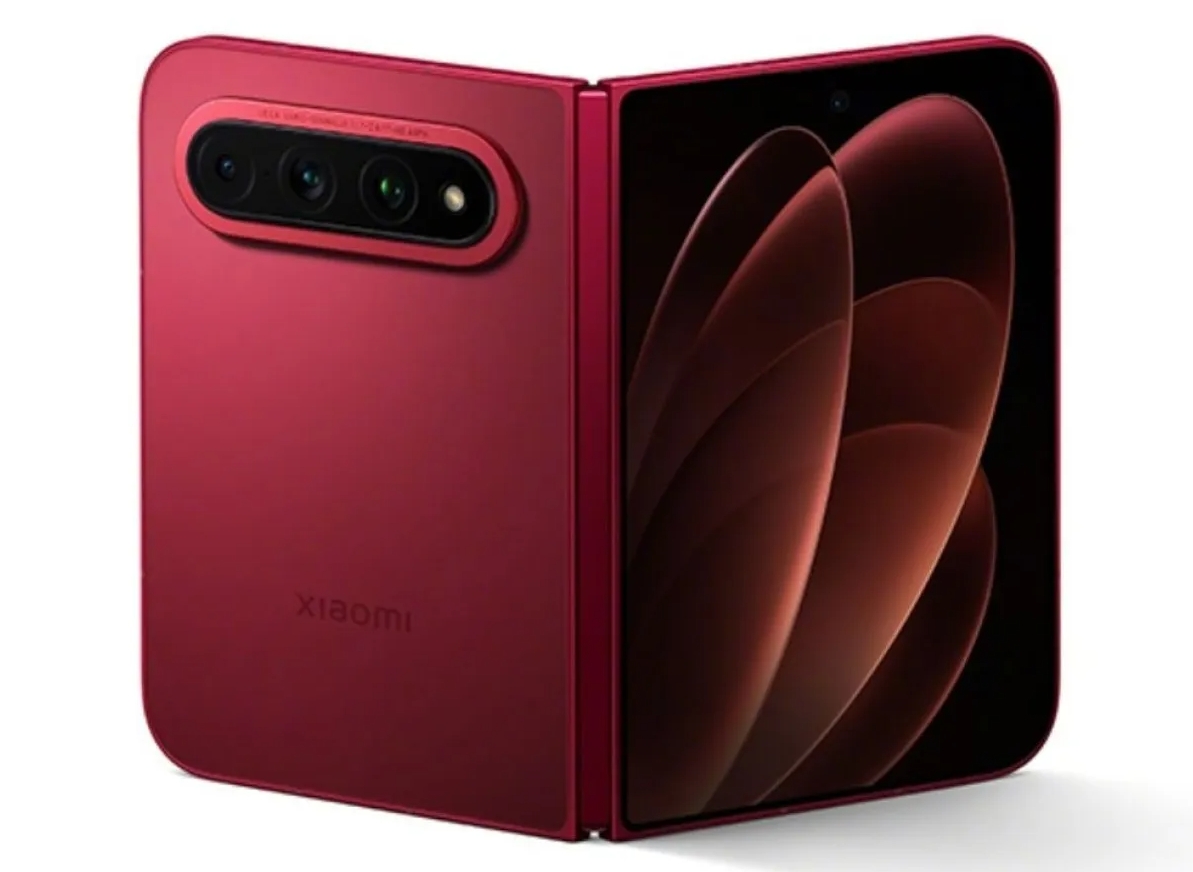
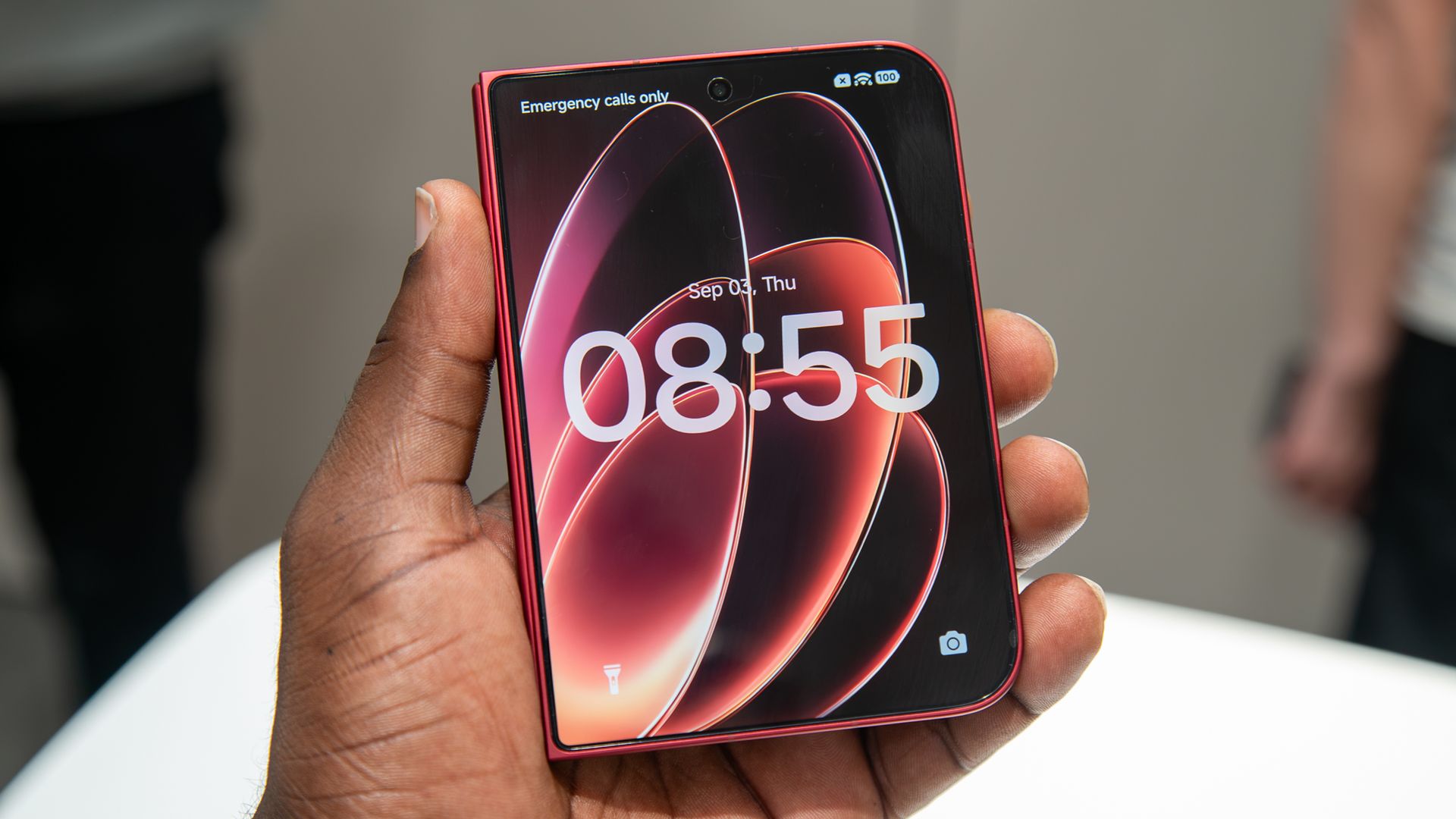
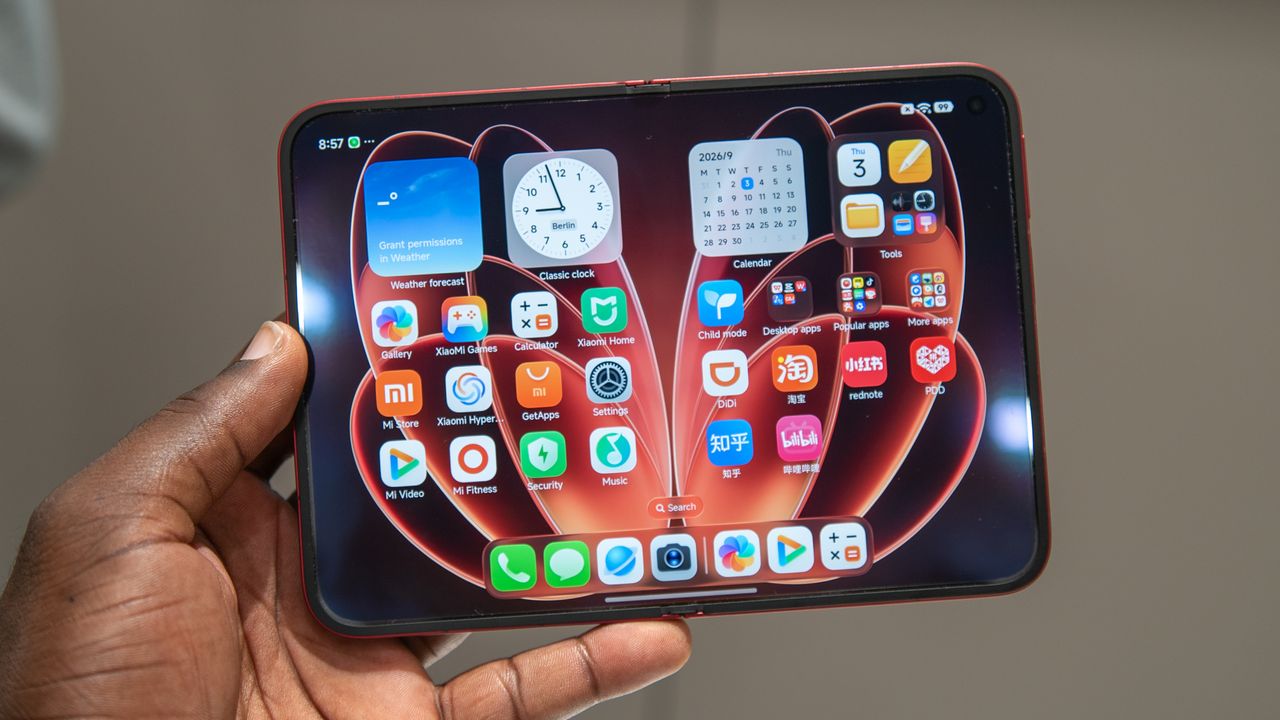
Make no mistake: the Xiaomi 18 Fold has the best design of any wide foldable, and Xiaomi deserves credit for slotting in a dedicated tele lens into the device. It is a full 35g lighter than the iPhone Duo, but you still somehow get a huge 6,000mAh battery. The custom Xring 03 silicon is intriguing, and the only issue with the 18 Fold is that it is limited to China, so you don’t get the best software — there’s no Play Store or other Google services.
Apple iPhone Duo vs. Xiaomi 18 Fold: Design and display
(Image credit: Apple)
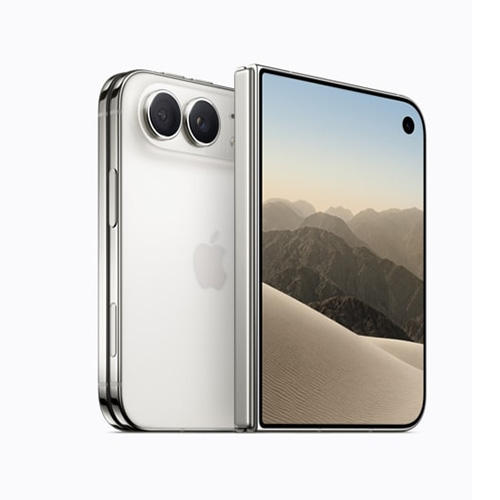
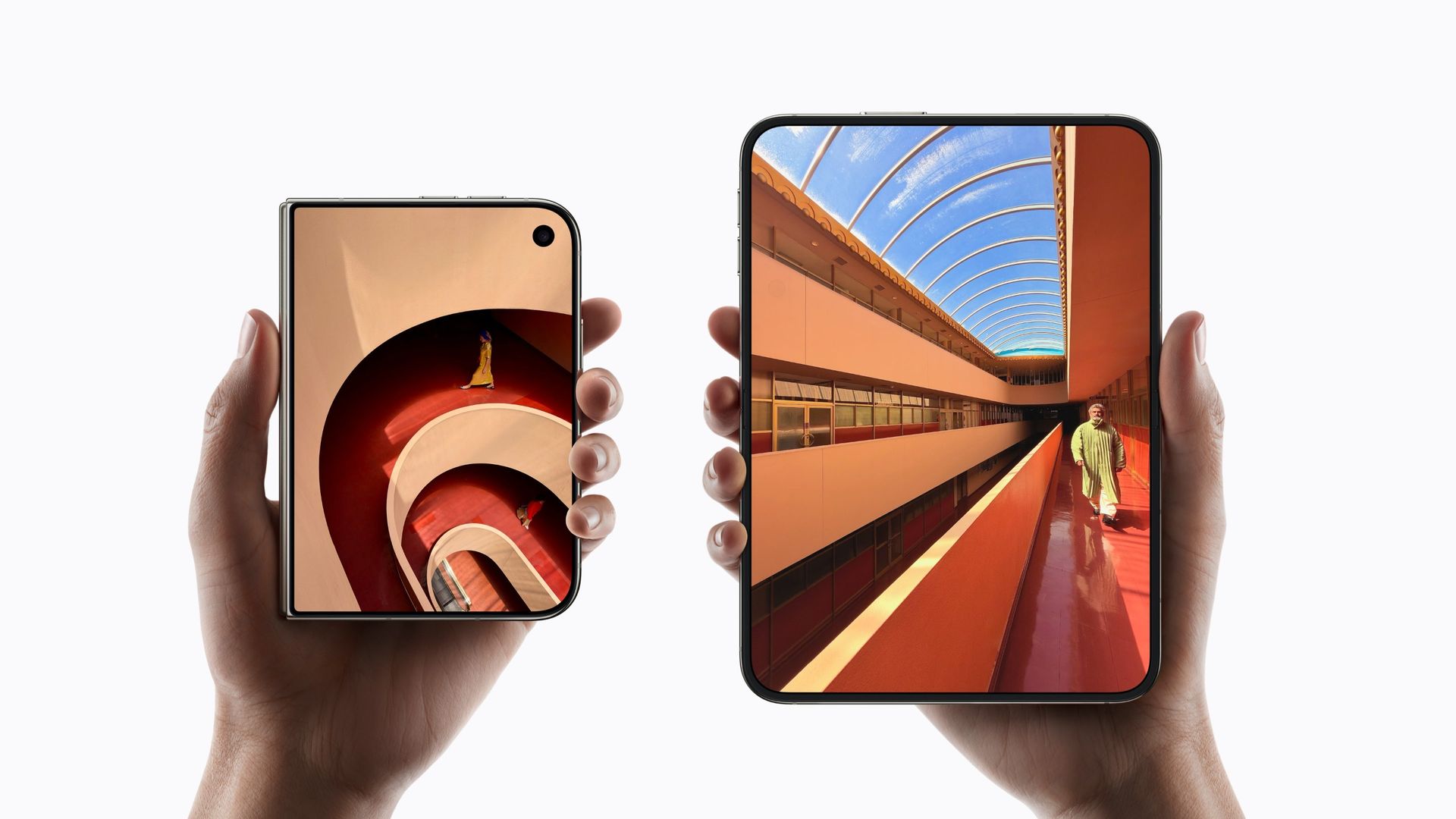
I like the design of wide foldables as they’re much easier to hold and use than traditional book-style devices like the Galaxy Z Fold 8 Ultra and Pixel 11 Pro Fold. The iPhone Duo looks interesting thanks to the 5.4-inch outer panel, and it unfolds to a 7.6-inch inner panel. The Xiaomi 18 Fold has similarly-sized displays as well, but when it comes to resolution, the iPhone Duo comes out ahead.
That said, the biggest issue with the iPhone Duo is the weight; at 254g, it is the heaviest of any 2026 foldable, and the Xiaomi 18 Fold is 35g lighter. Now, to give you some context, it is 5g heavier than the iPhone 18 Pro Max, but the point stands that it is a hefty device. Obviously, we’ll need to see how that makes a difference in daily use; weight distribution matters a lot on a foldable, and I’ll share findings once I used the Duo.
(Image credit: Derrek Lee / Android Central)
What I like is that the Duo gets IP68 dust and water resistance. It is the only foldable other Google’s Pixel 11 Pro Fold and 10 Pro Fold to have this feature, and it will make a genuine difference in regular use. The 18 Fold has IP58 and IP59 ingress protection, and it should do a good enough job in outdoor use.
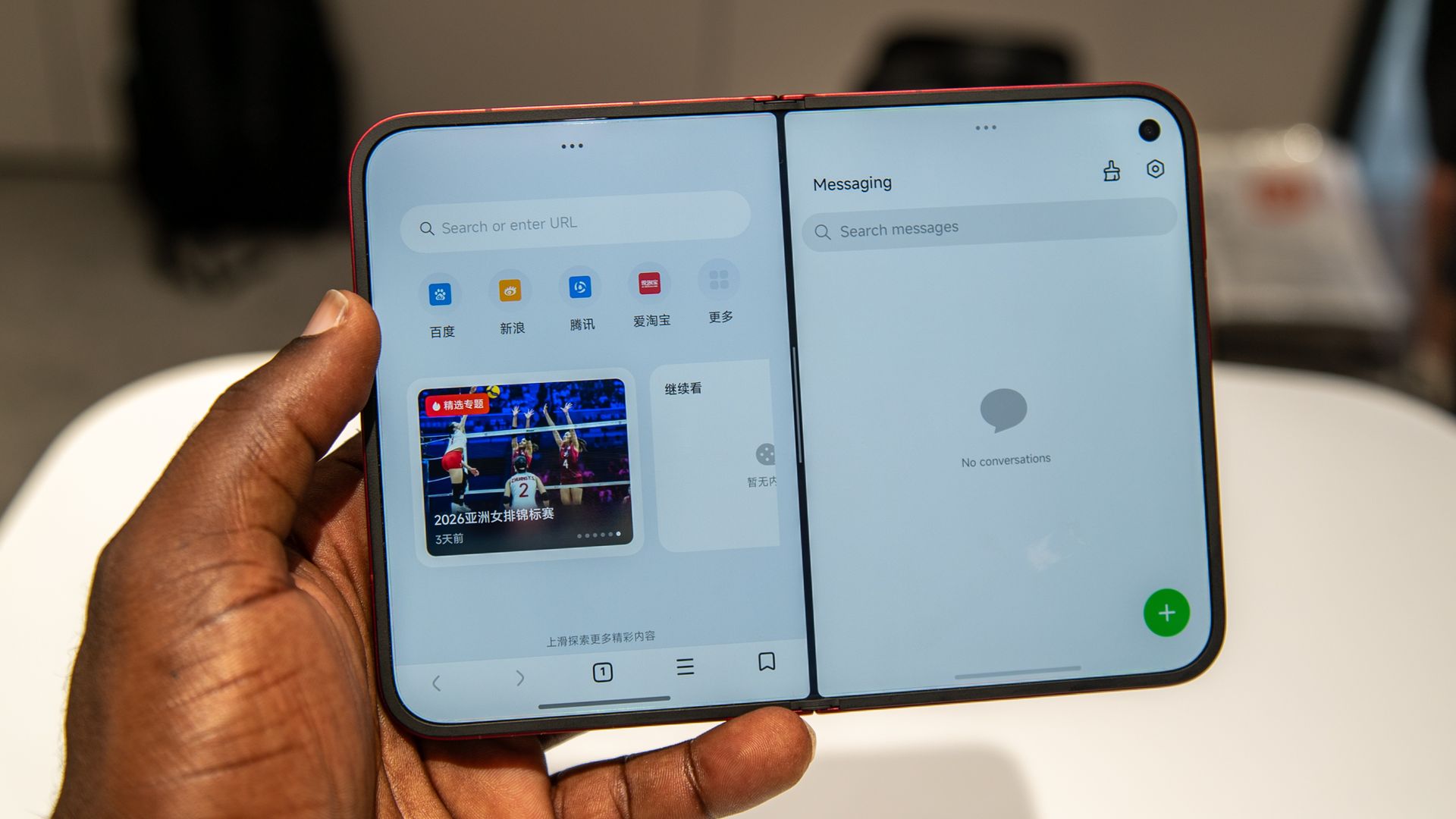
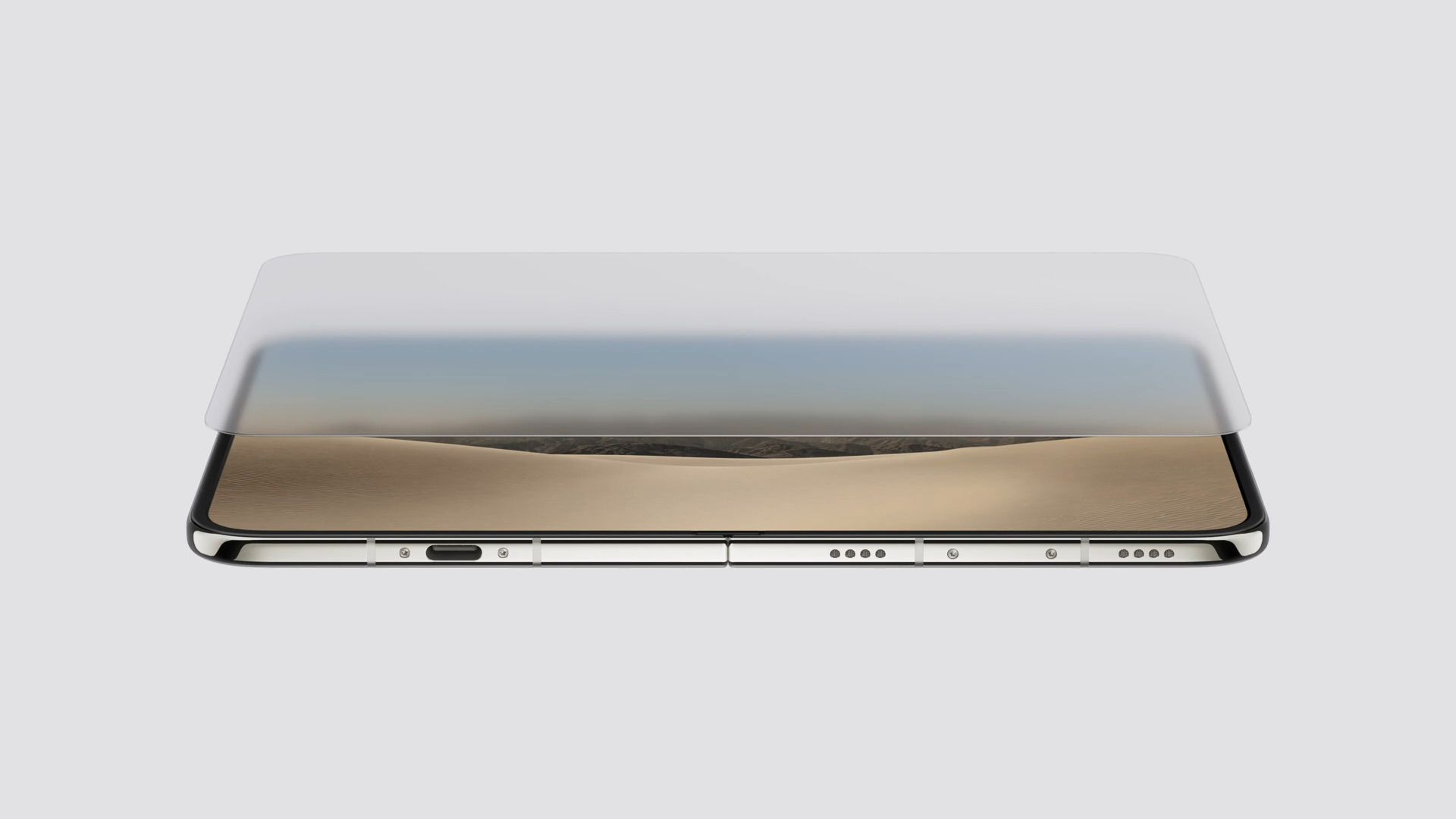
Also, the design itself is exquisite on the Duo, and the blue color looks stunning. Something you don’t see (but will make a difference) is the inner panel. The iPhone Duo uses layers of ultra-thin glass sandwiched over the panels, and it should give it much better resilience against deformation — which is an issue with most foldables. Xiaomi, to its credit, delivered what is arguably the best-looking wide foldable in the 18 Fold, and the svelte design along with the bright red hue is brilliant.
Apple iPhone Duo vs. Xiaomi 18 Fold: Hardware
(Image credit: Derrek Lee / Android Central)
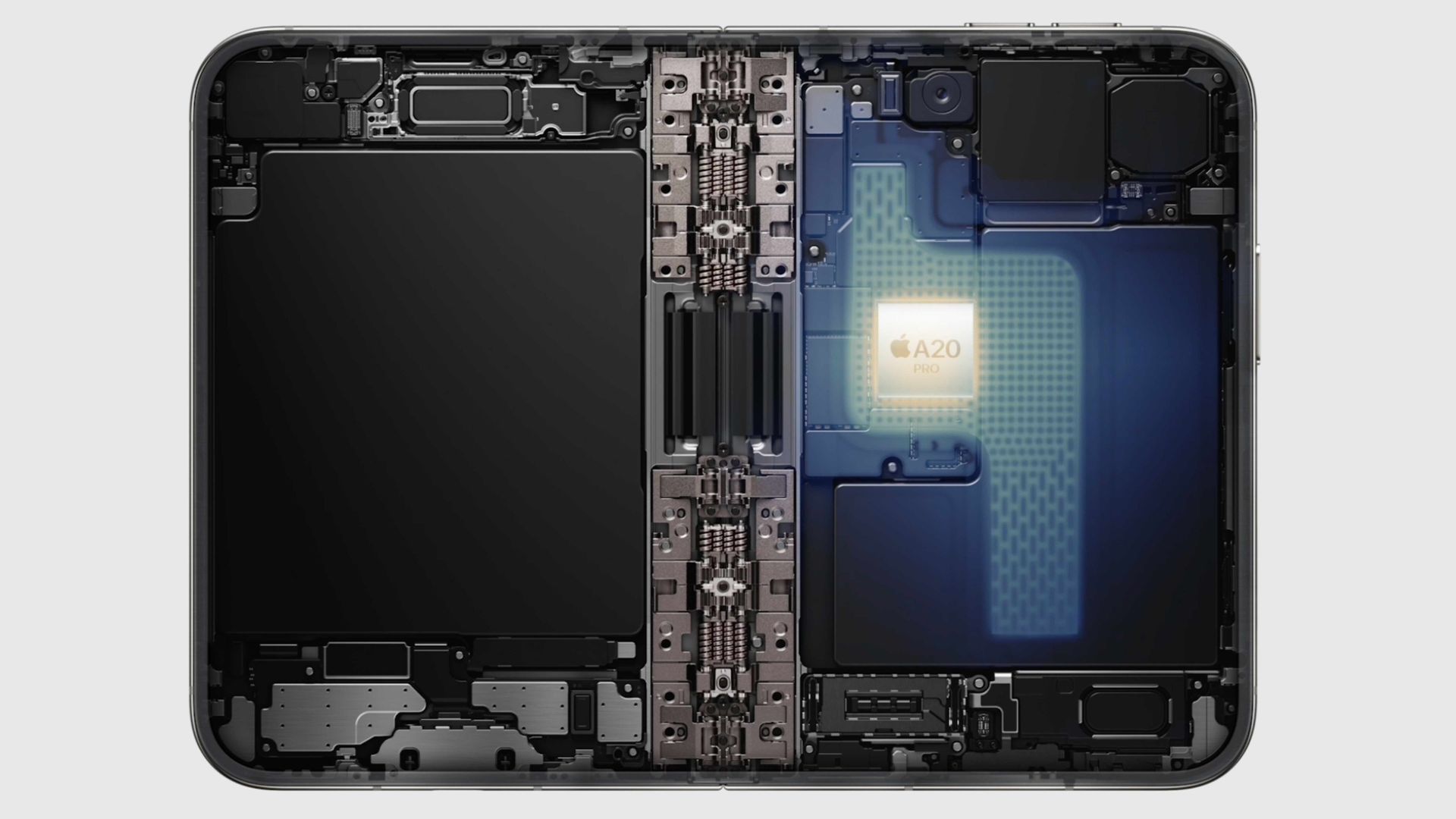
What’s notable about the internals is that both foldables use custom silicon. The iPhone Duo uses the latest A20 Pro, and the 2nm platform has much better power than last year, and it should deliver meaningful upgrades on the battery side of things. Xiaomi is using the Xring 03 silicon with the 18 Fold, and I’m excited to get my hands so I can test it — it’s not often we get a new player that can beat Qualcomm at its own game.
Xiaomi also has a distinct advantage with the battery, and the 18 Fold has a 6,000mAh battery that easily lasts over a day. the iPhone Duo should last a day as well, but this is something I’ll need to test. The 18 Fold has 67W USB PD charging tech, but what I like is that the iPhone Duo has 25W MagSafe, making it that much more convenient to use. Annoyingly, Xiaomi doesn’t have built-in magnets, so you can’t just use a Qi 2.2 charger with the device.
Category
Apple iPhone Duo
Xiaomi 18 Fold
Display
Outer: 5.4-inch ProMotion LTPO OLED, 2034x1398
Inner: 7.6-inch ProMotion LTPO OLED, 2670x1878
Outer: 5.38-inch LTPO AMOLED, 1712x1168
Inner: 7.58-inch LTPO AMOLED, 2364x1672
Operating System
iOS 27, at least seven updates
Android 17
Chipset
Apple A20 Pro, 2nm
Xiaomi XRing O3, 3nm
RAM
12GB
12GB/16GB
Storage
256GB, 512GB, 1TB, 2TB
256GB, 512GB, 1TB
Rear cameras
Main: 48MP f/1.6, sensor-shift OIS
Wide-angle: 48MP f/2.2
Main: 200MP f/1.7, OIS
Tele: 50MP f/2.8, 3x tele
Wide-angle: 50MP f/2.4
Front camera
12MP
16MP
Ingress Protection
IP68
IP58/IP59
Battery
4,700mAh
6,000mAh
Charging
40W, 25W MagSafe/Qi 2
67W PD 3.0, 50W HyperCharge
Dimensions
Folded: 117.8 x 84.1 x 11.3mm
Unfolded: 117.8 x 164.6 x 5.2mm
Folded: 83.6 x 117.8 x 10.7mm
Unfolded:163.8 x 117.8 x 5.0mm
Weight
254g
219g
Colors
Night Sky, Star White
Red, Rose gold, Silver, Grey
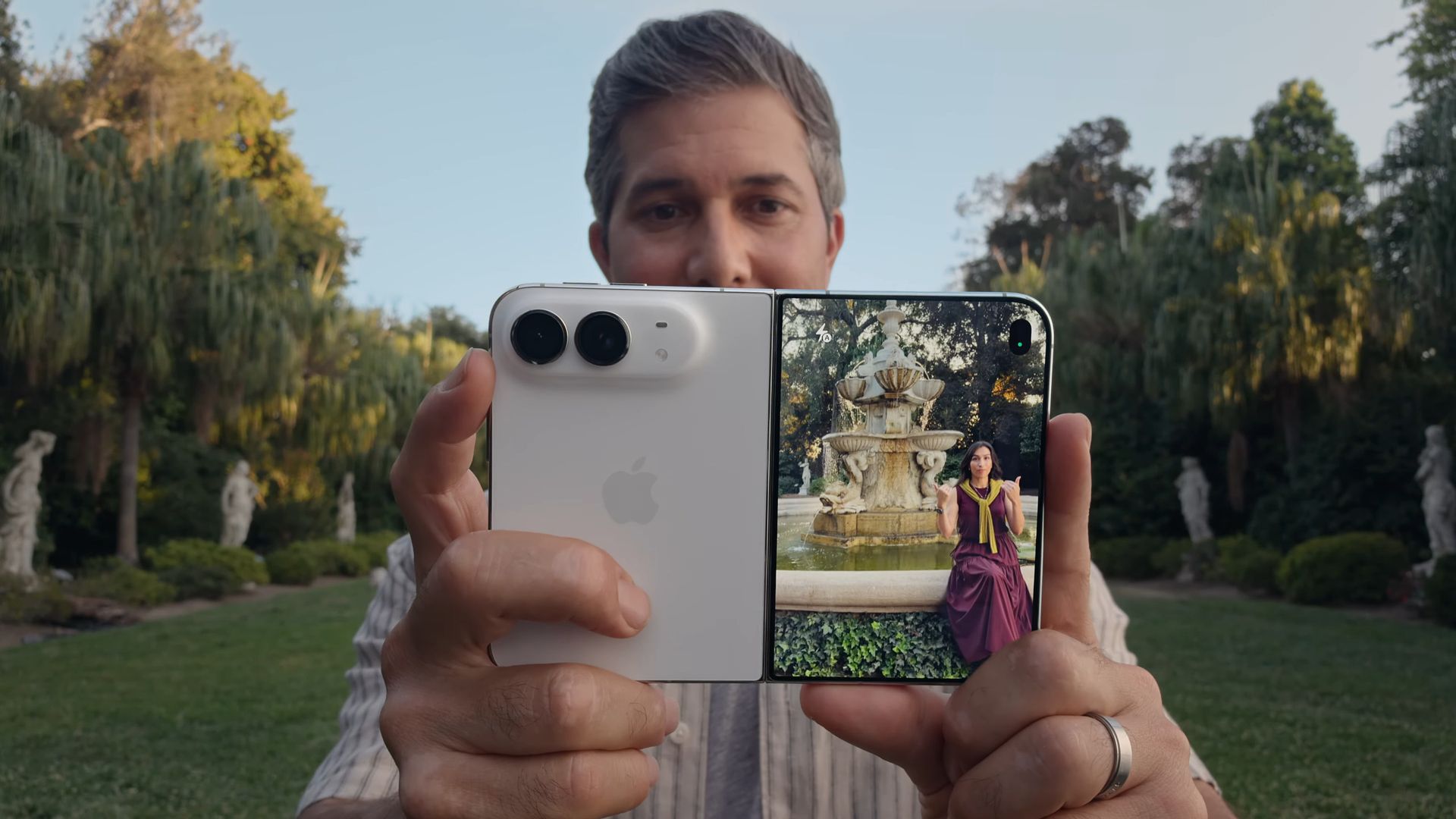
The iPhone Duo has two 48MP cameras — a main camera and wide-angle lens — but you don’t get a telephoto lens. This is annoying, as the tele lens is the one I use the most. That’s why it’s refreshing to see Xiaomi providing the lens on the 18 Fold; its foldable has a 200MP main camera, 50MP tele lens with 3x optical zoom, and a 50MP wide-angle lens. Just having a tele lens gives the device a huge advantage, and Xiaomi is the only brand doing so on a wide foldable.
Apple iPhone Duo vs. Xiaomi 18 Fold: Software
(Image credit: Apple)
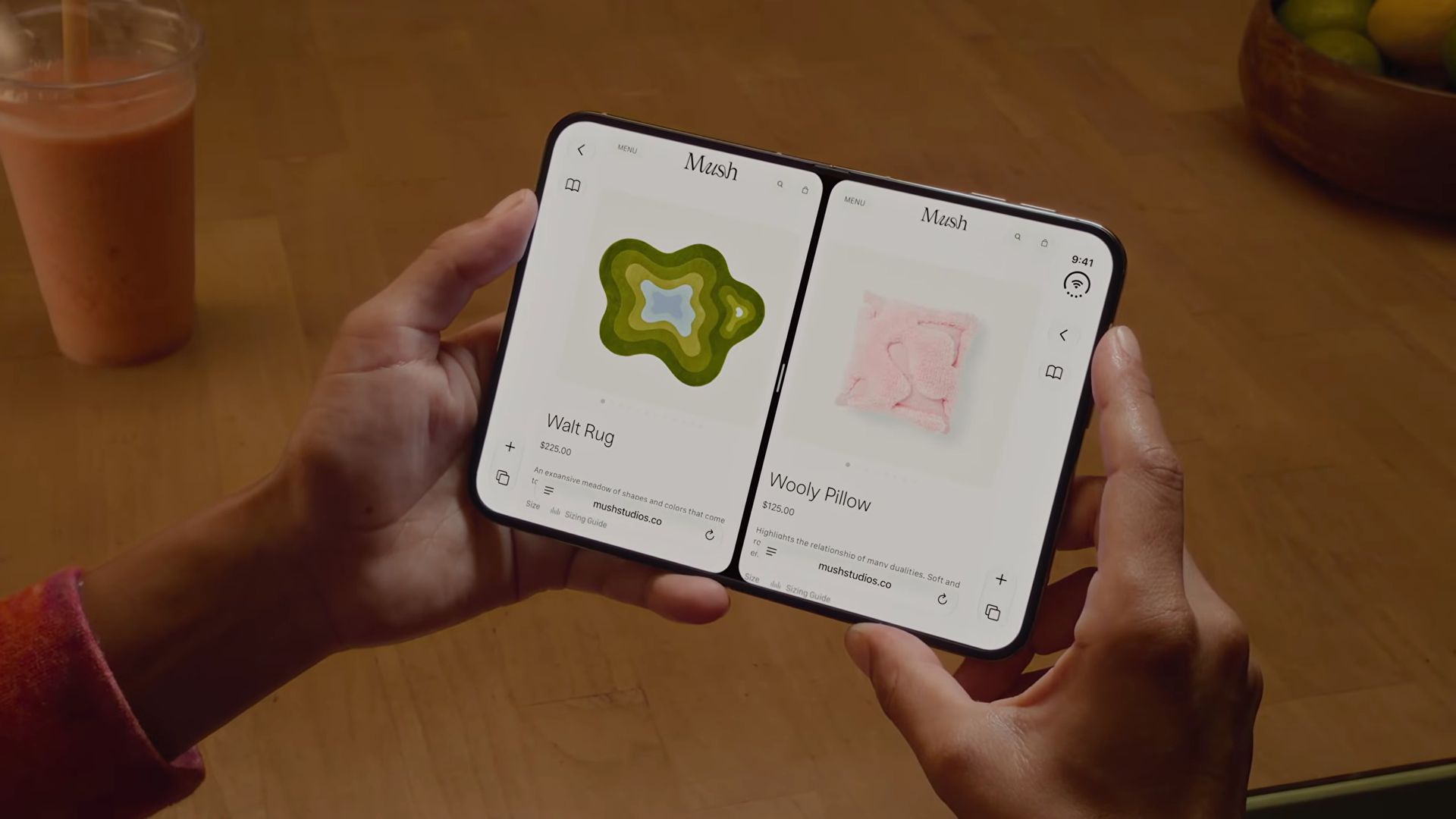
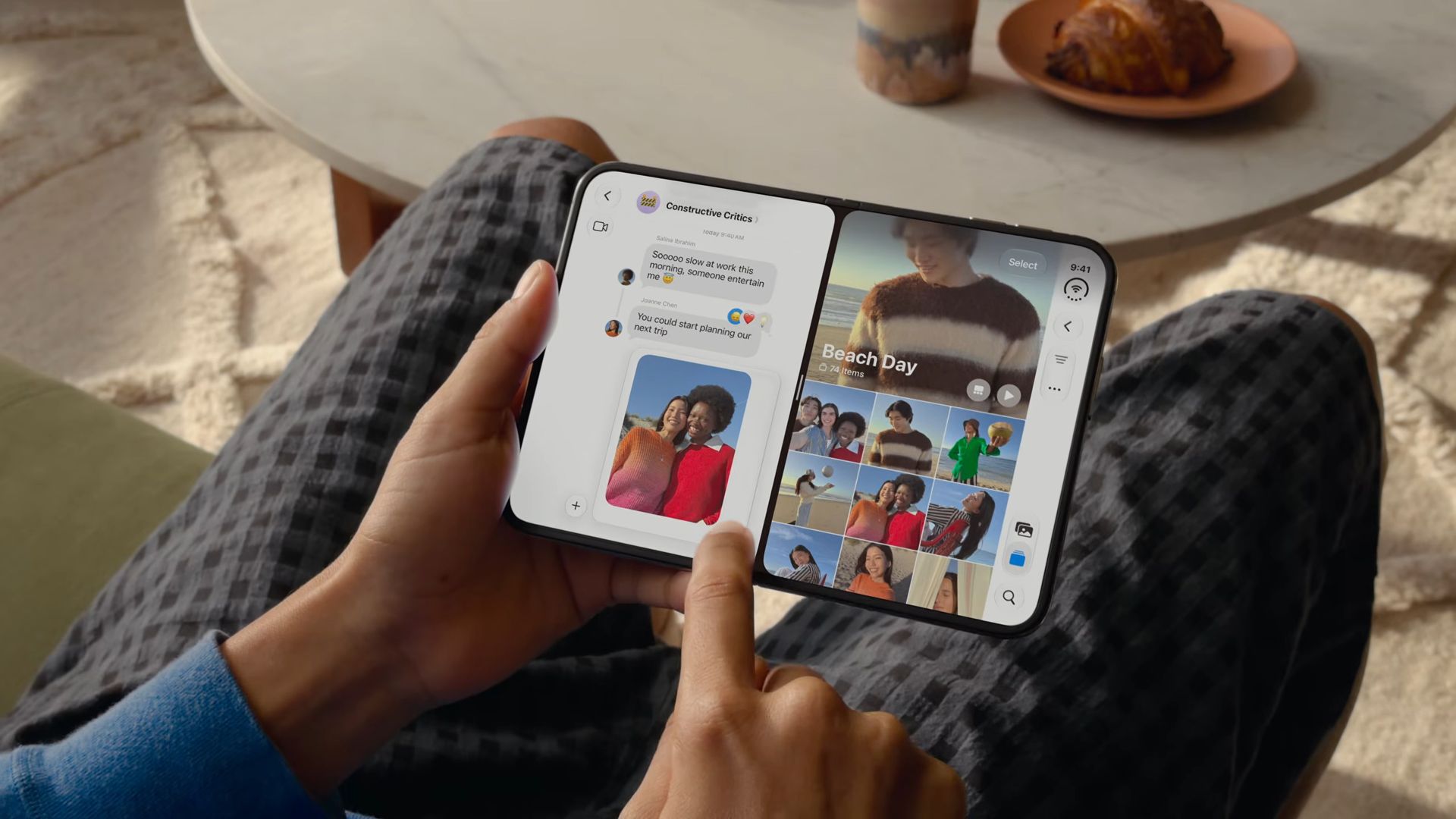
Where the iPhone Duo has a sizable lead is the software; it’s clear that iOS 27 has plenty of custom features to maximize the real estate on the foldable. What’s great to see is that the toggles and the taskbar are oriented on the right, and while it’s a small thing, it makes a difference in usability.
The main problem with the Xiaomi 18 Fold is that it is limited to China, so you have to use the Chinese iteration of the brand’s skin. There are issues with push notifications, aggressive memory management, and there’s no Play Store or Google services out of the box. If you're an enthusiast and have used Chinese software previously, you can wrangle the 18 Fold to work the way you want (I plan on doing that), but it is a hassle.
Apple iPhone Duo vs. Xiaomi 18 Fold: Which should you buy?
(Image credit: Apple)
I’ll make this easy: if you like the look of a wide foldable, you should get the iPhone Duo. Although the Xiaomi 18 Fold has arguably better internals, the software is not ideal, and I wouldn’t recommend getting it as a result. Xiaomi needs to do a better job bringing its foldables to global regions, because the 18 Fold deserves a wide rollout.
Of course, the iPhone Duo is costlier than any other iPhone, but not by too much than the latest Pro models. There's no doubt that the 18 Fold gives you a better overall value (as these things go), but with Xiaomi choosing not to launch the foldable globally, this is a moot point.
Apple
iPhone Duo
Heavyweight
The iPhone Duo is the default choice if you need a wide foldable. The Xiaomi 18 Fold has better internals, but the Duo arguably has the better software, and it is launching in over 75 countries.
Many years and even more rumors later, Apple's first foldable phone is finally official. The iPhone Duo is the company's first stab at a folding phone, and it's not the only new phone Apple launched at its annual September event. We got our first look at the iPhone 18 Pro and iPhone 18 Pro Max, too. In a major change of pace, Apple didn't announce the base-model iPhone 18, but there are plenty of new features and improvements to speak of.
Apple stole its fair share of features from Android, but the pendulum swings both ways. There are a handful of features I'd love my favorite Android phones to steal from the iPhone Duo, iPhone 18 Pro, and iPhone 18 Pro Max. There are even more features Apple included on its new iPhones that are available as niche offerings on Android, but aren't ubiquitous. Here's to hoping these five iPhone features are onboard your next Android phone.
The iPhone Duo's foldable nano-texture display
(Image credit: Apple)
Apple didn't launch its first foldable, the iPhone Duo, without a crease. It still has one down the middle of the folding display, just like all the Android foldables that came before it. However, it used a clever trick to minimize the crease's visibility during normal use. The folding display is covered by a matte, nano-texture surface. This reduces glare, reflections, fingerprints, and yes, it makes the crease more difficult to spot.
While some foldables have anti-reflective inner display coatings, such as the Galaxy Z Fold 8 and Galaxy Z Fold 8 Ultra, none of them have a matte finish. This is new for the iPhone Duo, and it solves a few major pain points of using glossy plastic foldable display coverings. For one, it'll be easier to see in broad daylight and won't pick up those nasty fingerprints. It's also strong enough to support the Apple Pencil. Most importantly, it hides the crease in normal viewing conditions, since light reflections are really what makes the crease appear pronounced.
I've used Apple's nano-texture finish on other products before, like the iPad Pro, and I'm excited to see it on the iPhone Duo. I'd love to see a matte display covering on future Android foldables, too.
Under-display camera
(Image credit: Apple)
Android phones pioneered the under-display camera (UDC), but then they abandoned it. Samsung had a UDC on the Galaxy Z Fold 3 through Galaxy Z Fold 6, and it helped make the main screen feel more immersive. Now, the Galaxy Z Fold 8 and Galaxy Z Fold 8 Ultra have a hole-punch camera smack dab in the top middle of the right half of the phone. It gets in the way of your content, especially if you decide to rotate the device.
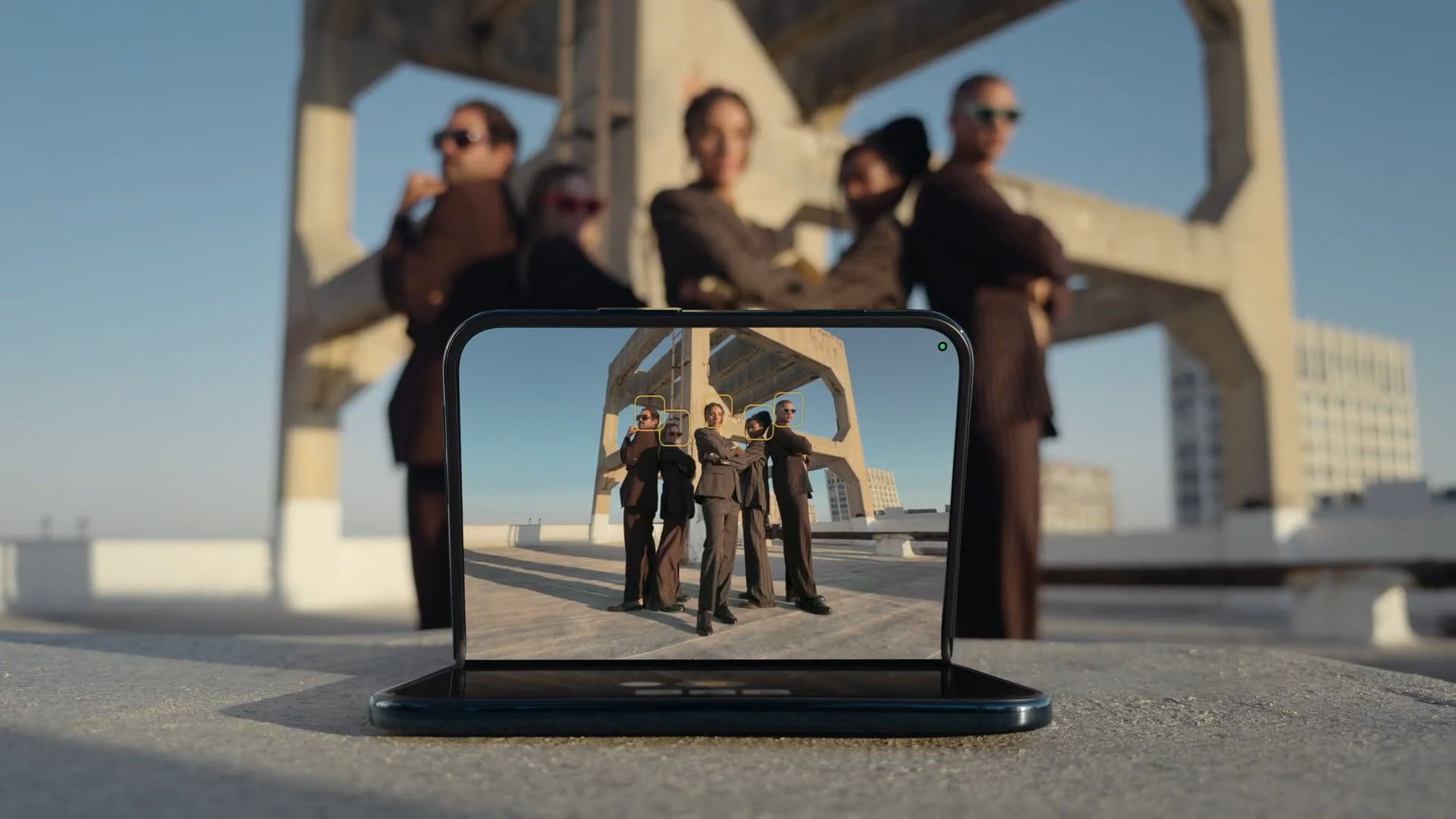
Motorola and Google do a better job with their hole-punch cameras, sticking them in the top-right corner, where they're less intrusive. However, I wish Samsung never removed the UDC from the Galaxy Z Fold lineup, and hope that the iPhone Duo's UDC will spark a revival of the trend. Apple's new UDC can handle 1080p video recording at 30FPS or 60FPS, making it good enough for video calls, which is what the front-facing camera on the folding display will primarily be used for.
At the same time, the UDC is hidden just enough to make the iPhone Duo's folding display feel complete no matter the orientation. That's important for a wide foldable like the iPhone Duo or Galaxy Z Fold 8, because they work just as well in portrait as landscape when unfolded.
Variable aperture
(Image credit: Apple)
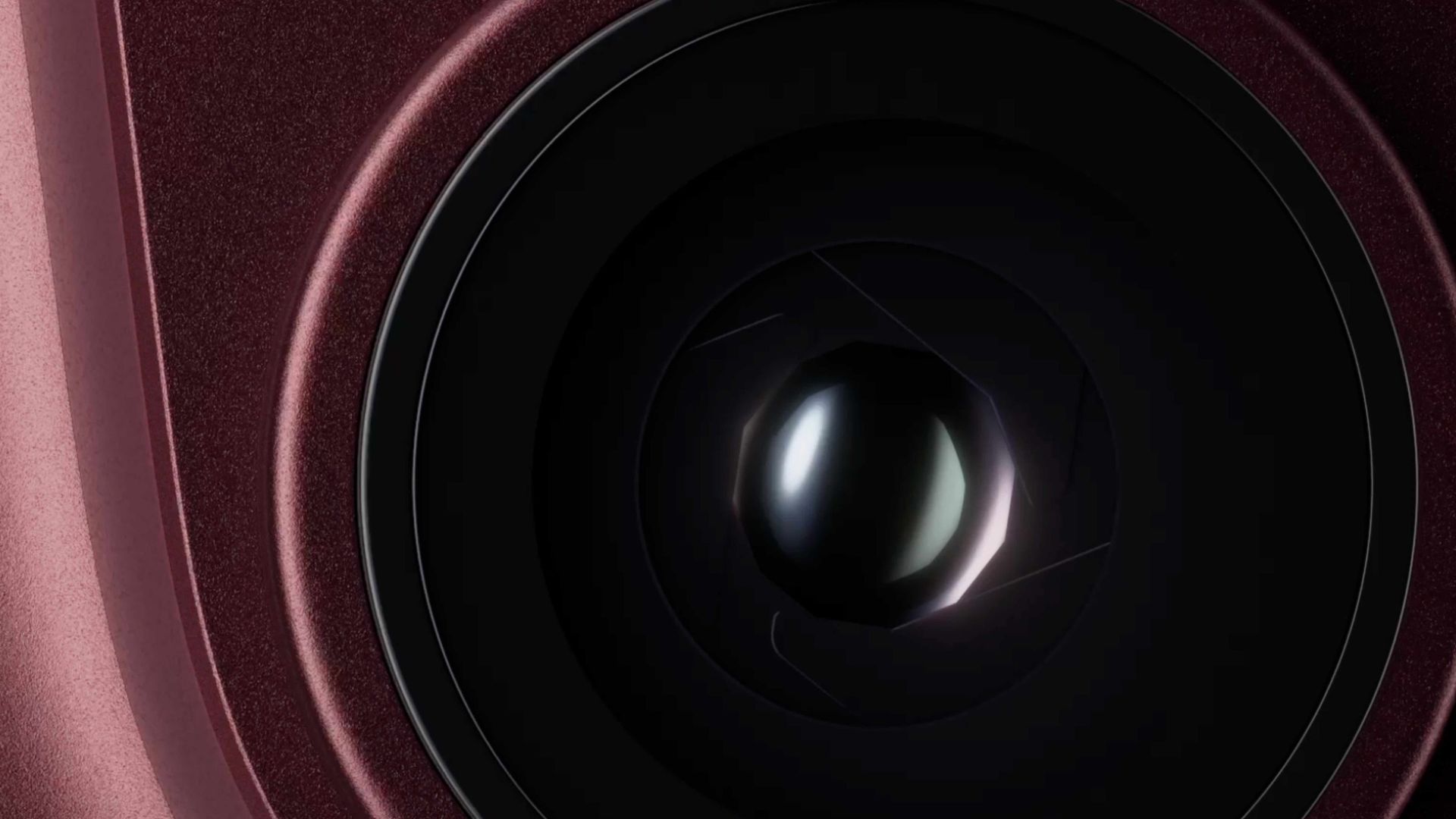
There's another iPhone feature that could revival an old Android one, and this time, it's on the iPhone 18 Pro. The two "Pro" phones have a variable aperture primary shooter that can move from f/1.8 to f/4.0, depending on the situation. Apple did this by adding six laser-cut blades to the 48MP main camera that move to transition between different apertures.
It's controllable by the user thanks to the new Pro controls in the Camera app. The iPhone 18 Pro's main camera supports manual adjustments to lens aperture, shutter speed, and white balance. There's also a histogram that shows exposure levels to help you refine the shot. The hardware is the interesting part, though, as variable aperture allows one camera to do the work of multiple specialized lenses.
Apple is working with carriers to add an iPhone Handoff feature, and while it's not strictly exclusive to the iPhone Duo or iPhone 18 Pro, it's certainly worth mentioning. The feature lets you use a single phone line with two iPhones at once. A primary eSIM profile is loaded onto one device, and a secondary eSIM profile is loaded onto a companion device. The phone you're using will automatically connect to your carrier's network automatically.
It's a great way to use two iPhones at once. The timing isn't a coincidence — iPhone Handoff lets you use your phone like with an iPhone Duo and a "regular" iPhone simultaneously. I'd love to have something similar on Android. I could keep a primary eSIM on a Galaxy S26 and a secondary eSIM on a Galaxy Z Fold 8, all using the same phone line.
For now, it's limited to T-Mobile in the U.S., and it won't come free with your plan. There'll be an extra fee, similar to adding an LTE smartwatch to your line.
iOS 27 foldable animations
(Image credit: Apple)
Finally, there's the software. I admit, after seeing Apple's iOS and iPadOS missteps over the past few years, I had my doubts about the iPhone Duo's software. Apple proved me wrong. There are a ton of software tweaks that make me, and others on the Android Central team, more excited to try it than any other foldable. For me, it starts with the dock. Using the extra vertical space on the right side of the iPhone Duo for launching apps and key controls is genius.
The animations are even better. When you open up an iPhone Duo, the cover screen blurs and dissolves into the main screen. It's an intuitive experience that makes the folding transition feel like a transformation rather than a friction point.
Apple did steal some Android foldable favorites for the Duo, like Flex mode, Split view, and Made You Look (called Kid Cue on the iPhone Duo). However, it definitely jazzed the software up, and Android could stand to borrow some of the animations and design features.
Honorable mentions: IP68, Qi2, pen support, and vapor chamber
(Image credit: Apple)
There are a collection of iPhone Duo features that are available scattered across different Android foldables, but are not found on one device.
Motorola's Razr Fold has an active stylus that works on both the cover screen and foldable display, like the iPhone Duo. Google's Pixel 11 Pro Fold has the same Qi2 and IP68 support as the iPhone Duo, and also has a vapor chamber for its chip, but lacks pen input. Honor's Magic V6 has a higher IP69 rating, but lacks Qi2 and a vapor chamber.
You get the idea. If I picked and chose my favorite features from the best Android foldables, I could build an iPhone Duo competitor. But that Android device — one with IP68, Qi2, stylus support, a vapor chamber, a UDC, and a nano-texture display — does not exist yet. That's why the iPhone Duo feels like a complete foldable package for fans, and it's exactly what Android phone makers should copy.

 Login