❌

Reading view

'I take the compact Nikon Stabilized 12x25 binoculars with me everywhere' β€” they now have $73 off, the best we've seen this year

Jase Parnell-Brookes has reviewed a huge range of skywatching optics, including the best telescopes, binoculars and image-stabilized binoculars. As our trusted authority and expert tester, when they recommend a product and you're in the market for it, their opinions and recommendations are worth paying attention to.

In their Nikon Stabilized 12x25 binoculars review, Jase reckoned they were without doubt the best compact image-stabilized (IS) binoculars they had ever tested. Right now they have $73 off and are at the best price we've seen since Black Friday 2025.

Get the Nikon S 12x25 binoculars, available for just $627 at Best Buy.

Jase awarded them with a perfect 5-star rating, which was mostly thanks to their excellent stabilization, their unobtrusive controls and incredibly small form factor. They also earned a place on our best binoculars guide as the best compact IS binoculars. This Best Buy deal is worthy of your attention if you're in the market for an incredibly versatile pair of binoculars that deliver still views in a compact body.
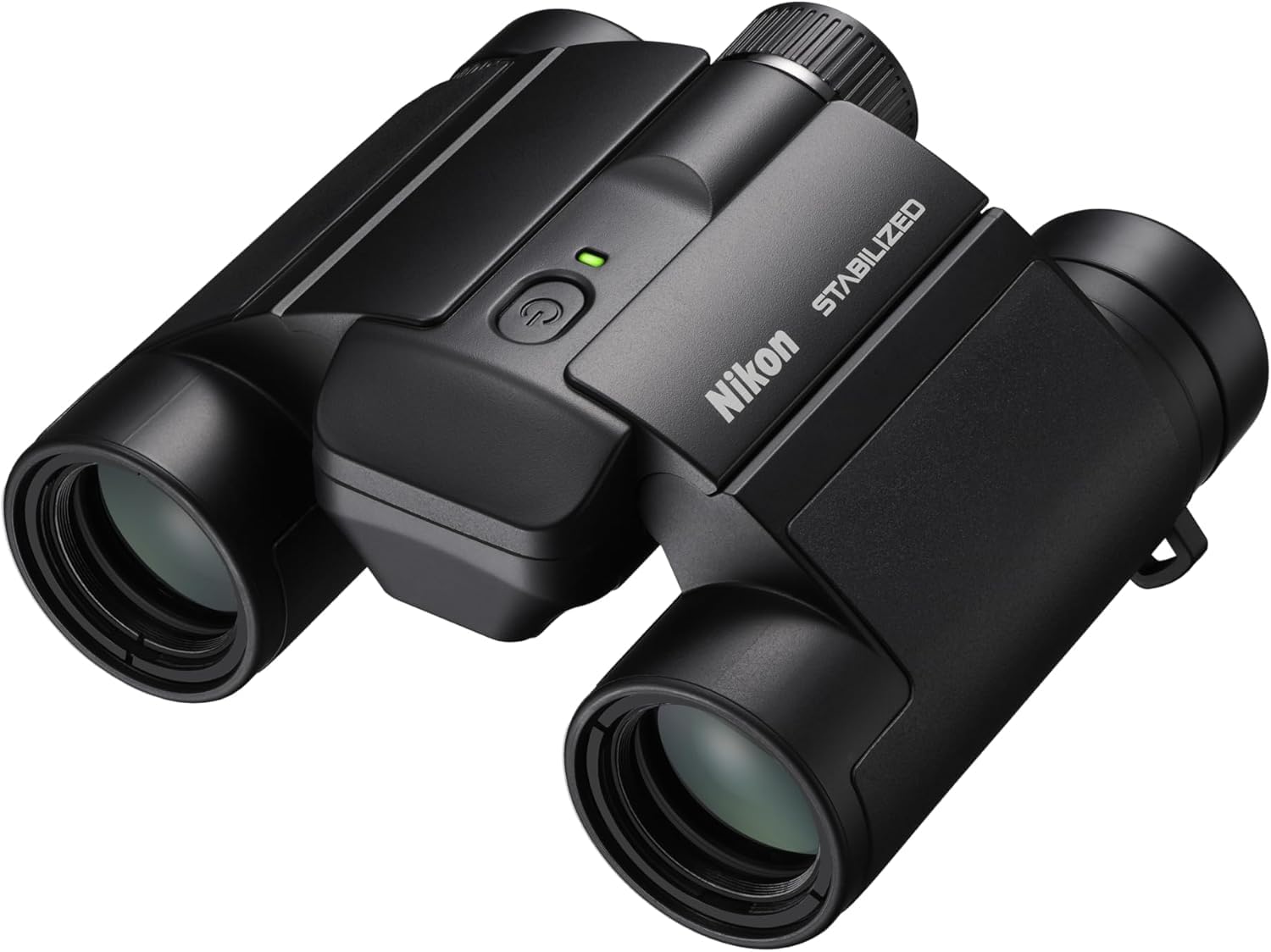
Save $73 on these pocket-sized image-stabilized (IS) binoculars from Nikon. They offer a strong 12x magnification and are portable enough to just slip into your pocket. In our review, we noted that the compact size and amazing IS system delivered amazing stargazing performance and earned them a perfect five-star review.

Read our Nikon Stabilized 12x25 Binoculars review.View Deal

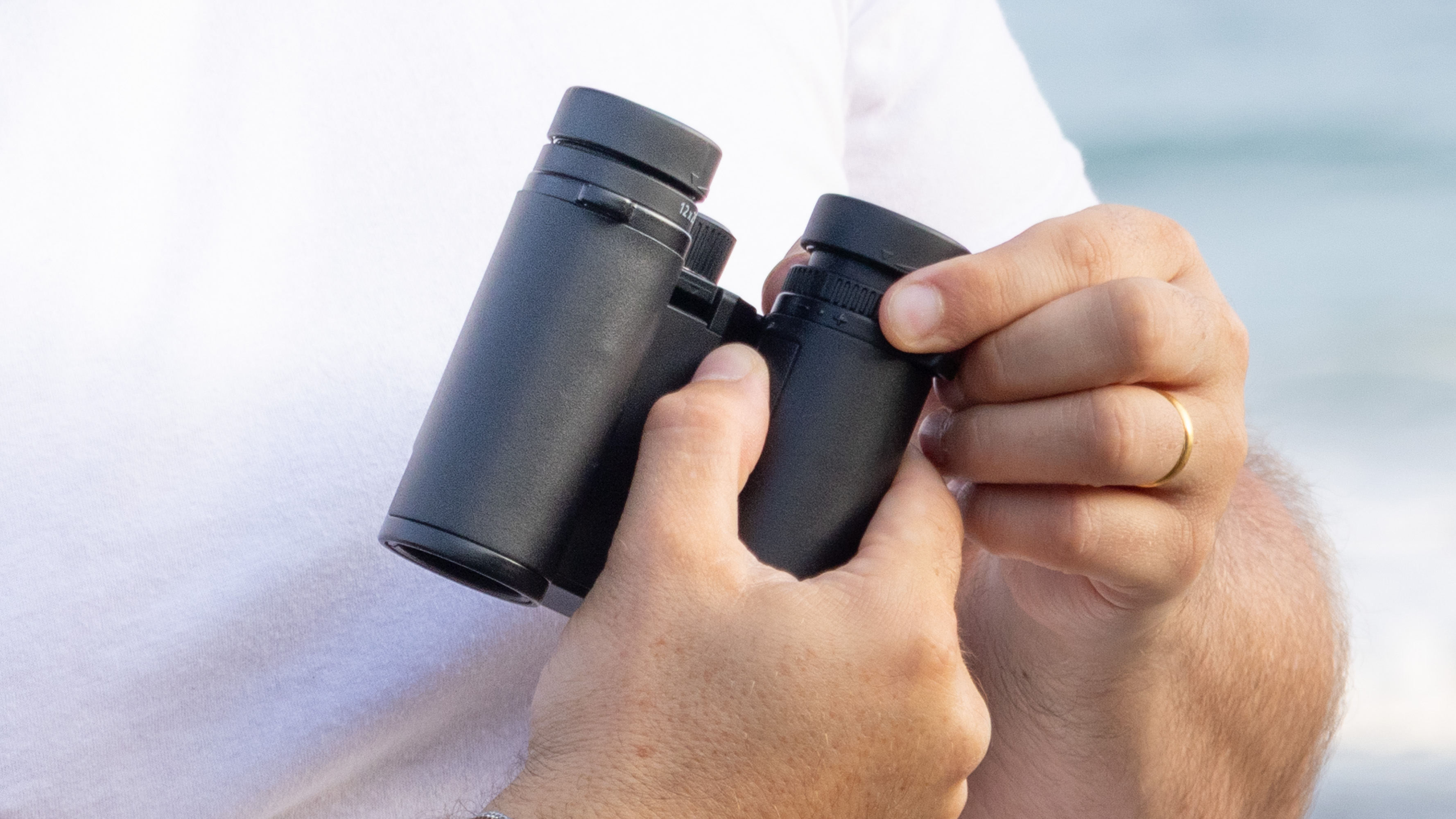
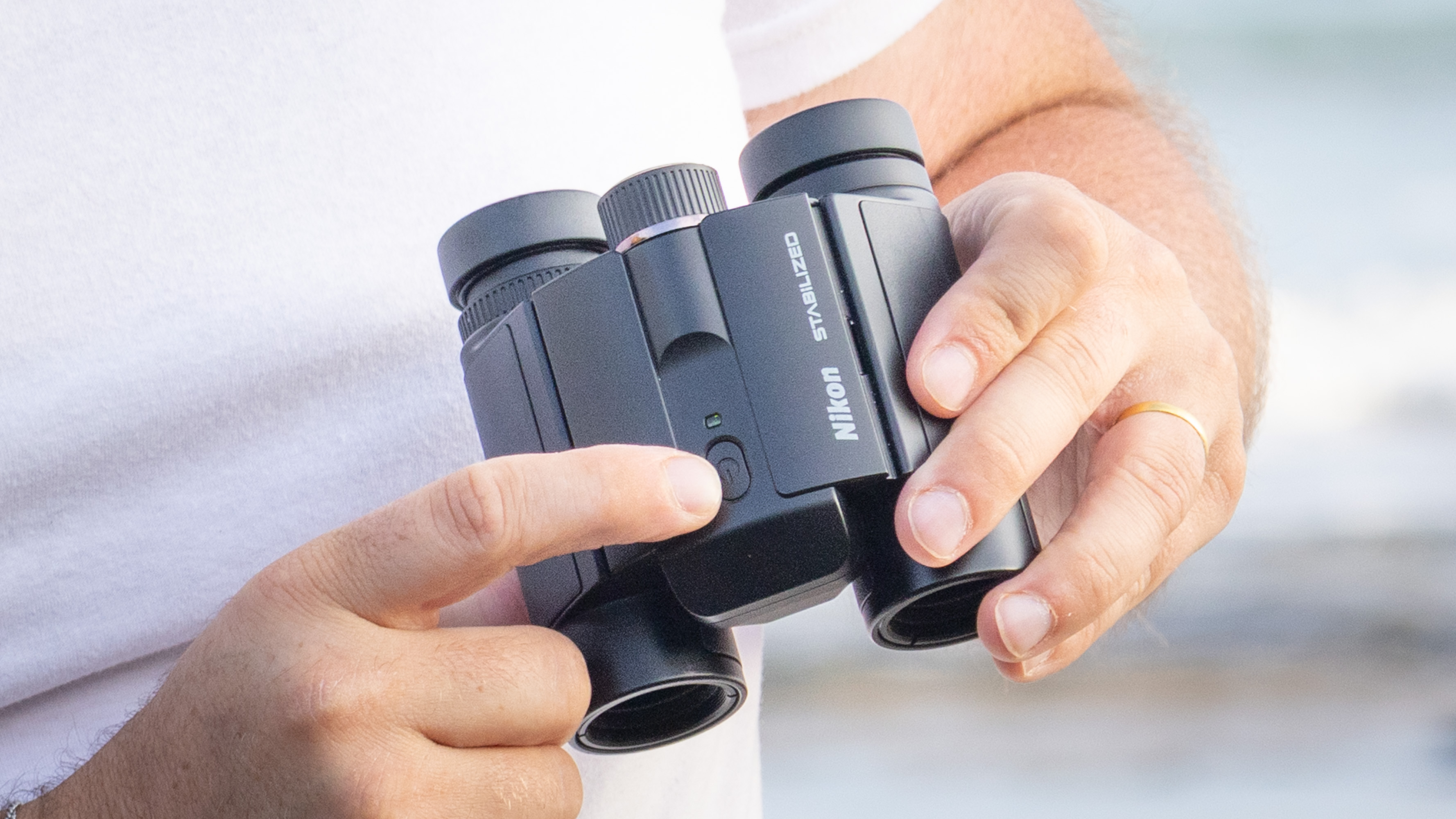
Nikon Stabilized 12x25 S binoculars held in the hands of the reviewer in front of breaking waves at the beach
The Nikon Stabilized 12x25 S binoculars are incredibly compact and are a handy pair to take wherever you go. Kimberley Lane
Nikon Stabilized 12x25 S binoculars held in the hands of the reviewer in front of breaking waves at the beach
The smaller objective lenses mean that the image looks a stop darker than viewing with the naked eye. Kimberley Lane
Nikon Stabilized 12x25 S binoculars held in the hands of the reviewer in front of breaking waves at the beach
The eyecups rotate freely to adjust the amount of eye relief. Kimberley Lane
Nikon Stabilized 12x25 S binoculars held in the hands of the reviewer in front of breaking waves at the beach
The binoculars are incredibly lightweight, considering their onboard image-stabilization system. Kimberley Lane

These image-stabilized (IS) binoculars punch well above their weight. Tipping the scales at a feathery 13.9 oz (395 g), they pack effortlessly into any bag, giving you rock-steady views wherever you roam. While the compact objective lenses yield a slightly dimmer view than the naked eye, they still deliver fantastic, crisp performance for casual stargazing.

In their testing, Jase managed to see the Andromeda galaxy (M31) with averted vision and the Orion nebula (M42), so these are worth taking out with you at night for a better look at the stars and some of the brighter deep sky objects.

They are also relatively cheap in the image-stabilized world where models can easily go for $1000 and up, depending on the model. Jase was happy to recommend these over another compact IS model, the Canon 8x20 IS binoculars, and they are actually lighter and smaller too. With their silky smooth steadying and clear views, they highly recommended them for anyone looking to get image-stabilized binoculars but doesn't want to spend big bucks.

Key features: 12x magnification, 25mm objective lens diameter, 4.5-degree angular field of view, 12.3mm eye relief, 13.9 oz (395 g) weight.

Product launched: November 2024

Price history: The Nikon Stabilized 12x25 binoculars usually retail for $699.95 on Amazon. This deal from Best Buy beats the Amazon price easily and, at just $626.95, is the best price we've seen since Black Friday 2025.

Price comparison: Best Buy: $626.95 | Newegg: $629.95 | Amazon: $699.95

Reviews consensus: Space: β˜…β˜…β˜…β˜…β˜… | Digital Camera World: β˜…β˜…β˜…β˜…

Featured in guides: Best binoculars, Best compact binoculars

βœ… Buy it if: You are looking for an affordable way into image-stabilized binoculars and need a pair that you can slip into your pocket.

❌ Don't buy it if: You need really high magnification or bigger objective lenses. For more powerful image-stabilized binoculars, try the Canon IS 15x50 binoculars.

Check out our other guides to the best telescopes, binoculars, cameras, star projectors, drones, lego and much more.

  •  

The Summer Triangle β€” 3 stars, 1 seasonal mystery

On clear September evenings, I often find myself looking up just after dusk, expecting the sky to feel a little less like summer. Yet there, still commanding the overhead darkness, are Vega, Altair, and Deneb β€” the three brilliant stars of the famous Summer Triangle.

Their familiar pattern can make the season feel as though it is lingering above us, even as cooler nights and earlier sunsets suggest otherwise. In fact, even as late as mid-November, the Triangle is still nearly overhead soon after sunset at dusk. That contrast raises a simple but intriguing question: if this bright celestial landmark remains so prominent well into autumn, why do we still call it the Summer Triangle?

Why not simply call it the Autumn Triangle?

Why it belongs to summer

The answer lies not in the calendar, but in how the Triangle moves across the sky over the course of a summer night. The chief reason is that, at this time of year, the Triangle does not remain visible all night. By dawn, it has begun to drop beyond the west-northwest horizon. During summer, by contrast, it remains with us from dusk until dawn: already evident in the east-northeast at nightfall, near overhead around the middle of the night, and descending in the west-northwest as daybreak approaches.

A matter of distance and brightness

The stars that compose the Triangle β€” Vega, Altair, and Deneb β€” lie at very unequal distances from us, so their apparent brightness can give a misleading impression of their true luminosity.

The closest of the three is Altair, 16.7 light-years away, followed by Vega at 25 light-years. Deneb, however, is vastly farther off, at roughly 1,600 light-years, though various sources place it between 1,400 and 2,600 light-years. Even though we see Deneb by light that may have begun its journey during the last days of the Roman Empire, it still shines at first magnitude (+1.3, to be exact) because it is a brilliant blue supergiant, at least 55,000 times brighter than the sun.

But their apparent superiority is largely a consequence of distance: Vega and Altair are only a few dozen light-years away, while Deneb lies well over a thousand light-years from Earth. Compared with the stellar lighthouse of Deneb, Vega and Altair are, comparatively speaking, penlight flashlights.

How to say "Vega"

Before continuing with this discussion about the Summer Triangle, it is worth pausing briefly on the pronunciation of Vega, a point that became especially noticeable after the 1997 science fiction drama Contact. Based on Carl Sagan's 1985 novel, the film follows astronomer Dr. Ellie Arroway, played by actress Jodie Foster, as she discovers a radio signal from Vega containing a sequence of prime numbers.

Throughout the film, the star is pronounced "Vey-gah," perhaps echoing Chevrolet's Vega, the subcompact automobile sold in the 1970s. Astronomers, however, generally use a different pronunciation.

The traditional astronomical pronunciation is VΔ“-ga, with the stress on the first syllable. In professional astronomical usage, Dr. Arroway and her colleagues would almost certainly have said "Vee-ga," not "Vey-gah." George Lovi (1939β€”1993), who was widely respected for his knowledge of star nomenclature, often reminded audiences that "Vee-ga is a star and Vey-gah is a car."

Who named the Summer Triangle?

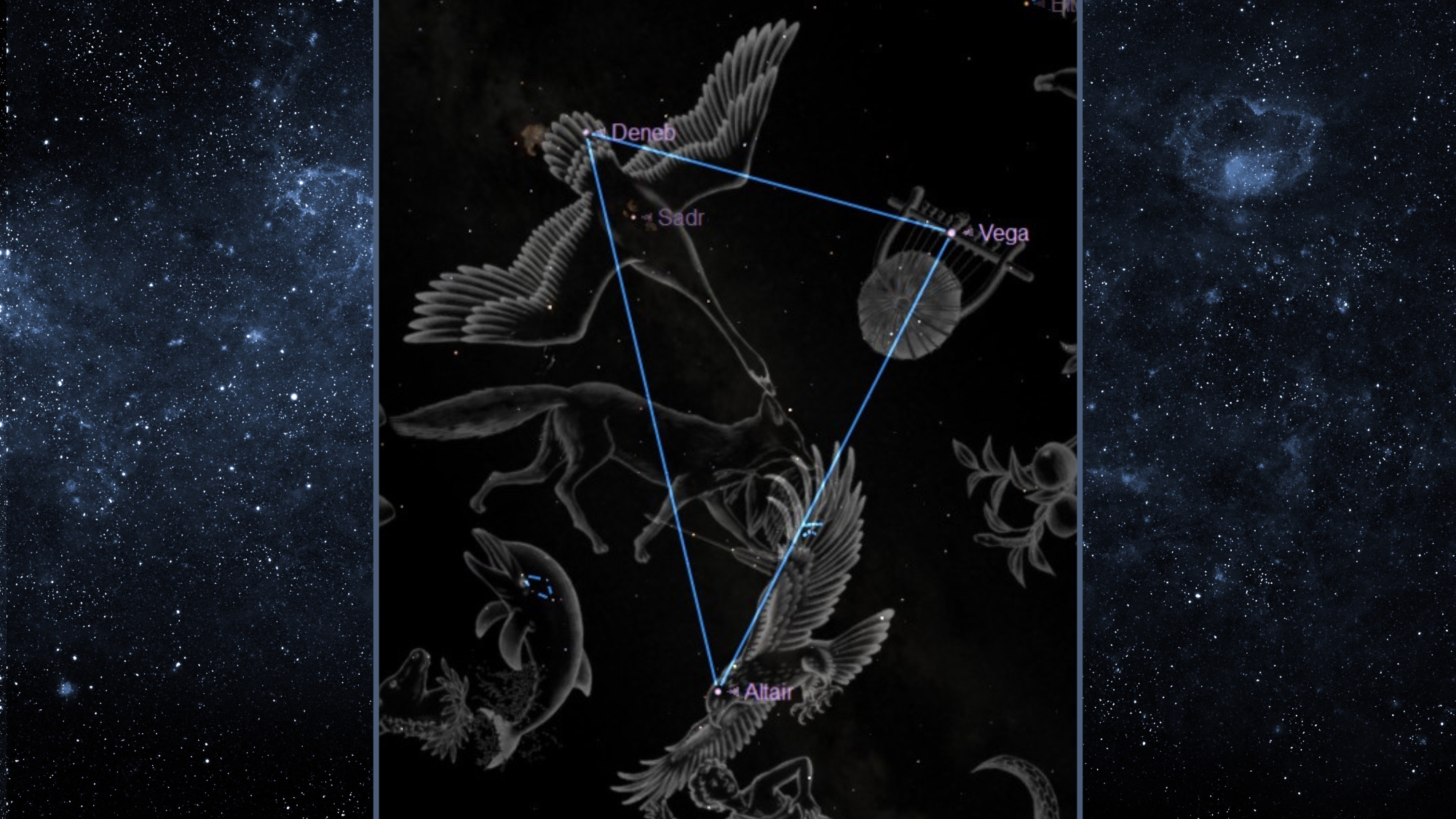
night sky graphic showing the three stars that make up the summer triangle, vega, deneb and altair.

The Summer Triangle and the allegorical figures (Cygnus, Lyra and Aquila) attributed to the three constellations it belongs to, at around 9 p.m. in mid-September.Β  (Image credit: Starry Night Pro 8.0, background added in Canva Pro.)

There has long been debate over who first christened the bright stellar trio of Vega, Deneb, and Altair as the Summer Triangle. Some credit the legendary British astronomer Sir Patrick Moore (1923β€”2012), who wrote, "During a 1958 television broadcast on the BBC, I introduced the nickname of the Summer Triangle, and everyone now seems to use the term, even though it is completely unofficial." Yet several years earlier, in his 1952 sky guide, The Stars β€” A New Way to See Them, H.A. Rey (1898β€”1977) referred to the three stars as a "right triangle," and in his 1954 children's book, Find the Constellations, Rey used the Summer Triangle moniker.

Still others believe the term was popularized through U.S. navigator training manuals during World War II. Interestingly, astronomer Oswald Thomas (1882β€”1963) described Vega, Altair, and Deneb as "Grosses Dreieck" ("Great Triangle") in the late 1920s and as "Sommerliches Dreieck" ("Summerly Triangle") in 1934.

Joe Rao serves as an instructor and guest lecturer at New York's Hayden Planetarium. He writes about astronomy for Natural History magazine, Sky and Telescope, The Old Farmer's Almanac and other publications.

  •  
❌