❌

Reading view

Modern humans interbred with Neanderthals before they disappeared, and most people of non-African ancestry still carry roughly 1 to 4 percent Neanderthal DNA today — meaning part of the human population we once thought we simply replaced never actually vanished

A man who died in a Romanian cave about 40,000 years ago carried more Neanderthal DNA than any other human ever sequenced, ancient or modern. His jawbone turned up in Peștera cu Oase, and when geneticists analysed it the result was startling: between six and nine per cent of his genome came from Neanderthals. Because those segments were still long and unbroken in his chromosomes, researchers reporting in Nature could work out that he’d had a Neanderthal ancestor only four to six generations back.

He was simply closer to the event than anyone alive today.

What the first Neanderthal genome settled

For most of the twentieth century the textbook story was replacement. Modern humans left Africa, Neanderthals died out, end of chapter. Anatomists had spent decades staring at skull shapes and reaching opposite conclusions from the same fossils. That held until 2010, when a draft sequence of the Neanderthal genome, assembled by Richard Green, Svante Pääbo and a large team from bones found in Vindija Cave in Croatia, showed that Neanderthals shared more genetic variants with living Eurasians than with living sub-Saharan Africans. Their estimate put the Neanderthal contribution to non-African genomes at one to four per cent.

Sixteen years of better data have tightened that figure rather than overturned it. Most current estimates sit closer to one or two per cent, with East Asians carrying about a fifth more than Europeans.

The meeting had a duration

How long did the two species actually overlap before Neanderthals disappeared? Two papers published on the same day in December 2024 finally gave a precise answer. A study in Science, led by Leonardo Iasi and Manjusha Chintalapati, compared 58 ancient Eurasian genomes against 275 present-day ones and dated the average moment of mixing to about 47,000 years ago, with gene flow continuing for some 7,000 years. A companion analysis, published in Nature, examined 45,000-year-old remains from Ranis in Germany and Zlatý kůň in Czechia and traced the archaic stretches in those genomes to a single admixture event between 45,000 and 49,000 years ago, shared by every non-African sequenced so far.

Seven thousand years is a long time to call an encounter. It is longer than everything that has happened since the first cities of Mesopotamia.

The parts that did not make it

“These deserts may have formed very rapidly after the gene flow,” Leonardo Iasi, one of the authors on the Nature paper, told UC Berkeley. He was describing what he and his colleagues call Neanderthal deserts, long stretches of the modern genome where archaic DNA is completely absent. Ancient human genomes from roughly 40,000 years ago already show no ancestry in those deserts, which is what led him to that conclusion. Read plainly, it means certain Neanderthal variants were harmful enough in a modern human body to be scrubbed out within a few thousand years.

The Oase man makes a similar point from the other end.

For all his recent Neanderthal ancestry, his population left little genetic trace in later Europeans.

What the surviving fragments do

Picture Neanderthal DNA as a jigsaw dropped and scattered across a crowd. No single person holds more than a sliver, but the crowd between them is still carrying a fifth of the picture. That is roughly what Benjamin Vernot and Joshua Akey found, writing in Science in 2014, when they sifted the genomes of 379 Europeans and 286 East Asians and recovered Neanderthal sequence covering roughly twenty per cent of that species’ entire genome.

There is a second archaic contributor in the mix too. Priya Moorjani of UC Berkeley, a senior author on the 2024 Science paper, is now studying people of East Asian descent, who carry both a larger Neanderthal share and up to 0.1 per cent of their genome from the Denisovans, a population known mainly from a handful of bone fragments and an enormous quantity of statistics.

Some of the surviving Neanderthal DNA is doing useful work. The variants that reached high frequency cluster around immune function, skin pigmentation and metabolism, which fits a group that had spent a few hundred thousand years adapting to Europe’s winters and its pathogens before anyone else showed up.

Some of it is a liability. In a paper published in Nature in 2020, Hugo Zeberg and Svante Pääbo showed that the strongest genetic risk factor then identified for severe COVID-19 was a stretch of roughly 50,000 bases on chromosome three, inherited from Neanderthals and carried by about half the population of South Asia and around sixteen per cent of Europeans. One paper, one chunk of chromosome, and the biology behind it is still being argued over. The provenance, though, is not really in dispute.

What to call an ending like that

Extinction normally means a line stopping. Neanderthals did stop existing as a distinct population, around 40,000 years ago, and no amount of genetics changes that. What the genetic evidence changes is the shape of the ending. A population that dies out and a population that gets absorbed look much the same in the fossil record and nothing alike in the genome.

That leaves an odd little fact sitting in the middle of human prehistory. The last Neanderthals were not necessarily childless. Some of them had children, those children had children, and the arithmetic has been running quietly ever since, through a few hundred million bedrooms, down to whoever happens to be reading this.

The post Modern humans interbred with Neanderthals before they disappeared, and most people of non-African ancestry still carry roughly 1 to 4 percent Neanderthal DNA today — meaning part of the human population we once thought we simply replaced never actually vanished appeared first on Space Daily.

  •  

Sweden is moving parts of an Arctic city because decades of iron mining are deforming the ground beneath it — in 2025 a 672-ton church was placed on giant transporters and rolled five kilometers to the new city center

Kiruna’s church went for a walk in August 2025, at half a kilometre an hour, on 224 wheels.

The trip took two days and included a daily stop for fika, the Swedish afternoon coffee break, because some traditions outrank engineering schedules. One driver steered the entire building with a handheld control box across roughly twelve hours of travel, along a route crews had spent months preparing. The Associated Press, in coverage carried by CTV News, reported that a main road was widened from nine metres to 24 and a viaduct was dismantled to clear a new intersection. State-owned mining company LKAB, which paid for the whole performance, lists the church at 672.4 tonnes and 40 metres across. Thousands of people stood in the wind to watch a building do the one thing buildings are designed never to do.

Norwegian contractor Veidekke built the road the church rolled along and the foundations waiting at the far end, as documented by Dezeen. It was not the first tenant to make the trip. By July, AP counted 25 buildings already jacked onto beams and wheeled east, with 16 still queued behind them.

Why the ground is giving way

Beneath the town sits the largest underground iron ore mine on the planet. White Arkitekter, the practice behind the masterplan for the new city, describes daily extraction as the equivalent of six Eiffel Towers of ore, and notes that two thirds of Kiruna’s residents depend on the mine for work. Digging began in 1910. The church was completed two years later, a gift from the company, built on a hill so the congregation could look out over the town the company had also built.

Take enough rock out from under a place and the rock above fractures, sags and follows the hole down. Crews are now working towards a main level 1,365 metres deep, and the surface has been reporting back for years in split walls and buckled roads. In 2004 LKAB told the municipality that the centre would have to be picked up and shifted east, since the alternative was to stop mining.

Sweden chose the mine.

What it costs to relocate a town centre

The company’s own accounting is blunt about the scale. LKAB estimates that at least 3,000 dwellings are affected, 6,000 residents must move and 450,000 square metres of floor space stands in the way, with roughly a third of the urban centre inside the affected zone. The replacement centre opened in September 2022. Per France 24, shifting the church alone carried a price tag of 500 million kronor, about 52 million US dollars.

Then came the sequel. LKAB has since published an expanded impact area that adds a further 6,000 people and 2,700 homes to the queue over the next decade, and CNBC has put the company’s estimated compensation costs across that period at 22.5 billion kronor, roughly 2.4 billion dollars.

Not all of it reads as loss. The Institution of Civil Engineers treats the relocation as a rare chance to redraw a city from scratch: a denser centre planned around good lighting through the long polar dark, 3,000 new homes, and streets arranged so nobody lives more than three blocks from open country. The same assessment records that the rebuild has squeezed Sami reindeer herders, who were working the land long before LKAB arrived.

The residents who cannot be loaded onto trailers

Lars-Marcus Kuhmunen chairs Gabna, the reindeer-herding Sami community whose grazing corridors have already been carved up by the mine, the railway and the town. Speaking to Swedish public broadcaster SVT, he said a new mine at the Per Geijer deposit would mean the end of reindeer herding as they know it, because the ore sits beneath the last narrow passage his herds use between seasonal pastures.

Per Geijer is the reason the arithmetic keeps changing. A report by the Stockholm Environment Institute, covered by ArcticToday, found the project carries significant risk of breaching the Indigenous rights of Sami community members, in the words of senior research fellow Rasmus Kløcker Larsen. That is one institute’s assessment rather than a court ruling, and permitting has years to run. The deposit holds 1.2 billion tonnes of mineral resources including 2.2 million tonnes of rare earth oxides, which is why the European Union has flagged it as strategically important for cutting its dependence on Chinese supply.

Reindeer, unhelpfully, cannot be rerouted by memo.

What happens to the building

Henning Larsen’s circular town hall anchors the relocated core, and the church is due to reopen at its new address, between the cemetery and the new town centre, in 2026. Parts of the stone wall that ringed the old site will be moved across to join it. Where it used to stand becomes a mining town park, kept as a quiet green space until the ground beneath it is needed, at which point the fences go up and the park goes the way of the neighbourhood.

Kiruna has become very good at a peculiar skill: treating permanence as a logistics problem with a budget attached. Beams, jacks, 224 wheels, a control box and a coffee break. A church can be lifted onto a trolley and driven down the road. A migration route cannot.

The post Sweden is moving parts of an Arctic city because decades of iron mining are deforming the ground beneath it — in 2025 a 672-ton church was placed on giant transporters and rolled five kilometers to the new city center appeared first on Space Daily.

  •  

When Cape Hatteras Lighthouse was built in 1870, the Atlantic sat about 1,500 feet away, but by 1999 the ocean had crept to within 60 feet — engineers lifted the entire lighthouse and moved it 2,900 feet inland, five feet at a time

Bar soap moved a lighthouse. Crews smeared ordinary Ivory soap along the steel beams the tower rode across, because it turned out to be the ideal lubricant for a job involving thousands of tons of creeping brick, a detail recorded at the time by the Lighthouse Directory.

Everything else about the job was considerably less homely.

Why a lighthouse ends up in the surf

When Cape Hatteras Lighthouse was finished in 1870, it stood a comfortable 1,500 feet from the Atlantic. Then Hatteras Island did what barrier islands do, which is travel. Storm tides strip sand off the ocean side and dump it on the sound side, and the whole island shuffles westward, a process the National Park Service traces back at least 10,000 years.

The island moved. The lighthouse stayed exactly where the builders left it.

Underneath sat yellow pine timbers resting in fresh water on compacted sand, a floating foundation improvised because pilings could not be driven through hard sand barely eight feet down. Ingenious for 1870, and considerably less reassuring once the surf reached the door. By the late 1990s the ocean had closed to within 60 feet of the base, per the park service’s account of the light station, and decades of groins and sandbags had mostly made the erosion worse.

How to move five thousand tons of brick

Very slowly, and with an enormous amount of hydraulics.

Crews cut the tower free of its foundation, all 4,830 tons of it by the park service’s own retrospective, and replaced it with a grid of seven main beams, each 70 feet long and weighing 11 tons, fitted with 100 hydraulic jacks, as documented by Island Free Press. Those jacks raised the lighthouse 5.34 feet, just enough to slide roll beams underneath and give it a road. Horizontal push jacks then nudged the tower forward about five feet, backed off, shifted position along the beams, and pushed again, a sequence the park service sets out in its move FAQs. Each shove took about a minute, in coverage by the National Parks Conservation Association, and beams the tower had already passed over were carried round to the front to extend the track.

Progress ran to roughly 100 feet a day, with crowds cheering pushes that were barely visible to the naked eye, as Our State magazine later described the scene.

Twenty-three days, 2,900 feet, $11.8 million, and one American Society of Civil Engineers award the following year. International Chimney Corp of Buffalo held the contract. Expert House Movers of Maryland did the shoving.

The argument that came first

None of this was settled quietly. Relocation had been on the table since the National Academy of Sciences recommended it in the late 1980s, and North Carolina State University reached the same conclusion in a review published in January 1997, as Coastal Review later recounted, but plenty of locals were convinced the tower would shake itself to rubble halfway down the track. Congress funded the move anyway in 1998. The lawsuit that followed now sits in an administrative record held by the State Archives of North Carolina, a tidy paper monument to a very loud argument.

What the ocean has done since

The tower now stands about 1,500 feet from the water, the same margin it enjoyed in 1870, and should not be threatened again for something like a century, according to the State Library of North Carolina’s history project on the relocation.

Nearby property has fared worse. At least 32 privately owned beach homes have collapsed onto Cape Hatteras National Seashore since 2020, most of them at Rodanthe and Buxton, with the latest counted by National Parks Traveler in June. Each one brings a notice from Cape Hatteras National Seashore warning visitors about nail-studded debris drifting for miles down the beach. Superintendent David Hallac has pointed out that earlier generations built smaller and shifted buildings when the surf came for them, which is a polite way of saying the island never agreed to stay still.

Cracks the sea did not cause

Scaffolding went up in 2024 for what was meant to be an 18-month restoration costing $19.2 million, and the work has turned up something awkward. Crews expected 30 to 40 cracks in the cast-iron brackets carrying the gallery deck near the top. They found 116, spread across all 16 brackets, Stone & Lime superintendent Josh Brundige told a media tour in July, in reporting by Outer Banks Insider. Most were hidden under seven layers of brick, and the documentation of them predates the 1999 move.

Nobody can say what caused the cracking. Brundige offered thermal expansion and water damage as candidates, with generations of whale oil flame heating the lantern room and winter cooling it down again.

So the lantern room is currently missing from the tower altogether, a temporary beacon is doing the work, and the repair has added about a year and $10 million, taking the project to roughly $30 million. Moving a lighthouse five feet at a time was, in the end, the easy part. Whatever quietly split the ironwork at the gallery deck was already there, decades before anyone thought to look.

The post When Cape Hatteras Lighthouse was built in 1870, the Atlantic sat about 1,500 feet away, but by 1999 the ocean had crept to within 60 feet — engineers lifted the entire lighthouse and moved it 2,900 feet inland, five feet at a time appeared first on Space Daily.

  •  

Apple TV libera trailer do documentário “K2 – O Desafio Final”

O Apple TV lançou hoje o trailer oficial de “K2 — O Desafio Final” (“The Last First: Winter K2”), aclamado documentário do diretor Amir Bar-Lev que tem como foco o monte K2, o segundo mais alto do mundo.

O doc se concentra em uma expedição de 2021, quando Ali e Sajid Sadpara (pai e filho) e John Snorri Sigurjónsson partiram na missão de serem os primeiros a alcançar o cume do K2 no inverno, quando as condições da montanha são mais cruéis.

Segundo a Apple, o documentário revelará uma história “surpreendente e multifacetada” nas alturas geladas e no clima imprevisível do K2 — tudo em um ambiente que requer estratégia e determinação, em circunstâncias de vida ou morte.

Confira o trailer:

O documentário é produzido por Bar-Lev, Sean Richard, Sarah Thomson, John Battsek, Ben Silverman e Howard T. Owens. Já os produtores executivos são Drew Buckley, James Packer, Will Kane, Taylor Levin, Kerstin Emhoff e Ali Brown.

Com edição de Joe Carey, direção de fotografia de Will Pugh e trilha sonora composta por Tom Hodge, o longa será disponibilizado no catálogo do Apple TV em 2 de outubro.

O Apple TV está disponível no aplicativo Apple TV em mais de 100 países e regiões, seja em iPhones, iPads, Apple TVs, Macs, dispositivos Android, smart TVs ou online — além de também estar em aparelhos como Roku, Amazon Fire TV, Chromecast com Google TV, consoles PlayStation e Xbox. O serviço custa R$34,90 por mês, com um período de teste gratuito de 7 dias. Por tempo limitado, quem comprar e ativar um novo iPhone, iPad, Apple TV ou Mac ganha 3 meses do Apple TV. Ele também faz parte do pacote de assinaturas da empresa, o Apple One.

NOTA DE TRANSPARÊNCIA: O MacMagazine recebe uma pequena comissão sobre vendas concluídas por meio de links deste post, mas você, como consumidor, não paga nada mais pelos produtos/serviços usando os nossos links de afiliado.

  •  

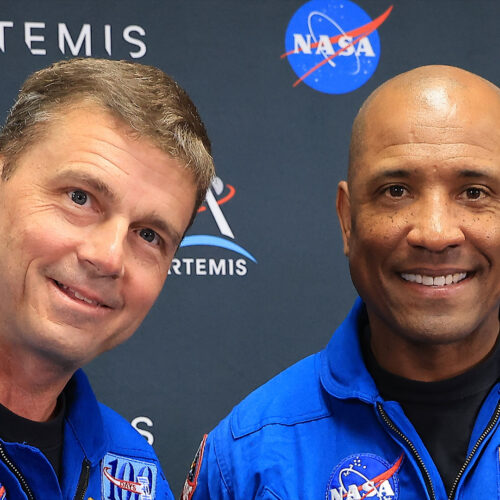
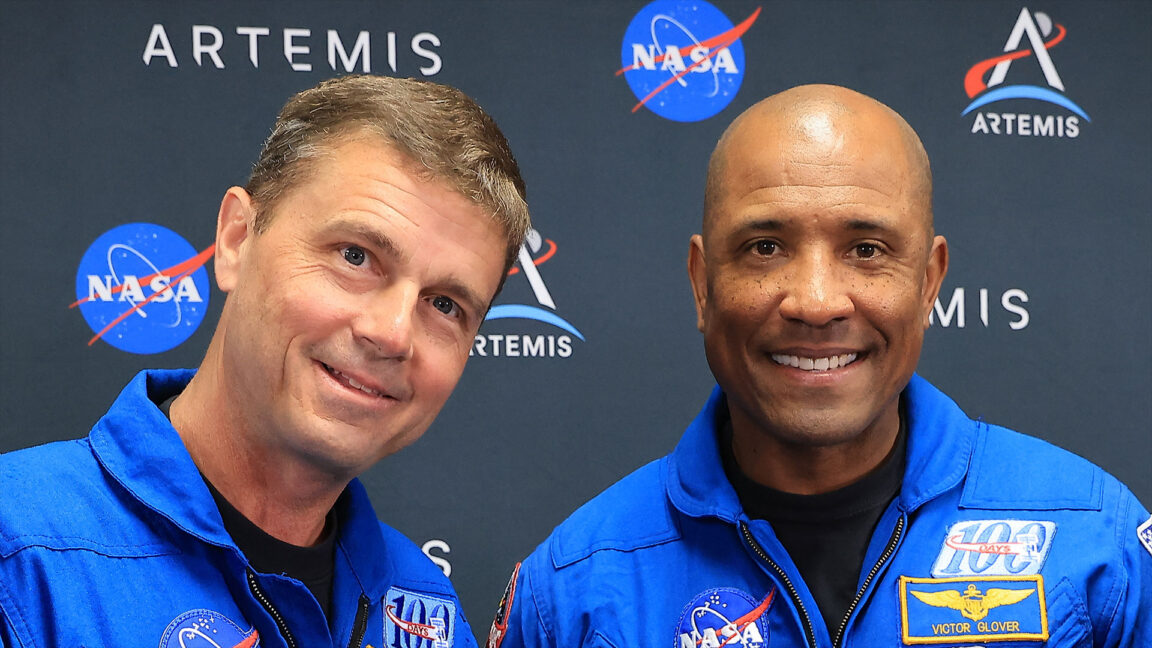
Artemis II commander and pilot become NASA's first astronaut emeriti

The commander and pilot of NASA's Artemis II mission have gained a new distinction five months after splashing down from the Moon: They're not fully retiring from the space agency.

Reid Wiseman and Victor Glover are the first astronauts to join NASA's emeritus program, enabling them to continue to support the work being done at Johnson Space Center in Houston. They will remain available to train and mentor the current workforce while still being able to pursue employment and opportunities outside of NASA.

"I have asked NASA ... to not use the term 'retire' as much, but technically emeritus is a retirement program," Glover told collectSPACE.com on Wednesday. "It's something we have typically done for scientists when they have groundbreaking research, and they want to go back to academia to teach or to research and publish."

Read full article

Comments

© NASA/Kim Shiflett

  •  
❌