Con cucine aperte sul soggiorno, lavanderie vicine alle camere da letto e case sempre più spesso utilizzate anche come luogo di lavoro, il rumore degli elettrodomestici sta assumendo un ruolo crescente in fase di scelta, paragonabile a consumi e prestazioni. Samsung lo ha appreso tramite indagini di mercato e si è impegnata su questo aspetto con le sue lavatrici e asciugatrici più recenti.
Secondo una ricerca di marzo commissionata a Verve e citata dall’azienda, un consumatore europeo su quattro considera la rumorosità della lavatrice un problema concreto. Non sorprende quindi che una parte dello sviluppo dei nuovi elettrodomestici si stia concentrando sulla riduzione di vibrazioni e rumori, soprattutto durante le fasi più critiche in tal senso, e cioè centrifuga e asciugatura. Alla base del lavoro di Samsung ci sono motori e compressori Digital Inverter, progettati per ridurre attriti e vibrazioni rispetto alle soluzioni tradizionali. L’azienda indica livelli di rumorosità fino a 72 dB per alcune lavatrici e 60 dB per le asciugatrici, valori che naturalmente dipendono da modello, programma e fase del ciclo. La riduzione della rumorosità si inserisce in una piattaforma più ampia dedicata alla gestione automatizzata del bucato.
La tecnologia Ecobubble miscela acqua, aria e detergente per generare una schiuma che penetra nei tessuti anche a basse temperature. L’obiettivo è mantenere buone prestazioni di lavaggio riducendo, a parità di risultato, la necessità di utilizzare acqua molto calda. Con AI Wash+, invece, la lavatrice può analizzare parametri come peso del carico e livello di sporco per regolare automaticamente quantità d’acqua, detergente e numero di risciacqui. Un altro tassello dell’approccio Samsung è rappresentato da SmartThings, l’app che permette di controllare da smartphone le lavatrici Wi-Fi compatibili. Da qui è possibile verificare l’avanzamento del ciclo e ricevere notifiche, per esempio quando il detergente nell’EcoDosatore sta terminando oppure quando è consigliata la pulizia del cestello.
Ceiling lights are usually one of those home products that disappear into the background once they are installed. BlitzWill BW-CLT2, however, takes a different approach by combining a conventional main ceiling light with a separate RGB ambient-lighting effect.
The result is a fixture designed to handle two different jobs: providing practical illumination for everyday activities while also giving a room a more customizable atmosphere when bright white lighting is not what you want. The BlitzWill BW-CLT2 is designed to replace a conventional ceiling fixture with a more flexible smart home lightingsetup.
The 40cm BlitzWill BW-CLT2 supports adjustable color temperature from 2700K to 6500K and can be controlled through an app, voice commands, or a remote control. It also supports DIY scene settings, giving users more control than a basic on/off ceiling lamp.
One Ceiling Light, Two Different Lighting Roles
The combination of adjustable white light and RGB effects also makes the BW-CLT2 more versatile than a basic smart LED ceiling light.
For normal use, the primary light can provide the room’s everyday illumination. The adjustable 2700K–6500K range gives users the flexibility to move between warmer and cooler-looking white light depending on the time of day or the atmosphere they want.
The RGB section serves a different purpose. Instead of replacing the main light, it can be used to add color around the room and create a softer background effect.
That separation makes the design more practical than an RGB-only lamp. You can keep the main light focused on visibility while using the colored lighting to change the mood.
2700K to 6500K Gives More Control Over the Room
A fixed-color ceiling lamp can work perfectly well, but it gives you little flexibility once the fixture is installed.
The BW-CLT2 takes a more adaptable approach with a 2700K–6500K adjustable color-temperature range. Warmer settings can suit relaxed evening use, while cooler white light can be more appropriate when you need a brighter, more functional environment.
This makes the light suitable for spaces that serve multiple purposes. A bedroom, study, living room, or gaming area can all require different lighting at different times.
Rather than buying separate lights for different situations, the BW-CLT2 puts those adjustments into one ceiling fixture.
Smart Controls Make Daily Adjustments Easier
Another advantage is that the BW-CLT2 is not limited to a physical wall switch.
The product supports app control, voice control and a dedicated remote, giving users several ways to change the lighting.
App-based control is particularly useful for people who prefer adjusting lighting from a phone, while the remote provides a more traditional option for quick changes.
The combination also means the light does not have to be treated as a purely decorative smart-home gadget. It can still be operated in a straightforward way when you simply want to change the lighting without opening an app.
DIY Scenes Are More Useful Than They Sound
The BW-CLT2 also includes a DIY scene mode, which is one of the features that separates it from a basic adjustable LED ceiling lamp.
Instead of repeatedly changing brightness, color temperature, or RGB effects manually, users can create lighting combinations suited to particular situations.
For example, one setup could prioritize a brighter white light for working, while another could use warmer illumination with RGB ambience for watching movies or relaxing.
The important point is not simply that the lamp has RGB lighting. It is that the different lighting elements can be used as part of a more personalized room setup.
Is the 40cm Size a Good Fit?
At 40cm, the BW-CLT2 occupies a middle ground between small decorative fixtures and larger ceiling panels.
That makes it potentially suitable for bedrooms, smaller living spaces, studies, gaming rooms, and other areas where a large ceiling fixture may look excessive.
However, buyers should consider the dimensions of their room before choosing it. A 40cm fixture may be a sensible fit for a compact or medium-sized space, while a much larger room could require additional lighting.
What Buyers Should Consider
The BW-CLT2 makes the most sense for people who want more than basic ceiling illumination.
Its strongest feature is arguably the combination of practical white lighting and RGB ambience. The adjustable 2700K–6500K range handles everyday lighting needs, while the RGB system and DIY scenes add a more decorative element.
It is also worth remembering that smart-lighting features are most valuable when you actually plan to use them. If you only need a simple ceiling lamp that stays at one brightness and color, a conventional LED fixture may be enough.
For users who want to experiment with room lighting, however, the BW-CLT2 offers considerably more flexibility in a single fixture.
BlitzWill BW-CLT2: A Flexible Upgrade for a Smart Home
BlitzWill BW-CLT2 Smart Ceiling Light is less about adding another colorful gadget to a room and more about combining several lighting functions into one ceiling fixture.
Its 40cm form factor, adjustable 2700K–6500K white lighting, RGB ambience, multiple control methods, and DIY scene support give it a broader role than a standard ceiling lamp.
Banggood’s EU-direct listing currently shows the BW-CLT2 at around $52.99, although the final price can change with promotions, region, taxes, and availability.
For shoppers looking to make a room more adaptable without filling the ceiling with multiple lighting fixtures, the BW-CLT2 is an interesting option worth considering.
The first I heard of Kleva Range was earlier this year, when a colleague mentioned it has a heck of a lot of home appliances and kitchenware in its catalogue. As a floorcare expert, the Krapof Auto Clean Self Empty Slim Power Vac caught my attention, especially since it listed an industry-leading spec — a whopping 450AW of suction, which beats out Samsung Bespoke Jet AI Ultra with its 400AW. Other powerful cordless stick vacuums I've tested are the Dreame Z50 Station with 330AW of suction, while the Dyson V16 Piston Animal has 315AW.
With the Krapof (surely that's a tongue-and-cheek take on a name?), it's not the suction that stands out, but how compact and lightweight it actually is. The vacuum weighs 2.3kg with the floorhead attached, while the self-cleaning docking station adds just another 5kg. That's a very lightweight package. It's also very compact, with the appliance taking up an area of just 25.5cm x 21.7cm — about the same footprint as Samsung's Clean Station but smaller than Dreame's Z-series auto-emptying docks or some free-standing docks like Dyson's.
(Image credit: Sharmishta Sarkar / TechRadar)
While the Krapof Slim Vac (as I shall call it from here on in) is quite short, even for short people like me (I stand just five-feet tall), thankfully the wand is telescopic and should suit most people.
Otherwise it's not all that different from so many other self-emptying stick vacuums on the market. However, unlike many of them, the dock has options for you to set auto self-emptying when the stick vac is placed back for charging or trigger it manually, although the former didn't always work during my testing, requiring me to press the Start/Stop button on top of the dock.
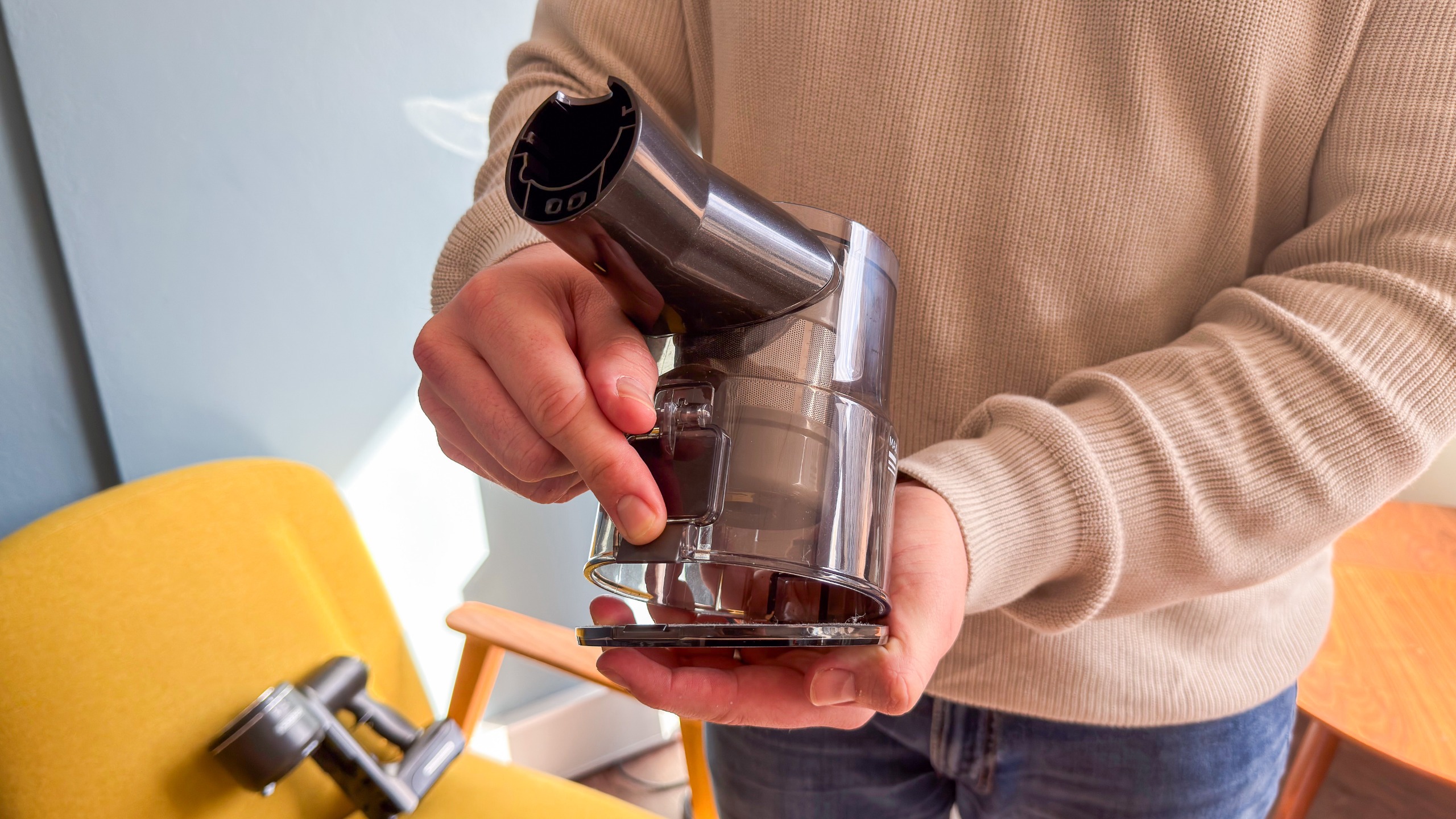
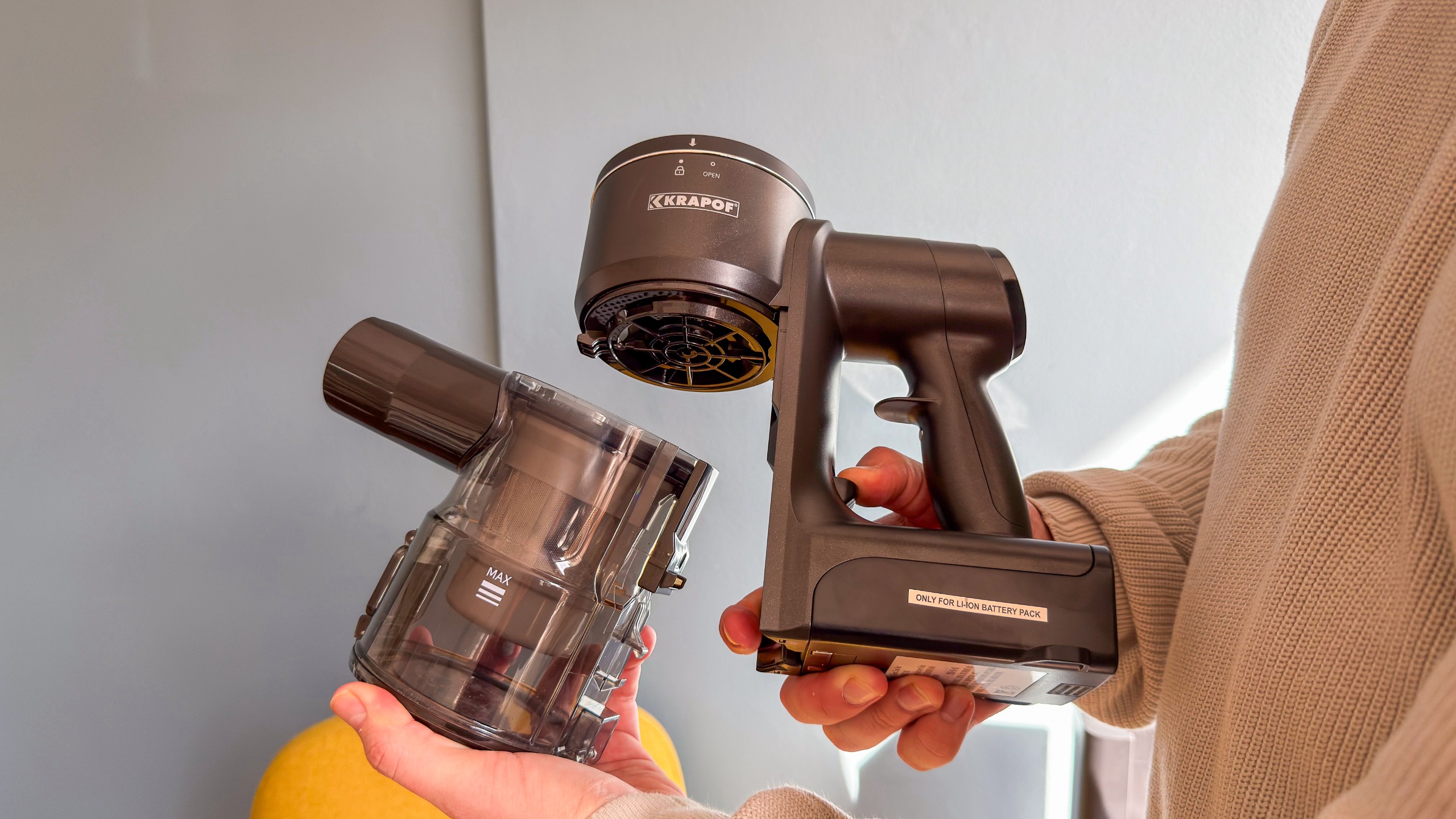
You can, however, empty it manually as well as directly into a bin if you wish, which could save you cash in the long run on buying replacement dust bags — just keep the self-emptying function in the dock turned off and press a button on the lower part of the dust canister in the handheld unit to lower the trapdoor.
You can also clean out the inside by twisting the top to remove and access the filter. Dismantling fully isn't the easiest task, though, but it at least means you can maintain the vacuum well to increase its lifespan and keep it in tiptop condition.
One thing to note about the stick vacuum while it's docked and charging is that the top display will be upside down when you stand before the appliance, but it's fine when you take off the dock to use. So if you see the percentage sign of the battery indicator before a number like 85, assume it means it's a 58%.
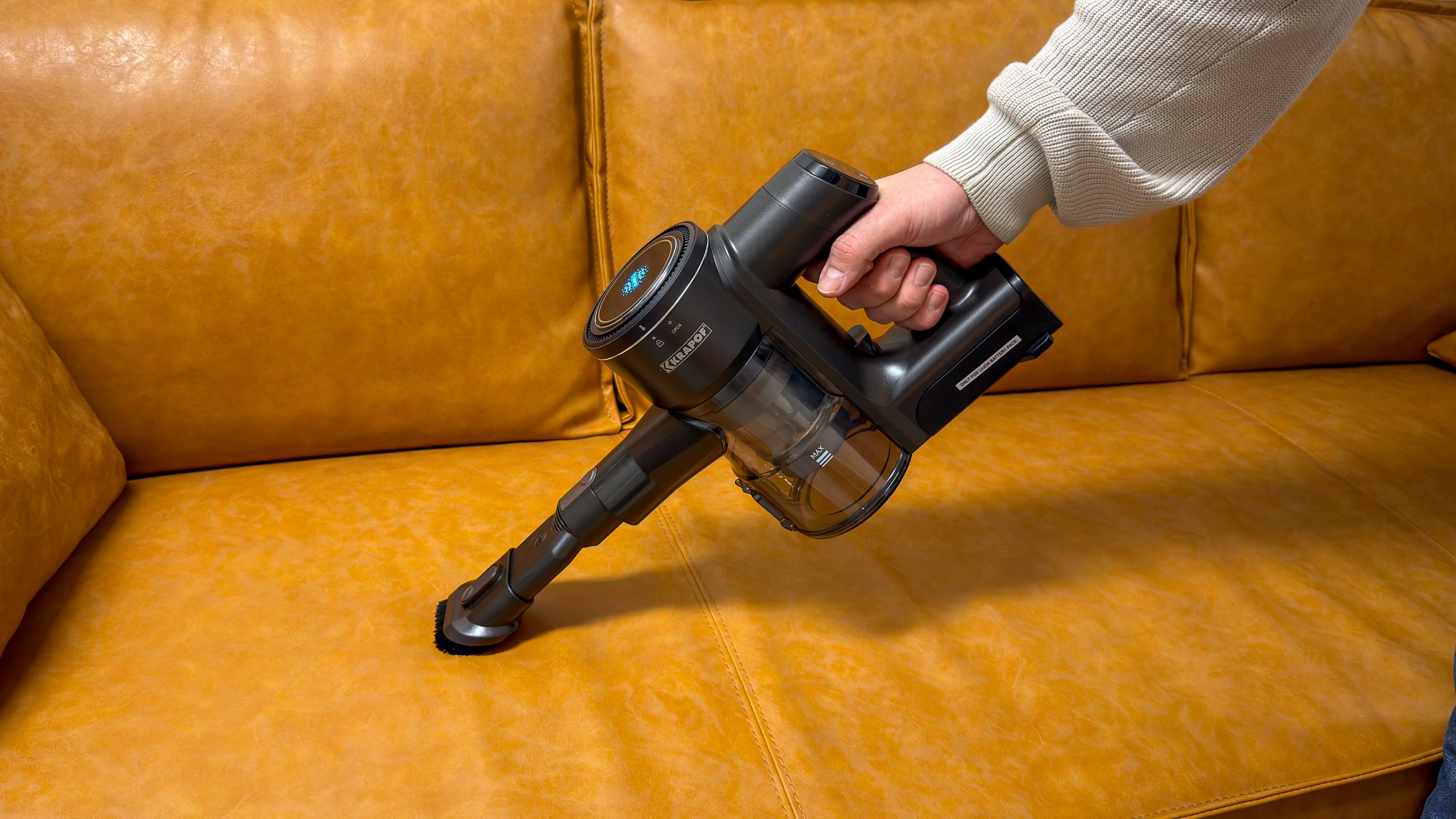
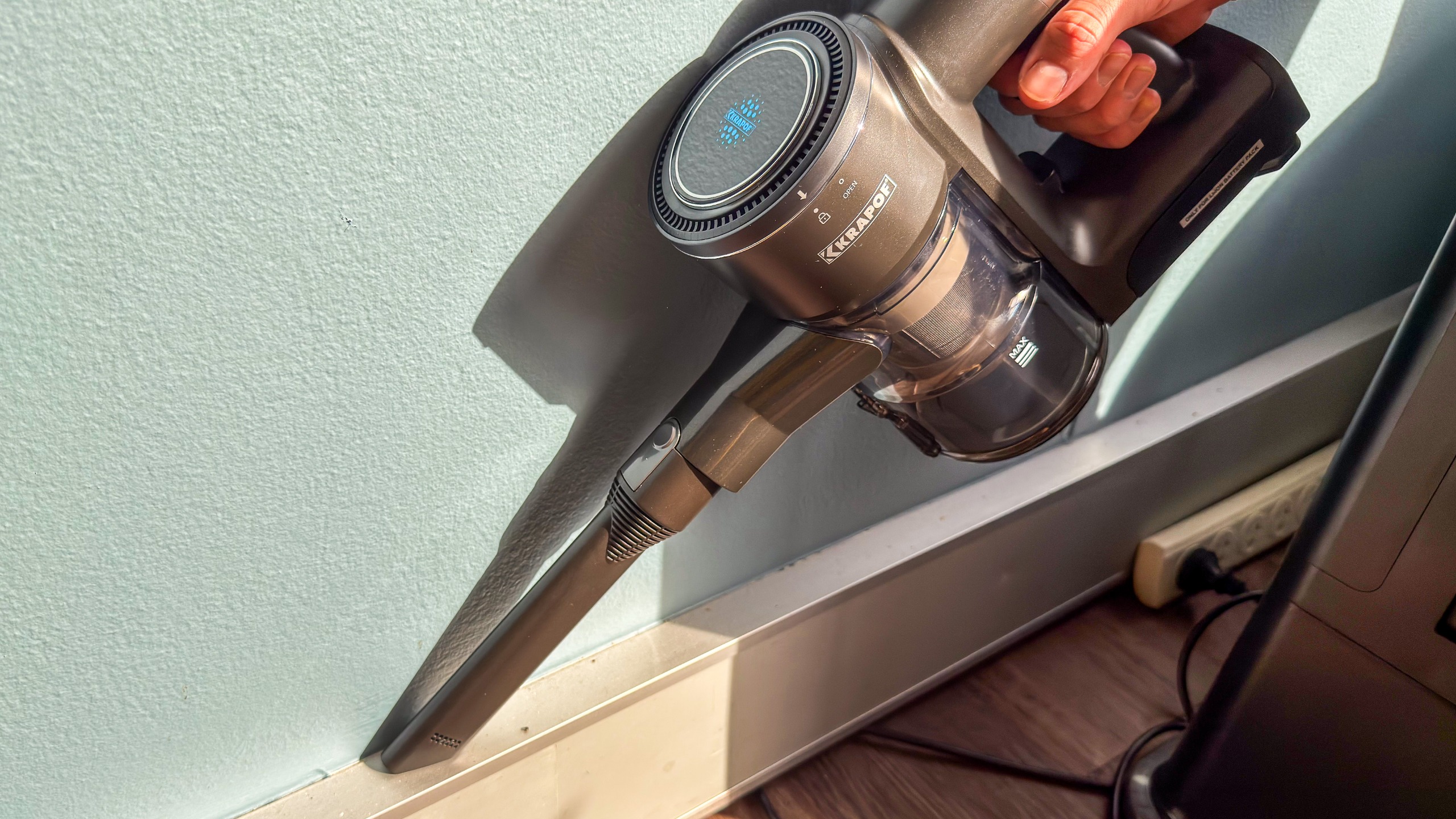
What I do appreciate about the self-emptying charging station is that it has dedicated space to store the two extra attachments that ship with the vacuum (a crevice tool and a brush) — they just clamp onto two stumps on the side of the dock's base.
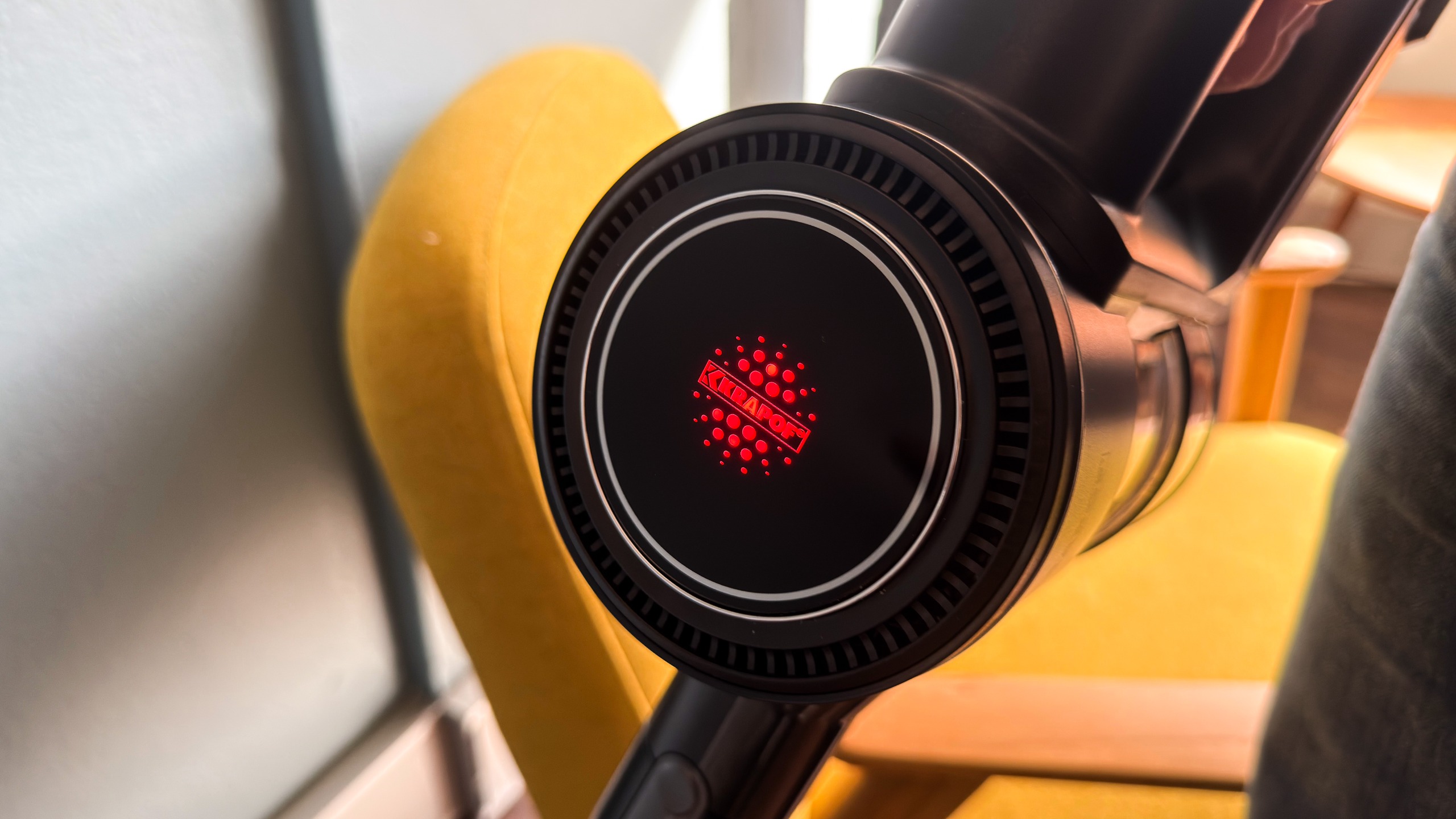
The Krapof Slim Power Vac has three suction settings, which can be accessed by pressing the +/- icon on the touchscreen when needed, but in its default Auto settings, dynamic suction sets in and the power increases or decreases depending on how much dirt the vacuum senses. The change in suction in denoted by the colour of the Krapof logo on the front of the handheld unit, going from green to blue to red as you shift from lowest to highest power settings.
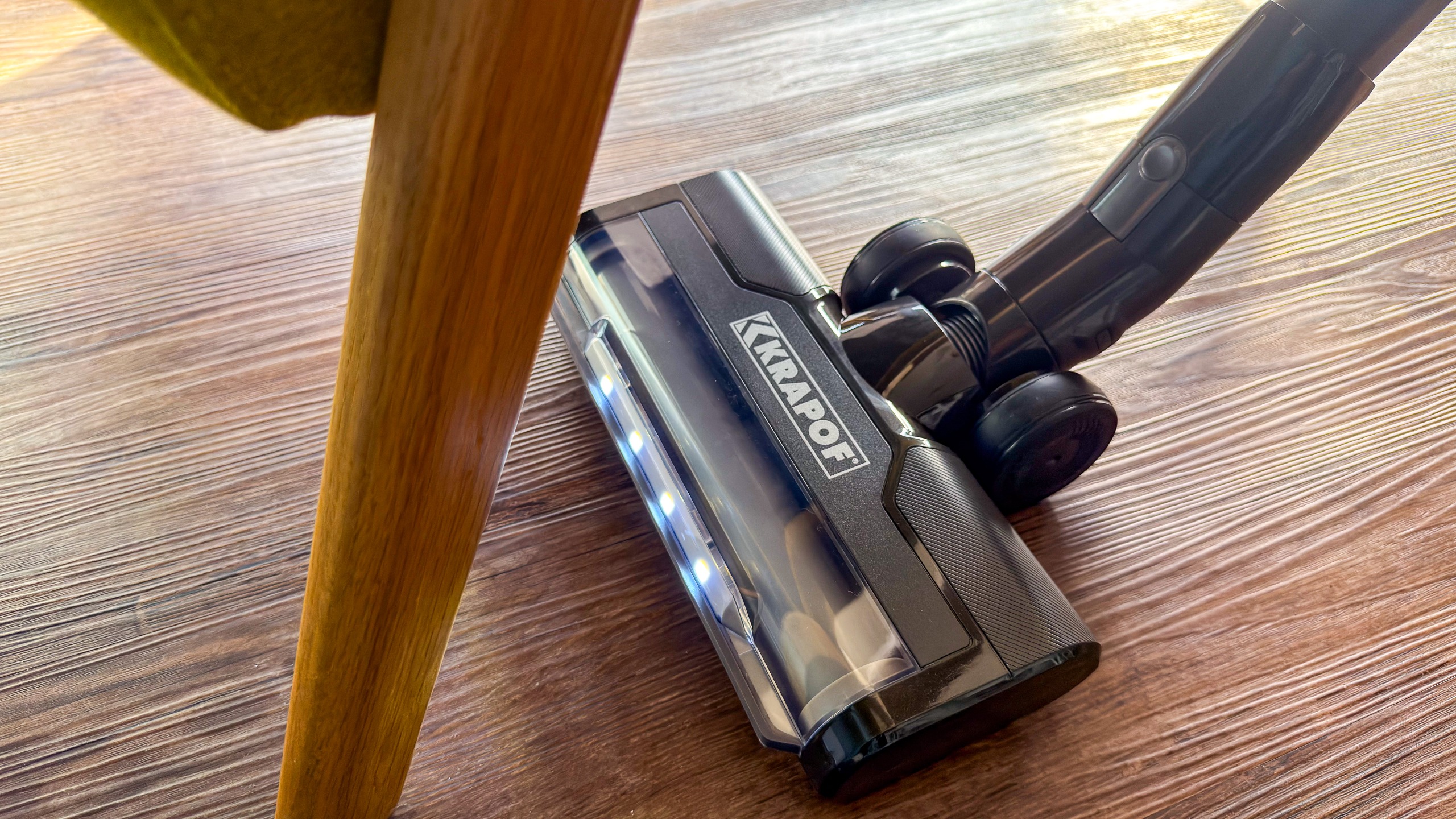
Interestingly, despite claiming to have a whopping 450AW of suction, the Krapof Slim Power Vac is not very loud and, to be honest, it doesn't even perform as well as the 400AW Samsung Bespoke Jet AI Ultra or the 280AW Dyson Gen5detect. I suspect a lot of that has to do with the overall design of the stick vacuum, which also means its disappointing performance is down to a floorhead that tends to scatter visible particles, even those as small as chia seeds.
So while it's perfectly good for invisible dust, other household spills like cereal (even small bits of oats), tea leaves, grains of rice or other dry spills get pushed around by the edges of the floorhead (as you can see from the video below). That means you're cleaning parts of the floor you've probably already vacuumed, doubling your work and making cleaning more of a chore than it really ought to be.
The scattering happens on both hard floors and carpets, so it's really not dependent on floor type and definitely got to do with the design. Furthermore, the floorhead's best suction is the forward motion, which is disappointing given its price tag and the fact that other models that cost about the same can suck equally well when moving front or back.
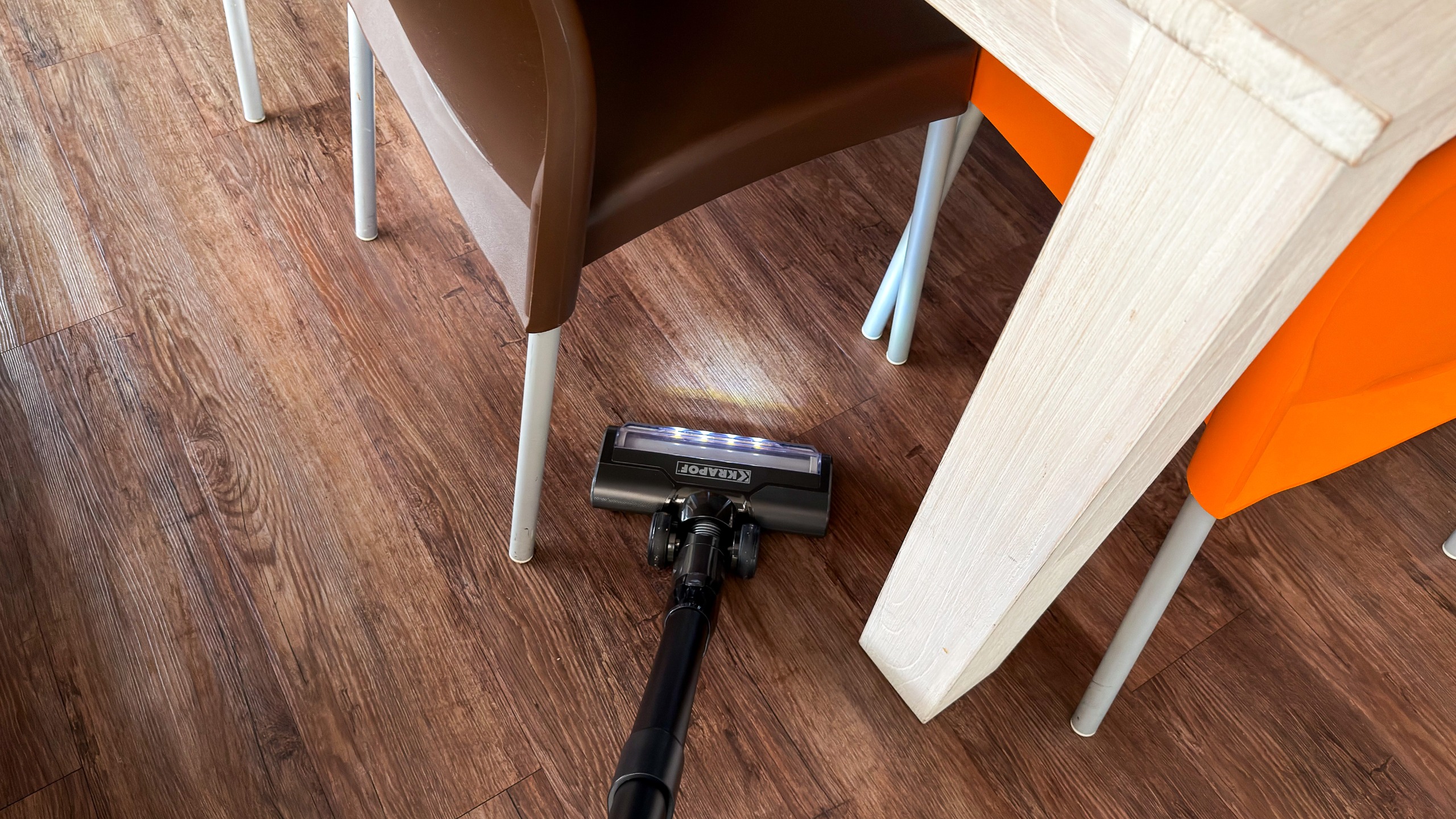
The floorhead has headlights built in, but they're not very bright and, in a well-lit room, aren't useful at all. Even under furniture, I didn't think the lights helped illuminate dust but highlighted long-forgotten lost items under furniture.
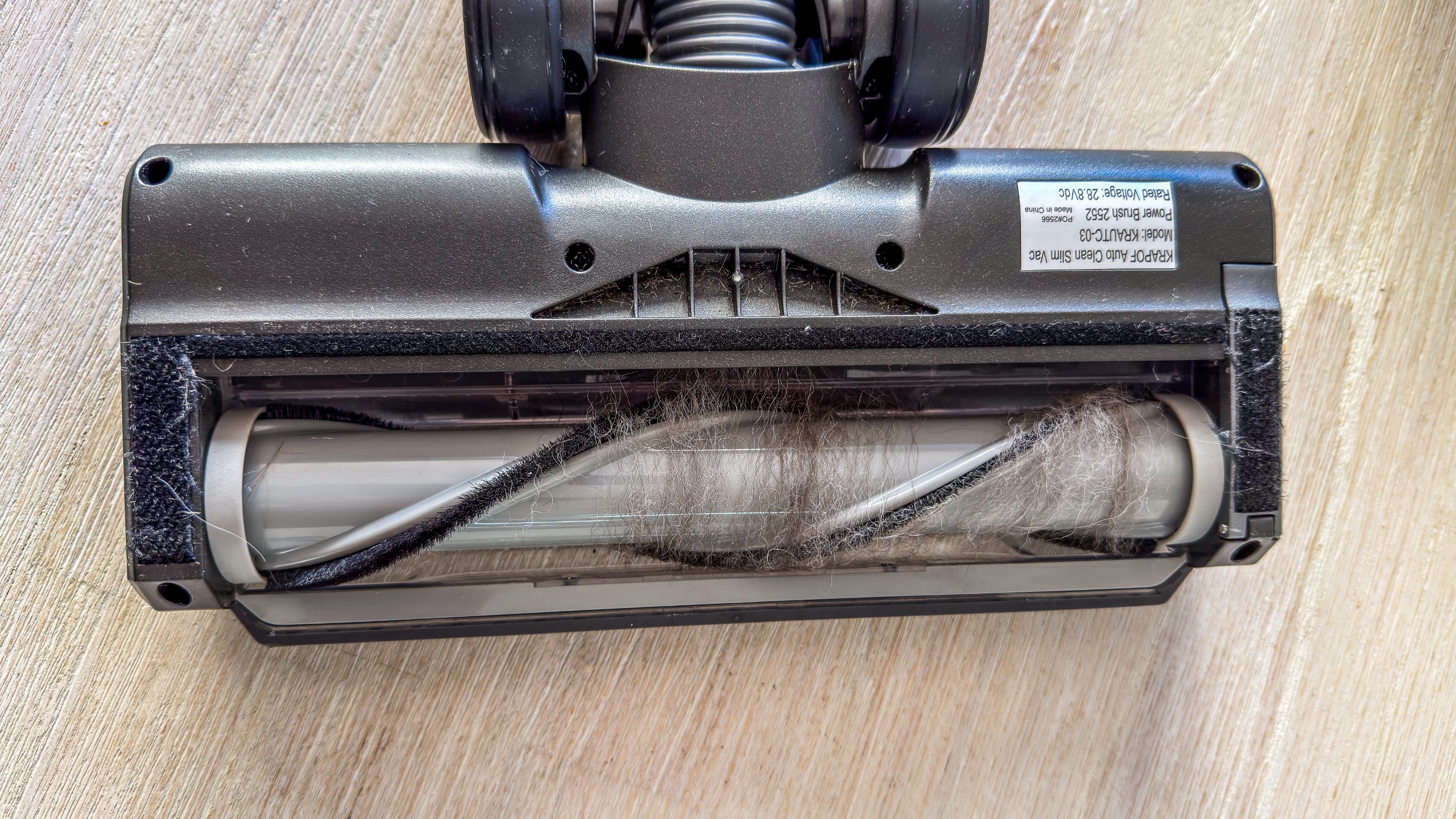
Another disappointing aspect of the main floorhead is the amount of hair and fur that gets entangled in the bristles. So if you have pets, I definitely wouldn't recommend it. That said, if you exclusively have just hard floors, a separate roller is included in the box that can be used in the floorhead to avoid bristle damage if your wood floors are sensitive, and this minimises the entanglements, but you will need to clean out the brush if you use the main floorhead as your primary cleaning tool.
This also means that your regular maintenance of the appliances increases as performance will be affected if you don't keep the floorhead free of human hair and pet fur.
(Image credit: Sharmishta Sarkar / TechRadar)
As disappointing as I may have found the scattering of dirt and the hair tangles, battery life at least is quite standard here. Depending on how often dynamic suction gets triggered, you can eke out about 35 minutes of vacuuming on the default Auto mode, but if it's just daily dust, you can get a more with the LED floorhead attached.
This matches Kleva's claims of getting up to 30 minutes on the 'standard' setting, but switch to the non-motorised attachments and you'll get up to 80 minutes on the lowest Eco power setting.
Decent battery life, however, does not make up for the fact that this vacuum cleaner, while fine for some basic tasks, will struggle and make you work harder rather than easing the task of cleaning your floors. At the end of the day, I found it to be a frustrating experience overall and, for its price, find it hard to recommend over options like the Samsung Jet 95S or the Shark PowerDetect Clean & Empty if you really want a self-emptying option. In fact, I would even recommend a discounted Dyson V8 Cyclone and the additional purchase of the Auto-empty Dok. Despite lower suction, any of these three will offer a much smoother experience.
What surprises me even more is the number of glowing user reviews online, but the vast majority on Product Review seem to be incentivised ones, so please don't fall for the hype.
List price of AU$899 but usually discounted to around AU$649
For a stick vacuum that claims to offer industry-leading suction and a self-empty function, the Krapof Slim Power Vac is well priced even at its RRP of AU$899. However, it's only directly sold via the Kleva Range website and is typically available with a discount that saves you AU$250.
However, given its design flaws that affect the overall user experience, even the discounted price of AU$649 is a bitter pill to swallow as you can opt for a lower-specced and more reliable vacuum for about the same price or lower.
Take, for example, the Dyson V8 Cyclone which, with its 150AW of suction feels overpriced at AU$649 and no self-emptying. However, it regularly drops to around the AU$450 mark, then add on the cost of purchasing Dyson's Auto-empty Dok for about AU$250 and you'll get just as good a clean with a much easier vacuuming experience for AU$700.
If I had to score the Krapof on value alone, it'd be a rather low number.
(Image credit: Sharmishta Sarkar / TechRadar)
Krapof Auto Clean Self Empty Slim Vac review: specs
Weight:
2.3kg (with LED floorhead)
Dimensions (vacuum + dock):
95 × 25.5 × 21.7 cm
Bin capacity:
0.5L
Max suction:
450AW
Max runtime:
80 minutes
Charge time:
5 hours
Attachments:
Crevice tool, Duster brush
Should I buy the Krapof Auto Clean Self Empty Slim Vac?
Buy it if...
You need a vacuum for just daily dust pickup
For tackling the easy tasks, this stick vac is well equipped and even comes with different brushes to help suck up dust from hard floors and carpets.
You need a lightweight stick vacuum
At about 2.3kg with the floorhead attached, it's even lighter than the Samsung Jet 95S that I claimed was a pleasure to use for being lightweight. The Krapof Slim Power Vac is also easy to manoeuvre, although note that the handheld part pivots more than the floorhead, so it may not always go in the direction you want it to.
Don't buy it if...
You have pets that shed
It's hard to recommend the Krapof Slim Power Vac for a pet-friendly home as the floorhead tangles both fur and human hair, requiring constant maintenance to keep the appliance clean.
You have messy kids or butter fingers
If you're home is prone to crumbs, scattered kitty litter or any dry spill with particles larger than dust, you'll find the scattering frustrating.
Krapof Auto Clean Self Empty Slim Vac review: alternatives
Shark PowerDetect Clean & Empty
It's been our top pick for the best stick vacuum in Australia for a long time until Samsung's Jet 95S dethroned it, but the latter is now harder to find on the market. For about the same price as the Krapof, you won't get the 450AW of suction, but you will get a good clean and self-emptying. Sadly, though, this Shark is a relatively heavy one. Read our in-depth Shark PowerDetect Cordless review for more information
Dyson V8 Cyclone
It might have only 150AW of suction, but if you wait for a good discount (which is gets often these days) and then use the savings to buy the optional Auto-empty Dok, you'll get a very capable stick vacuum with self-emptying that works well on both carpets and hard floors, plus has no issues tackling hair or fur. Read our full Dyson V8 Cyclone review to learn more
How I tested the Krapof Auto Clean Self Empty Slim Vac
(Image credit: Sharmishta Sarkar / TechRadar)
The Krapof Auto Clean Self Empty Slim Power Vac was tested in TechRadar's Sydney office which has large open spaces of hard floors and low-pile carpet. While regular dust suction was tested every two days on hard floors where particles are more visible then on darker carpet, I also used mixtures of various pantry staples to emulate different particle sizes. Tea from a bag is fine dust, while chia seeds are small. Along with them, I added in quick-cook oats which are smaller than regular rolled oats, plus pieces of freeze-dried raspberries.
One of my colleagues also kindly brought in fur from her two dogs for me to test this vacuum for pet households, which I scattered on both the hard floor and on the low-pile carpet in the office.
Battery tests were conducted with the main motorised floorhead with dynamic suction and without by leaving the machine running in one spot. The latter was also done using the crevice tool attached to the handheld unit.
Cosori may be better know for making some of the best air fryers we've tested over the years here at TechRadar, but now its engineers have taken on a new challenge: pour-over coffee. Getting a perfectly-extracted pour-over coffee calls for just as much skill and care as espresso, and the new Cosori Juni aims to replicate that technique mechanically with a system that mimics the movements of a trained barista within the brewer.
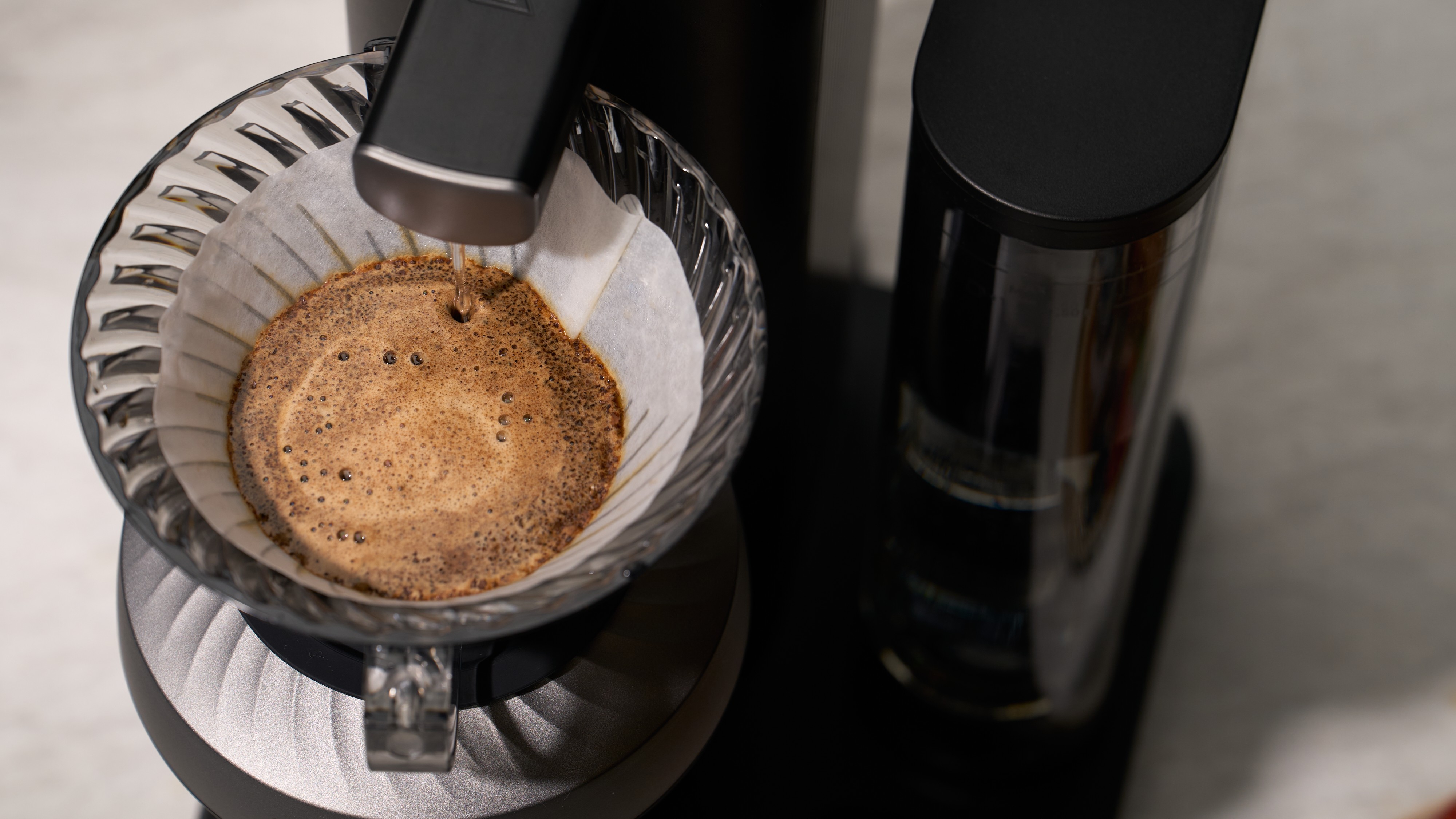
Unlike most drip coffee makers, which shower water over the basket of ground coffee in an attempt to achieve an even extraction, the Juni uses a rotating basket and an extendable nozzle to recreate the movement and speed of a barista wielding a goose-neck kettle.
According to Cosori, this mechanical process creates a 360-degree spiral flow that evenly saturates the coffee grounds while avoiding creating channels that would cause uneven extraction. Better yet, the process is consistent and repeatable, so once you've found the ideal brew settings for your preferred beans, you can be sure you'll get exactly the same flavor profile every time.
"The physics weren't the difficult part," says Pierce Barnard, Head of Product Innovation at Cosori. "The real work was understanding the human element: spending 18 months studying and mapping how skilled baristas move across the coffee bed and translating that motion into a system that can deliver the same result, every single morning."
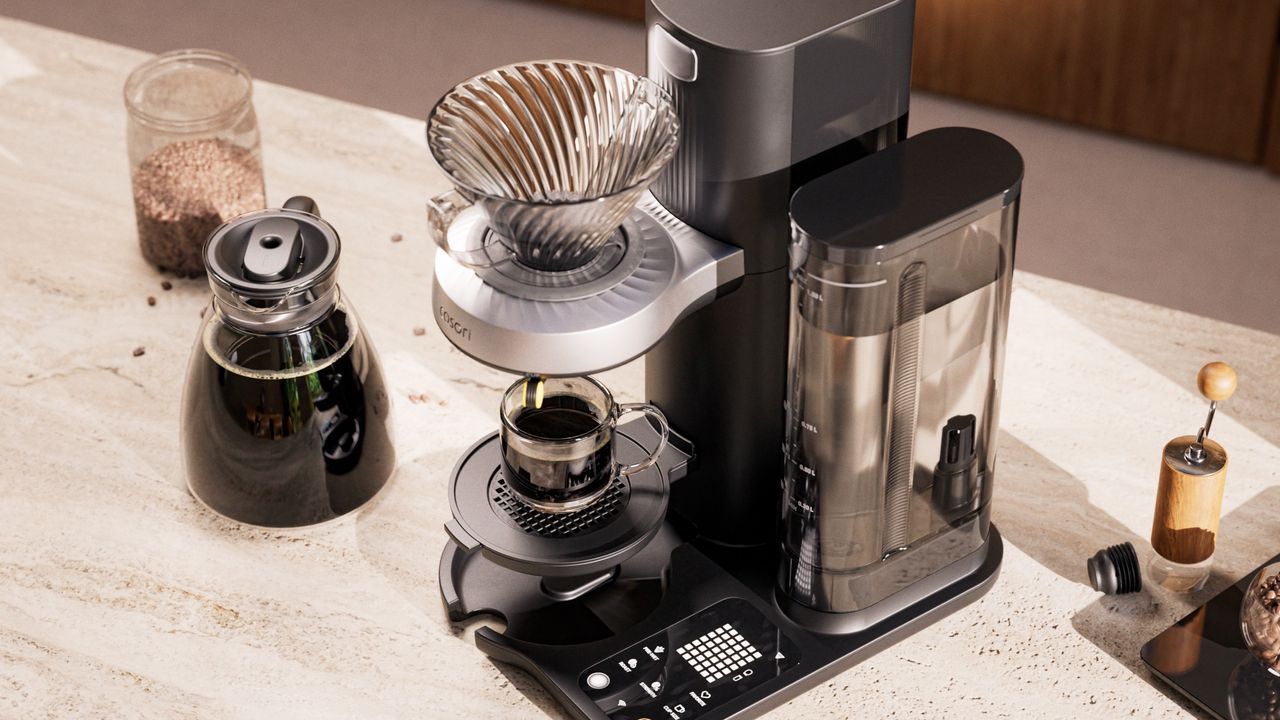
The Juni aims to recreate the movements of a skilled barista as it pours water over the basket (Image credit: Cosori)
The Cosori Juni can handle as much or as little of the brewing process as you like, whether you want to keep things simple of refine the brewing technique and temperature to suit your chosen coffee. The Juni can even use AI to help you pick the optimal settings, and warn you if you've not picked the ideal brewing profile. Just scan your bag of coffee beans, and the machine will generate a brewing profile based on the bean type and your chosen cup-size, then invite you to tinker with factors like agitation, temperature flow rate, and pause time.
It's not yet clear whether the Juni will only be able to scan a particular brand of coffee, as is the case with the Lavazza Assoluta espresso machine I tested earlier this year, which can only adapt its brew settings to Lavazza's own beans.
Alternatively, manual mode lets you take control yourself, though if you want a little guidance then the machine's AI can still warn you if any of the settings you've picked are likely to result in an under- or over-extracted drink. For simplicity, there are also one-touch presets for different coffees and roasts.
(Image credit: Cosori)
If you don't like the idea of such tinkering first thing in the morning, don't worry. Like most of the best drip coffee makers I've tested, the Juni has a timer, but Cosori has gone one step further by letting you set different times for each day of the week, and even allows you to set a reminder to prepare the machine the night before.
Despite its complexity, the Cosori Juni costs a reasonable $299.99 (about £220 / AU$430), which is significantly less than the similarly technical Fellow Aiden Precision Coffee Maker, which has a list price of $365 / £365 (about AU$580). I'm hoping to put it to the test soon, to see how the two advanced brewers compare.
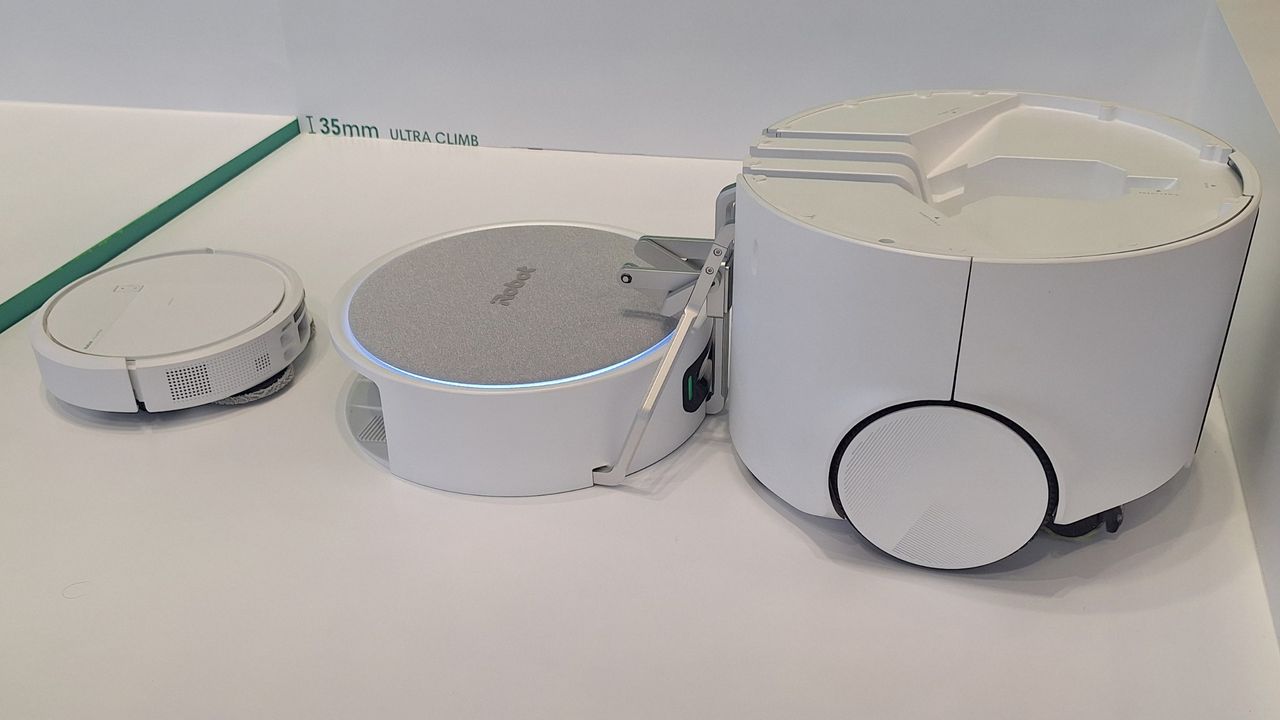
One chunky, powerful mopping and vacuuming robot...
... with a regular, small robovac docked in its hat, for detail work
When it comes to robot vacuums, size matters. Robovac makers need their bots to be powerful, but also small enough to get into tight spots. The two things are often incompatible.
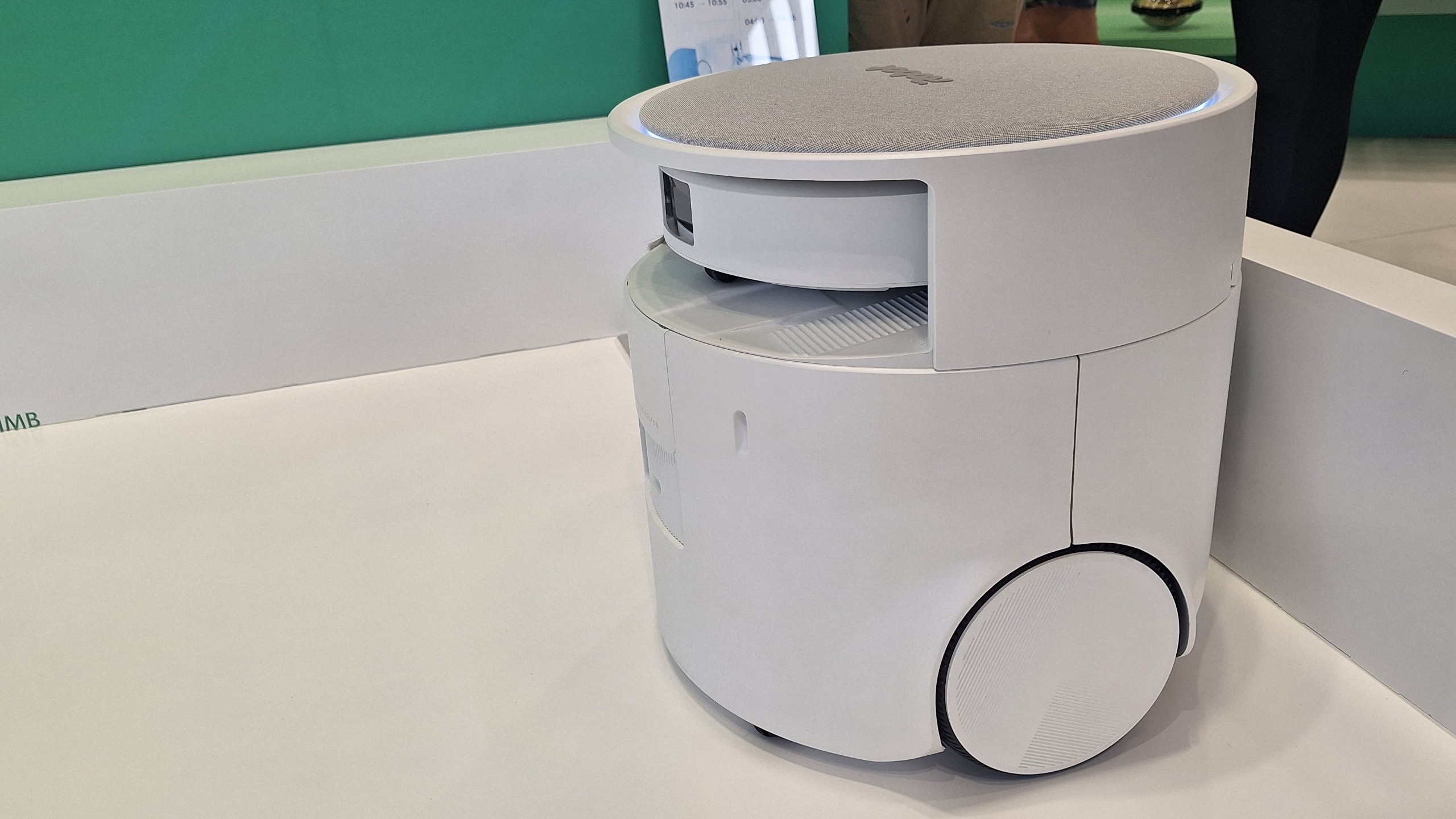
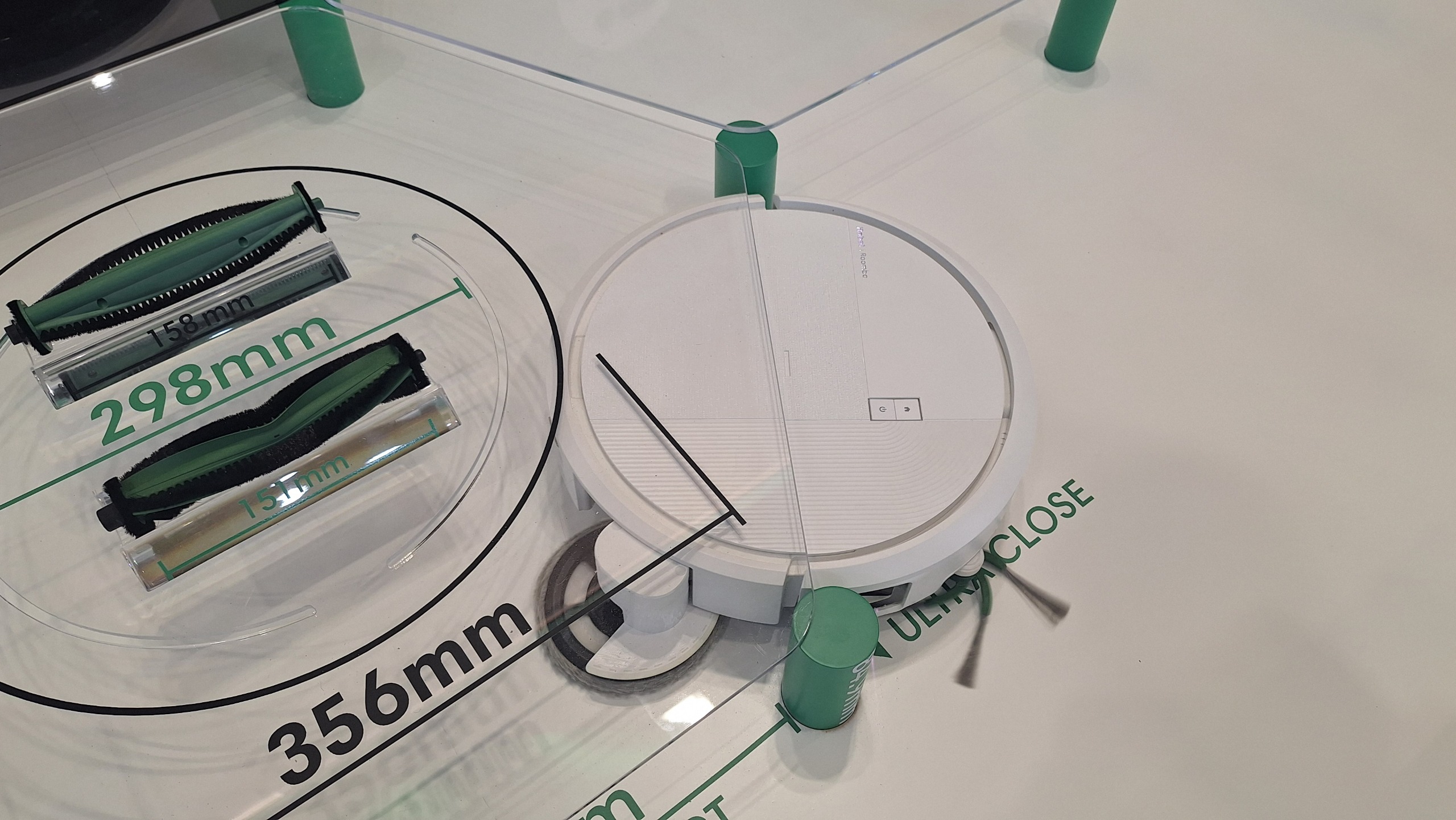
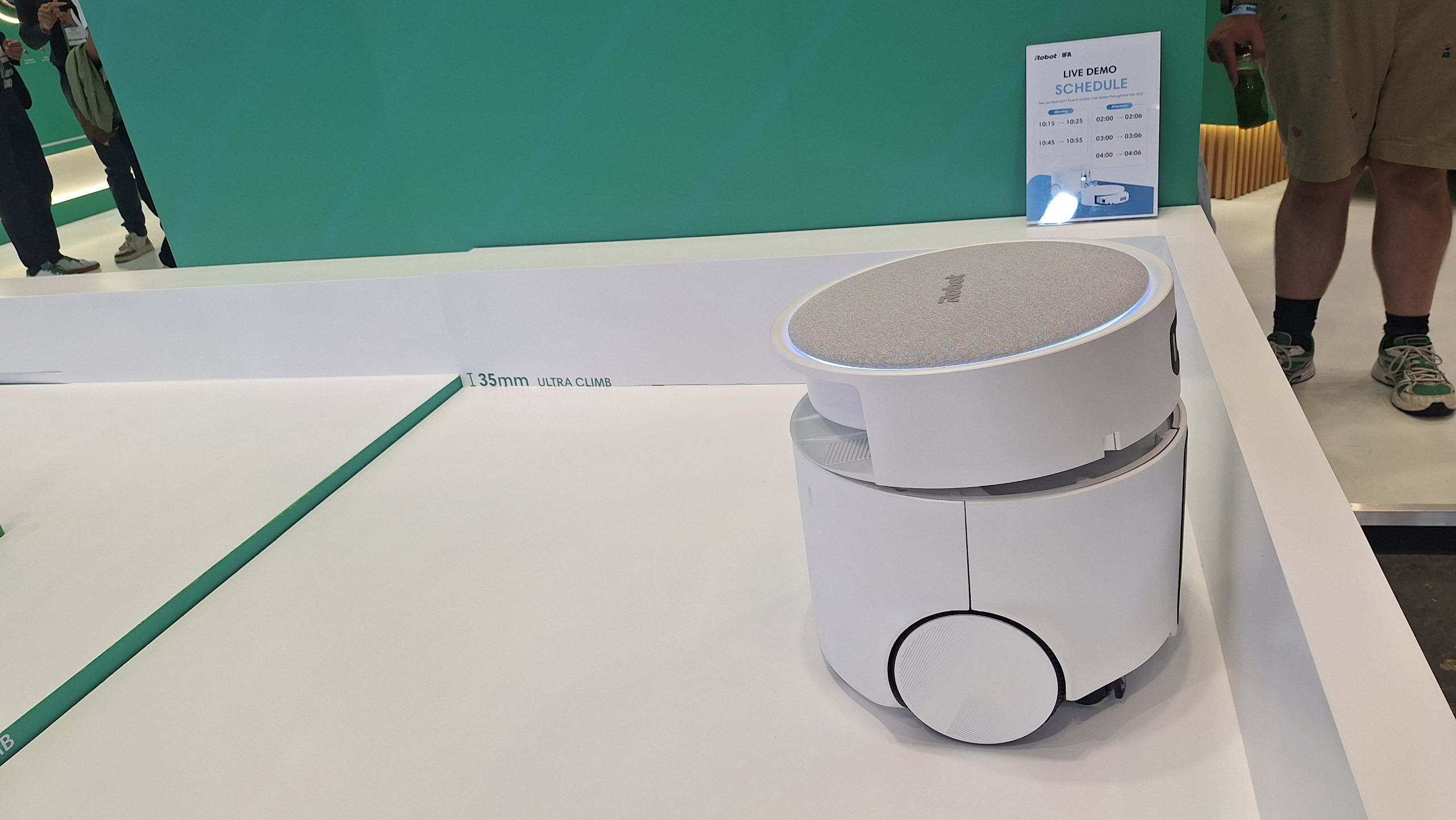
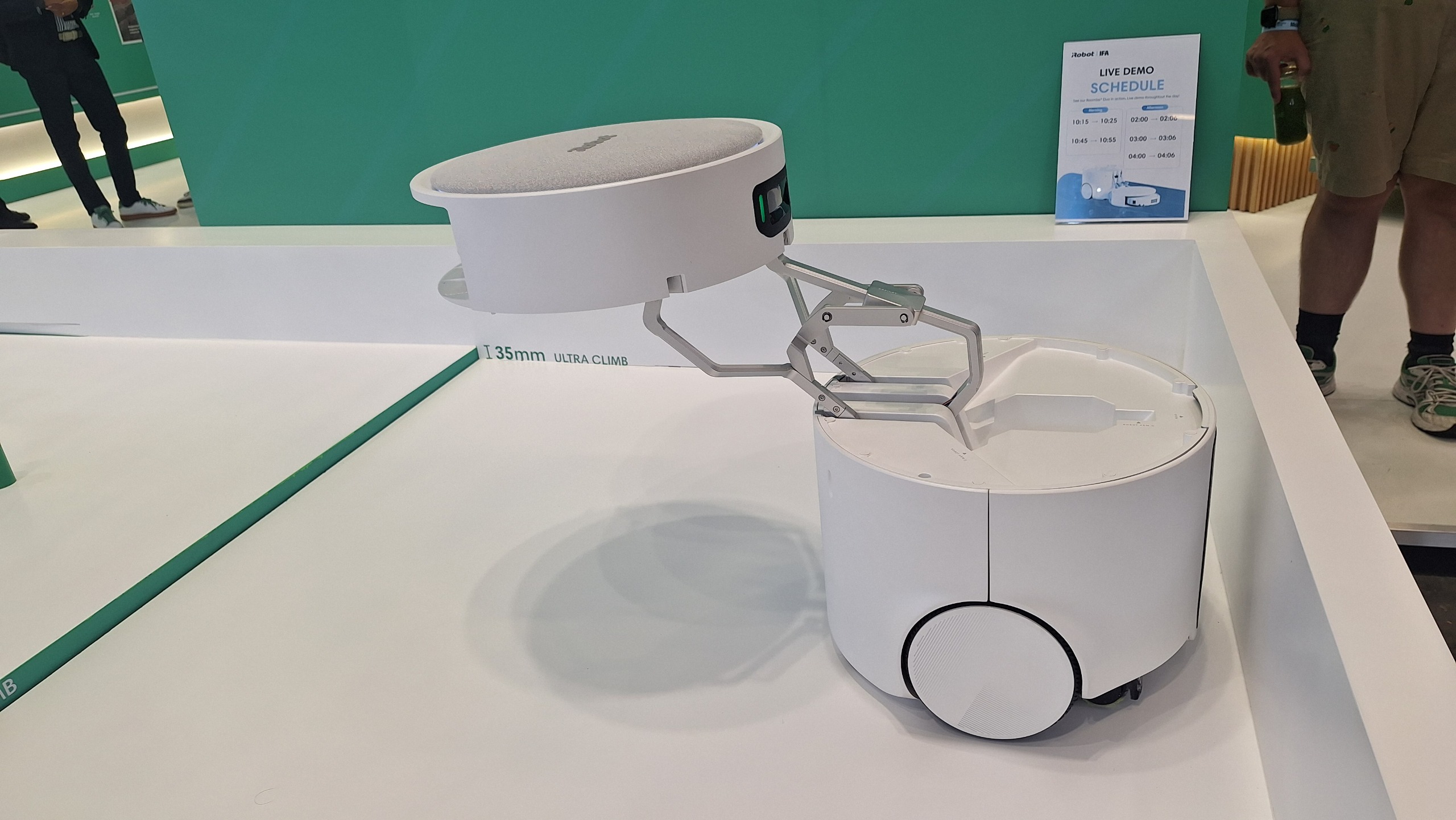
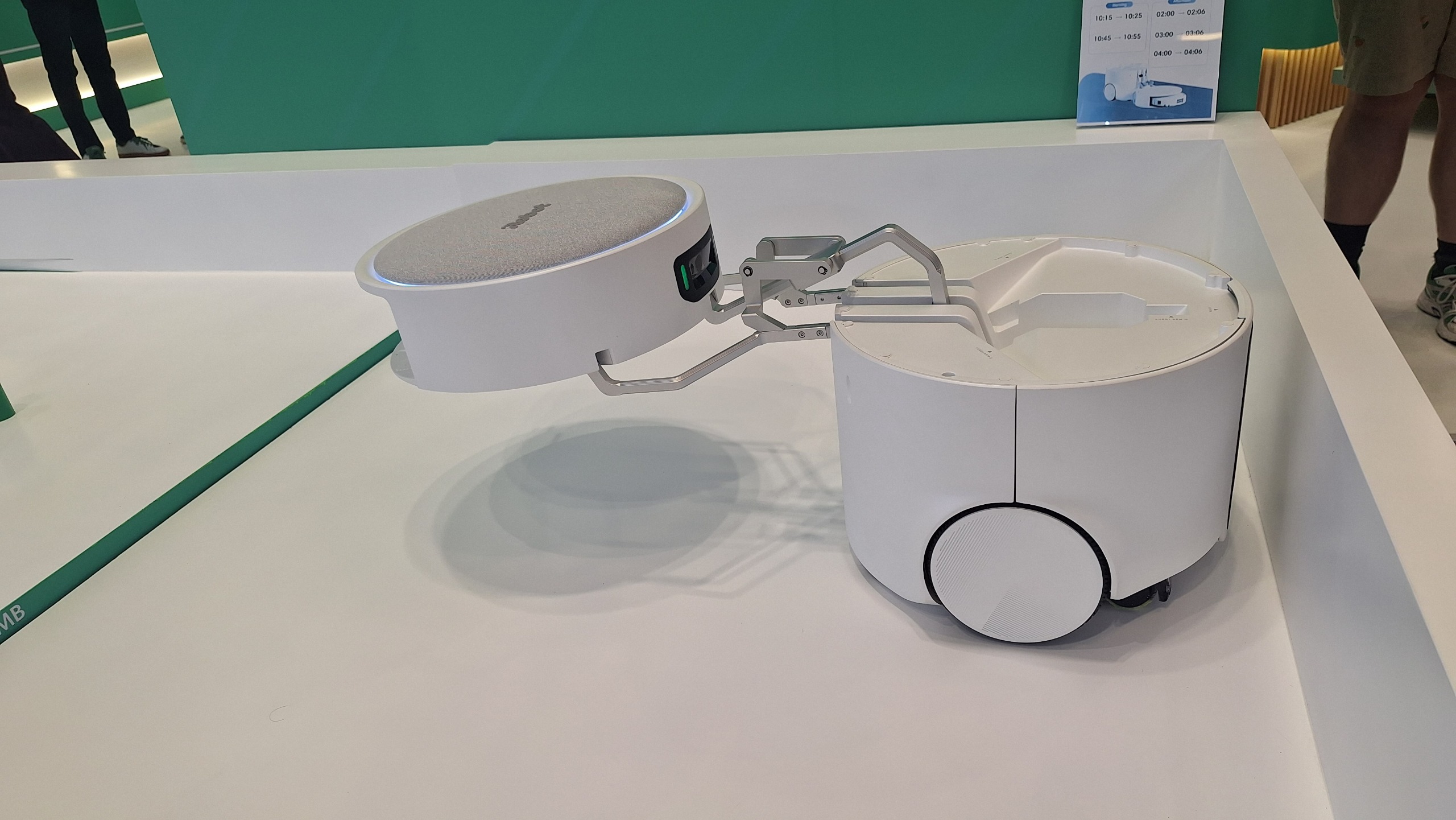
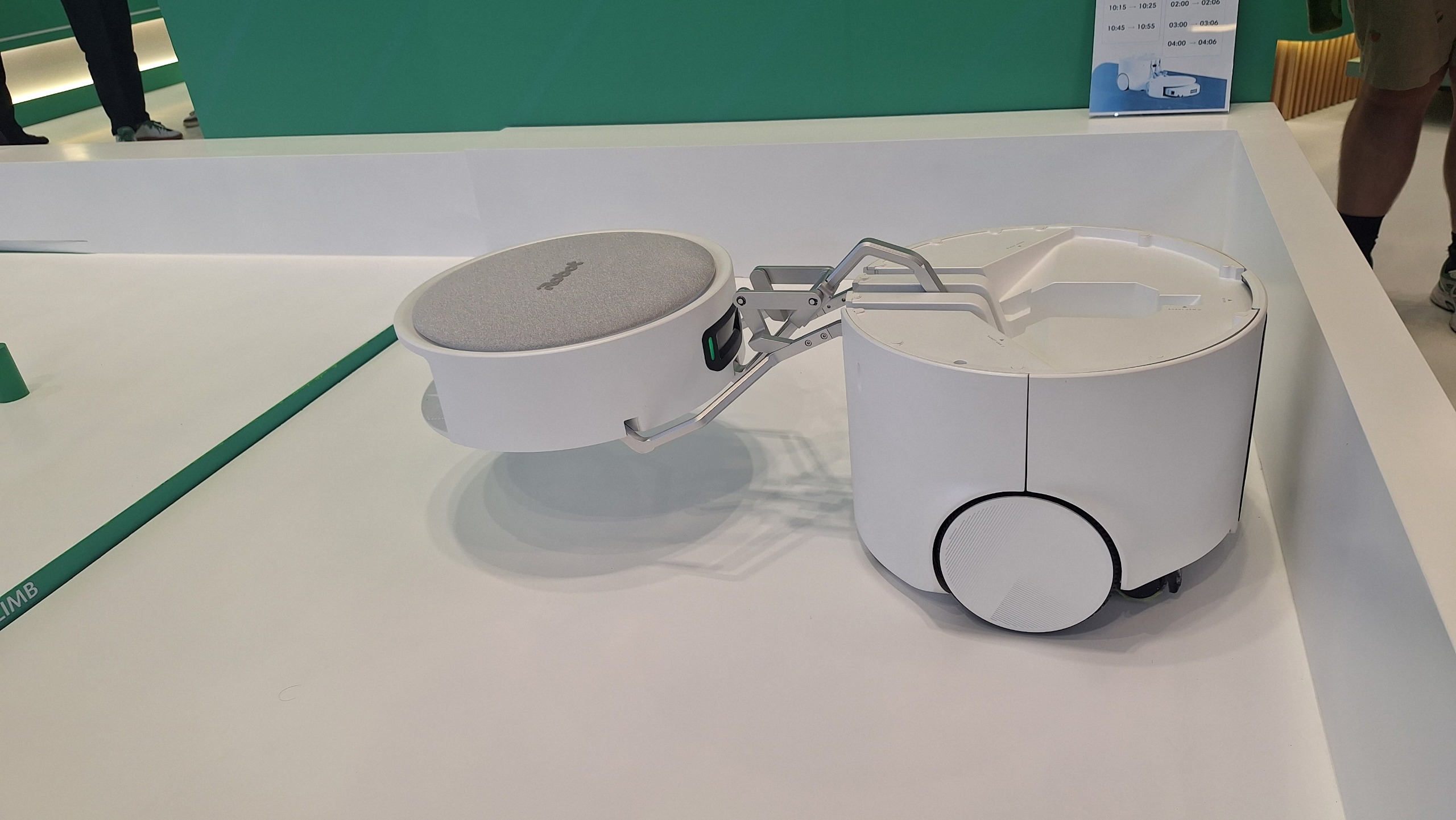
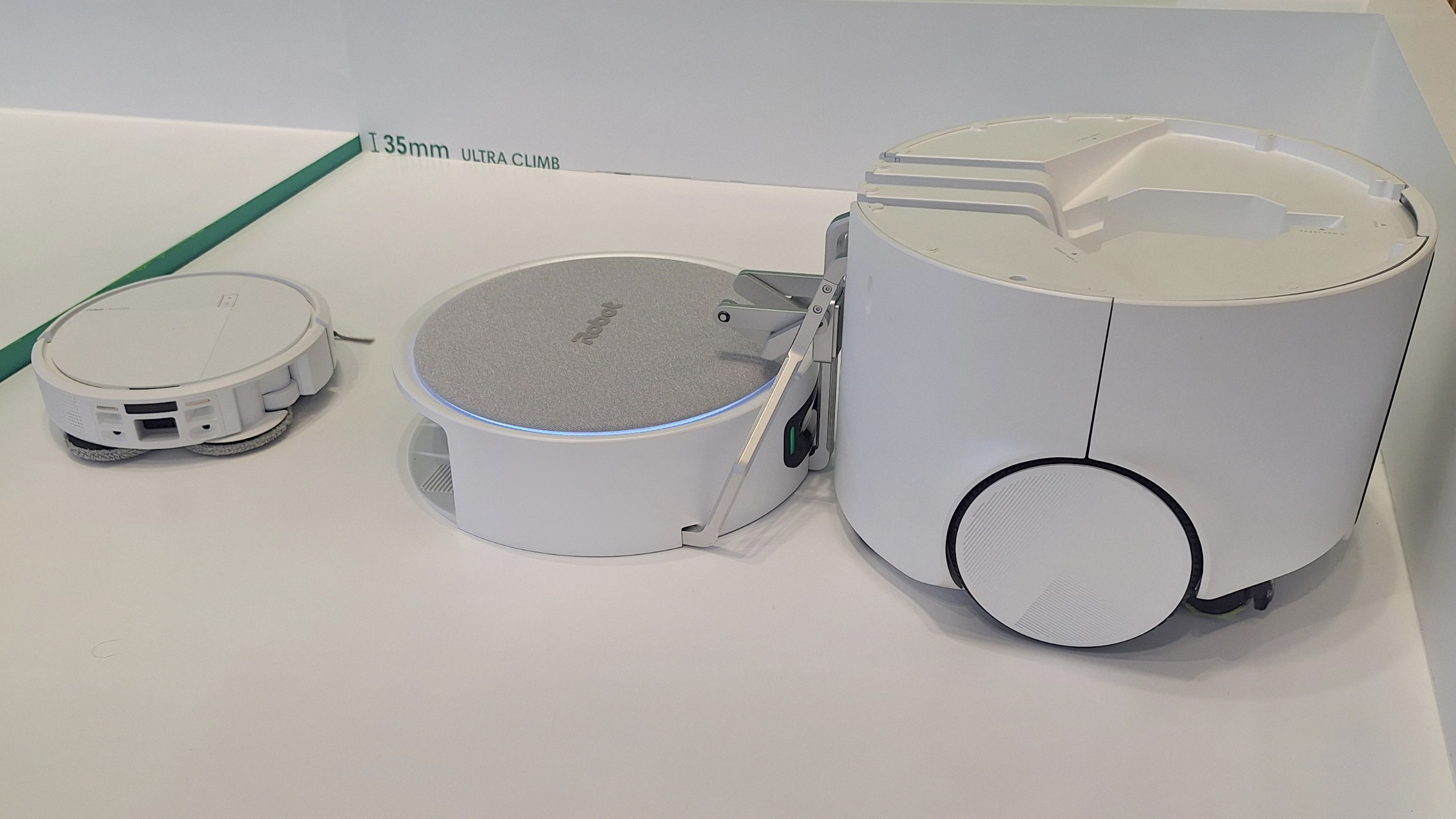
iRobot has come up with an imaginative solution. The iRobot Roomba Duo is a two-in-one bot in the truest sense. In its full form, it's a big, chunky floor cleaner, with a bulky body is large enough to contain everything you need for serious cleaning oomph. Then, in the upper part hides a regular robot vacuum that's compact enough to take care of detail work.
(Image credit: Future)
I spoke to Adam Pope, Chief Engineer & Vice President of Product Planning & Development at iRobot, to get some more insight into the unusual creation.
"The large base robot is really for heavy-duty cleaning," he tells me. "It's big enough to be able to have lots of water inside, and it can also have stronger vacuum. It's designed for heavy-duty cleaning and more open spaces and high-traffic areas in your home. You get that heavy-duty clean that you might use a stick vac or a wet-dry vac on today."
(Image credit: Future)
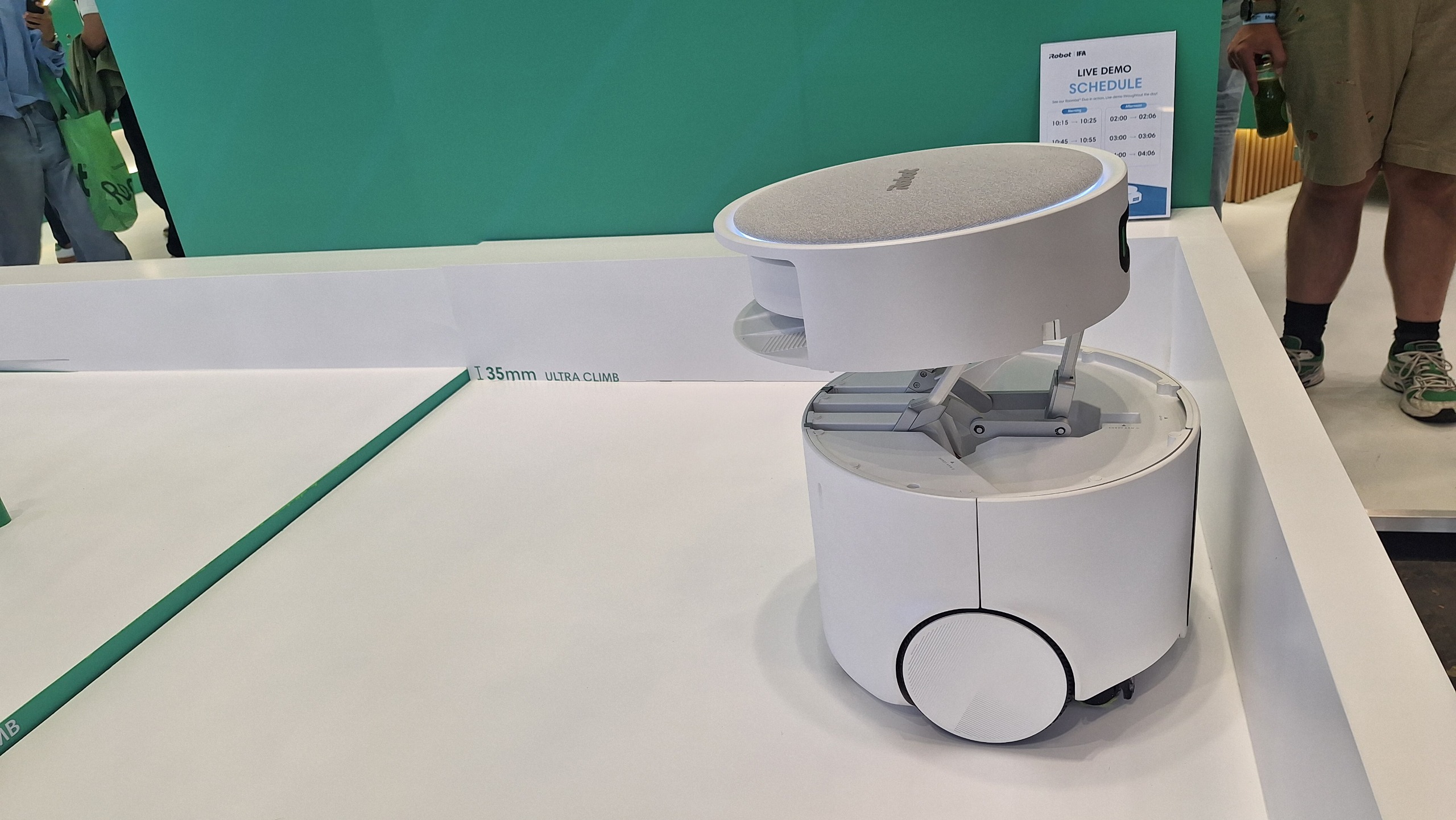
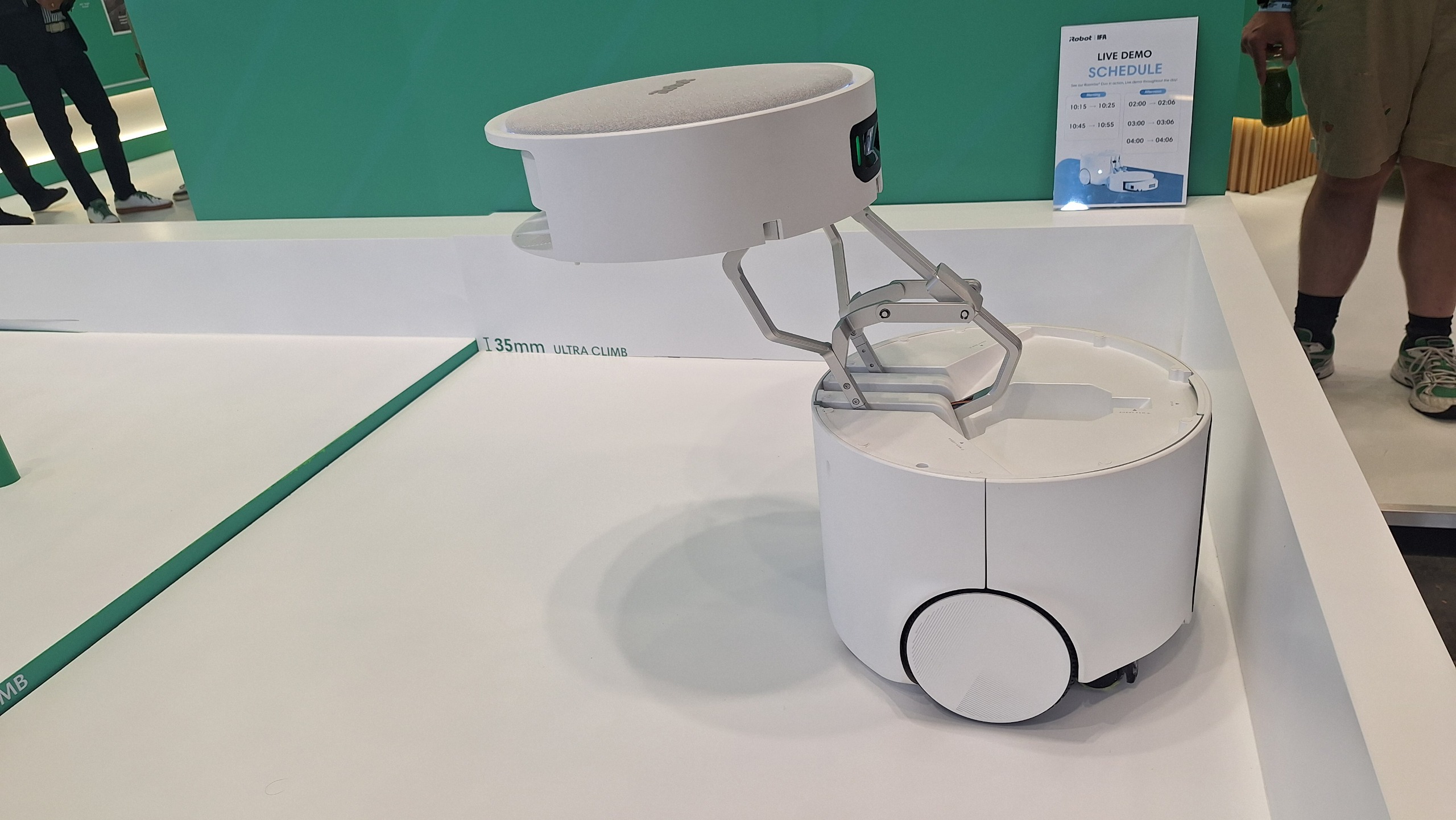
He explains that on top of all that, the base also deploys the companion bot — which is similar to the Roomba Plus 575 robot. That smaller robovac will clean under furniture, around chair legs, in corners and essentially "all those other spaces that the larger robot can't get to".
"They work together," he adds. "They each have their own job, and they kind of split the job up and go do those activities."
I saw a demo of the iRobot Roomba Duo in action at IFA 2026. The dock was lifted off the top of its cleaner base — like someone taking their hat off — and lowered gently to the ground, where the smaller robot vacuum exited. This then went on to successfully complete an obstacle course that looked far too tight for it to navigate, before returning to its hutch, to be lifted back to its charging home on top of the base bot.
FutureFutureFutureFutureFutureFutureFuture
Unfortunately, for those who like the sound of this, the iRobot Duo isn't going on sale quite yet. "It's a cool little innovation concept we're just showing here at IFA to see how the market reacts to it and if there's interest in that type of product," Pope tells me.
I suggest it's quite difficult to stand out in the robot vacuum market these days, given the speed at which brands are releasing new models. "There's a lot of spec war in that category," he responds. "Not as much innovation as we'd like to see. So this was our way of trying to get something different, something new. But it still does the job — the job that customers actually need."
John Ternus: 'I started the day with the idea of a personal hub'
This, during Apple's famous 'one more thing' moment, to close its event
And yet, no HomePod mini 2 — which feels like an oversight
Whether you followed our Apple event coverage or simply streamed the event itself (and referred back to us later for a rundown of what you saw) you'll know that alongside a cracking duo of AirPods 5 new releases and of course our first folding iPhone, Apple's John Ternus seemed to continually tease the idea of a "personal hub" to act as the remote for your life.
At one point during the event, before announcing those ice-white buds, Mr. Ternus also stood in front of a spherical array of speakers (imagine standing right in the center and streaming a bit of Rage Against the Machine…), so I felt sure Apple's "one more thing" moment would be the much-rumored, hotly anticipated HomePod mini 2, which we've been waiting on (and writing about) for quite some time now.
Most of us agreed that Apple's delay in releasing its second-generation HomePod mini would be intrinsically tied to everyone at Apple Park waiting, with bated breath, for the company's overhauled, AI-powered Siri assistant to be fully finished and worthy of some new products.
And so I sat there, waiting for the "Behold, Apple's new and improved softball-sized wireless speaker (now in colors fit to grace any softball pitch), the HomePod mini 2! What's new? The chipset, the improved chattiness and the snappier responses".
And then, Ternus' people would wax lyrical about the fact that even six years after the original launched, the 2020 pricing of the new HomePod mini 2 had been put on lockdown (see what I did there?), so the price rise from $99 / £99 / AU$129 to $129 / £129 / AU$199 that was enacted in late June of this year would be reversed — just like the better-value AirPods 5. These, after all, just arrived with wireless charging, ANC and volume-swipe stems for $149 / £149, less than the $179 / £179 of the previous version!
But no.
What else might Apple have unveiled in its compact, Siri-powered "hub" speaker no-show? Oh, maybe an upgraded S9 chip, to replace the original HomePod mini's S5 chipset. Then perhaps deeper integration with Apple Intelligence for a chattier, more context-aware Siri that actually could become a voice to talk to, about music (music commands are all I use Siri for, when I use it at all).
How about stronger Wi-Fi or 2nd-gen Ultra-Wideband (UWB 2) for improved Handoff — something Apple did note at the event?
It seems that what Ternus said after his opening "I started the day with the idea of an intelligent personal hub" bit was most important. What was the end of the sentence? It was " …and why there's no product in the world better-designed to be that hub than iPhone". Ah. There's the rub. Folding phones.
I understand Apple's desire to get a foldable out there, but I have to disagree. A speaking speaker hub that plays music as well as the HomePod mini can, and is able to simply accept your iPhone-and-AirPods audio in one smooth audio handoff as you step in the door? That would be a hub that made your home a better place to be.
And if we look at the definition of the word — a hub is the central component of something — isn't home where the heart is for many of us? So wouldn't a HomePod mini 2 be a great intelligent personal hub, Mr. Ternus?

 Login