ON CALL Friday morning is The Register's home for tech support stories, which we showcase in On Call – the weekly column made possible by readers generously sharing their experience of what it takes to fix things for the furious, fatuous, or feebleminded users that infest every workplace. This week, meet a reader we'll Regomize as "Lucia," who was once ordered to report immediately to a company director's office. "All of my files have gone," the director fumed, before insisting this was all the fault of the IT team, who were all inept, incompetent, and unfit for duty. Lucia examined the director's PC and found an empty "Home" folder. "I saw that he had clicked on the 'Up' directory icon to get there," Lucia told On Call. "I casually clicked on the 'Documents' folder and his files magically reappeared." Guess how much gratitude the director showed Lucia. If you guessed zero, congratulations. When Lucia tried to impart a quick lesson in directory navigation, the director was having none of it. "He simply bundled me out of his office, yelling, 'And make sure it doesn't happen again!'" Have your users refused to learn a simple fix? If so, a single click here will speed your story to On Call, so we can share it on a future Friday. ®
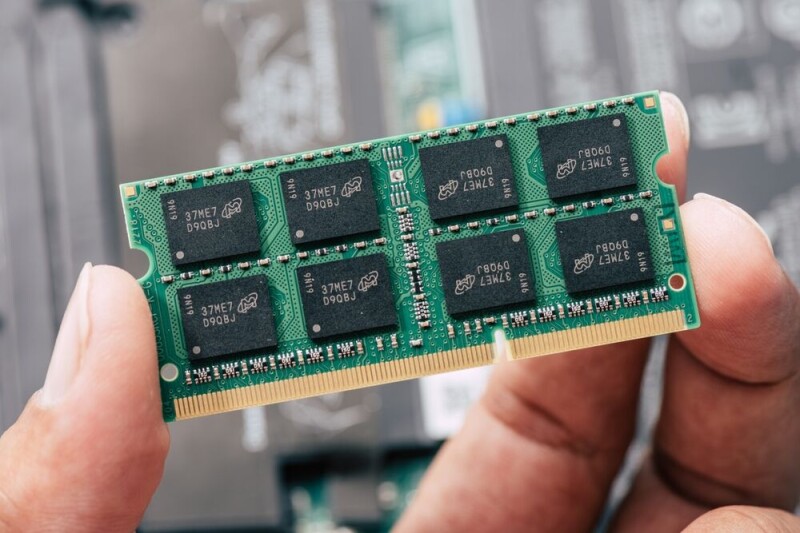
Laptop-maker Framework has decided to refund some of its customers who paid high prices for its model 13 Pro laptop due to the soaring cost of RAM. In July, the company told some customers who had ordered its very repairable machines that if they ordered 64GB of RAM, they would get just 32GB. “We recently received a cost update from our LPCAMM2 supplier that goes far beyond anything we had predicted and anything we’re able to absorb without placing our ability to operate at real financial risk,” the company wrote at the time. The company expected the price it paid for LPCAMM2 would go up by a low-to-mid double digit percentage from Q2 to Q3. Instead the price it paid was more than double the cost of its previous shipment. The company said the decision to reduce RAM in some machines “minimizes the impact of this challenge.” On Tuesday, Framework revealed that it has just scored “a limited quantity” of Micron 32GB and 64GB LPCAMM2 memory modules that it was able to acquire “at lower cost.” “While these new costs remain above our original pre-order launch baseline, they are lower than the last cost update that drove our current pricing for new pre-orders,” the company’s post states. Framework is therefore “rolling out price reductions across both already shipped and a subset of currently pending pre-orders.” That decision means customers who bought Framework laptops when it was paying top dollar for memory can get a refund for price difference between July and now. Customers who ordered when memory prices were high, but haven’t yet received a machine, will see the price of their orders fall. They can also edit their orders to acquire more memory at the new, lower price. Framework is not alone in eating the cost of increased memory costs. Storage vendor Everpure (formerly Pure Storage) promised to honor prices it quoted to customers before solid state disk prices soared. HPE recently promised to honor quotes from the day it issues them until it ships hardware, despite the fluctuating cost of memory. Such pledges probably aren’t altruistic, because major memory makers Micron and SK Hynix have offered long-term deals that reduce exposure to big price swings for buyers willing to commit to years of future purchases. Memory-makers’ margins are currently enormous, so if these deals sometimes mean they miss out on maximum profits it’s survivable. If HPE and Everpure have signed such deals, they get better visibility of future costs, and perhaps a little discount for committing to years of purchases. Others are hiking prices. Apple, which made $30 billion of profits in its most recent quarter, yesterday lifted the price of iPhones by $100. ®
It’s been a long time since Apple introduced a truly new product. The world finally got one today in the form of the folding iPhone Duo, and while it's new for Apple, it's not new for the industry. Nonetheless, Apple is once again hoping to validate a mostly moribund market as it did with tablets and smartwatches – folding phones only made up 1.6% of total smartphone sales last year, according to Counterpoint Research. Apple announced the iPhone Duo – did no one check the list of cursed gadget brands? – on Wednesday during new CEO John Ternus’ first crack at an Apple keynote, and it's a foldable iPhone. Given its aspect ratio, it’s probably more apt to call it an iPadphone, though. Ternus criticized the shape of other foldable smartphones, likening them to “just two phones strapped together” rather than a purpose-built foldable device. The Duo is intended to break that mold, though it was a little hard to tell from the event. Folded, the Duo has an oddly square shape that Apple described as being “passport sized,” with a 5.4” screen. When opened, the Duo has a 7.6” screen – not much smaller than the 8.3” screen on the iPad mini, which in turn is just a bit smaller than Huawei’s massive 10.3” tri-fold device. Speaking of screens, anyone who’s had an opportunity to play with a foldable smartphone knows their durability is abysmal. The original Samsung foldables were so soft they could be scored with a fingernail, and while successive models have improved, they still aren’t as hard as regular glass. Apple had plenty of platitudes to deliver about the screen, of course: Its many layers use a “visco-elastic adhesive” to allow components to slide against each other so everything folds more easily, and there’s a titanium plate at the back to keep the durability up, too. But what of its hardness? Not a word. As for the hinge – the bane of every foldable smartphone since the first Galaxy Fold hit shelves in 2019 – Apple claims that “over 100 tiny precision components” and the assistance of AI will ensure it's a tight and reliable fit. It’s worth pointing out, however, that Samsung has released eight generations of Galaxy Fold, and iFixit says the hinge is still its weakness. The Galaxy Fold 8, mind you, is only rated at IP48, meaning it’s not completely dust-tight, while the iPhone Duo claims to be IP68, meaning it’s completely dust-tight, though we’d caution waiting to see what the initial teardowns determine before deciding if that’s accurate. Either way, if you’re going to actually spring for this $1,999 phone you’d better plan to get an Apple Care plan, too. Unnecessary introductions There’s another big sticking point about the iPhone Duo that needs to be addressed, and that’s what it does with iOS. Apple apparently knows that such a wide device is going to make using the iOS dock, and other interface buttons less practical, so it’s decided to move all of them to the right side of the iOS screen. Navigation buttons, app interfaces, and everything one would use to get around is now located on the side to, in Apple’s words, “maximize vertical space for content.” That’s all well and good, but it means developers need to make arrangements for the iPhone Duo. Apple knows this, as it made sure to mention a new API that developers can use to adapt their apps. For what it's worth, a revamped version of Siri launching this fall has also required developers to adapt to its presence on Apple devices. According to the New York Times, that hasn’t been going too well, with many big developers yet to make the necessary changes to enable support for Apple Intelligence and its interface with Siri in their apps. That’s for a feature that extends across Apple’s ecosystem, mind you. The Duo is one single device. The Duo also only has two cameras to the iPhone Pro series’ triple lenses, and takes a step backwards by ditching FaceID for a TouchID button embedded in the side button. Apple tends to have a wait-and-see approach to new technology, joining the game late after the competition has had a chance to flounder around and make bad decisions with early models. It’s not clear whether the Duo will be a prime example of that philosophy in action, or whether it’ll join Apple’s other recent developments, like the Vision Pro, in relative obscurity. Ternus and company at least chose a good name if the product withers: No one remembers Microsoft’s Duo either. ®

 Login