
❌

Reading view

How the ‘first bird’ leapt into the sky and soared above the dinosaurs

Archaeopteryx is an icon of evolution and is often called the first bird. Scientists have long debated just how it took off from the ground but a recent study published by my colleagues and I has brought new insights to the mystery.

Our study compared Archaeopteryx with the anatomy of modern birds, and our findings suggest it generated the force needed to take off by taking several jumps forwards.

Archaeopteryx, a fossil uncovered from the Jurassic rocks of Germany, dates back 150 million years. It was covered in feathers and it had wings. But it retained a number of distinctly dinosaur features such as a long bony tail, claws on separate fingers and teeth in a beakless jaw.

Charles Darwin predicted, in the first edition of On the Origin of Species published in 1859, that fossils would later be found linking major groups of animals. A year after publication a feather, and within two years, an entire skeleton of Archaeopteryx had been discovered, showing clear links between birds and the dinosaurs. Archaeopteryx is one of those transitional forms that links one group to another.

The “first bird” was not perfectly developed, as birds have evolved to be today. We would not expect them to be. It had relatively weak flight muscles, with no keeled sternum for strong muscle attachment, and could not have raised its wings above the horizontal.

Rather than call it the first bird, it is better to describe it as the earliest branching species, yet known, on the lineage of birds after the whole bird group split from non-avian dinosaurs some time more than 150 million years ago.

In 2016 my friend Colin Palmer asked a colleague, Markus Heller (professor of biomechanics) and me to join him in exploring a tricky problem: how did early birds slip the bonds of Earth and take to the sky?

Palmer had been working on the flying cousins of dinosaurs, the pterosaurs for over a decade, and also a peculiar (although now one among several known) four-winged, feathered and flying dinosaur called Microraptor. However, pterosaurs are not dinosaurs and Microraptor is a dinosaur closer to Velociraptor (small meat-eating dinosaurs) than to birds.


Read more: How ancient flying reptiles ruled the skies – new research


There have been a number of suggested mechanisms for the evolution of flight and takeoff, quite literally from the ground up, or the trees down, to flapping while running to climb a slope. The problem is that these are difficult to test experimentally. So we turned instead to the best example of takeoff there is: birds themselves.

Palmer had already filmed a number of birds, out of curiosity. As some other scientists had observed, but had never followed up, Palmer saw that they all showed the same sort of pre-takeoff behaviour. Two leg jumping. The wings appeared to do little in getting the bird off the ground, and this opened up some possibilities for research into the earliest of birds.

The ancestors of birds, the theropod dinosaurs, had powerful legs. They could definitely jump, and jumping could provide an important evolutionary advantage. Being able to get out of the way of a hunter, and maybe adding in a flap of your feathered arms to extend your leap, might just save your life.

The first bit of this research, which we carried out with then undergraduate student Erik Meilak, was developing a means to see how much force the hindlimbs of birds generate in getting off the ground. We used a force plate (a modified kitchen scale) and a Raspberry Pi computer controlling some high-speed photography, along with CT scanning of the skeleton to see exactly how bones were articulated. We worked out how magpies got off the ground. They used their legs as the primary generator.

This undergraduate summer project became a fully-fledged PhD project, with Meilak looking at several birds such as starlings and crows. We worked with evolutionary biologist Pauline Provini in Paris who had done work with doves and finches, demonstrating how all of these birds used their legs in takeoff.

And with detailed kinematics, all of the forces and moments generated by the muscles around the hindlimb joints, we fitted the model to Archaeopteryx and looked to see if the first bird could get into the air in a similar way to modern birds.

Archaeopteryx is by definition 150 million years behind the “leaps” of modern birds, and couldn’t take off as we had observed modern birds do when startled, explosively, with a single jump and then add flapping into the sky. Archaeopteryx couldn’t do that, and as I said couldn’t rely on its wings for powerful flaps. So we had asked what its legs could do. And like birds today, when taking off more leisurely, we demonstrated that Archaeopteryx could have got into the air with two leg leaps. Archaeopteryx could have used three jumps increasing in velocity, and once airborne its flapping wings could have maintained a flight speed of 7 metres per second.

However, if Archaeopteryx had added in a flap, it would have got to that speed – jump-flap-jump – with just two leaps. And all this without the highly evolved and flight-adapted anatomy of pigeons, crows, hawks and even chickens.

In the future we may find a fossil that is still a bird rather than a non-avian dinosaur, but is less, well, “birdy” than Archaeopteryx, and then that would become the earliest branching taxon. But we haven’t yet. So Archaeopteryx still sits on its perch as the first bird that we know of.

The Conversation

Neil J. Gostling is an Associate Professor in the School of Biological Sciences at The University of Southampton. The work described here was funded by the Natural Environment Research Council (grant number NE/L002531/1).
  •  

Fly-tipping: here’s what is missing from Andy Burnham’s plan to tackle waste dumpers

Large fly-tipping dumps are an increasing problem. Sean Aidan Calderbank/Shutterstock

UK prime minister Andy Burnham has promised to clean up three of the worst illegal waste dumps in England and sign off new measures to tackle the problem more widely.

The pledge is bold, but it is also unlikely to solve the problem on its own.

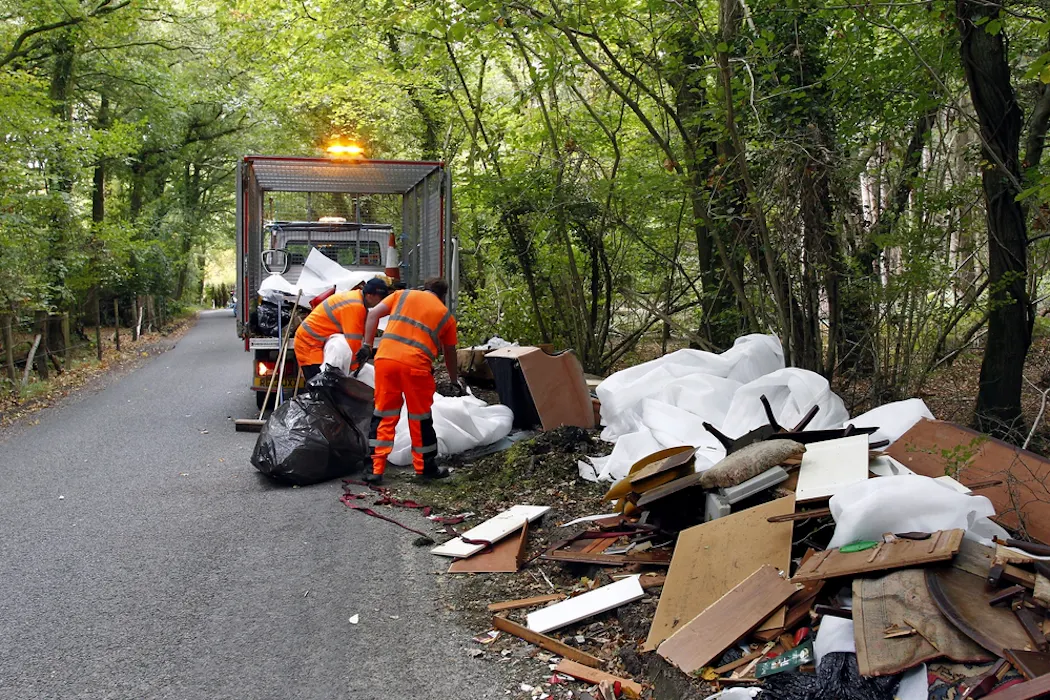
Illegal waste sites and fly‑tipping is now widespread in the UK, and globally.

They are not just local eyesores. They are public health hazards, environmental damage, and a symbol of organised criminal activity. They cost councils millions. They poison soils and waterways. They also erode trust in government. Any plan that ignores the full picture will fail.

What Burnham has proposed

Burnham’s announcement commits resources to clear three of the worst sites and to work with councils and police to tackle the problem. The aim is immediate clean‑ups and stronger local coordination. This is welcome. Quick action on visible sites helps communities and restores confidence. But the plan as described lacks the scale and tools needed to stop the flow of illegal waste in the long term.

Fly‑tipping is the illegal dumping of waste on land without a licence. Illegal waste sites are larger, often semi‑permanent locations where waste is stored, processed or burned outside regulatory control. These activities range from small household dumping to organised operations run by criminal networks. The latter are the most damaging and the hardest to stop.

English local authorities dealt with 1.26 million fly-tipping incidents in 2024-25, a 9% increase from the previous year.

For decades, local authorities have borne the cost of clearing dumped waste. Budget cuts since 2010 reduced council capacity for enforcement and waste services.

At the same time, regulatory gaps and weak sentencing created an environment where organised waste crime could flourish. Criminal groups exploit low enforcement, transport networks and demand for cheap disposal. The result is more illegal sites and higher clean‑up bills for councils.

Fly-tipping is often organised by criminals gangs.

What Burnham needs to add

Burnham’s current approach treats symptoms, not causes. Cleaning up three sites is necessary but not sufficient. Without cutting off the supply chain – illegal collection, transport and disposal – new sites will appear.

But the current plan lacks sustained funding. Effective action needs long‑term investment in enforcement teams, surveillance, legal support and prosecution. Short‑term funding can clear sites but cannot sustain the multi‑year operations needed to dismantle organised waste crime. Councils already report rising costs and limited budgets for pursuing fly-tippers.

Enforcement is currently fragmented. Responsibility is split across councils, the Environment Agency as well as the police and private sector actors. Burnham has said the National Crime Agency will work more closely with the Environment Agency in England, but this could still create gaps that criminals exploit.

Successful disruption requires a single, well‑resourced taskforce with investigative powers and rapid legal follow through. Past local initiatives without national backing have struggled to keep pace.

Sentences for serious waste crime are often too light to deter organised groups. To help tackle this Burnham has said fines will rise from £300 to a maximum of £5,000. But prosecutions are complex and slow. Without tougher, faster legal consequences, the economics could still favour illegal operators.

Tougher sentencing and fast‑track courts should be put in place. Pushing for tougher sentencing guidelines for serious waste crime and specialist courts to speed cases is needed. Swift, certain punishment deters more than occasional heavy fines.


Read more: Criminal fly-tipping gangs are costing governments millions – AI and drones can help track waste dumpers


What would work?

A national waste‑crime taskforce with investigative powers, forensic capability and a legal team to secure rapid prosecutions could reduce offending. This could be modelled on successful multi‑agency units used against other organised crimes.

The government should target the money being made by these gangs. This could include freezing or seizing profits from illegal operations. These recovered funds could be used for clean‑ups and community prevention. Greater financial consequences for the criminals are likely to deter organised fly tipping.

Investment is also needed in understanding behaviour, prevention and legal disposal. Subsidising safe, low‑cost waste disposal options for households and small businesses would also help as well as licensing and tracking of waste carriers. When legal disposal is affordable and traceable, illegal options are likely to shrink.

Funding local rapid‑response teams and anonymous reporting lines would be another means of attacking the problem. Community intelligence often leads to the best leads. This should be combined with AI, drones, CCTV and vehicle tracking to catch offenders in the act.

There are some pilot schemes that show success. The Keep Britain Tidy group worked with Newham council in London to add stickers to illegally dumped waste and bring it to public attention. This resulted in an average 64% reduction in fly-tipping incidents, with over half of residents reporting they had noticed the intervention.

Burnham’s pledge to clear three sites is a good start. It will help communities and draw attention to a national crisis. But it will not halt the problem.

The question now is whether political plans will match the scale of the crime. If it does, a successful national model could emerge. If it does not, the clean‑ups will be temporary – and the next illegal site will already be being planned.

The Conversation

Ian Williams receives funding from UK Research Councils, including the Engineering and Physical Sciences Research Council (EPSRC) and its Impact Acceleration Account.

  •  
❌