❌

Reading view

Scientists Say: Virga

Virga (noun, β€œVER-gah”)

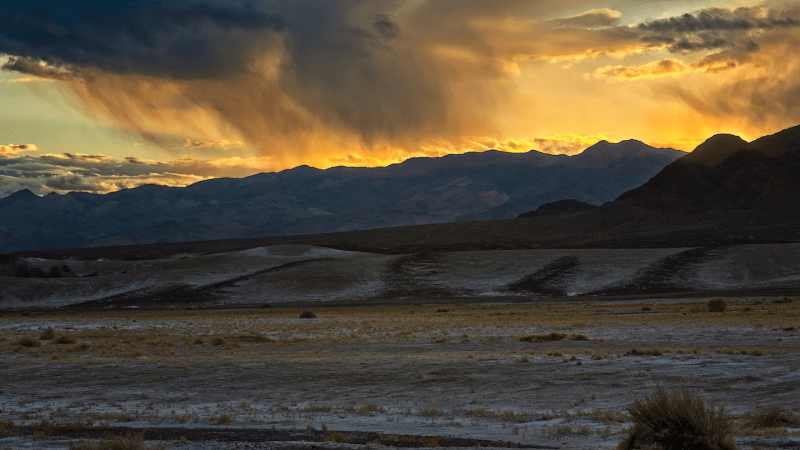
Virga refers to rain or snow that evaporates before it reaches the ground.

From a distance, virga looks like ghostly, grayish wisps that streak down from storm clouds. Virga occurs when rain or snow passes through dry, often warm air during its fall. So it tends to form in places such as deserts and the arid high plains of the western United States.

Pilots watch out for virga. That’s because virga can warn of dangerous downward swooshing pockets of air, called downdrafts. As falling rain or snow evaporates, the air cools. Cold air is denser than warm air and tends to drop. Sometimes, these downdrafts occur suddenly and in a small area. Small pockets of downward bursting air can rock an aircraft.

On Earth, virga consists of water. But scientists have observed evaporating precipitation elsewhere in the solar system, too. In Jupiter’s gas clouds, falling streaks of precipitation evaporate into the atmosphere below. This falling material could contain ammonium or water, depending on where in Jupiter’s atmosphere it occurs. Scientists have also noticed virga-like wisps in Mars’ atmosphere.

In a sentence

Dry, desert climates can produce unusual weather phenomena from ghostly virga to wall-like dust clouds.

Check out the full list ofΒ Scientists Say.

  •  

Scientists Say: Symmetry

Symmetry (noun, β€œSIM-meh-tree”)

A shape with symmetry has parts that match each other in some way.

Imagine cutting a heart from a piece of paper. To ensure the two halves match perfectly, you might fold your paper in half. Then, you can cut both sides of the heart at once. When you unfold the paper, the two sides are identical. The heart is symmetrical.

The line down the center of the heart, left over from folding your paper, is called the line of symmetry. Folding a shape along a line of symmetry matches up the parts. This kind of symmetry, across one line down the middle, is called mirror symmetry. That’s because the two sides of the heart are shaped like mirror reflections of one another.

But symmetry can come in different forms. Rotational symmetry is another example. This describes a shape that you can spin into a new position that looks identical to the first one. A propeller often displays this kind of symmetry.

Symmetry appears in nature. The elegantly branching crystal shards of a snowflake often have rotational symmetry. Leaves of a tree may display mirror symmetry. The body shape of a cat or dog or person also shows this kind of symmetry. When referring to living things, biologists often use the word bilateral symmetry. It means the same thing as mirror symmetry.

Radial symmetry is another example of symmetry in body shapes. This describes a body shape where you can draw several different lines of symmetry that cross the center. Jellyfish and starfish are examples of creatures with radial symmetry.

Not all living things are symmetrical. A marine sponge usually lacks matching parts. So, this type of body plan is described as asymmetrical.

In a sentence

Floral designs on ancient pottery suggest people understood symmetry 8,000 years ago.

Check out the full list ofΒ Scientists Say.

  •  

Scientists Say: Midden

Midden (noun, β€œMID-den”)

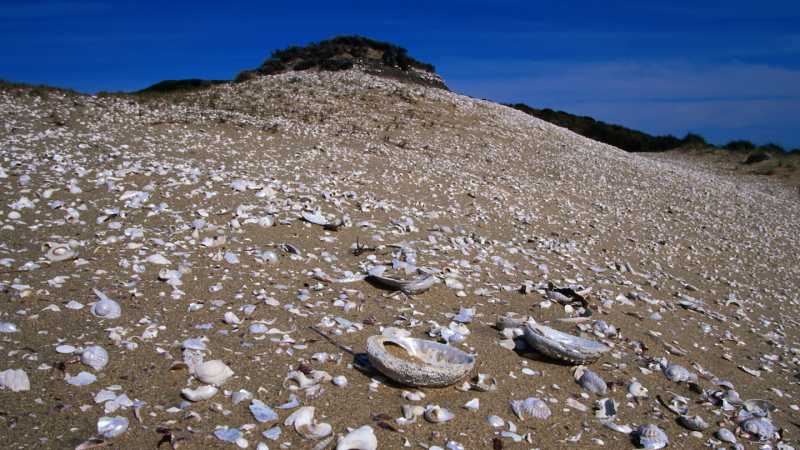
A midden is a garbage pile or dump site left by ancient people. This word also describes a pile of items gathered by an animal.

Old trash heaps can contain artifacts of ancient life. Fossilized scraps from a kitchen dump site can tell us how our ancestors cooked their food. Other sites may contain broken tools, pottery fragments or other clues about people of the past.

Imagine you live in an ancient village along a coastline. You and your people catch food from the sea, especially clams and mussels. You sit at the same site each day to crack open shells and extract the meat. You toss empty shells into the same pile. A thousand years later, an archeologist discovers this shell midden.

From this trash heap, the archeologist might learn more than just what was on your menu. They also might estimate how many people lived in your village and whether you used tools to open shells.

Dump sites containing many shells also create a unique environment that helps preserve fragile materials. Calcium minerals leached from old shells create a low-acid environment. This helps keep bone, fish scales and other biological materials from dissolving. A fragile bone tool, discarded in such a heap, stands a better chance of staying intact.

The word midden also refers to a pile of items collected by an animal. Many rodents create such piles. Squirrels gather and store food in middens. Rats hoard trinkets β€” such as pieces of trash, beads or seeds β€” in piles. Many rats even seal their hoards by peeing on them. Rat pee hardens into a shell-like substance called amberat.

Crystallized rat pee repels water and helps preserve the rat’s collection. Throughout human history, rats have lived alongside us. That means that rats may store artifacts from humans in their middens. So, archeologists may study fossilized rat middens for clues about ancient human societies.

In a sentence

Fossilized rat middens can offer a glimpse into the ancient life β€” not just of rodents, but also of the humans they lived beside.

Check out the full list ofΒ Scientists Say.

  •  
❌