❌

Reading view

‘Birds Supporting Birds’ connects the Philadelphia Eagles with migrating seabirds

As the 2026-2027 NFL season kicks off, the Philadelphia Eagles are giving new meaning to their signature “Fly, Eagles, Fly” fight song. The football team is partnering with the National Marine Sanctuary Foundation for Birds Supporting Birds, an initiative to support seabirds off the coast of Massachusetts (and in New England Patriots’ territory) this fall. 

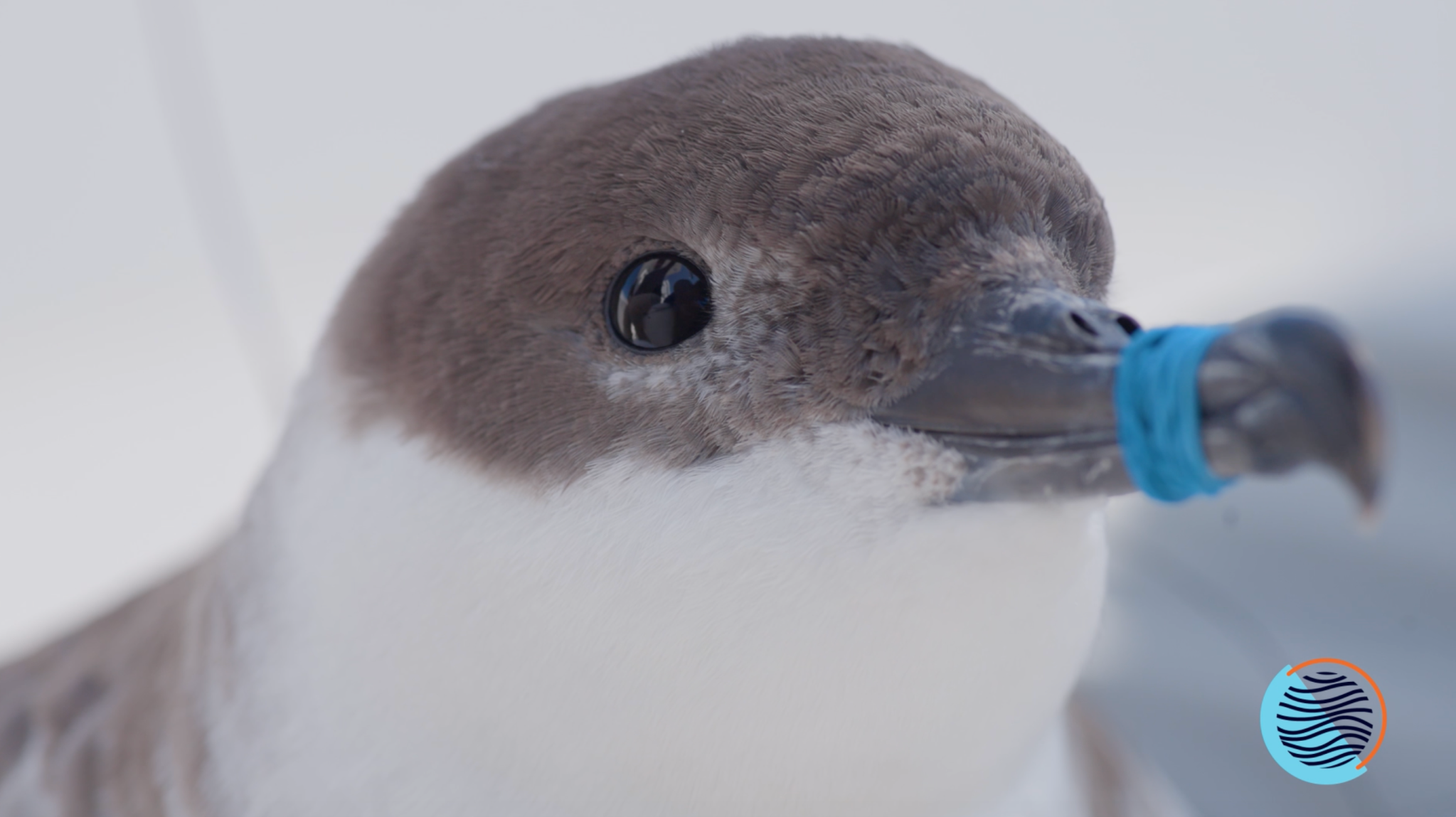
The team is supporting NOAA’s Stellwagen Bank National Marine Sanctuary Shearwater Tagging Project, an ongoing initiative dedicated to studying the great shearwater (Ardenna gravis) and their migration. Great shearwaters are large, white-and-grey seabirds known for their epic journeys. They travel thousands of miles every year from their remote South Atlantic breeding grounds up to the cooler North Atlantic waters during the nonbreeding season. According to the National Marine Sanctuary Foundation, they fly the equivalent of over 200,000 football fields across the Atlantic Ocean every single year.

Birds Supporting Birds will help support researchers in Stellwagen Bank, an 842-square-mile marine sanctuary east of Boston, to tag great shearwaters and track their migratory routes across the Atlantic. 

“The Eagles are directly funding researchers to attach lightweight, solar-powered satellite transmitters to great shearwaters,” Joel R. Johnson, President and CEO of the National Marine Sanctuary Foundation, tells Popular Science. “These tags track the birds’ migration patterns around the Eastern Seaboard and down to the Southern Atlantic Ocean in real time.”

Lovingly known as “The Birds” by their incredibly devoted fanbase, the football team is leveraging their platform to bring attention to ocean conservation and highlight environmental stewardship. 

A major 2015 study found that the Gulf of Maine is warming faster than 99 percent of the ocean due to climate change. While the water has slightly cooled since 2021, a report published by NOAA in July found that the environment in the Gulf of Maine still remains unstable. These changes in ocean temperature, currents, and other conditions can impact the seabirds’ food supply. 

Great shearwaters are reliable indicators of an ecosystem’s health, who rely on small fish called sand lance in their diets. Whales, dolphins, bluefin tuna (Thunnus thynnus), and other key Gulf of Maine species also rely on these fish belonging to the family Ammodytidae in their diets. By studying great shearwaters and their health, researchers can better understand what is happening in the local ecosystem as a whole. 

Researchers at Stellwagen Bank National Marine Sanctuary used satellite tracking technology in 2013. These tags are lightweight and attached to the birds with degradable thread. They have small solar panels so scientists can monitor the birds’ routes over extended periods. 

Researchers have now deployed tags on Phil, Franklin, Hoagie, and Liberty, four great shearwaters with very Philly-appropriate names.
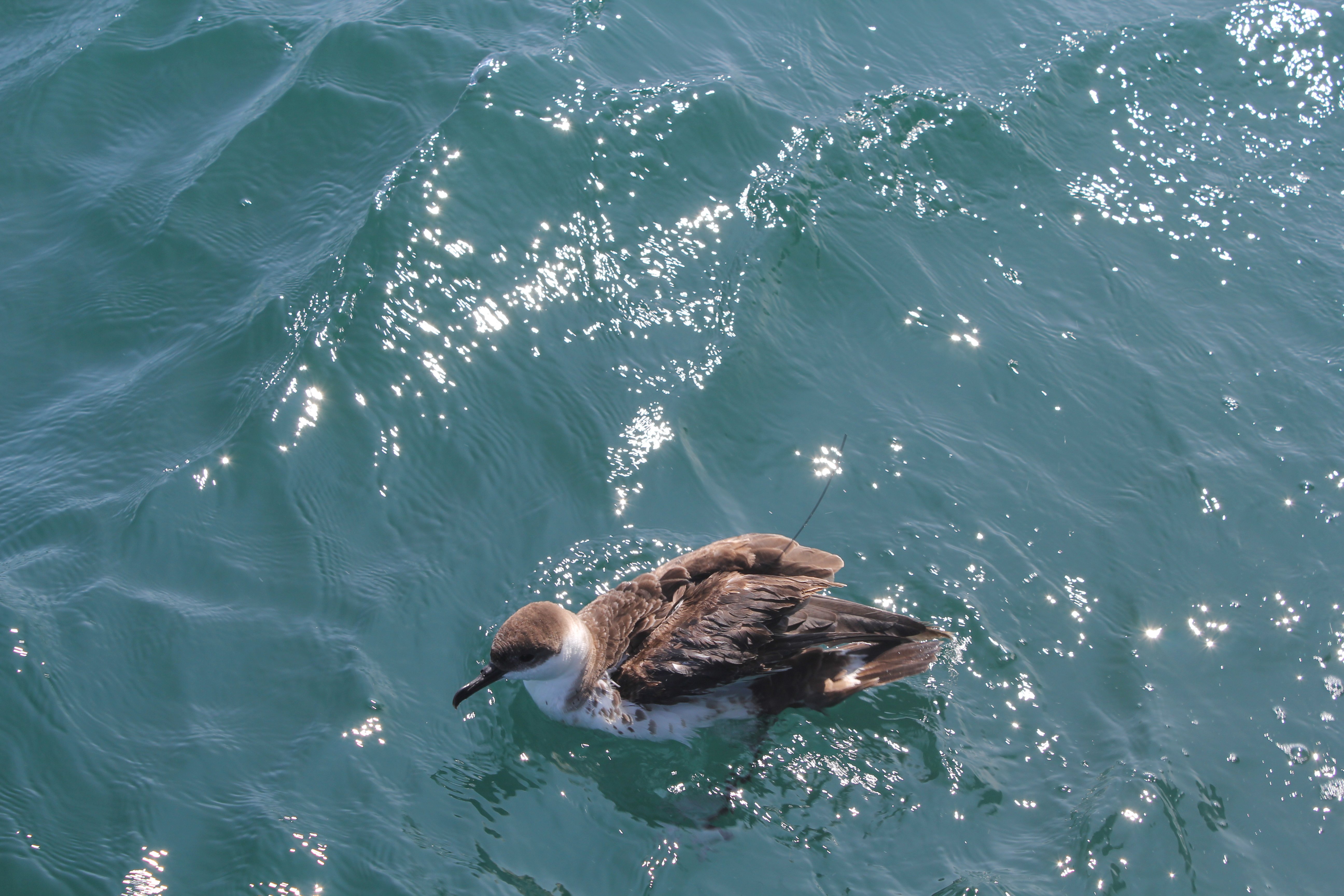
a bird wearing a small tracker on its feathers sits on the ocean
Great shearwaters can help scientists understand an ecosystem’s health. Image: National Marine Sanctuary Foundation.

“We are thrilled to invite the public to follow Phil, Franklin, Hoagie, and Liberty in real time on our interactive maps and social channels, bringing everyone along on our shared mission to protect our ocean waters and marine life,” says Johnson, who lists bald eagles (Haliaeetus leucocephalus), great blue herons (Ardea herodias), and great shearwaters among his favorite birds. 

Live interactive maps will be available soon on the Stellwagen Bank National Marine Sanctuary and National Marine Sanctuary Foundation’s website, so you can follow the great shearwater’s epic journey, while the Eagles (or your favorite team) compete on the gridiron.

The post ‘Birds Supporting Birds’ connects the Philadelphia Eagles with migrating seabirds appeared first on Popular Science.
  •  

Backwards-walking fish caught on video in the South China Sea

The deep-sea is filled with weird creatures: goblin sharks (Mitsukurina owstoni), vampire squid (Vampyroteuthis infernalis), and… walking fish? For the first known time, a team of scientists in China filmed a strange, shrimp-like fish walking backward along the seafloor. 

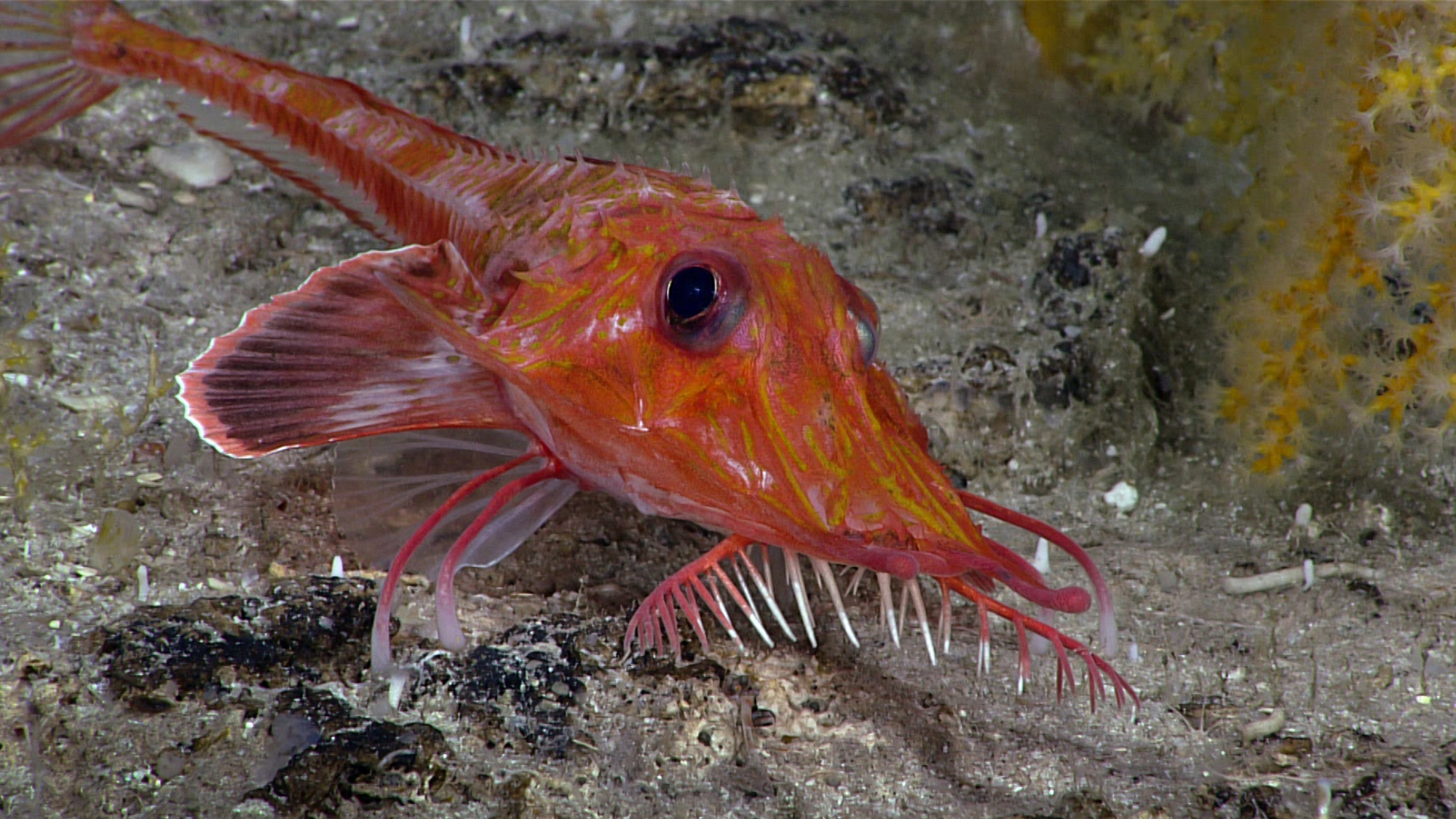
The fish, Scalicus engyceros, is a species of armored searobin, a group of fish known for  weird anatomy. Their bodies are  covered in bony plates, while stiff free fin rays stick out of its pectoral rays like tiny legs it can use to “walk.” 

The new study, published in the journal Ocean-Land-Atmosphere Research, not only provides video evidence of the animal’s sea-floor strolls, but it also marks the first time backwards locomotion has been described in fish. 

“[Our] study delivers a paradigm-shifting revelation: the deep-sea fish Scalicus engyceros, a representative of fishes characterized by highly specialized free pectoral-fin rays, is among the few fish species known to walk,” said Han Tian, a postdoctoral researcher at Sun Yat-sen University in Guangzhou, in a statement. 

The video was taken from a deep-sea diving vehicle in the northern South China Sea that also helped the researchers observe the fish’s other unique traits. It has outward-extending barbels that resemble a farmer’s rake. While the barbel makes it awkward for the fish to walk, it provides “an advantage in probing, digging, or hunting for food buried in the sediment,” according to the team. 

Like other deep-sea creatures, Scalicus engyceros also has large eyes. The researchers note that the fish did not seem to react to the approaching vehicle, but it did appear to react to its light beam before swimming away. This suggests its eyes have at least some sensitivity to light, perhaps pointing to the fish not having lived in this habitat for very long. 

While there’s still much to learn about this mysterious creature, advancements in technology are helping scientists better understand the life way beneath our oceans’ surface. 

“Modern deep-sea diving vehicles allow not only discovery of new species but also add a new in situ, functional dimension to the study of species based solely on the morphology of preserved specimens,” said Tian. 

“By observing deep sea animals alive in their surrounding environment, we can gain insight into the adaptation and evolution of the species. These walking fish harbor far more novel behavioral and evolutionary adaptations than previously assumed.”

The post Backwards-walking fish caught on video in the South China Sea appeared first on Popular Science.
  •  

Nearly 500 animals rescued from trafficking arrive at a California aquarium

On June 19, the Aquarium of the Pacific took in almost 500 animals in one go. Fish, marine invertebrates, and sharks were all brought into the facility in Long Beach, California, but the aquarium hadn’t just gone on some big marine shopping spree. 

These animals were rescued from animal trafficking, and were in urgent need of a home. At the aquarium, the staff worked through the night to stabilize and care for them. 

“Every animal that arrives at the Aquarium, whether through a carefully planned acquisition or a last-minute confiscation, receives the same high standard of care. What can differ is the condition in which those animals arrive,” Johnathan Casey, Aquarium of the Pacific curator of fish and invertebrates, tells Popular Science. 

Many trafficked animals have been traveling in stressful or poor conditions, so the aquarium’s experts immediately check their physical condition, water quality, and individual needs. They usually know little about an animal’s origin or history, so the team needs to be prepared for anything. The rescued animals are also quarantined to avoid the potential spread of diseases, according to Alyssa Tillman, the assistant curator of fish and invertebrates. 

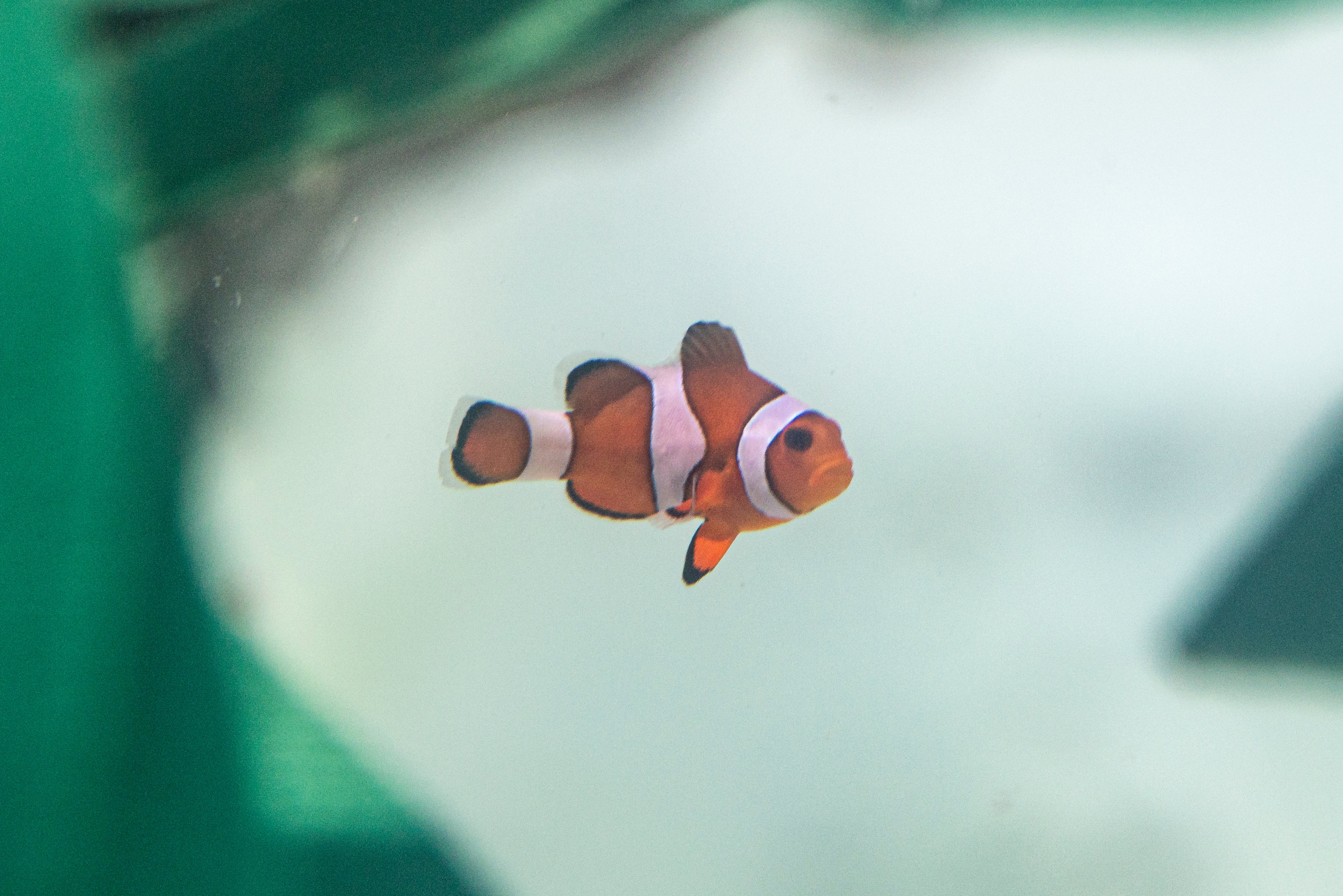
a rescued clownfish swims in a holding tank
Confiscated animals like this clownfish were kept in holding tanks at the Aquarium of the Pacific on Long Beach, California. Image: Josh Barber/Aquarium of the Pacific. Josh Barber

The species included brownbanded bamboo sharks (Chiloscyllium punctatum), ocellaris clownfish (Amphiprion ocellaris), and Banggai cardinalfish (Pterapogon kauderni). The IUCN Red List classifies brownbanded bamboo sharks as Near Threatened and Banggai cardinalfish as Endangered. 

While the arrival of almost 500 animals was a standout event, the Aquarium of the Pacific has received rescued animals from over 30 confiscation events since September 2024.  This means they saw one confiscation event every three weeks, though the first eight months of 2026 have already seen over a dozen cases. Overall, the aquarium has taken in over 3,600 rescued trafficked animals in the past two years. 

The Aquarium encourages “the public to become informed consumers to help avoid wildlife trafficking of exotic pets. This includes researching the protected status of the species and ensuring purchases are through a reputable vendor,” Casey explains. “If the vendor cannot provide proof of where the animal came from, refraining from purchasing it is a way to help.” 

The post Nearly 500 animals rescued from trafficking arrive at a California aquarium appeared first on Popular Science.
  •  

Australia’s humpback whales were acting weird. What happened next surprised scientists.

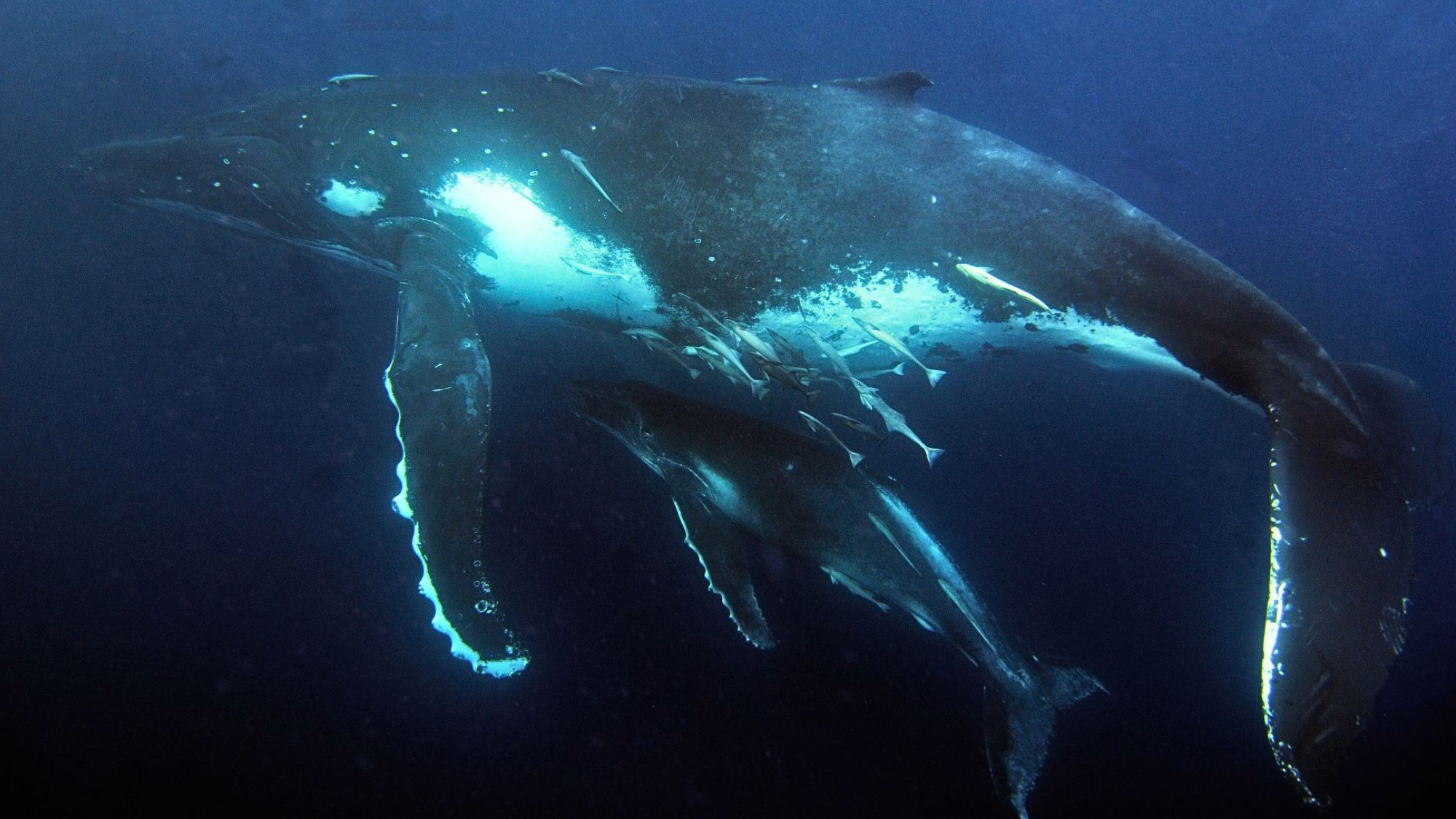
In 2009, tourism operators in Australia spotted more and more humpback whales (Megaptera novaeangliae) “fluking,” when a whale floats upside down, holding its tail above the water. Confused by the behavior, they reached out to scientists for help, triggering a research effort that solved one of the biggest mysteries about humpback whales on the Great Barrier Reef. 

The Whitsundays, where the fluking was taking place, is a region with dozens of islands between the Great Barrier Reef and Australia’s north-eastern coast. 

“It was an unusual behaviour they had never seen before. Not even the whale scientists knew what it meant at the time,” Crystal Lacey, Master Reef Guides program manager, said in a statement. “So that uncertainty sparked a major research effort, which combined citizen science through the tourism operators’ observations, and scientific research. It was one of the region’s largest citizen science efforts.” 

The efforts included tourism operators counting whales and calves, and scientists mapping the seafloor, monitoring water temperatures, tracking whales by satellite, and surveying the region from the air. The joint mission found that the Whitsundays is one of the Great Barrier Reef’s most important humpback whale calving areas. In other words, they’d revealed a previously unknown whale maternity ward. 

“The fluking the operators observed was actually a breeding behaviour,” explained Lacey. “We discovered the Whitsundays provides the sheltered, warm and shallow waters humpback whales need to give birth and raise newborn calves.”

Their results also resolved one of the biggest enigmas associated with humpback whales on the Great Barrier Reef—the question of where they give birth. The findings ultimately led to the creation of the Whitsundays Whale Heritage Area within the Great Barrier Reef Marine Park. 

Humpback whales are found in all the world’s oceans. They’re a whale-watcher favorite because they can be observed close to shore, and frequently put on a show near the surface of the water. Humpback whales mate while “hugging” face-to-face, and the gestation period of females is 11 to 12 months. When they give birth—once every 2 to three years—the calf comes out tail first. 

The post Australia’s humpback whales were acting weird. What happened next surprised scientists. appeared first on Popular Science.
  •  

11 vibrant deep-sea creatures shine in new Caribbean expedition

Marine biologists from Trinidad and Tobago recently completed the first locally helmed and most expansive survey of the deep-sea waters around the Caribbean islands. The month-long project aboard Schmidt Ocean Institute’s research vessel (R/V) Falkor (too) documented around 13 percent of the nation’s marine territory, and described 20 potential new species. Researchers also collected over 700 specimens for the University of the West Indies, St. Augustine. Once catalogued, the additions will increase the size of the university’s Zoology Museum deep ocean collection by 12 times.

“Every new discovery we make, whether ecosystem, species or behavior, deepens our understanding of what’s at stake and strengthens our ability to be true stewards of this largely unseen but critical part of our country,” said expedition chief scientist Diva Amon.

Check out some of the stunning, rarely seen creatures below. (Click to expand images to full screen.)

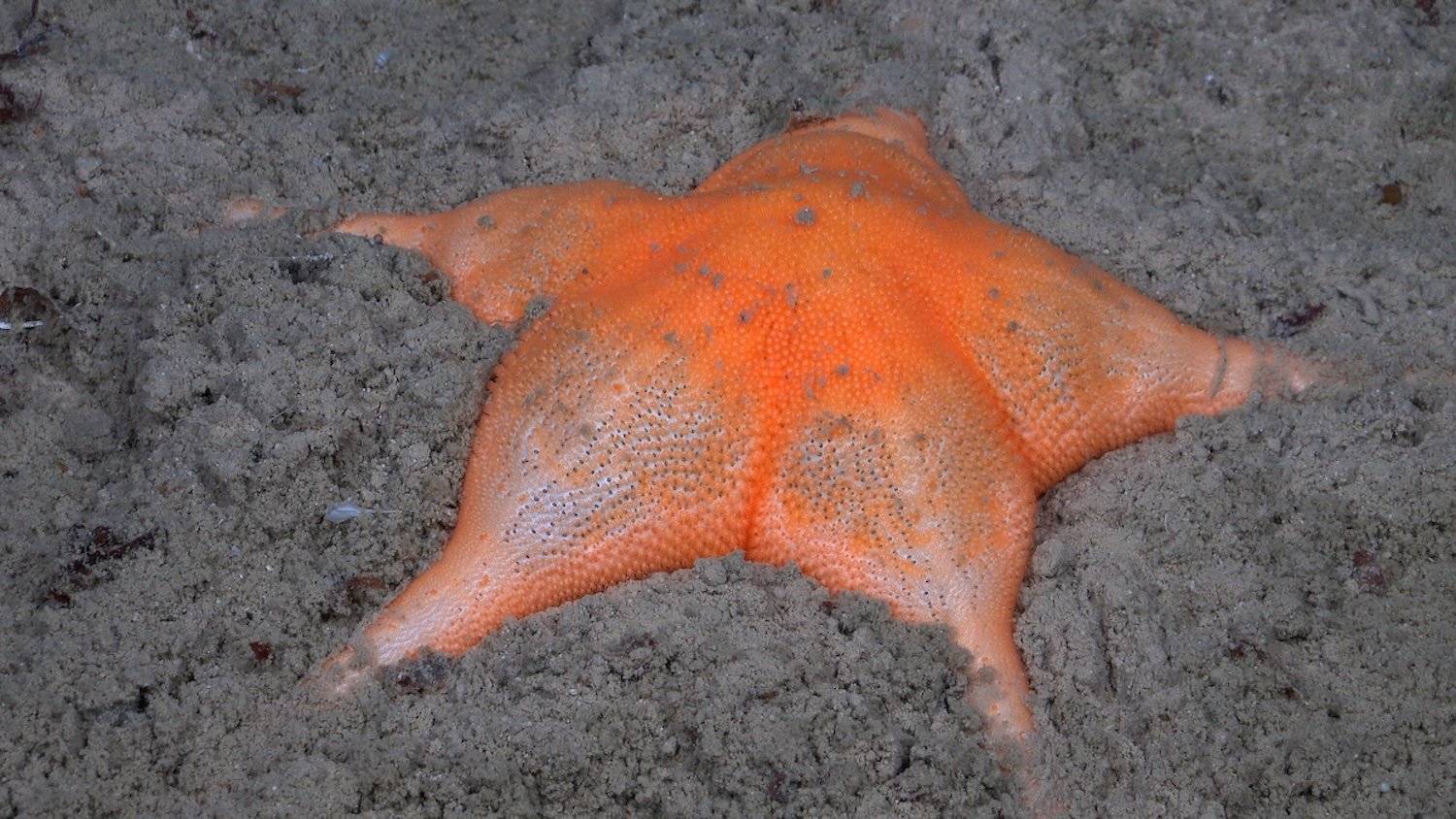
Suspected new sea star

A suspected new species of sea star (Porcellanasteridae) rests on the seafloor at a depth of 3,961 meters. Researchers collected the specimen while making dozens of other discoveries during the expedition, including at least 20 suspected new species. Photo credit: ROV SuBastian / Schmidt Ocean Institute Usage: Available via creative commons Attribution-NonCommercial-ShareAlike CC BY-NC-SA https://creativecommons.org/licenses/by-nc-sa/4.0/
A suspected new species of sea star (Porcellanasteridae) rests on the seafloor at a depth of 3,961 meters. Researchers collected the specimen while making dozens of other discoveries during the expedition, including at least 20 suspected new species. Credit: ROV SuBastian / Schmidt Ocean Institute

Symbiotic coral

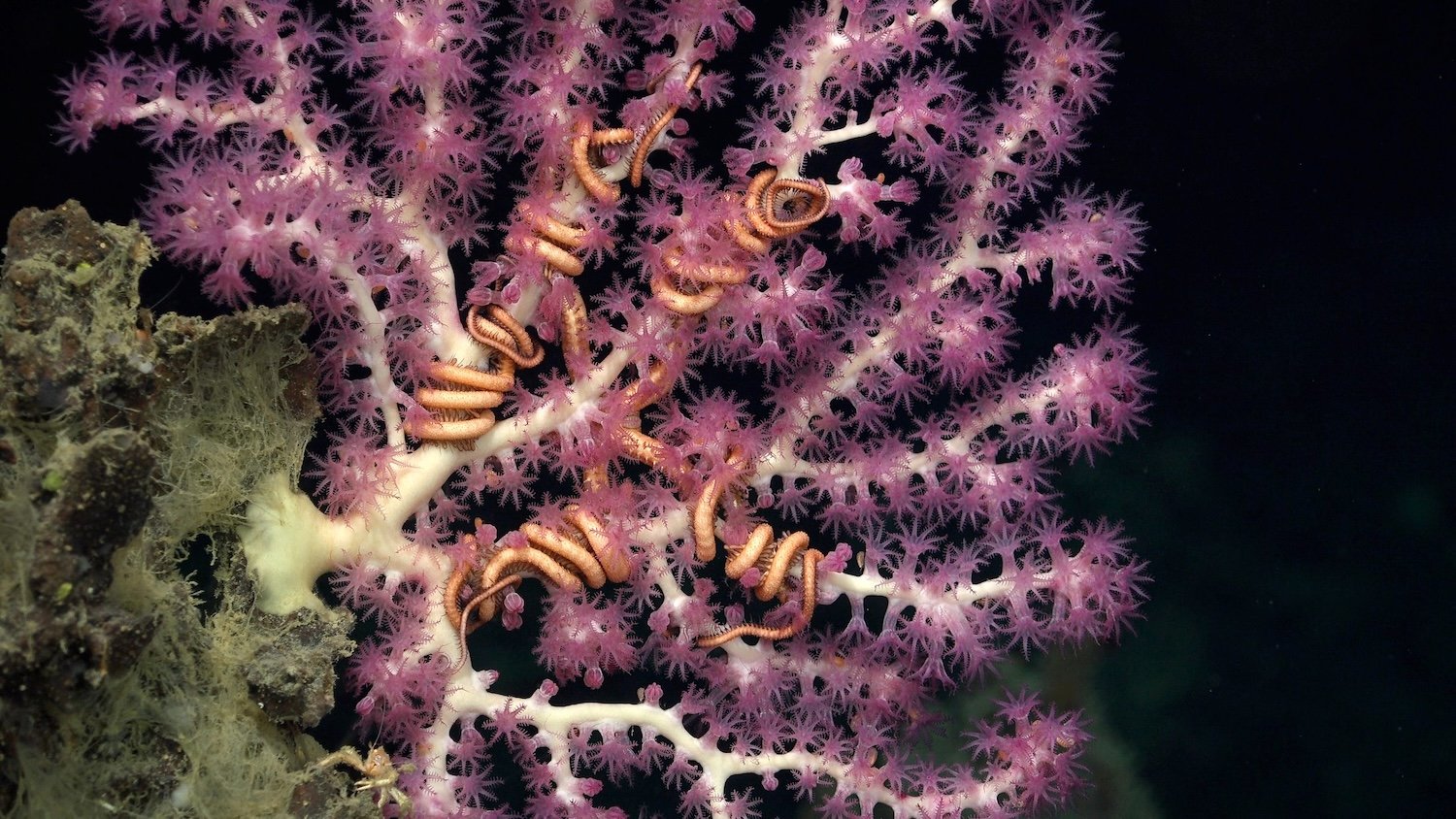
Symbiotic brittle stars cling to a deep-sea coral off the coast of Trinidad and Tobago. A research team led by marine biologist Dr. Diva Amon (SpeSeas), composed largely of Trinbagonian scientists, surveyed the island nation's deep-water territory to document rare ecosystems and guide local conservation efforts.
Symbiotic brittle stars cling to a deep-sea coral off the coast of Trinidad and Tobago. A research team led by marine biologist Dr. Diva Amon (SpeSeas), composed largely of Trinbagonian scientists, surveyed the island nation’s deep-water territory to document rare ecosystems and guide local conservation efforts. Credit: ROV SuBastian / Schmidt Ocean Institute

King crab

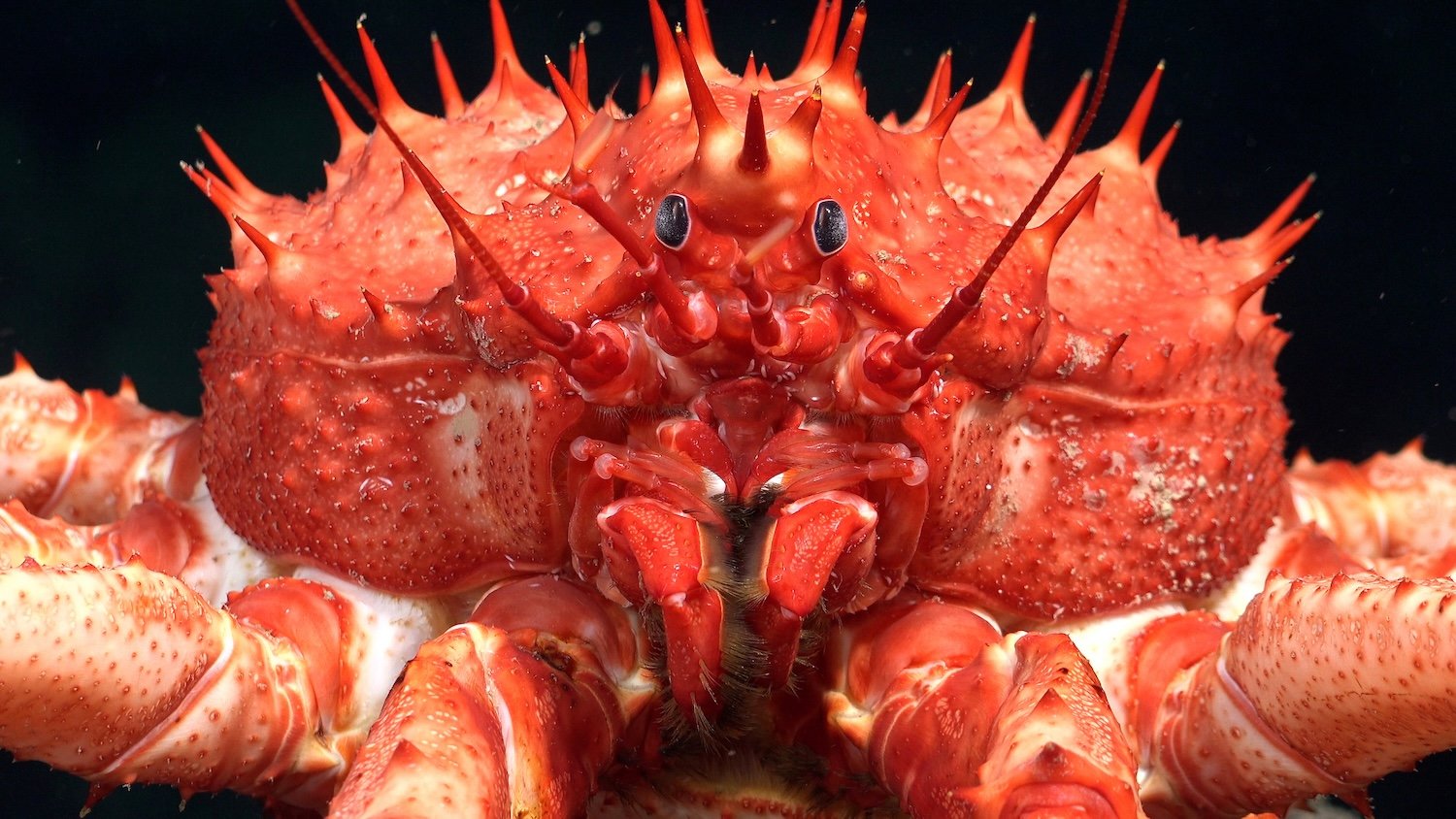
A king crab (Lithodes genus) crawls across the seafloor at a depth of 1,083 meters. Top predators in deep-sea environments, researchers documented these crabs while searching for bubble streams associated with unexplored cold seeps. Photo credit: ROV SuBastian / Schmidt Ocean Institute Usage: Available via creative commons Attribution-NonCommercial-ShareAlike CC BY-NC-SA https://creativecommons.org/licenses/by-nc-sa/4.0/
A king crab (Lithodes genus) crawls across the seafloor at a depth of 1,083 meters. Top predators in deep-sea environments, researchers documented these crabs while searching for bubble streams associated with unexplored cold seeps. Credit: ROV SuBastian / Schmidt Ocean Institute

Rare manta ray fall

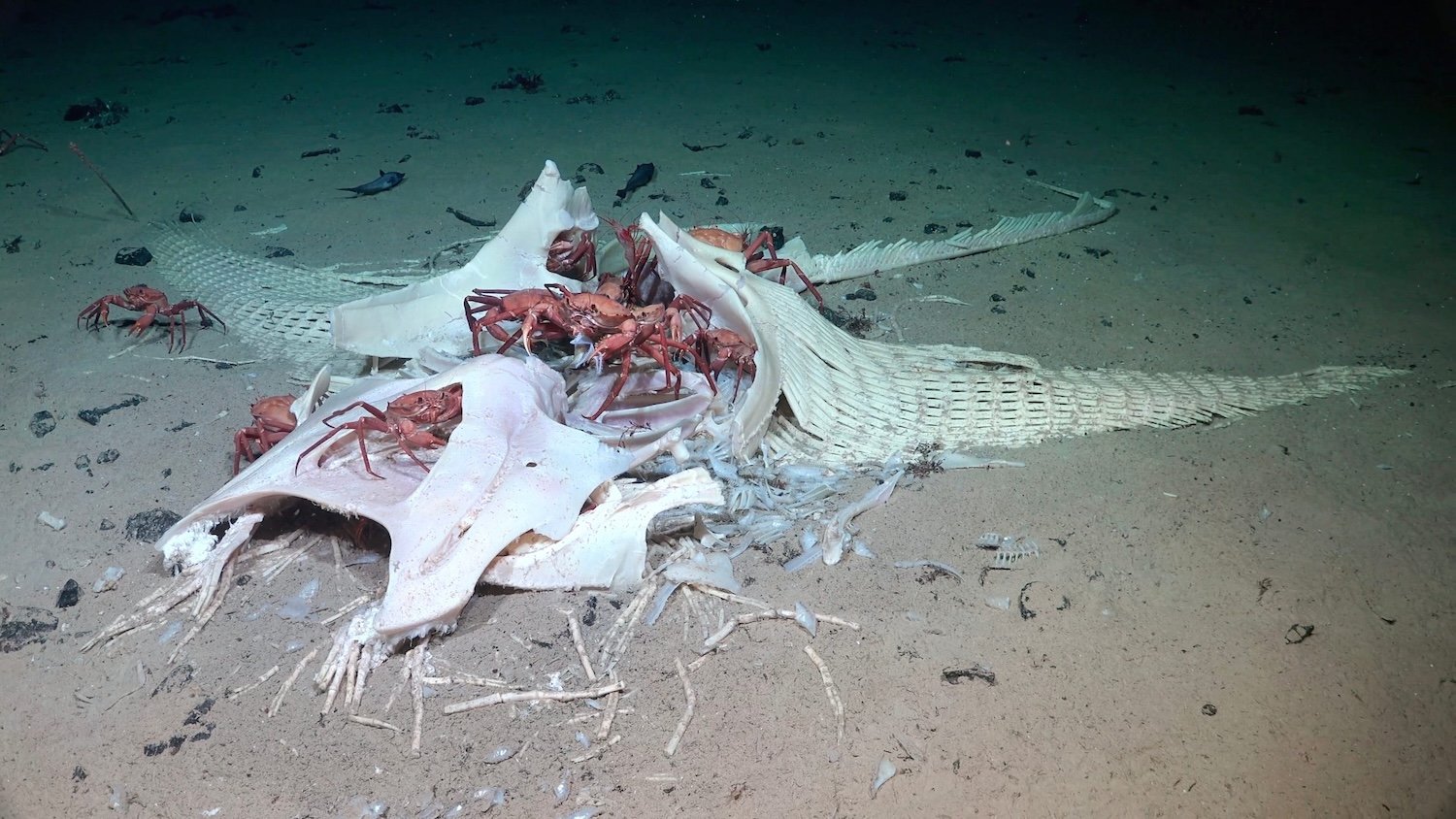
The science team encountered this rare manta ray (Mobula) fall at 1,025 meters depth off the coast of Trinidad and Tobago. When animals die in the Ocean, their bodies often sink to the seafloor, creating a rich food buffet that feeds hundreds of deep-sea species in an often food-scarce environment.
The science team encountered this rare manta ray (Mobula) fall at 1,025 meters depth off the coast of Trinidad and Tobago. When animals die in the ocean, their bodies often sink to the seafloor, creating a rich food buffet that feeds hundreds of deep-sea species in an often food-scarce environment. Credit: ROV SuBastian / Schmidt Ocean Institute

Eelpout

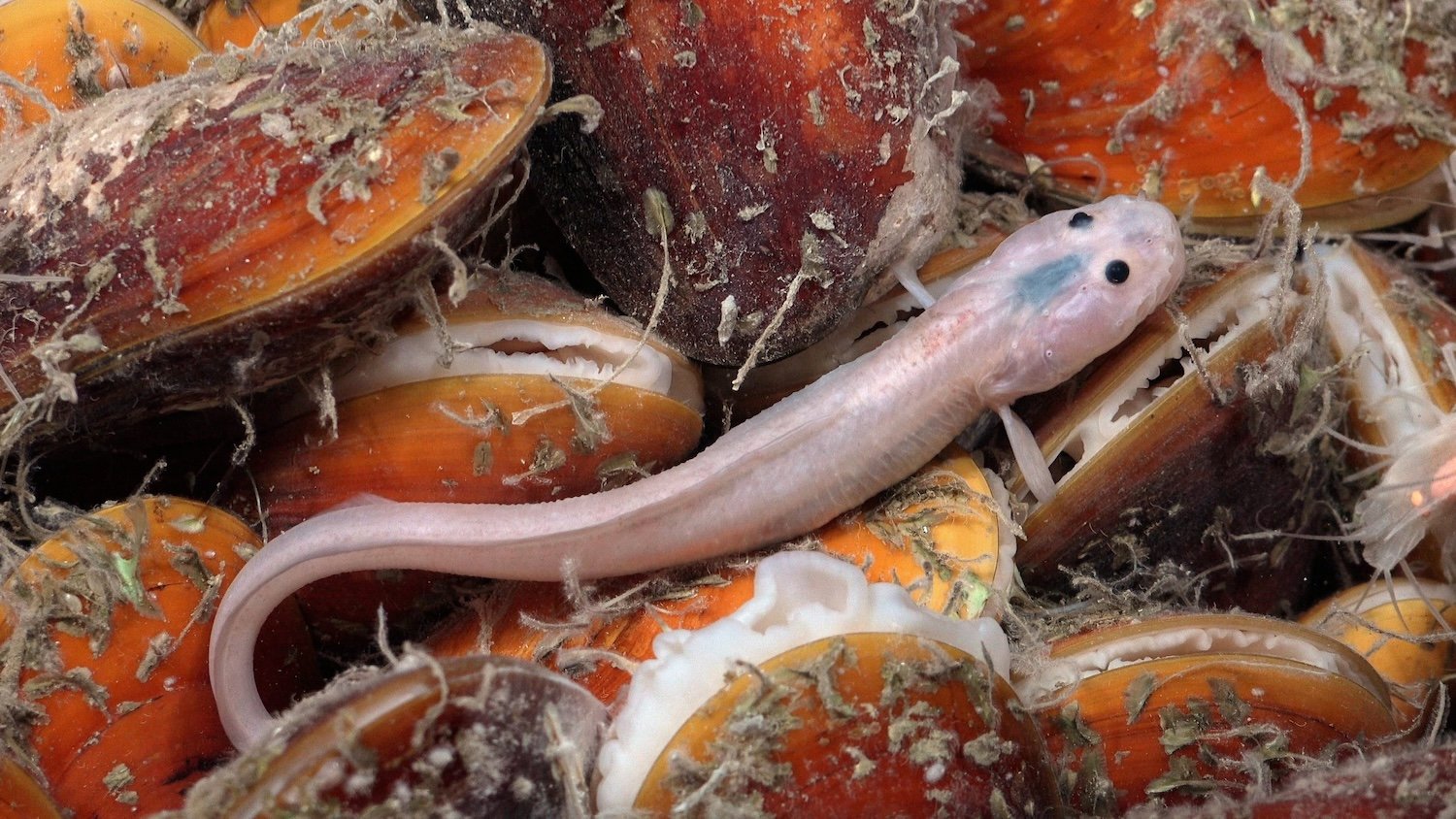
An eelpout (Pachycara caribbaeum) lies on a bed of chemosynthetic mussels (Gigantidas childressi) off the coast of Trinidad and Tobago. Ninety-three percent of Trinidad and Tobago lies below recreational scuba depths, placing its largest ecosystems in the mesophotic zone (between 30 and 199 meters) and the deep ocean. The geological setting of the two islands is ideal for supporting chemosynthetic habitats.
An eelpout (Pachycara caribbaeum) lies on a bed of chemosynthetic mussels (Gigantidas childressi) off the coast of Trinidad and Tobago. Ninety-three percent of Trinidad and Tobago lies below recreational scuba depths, placing its largest ecosystems in the mesophotic zone (between 30 and 199 meters) and the deep ocean. The geological setting of the two islands is ideal for supporting chemosynthetic habitats. Credit: ROV SuBastian / Schmidt Ocean Institute

Squat lobster

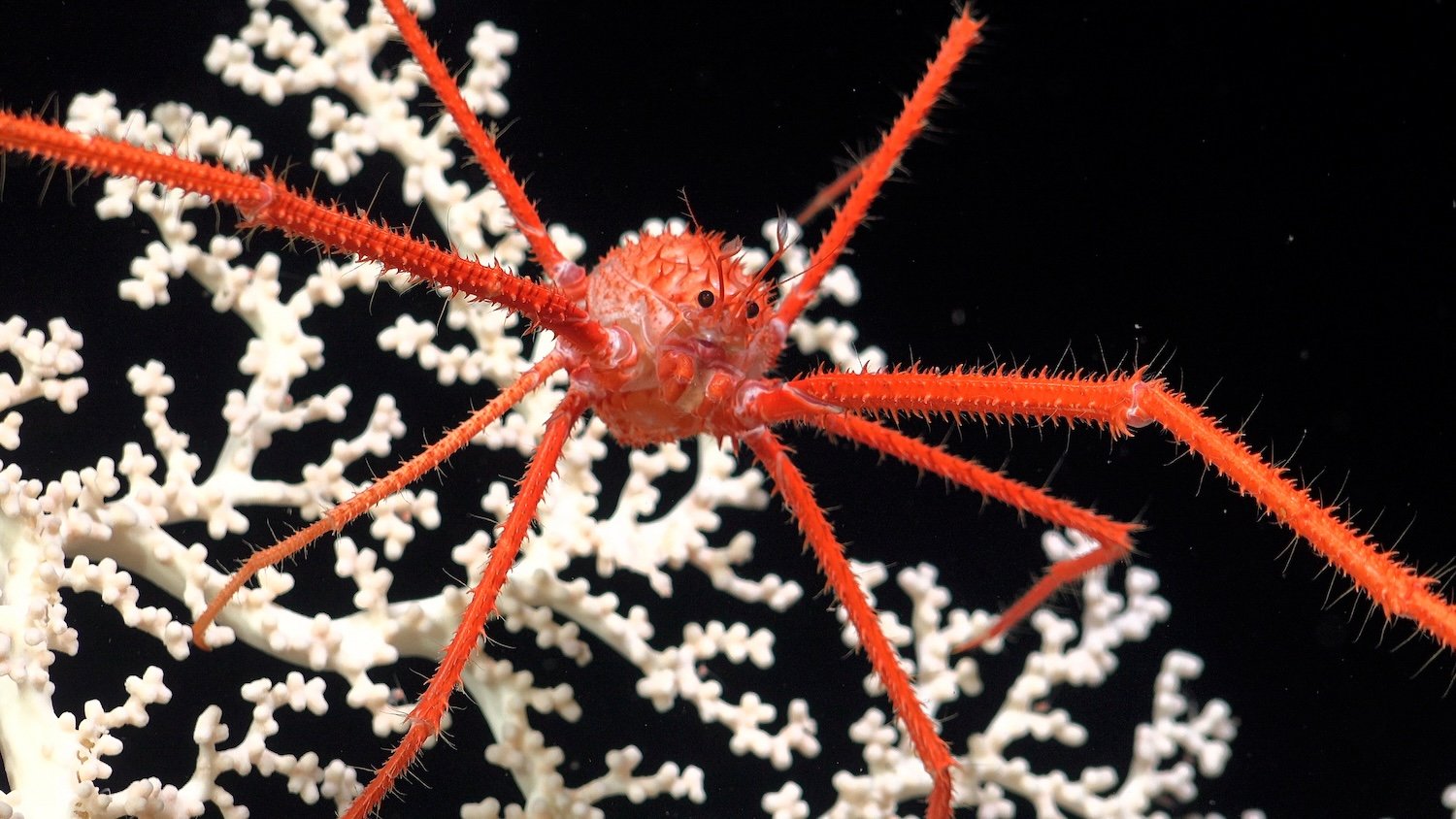
A cold-water coral recorded at a depth of 1,055 meters (3,461 feet) provides habitat for marine life on the seafloor. While warm-water coral reefs at shallow recreational depths are widely known, deep-sea cold-water corals are far more abundant yet remain understudied. These complex ecosystems support diverse marine species, including squat lobsters, as pictured here. Photo credit: ROV SuBastian / Schmidt Ocean Institute Usage: Available via creative commons Attribution-NonCommercial-ShareAlike CC BY-NC-SA https://creativecommons.org/licenses/by-nc-sa/4.0/
A cold-water coral recorded at a depth of 1,055 meters (3,461 feet) provides habitat for marine life on the seafloor. While warm-water coral reefs at shallow recreational depths are widely known, deep-sea cold-water corals are far more abundant yet remain understudied. These complex ecosystems support diverse marine species, including squat lobsters, as pictured here. Credit: ROV SuBastian / Schmidt Ocean Institute

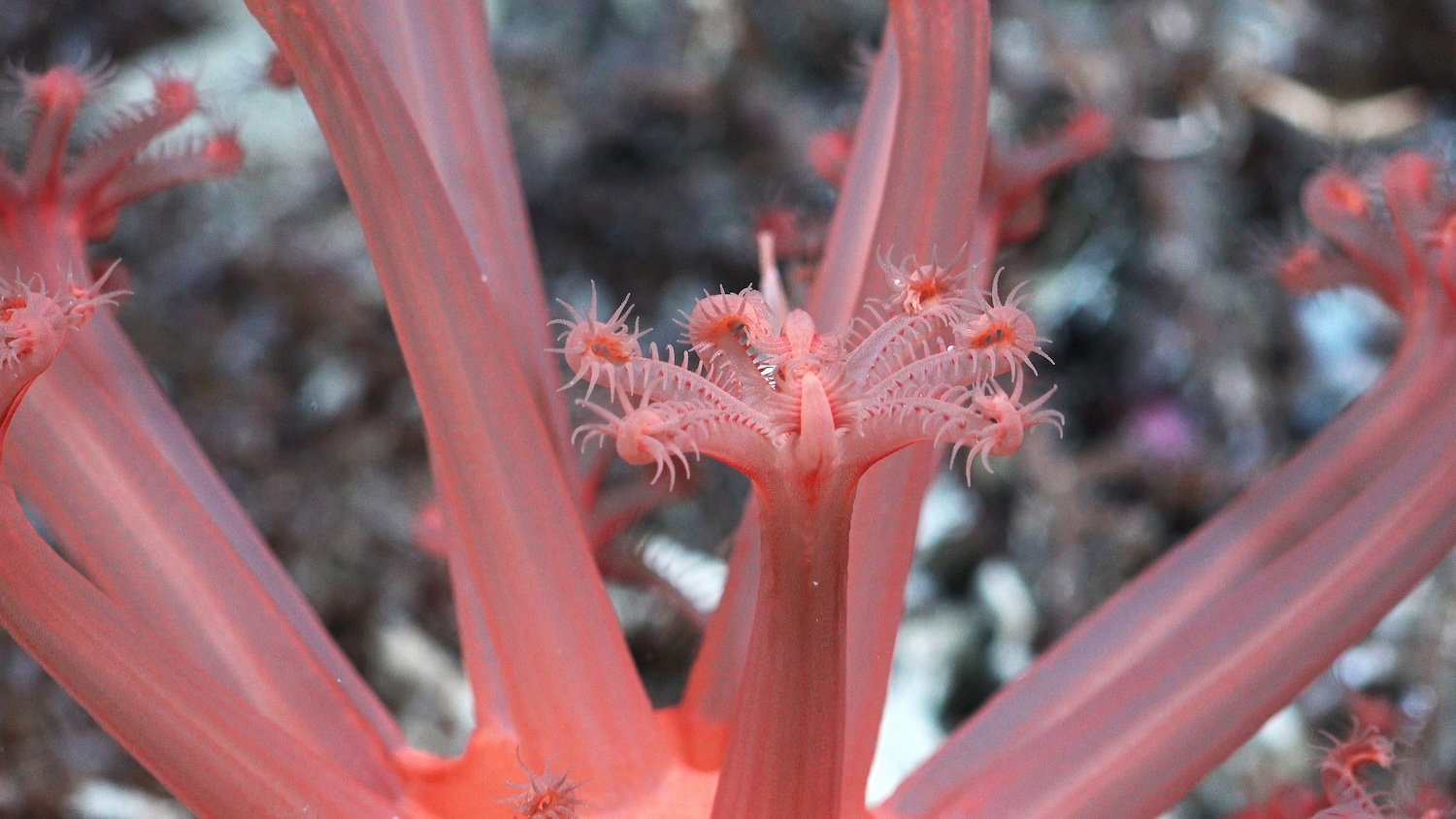
Mushroom coral

A mushroom coral rests on the seafloor at a depth of 1,277 meters off Trinidad and Tobago. Less than 0.001% of the island nation's deep-ocean territory has been explored due to technological constraints, leaving significant knowledge gaps about deep-water marine life in the region. Photo credit: ROV SuBastian / Schmidt Ocean Institute Usage: Available via creative commons Attribution-NonCommercial-ShareAlike CC BY-NC-SA https://creativecommons.org/licenses/by-nc-sa/4.0/
A mushroom coral rests on the seafloor at a depth of 1,277 meters off Trinidad and Tobago. Less than 0.001% of the island nation’s deep-ocean territory has been explored due to technological constraints, leaving significant knowledge gaps about deep-water marine life in the region. Credit: ROV SuBastian / Schmidt Ocean Institute

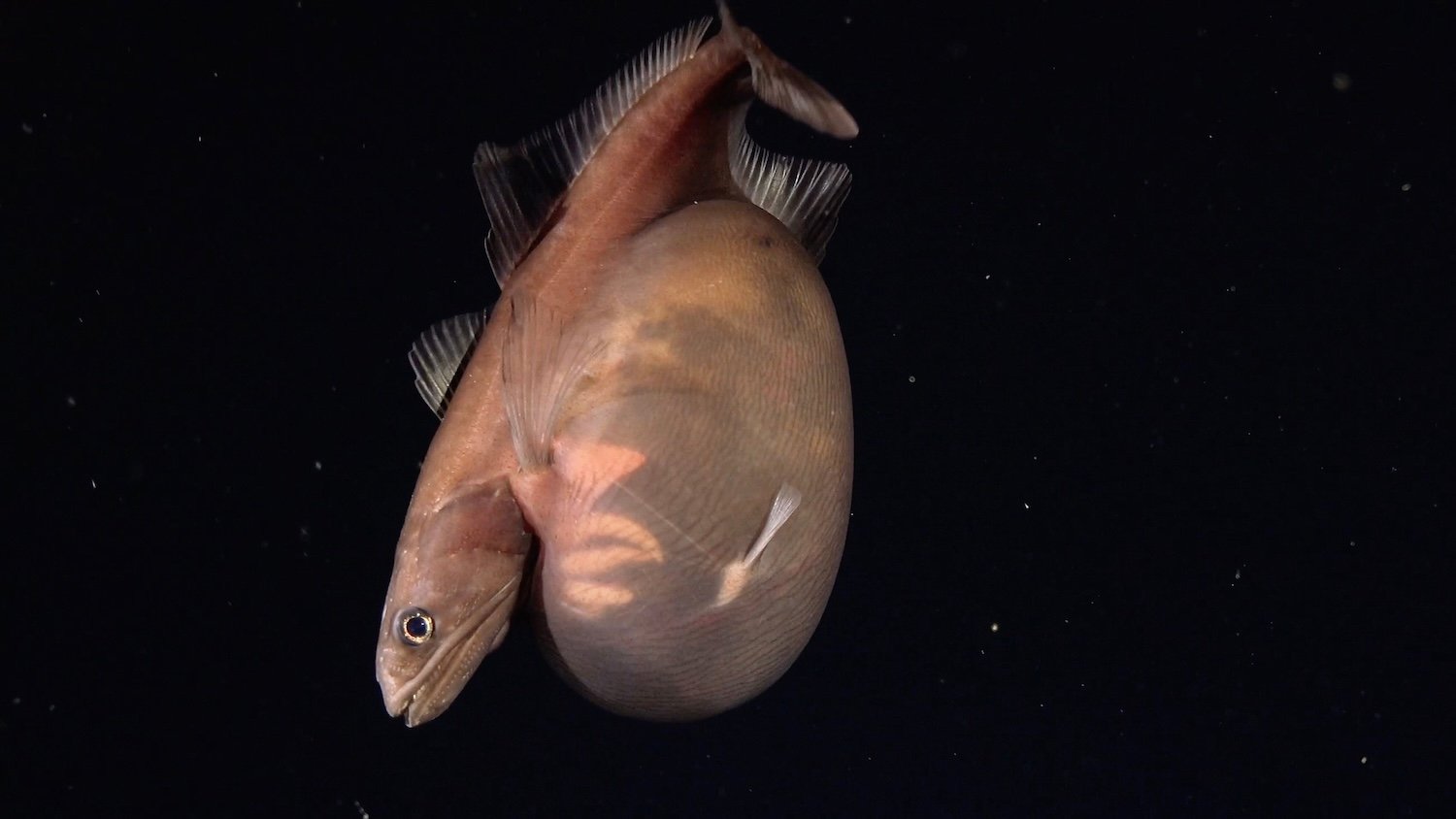
Black swallower fish

A black swallower fish (Chiasmodon niger) swims at a depth of 1,259 meters during a remotely operated vehicle dive off Trinidad and Tobago. Known for their expandable stomachs and dislocating jaws, these rare deep-sea fish can swallow prey larger than themselves. This specimen's translucent belly reveals a recent meal. A research team led by marine biologist Diva Amon conducted the first comprehensive deep-water survey of the nation's ocean territory, where more than 93% of the waters lie below recreational diving depths. Restricted usage: For editorial and news usage only Credit: ROV SuBastian / Schmidt Ocean Institute
A black swallower fish (Chiasmodon niger) swims at a depth of 1,259 meters during a remotely operated vehicle dive off Trinidad and Tobago. Known for their expandable stomachs and dislocating jaws, these rare deep-sea fish can swallow prey larger than themselves. This specimen’s translucent belly reveals a recent meal. A research team led by marine biologist Diva Amon conducted the first comprehensive deep-water survey of the nation’s ocean territory, where more than 93% of the waters lie below recreational diving depths. Credit: ROV SuBastian / Schmidt Ocean Institute

Lizard fish

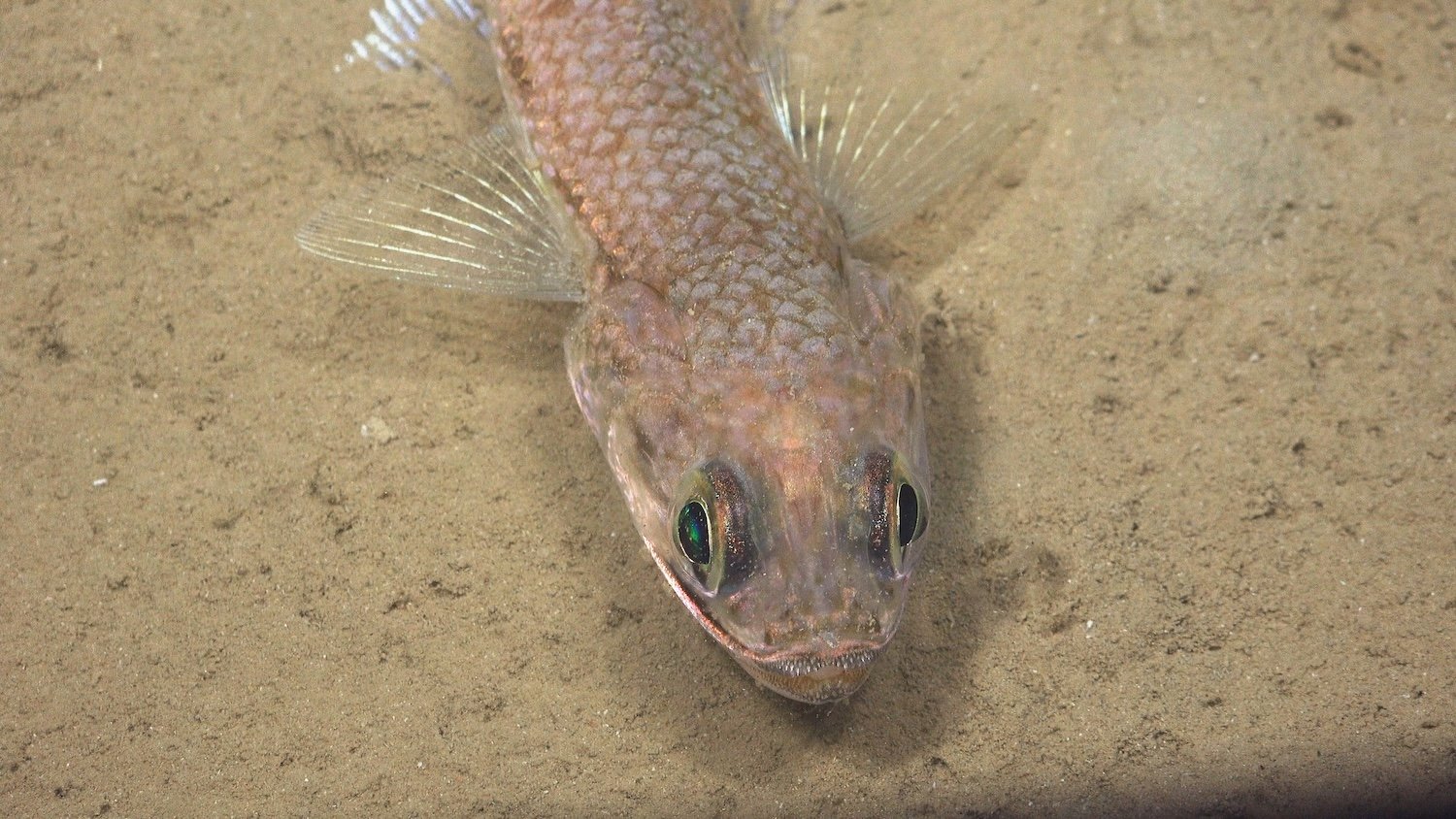
Scientists observed this lizardfish at a depth of 148 meters while exploring a slope off the coast of Trinidad and Tobago in a UNESCO Biosphere Reserve. Photo credit: ROV SuBastian / Schmidt Ocean Institute Usage: Available via creative commons Attribution-NonCommercial-ShareAlike CC BY-NC-SA https://creativecommons.org/licenses/by-nc-sa/4.0/
Scientists observed this lizardfish at a depth of 148 meters while exploring a slope off the coast of Trinidad and Tobago in a UNESCO Biosphere Reserve. Credit: ROV SuBastian / Schmidt Ocean Institute

Ghost shark

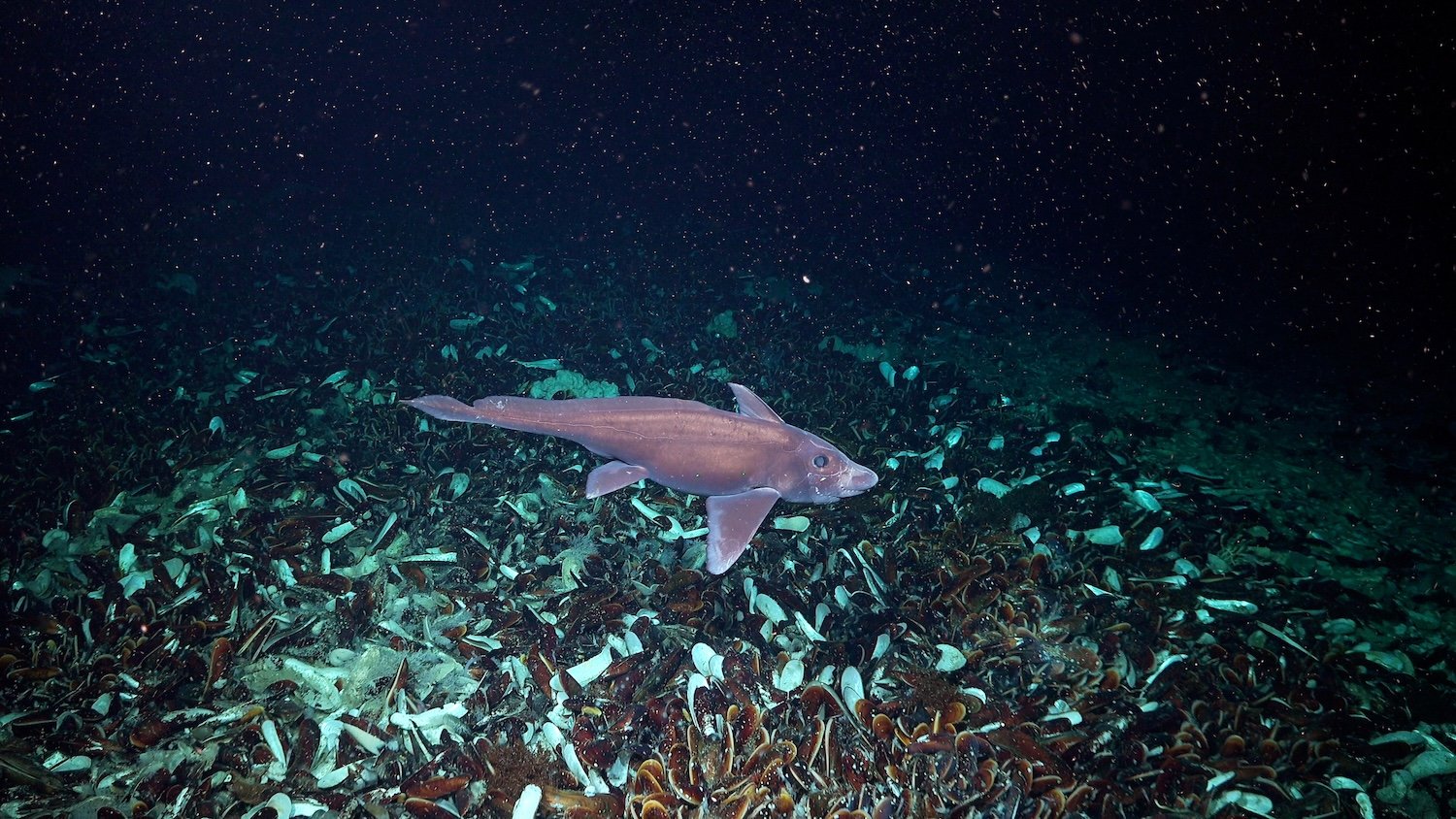
A chimaera, or ghost shark, swims near a cold seep at a depth of 2,355 meters. Scientists discovered 25 cold seeps during the recent deep-sea expedition. Unlike sunlight-dependent ecosystems, marine life near these seafloor fissures relies on chemosynthetic energy generated by gas escaping from the Earth's surface. Photo credit: ROV SuBastian / Schmidt Ocean Institute Usage: Available via creative commons Attribution-NonCommercial-ShareAlike CC BY-NC-SA https://creativecommons.org/licenses/by-nc-sa/4.0/
A chimaera, or ghost shark, swims near a cold seep at a depth of 2,355 meters. Scientists discovered 25 cold seeps during the recent deep-sea expedition. Unlike sunlight-dependent ecosystems, marine life near these seafloor fissures relies on chemosynthetic energy generated by gas escaping from the Earth’s surface. Credit: ROV SuBastian / Schmidt Ocean Institute

The post 11 vibrant deep-sea creatures shine in new Caribbean expedition appeared first on Popular Science.
  •  

Happy Birth-ray! Mystic the cownose ray turns 27

The New England Aquarium has cause to celebrate. Their cownose ray (Rhinoptera bonasus) Mystic officially turned 27-years-old. The birthday girl’s milestone is even more exceptional in light of the fact that cownose rays in the ocean typically live around 18 to 20 years.

“With excellent care, these animals can live even longer. We aren’t sure what the upper age limit for this species is, but Mystic could be considered one of the oldest individuals in public aquariums,” Rachel Moote, manager of husbandry at the New England Aquarium, tells Popular Science. “Our dedicated veterinary and aquarist staff work to keep Mystic in excellent health. She is monitored regularly by our teams and receives hands-on exams whenever a closer look is required.”

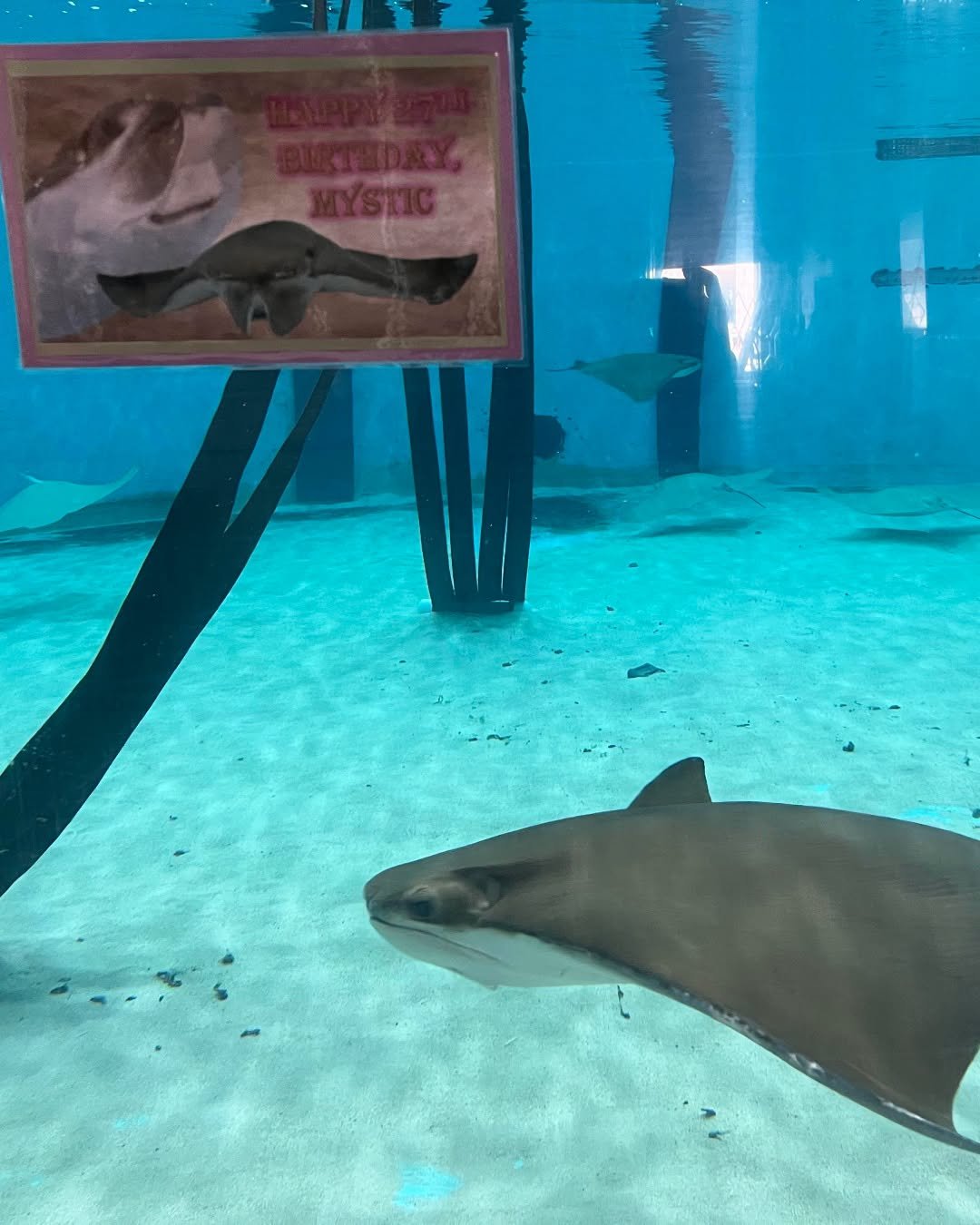
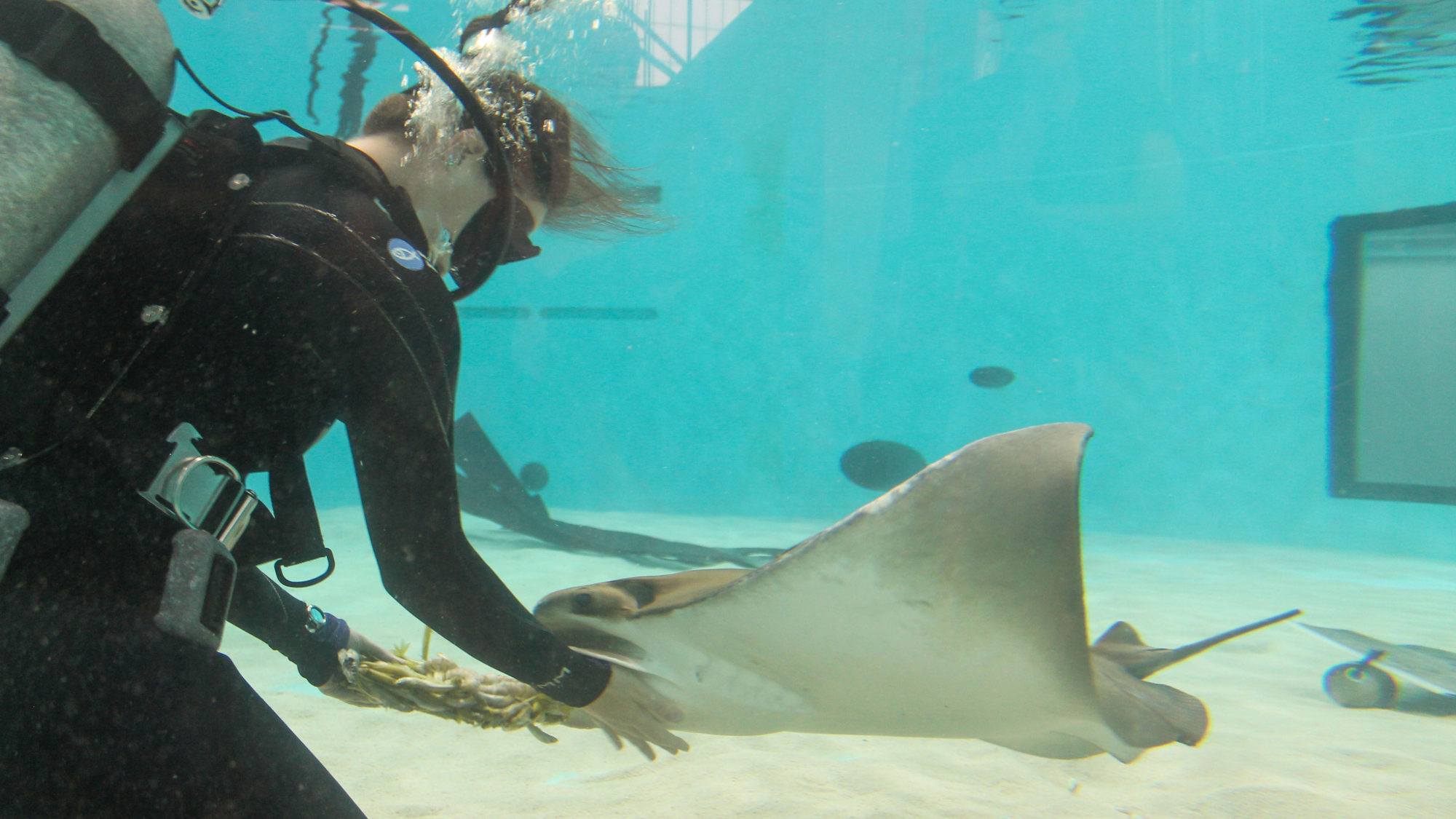
a gray stringray swims in a tank by a sign that reads "happy birthday mystic"
Mystic swimming by her birthday sign. Image: New England Aquarium.

Cownose rays are migratory, open-ocean animals related to other rays. Their unique name comes from their snout, which looks a bit like a cow’s nose, and their wingspan can be up to three feet long. Cownose rays have a venomous spine behind their dorsal fins, but the species is shy. In fact, a majority of ray-caused injuries in humans occur when humans unintentionally step on their spines. They are found along the east coast of the United States, and are classified as Vulnerable by the IUCN Red List. 

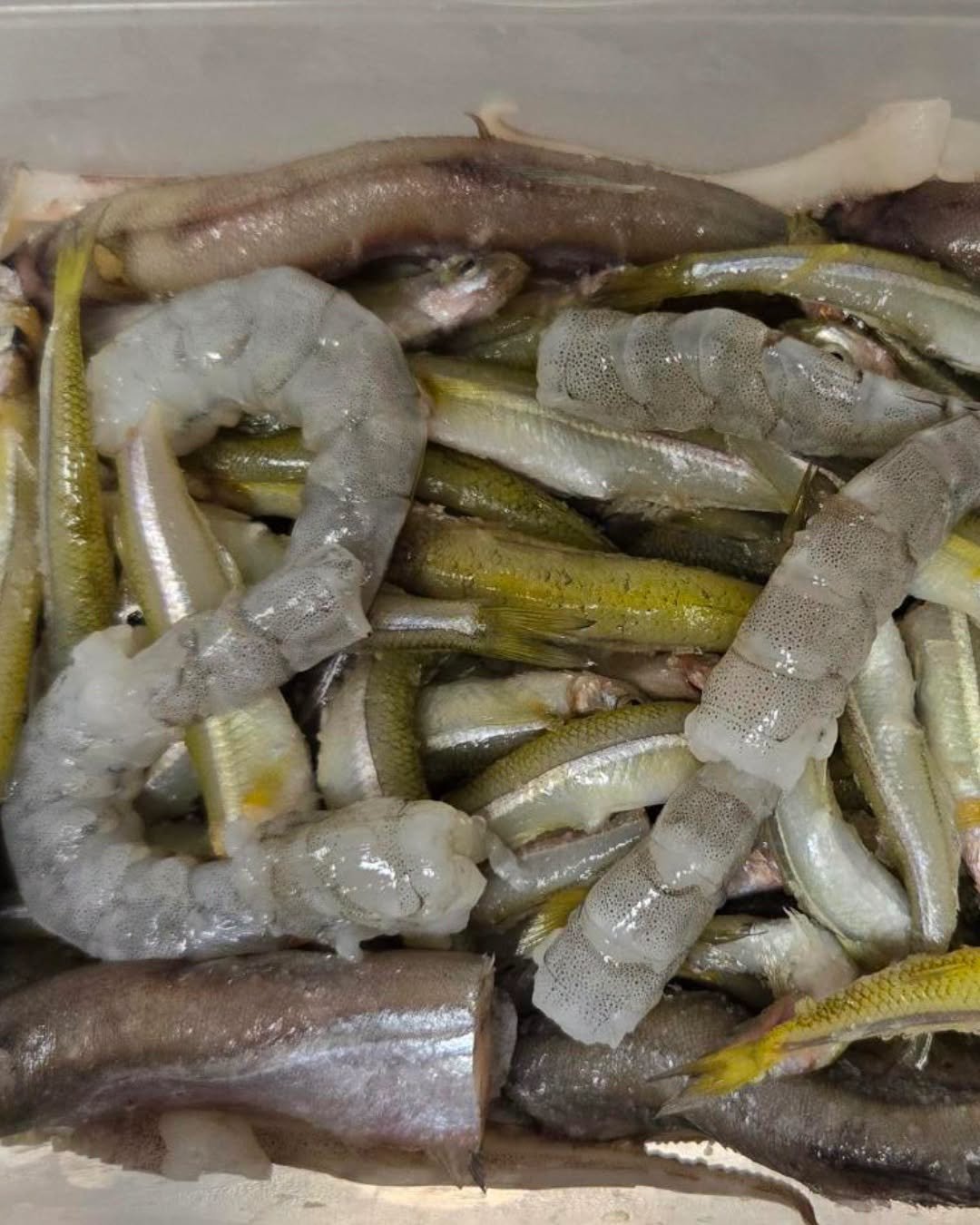
Mystic has lived at the aquarium for almost two decades. Following a long career in the Giant Ocean Tank, she’s currently taking a  “much-deserved retirement,” at the aquarium’s Quincy Animal Care Center. Her care team in Quincy includes aquarists, volunteers, and interns. She is hand-fed a diverse diet of fish, clams, and shellfish similar to what her diet in the wild would be, and also takes vitamin supplements. For her birthday, she received a fish and shrimp cake. 

shrimp and fish
Mystic’s “birthday cake” was fit for a ray. Image: New England Aquarium.

However, her care goes beyond making sure she eats appropriately. 

“Our team works hard to ensure Mystic can practice her natural foraging and problem solving abilities. One way we keep her mentally stimulated is by providing her with specially prepared rubber puzzle balls filled with her regular food items,” explains Moote. Every week, aquarists also dive into Mystic’s tank to clean the habitat. 

Happy birth-ray, Mystic!

The post Happy Birth-ray! Mystic the cownose ray turns 27 appeared first on Popular Science.
  •  

Pair of rare, colorful lobsters have a new home in Maine

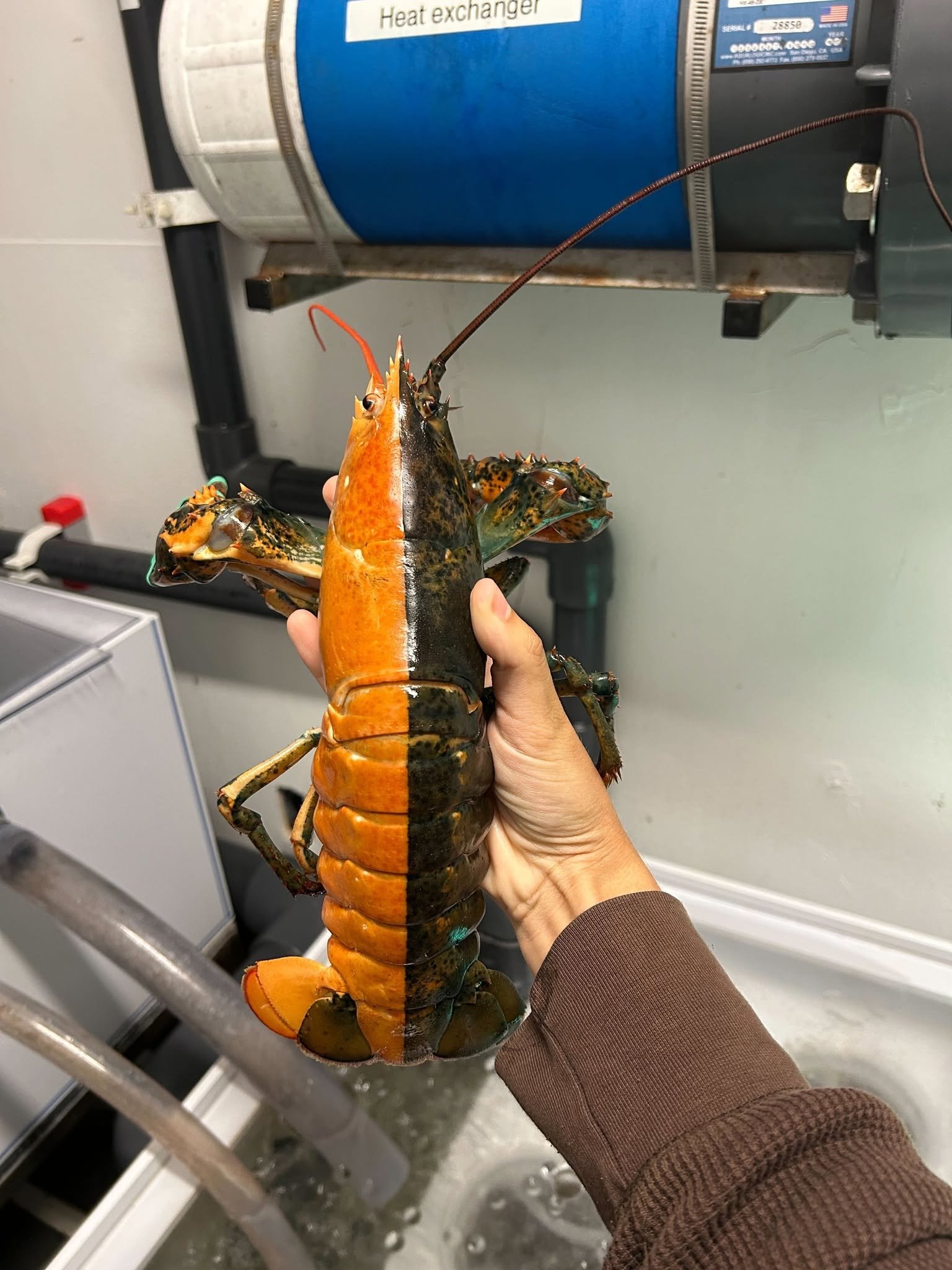
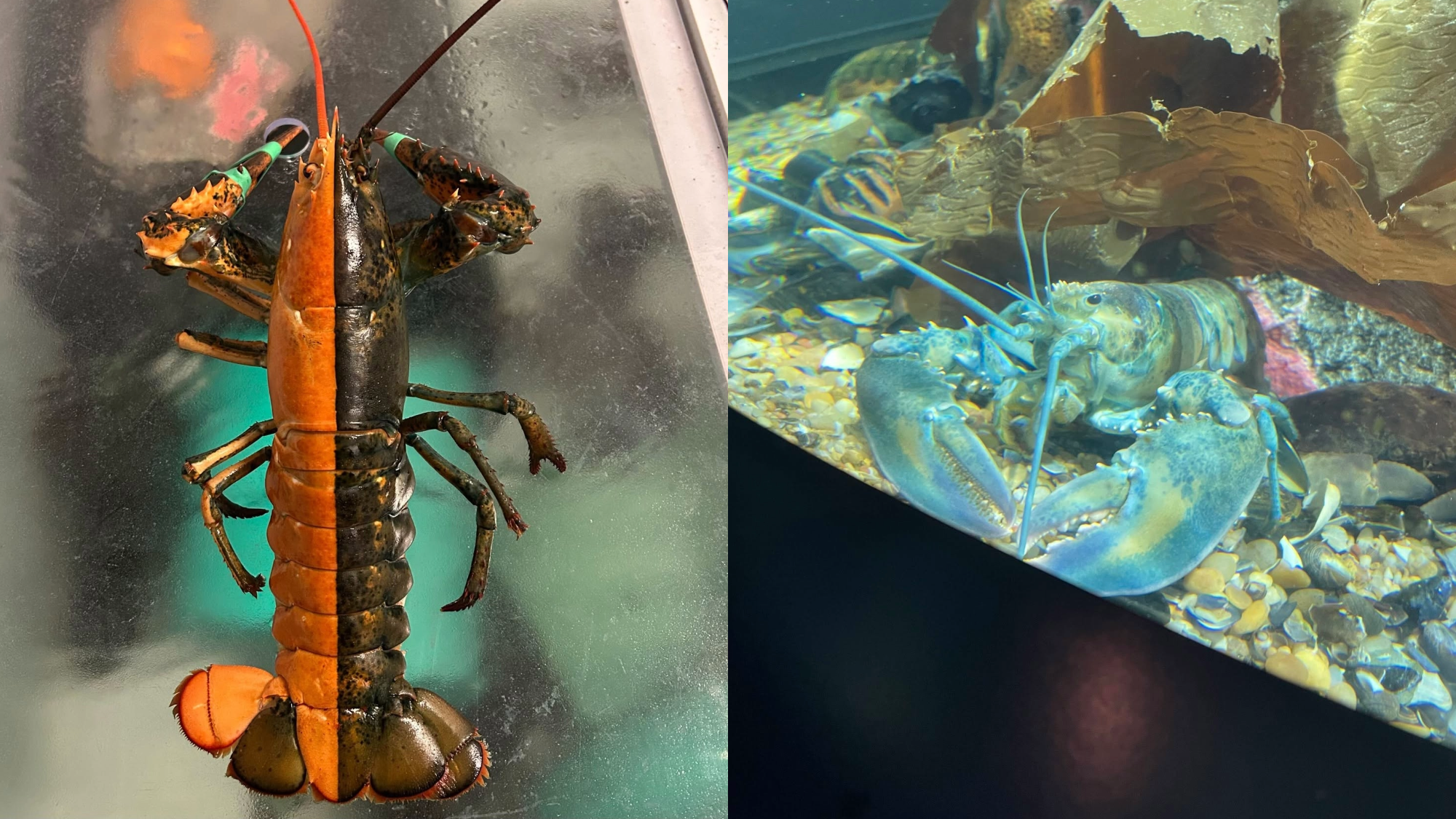
Two unusually colored lobsters have been spared from the dinner plate and are living at the Gulf of Maine Research Institute (GMRI) in Portland, and will be educating students in the process. Ethel is a split-colored lobster, with a very autumnal orange and black hue, while Gertrude is a breathtaking blue.

Shawn McEwen at Sea Salt Lobster Wholesale in nearby Saco, Maine contacted the team at the research center to see if they were interested in taking Ethel the two-toned lobster. 

“He told us ‘We move a lot of lobsters and in my career this is top 3,’” Sam Fuss, an educator with GMRI’s LabVenture program, tells Popular Science.

a lobster with orange on the left side of its body and black on the right
Ethel’s two-tone look is a genetic mutation. Image: Gulf of Maine Research Institute.

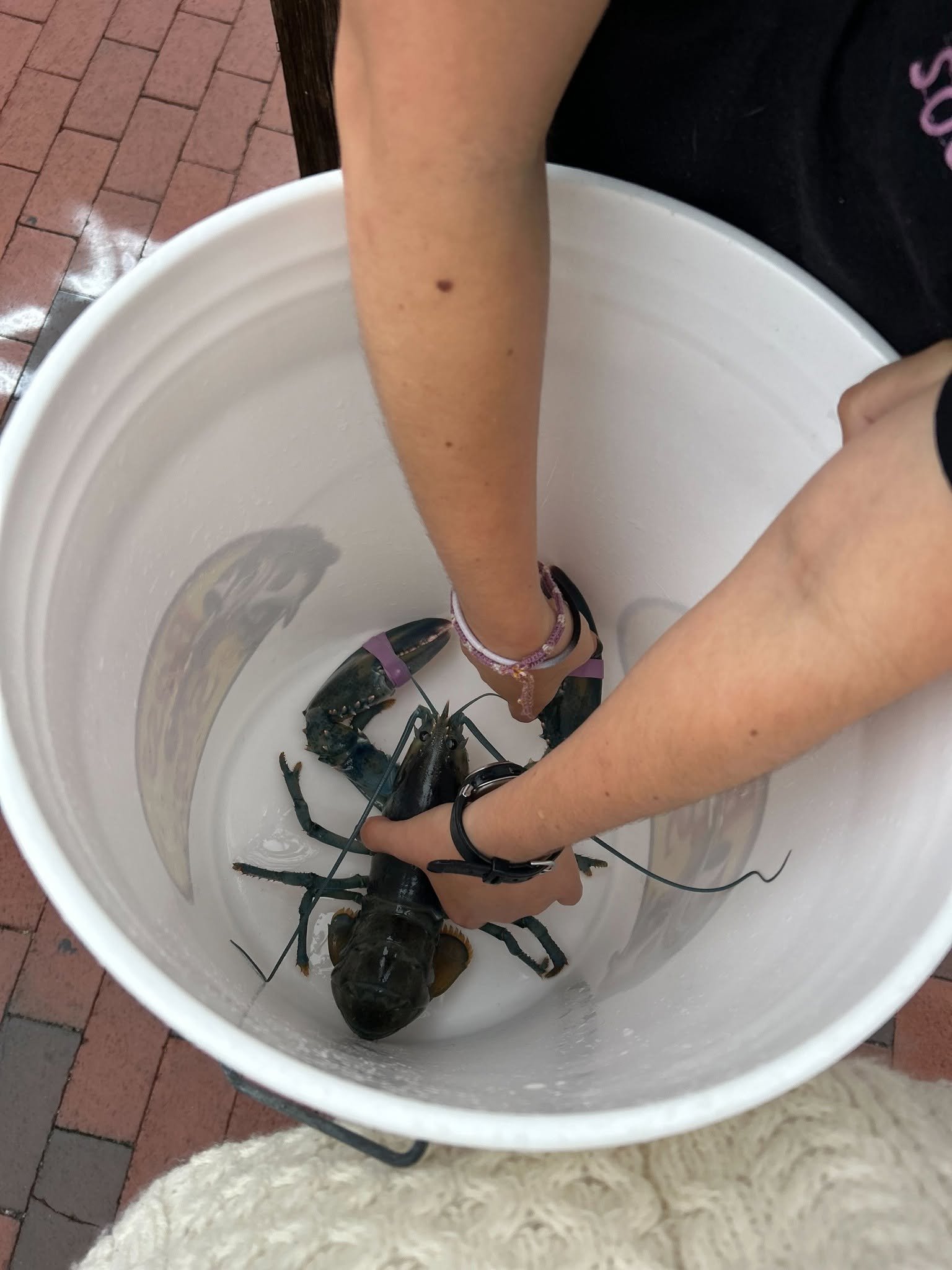
To find Gertrude the blue a new home, the staff at the nearby Portland Lobster Company reached out to GMRI. And it could not have been easier for the team to pick up the new colorful crustacean.

“We coordinated a time, walked over to their restaurant with a bucket, and then walked her right back to our tank,” says Fuss. 

a blue lobster in a white bucket
Gertrude the blue on the way to her new home. Image: Gulf of Maine Research Institute.

GMRI works with many of Maine’s lobster fishers and has a network who will reach out about interesting catches like Ethel and Gertrude.  

“Previously, in our tank, we have had blue lobsters, orange lobsters, calico lobsters, and other split-color lobsters,” says Fuss.

Why some lobsters are so colorful

In the wild, American or Maine lobsters (Homarus americanus) typically have a greenish-brown color. This helps them blend in better with the rocky seafloor. Lobsters have several layers of a pigment called astaxanthin. This pigment appears as layers of red, yellow, and blue. When all of those color layers are stacked up, they give lobsters a mottled blotch pattern of oranges, reds, blues, pinks, purples, yellows, and browns.

But some lobsters end up more colorful. Rare genetic mutations can alter the amount of pigment or how they interact with one another, producing striking shell colors such as blue, half-orange half-black, or even calico patterns. A lobster’s diet can also impact its shell color. For example, individuals that only eat small fish rather than shrimp and crabs get less astaxanthin, which can affect their coloration.

Split-colorization like we seen on Ethel occurs when two fertilized, unlaid eggs contact each other. One of the eggs then absorbs the other, creating a lobster that has two sets of genetic information. They also can store color pigments differently on either side of its shell.

The chance of finding a blue lobster like this Gertrude is about 1 in 2 million, while the odds are 1 in 50 million to find a split-colored lobster like Ethel. As for the other colors, the chance of finding a red lobster is 1 in 10 million, and 1 in 100 million for an albino or cotton candy lobster.

Crustaceans tackling climate change

Now that they are at GMRI, Gertrude, Ethel, and the institute’s other fish and crustaceans will be on display for fifth and sixth grade students from across the state who visit during the LabVenture field trip.  Since the program began in 2005, LabVenture has provided a hands-on lab to over 170,000 Maine middle school students free of charge. 

“The display tank that Gertrude and Ethel are living in is always a highlight of the field trip for our students,” Zoë Kennedy, LabVenture’s Lead Educator, tells Popular Science. “Many of them have spent most of their lives living right next to the Gulf of Maine but being able to see what the ecosystem looks like beneath the water brings a whole new perspective and sense of wonder.”

A landmark 2015 study found that the Gulf of Maine is warming faster than 99 percent of the ocean due to climate change. While the water has been cooling off a bit since 2021, a report published by NOAA in July 2026 found that the environment in the Gulf of Maine remains unstable. According to the GMRI LabVenture team, building more climate-ready communities, a strong waterfront workforce, and a blue economy in the face of this upheaval all starts with education.

“Our LabVenture program builds that foundation early by teaching students to interpret real, authentic climate data, while sparking the curiosity that drives them to keep asking questions about the world around them,” says Kennedy. 

The post Pair of rare, colorful lobsters have a new home in Maine appeared first on Popular Science.
  •  

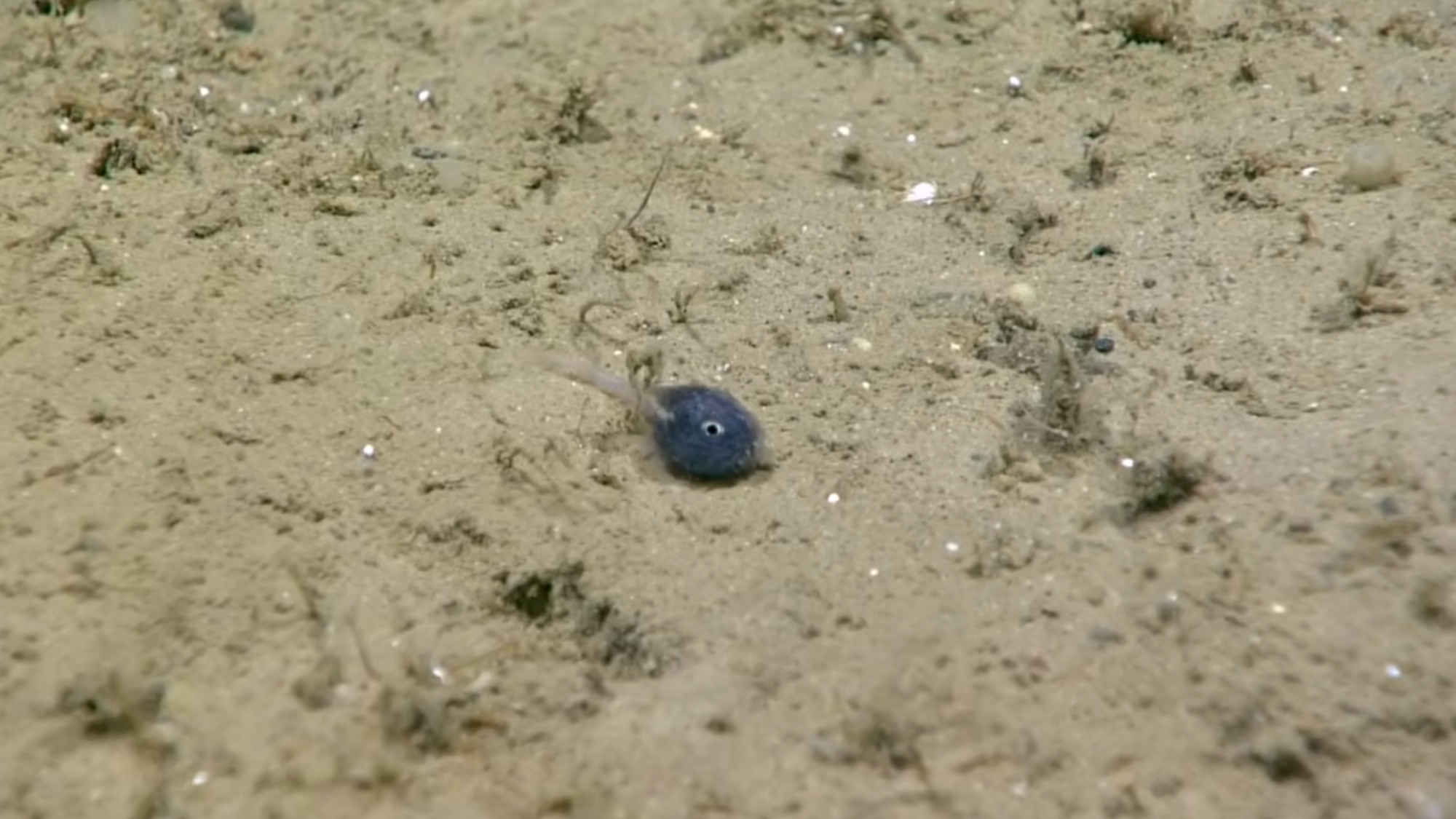
NOAA scientists spot ‘outrageously tiny’ fish

The deepest parts of our ocean are more like the fare reaches of space than planet Earth. We never really know what we’ll find down there. A team from the National Oceanographic and Atmospheric Administration’s (NOAA) Ocean Exploration team experienced that first hand when they spotted a very tiny fish in the Northeast Canyons and Seamounts Marine National Monument in the Atlantic Ocean off the coast of New England.

The team estimated that it measured only five millimeters (0.19 inches) to one centimeter (0.4 inches). It is still unclear what species this fish is, but scientists speculated that it could be a juvenile toadfish (family Batrachoidida) aka the sea toad. They have a sad-looking “Monday Face” and dwell on the sea floor to  hunt whatever comes within their reach.

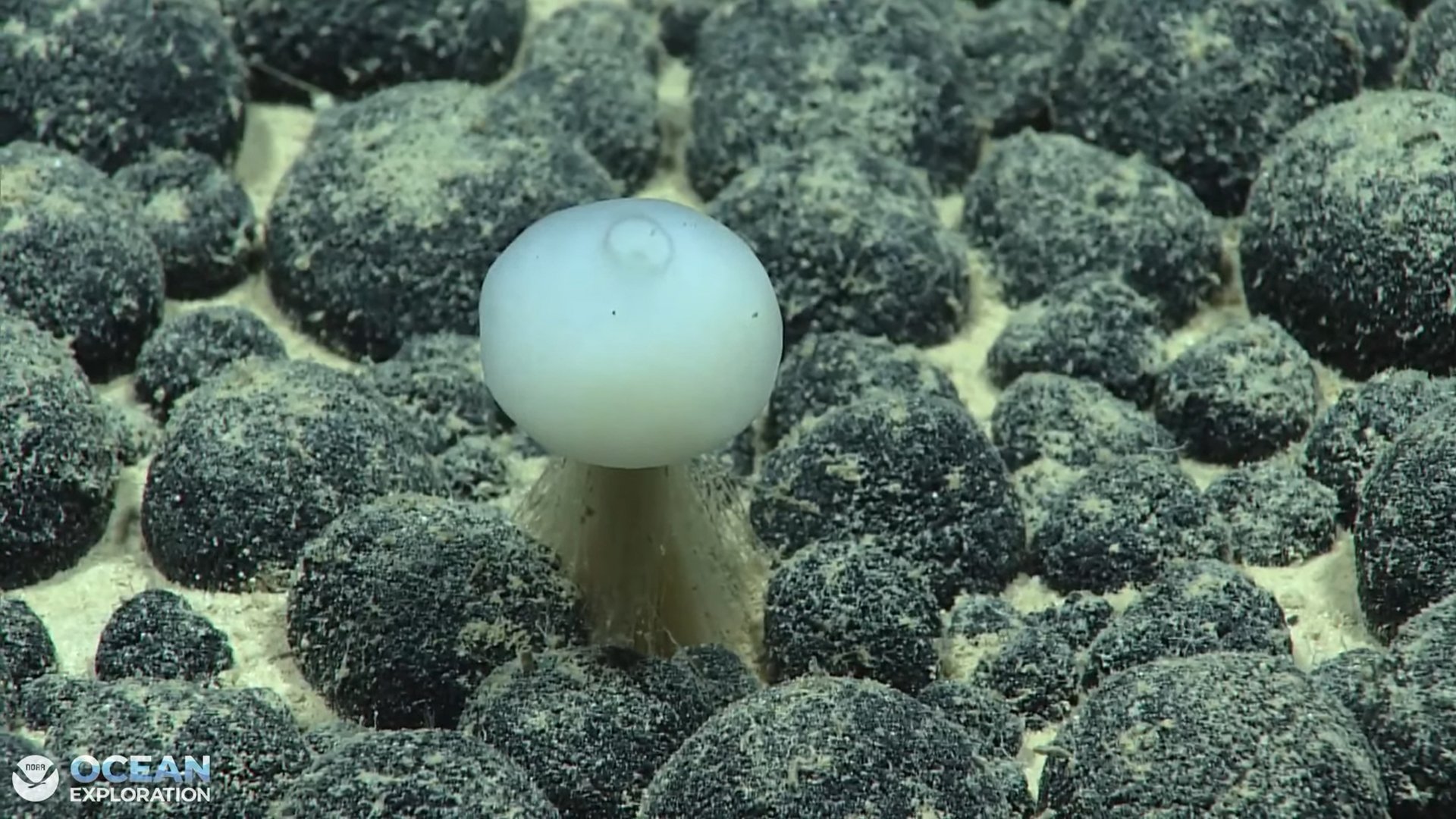
This particular little fish was spotted during Deep Connections 2019: Exploring Atlantic Canyons and Seamounts of the United States and Canada. However, these kinds of deep-sea discoveries are not over. NOAA just completed their 2026 Cook Islands ROV Exploration in the Pacific Ocean, where they recovered a whale beak, observed an ethereal type of sea sponge called glass sponge (class Hexactinellida), and more.

A glass sponge amongst polymetallic nodules. It was one of several varieties of sponges seen during the final dive of the 2026 Cook Islands ROV Exploration cruise.
A glass sponge amongst polymetallic nodules. It was one of several varieties of sponges seen during the final dive of the 2026 Cook Islands ROV Exploration cruise. Image: NOAA Ocean Exploration, 2026 Cook Islands ROV Exploration.

Currently, NOAA is partnering with Nautilus Live to explore the deep sea near Wake Island. The island is about halfway between the Hawaiian and Mariana Islands, and is one of the most isolated land masses on Earth. The 30-day expedition will utilize remotely operated vehicles (ROV), mapping technology, and the E/V Nautilus to collect baseline data about the 157,236 square-mile area and the marine life that lives there. 

The expedition could find potential maritime heritage sites associated with the Battle of Wake Island. From December 8 to 23, 1941, a small force of United States Marines and civilian defenders fought off parts of the Imperial Japanese Navy. The Japanese Navy ultimately took Wake Island, but at great cost. According to the National World War II Museum, the Japanese Navy ultimately sacrificed two destroyers, one submarine, 21 aircraft, and 900 to 1,000 lives just to conquer Wake Island. Despite the loss, fewer than 100 Americans died during the 16-day siege, including 46 Marines and three sailors.

The Wake Island expedition is scheduled to end on September 18. 

The post NOAA scientists spot ‘outrageously tiny’ fish appeared first on Popular Science.
  •  
❌