O Threads disponibilizou uma nova versão do seu painel de insights destinado aos criadores da plataforma, expondo com mais clareza o funcionamento do seu algoritmo.
Além de seguir apresentando a quantidade de visualizações, espectadores, curtidas e republicações, agora o painel conta com resumos gerados pela Meta AI sobre o desempenho da conta e de postagens individuais, comparando o alcance e engajamento da sua conta.
Em um salto qualitativo, a IA da Meta é capaz de detalhar a porcentagem de queda nas visualizações e interações, bem como as preferências do público e o perfil demográfico médio dos seus seguidores.
Mas, como observado pelo Engadget, apesar das adições houve a remoção de uma métrica: a das visualizações sobre cliques em links. Antes mesmo dessa decisão da Meta, a intenção (ou falta dela) da empresa quanto à saída do app já foi motivo de muitas especulações, sobretudo se a Meta boicotava (ou não) o alcance dos criadores que adicionavam links externos em suas publicações.
Muse, the popular English rock band that’s been selling out arenas for decades, is no longer @muse on Instagram, where it boasts nearly three million followers.
That’s because on Tuesday, Meta, which owns Instagram, announced a new “personal AI agent” also called Muse — which is now taking the rock band’s original handle, in an act of what appears to be corporate eminent domain for a long-established username.
Indeed, an archived version of the band’s website shows that just last month, it held the @muse handle on Instagram. Now it’s going by @museband, because Mark Zuckerberg apparently couldn’t settle for his new tool being stuck with the handle @museAI. A similar swap happened on X. Meta’s newfangled AI got the @muse handle, while Muse had to settle for even clunkier @musetheband.
The changes were immediately noticed by the band’s fans, who largely didn’t sound impressed by Meta’s naming scheme. One viral Reddit post claimed Muse were “forced” to change its social media handles, fomenting further outrage.
“That’s genuinely the worst,” fumed one bewildered fan.
“Mark Zuckerberg is such a loser,” another said.
Others, in classic music fan fashion, accused the English rockers of being “sellouts,” seemingly under the impression that Muse took a Big Tech payday in exchange for giving up its social media handles.
It’s not clear what happened to facilitate the username swap. Given that this happened on both Instagram and X, it seems possible that Meta came to some sort of agreement with Muse to take its handle, which the band has been sitting on for over a decade now.
Meta didn’t immediately respond to a request for comment about whether the handover was consensual, and whether the band was paid for the handle.
The actual band hasn’t commented on the situation either, adding to the confusion.
Of course, it wouldn’t be unprecedented for a social media site to jack someone’s username without compensation or recourse. When Elon Musk rebranded Twitter into X in 2023, he took the username @X from someone who had been holding onto it since 2007. The only thing the company offered in return was some merch and a chance to visit X’s headquarters.
The recent swap didn’t go as smoothly as Zuckerberg may have hoped. As New York Times tech journalist Mike Isaac noticed, Zuckerberg apparently copied his Muse announcement from his platform Threads, where his AI agent already had the @muse handle, pasted it onto X, and accidentally tagged the rock band. This appeared to be because of a bug on X’s end, and it also caused people trying to tag the new AI to autofill the rock band’s new handle. Gaffes ensued.
“I’ve been using @museband for the last few months and can honestly say it’s the best AI agent I’ve tried,” lauded a senior director at Meta, in a post that’s since been corrected.
Content warning: this story contains descriptions of disturbing AI-generated videos that depict violent child abuse.
As Meta has embraced AI at a deep corporate level over the past few years, its users’ feeds on Facebook and Instagram have been overrun with AI-generated material.
Much of this AI content is insipid or manipulative, clearly produced at scale to take advantage of Meta’s indifference to the slop by harvesting as many human eyeballs as possible in various monetization schemes.
Some of the AI material has now grown so dark that it defies easy comprehension. A Futurism investigation has uncovered a huge number of Facebook accounts uploading streams of videos depicting violent child abuse — and Meta is barely pretending to care about taking them down.
Facebook accounts dedicated to the horrific content have uploaded videos of babies and young children being slapped, kicked, bludgeoned with heavy objects, dragged by their hair, burned with stoves and irons, chained up and locked in cages and freezers, thrown down stairs, threatened with knives and guns, starved, made to eat dog food and garbage off the floor, and much more.
In one video, a woman screams at a little girl to stop crying.
“Please don’t hit Noah, hit me instead,” the girl sobs, with cuts and bruises on her cheek and forehead, as another child cowers.
In another, a visibly dirty boy begs for food.
“Please ma’am, just a few dollars for food,” he implores a woman, prompting her to slap him in the face twice. He falls to the floor, bleeding from his nose.
In another, a man drips wax from a burning candle onto the hands of a boy who has been tied up.
“It hurts!” the boy cries, flinching in pain.
Some of the cruelties in the videos are astonishing in their specificity, seemingly generated at scale using repeated prompts. Some involve withholding an inhaler from a child who needs it, while others show allergic children forced to eat shellfish. Others show adults pouring snakes and cockroaches on weeping kids. One video shows a woman throwing a baby into a fire pit. Many more involve young Black children being whipped or beaten by white adults as they perform manual labor in what looks like a colonial African setting.
The videos aren’t quite photorealistic, but they are clearly being generated with cutting-edge technology, and the effect is distressing. Many commenters on the videos, which often attract thousands or even tens of thousands of reactions on Facebook, seem unaware that they’re synthetic, with many reacting in horror — or begging for a follow-up video that continues the disturbing narrative.
“You psycho, why are you abusing the child,” wrote one user on a video of a woman slapping a boy in the face with a belt, leaving a bloody mark around his eye. “You deserve a punishment and a big one.”
At first, we thought that we could map out the full network of accounts sharing the child abuse content. But after days of reviewing accounts and videos, we kept finding hundreds more. In effect, the supply seems to be endless, with the creators of the material uploading it as fast as we could identify it.
Meta’s policy about violence against children is phrased ambiguously, saying that it bans “videos or photos that depict real or non-real non-sexual child abuse regardless of sharing intent, unless the imagery is from real-world art, cartoons, movies or video games.” The policy doesn’t clarify whether those carve-outs include AI-generated content.
Contacted with questions and examples of the sickening videos, Meta offered a brief statement.
“We have strict rules against content that depicts physical harm to children — whether it’s real or AI-generated — and we have removed these videos,” it read.
Meta has long struggled to control the proliferation of troubling content on its platforms. Just this week, Wired reported that the company has accepted money from advertisers to run hundreds of promos for “nudify” apps that contained AI-generated sexual imagery of children, including numerous real-life minors whose photos were pilfered from social media and stock images.
Provided with numerous examples of the violent child abuse content and asked whether Meta would work to proactively take the material down, the company’s spokesperson declined to comment on the record, opting only to share a Meta page about the company’s efforts to automatically remove child abuse content. The data on the page is hard to parse and doesn’t specify how many videos of violent child abuse the company removes, never mind whether they’re AI-generated.
One defense the Meta spokesperson offered is that many of the videos first show violence against children before an adult steps in to protect the child. This is trivially true in many examples, but it feels more like a proactive defense by the creators of the content against attempts at moderation, or perhaps a strategy to evade guardrails on an AI video generator. And in reality, the mass-produced videos sometimes devolve into orgies of brutality in which the violence against children gives way to various adults punching and slapping each other in ways that don’t make sense.
The company removed the majority of the videos we flagged to its press team, but left others online. The videos it opted not to remove included one depicting a young girl shut in a chest freezer, another showing a boy discarded in a trash can where he is seen gnawing on bones, and another of a girl in a classroom environment being forced to eat garbage.
Curious about how Meta polices such vile content in practice, we conducted a test by reporting eight accounts that had been sharing AI-generated child abuse videos.
Out of the eight accounts we reported, Meta eventually removed only two — and in one of those cases, it initially rejected the report before overriding the decision and taking it down. The timelines for action were lengthy, exceeding a week.
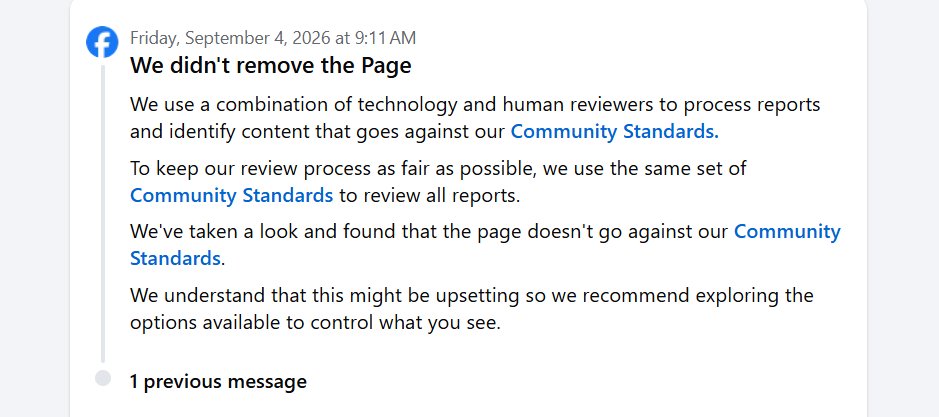
“We’ve taken a look and found that the page doesn’t go against our Community Standards,” the company wrote.
The six accounts that the company’s moderators left up had shared many heinous videos, including a toddler being struck in the face with a frying pan, a girl being beaten with a baseball bat, and a baby being kicked. (After a thoughtful internal discussion, we are opting not to share any of the videos at this time; if you are a member of the media considering follow-up coverage, please feel free to email us and we can provide examples to corroborate our reporting.)
If Meta were serious about proactively taking down the child abuse content, or detecting it at the time of upload, it would almost certainly be able to do so.
In fact, AI systems could probably be helpful: the company has invested hundreds of billions of dollars toward building “superintelligence” — reportedly making offers to top talent in the industry that have exceeded a billion dollars for a single hire — with Meta CEO Mark Zuckerberg saying last year that “whoever gets there first is going to have a long-term, durable advantage towards building one of the most important products in history.”
The tech to moderate these types of videos automatically already exists. In rudimentary testing, we found that Anthropic’s Claude AI was adept at evaluating whether videos contain imagery of violence against children.
For that matter, Meta appears to have already deployed systems that can identify the stomach-turning videos, even if it’s declining to use them to moderate content on its platforms. We identified the vast majority of the horrid accounts simply by loading one of them, and then scrolling Facebook’s recommendation feature, which eagerly provided a bottomless feed of similar appalling material.
In other words, Meta has extraordinary resources at its disposal to remove the child abuse videos, or to prevent them from being uploaded in the first place. But even when the material is flagged to it directly by journalists or reported by concerned users, it’s dragging its feet and refusing to delete it — a familiar pattern for a company that has long claimed to care about abuses of its platforms while doing little to stop them.
When we presented that line of thinking to Meta, the final abhorrent videos we’d flagged to the company’s press team finally disappeared from Facebook — though untold thousands remain on its platforms.
The company also provided a brief final statement.
“Not all the links you sent violate our policies,” it read. “Can you please avoid suggesting in your reporting that they do?”
Are you aware of anything about Meta’s moderation strategies that we know about? Reach out to tips@futurism.com. We can keep you anonymous.
Depois de ganhar o Liquid Glass, a versão do WhatsApp para iPad começará a receber outra novidade de design para parte dos seus usuários: uma nova barra lateral.
A reformulação da interface aproximará a versão de iPad daquilo que é visto no macOS, com a nova versão da barra lateral abrangendo conversas, atualizações, comunidades, chamadas e Meta AI, além da seção “Mais” (que engloba conversas favoritadas, trancadas e arquivadas, bem como os status do mensageiro da Meta).
WhatsApp is rolling out a redesigned navigation interface for iPad!
WhatsApp is bringing the same sidebar from the Mac app to iPad, making it easier for users to navigate the interface on a larger screen. The update is also compatible with Liquid Glass.https://t.co/vVfpctrXulpic.twitter.com/uUYQ8cPak5
O WhatsApp está lançando uma interface de navegação redesenhada para iPad!
O WhatsApp está trazendo a mesma barra lateral do aplicativo para Mac para o iPad, facilitando a navegação dos usuários na interface em uma tela maior. A atualização também é compatível com Liquid Glass.
A quem desejar que a conversa ocupe mais espaço da tela, será possível ocultar a barra lateral por meio de um botão localizado no canto superior direito da interface. Para exibi-la novamente, bastará tocar no botão da barra lateral na barra de guias superior, exibido quando a barra lateral é ocultada.
Por ora, a novidade está sendo testada com os usuários da versão beta do WhatsApp via atualização mais recente do TestFlight, além de alguns usuários da versão mais recente do aplicativo da App Store. É provável que não demore muito para que a funcionalidade chegue a todos os usuários.
Pré-visualização de miniaturas em conversas
Para os usuários de iOS, a Meta também implementou um recurso que já vinha sendo testado na versão de Android: a pré-visualização de mídias e figurinhas em uma miniatura exibida na própria seção de conversas.
Imagem: WABetaInfo
Até o momento, a única forma possível de pré-visualizar mídias e figurinhas no WhatsApp era segurando a conversa, caso contrário o aplicativo só fazia uma menção textual ao material enviado.
A ANACOM afirma que as plataformas da Meta foram responsáveis por mais de 50% das reclamações sobre serviços digitais recebidas durante o segundo trimestre do ano. Entre as plataformas que geram mais queixas em Portugal incluem-se ainda as da Google e a rede social X.
A Metaanunciou hoje o Muse, um agente de inteligência artificial generativa pessoal e privado que foi projetado pela empresa para ajudar usuários a explorar novas ideias e cumprir suas metas.
Focado no público em geral, ele é bem simples de usar. Basta dizer ao Muse o que precisa ser feito para que ele execute a tarefa — sem curva de aprendizado ou necessidade de experiência.
Usuários podem pedir-lhe que faça tarefas como enviar um email ou até mesmo reservar uma viagem, graças à capacidade do Muse de abrir o navegador, preencher formulários ou clicar em elementos da tela.
Ele se conecta aos apps e serviços que você usa no dia a dia, um por vez e sempre por sua escolha, em categorias como email e calendário, pagamentos, fitness e saúde, música e eventos ao vivo, restaurantes e compras, e casa inteligente. Os conectores integrados estão disponíveis nas configurações, e outros estão por vir. Se um serviço não estiver lá, mas tiver uma API pública, seu Muse pode configurar uma conexão usando credenciais fornecidas por você; e se não tiver API nenhuma, ele pode usar o serviço por meio de um navegador, do mesmo jeito que você faria.
Com a capacidade de continuar trabalhando mesmo depois de os usuários fecharem o app, o Muse é capaz de realizar pagamentos via Stripe e, futuramente, também suportará o Shop Pay.
Bastante proativo, o Muse se lembra do que é importante para o usuário e pode fazer sugestões sem a inserção de um prompt ou atuar com base em detalhes mencionados apenas uma vez.
Construído com base no Muse Spark, o modelo mais poderoso da Meta, o agente também conta com mecanismos avançados de segurança para proteger a sua interação com o usuário final.
Ele é executado em seu próprio computador dedicado na nuvem — que é onde os dados e credenciais para qualquer serviço conectado a ele são armazenados com segurança.
O Muse foi lançado nos Estados Unidos para a web, iOS e Android. Ele é grátis “para a maioria do que as pessoas precisam”, com planos de assinatura para pessoas que querem “fazer mais”.
Meta took days to remove ads containing AI-generated child sexual abuse material (CSAM) on Facebook and Instagram. Some ads featured photos of real kids, including a press photo of a young member of a European royal family and images swiped from a popular Instagram profile of a preteen girl deemed an influencer.
In an investigation published Tuesday, the Tech Transparency Project (TTP) reported that Meta failed to detect 332 ads containing CSAM this year. The “vast majority” of ads promoted AI apps made in China, while many ads promoted so-called “nudify” apps that make it easy for bad actors to use AI and digitally alter images of children.
TTP matched “multiple CSAM ads to photos of real children that appeared online.” These ads seem to violate federal child pornography laws, since the Justice Department has clarified that AI CSAM is just as harmful as CSAM. The young royal’s image was “animated into a video of her performing a graphic sex act,” TTP found. Other ads animated a photo of a 14-year-old Instagram influencer “showing off her new sports club uniform” into “a video of her performing oral sex.” A third “preteen” victim “posing in a pink athletic outfit with pigtails” in a series of stock photos was morphed into a video where she looks frightened as she’s molested by an adult male, TTP reported.
Even if the legislation passes, tech companies may still find ways to frustrate its intent and keep Australians hooked on their feed
Social media could become a “choose your own adventure” between the doom-scrolling status quo, or just the feed of the friends you want to see, if the government’s planned digital duty of care legislation passes, and the tech companies don’t muck around on compliance.
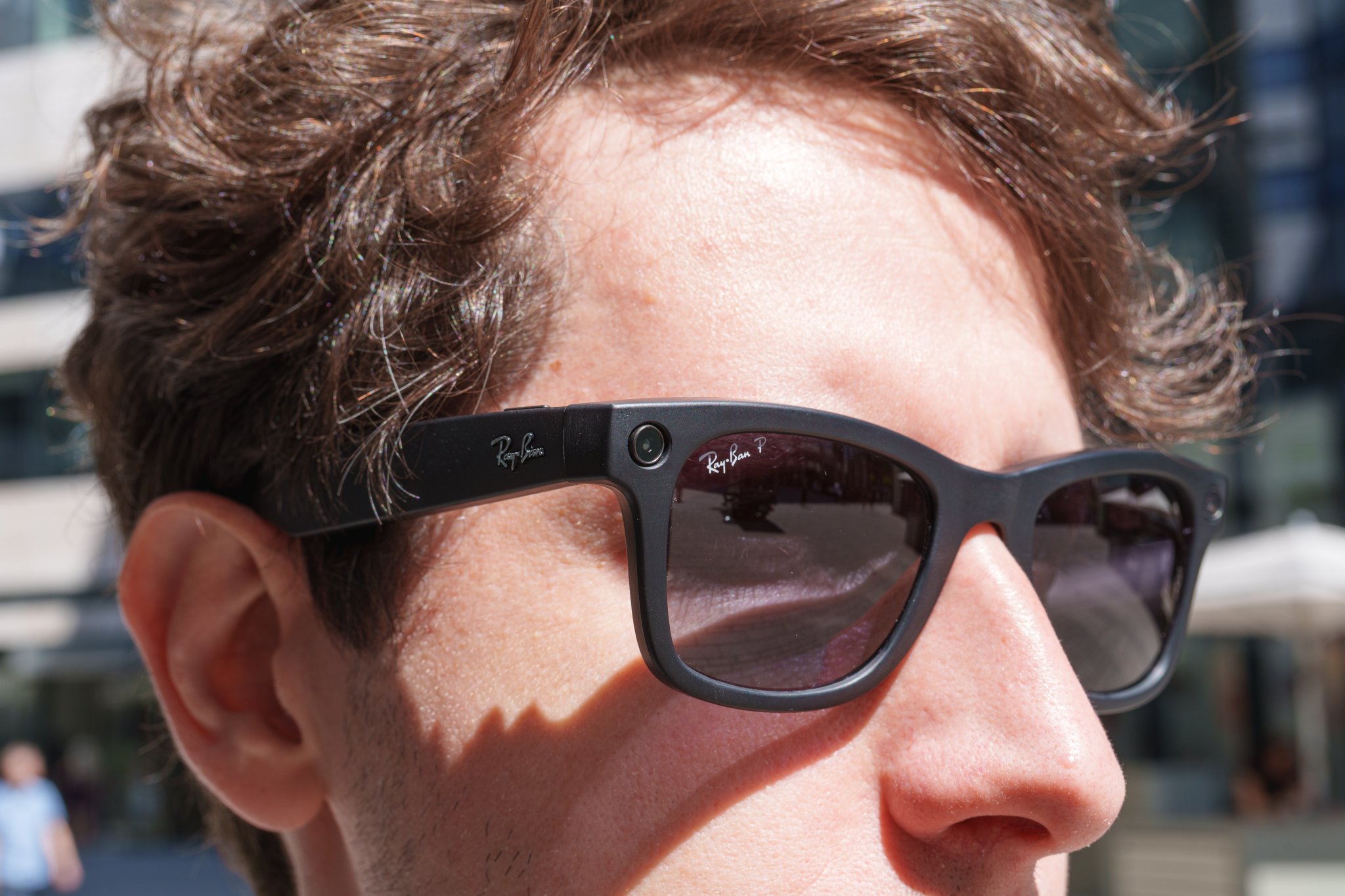
In an affront to creeps everywhere, Meta has started remotely bricking the smart glasses of wearers who try to secretly record other people.
Earlier this month, the Mark Zuckerberg-led company said it would crack down on customers who modified the spectacles to disable or cover up their lights that indicate when they’re recording, amid incredible public backlash against how the glasses are being used to film people without their consent — girls and women especially — and harass them.
Now, it looks like more than a few weirdos have gotten the ax. On Tuesday, Meta said it’s bricked the photo and video-taking capabilities on thousands of its smart glasses users, as part of a software update that was reported by Semafor.
Meta didn’t provide hard numbers, but its vice president of wearables Alex Himel told Semafor that it estimated that less than one tenth of a percent of all glasses sold have been tampered with. Seven million of the glasses were sold in 2025, making that fraction of a percentage translate to up to, but probably less than, 7,000 individual units.
More than a sign of Meta caring about people’s privacy, it goes to show that the abuse of its “pervert glasses” wasn’t down to just a few bad apples. A few thousand doesn’t sound like a lot, but it’s worth remembering that this crackdown only applies to customers who physically tampered with their glasses to disable the recording light. There’s no doubt that many people using the glasses to creepily record people have made no effort to modify their devices or hide that they’re recording.
Instagram, which is owned by Meta, recently began suspending some influencers who filmed themselves using the glasses as they aggressively hit on girls and women, often by making sexually explicit and provocative comments. The social media platform’s head Adam Mosseri vowed to crackdown on the harassment in “every way we can.”
Still, these efforts are a drop in the bucket, and with Meta reportedly planning to stuff the glasses with facial recognition tech, members of the public who aren’t convinced that Meta has their best interests in mind have taken matters into their own hands. Many establishments are outright banning smart glasses, including popular nightclubs. Some feel strongly enough about the glass that they’re confronting people who wear them in public.
Himel, Meta’s VP of wearables, admitted that it’s fighting an uphill battle.
“It’s been a little bit of a cat and mouse game,” Himel told Semafor, adding that “I don’t think we’ll ever be done… There’s always new ways to get around the safeguards that are in place. So we’re going to keep monitoring and evolving the measures that we have.”
Meta AI glasses v28 update adds pedestrian navigation, Spatial Audio, expanded language support, and camera anti-tampering improvements.
With hands-free walking directions, you can ask Meta to navigate to nearby destinations, with driving directions sent to your phone for farther trips.
Spatial Audio makes listening richer and adds a more immersive layer to music and podcasts on supported Ray-Ban Meta glasses.
Meta has been steadily expanding what its AI glasses can do, and the latest v28 update adds several practical upgrades, including pedestrian navigation, Spatial Audio, and broader language support.
Perhaps the headline addition is pedestrian navigation. You can now ask the smart glasses to guide you on foot to nearby destinations using voice commands such as “Hey Meta, navigate to Times Square.” If you’re farther away, the glasses can send driving directions to your phone.
There’s also a new way to begin navigation from your phone: Find a destination in your mapping app, tap Share, and select Meta AI, and navigation will start on your connected glasses.
The update also broadens where walking directions work. Meta says it now offers walking directions in the U.S., Puerto Rico, Canada, and some cities across the world.
Audio gets an upgrade as well. Now, Spatial Audio can make a more immersive version of the stereo sound you’re already getting, whether that’s music or a podcast. You can find this option in Settings > Audio > Spatial. It works with Ray-Ban Meta Gen 2 Optics and the Meta Glasses collection.
(Image credit: Android Central)
Meta is also adding Mandarin Chinese (zh_CN) support across Device Controls, calls and messaging, media capture and music controls, Meta AI, and MMAI.
Finally, v28 has ongoing anti-tampering improvements to protect the cameras on the glasses.
Earlier firmware releases introduced features like Conversation Focus, which uses the microphones in the glasses to help users hear nearby voices better, and deeper Spotify integration. Similarly, on Reddit, the response is pragmatic, with users mostly praising the glasses for hands-free photos, calls, podcasts, and open-ear audio, while battery life and Meta AI’s limitations remain common complaints.
Since the start of the data center boom, “job creation” was one of the key promises made to communities weighing whether to host the tech industry’s monstrous computing facilities in their backyards.
That was always a gross over-representation of the facts, as most labor required for data centers comes in the form of temporary construction jobs to build them. Still, the tech tycoons who need data centers to keep the AI revolution chugging along could always fall back on promoting the lonely skeleton crews tasked with manually monitoring, patrolling, and maintaining each facility.
Now, even that could be going away.
According to new reporting by Ars Technica, the AI giant Meta is testing new robots designed to automate the work of data center maintenance, with the aim of keeping the cost of labor even lower.
The initiative is in its very early stages, per Ars, involving trial runs of hardware from a few different robotics firms. These include companies like ABB, Kinova, and Watney Robotics, which supply robot arms being tested for tasks like hot-swapping network cables and cycling power to server racks.
One anonymous Meta staffer told Ars that, if it’s successful, a robotic arm from Kinova could replace up to 80 percent of their the facilities’ workload.
“We thought those of us performing the physical tasks were safe for a while, but not anymore,” the worker lamented. “It’s coming for us all, unfortunately.”
The bulk of data center overhead comes from the hardware itself, particularly the extremely pricey AI chips needed to run high-powered large language models. Even when factoring in construction the human labor cost of data centers is negligible, meaning Meta is going far out of its way to automate maintenance work.
Approached for comment by Ars, a Meta spokesperson declined to comment on the testing of robots for data center work.
As if a million white collar workers suddenly cried out in terror at once, a great disturbance in the AI force forced down every major AI chatbot service — a brief moment of reprieve from our AI empire overlords.
OpenAI’s ChatGPT, Anthropic’s Claude, Google’s Gemini, and X’s Grok mysteriously went down Thursday morning, and we still don’t know what’s behind it.
OpenAI’s status page noted “elevated errors across ChatGPT and Codex.”
“We have applied the mitigation and are monitoring the recovery,” the company wrote.
While X’s Grok shows widespread outages, Anthropic’s Claude status page noted that the “only affected models right now are Opus 4.8 and Opus 5.”
“The rest of the models have recovered to baseline error rate,” Anthropic’s website reads.
Spiking and falling reported incidents on Downdetector suggest outages affecting OpenAI’s services have largely been resolved. Other services, including Google and the popular video game “Fortnite,” continue to experience issues.
Netizens were quick to joke about out the unusual outage affecting almost every major AI chatbot service, describing a momentary glimpse of lucidity for a society obsessed with a tech that’s deteriorating our cognitive abilities.
There’s a burning question on the minds of those about to attend one of the world’s most iconic festivals this summer: how should they deal with Meta smart glasses?
As controversy around the gadgets grows, some events and venues have taken a hard line against wearing the camera-equipped frames. Basement, one of New York City’s buzziest nightclubs, recently said it would permanently ban anyone who tries to sneak in with smart glasses.
But Burning Man, the week-long event that takes place in the Nevada desert each year, has taken a softer stance. In an update to its official “survival guide” last month, organizers said that wearing and using smart glasses were A-okay — so long as you don’t record anyone without consent.
“Before using any device — including cellphones, cameras, or smart eyewear — you must ask and receive permission from anyone who may appear in your frame, whether they are the main subject or in the background,” it states.
Fans, though, sound like they wanted the festival to take a harder stand. A recent thread in the r/BurningMan subreddit asking “How do we ban Meta glasses at BM?” has received hundreds of comments, many of them trashing spyware spectacles and the “glassholes” who wear them.
“Public shaming is great,” one wrote in the thread, spotted by Mercury News. “At BMan I am sure it would be easy to turn a whole bar or art car against a glass hole.”
“Shame the sh*t out of whoever is wearing them,” echoed another. “They’re creep-glasses and whoever is wearing them at Burning Man is a creep.”
Others were less optimistic about banning the glasses at Burning Man, an event that’s inextricably connected to the culture of Silicon Valley and tech.
“You can’t. Burning man and society noticeably degraded after good phone video appeared and this is just an extension of that,” lamented one, reminiscing on the times when nudity was more common at the festival.
It’s a particularly interesting issue for Burning Man, a festival that prides itself on “radical inclusion,” to be dealing with.
In recent decades, it’s become more notorious for being a retreat for celebrities and wealthy elites, ranging from SpaceX founder Elon Musk to Meta head Mark Zuckerberg. Plenty of Silicon Valley types and tech bros make a pilgrimage there — in other words, exactly the kind of people who would wear smart glasses.
That, of course, clashes with Burning Man’s more radical and proletarian crowd — the people who run around naked on the playa and probably don’t want to be recorded, the artists who turn their nose up at AI and tech companies, and anyone else who wants to indulge in some debauchery away from social and digital surveillance.
Maybe it’s a little telling that the organizers have refrained from a sweeping ban. It knows its crowd — or its crowd that has all the money, at least.
An ongoing class action lawsuit against Meta, which accuses the tech giant of misrepresenting its privacy practices regarding its controversial Meta AI Glasses, was amended yesterday to include a new class of “bystander” plaintiffs who claim that Meta violated their privacy without their consent.
The implications are considerable. The new violations occurred even if bystanders never purchased the AI-powered glasses themselves, the expansive amended complaint alleges, reflecting rising anxieties around what the increasing ubiquity of AI-integrated surveillance technologies — from smart glasses to Flock cameras — mean for everyday life.
The lawsuit was first filed back in March after a joint investigation by a pair of Swedish newspapers found that Meta had stored content captured by its Meta AI Glasses and funneled it to human reviewers for the purpose of training AI models, according to Kenyan whistleblowers working for the content moderation outsourcer and longtime Meta partner Sama. Meta is accused in the lawsuit of engaging in false advertising, wrongly telling purchasers that the smart glasses are “designed for privacy” and that users are “in control of your data and content,” despite content collected through the glasses’ AI features winding up in front of human reviewers who say they saw intimate material.
“In some videos you can see someone going to the toilet, or getting undressed,” one Kenyan whistleblower told the Swedish journalists. “I don’t think they know, because if they knew they wouldn’t be recording.” Other contractors described watching people have sex and viewing documents revealing personal identifying information.
In addition to representing users of Meta’s smart glasses, the amended complaint has been expanded to include claims from people who don’t own the face-mounted gadgets but say they were recorded without their “informed consent” when someone around them used the spectacles’ AI features — only for that data to possibly then be used for AI training, again without their consent. Some bystanders are minors.
The amended complaint contends that “no reasonable consumer would expect that a product marketed as privacy-protective is a conduit for AI training and systemic surveillance,” nor “would any reasonable consumer understand ‘designed for privacy’ or ‘controlled by you’ to mean that everything the Glasses’ AI sees and hears, including people’s most intimate moments, could be viewed by strangers overseas and used to train Meta’s AI.”
It argues that “millions” of consumers may have unwittingly been impacted, and that “no bystanders anywhere had any opportunity to, much less in fact did, consent to having their faces, bodies, voices, and personal information captured, reviewed, labeled, and embedded into Meta’s AI systems.”
“Meta sold millions of consumers on the lie that their AI glasses were ‘designed for privacy,'” Ryan Clarkson, founder and managing partner of Clarkson Law Firm and co-lead counsel on lawsuit, said in a statement. “This amended complaint adds the human beings on the other side of the glasses to the story — people having intimate sexual encounters, children being bathed by parents, or having their diapers changed by grandparents, people showering, changing clothes, and breastfeeding — who never agreed to surrender their privacy because someone near them bought a pair of glasses.”
Meta told Futurism in a statement that “we disagree with these allegations and will fight them.”
“Our glasses help you use AI hands free to answer questions about the world around you,” the statement continued. “If you use Meta AI, we may review that data to help improve our products and people’s experiences — this works the same way as memany other companies. We take steps to filter this data to help remove identifying information and to protect people’s privacy.”
Earlier this year, Meta reported that it had sold more than seven million pairs of its smart glasses in 2025. It’s also not the only tech giant chasing dominance in the AI wearable market: Google is developing smart glasses with the affordable eyewear maker Warby Parker, and Apple is reportedly working on infusing cameras and AI into its hugely popular AirPods.
Instagram and Facebook’s parent company agreed to sweeping alterations and a payment of up to $18bn to settle a landmark trial
Meta’s agreement to change how teenagers use its social networks marks a major turning point for the US tech giant, setting a precedent that could significantly reshape how other social media operates in the coming years.
Meta agreed to substantial alterations to Instagram and Facebook on Wednesday as part of a settlement to end a landmark lawsuit. Dozens of US states had accused it of addicting and harming children with dangerous products. The company also agreed to pay up to a combined $18bn over a decade to several US states and territories involved in the suit.
Earlier this year, Meta created a “plan” to reduce some of its teams by as much as 60 percent to make the company “AI native,” Reuters reported today, citing two people familiar with Meta’s internal affairs.
Reuters’ report highlights the challenges organizations face when analyzing the best uses for AI and determining when the technology is a better fit for certain tasks than employees.
Meta confirmed to Reuters that the plan, reportedly codenamed Project OT (short for organization transformation), explored scenarios in which Meta reduced some team headcounts by 60 percent and that the plan called for two rounds of layoffs. Meta wouldn’t confirm which teams Project OT affected.
Also: OpenAI CEO Sam Altman expressed his surprising sympathy over the construction of datacenters across the country
Hello, and welcome to TechScape. I’m Blake Montgomery, US tech editor at the Guardian, writing to you from a sunny park in New York City, which was supposed to endure rain all weekend but in fact delivered the best weather of the year.

 Login