UC Riverside environmental engineers have identified key chemical reactions that occur when ultraviolet light is used to destroy "forever chemical" pollutants in water, providing a roadmap for developing more effective cleanup technologies.
UC Riverside environmental engineers have identified key chemical reactions that occur when ultraviolet light is used to destroy "forever chemical" pollutants in water, providing a roadmap for developing more effective cleanup technologies.
Flushing a toilet may send more into the air than most people realize. A new review has found that toilet flushing can produce tiny airborne particles, including some that may contain microorganisms, and these particles can sometimes rise high enough to reach the breathing zone of adults. Researchers from Flinders University examined previous studies to […]
Rivers flowing from melting glaciers in Svalbard are carrying ancient methane out of rocks beneath the ice, according to new research. The discovery reveals a natural climate feedback that could become more important as the Arctic warms and glaciers continue to shrink. Methane is a powerful greenhouse gas. Although the amount identified in the study […]
Carbon emissions from the petrochemical industry could increase by 50% by 2050, according to new research from the University of Sheffield. The study, published in Nature Sustainability, provides the most detailed data to date on emissions from one of the world's biggest emitters of carbon dioxide.
Carbon emissions from the petrochemical industry could increase by 50% by 2050, according to new research from the University of Sheffield. The study, published in Nature Sustainability, provides the most detailed data to date on emissions from one of the world's biggest emitters of carbon dioxide.
As the 2026-2027 NFL season kicks off, the Philadelphia Eagles are giving new meaning to their signature “Fly, Eagles, Fly” fight song. The football team is partnering with the National Marine Sanctuary Foundation for Birds Supporting Birds, an initiative to support seabirds off the coast of Massachusetts (and in New England Patriots’ territory) this fall.
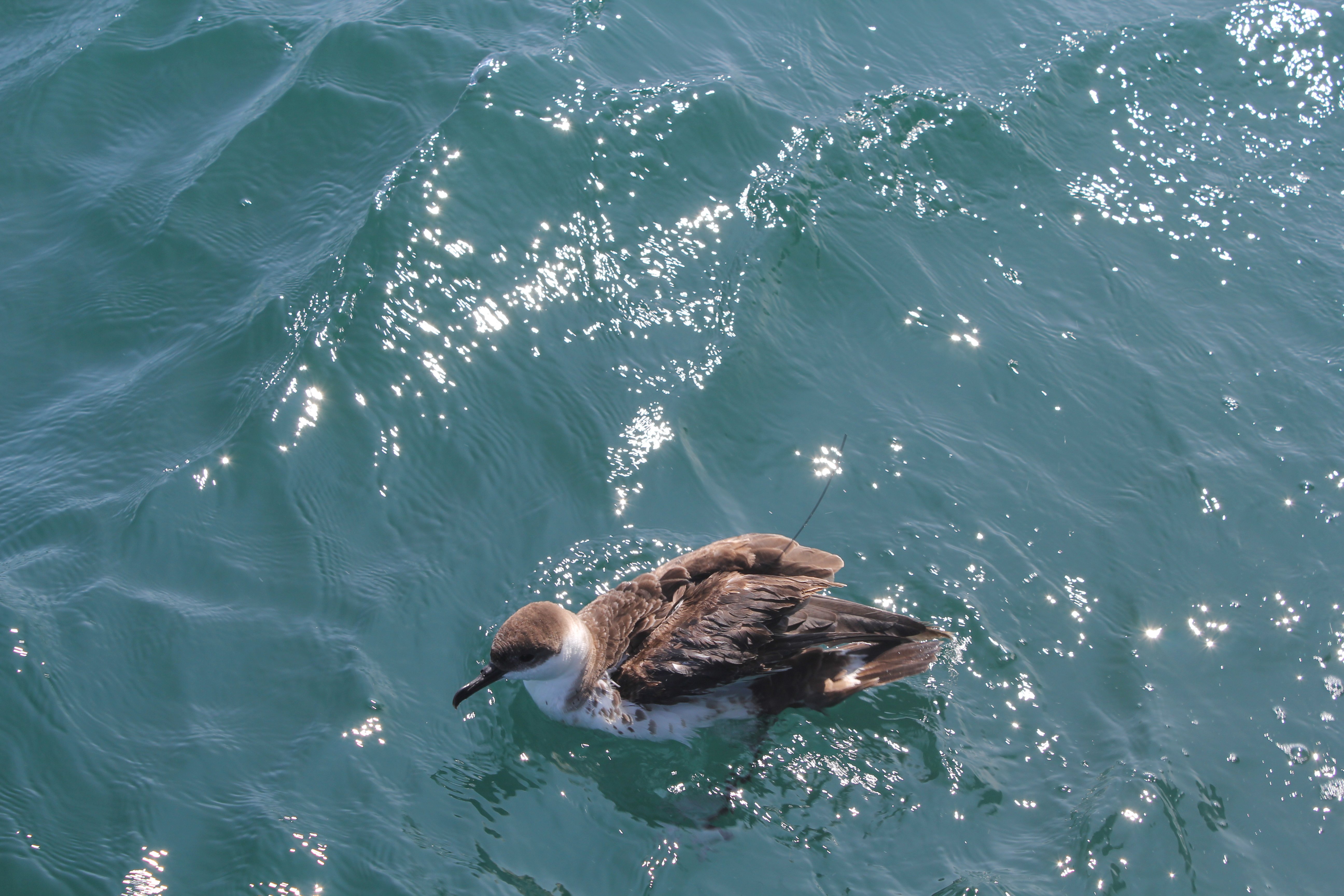
The team is supporting NOAA’s Stellwagen Bank National Marine Sanctuary Shearwater Tagging Project, an ongoing initiative dedicated to studying the great shearwater (Ardenna gravis) and their migration. Great shearwaters are large, white-and-grey seabirds known for their epic journeys. They travel thousands of miles every year from their remote South Atlantic breeding grounds up to the cooler North Atlantic waters during the nonbreeding season. According to the National Marine Sanctuary Foundation, they fly the equivalent of over 200,000 football fields across the Atlantic Ocean every single year.
Birds Supporting Birds will help support researchers in Stellwagen Bank, an 842-square-mile marine sanctuary east of Boston, to tag great shearwaters and track their migratory routes across the Atlantic.
“The Eagles are directly funding researchers to attach lightweight, solar-powered satellite transmitters to great shearwaters,” Joel R. Johnson, President and CEO of the National Marine Sanctuary Foundation, tells Popular Science. “These tags track the birds’ migration patterns around the Eastern Seaboard and down to the Southern Atlantic Ocean in real time.”
Lovingly known as “The Birds” by their incredibly devoted fanbase, the football team is leveraging their platform to bring attention to ocean conservation and highlight environmental stewardship.
A major 2015 study found that the Gulf of Maine is warming faster than 99 percent of the ocean due to climate change. While the water has slightly cooled since 2021, a report published by NOAA in July found that the environment in the Gulf of Maine still remains unstable. These changes in ocean temperature, currents, and other conditions can impact the seabirds’ food supply.
Great shearwaters are reliable indicators of an ecosystem’s health, who rely on small fish called sand lance in their diets. Whales, dolphins, bluefin tuna (Thunnus thynnus), and other key Gulf of Maine species also rely on these fish belonging to the family Ammodytidae in their diets. By studying great shearwaters and their health, researchers can better understand what is happening in the local ecosystem as a whole.
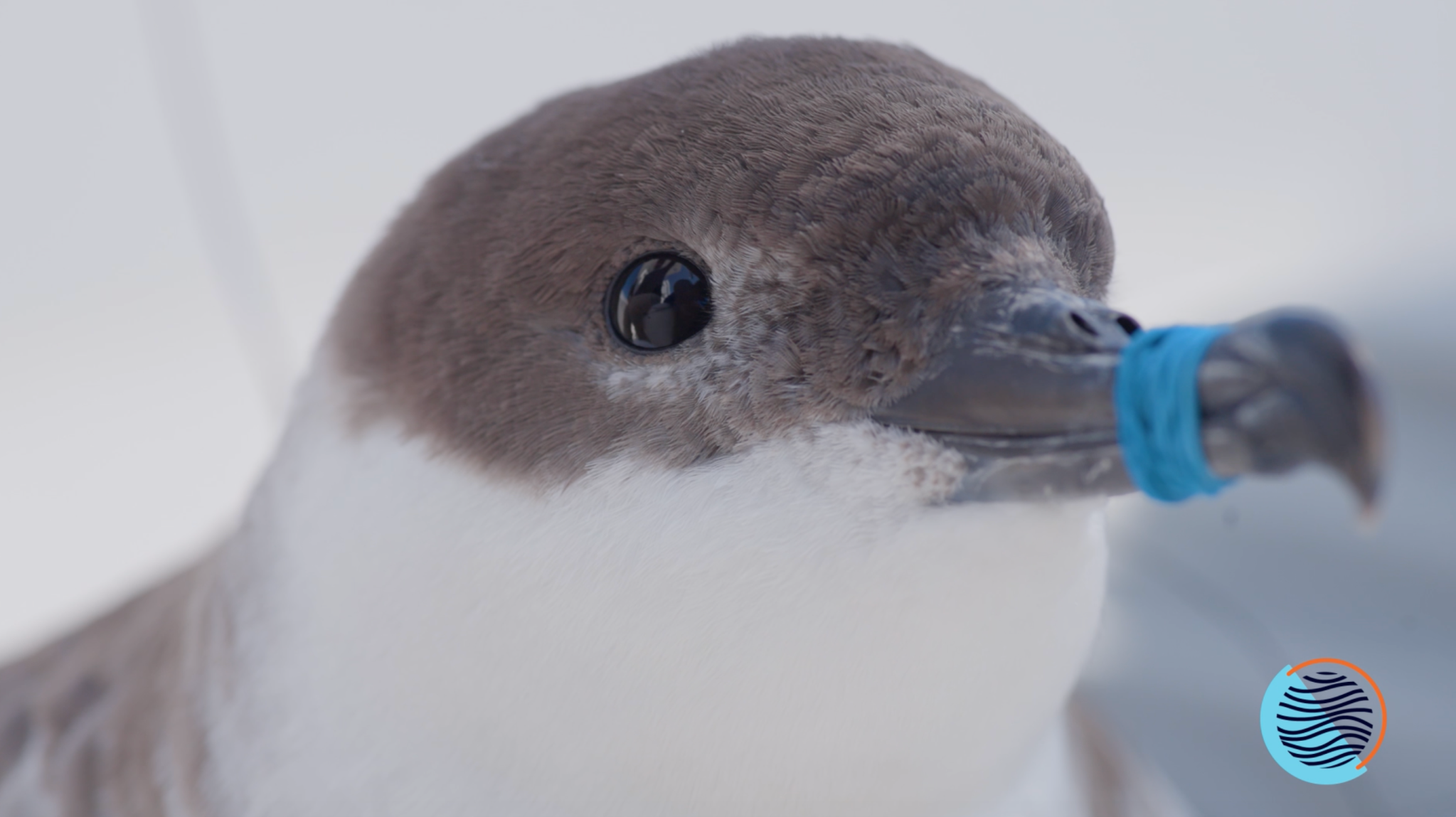
Researchers at Stellwagen Bank National Marine Sanctuary used satellite tracking technology in 2013. These tags are lightweight and attached to the birds with degradable thread. They have small solar panels so scientists can monitor the birds’ routes over extended periods.
Researchers have now deployed tags on Phil, Franklin, Hoagie, and Liberty, four great shearwaters with very Philly-appropriate names.
Great shearwaters can help scientists understand an ecosystem’s health. Image:National Marine Sanctuary Foundation.
“We are thrilled to invite the public to follow Phil, Franklin, Hoagie, and Liberty in real time on our interactive maps and social channels, bringing everyone along on our shared mission to protect our ocean waters and marine life,” says Johnson, who lists bald eagles (Haliaeetus leucocephalus), great blue herons (Ardea herodias), and great shearwaters among his favorite birds.
Live interactive maps will be available soon on the Stellwagen Bank National Marine Sanctuary and National Marine Sanctuary Foundation’s website, so you can follow the great shearwater’s epic journey, while the Eagles (or your favorite team) compete on the gridiron.
Microplastics are plastic particles smaller than 5 millimeters that originate either from manufactured products or from the breakdown of larger plastic items. They can now be found everywhere, from oceans and rivers to soils and indoor air. Because most plastics degrade very slowly, these particles can remain in the environment for decades or centuries.
Across the stories today, a common thread emerges: the gap between what protects us on paper and what protects us in practice. Again and again, communities are discovering that designations, promises, and permits only matter when someone is willing to enforce them — and that when systems fail, it’s ordinary people, and often the most vulnerable, who absorb the shock.
Nowhere is that clearer than in Jackson, Mississippi, where a federal appeals court ruled this week that the Constitution guarantees no right to clean water. For residents who have lived through years of contaminated taps and boil-water notices, the decision lands as a gut-punch reminder that legal frameworks haven’t caught up to environmental reality. A similar tension runs through the Guardian’s reporting on datacenter wastewater in Wyoming, where testing turned up a rare, potentially hazardous bacterium, and on English golf clubs, where one in twelve have quietly broken water extraction rules amid growing drought stress. Behind the numbers are real communities adapting in real time — often without knowing what’s actually flowing through their pipes or being pulled from their aquifers.
That same gap between promise and delivery surfaces in the UK’s datacentre boom, which new analysis suggests will produce only a quarter of the jobs once advertised, even as it strains the national grid. It echoes in Georgia, where a once-booming EV manufacturing corridor is hitting turbulence under shifting federal policy — a reminder that industrial transitions built on incentives can be as fragile as the politics that fund them.
Yet the day’s coverage also points to growing momentum around care, restoration, and reckoning. Hurricane Lowell’s damage across Hawaii’s western islands — toppled trees, flooded roads, thousands without power — sits alongside quieter stories of renewal: Gloucestershire’s proposal to reintroduce beavers as a defense against drought and flooding, Douglas Head’s new conservation status on the Isle of Man, and Coventry’s investment in Longford Nature Park. These are small, deliberate acts of stewardship, the kind Wendell Berry spent his life advocating for. His death last week, at 92, feels newly resonant this week — a farmer-poet who insisted that loving a place well was itself a form of environmental action, long before it became policy language.
Farther afield, the human cost of extraction runs deep. In Peru and Brazil, mercury from illegal gold mining is showing up in children’s blood and in fish that families have eaten for generations, forcing painful dietary changes in communities that did little to cause the contamination. In Indonesia, El Niño-fueled fires are pushing orangutans out of burning forests, while in Uttarakhand, India, women — who gather firewood and fodder — are bearing the brunt of increasingly long fire seasons. In Colombia, the Wiwa community’s decision to relocate their village down the mountain is less retreat than adaptation, a recognition that sacred land is changing faster than tradition can hold still.
It’s a reminder that progress and pressure often arrive together — a new spaceport investment in Shetland, a badger vaccination program under scientific scrutiny, a push for a Natural History GCSE to reconnect children with the outdoors. Each represents a small bet on the future, even as larger systems strain under climate and economic pressure.
As the week unfolds, watch whether the Jackson ruling prompts congressional attention, whether Britain’s Green Party succeeds in forcing transparency around ecosystem collapse risks, and whether Gloucestershire’s beavers get their chance to prove that sometimes the oldest solutions are still the best ones.
A troubling pattern is emerging at the intersection of the tech industry’s data boom and environmental safety. In Cheyenne, Wyoming, routine testing of wastewater discharged from a massive Meta datacenter under construction turned up an unexpected and unsettling find: a rare, potentially hazardous bacterium called Cupriavidus gilardii. The contamination was detected in more than 801,000 gallons of water released by a contractor working on the site earlier this year.
Although the wastewater was directed into municipal sewers rather than the public drinking water supply, the discovery has raised fresh alarm about the environmental oversight surrounding the rapid expansion of datacenters across the United States. As tech giants race to build the infrastructure needed to power artificial intelligence and cloud computing, concerns are mounting over the water and waste these facilities generate—and how well that byproduct is being monitored.
This case is not isolated. Across the country, similar allegations have surfaced involving datacenter wastewater contaminated with so-called “forever chemicals,” or PFAS, compounds linked to serious health risks that persist in the environment for decades. Together, these incidents are fueling growing scrutiny from regulators, environmental advocates, and local communities who worry that the breakneck pace of datacenter construction is outstripping the safeguards needed to protect water systems and public health.
As the demand for data storage and processing power continues to surge, the incidents raise pressing questions about accountability, regulatory enforcement, and whether current environmental protections are equipped to handle the tech industry’s expanding physical footprint.
More than 140 golf clubs across England have violated their water extraction licences over the past five years, according to newly analyzed data. That figure represents roughly one in every twelve clubs nationwide, raising fresh concerns about how the sport manages a resource that is under growing strain from climate change and population pressure.
The findings reveal that more than a third of the offending clubs were caught illegally withdrawing water from rivers, streams, or groundwater sources—either by exceeding their permitted volumes or by extracting water outside the timeframes allowed under their licences. These breaches often occur during dry summer months, precisely when rivers and aquifers are most vulnerable and wildlife most dependent on stable water levels.
Despite the scale of the violations, no fines have been issued to any of the clubs involved. Critics argue this points to a broader enforcement gap, where regulatory bodies identify wrongdoing but lack the resources or political will to impose meaningful penalties. Without financial consequences, there is little incentive for golf courses to invest in more sustainable irrigation practices or to strictly adhere to extraction limits designed to protect local ecosystems.
The revelations come at a time when England faces increasing water scarcity, with several regions experiencing drought conditions in recent years. Water companies have imposed hosepipe bans on households, while golf courses—often criticized for their heavy irrigation needs to maintain pristine greens—continue to draw significant volumes of water, sometimes unlawfully. Environmental advocates are calling for stronger oversight and real consequences for repeat offenders.
A federal appeals court has ruled that the US Constitution does not guarantee citizens a right to clean water, dealing a significant blow to residents of Jackson, Mississippi, who sued over their city’s contaminated drinking water system.
The fifth circuit court of appeals issued its decision on Friday, upholding a lower court’s dismissal of a 2022 lawsuit brought by several Jackson residents. The plaintiffs had argued that the city’s long-troubled water system, which repeatedly failed to deliver safe drinking water, violated their constitutional rights.
Jackson’s water crisis drew national attention in recent years after decades of underinvestment and deferred maintenance led to system-wide failures. Residents faced boil-water notices, discolored tap water, and periods without reliable water pressure, prompting outrage over what many saw as environmental neglect in a majority-Black city with a shrinking tax base.
The court’s ruling underscores a broader legal reality: unlike some state constitutions and international frameworks, the US Constitution contains no explicit language establishing environmental rights, including access to clean water. This leaves such protections dependent on statutory law, such as the Safe Drinking Water Act, rather than constitutional guarantees enforceable through lawsuits like this one.
The decision is likely to reverberate beyond Mississippi, as environmental justice advocates have increasingly sought to use constitutional arguments to hold governments accountable for infrastructure failures that disproportionately harm low-income and minority communities. Legal experts suggest the ruling may push advocates to focus more heavily on state-level constitutional amendments or federal legislative reform rather than relying on the federal courts to establish new environmental rights.
Today's best weather computers would still have struggled to accurately predict the weather for the D-Day landings, University of Reading research shows. The new research, published in the journal Weather ahead of the release of the D-Day film "Pressure," used AI models to produce 50 different forecasts of the storm that famously pushed back the Allies' invasion of Normandy in June 1944.
Facilities likely to employ 10,400 workers, compared with 40,000 in industry estimates, thinktank says
Datacentres in the UK will create just a quarter of the jobs predicted by the tech sector, while consuming vast amounts of energy, according to new research.
Environmental thinktank Verdant predicts that all the datacentres currently planned are likely to directly employ 10,400 workers – compared with the more than 40,000 cited in projections by the industry lobby group TechUK.
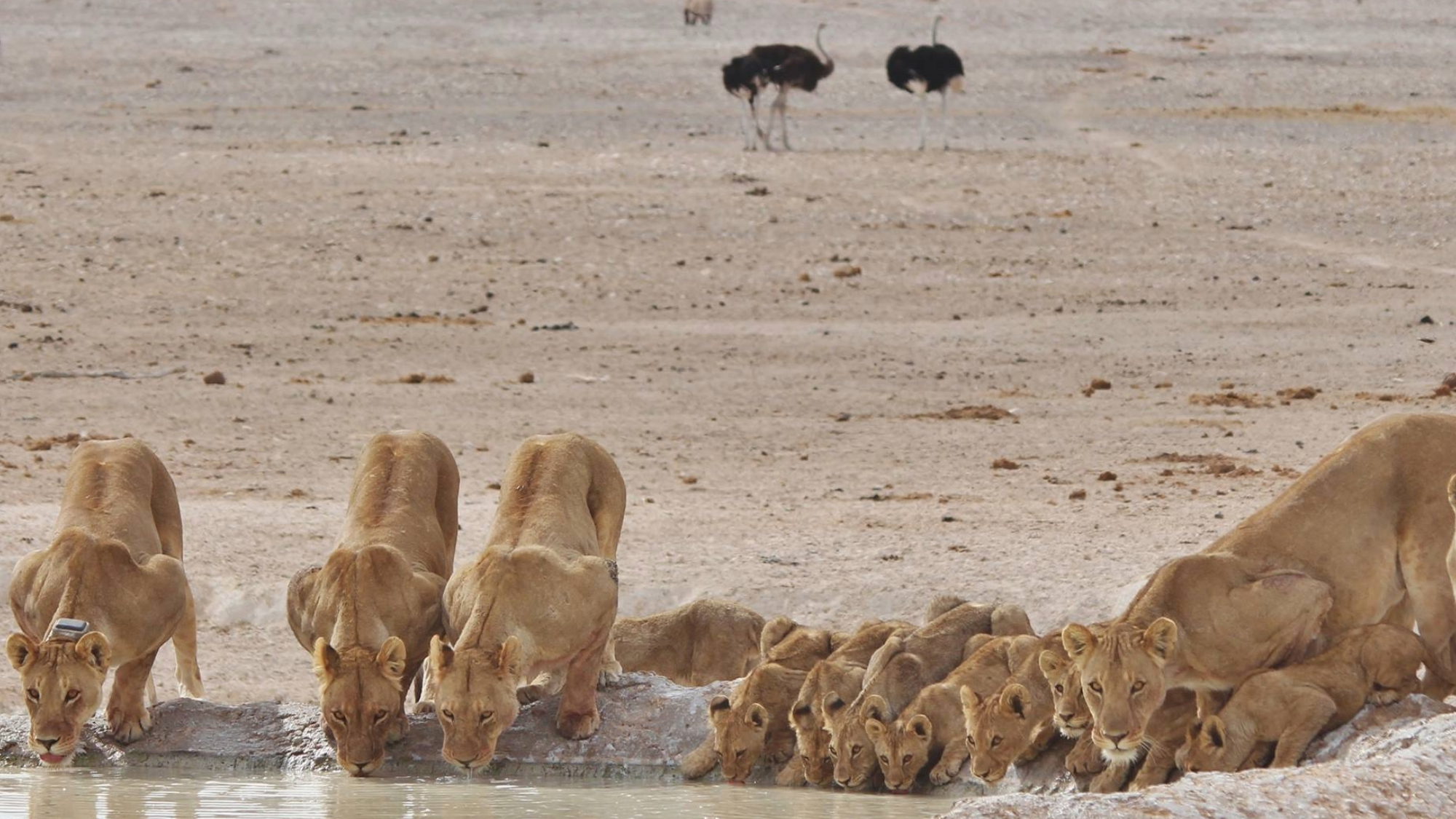
In The Lion King, the hyenas Shenzi, Banzai, and Ed were at the evil lion Scar’s every beck and call. And while the Disney team probably didn’t spend an extensive amount of time observing lions and hyenas interacting in the wild while making the beloved movie, a zoologist and her colleagues just did—and they found something unexpected.
The long-standing assumption about the relationship between the carnivores involves hyenas following lions for their food scraps. However, male African lions (Panthera leo) are the ones going after spotted hyenas (Crocuta crocuta), who move away from the big cats. These new findings are detailed in a study published today in the journal Frontiers in Ethology.
Nancy Barker, an ecologist at the University of KwaZulu-Natal in South Africa and lead author of the study, observed lions actively tracking hyenas while she was studying brown hyenas (Parahyaena brunnea).
“When I shared my observations with other leading researchers, I was often told that I had the relationship backwards: that hyenas are the ones tracking lions, primarily for scavenging opportunities, and that what I had seen was simply a series of chance encounters,” Barker said in a statement “I felt there was more to the story.”
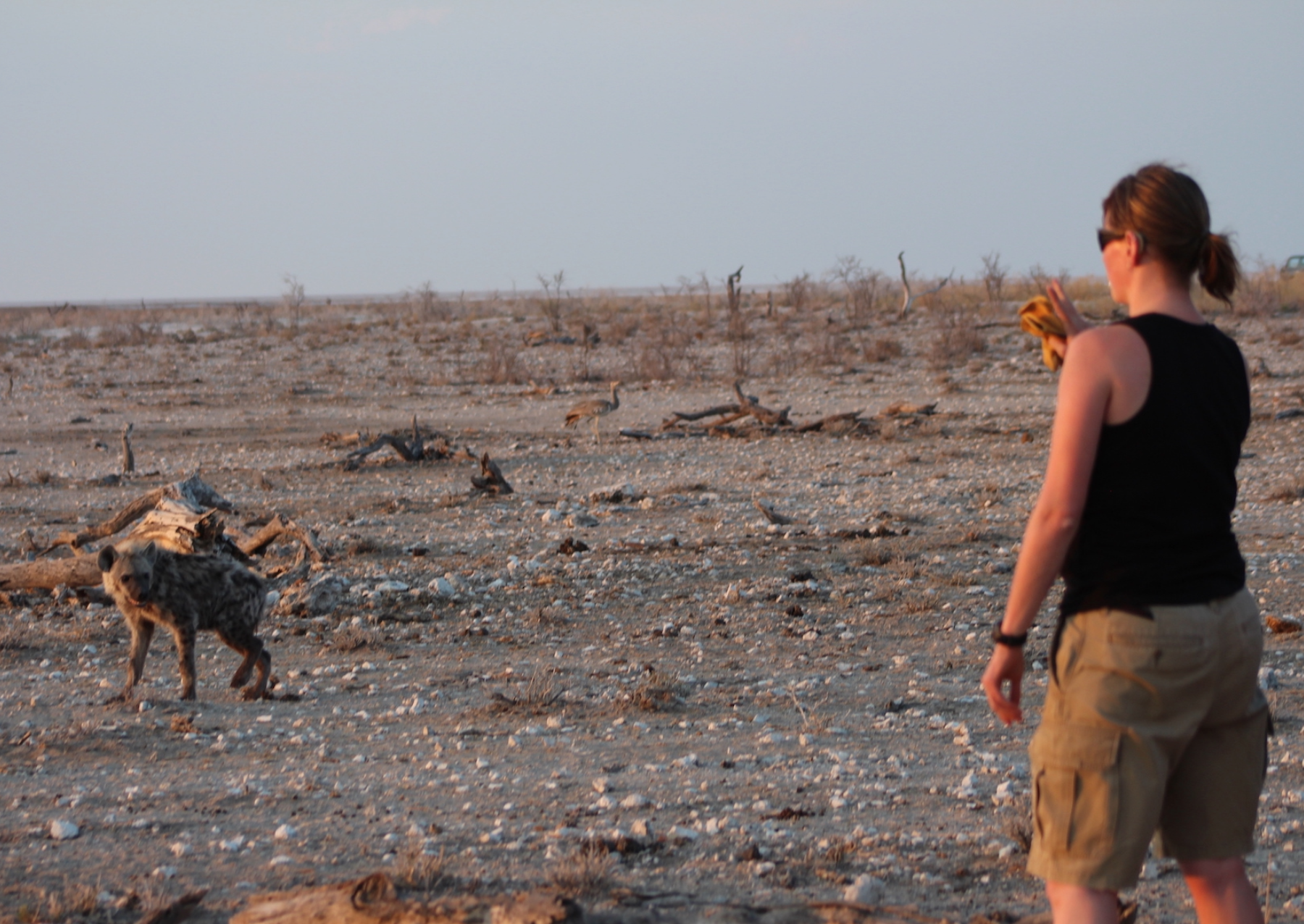
A young spotted hyena at Etosha National Park scopes Barker out. At the time, Barker was setting up a bait station to immobilize and collar the matriarch of the hyena clan. Image: Dr. Nancy Barker.
Barker then put GPS-collars on socially high-ranking African lions and spotted hyenas at Namibia’s Etosha National Park, as well as lions in Linyanti Conservancy in northern Botswana and northeastern Namibia, and Chobe National Park in Botswana.. The study included data from 17 lions and 14 hyenas collected across four years.
The collars mapped the animals’ movement by capturing a location snapshot every five minutes during their peak activity hours, and Barker also maintained camera traps and conducted behavioral observations for context. Barker identified 23 pairs of simultaneously tracked animals from the GPS collar data, including 10 lion-hyena pairs. Her team classified the direction of every paired animal’s movements, consequently revealing and studying thousands of interactions.
“Our GPS collar data shows that African lions and spotted hyenas leave a clear, measurable signature in the way they move around one another,” said Barker. “Spotted hyenas consistently move away from lions, while male lions tend to move toward hyenas.”
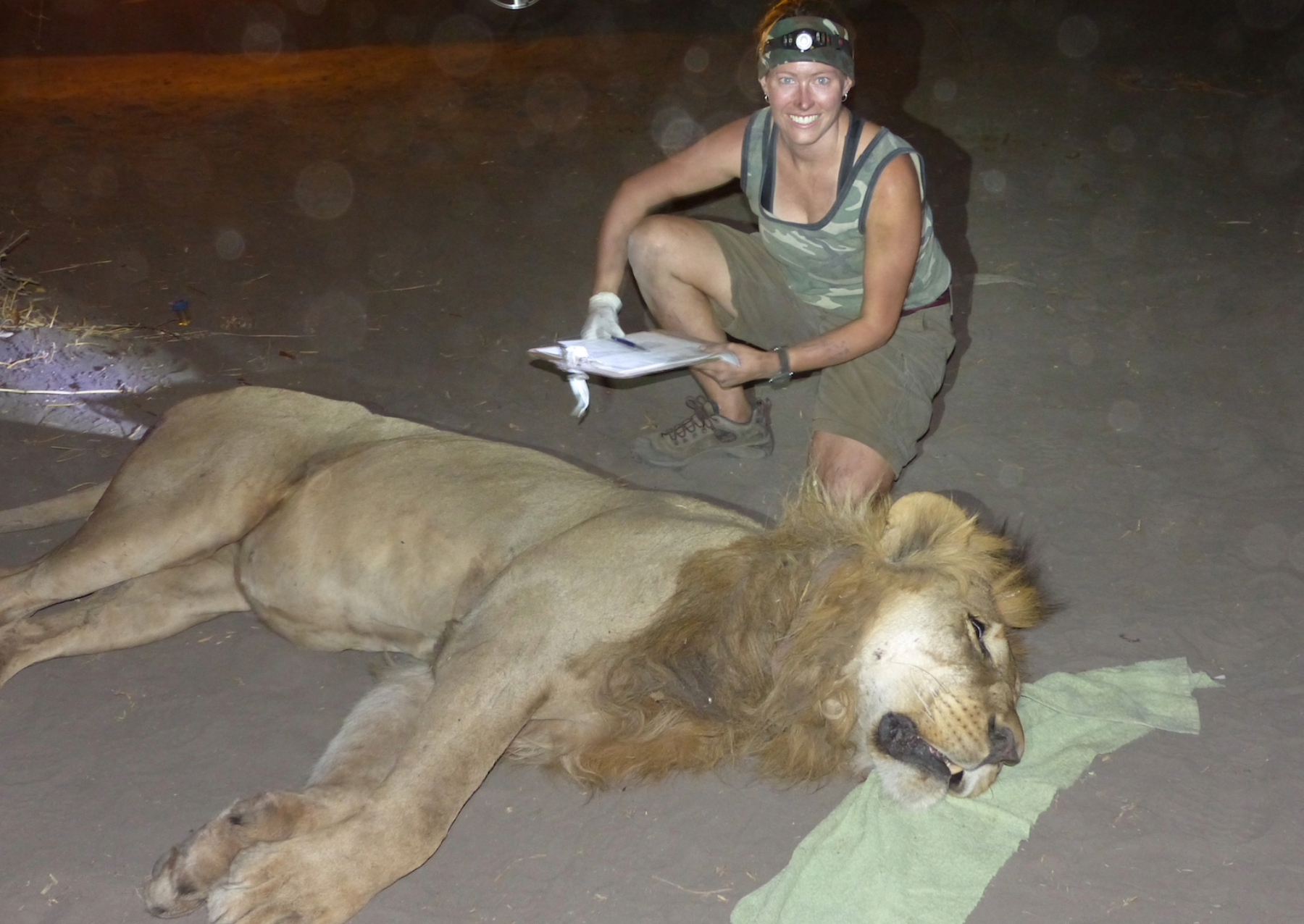
Dr. Nancy Barker with an immobilized adult male lion from a pride in the Chobe-Linyanti floodplains. Barker took morphological measurements, identification photographs, and blood, tissue and faecal samples before fitting each collar. Image: Dr. Nancy Barker.
Female lions, on the other hand, weren’t as consistent. Barker’s observations revealed that lionesses’ reactions to hyenas were based on which other pride (a group of lions) members were around, though more data is necessary to bolster this determination.
Because the study includes a limited amount of data, Barker says that some of the findings should be viewed more as trends instead of firm scientific conclusions.
“I would love to extend this approach to other members of the carnivore guild, to understand how the entire community negotiates space and risk,” she said. “Ultimately, I want to connect these movement patterns to what matters most for the animals: their survival and reproduction.”
As the National Park Service (NPS) continues highlighting the many roles of its parks during World War II, the western most landmass in the contiguous United States is getting its due: Olympic National Park.
First designated a monument by President Teddy Roosevelt in 1909 before President Franklin D. Roosevelt’s reclassification as a park in 1938, the 922,650 acre protected region in Washington State is also recognized by UNESCO as an International Biosphere Reserve. Olympic National Park includes temperate forests, stretches of Pacific coastline, as well as subalpine forests and meadows. Thanks to its location on an isolated peninsula, it’s also home to many endemic plant and animal species including the Olympic marmot (Marmota olympus) and Piper’s bellflower (Campanula piperi).
The national park received a lot of attention during WWII for very different reasons, however. Its history is laid out in a recent social media post by Pearl Harbor National Memorial due to an ongoing search-and-rescue operation in the park. Because the peninsula extends further west than any other landmass in the contiguous United States, military and government officials considered it one of the most strategic—and vulnerable—places in the nation. The nearby Strait of Juan de Fuca funneled all traffic to-and-from vital ports in Seattle and Tacoma, as well as the naval base in Bremerton.
Two of the outposts are still accessible by trail today. Credit: NPS
U.S. Army and Coast Guard engineers began installing 13 Aircraft Warning Service (AWS) stations throughout Olympic National Park in 1942, many from converted fire lookouts. Park rangers even staffed some of the stations, and continuously monitored the skies for potential aerial bombardments. The installations remained operational throughout the entire year, regardless of the region’s notorious winter storms.
The many logistical and environmental challenges were even documented by Olympic National Park’s superintendent. At one point, it took two days for a six-person resupply crew to toboggan the three miles to Hurricane Lookout. Another team of eight workers backpacked six miles to one of the park’s most remote posts while carrying 400 pounds of supplies.
The AWS ended in 1944, but two of the original outposts still exist and are accessible to park visitors. Dodger Point and Pyramid Peak can be reached after hiking a steep trail north of Lake Crescent.
Every week leading up to the 85th anniversary of the attack on Pearl Harbor on December 7, the National Park Service will take you across the country to explore America’s experience in World War II through the lens of national parks. The first week in the series also highlighted the roles of Golden Gate Recreation Area and Governors Island National Monument in protecting the coasts.

 Login