Em “Last Seen”, acompanhamos a vida de Ian Ridley (interpretado por Brammall), detetive policial que teve o rumo de sua vida alterado quando sua filha, Maggie, desapareceu sem deixar vestígios. Agora trabalhando como operador de chamadas da polícia, ele segue em busca de reunir a família a todo custo após receber um pedido de socorro de uma jovem que ele acredita ser justamente sua filha.
Confira o trailer:
Há também uma versão dublada em português do Brasil:
Já estão disponíveis os dois primeiros episódios da série. Os demais serão lançados semanalmente, sempre às quartas-feiras, até o dia 7 de outubro.
O Apple TV está disponível no aplicativo Apple TV em mais de 100 países e regiões, seja em iPhones, iPads, Apple TVs, Macs, dispositivos Android, smart TVs ou online — além de também estar em aparelhos como Roku, Amazon Fire TV, Chromecast com Google TV, consoles PlayStation e Xbox. O serviço custa R$34,90 por mês, com um período de teste gratuito de 7 dias. Por tempo limitado, quem comprar e ativar um novo iPhone, iPad, Apple TV ou Mac ganha 3 meses do Apple TV. Ele também faz parte do pacote de assinaturas da empresa, o Apple One.
NOTA DE TRANSPARÊNCIA: O MacMagazine recebe uma pequena comissão sobre vendas concluídas por meio de links deste post, mas você, como consumidor, não paga nada mais pelos produtos/serviços usando os nossos links de afiliado.
Australia is proposing the "My Feed, My Way" initiative that would force social media platforms to let users over 16 turn off algorithmic recommendations and instead see only posts from people and creators they follow. Platforms that fail to comply could face fines of up to $79 million. CNBC reports: The legislation, which is being drafted and released Tuesday for targeted consultation, would require platforms to send notifications to new and existing users so they can choose their default feed. [...] The measures, set to be introduced to the Parliament of Australia this year, will also require AI chatbots, online games and other digital services to take action to protect under-18s from addictive design features. "This is not about giving government control. It's about giving people control. It's about putting choice back into the hands of Australians online," said Prime Minister Anthony at a press conference on Tuesday.
"This is sensible, pragmatic, practical reform. It gives users choice, and it will hold the big tech companies responsible for inaction."
iPhone prices are drawing attention ahead of Wednesday’s launch, with U.S. estimates placing the iPhone 18 Pro around $1,250 to $1,300, the Pro Max around $1,350 to $1,400, and the foldable Ultra above $2,000. Those expectations build on reports of a new premium price tier for the foldable iPhone, but the figures circulating under Vodafone’s name need closer examination.
Vodafone Egypt has denied that the alleged pricing leak came from its operation. In a September 4 correction, PhoneArena reported the carrier’s response and acknowledged that it could not verify the material.
The American price estimates and the overseas carrier claims come from different sources. Apple has not announced U.S. retail prices for any of these devices.
U.S. iPhone Prices Could Rise Across the Pro Lineup
For American buyers, the most useful figures are the estimates expressed directly in U.S. dollars. Current reporting on the projected Pro prices places the iPhone 18 Pro between $1,249 and $1,299 and the iPhone 18 Pro Max between $1,349 and $1,399.
Those ranges reflect expectations built around TrendForce’s pricing outlook. They are possible starting prices before applicable sales tax, rather than authenticated carrier listings or amounts Apple has approved publicly.
The foldable has a wider potential spread. In its September 3 forecast, TrendForce estimated a starting price between $2,099 and $2,299, with the highest configurations potentially exceeding $3,000.
The firm expects price increases of roughly 10% to 20% for the new models as rising memory costs put pressure on production expenses. It also expects Apple to absorb some of those costs to protect demand.
An increase in component spending does not translate directly into the same increase at checkout. Apple can accept a smaller margin, negotiate elsewhere in the supply chain, or distribute the increase differently across models and storage configurations.
The exact starting capacities will therefore deserve attention alongside the prices. A more expensive entry model that includes additional storage presents a different comparison from an unchanged configuration carrying a higher charge.
Image Credit: AppleMagazine
Australian Ultra Claim Converts to About $2,700
The separate Australian claim would put the entry iPhone Ultra at approximately $2,700 when converted into U.S. dollars. The original amount is AU$3,699 for a purported 256GB model.
The same claim lists a 512GB version at roughly $3,000 in converted value, with an original price of AU$4,199. The alleged 1TB model approaches $3,400, corresponding to AU$4,699. These rounded equivalents provide context for the overseas figures; they are not predicted American retail prices.
The post also names September 12 as the preorder date. Neither that date nor the claimed Australian pricing has been authenticated through a public carrier announcement.
The proposed storage structure adds about $360 in converted value at each step, or AU$500 locally. If accurate, that would make storage selection a substantial part of the purchase rather than a minor addition to the headline price.
A buyer planning to record large amounts of video or carry a substantial offline library could quickly move into a more expensive configuration. Comparing an entry Pro with a fully equipped Ultra would then combine two separate premiums: the folding hardware and the extra capacity.
The Egyptian Figures Are Disputed
The alleged Egyptian listing translates to approximately $1,930 for the iPhone 18 Pro, $2,070 for the Pro Max, and a little over $3,000 for the Ultra, using the conversions reported when the claim circulated.
The original figures were EGP 98,000, EGP 105,000, and EGP 155,750, respectively. Vodafone Egypt’s denial means these amounts cannot be presented as prices confirmed or leaked by the carrier.
A recognizable logo and local currency can make a screenshot appear convincing. They do not establish that a company published it, that its contents are authentic, or that the amounts represent final retail pricing.
For U.S. buyers, this material offers no dependable basis for changing an upgrade budget. Its main relevance is explaining where some of the unusually high numbers appearing online originated.
Image Credit: AppleMagazine
Currency Conversions Can Exaggerate U.S. Expectations
An overseas price converted into dollars answers what that amount of foreign currency is worth. It does not reveal what the same product will cost in an American store.
Tax treatment contributes to the difference. Australian consumer prices generally include GST, while U.S. advertised prices typically exclude sales tax. Regional pricing also reflects currency planning, distribution expenses, and commercial decisions.
Removing tax and applying an exchange rate still would not produce an official American price. Companies set regional prices for a selling period, rather than adjusting them continuously to match daily currency movements.
The same limitation applies when comparing percentage differences with an older phone. Assuming that the Ultra will carry an identical premium over the Pro in Australia, Egypt, and the United States introduces another unverified step.
That is why the direct U.S. estimates deserve priority when considering a purchase here. The international claims can provide additional context, but they should not replace an American price forecast or be mixed into it as supporting confirmation.
The Ultra Premium Creates a Different Buying Decision
If the projected U.S. ranges hold, the foldable could cost roughly $700 to $950 more than the Pro Max at entry level. That is a substantial amount to spend on a different form factor.
The larger internal display would need to earn its place in everyday use. Reading documents, comparing information, reviewing photographs, and working with more content on screen could make the extra space valuable. Someone primarily interested in photography, messaging, and navigation may find fewer reasons to make the jump.
The most expensive device also will not automatically be the best choice in every category. Camera versatility, battery endurance, weight, and comfort can favor different designs. Those comparisons will become more useful once Apple publishes complete specifications.
For a first-generation foldable, repair pricing deserves particular attention. An attractive monthly device payment can look different once accidental-damage protection and display service costs enter the ownership budget.
Carrier Offers Will Need Their Own Comparison
Apple’s September 9 event announcement confirms a presentation at 10 a.m. Pacific Time. Product pricing, availability, and ordering details remain separate from that confirmed schedule.
When American carrier offers appear, the monthly figure should be read together with the requirements attached to it. A promotion may depend on an eligible trade-in, a particular service plan, or credits distributed across an extended agreement.
A household already using the required plan might receive substantial value. Someone moving to a more expensive plan solely to obtain a phone discount could spend more over the full term.
The final comparison should use the same storage capacity and include the upfront payment, service cost, financing charges, and any credits lost by leaving early. A smaller payment on the device line of the bill does not necessarily produce a smaller total bill.
Electric cars outsold petrol cars in Australia for the first time in August. Battery-electric vehicles hit 27,078 sales, or 24.9% of the new-car market, ahead of both petrol (25,824) and diesel (23,608).
The Tesla Model Y topped every model on sale. But look past it, and Australia’s EV record is almost entirely a Chinese one.
Australia’s extinct thylacine, also known as the Tasmanian tiger, was not the powerful predator European settlers had assumed based on experiences with the dogs and wolves of their homeland, scientists say.
In a recent study of the skull of this creature, famously hunted to extinction, researchers from Flinders University and the University of Melbourne found something unexpected: the thylacine likely hunted only small prey. The team presented these findings in a paper published in Nature Communications, challenging the assumption that the Tasmanian tiger targeted large animals like sheep.
According to the new research, false European assumptions brought to a new land led to the overhunting and extinction of the thylacine species.
Reconsidering the Thylacine
The primary discovery in the work was that the thylacine’s long, deep jaw shape would be poorly suited to holding down large animals. Instead, it would be more effective at delivering a powerful snap to a much smaller animal.
“Our latest findings on their feeding adaptations counter the myths that drove the thylacine to extinction,” said lead author Professor Vera Weisbecker, from the College of Science and Engineering at Flinders University. “Thylacines were often compared to Northern Hemisphere predators such as wolves, jackals and foxes from the dog family Canidae. This resemblance gave them their species name ‘cynocephalus’, meaning ‘dog-head.’”
While the animal may have had some superficial resemblance to a wolf or dog, they followed a quite different evolutionary trajectory. Instead of being closely related to canines, they were more similar to kangaroos. Thylacines were marsupials, pouch-bearing mammals that separated from the broader mammalian lineage in the time of the dinosaurs.
Comparing the Thylacine skull with canid species makes its differences readily apparent. Credit: Vera Weisbecker (Flinders University)
The Strange Thylacine Skull
The researchers say the thylacine skull combines a set of features seen in no other living carnivorous mammal, making it a true outlier. At a glance, the team noted the extinct animal’s large skull, with its long, tall upper jaw that protrudes and ends in a wide snout—an unusual feature that is worthy of more detailed study.
“Even though the average thylacine may have weighed only half as much as the average wolf, its vastly oversized skull is about as large as a grey wolf’s skull,” said co-author Dr Douglass Rovinsky. “But while it was big, it wasn’t really shaped like the skull of a big predator. Instead, the thylacine’s snout was long and slender, almost delicate – not robust like the snout of a grey wolf. It very much looks like the snout of a fox or jackal, which can be much smaller than thylacines.”
Instead of holding down large animals, the researchers say these jaws would be better suited to capturing bandicoots, an animal similar in size to a rabbit, with a powerful snap.
“The longer a jaw is, the faster its tip moves when an animal bites. This increases the impact of the strike. We think that the thylacine’s huge skull size allowed it to withstand these bite forces,” says Professor Weisbecker.
Similar Carnivore Skulls
Intriguingly, while this skull configuration is not seen in carnivorous mammals, large-headed hunters with powerful snapping jaws are common outside of the mammal group.This shape is particularly useful in aquatic environments, where fast, slippery fish are a primary target for predators.
Long, tall jaws with a wide tip are frequently found in crocodiles and some predatory fish. While the shape is conducive to hunting, it is typically used to capture smaller, highly agile prey.
“Thylacines were hunted because of myths that they were ferocious predators of livestock, when there was little evidence for this. Their extinction is a story of ignorance and lack of respect for Australia’s unique wildlife and its Indigenous custodians,” Professor Weisbecker concluded. “As a country at the global forefront of mammal extinctions, we need to do all we can to safeguard equally irreplaceable surviving species.”
Ryan Whalen covers science and technology for The Debrief. He holds an MA in History and a Master of Library and Information Science with a certificate in Data Science. He can be contacted at ryan@thedebrief.org, and follow him on Twitter @mdntwvlf.
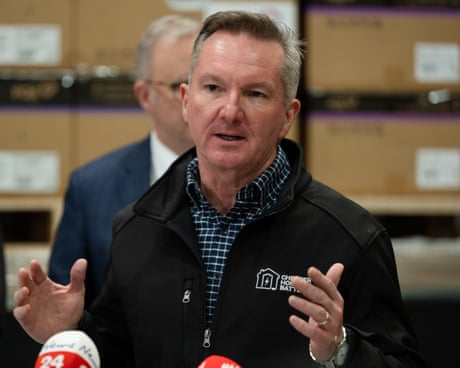
Chris Bowen insists federal Labor’s new national laws on datacentre power supply will not include carve-outs for Queensland and the Northern Territory, with states that are eager to use coal and gas required to make their case to the national regulator.
The energy minister told Guardian Australia on Friday the only concession agreed at Wednesday’s meeting of national cabinet was that existing coal and gas supply could be used on the condition it could be shown to be cheaper than renewables.
Researchers say an untapped source of clean energy has been hiding beneath Western Australian soil, where some of the world’s largest iron deposits could harbor an unexpected secret.
These deposits, according to researchers at Edith Cowan University (ECU), are also rich in magnetite capable of producing hydrogen when it interacts with hot water, under conditions that mirror those which occur naturally deep underground.
Such processes, the researchers say, could be stimulated in magnetite-rich locations like Western Australia’s naturally reddish Pilbara region, stimulating hydrogen production and potentially unleashing a valuable, untapped clean energy source.
An Unexpected Source of Energy
Magnetite is abundant within the Pilbara’s vast banded iron formations, and when subsurface temperatures rise, the naturally occurring interactions between this iron-rich mineral and water lead to chemical reactions—the same kind which can produce molecular hydrogen.
“Australia could be sitting on a massive, untapped energy reserve,” said ECU Associate Professor Alireza Keshavarz of the team’s recent discovery, “and the potential is enormous.”
To better understand the processes that may hold the key to unlocking Australia’s untapped subsurface energy reserves, the ECU team began by placing samples of magnetite in water heated to 200 degrees Celsius and under extreme pressure. The experiments continued for close to two months, during which time the researchers were able to recreate some of the same conditions that occur naturally deep within the Earth.
Doing so allowed the team to look at how hydrogen naturally forms, as well as what geological conditions help to sustain its production.
“Western Australia has some of the world’s largest banded iron formations,” said Kaveh Moghanirahimi, the lead author of a recent study detailing the team’s findings.
“If we can unlock this resource at scale, it could be transformative for our energy future,” he adds.
Water May Hold the Key
Significantly, the team says they found that just having large amounts of magnetite in subsurface deposits may not be all that is required for significant hydrogen production. Another key component is having enough water present to be able to reach fresh mineral surfaces for the hydrogen-producing reactions to continue.
Importantly, the researchers found that simply having large quantities of magnetite underground may not be enough. Water must also be able to reach fresh mineral surfaces for the hydrogen-producing reactions to continue.
“Our findings show that hydrogen production depends not only on the amount of magnetite present, but also on how easily water can access fresh mineral surfaces through fractures, pores, and permeable pathways,” said Professor Stefan Iglauer, a researcher with ECU’s School of Engineering.
Hydrogen through Injection?
The researchers also say they have identified a potential method for stimulating hydrogen generation by injecting a solution into banded iron formations. This, they say, points to a novel possibility: that geological deposits of the right specific kind may also one day function as sites for engineered production of naturally generated hydrogen.
That possibility, the researchers argue, could prove to be significant as governments and industries seek lower-emission alternatives to hydrogen currently produced mainly using fossil fuels. Also, unlike conventional methods of hydrogen manufacturing, tapping geological hydrogen only requires leveraging natural reactions that occur underground.
A Step Toward the Future of Clean Energy
Presently, the research remains an early step toward determining whether the process can be translated from lab experiments into a commercially viable method of producing clean energy with the resources present in natural geological formations.
However, if researchers can continue to capitalize on methods that allow hydrogen to be generated and recovered at economical scales, there are already remarkable possibilities in terms of what Western Australia’s enormous iron formations could one day help provide.
“This work helps bridge the gap between laboratory experiments and real geological systems,” Iglauer said.
Micah Hanks is the Editor-in-Chief and Co-Founder of The Debrief. A longtime reporter on science, defense, and technology with a focus on space and astronomy, he can be reached atmicah@thedebrief.org. Follow him on X @MicahHanks, and at micahhanks.com.
Well-preserved bones have often been found in submerged caves, but interpreting how they accumulated and what happened to them afterward has been difficult. Researchers have had limited tools for determining the environmental processes that alter remains over time.
With help from specialist cave divers from the Cave Divers Association of Australia, Walker’s team examined animal bones recovered from Green Waterhole and Gouldens Sinkhole, two underwater cave systems near Mount Gambier, South Australia. Gouldens Sinkhole reaches 63 meters deep through a nearly 30-meter-wide shaft.
The researchers used radiocarbon dating methods on 41 specimens and examined them at various scales, starting with a visual evaluation of spatial distribution and surface wear before progressing to portable X-ray fluorescence, scanning electron microscopy, and protein analysis. Using these techniques, the researchers identified chemical residue, signs of bacterial damage, and traces of ancient DNA. The group also identified changes associated with different preservation environments by comparing submerged bones with those recovered from nearby dry caves.
Light, Algae, and Total Darkness
Light played an important role in some of the most noticeable changes to the bones. Near the cave entrances, where sunlight was available, algae and aquatic plants grew on the bone surfaces and left black biological stains, while cyanobacteria produced circular etchings and tunnels on the outer surfaces. Deeper within the caves, in areas where sunlight did not reach, the bones mostly stayed the same and retained their original characteristics.
This distinction is important because it shows that staining alone does not indicate that a bone was buried in sediment or fully submerged, as previously assumed. Instead, it shows that the bone was simply exposed to light.
A Different Kind of Damage on Dry Land
Bones from the dry sections of the cave systems showed different patterns. In the absence of water and algae, land-based bacteria penetrated the bone from within, while plant roots created long grooves on the surface as they grew in search of nutrients. These features are distinct from those observed in submerged specimens.
Cows, Kangaroos, and One Very Specific Sheep
The bones in the team’s study were not from ancient megafauna, belonging instead to cattle, kangaroos, emus, sheep, pigs, dingoes, rabbits, possums, quolls, and swamp rats. European settlers likely deposited the specimens in the caves after they arrived in the Mount Gambier region in the 1840s. DNA tests showed that one bone came from a Merino sheep.
Walker’s team built a reliable reference set by choosing bones they could date accurately and species they could clearly identify, with the aim that, going forward, this will help researchers use the same methods on older fossils that are harder to study.
A Deeper Mystery Still Submerged
The ultimate goal is to apply this framework to older material. Caves in the Mount Gambier region, such as Tank Cave and Englebrechts Cave, have yielded remains of Australia’s Pleistocene megafauna, including Diprotodon, a large marsupial similar in size to a rhinoceros, Thylacoleo carnifex, the largest known marsupial predator, and short-faced kangaroos that reached about 2 meters in height. Some of these fossils have remained undisturbed for more than 60,000 years.
Using Walker’s framework when looking at these specimens might help researchers understand how Australia’s megafauna fossils accumulated and could also provide a method for investigating factors such as human activity and environmental change that caused their extinction.
“This study has delivered the first framework for interpreting how megafauna fossils formed, survived, and changed in underwater caves,” Walker said. “It will provide archaeologists and paleontologists worldwide with a powerful new tool for reconstructing past environments and histories in these challenging conditions.”
Researchers have yet to determine whether applying the framework to much older megafauna remains will reveal similar patterns. Divers and scientists are still working to investigate the region’s submerged fossil record.
Austin Burgess is a writer and researcher with a background in sales, marketing, and data analytics. He holds an MBA, a Bachelor of Science in Business Administration, and a data analytics certification. His work focuses on breaking scientific developments, with an emphasis on emerging biology, cognitive neuroscience, and archaeological discoveries.

 Login