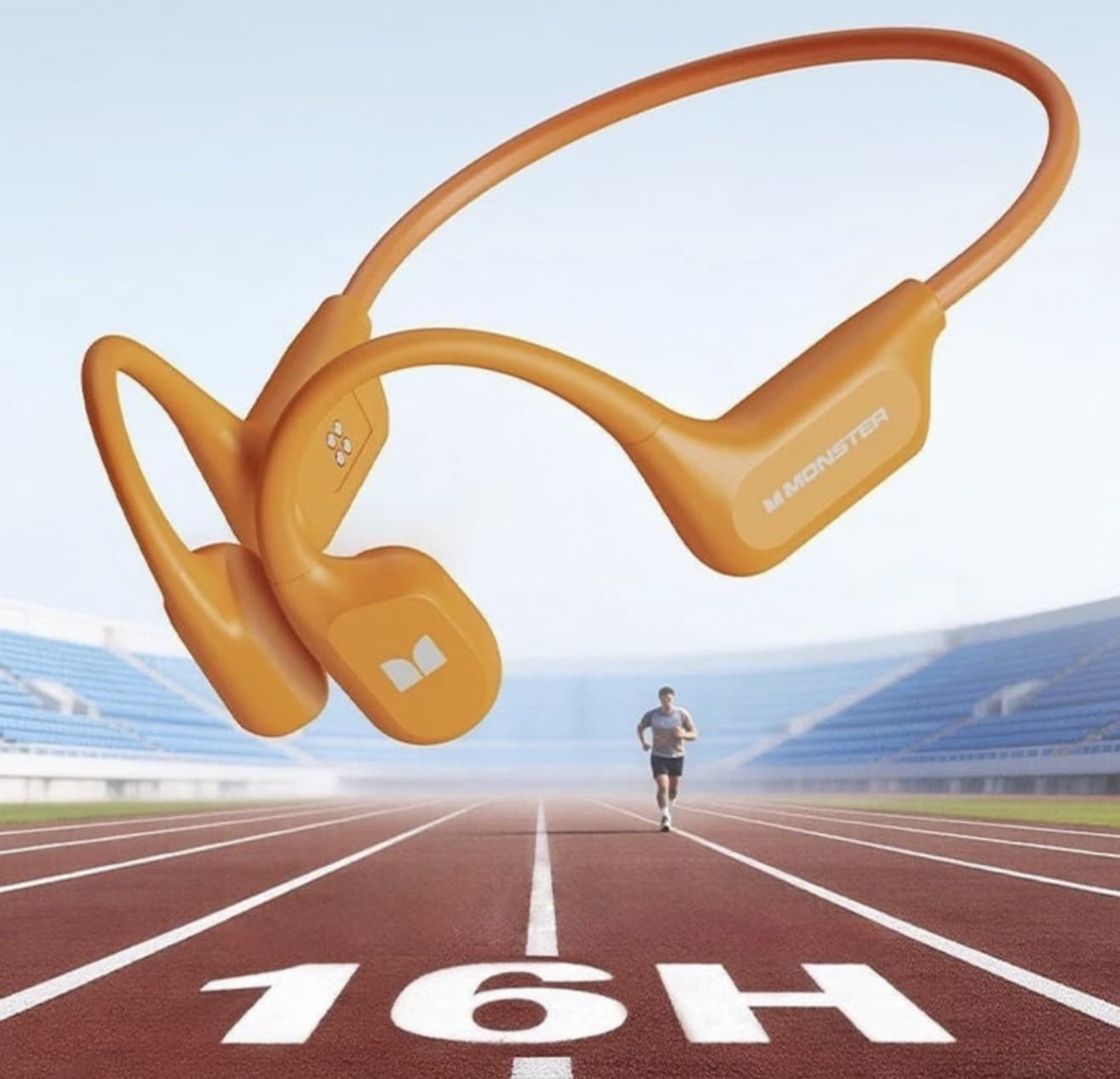
Wireless headphones are convenient for everyday listening, but they are not always designed for demanding environments. Swimming, outdoor running, heavy workouts, and rainy conditions can quickly expose the limitations of ordinary earbuds. The Monster MH22282 takes a different approach by combining an open-ear neckband design with IPX8 water resistance, built-in storage, Bluetooth 6.0 and a lightweight frame.
Rather than depending entirely on a smartphone, the MH22282 can also operate as a standalone music player through its integrated 32GB memory. That makes it particularly interesting for people who want to exercise without carrying a phone.
Open-Ear Design With a Focus on Active Use
The Monster MH22282, open-ear headphones uses a neckband-style construction that sits around the back of the head and keeps the ears open. This design can be useful during outdoor activities because users can continue to hear music while remaining aware of sounds around them.
The headset weighs just 23.5 grams, according to the product specifications, so it is designed to avoid the heavier feeling associated with some over-ear sports headphones. Its frame uses a flexible titanium memory alloy, while the ear-hook structure is intended to keep the headset stable during movement.
That combination makes the MH22282 better suited to activities such as running, cycling, gym sessions and other situations where a secure fit matters more than a traditional sealed earbud design.
IPX8 Waterproofing Makes Swimming the Main Attraction
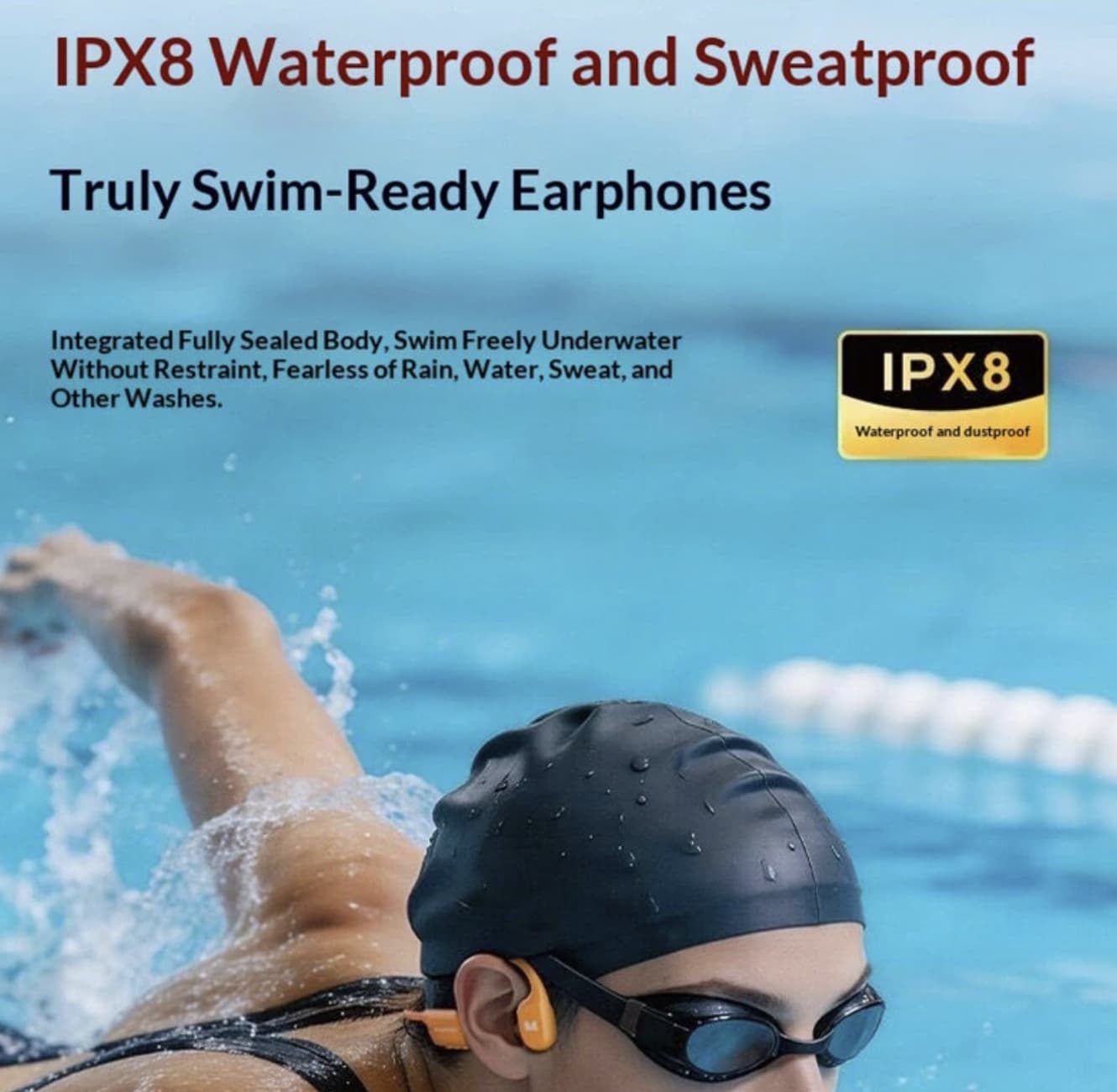
One of the most distinctive features of the MH22282 is its IPX8 waterproof rating. Monster’s product listing positions the headset for swimming, workouts, rainy conditions and other situations where exposure to water could be a problem for conventional wireless headphones.
However, there is an important distinction between waterproof hardware and underwater wireless connectivity.
Bluetooth signals do not work reliably underwater, so the MH22282 is designed to use its internal memory when swimming. In other words, users can load music onto the headset before entering the pool and listen without maintaining a Bluetooth connection to a smartphone.
This is arguably more useful than simply calling the headset waterproof. The combination of water resistance and local music storage addresses one of the biggest practical problems with using wireless headphones in waterproof headphones for swimming.
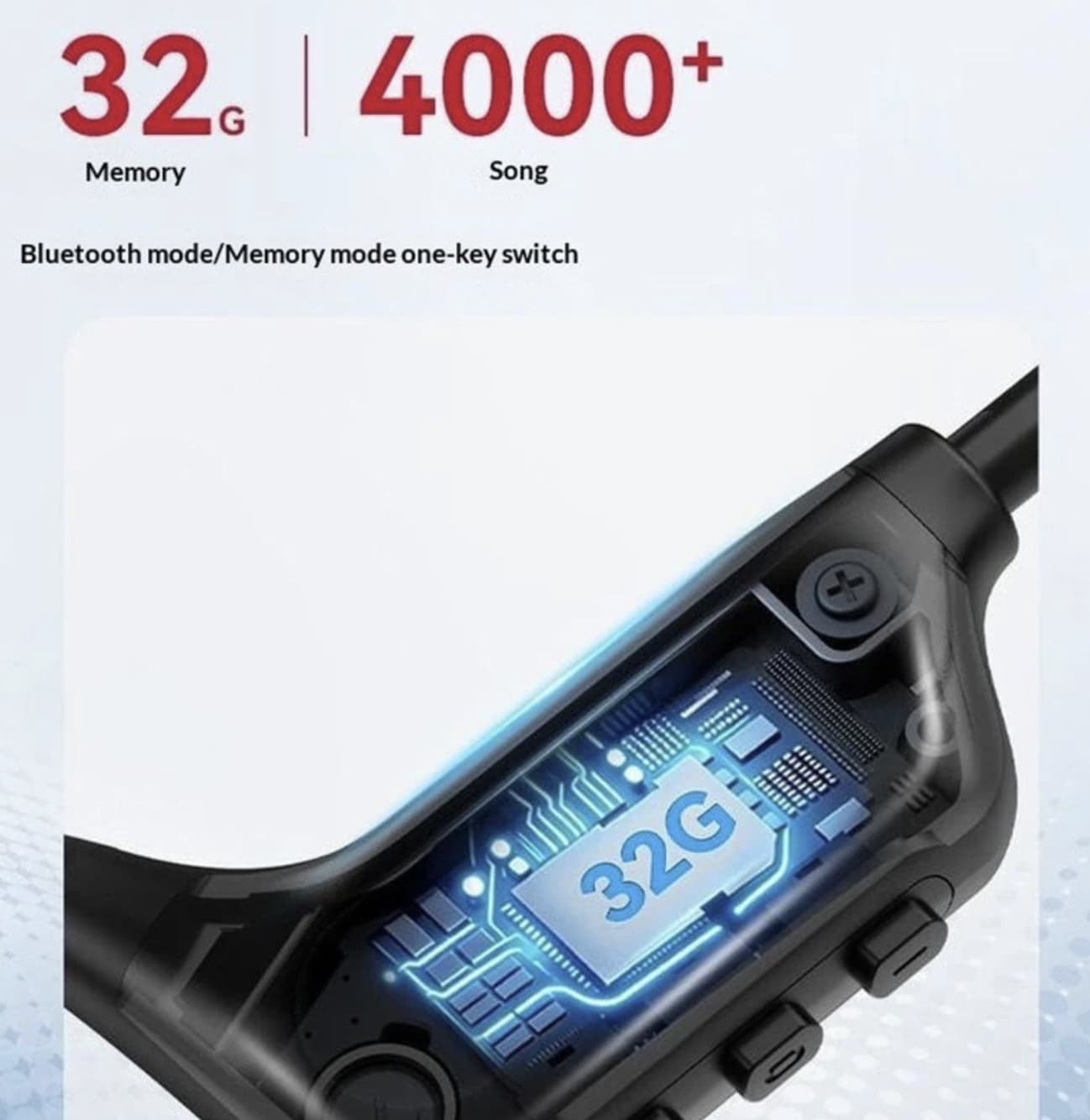
32GB Storage Turns It Into a Standalone Music Player
The built-in 32GB memory is another feature that separates the MH22282 from many conventional Bluetooth headsets.
When the headset is being used for running or swimming, carrying a smartphone can be inconvenient. With headphones with built-in storage, music can be transferred to the headset beforehand, allowing users to leave their phone behind.
The product listing claims that the 32GB storage can hold more than 4,000 songs, although the actual number will depend on file format, bitrate and the size of the individual audio files.
The headset also supports switching between Bluetooth and memory modes, giving users two different ways to listen depending on where they are using it.
For pool workouts, this local-storage approach is particularly important because it removes the need for an underwater Bluetooth connection.
Bluetooth 6.0 for Everyday Wireless Listening
Outside the pool, the Monster MH22282 works as a conventional wireless headset through Bluetooth 6.0.
The specifications list support for HSP, HFP, A2DP and AVRCP profiles, with a stated transmission distance of up to 10 meters. It also supports AAC and SBC audio codecs.
This makes the headset suitable for more than sports. It can be paired with a phone for music, podcasts and calls, or connected to another compatible device for everyday listening.
Bluetooth is therefore the more convenient mode for commuting and general use, while the internal memory becomes more valuable when users are swimming or exercising without a phone.
11.2mm Drivers and Open-Ear Audio
The MH22282 features 11.2mm dynamic drivers. Monster’s listing says the drivers are tuned to provide stronger bass, detailed midrange and clear high frequencies while keeping the ears open to the surrounding environment.
The open-ear approach comes with a different listening experience from sealed in-ear headphones. It does not aim to completely isolate the listener from the outside world. Instead, it provides audio while allowing environmental sounds to remain part of the listening experience. So open-ear vs in-ear headphones are very different.
That can be useful when running outdoors or exercising in shared spaces, although people looking for strong passive isolation or deep noise blocking may prefer a conventional in-ear design.
ENC Is Mainly Useful for Calls
For voice communication, the MH22282 includes microphones and environmental noise cancellation technology.
Monster says its ENC system uses dual microphones to help identify the user’s voice and reduce surrounding noise during calls.
This feature is more relevant to phone calls than music playback. It can be useful when taking calls in places with background noise, although real-world call performance will naturally depend on the environment, wind conditions and the connected phone.
Up to 16 Hours of Playback
Battery life is rated at up to 16 hours of continuous playback, while the listed charging time is approximately two hours. Monster also claims that a 10-minute quick charge can provide around 90 minutes of listening.
Actual battery life will vary according to volume, connection conditions, call usage and other factors, but the claimed 16-hour figure gives the headset enough endurance for extended workouts and daily listening.
For someone who runs regularly or spends several hours at the gym, avoiding daily charging can be a meaningful advantage.
Monster MH22282 Specifications
Feature
Monster MH22282
Design
Open-ear neckband
Model
MH22282
Bluetooth
6.0
Audio codecs
AAC / SBC
Speaker
11.2mm
Internal storage
32GB
Waterproof rating
IPX8
Frequency response
20Hz–20kHz
Bluetooth profiles
HSP / HFP / A2DP / AVRCP
Transmission distance
Up to 10m
Playback time
Up to 16 hours
Charging time
About 2 hours
Microphone
Yes
Noise cancellation
ENC
Weight
23.5g
Dimensions
128 × 98 × 48mm
Color
Black/Orange
Specifications are based on the current product listing and should be treated as manufacturer/merchant-provided figures rather than independent laboratory measurements.
Who Is the Monster MH22282 For?
The MH22282 makes the most sense for users who need more than a standard pair of Bluetooth earbuds.
Swimmers are the clearest target group because the combination of IPX8 protection and onboard storage solves the problem of maintaining a wireless connection underwater.
Runners and outdoor athletes may also appreciate the open-ear design, which avoids completely blocking the ears and keeps the headset lightweight.
Gym users can use Bluetooth for normal smartphone playback or switch to internal storage when they want to exercise without carrying their phone.
It may be less attractive for listeners who prioritize strong passive isolation, compact true-wireless earbuds or a traditional sealed listening experience.
What Makes the MH22282 Different?
Many sports headphones focus on only one major feature, such as water resistance, long battery life or a secure fit. The Monster MH22282 combines several of these ideas into one device.
Its most interesting combination is not Bluetooth 6.0 alone or the 16-hour battery rating. Instead, it is the relationship between IPX8 protection and 32GB internal storage. Bluetooth remains useful for everyday listening, while local storage provides a practical solution when wireless connectivity becomes unreliable underwater.
The 23.5-gram open-ear construction also gives the headset a clear fitness-oriented identity.
Final Thoughts
Monster MH22282 headphone is designed around a simple idea: a sports headset should remain useful when a smartphone or conventional wireless earbuds are no longer convenient.
Its open-ear neckband design, 23.5g weight, Bluetooth 6.0 connectivity and 16-hour claimed playback make it suitable for everyday exercise and wireless listening. More importantly, the combination of IPX8 waterproofing and 32GB internal storage gives it a specific advantage for swimming.
The biggest point to remember is that IPX8 does not mean Bluetooth will work normally underwater. The headset’s built-in memory mode is the practical solution for swimming, allowing music to be stored locally before entering the water.
For athletes who want one lightweight headset for running, gym sessions, outdoor activities and pool workouts, the Monster MH22282 offers a more specialized feature set than a typical Bluetooth headset.
Garmin smartwatch deals are hardly uncommon nowadays, but any discount on the brand's premium Fenix line is sure to turn heads.
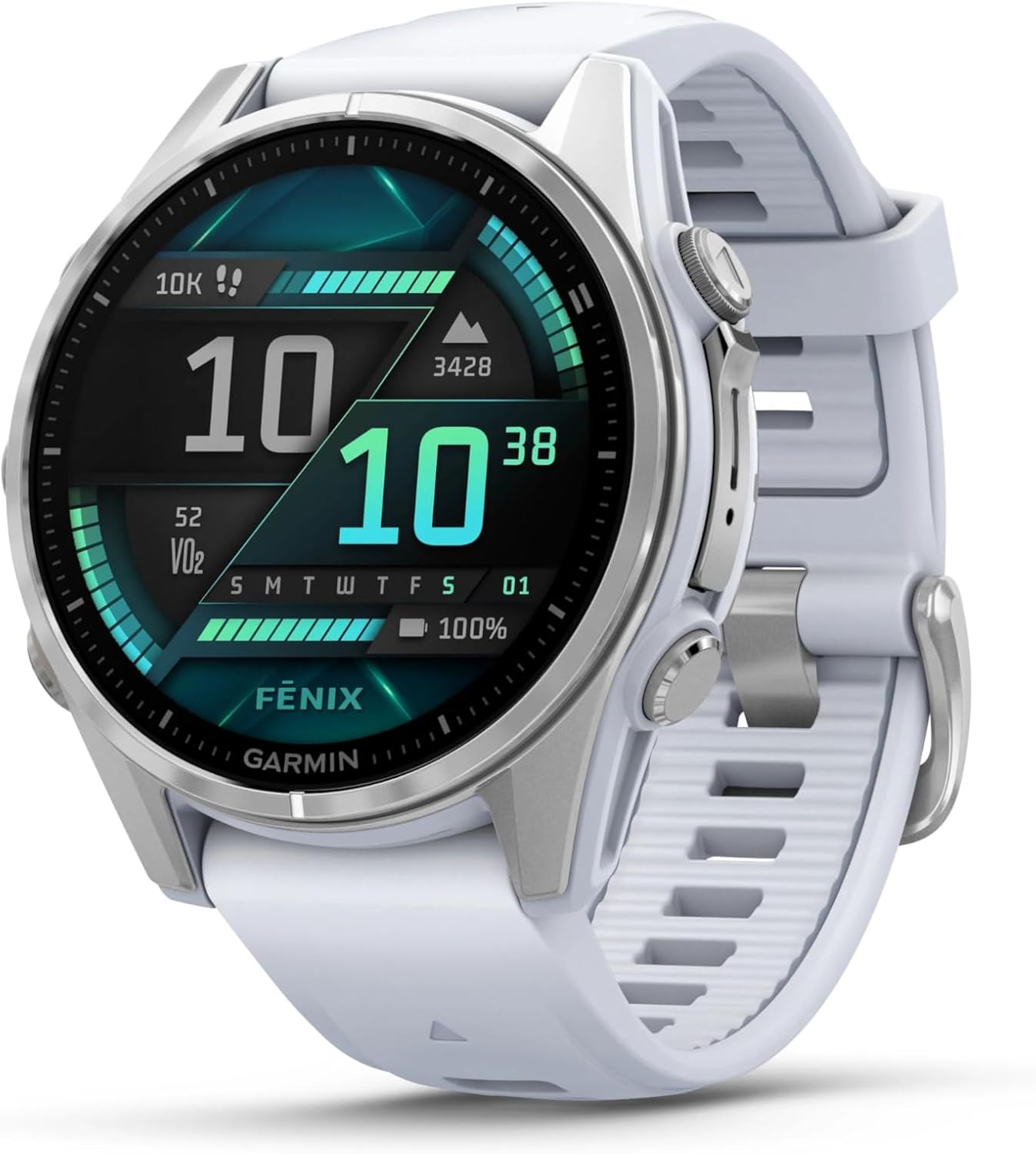
Head to Amazon before its Labor Day deals expire and you can score a straight 25% discount on the Garmin Fenix 8, a classic fitness watch that still impresses with a rugged design and a suite of comprehensive fitness tracking features.
It may not be the newest Garmin Fenix watch around any longer (that honor belongs to the great Fenix 9), but if you don't mind going with a last-gen device, you'll get a lot more bang for your buck with the Fenix 8.
Head to Amazon today and you can score a straight 25% off the Garmin Fenix 8 with AMOLED display. This leftover Labor Day discount knocks the price of the watch down to $749, which is a return to the lowest price ever recorded for this particular variant (43mm in Whitestone). Amazon is saying that stock is low, however, so don't wait too long if you're interested.View Deal
Despite its last-gen status, the Fenix 8 continues to impress as one of the best Garmin watches on the market today, thanks to the wearable's sophisticated blend of rugged design and powerful performance. The watch boasts a vibrant AMOLED face with stainless steel and reinforced polymer components, plus you get military-grade durability with 10ATM water resistance (so you can wear it in the pool).
The Fenix 8 also sports a built-in LED flashlight and microphone for voice commands/calls, while under the hood you get 32GB of onboard storage and up to 10 days of battery life on a single charge. The fitness watch also comes with all of the health and fitness tracking tools we've come to expect from the brand, including heart rate, SpO2, and ECG monitoring, alongside features like Body Battery and Garmin Coach.
Indeed, the newer Garmin Fenix 9 is the better watch, but these upgrades come at a price. If you want the flagship Garmin experience without spending an arm and a leg, this Fenix 8 deal presents a convenient alternative. Just don't wait too long to make your move.
As we approach the release of the newest iPhones, Chuck Joiner, Marty Jencius and Chuck Joiner look at how science fiction and popular culture imagined modern communication long before the technology existed. From early video-phone concepts and Dick Tracy to Star Trek, Get Smart, Space: 1999, and more, the panel examine fictional devices that anticipated smartphones, wearables, Bluetooth earbuds, video calls, authentication, mobile computing, and maybe even foreshadow what’s coming next. (Part 1)
Ultrahuman announced that it has raised $70 million, thanks to investments from Qualcomm Ventures, Labcorp, Alpha Wave, and more.
The company says these investments will help push its desires to create a world where human computing helps us and our health.
Ultrahuman says it wants computational platforms that can understand the human body, delivering important, crucial pieces of actionable intel.
This afternoon (Sept 3), Ultrahuman announced another substantial investment from several companies. The announcement comes at a time when Ultrahuman wants to push the envelope for human computing.
A press release reveals that Ultrahuman has received $70 million in investment funding from Qualcomm Ventures, Labcorp, Alpha Wave, Blume, Nexus, Alteria, and more. As stated before, human computing is where Ultrahuman is placing its focus. Moreover, Ultrahuman states this investment will help it shift from "a wearable health company into a human-computer interface company built around the body."
Ultrahuman highlights several features daily users will know well: Jade AI, its smart rings, and M1/M2 Live continuous glucose monitoring. These features nail Ultrahuman's goal: systems that understand the state of the user's body. The company no longer wants features that "wait for human input." Through AI and newer computing systems, Ultrahuman wants more proactive, smart features that deliver true aid.
The company states the future of computing platforms should "understand the human body continuously... and turn those signals into intelligence that meaningfully improves a person’s life."
The company discussed how it's continued to evolve the smart ring form factor with science and computational platforms. Ultrahuman drew attention to Pulsomics, which was launched this year. This research platform aids its software and smart rings with the tools required to turn the body's complex signals and information into actionable intel for the user.
Power ahead with intel that means something
(Image credit: Ultrahuman)
The investments Ultrahuman has received in September will help continue the work it's trying to complete. It says "development across sensing, AI, miniaturised electronics and health algorithms" will deepen and accelerate.
PowerPlugs are another major part of the Ultrahuman experience. The company describes it as a feature that brings "specialised health capabilities" to the platform. Take Ultrahuman and Les Mills' partnership from April. It brought workout sessions that rivaled what you'd find in a traditional studio right to your phone. The app would also take advantage of your biomarkers to understand key data, so you know when to push yourself and when to let off.
On the other hand, we have Ultrahuman's significant Emerald update from July. The "decision engine," otherwise known as the UltraSphere, felt like Ultrahuman's next step into this "human computing" world for our health. It can deliver over 60 "Next Best Action" suggestions to users using sleep, HRV, recovery, weather, location, and more.
At IFA 2026, the Moto Watch Ultra was announced with Wear OS, a partnership with Polar for fitness, on a 46mm stainless steel body and a 1.5-inch OLED display.
The continued Polar partnership adds various sleep features like "Serene" for breathing exercises and Nightly Recharge and Sleep Plus Stages for sleep score and more.
The Moto Watch Ultra will be available on September 10 for $349.
That's not all Motorola has prepared this midweek. The Moto Watch Ultra was debuted at IFA 2026, expanding the company's wearable portfolio. The Watch Ultra uses Google's Wear OS, incorporating the Play Store and Moto's AI, Qira. However, the major highlight with the Moto Watch Ultra is Motorola's continued partnership with Polar.
Polar excels at wearable sports and fitness, and it's bringing that prowess to the Moto Watch Ultra. For its wellness features, the Watch Ultra sports "Serene." This breathing exercise mode delivers real-time "biofeedback" to help the user calm their breathing and reach a more optimal rhythm. Nightly Recharge and Sleep Plus Stages help users understand their recovery and sleep score.
If you're looking to get more active and track your progress, Polar's involvement brings a breadth of features. Consumers will find expected features like Activity Goal, Activity Score, and Active Intensity Zones. What's more, Smart Calories delivers an overview of your daily calories burned, alongside an Inactivity Alert and Energy Sources (metabolic insights).
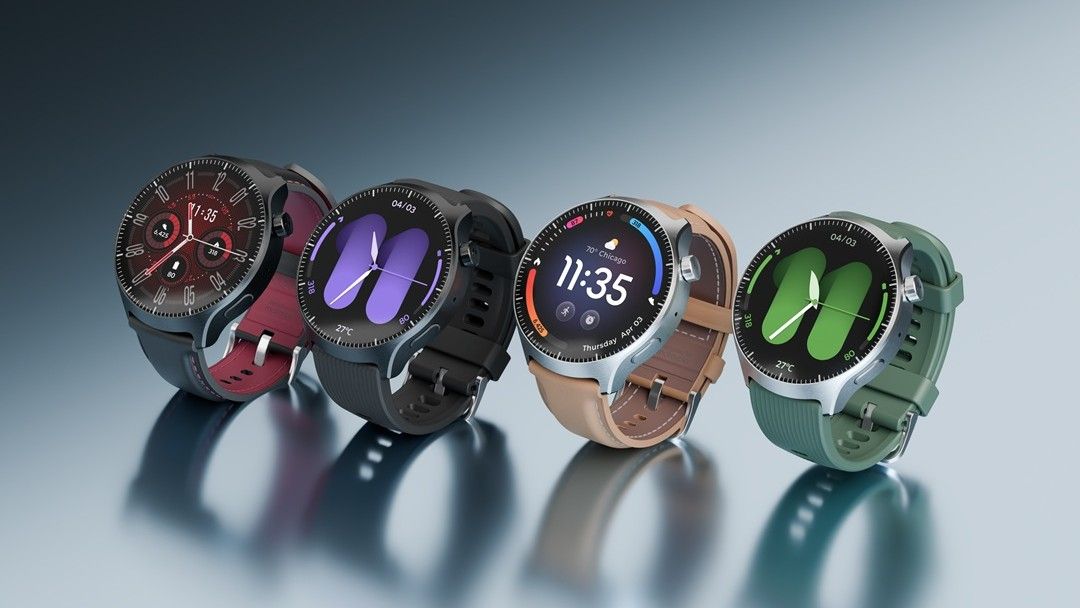
The Moto Watch Ultra offers a 1.5-inch OLED display on a 46mm stainless steel body. Inside, you'll find Qualcomm's Snapdragon W5 Plus Gen 1 SoC. The Watch Ultra is said to last two days with "active use" with its AOD (always-on display) disabled. Consumers can choose between the "breathable" silicone band (PANTONE Black Beauty or PANTONE Mountain View) or the leather strap (Black Beauty or Nuthatch).
Not bad
(Image credit: Motorola)
Elsewhere, Motorola highlights the "Running Coach." As it sounds, you can expect a guided experience for new and veteran runners (walking, too). The company states the Running Coach can help users struggling with pacing themselves. Other details include Google Wallet support, dual-band GPS, IP68, and 5ATM underwater protection.
At IFA 2026, Motorola confirmed that the Watch Ultra will be available on September 10, starting at $349 on motorola.com. Consumers will also find the device at Verizon on September 24. The Watch Ultra will expand to more places, such as T-Mobile, Metro by T-Mobile, AT&T, Xfinity Mobile, and Consumer Cellular, "in the coming months."
Android Central's Take
I'm pleasantly surprised by the Moto Watch Ultra. Motorola already has what you'd consider a "basic" watch. It misses the Ultra tag. The design is fairly simple, very watch-like. The Watch Ultra feels cleaner to me. I also think the Polar partnership is a huge win for Motorola to continue with the device. I already think I hear my colleague Derrek Lee putting one on his wrist and heading outside.
Editor’s note: This story was originally published in July 2015
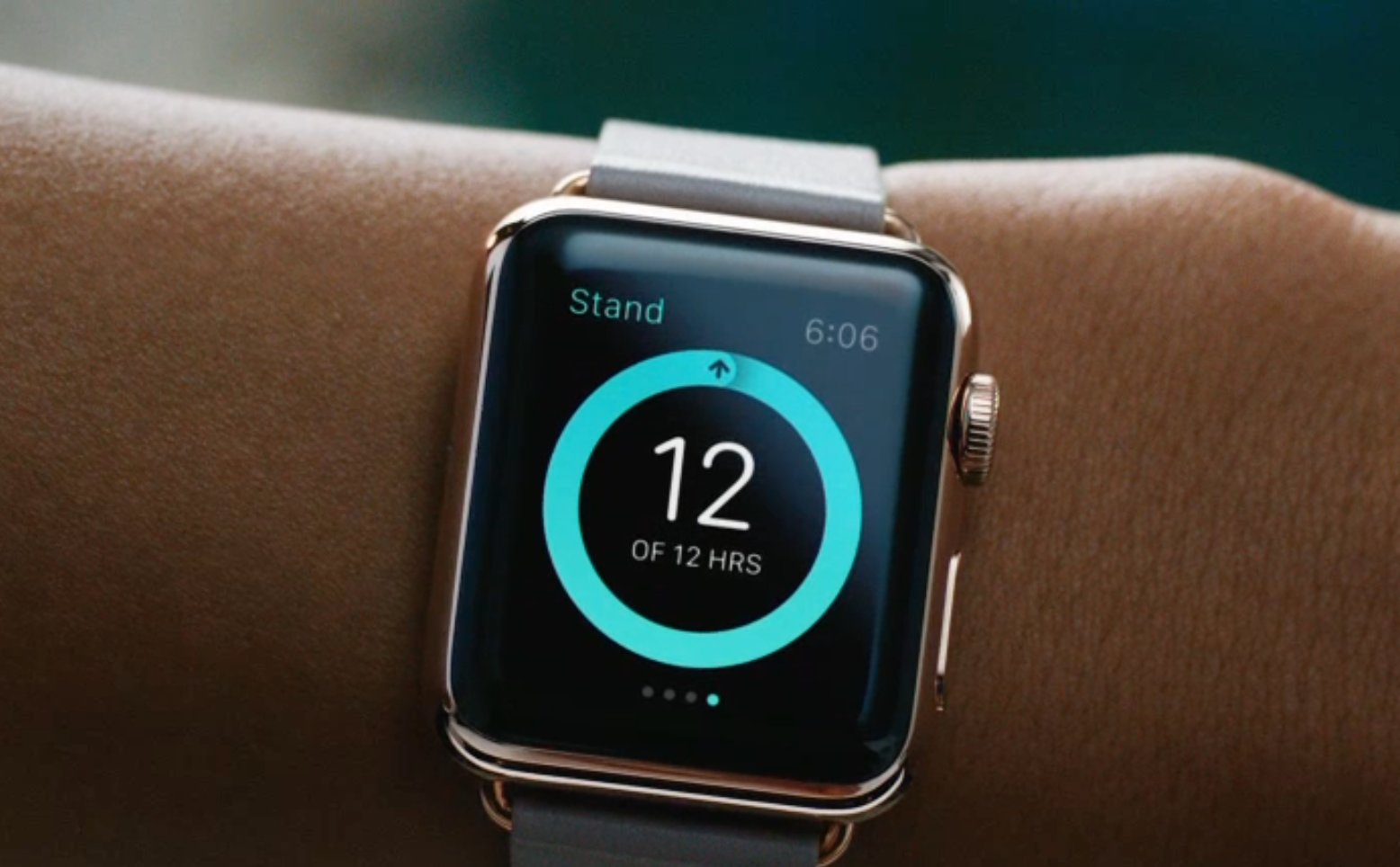
What makes a gadget worth wearing? Apple is betting it knows better than anyone, and today they’ll likely reveal the final details of the Apple Watch–the most anticipated piece of technology since, well, the last Apple device to hit the streets.
Apple is rarely a first mover in electronics. We’ve all grown used to the company walking into existing markets and redefining them: the original Macintosh, the iMac, the iPod, the iPhone, the iPad. When it decides to jump in a pool, it strives for an epic cannonball that sends waves throughout the rest of the industry.
Could this time be different? This is, after all, the first major new category Apple will stake out under the stewardship of Tim Cook. The Apple Watch is also unlike anything the company has ever tried before: It’s a device that relies almost as much on fashion as it does technology, with a price tag that some speculate may rise into the $10,000-dollar range when most competing devices cost between $100 and $250. Is this a pure hubris play from Cupertino?
Wearables Whereabouts
Apple’s challenge to sell a look will be more intense than usual. The company has, of course, always focused on aesthetics for its devices–a source of common criticism from competitors and detractors (yet the delight of many consumers). Yet it has never relied so heavily on the buy-in of the fashion community. With models wearing the new smartwatch in magazines and high-end jewelers talking to Apple, clearly the company has its eyes trained on the world of haut-couture. Yet fashion is notoriously fickle; one day’s hot accessory is the next day’s unspeakable faux pas. Even for a company that’s often called elitist, Apple risks selling a device for the few rather than something with mainstream appeal.
Wherever there’s challenge, however, there’s also opportunity–and the wearables market has many. Despite the number of devices clamoring for space on your wrist and on your face, no company has cracked exactly what gives a wearable device mass appeal. Fitbit is perhaps the closest with 70 percent of the fitness-tracker market. Still, they own a niche and one that doesn’t necessarily place it in direct competition with the Apple Watch.
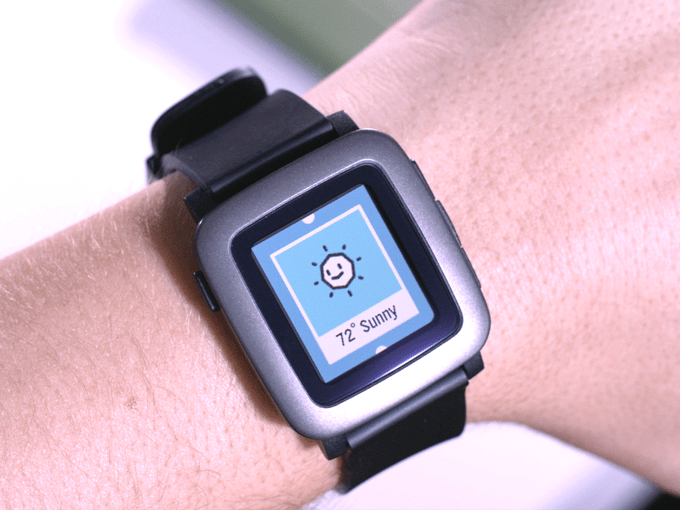
The most direct competitor would be Pebble, which offers what many think is the best smartwatch around. And though it’s made smartwatches since 2013, its products have evolved considerably in that time, and Best Buy continues to sell the devices, finding a truly mainstream market has eluded Pebble.
The startup also isn’t playing in the same league. By my calculations, Pebble has–as of this writing–pre-sold nearly 81,500 of its latest color-screened Pebble Time and Pebble Time Steel smartwatches, bringing in $17 million in revenue. For the sake of comparison Apple, in its most recent quarter, sold 30,000 iPhones per hour and had revenue of $74 billion. Pebble is playing single-A ball; Apple is in the major leagues.
Pebble
Look at it that way, and the wearables market doesn’t seem so different from the smartphone market before Apple entered. Remember what those devices looked like before the iPhone? Bulky, inconsistent plastic objects with frustratingly small screens and physical keyboards. Fast-forward eight years, and every smartphone looks more or less like an iPhone.
Maybe the Apple Watch will do to wearable devices what the iPod did to MP3 players. But it could just as well be an evolutionary cul-de-sac that ends up in a dustbin next to our PDAs or videophones, to eventually be incorporated into some other far more compelling piece of tech down the road.
Technology That Does Less
The biggest risk for the Apple Watch is the wearable device market as a whole. As of yet, people aren’t crying out for devices to wear on their wrists or faces. They seem futuristic, but perhaps too much–and are better relegated to a retro-future of flying cars and commuting to lunar colonies via rocket ship. The reaction from most of the average folks that I talk to about the Apple Watch is, “why do I need such a thing?”
Take my girlfriend, for example. To her the Apple Watch is just another technological distraction in a world already rife with them. She’s worried that instead of constantly pulling out my phone to check Twitter, reply to text messages, and triage emails, I’ll spend all my time staring at my wrist.
That’s not unjustified. I bought the first iPhone back in 2007, and my friends often joked that it might catch on fire if I didn’t take it out of my pocket, so often did I seem to have it in hand. Eight years later and we’re all glued to our screens, spending far less time engaged with the people around us.
If I have one hope for the Apple Watch, and for wearables in general, it’s that they will make us less dependent on technology. Wearables should dole out the information we want, when we need it, and in bite-size chunks. They shouldn’t further train us to be zombies who constantly stare at screens. The challenge, then, is to smartly and seamlessly integrate technology into daily life while keeping our eyes ahead instead of fixated on glowing slabs (be they phone-sized or watch-sized). If the Apple Watch can deliver on this, then their timing couldn’t be better.
What makes a gadget worth wearing? Apple is betting it knows better than anyone, and today they’ll likely reveal the final details of the Apple Watch–the most anticipated piece of technology since, well, the last Apple device to hit the streets.
Apple is rarely a first mover in electronics. We’ve all grown used to the company walking into existing markets and redefining them: the original Macintosh, the iMac, the iPod, the iPhone, the iPad. When it decides to jump in a pool, it strives for an epic cannonball that sends waves throughout the rest of the industry.
Could this time be different? This is, after all, the first major new category Apple will stake out under the stewardship of Tim Cook. The Apple Watch is also unlike anything the company has ever tried before: It’s a device that relies almost as much on fashion as it does technology, with a price tag that some speculate may rise into the $10,000-dollar range when most competing devices cost between $100 and $250. Is this a pure hubris play from Cupertino?
Wearables Whereabouts
Apple’s challenge to sell a look will be more intense than usual. The company has, of course, always focused on aesthetics for its devices–a source of common criticism from competitors and detractors (yet the delight of many consumers). Yet it has never relied so heavily on the buy-in of the fashion community. With models wearing the new smartwatch in magazines and high-end jewelers talking to Apple, clearly the company has its eyes trained on the world of haut-couture. Yet fashion is notoriously fickle; one day’s hot accessory is the next day’s unspeakable faux pas. Even for a company that’s often called elitist, Apple risks selling a device for the few rather than something with mainstream appeal.
Apple
Wherever there’s challenge, however, there’s also opportunity–and the wearables market has many. Despite the number of devices clamoring for space on your wrist and on your face, no company has cracked exactly what gives a wearable device mass appeal. Fitbit is perhaps the closest with 70 percent of the fitness-tracker market. Still, they own a niche and one that doesn’t necessarily place it in direct competition with the Apple Watch.
The most direct competitor would be Pebble, which offers what many think is the best smartwatch around. And though it’s made smartwatches since 2013, its products have evolved considerably in that time, and Best Buy continues to sell the devices, finding a truly mainstream market has eluded Pebble.
The startup also isn’t playing in the same league. By my calculations, Pebble has–as of this writing–pre-sold nearly 81,500 of its latest color-screened Pebble Time and Pebble Time Steel smartwatches, bringing in $17 million in revenue. For the sake of comparison Apple, in its most recent quarter, sold 30,000 iPhones per hour and had revenue of $74 billion. Pebble is playing single-A ball; Apple is in the major leagues.
Pebble
Look at it that way, and the wearables market doesn’t seem so different from the smartphone market before Apple entered. Remember what those devices looked like before the iPhone? Bulky, inconsistent plastic objects with frustratingly small screens and physical keyboards. Fast-forward eight years, and every smartphone looks more or less like an iPhone.
Maybe the Apple Watch will do to wearable devices what the iPod did to MP3 players. But it could just as well be an evolutionary cul-de-sac that ends up in a dustbin next to our PDAs or videophones, to eventually be incorporated into some other far more compelling piece of tech down the road.
Technology That Does Less
The biggest risk for the Apple Watch is the wearable device market as a whole. As of yet, people aren’t crying out for devices to wear on their wrists or faces. They seem futuristic, but perhaps too much–and are better relegated to a retro-future of flying cars and commuting to lunar colonies via rocket ship. The reaction from most of the average folks that I talk to about the Apple Watch is, “why do I need such a thing?”
Take my girlfriend, for example. To her the Apple Watch is just another technological distraction in a world already rife with them. She’s worried that instead of constantly pulling out my phone to check Twitter, reply to text messages, and triage emails, I’ll spend all my time staring at my wrist.
That’s not unjustified. I bought the first iPhone back in 2007, and my friends often joked that it might catch on fire if I didn’t take it out of my pocket, so often did I seem to have it in hand. Eight years later and we’re all glued to our screens, spending far less time engaged with the people around us.
If I have one hope for the Apple Watch, and for wearables in general, it’s that they will make us less dependent on technology. Wearables should dole out the information we want, when we need it, and in bite-size chunks. They shouldn’t further train us to be zombies who constantly stare at screens. The challenge, then, is to smartly and seamlessly integrate technology into daily life while keeping our eyes ahead instead of fixated on glowing slabs (be they phone-sized or watch-sized). If the Apple Watch can deliver on this, then their timing couldn’t be better.
Ambient computing is here at home on speakers and in the workplace with apps like Wispr Flow, it’s only a matter of time before we carry it with us everywhere.
The Pebble Index is the best preview of that future. The simple gesture of pressing your thumb to your index finger is unbelievably natural. Especially for quick interactions. I’ve found myself setting more reminders, recording ideas, and keeping lists up-to-date. And I know that everything is being logged on my phone in the Pebble app. Better yet, you can connect the Pebble Index to your other AI tools using MCP. There’s also no reason for skeptics to fret, it’s not always listening for hot words or logging everything it hears.
As Ortolani explains, the device ticks a lot of boxes that other AI gadgets just don’t:
The thing that I think strikes me hardest with the Index is that it’s just so socially inoffensive. It’s a form factor people already love, it’s not distracting, it’s not always listening, and it’s affordable. It could be the first truly noncontroversial AI-first hardware.
I ordered a Pebble Index months ago and it should be coming within the next week or so. I bought it for many of the features Ortolani mentions. It’s on-demand, discreet, and a form factor that doesn’t look out of place. The hardware and software matter a lot with a device like this, but if Pebble has nailed it, I can see it becoming my go-to way to jot down brief notes. I’m excited to give it a try and report back.
 Login