❌

Reading view

US Army to bolster its obstacle breaching capability with autonomous vehicles
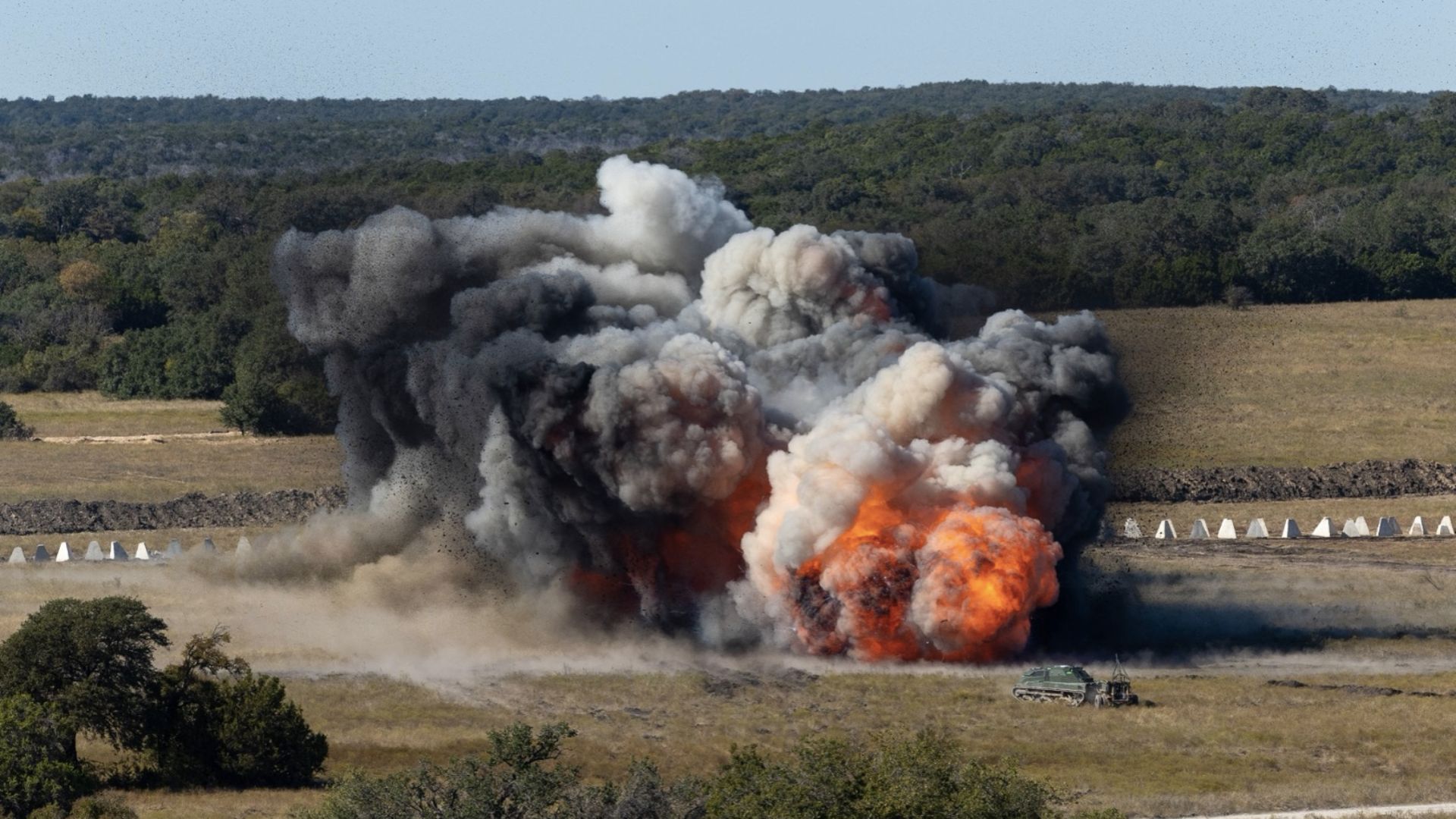
A Seattle-based company is set to boost autonomous operations in the U.S. Army. Overland AI, the leader in ground-based autonomous capabilities, has been selected by the U.S. Army’s Capability Program Executive (CPE) Mission Autonomy for the Engineer Autonomous Breaching Capability (EABC) initiative.

This $20 million contract signifies a broader shift from proving that autonomy works to delivering an operational breaching package that soldiers can employ.

Breaching mission can be executed most effectively with truly autonomous vehicles

“A breaching mission can be executed most effectively with truly autonomous vehicles,” said Byron Boots, co-founder and chief executive officer of Overland AI.

“Our proprietary software stack is the best solution for ensuring the safety of soldiers by modernizing the battlefield.”

The company revealed that its Overland AI’s software stack, OverDrive, can be integrated onto any ground vehicles to make them autonomous and enable multi-robot coordination. This technology is being leveraged for complex military operations such as breaching to overcome obstacles and facilitate the safe passage of follow-on forces.

With one operator to many robotic platforms, the company’s autonomous systems are designed to reduce the number of combat engineers needed to complete a breach. In doing so, we can reduce unnecessary risk to soldiers during these exceptionally hazardous missions. For operations that have historically cost many American lives, this shift has meaningful implications, according to a press release.

Autonomous mission capabilities, spanning software stacks, hardware platforms

CPE Mission Autonomy was established to accelerate Army acquisition of autonomous mission capabilities, spanning software stacks, hardware platforms, and modular payloads. Along with its partners and subcontractors, Overland AI is delivering the full capability, from operator to battlefield effect. 

Overland AI was selected for its innovative approach to autonomous breaching, honed through extensive work with warfighters across multiple combat engineer units and Department of War research labs, and more than 25 government demonstrations for DARPA, DIU, and the U.S. Army. The EABC program is designed to deliver a cohesive autonomous breaching package, and Overland AI is honored to bring this next generation capability to warfighters, as per the release.

Breaching is a critical combat-engineering function. Forces may need to create passages through obstacles so that troops, vehicles and other equipment can continue advancing. Traditionally, combat engineers must operate in highly exposed environments while identifying and overcoming these obstacles.

The EABC initiative seeks to change that equation by introducing autonomous systems into the process.

The objective is not simply to put a vehicle under remote control. Instead, the Army is pursuing a broader autonomous capability that combines vehicles, software, sensors, control systems and mission-specific equipment into a coordinated package.

That distinction is important as military organizations increasingly look at autonomy as a way to reduce human exposure to battlefield hazards.

The company says its approach has been developed through work with combat engineers, military research organizations and government programs. Overland AI also says it has conducted more than 25 government demonstrations involving organizations including DARPA, the Defense Innovation Unit and the U.S. Army.

This operational experience appears to have been an important factor in the company’s selection.

The Overland AI contract comes as the U.S. military is accelerating the integration of artificial intelligence and autonomous systems across multiple domains.

The Army has increasingly emphasized systems capable of operating with greater independence, while recent programs have explored autonomous intelligence, sensing, targeting, logistics and maneuver.

  •  

US allies lack resources to keep pace on AI, top Pentagon official says

Cameron Stanley talks up ‘revolutionary’ AI capabilities and says Washington working with Nato and Five Eyes partners

The Pentagon’s top artificial intelligence official said on Tuesday that America’s closest allies lack the resources to keep pace with the US military’s adoption of AI, and that Washington is working to steer them away from mistakes it made along the way.

“They don’t have the resources that we do, they don’t have the experience that we do, they don’t have the scale that we do,” Cameron Stanley, chief digital and artificial intelligence officer at the Department of Defense, said at an event at the Billington Cybersecurity summit. Of Nato and the Five Eyes, an intelligence-sharing partnership of the US, UK, Canada, Australia and New Zealand, Stanley said Washington was “actively working with a number of our partners” so “they don’t make the same mistakes that we make”.

Continue reading...

© Photograph: Alexander Drago/Reuters

© Photograph: Alexander Drago/Reuters

© Photograph: Alexander Drago/Reuters

  •  

National Park Service’s WWII series highlights Washington State nature reserve

As the National Park Service (NPS) continues highlighting the many roles of its parks during World War II, the western most landmass in the contiguous United States is getting its due: Olympic National Park. 

First designated a monument by President Teddy Roosevelt in 1909 before President Franklin D. Roosevelt’s reclassification as a park in 1938, the 922,650 acre protected region in Washington State is also recognized by UNESCO as an International Biosphere Reserve. Olympic National Park includes temperate forests, stretches of Pacific coastline, as well as subalpine forests and meadows. Thanks to its location on an isolated peninsula, it’s also home to many endemic plant and animal species including the Olympic marmot (Marmota olympus) and Piper’s bellflower (Campanula piperi).

The national park received a lot of attention during WWII for very different reasons, however. Its history is laid out in a recent social media post by Pearl Harbor National Memorial due to an ongoing search-and-rescue operation in the park. Because the peninsula extends further west than any other landmass in the contiguous United States, military and government officials considered it one of the most strategic—and vulnerable—places in the nation. The nearby Strait of Juan de Fuca funneled all traffic to-and-from vital ports in Seattle and Tacoma, as well as the naval base in Bremerton.

Hurricane Ridge black and white photo from Olympic National Park
Two of the outposts are still accessible by trail today. Credit: NPS

U.S. Army and Coast Guard engineers began installing 13 Aircraft Warning Service (AWS) stations throughout Olympic National Park in 1942, many from converted fire lookouts. Park rangers even staffed some of the stations, and continuously monitored the skies for potential aerial bombardments. The installations remained operational throughout the entire year, regardless of the region’s notorious winter storms.

The many logistical and environmental challenges were even documented by Olympic National Park’s superintendent. At one point, it took two days for a six-person resupply crew to toboggan the three miles to Hurricane Lookout. Another team of eight workers backpacked six miles to one of the park’s most remote posts while carrying 400 pounds of supplies.

The AWS ended in 1944, but two of the original outposts still exist and are accessible to park visitors. Dodger Point and Pyramid Peak can be reached after hiking a steep trail north of Lake Crescent. 

Every week leading up to the 85th anniversary of the attack on Pearl Harbor on December 7, the National Park Service will take you across the country to explore America’s experience in World War II through the lens of national parks. The first week in the series also highlighted the roles of Golden Gate Recreation Area and Governors Island National Monument in protecting the coasts.

The post National Park Service’s WWII series highlights Washington State nature reserve appeared first on Popular Science.

  •  

Former Obama Admin Official Says It’s Time To Consider Military Strikes on Chinese Data Centers to Prevent Them From Reaching AGI

While American tech billionaires fret over the capabilities of Chinese AI, one national security advisor has a brilliant idea to flatten the competition: simply bomb their data centers to smithereens.

In a new report titled “Superpowers and AGI,” former Obama-era national security official Jacob Stokes calls for United States to begin preparing readiness drills in response to Chinese AI development — up to and including military strikes on the nation’s data centers, the South China Morning Post reported.

AGI, or artificial general intelligence, refers to the theoretical point at which an AI model achieves human, or superhuman, levels of reasoning and intelligence. Though the science is still out on whether such a system is even possible, Stokes’ report begins from the assumption that AGI is inevitable, and that if the US can’t get to it first, its military needs to prepare to take drastic action.

Referring to the US as a hypothetical “laggard state” behind China’s achievement of AGI, Stokes — now the deputy director of the Indo-Pacific Security Program at the Center for a New American Security, a prominent DC think tank — writes that the country could “try to sabotage the leading state’s AGI systems, either through physical infiltration or offensive cyber operations; that is, cyberattack.”

“Cyberattacks to sabotage AGI might not provoke large-scale retaliation,” Stokes considers, given that “cyberattacks are already to some extent considered normal state behavior below [the] threshold of war.”

But waging an unprecedented cyberwar is just one of many scenarios he outlines. As Stokes observes, AI doesn’t just live online; it also requires immense computing power from physical facilities to run.

“The final option,” therefore, “would be the most dangerous and carry the most escalation risk: kinetic attacks, meaning destroying things with missiles and bombs.”

“Data centers can be bombed with conventional munitions,” Stokes writes. (He’s not the first thinker to suggest bombings to stop powerful AI; in 2023, AI critic Eliezer Yudkowsky suggested that countries needed to be ready to “destroy a rogue data center by airstrike.”)

Of course, the China hawk isn’t numb to what such an attack would mean for the world.

“Bombing would cross a major threshold that heretofore has not been crossed in US-China relations,” Stokes continues. “Trying to think through the particulars of that will be especially important, in part because it will help policymakers… start to work backwards based on the unique nature of the technology, in the same way that in a past era, policymakers would learn about nuclear weapons.”

The difference is that nuclear weapons are physical objects which can be empirically observed. AGI, in contrast, remains a fantasy — albeit one which can evidently justify preparations to make war — not unlike the fiction of weapons of mass destruction which justified the brutal invasion and occupation of Iraq in 2003.

And that’s not to mention the fact that China’s approach to AI development is dramatically different than the United States’, which currently leads the world in most large language model (LLM) benchmarks. If anybody is chasing AGI, it’s the US — which surely wouldn’t take kindly to news that Chinese leaders were organizing war games around its own AI development.

Even so, Stokes is undeterred in painting China as the ultimate boogeyman. He warns that Chinese AI companies could make a “surprise technological breakthrough” that brings it closer to AGI, and thus the ability to produce cutting-edge “offensive cyber tools — in other words, cyber weapons.”

Stokes, who previously served as national security advisor to then-vice president Joe Biden as well as the Department of Homeland Security, has long worried about the economic strength of the US relative to its chosen adversaries. Still, his latest comments mark a severe escalation, even for the US national security establishment.

While making a mountain out of a Chinese molehill, Stokes’ report also takes a blind eye to the present-day use of AI by his own country’s military. In Iran, for example, US forces have used LLMs like Claude and Grok to help plan out bombing campaigns — which may have played a role in the Shajareh Tayyebeh girls’ school bombing, which killed over 150 elementary students and staff.

More on Chinese AI: US Companies Are Realizing That Chinese AI Models Are Way Cheaper, Ditch American Ones

The post Former Obama Admin Official Says It’s Time To Consider Military Strikes on Chinese Data Centers to Prevent Them From Reaching AGI appeared first on Futurism.

  •  

National Parks commemorate ties to WWII ahead of 85th Pearl Harbor anniversary

The United States’ 63 official National Parks are often renowned for their natural beauty, but many of them are also hubs of history. To help honor both the country’s 250th birthday and the upcoming 85th anniversary of the attack on Pearl Harbor, more than a dozen locations are participating in World War II Across America’s National Parks. According to a recent announcement, three parks from around the country will highlight “different parts of America’s wartime story, including both triumphs and tragedies” every week leading up to December 7.

“This list of parks is by no means exclusive, nor are the stories that will be shared,” park representatives wrote on social media. “They represent just a fraction of the war’s impact on our parks and the nation, with many of those impacts still felt today.”

While the project began with the Pearl Harbor National Memorial itself, the two subsequent entries are arguably lesser known for their relationships to WWII—Governors Island National Monument in New York and Golden Gate Recreation Area in California.

An eastern military headquarters

Located in New York Harbor near Lower Manhattan, Governors Island National Monument commemorates the location of the Eastern Theater of Operations, later renamed the Eastern Defense Command in 1942. The U.S. established the military headquarters here two weeks after the attack on Pearl Harbor. This headquarters oversaw protecting the then 40 states, Washington D.C., as well as Army bases in Bermuda, Iceland, Greenland, and Newfoundland. 

Governors Island also oversaw New York City’s defensive brownouts and blackouts to guard residents against any suspected aerial bombardments.

New York, UNITED STATES: Governors Island is pictured 11 May 2006 in New York harbor with lower Manhattan (L) in background. According to the National Park Service, Governors Island was the command headquarters and military post for the United States Army from 1794 until 1966. From 1966 to 1996 it was the US Coast Guard?s largest and most complex installation. In 2003, the island was sold and transferred to two parties: 22 acres, designated as the Governors Island National Monument, to the US Secretary of the Interior, and managed by the National Park Service; and 150 acres to the Governors Island Preservation and Education Corporation, a corporation formed jointly by the State and City of New York. Today, city, state and federal agencies are in the planning stages of converting this former military installation into new public parkland. AFP PHOTO/Stan HONDA (Photo credit should read STAN HONDA/AFP via Getty Images)
According to the National Park Service, Governors Island was the command headquarters and military post for the United States Army from 1794 until 1966. From 1966 to 1996 it was the US Coast Guard’s largest and most complex installation. Credit: STAN HONDA/AFP via Getty Images STAN HONDA

Anti-submarine nets, blackouts, and other domestic defences

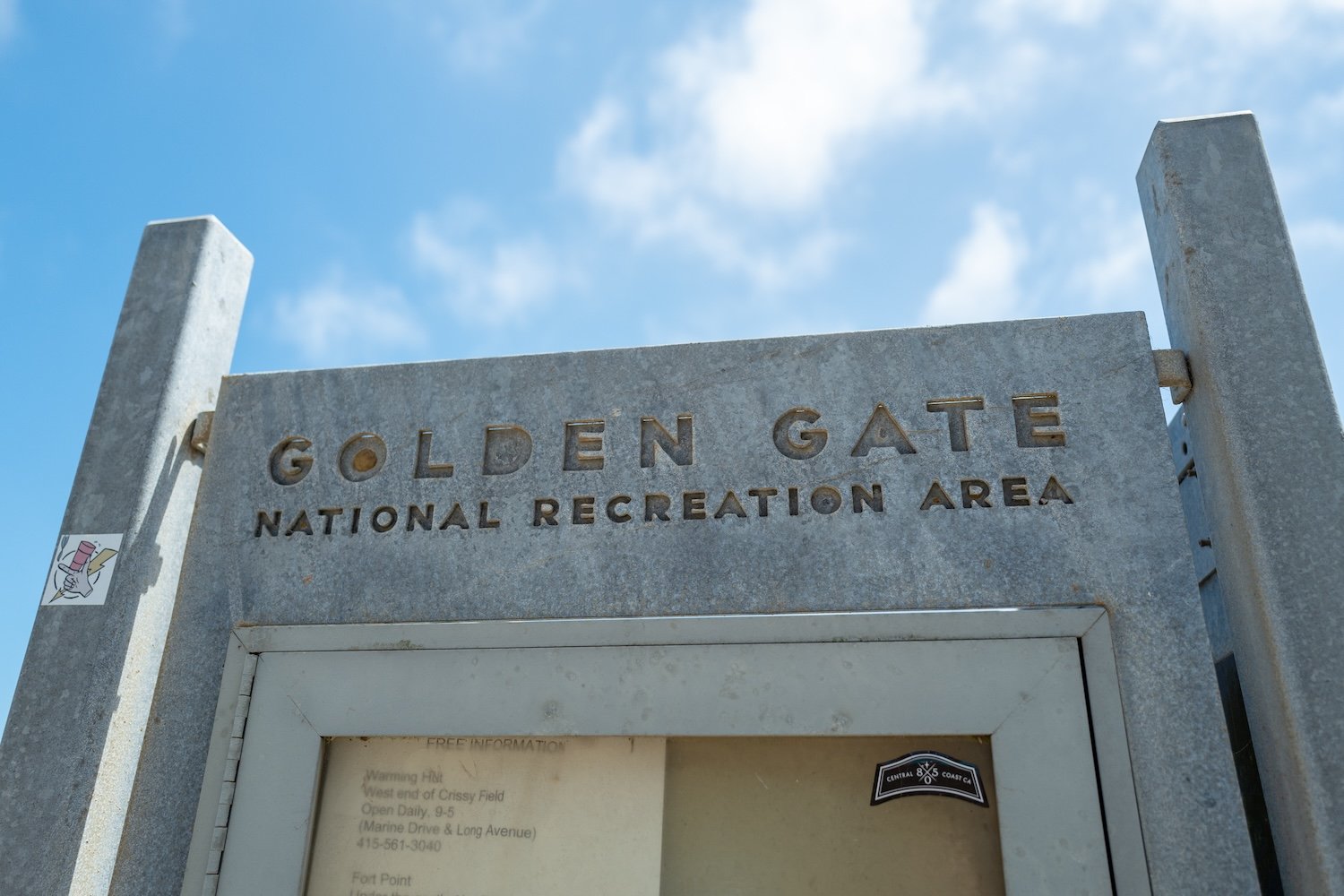
On the other side of the country,the Golden Gate Recreation Area, was vital to the West Coast’s domestic defense during WWII. At the newly established Fort Cronkhite, thousands of troops in the Harbor Defenses of San Francisco mandated evening blackouts around the Bay Area, while maintaining an anti-submarine net, anti-aircraft weapons, and 600 underwater mines. The fort also included two 500-pound battery guns that were ready to aim at any potential incoming enemy naval vessels. Even today, many of the site’s hastily built, temporary wooden structures are still used by non-profit and educational park partners.

Sign for Golden Gate National Recreation Area near Crissy Field, in the Presidio, San Francisco, California, June 28, 2020. (Photo by Smith Collection/Gado/Getty Images)
A sign for Golden Gate National Recreation Area near Crissy Field, in the Presidio, San Francisco, California. Credit: Smith Collection/Gado via Getty Images Smith Collection/Gado

To keep up with the series, the National Park Service recommends following the #WWIINPS and #Freedom250 hashtags on social media. Next up for celebration: the Redwood National and State Parks.

The post National Parks commemorate ties to WWII ahead of 85th Pearl Harbor anniversary appeared first on Popular Science.

  •  
❌