❌

Reading view

Katmai brown bear cubs learning how to ‘walk on water’ to nab salmon

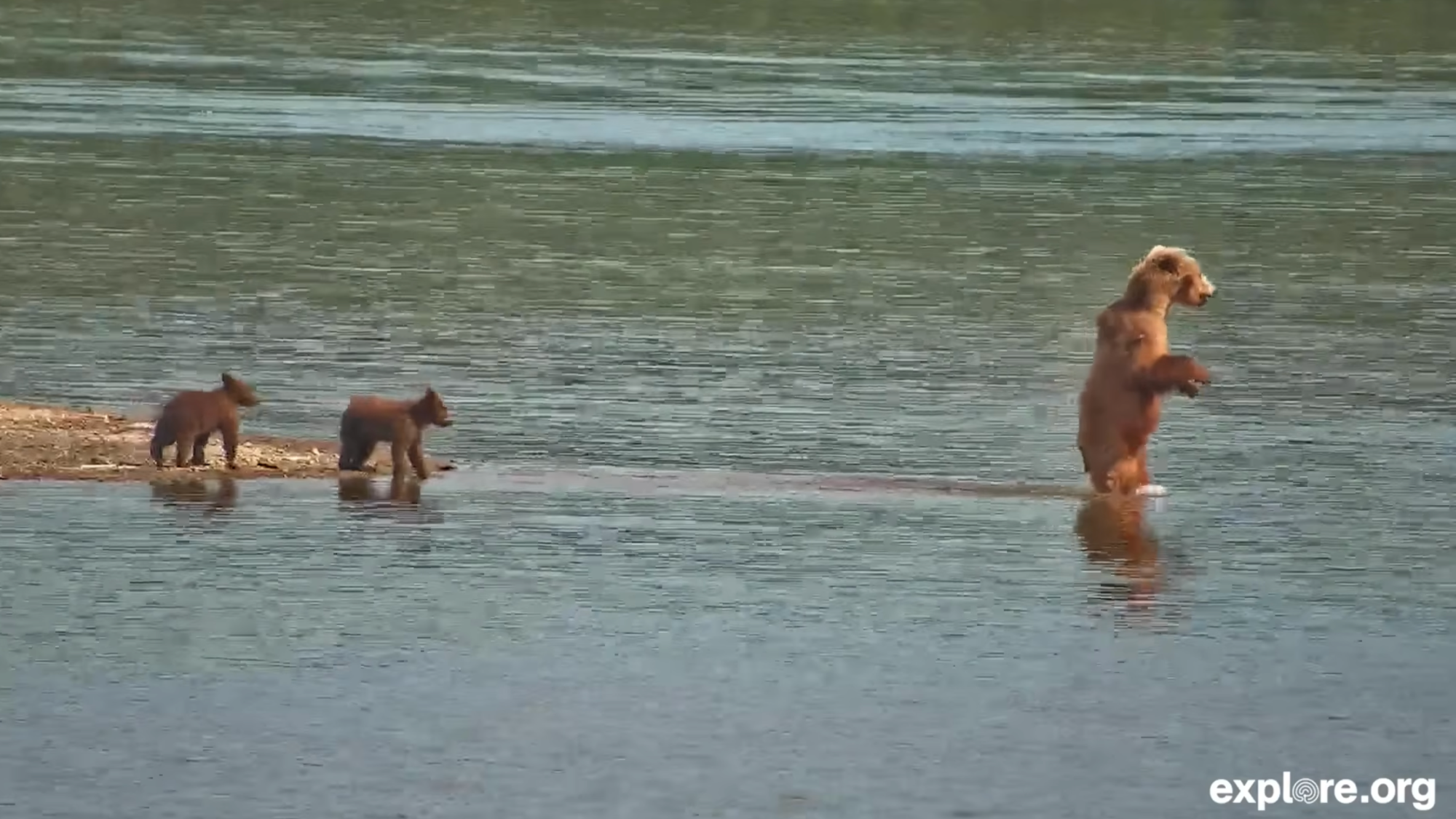
As salmon season winds down and Fat Bear Week approaches, the famous brown bears (Ursus arctos) in Alaska’s Katmai National Park and Preserve have to get out and about while the eating is good. Bear #284 (Electra) was spotted out and about this week, looking healthy with her two cubs.

Electra is part of a well-established bear lineage in Katmai. She was born in 2008 to Bear #708 (Amelia), who was likely born to Bear #468 (Reggie). Rangers first spotted her in  2011 as a subadult. She has had at least three litters of cubs, in 2016, 2020, and 2026, respectively. Bears #901 and #384 are two of her adult offspring who have been seen in the park. This year, she had two spring cubs who have been spotted with her multiple times over the summer.

According to Katmai and explore.org naturalist Mike Fitz, one way that bear culture is similar to human culture is that their knowledge is passed down. Mother bears teach their cubs skills, and the offspring primarily learn by doing instead of through inherited instincts. Mother bears like Electra will teach their cubs about safe places to build dens, where and when to find food, and how to get it.

Fishing techniques can also be specific to each individual bear. Adult male Bear #164 (aka Bucky Dent) is known for standing at the deepest plunge pool under the cascade of Brooks Falls, where he can catch the salmon that wells up from the pool below, jump up, or come down from the falls above. Electra’s mother Amelia used to stand and walk out into the water when she was fishing, and Electra and one of her adult offspring (Bear # 901) fish the same way.

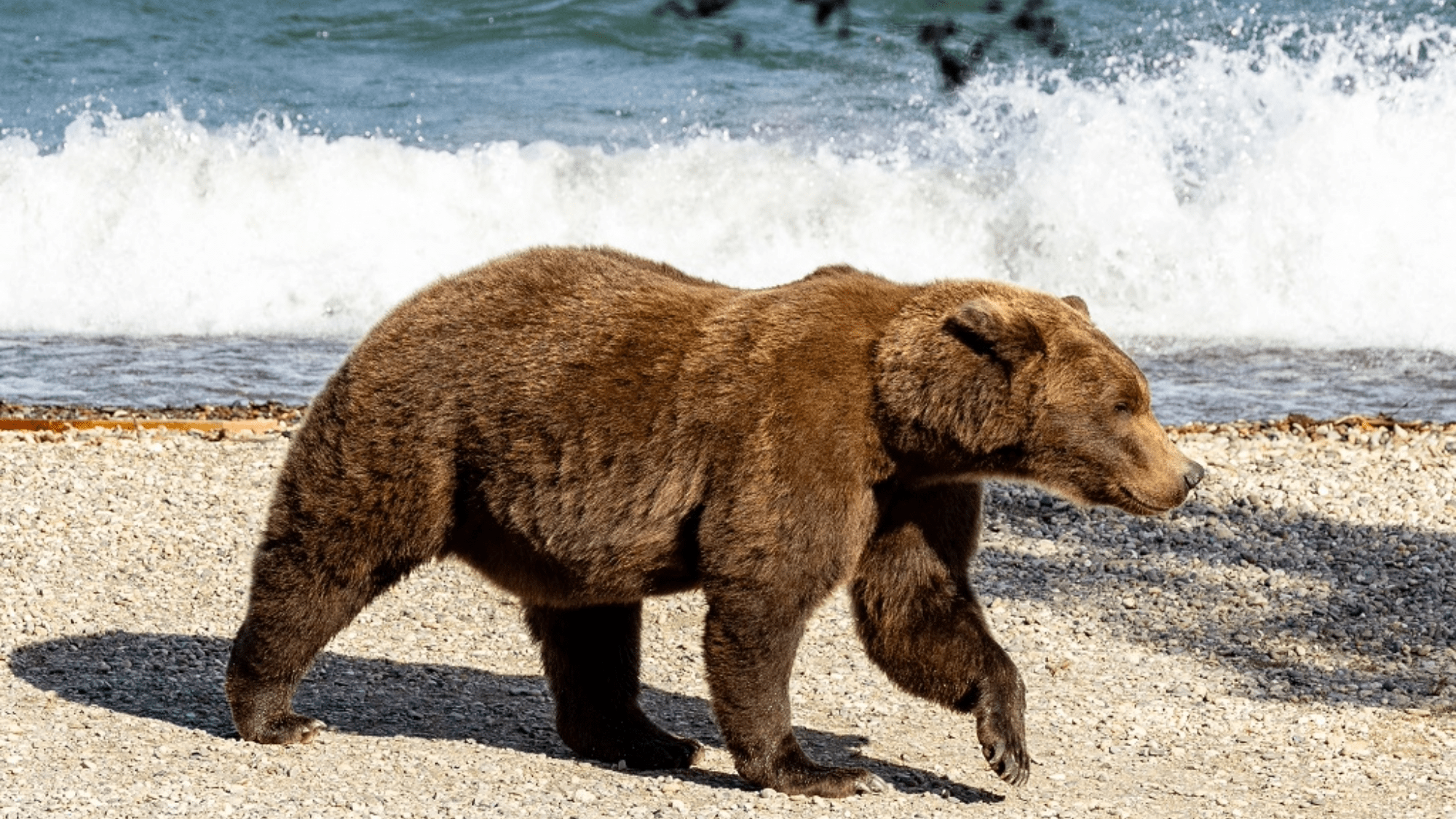
Physically, Electra is a medium-sized adult, and has a dark blond or medium-brown coat in July. By the fall, her coat typically becomes more uniformly brown. She also has a prominent shoulder hump and a tapered muzzle.

Electra made her Fat Bear Week debut in 2023, where she lost to ace-fisher bear Bucky Dent. Fat Bear Week 2026 runs from September 22 through September 29.

The post Katmai brown bear cubs learning how to ‘walk on water’ to nab salmon appeared first on Popular Science.
  •  

Japan’s continuing bear problems can’t be solved by culling alone

Japan’s bears are still causing problems. The hefty predators continue to stray from mountainous forests in search of food, putting them in direct contact with the nation’s rapidly aging and dwindling population. According to the country’s Environment Ministry, bears have killed six people across the country since April 1, while a record 13 victims died during the previous fiscal year. It’s gotten so bad that Japan called in the armed forces to help, and companies are even running out of their popular robotic wolf deterrents.

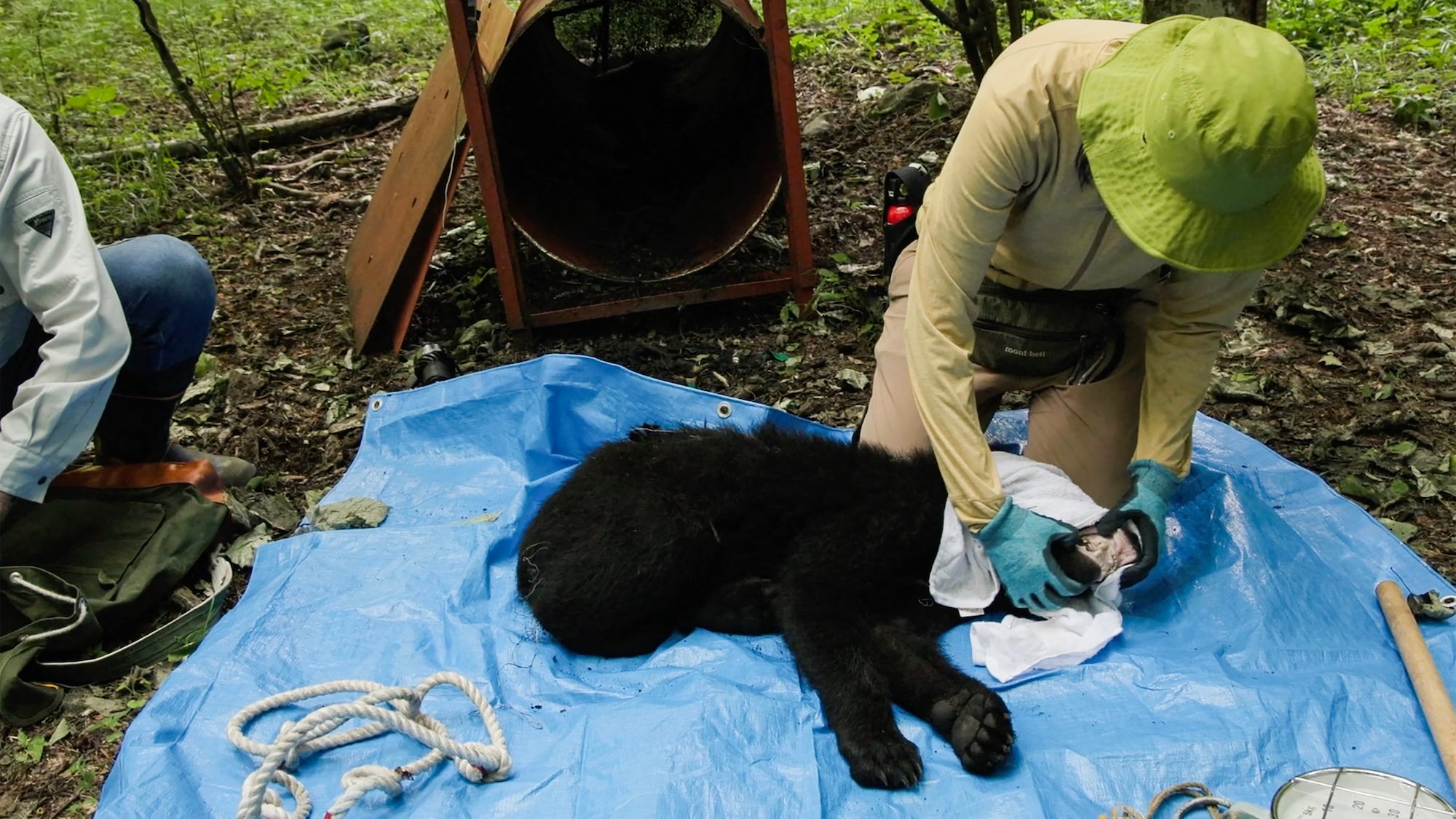
Culling strategies are reducing bear numbers, with around 14,000 killed during the last fiscal year. But in the central prefecture of Nagano on the main island of Honshū, conservationists are promoting a different approach to keeping both humans and bears safe. Using a combination of sensors, traps, and GPS monitoring, researchers are avoiding unnecessarily killing bears while improving the overall population’s wellbeing at the same time.

“By not killing too many of them, more bears survive to live out their expected lifespan. In that sense, a healthy bear population is being formed,” biologist Akiko Takii explained in a recent interview with AFP.

Takii is participating in a program with an over 30 year head start. In 1995, local authorities discovered bear numbers suddenly shrinking on Honshū, and slowly enacted new strategies like GPS monitoring and installing over 2,000 miles of fencing. But concerns for the animals have dwindled in recent years, as attacks and deaths continue to mount across Japan. 

Takii and her supporters argue that simply culling bears is not a practical, ethical, or necessarily long-term solution strategy. Instead, members of Nagano’s Shinshu Asian Black Bear Research Association are using catch-and-release tactics to monitor animal movements and keep locals out of harm’s way. Meanwhile, Takii is overseeing school outreach classes to educate children and their parents about bears, as well as humanity’s relationship to them. While a combination of culling and conservation is likely the path forward, advocates like Takii hope officials will see the added benefits of humane interventions

“I am convinced it’s safe to live with them as long as humans don’t offend them,” a school principal recently told AFP , following one of Takii’s presentations.

The post Japan’s continuing bear problems can’t be solved by culling alone appeared first on Popular Science.

  •  

History-making mother bear could be big Fat Bear Week 2026 contender

We are mere weeks away from Fat Bear Week 2026, but the brown bears (Ursus arctos) gorging on salmon at Katmai National Park and Preserve in Alaska are already showing off that beautiful bulk. Based on a recent video posted by explore.org, Bear #910 might be a major contender for this year’s competition.

Bear #910 is a female brown bear that was first spotted in 2019 at Katmai’s Brooks River. She is about 10.5-years-old, has large, blonde, floppy ears, which can help viewers pick her out of the crowd on the live cam set up in the park. 

Bear #910 is also a particularly unique mother bear. Between mid-August and October 2022, she adopted her sister Bear #909’s 2.5-year-old female yearling cub (a one- to two-year-old cub still with its mother), while she herself had a spring cub (a first-year cub that was born over the winter and emerges in the spring). An adoption like this is an exceptionally rare event in the wild, but it has also been observed in polar bears. The pair was frequently seen fishing together with their cubs throughout 2023 and 2024 and a paper on their story was published in the journal BioOne in 2025. 

Most bear mothers generally keep their litters separated, and this year’s season was an example of why they tend to stick to themselves. On Tuesday, July 28, the live-cams captured a young brown bear cub being killed and eaten by an unrelated mother bear (Bear #806). The deceased cub was born this spring, and was one of Bear #909’s cubs. Bear 909 started this season with two cubs, but has now lost both. 

On Sunday, August 2, one of Bear #335’s (also known as Jolly) cubs died, after following three unrelated cubs up a tree. The mother of the cubs already in the tree attacked Bear #335’s cub, who did not survive the encounter. The identity of the mother bear who killed the spring cub was not confirmed. 

Following the first cub’s death, naturalist Mike Fitz and park rangers Christine Loberg and Sarah Bruce hosted a chat about the incident. The team said that while infanticide by female adults does occur, this is likely the first documented case occurring at Brooks River. While there is no single answer as to why mother bears are killing cubs, some experts suspect bear adoption, food scarcity, and fights for dominance all play a role. 

During Fat Bear Week 2025, she lost to Bear #856 in the second round of voting. Voting this year. The competition this year is scheduled to begin at the end of September.

The post History-making mother bear could be big Fat Bear Week 2026 contender appeared first on Popular Science.

  •  
❌