❌

Reading view

Anthropic researcher issues grave AI warning

An Anthropic AI safety researcher warned there is more than a 10% chance that increasingly capable AI could “kill all humans” within the next decade, highlighting growing concerns in the industry over the pace of development.

Evan Hubinger, manager of the AI Alignment Stress-Testing team at Anthropic, wrote on social media platform X: “I personally think it is >10% within the next decade.”. He explained the risk from existing AI models was “low” but warned he was concerned about “superintelligence” emerging through “recursive self-improvement”, which is the ability of an AI system to autonomously develop its own successor.

He added Anthropic was “trying its best” but did not yet have a plan to solve alignment for superintelligence and was “not clearly on track to”.

Gambling with lives
Hubinger’s comments came in response to the resignation of AI researcher Jacob Coxon from Anthropic. In a post on X, Coxon accused OpenAI and Anthropic of “racing straight to self-improving superintelligence and gambling with our lives”.

“Neither company is acting responsibly,” he said.

Coxon argued future AI models could become capable of hacking systems, rapidly transforming industries and acquiring “real power and resources”. He called for greater coordination between AI developers, including a temporary halt to improving model capabilities.

“At OpenAI, many have not deeply internalised the civilisational stakes,” he warned. Meanwhile at Anthropic, he said “the stakes are well-understood” but “they believe no one else will act responsibly, so they must do it themselves, despite the risk”.

AI giants are facing increasing scrutiny over the behaviour of autonomous systems. In recent months, OpenAI, Anthropic and Meta have all disclosed unprecedented incidents involving AI tools carrying out cyberattacks.

Indeed, Anthropic’s August risk report assessed that while the threat posed by current models was low, the company was “less confident in this assessment than we were in prior risk reports”. It said advanced models could eventually automate R&D, rapidly accelerate progress in technical fields, and “lead to catastrophic harm”.

“We are seeing early signs of potential acceleration,” the US AI player stated.

The post Anthropic researcher issues grave AI warning appeared first on Mobile World Live.
  •  

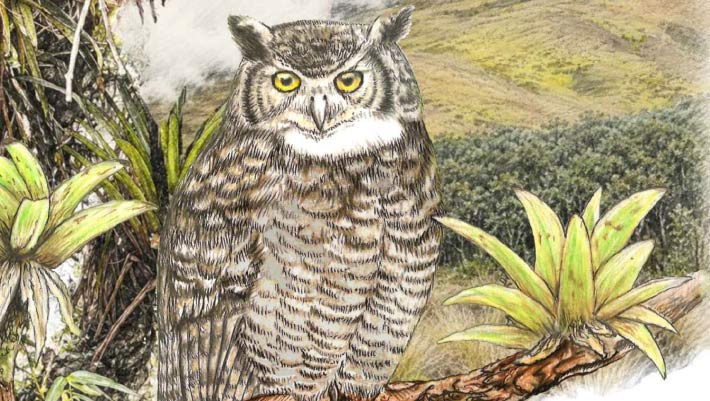
New Owl Species Discovered in Peru

The Jalca horned owl (Bubo jalca). Image credit: López-Lanús et al.

A horned owl living in a narrow strip of high-Andean grassland in northern Peru is a species new to science, according to a paper published in July 2026 in the journal Audiornis.

The post New Owl Species Discovered in Peru appeared first on Sci.News: Breaking Science News.

  •  

US, Huawei racketeering showdown to begin

Huawei edged closer to laying claims of racketeering to rest as a court case brought by the US is set to get underway later today (8 September) when the process of picking a jury begins.

The Chinese vendor is steadfast in denying any wrongdoing in a matter dating to 2018 which resulted in then CFO and now rotating chair Sabrina Meng being detained by authorities in Canada.

ABC News reported the US Department of Justice (DoJ) is pursuing claims Huawei stole and attempted to steal trade secrets, ignored sanctions on doing business in North Korea and aided Iranian authorities in monitoring protestors during unrest in 2009.

The trial is one of several attacks made by the US against Huawei: it also alleges the vendor is a threat to national security and has imposed stringent restrictions on its access to key technologies.

Nikkei Asia noted the DoJ dropped two claims from its case late last week; a conspiracy charge relating to historic US presidential powers afforded under the International Emergency Economic Power Act and another relating to economic sanctions breaches.

The move left 12 charges in place.

Huawei told Nikkei Asia it is not guilty and the “narrative” of the US case is “demonstrably false”.

Prisoner swap
Although charges against Meng have long-since been dropped, Nikkei Asia noted the bargain she struck to achieve this could now hurt Huawei.

It explained the founder’s daughter admitted she made false statements about the company having worked within US sanction and export rules, details which have been cleared for use in the looming trial.

Most observers note the court case is something of a watershed in a long-running trade battle between the US and China in which big companies from the latter have become symbolic pawns.

The post US, Huawei racketeering showdown to begin appeared first on Mobile World Live.

  •  

Ancient DNA Rewrites Story of Enigmatic ‘American Cheetah’

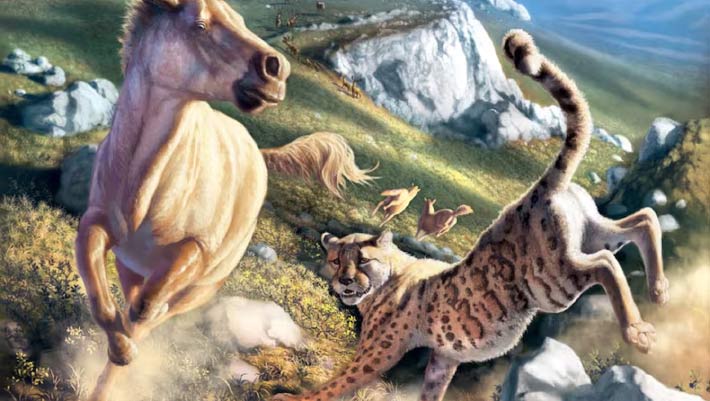
Miracinonyx trumani and the ecosystem this species lived in. Image credit: Julius Csotonyi.

For several decades, paleontologists have described Miracinonyx trumani -- an extinct species of cheetah-like felid that roamed the North American prairies and steppe terrains more than 13,000 years ago -- as North America’s answer to the African cheetah (Acinonyx jubatus).

The post Ancient DNA Rewrites Story of Enigmatic ‘American Cheetah’ appeared first on Sci.News: Breaking Science News.

  •  

Apple Maps now displays ‘Lake America’ after President Trump’s executive order

Apple Maps now displays "Lake America"
Apple Maps now displays “Lake America”

Apple has updated Apple Maps so that U.S. users see Lake Ontario labeled as Lake America, matching a change recorded in the U.S. Geographic Names Information System after President Donald Trump signed an executive order renaming the lake for federal use.

The update appeared on the web version of Apple Maps on Tuesday and is rolling out more broadly. Apple said U.S. users will see “Lake America,” users in Canada will continue to see Lake Ontario, and users elsewhere will see both names. That is the same approach Apple used after the Gulf of Mexico was renamed the Gulf of America on U.S. maps.

Google Maps renamed Lake Ontario to Lake America last week
Google Maps renamed Lake Ontario to Lake America in late August

Google Maps made a similar change for U.S. users over the weekend. Both companies have pointed to official U.S. geographic naming records as the basis for what American users see.

Lake Ontario is one of the five Great Lakes. About 52 percent of its surface area lies in Canada, with the rest in New York. Trump’s order applies to U.S. federal usage and does not require Canada or international bodies to adopt the new name.

The lake rename follows last year’s Gulf of America change, which Apple and Google also reflected for U.S. users. Interior Secretary Doug Burgum said the president contacted Apple directly about aligning maps with the new official U.S. name.

Apple confirmed the Maps update tracks the Geographic Names Information System listing. For travelers, boaters, and anyone using Apple Maps in the United States, the lake now appears under the name adopted in U.S. federal records.


‎
MacDailyNews Take: President Trump’s full Executive Order, “Honoring The American History Of The Great Lakes And Renaming Lake Ontario As Lake America,” can be read here.


‎
Please help support MacDailyNews — and enjoy subscriber-only articles, comments, chat, and more — by subscribing to our Substack: macdailynews.substack.com. Thank you!

Support MacDailyNews at no extra cost to you by using this link to shop at Amazon.

The post Apple Maps now displays ‘Lake America’ after President Trump’s executive order appeared first on MacDailyNews.

  •  
  •  

Traders brought Central American cacao to Georgia 1,000 years ago

A thousand years ago, feasts in what’s now northern Georgia state included cacao from Central America.

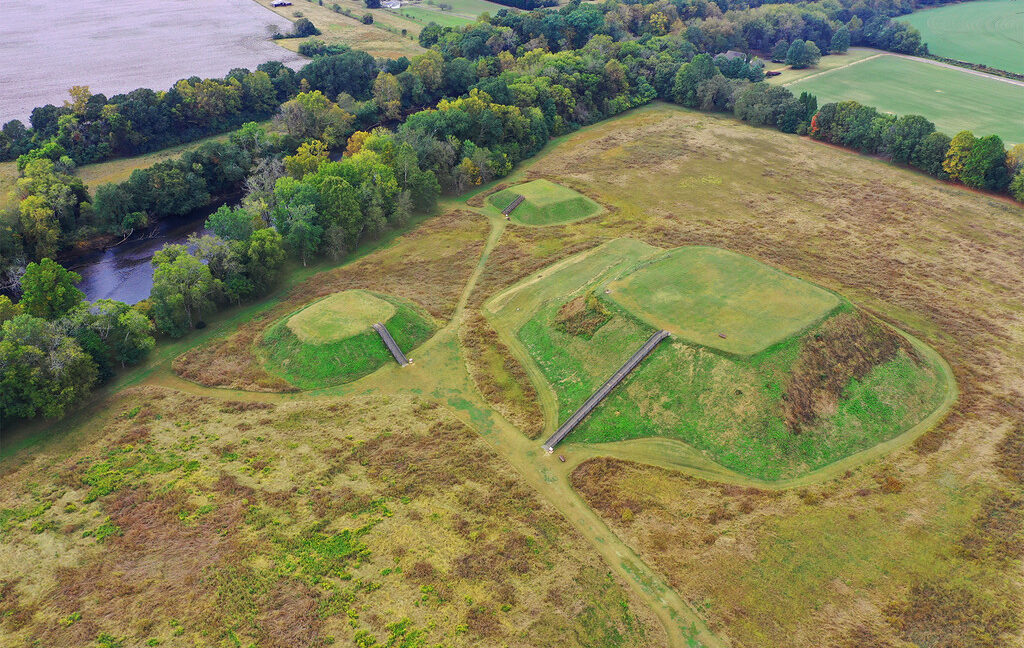
Potsherds discarded after an 11th-century feast at Etowah—an Indigenous city just north of what’s now Atlanta—contained traces of cacao, a raw ingredient of chocolate. The chemical residue and ancient DNA reveal that not only did the Mississippian people who built the city have excellent taste, they also had trade connections that reached at least 3,000 kilometers to Central America. And in a sense, chocolate may have helped build the Mississippian mounds.

Ancient dirty dishes

University of South Carolina archaeologist Adam King and his colleagues found fragments of ancient DNA from Theobroma cacao in the inner surfaces of potsherds from long-ago feasts at Etowah. Fruit from the cacao tree contains beans that, when dried and roasted, produce chocolate in all its glorious forms. Cacao only grows in the tropics, which means the nearest actual cacao trees would have been at least a 3,000-kilometer trek away from the woodlands of the eastern US. And that means the Mississippian people who lived in Etowah must have had continent-spanning trade connections.

Read full article

Comments

© Georgia Department of Natural Resources

  •  
❌