❌

Reading view

Earth May Not Be a Cosmic Fluke, New Simulations Suggest

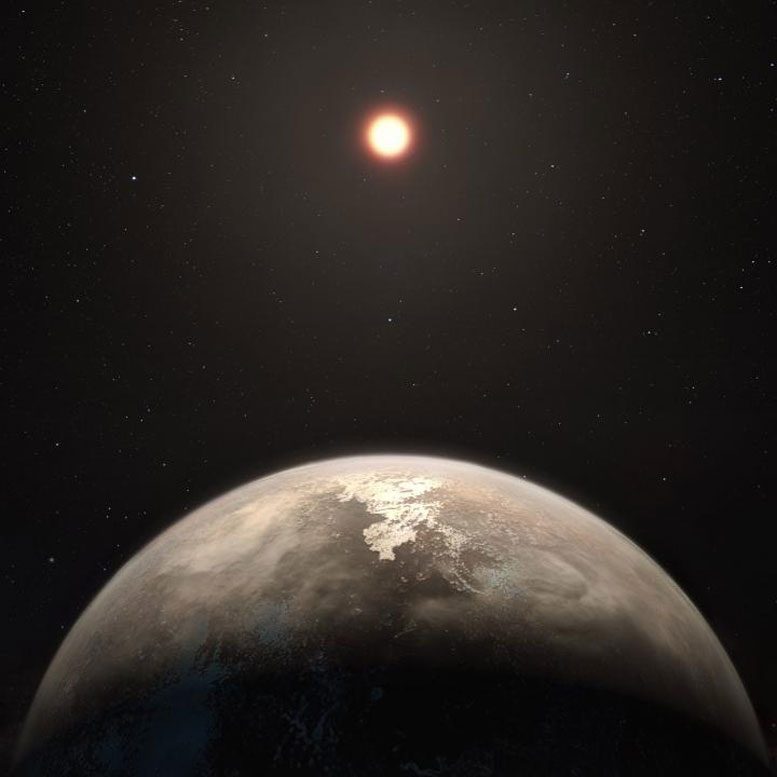
Exoplanet Ross 128 b Is Not Like EarthSolar system simulations starting from varied initial conditions suggest that Earth-like planets can emerge naturally from planet formation. Computer simulations of planetary systems can now begin from thousands of different starting conditions, allowing researchers to explore how worlds might emerge without assuming the final outcome. Over the past three decades, these models have advanced from [...]
  •  

Lava-Covered Planets Are Defying a Key Rule of Planetary Science

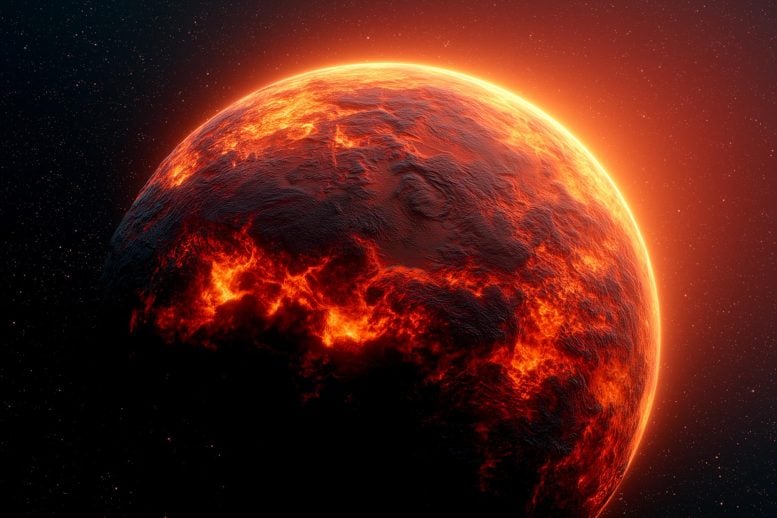
Hot Lava World ExoplanetResearchers developed a model showing how lava-covered planets close to their stars can hold onto their atmospheres, which could help guide the search for life beyond our solar system. Some planets orbit so close to their stars that intense radiation should strip away their atmospheres. Yet several of these scorching, lava-covered worlds still retain thick [...]
  •  

Scientists Discover the 7 Stages a Meteoroid Goes Through Before Hitting Earth

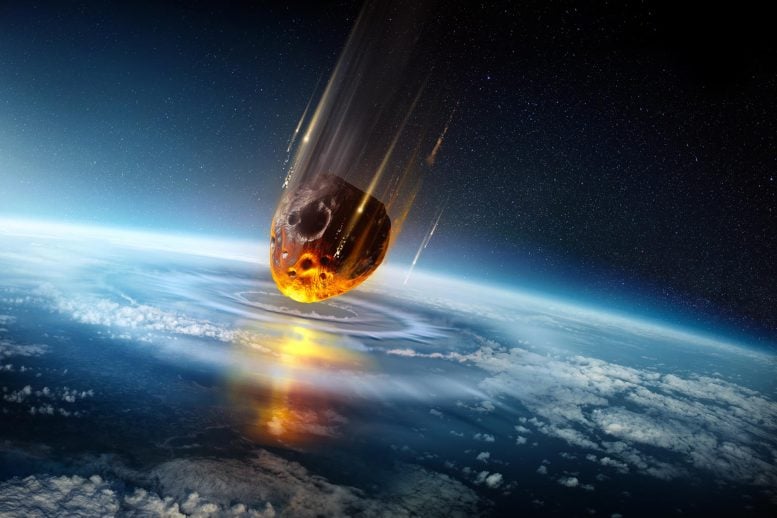
Huge Meteor Asteroid Slams Into EarthAn analysis of 75 meteorite falls identified seven distinct processes that occur as space rocks melt, break apart, and slow down before reaching the ground. A space rock entering Earth’s atmosphere does far more than simply “burn up.” By examining 75 meteorite falls recorded in videos and photographs, researchers identified seven distinct stages that shape [...]
  •  

Magnetism likely played a key role in early solar system formation

The oldest known solids in the solar system contain evidence that the protoplanetary disc that went on to form the planets around our Sun experienced a magnetic field stronger than the field on Earth today, new research suggests. Study of inclusions in a primordial meteorite called a carbonaceous chondrite indicates that magnetism needs to be considered in simulations of planet formation, and may even be the dominant factor.

When planetary systems condense, they initially form high-temperature molecular nebulae. These later cool and accrete into planets surrounding central stars – which, at some point, begin to undergo nuclear fusion. Even before this happens, however, the gas is highly ionized. “A good portion of the ionization is coming from the molecular cloud itself,” explains planetary scientist Cauê Borlina of Purdue University. “It’s a combination of radiation from space and high temperature.”

In any ionized system there is the potential for magnetic fields, but simulations of disc formation often take no account of them, partly as they remain poorly constrained: “It’s a lot easier to just crank up the gravity and use that as a way to match the accretion rate,” says Borlina.

The new study from Borlina and colleagues in the US, China and the UK provides an unprecedented peek at fields in the terrestrial planet-forming region in the first 500,000 years of the Solar System’s existence – before the Earth had formed – using calcium-aluminium-rich inclusions. These are the oldest known solar system solids, comprising minerals with extremely high melting points that are inclined to condense early. “It is very unlikely to get them at later stages,” says Borlina. Previous researchers have confirmed their ages using isotopic dating.

Millions of years after these inclusions formed, they agglomerated with other protoplanetary material into planetesimals, some of which went on to form planets. Planetary scientists think the remaining material accreted to form the chondrites – which astronomers distinguish into several different types depending on their chemical composition. When they fall to Earth as chondrite meteorites, therefore, they provide a valuable glimpse into the solar system’s raw material.

Carbonaceous chondrites hold particular interest as they are thought to have the most primitive chemical compositions of all meteorites. The researchers studied calcium-aluminium inclusions in the 667 g Dominion Range 08006 carbonaceous chondrite discovered in Antarctica in 2008. Such inclusions had, until around 2010, been thought to contain no magnetic minerals. Borlina and colleagues, however, found that some – although not all – of the inclusions contained nanometre-scale amounts of ferromagnetic iron-nickel.

The researchers measured the thermoremanent magnetization of these iron-nickel grains (the field strength they experienced at the time when they cooled down through their “Curie temperature”, thereby fixing their own magnetism). In theory, this could be achieved by heating the sample above the Curie temperature, which for iron-nickel is about 1050 K, and measuring the field required to demagnetize it. Unfortunately, says Borlina, heating meteorites up in the laboratory tends to oxidize the materials extremely quickly, making reliably calibrated experiments very difficult.

Instead, the researchers used an established method called anhysteric remanent magnetization, concluding that the inclusions were exposed to fields of 150–600 µT when they cooled through the Curie temperature (the field on Earth today is around 30–60 µT). “This is good evidence that…you can’t just ignore magnetic fields,” says Borlina. “They need to be present in your simulations.”

The researchers are now studying other carbonaceous chondrites and other types of chondrite meteorites – some of which are thought to have formed in different regions of the protoplanetary disc – hoping to gain a fuller picture of how magnetism shapes disc evolution. “The idea was to put it out there that there’s this new inclusion that might hold magnetic carriers, and there’s a lot of work to be done,” says Borlina.

Meenakshi Wadhwa of University of California, San Diego – who formerly directed the Center for Meteorite Studies at Arizona State University – describes the work as “genuinely significant”. First, she says, it provides the first definitive paleomagnetic signal from a carbonaceous chondrite. Second, the estimated field is multiple times previous estimates.

“Yes, the sample size is small (five inclusions from a single chondrite), but I think the authors make a reasonably solid argument for their conclusions,” she says. The next step, she concludes, “is to measure inclusions from other chondrite groups to see if the signal is reproducible, and to test whether it’s a real nebular record versus something very localized, specific to DOM 08006 or the carbonaceous chondrite reservoir. Beyond that…pinning down when and where inclusions acquired their magnetization will also be important.”

The research is published in Proceedings of the National Academy of Sciences.

The post Magnetism likely played a key role in early solar system formation appeared first on Physics World.

  •  

BepiColombo Begins Final Approach to Mercury

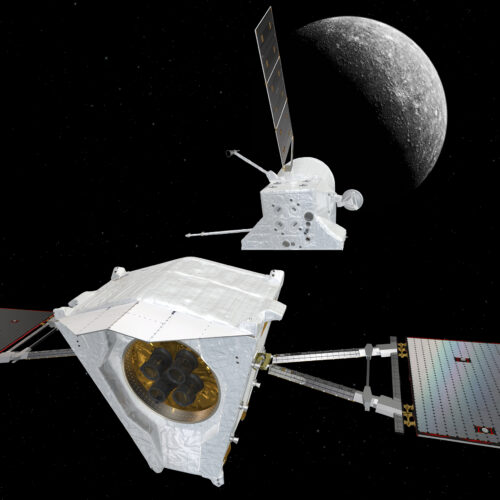
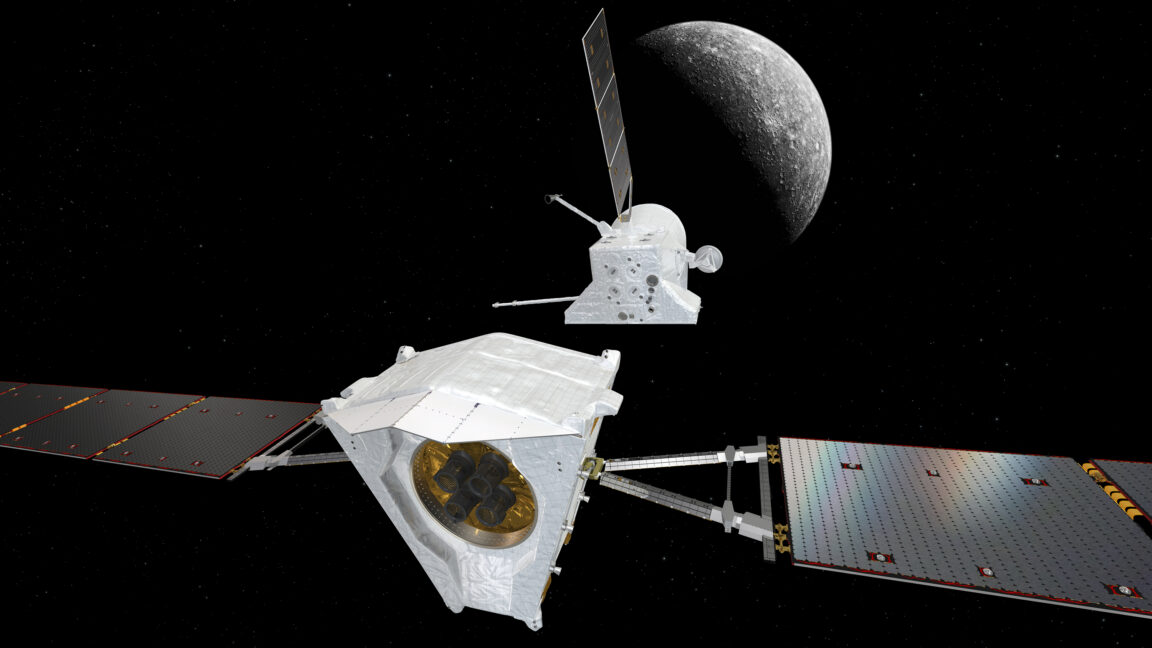
An artist’s impression of the ESA/JAXA BepiColombo spacecraft in cruise configuration, with Mercury in the background. On its 7.2 year journey to the innermost planet, BepiColombo will fly by Earth once, Venus twice and Mercury six times before entering into orbit. The MTM module is shown with ion thrusters firing, and with its solar wings extended, spanning about 100 feet (30 m) from tip-to-tip. The 24.6-foot (7.5 m) long solar array of the MPO orbiter in the middle is seen extending to the top. The Mio orbiter is hidden inside the sunshield in this orientation. Image credit: ESA / ATG Medialab / NASA / JPL.

After nearly eight years and billions of kilometers of travel, BepiColombo -- a science mission led by ESA in close collaboration with JAXA -- has begun its long-awaited arrival at the smallest and innermost planet in our Solar System.

The post BepiColombo Begins Final Approach to Mercury appeared first on Sci.News: Breaking Science News.

  •  

After 8 years, Europe's BepiColombo mission is on final approach to Mercury

The BepiColombo mission cleared a major milestone this week in the final stretch of an eight-year interplanetary voyage to Mercury, the hard-to-reach, scorching hot iron world at the Solar System's innermost frontier.

The robotic science mission, with a price tag of nearly $2 billion, is led by the European Space Agency with contributions from Japan and the United States. Since its launch in 2018, BepiColombo has spiraled closer to the Sun using a combination of plasma propulsion and a series of flybys of Earth, Venus, and Mercury. The maneuvers changed the spacecraft's velocity and steered it toward a final encounter with Mercury later this year.

Next time it reaches Mercury, BepiColombo will be traveling at just the right speed for the planet's gravity to capture the spacecraft into orbit. Scientists working on interplanetary missions are accustomed to long waits for scientific payoffs. It took nearly 10 years for NASA's New Horizons spacecraft to travel from Earth to Pluto. It turns out traveling to fleet-footed Mercury and then entering orbit requires more energy, or delta-v, than sending a probe to fly by Pluto.

Read full article

Comments

© ESA/ATG medialab and NASA/JPL

  •  

Who Needs Jupiter?

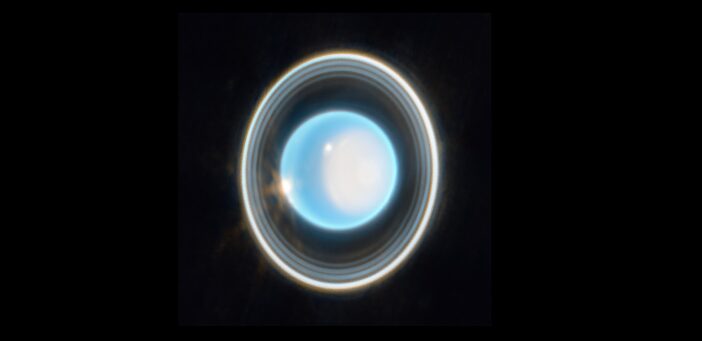
A photograph of Uranus against a black background.

A planned flagship spacecraft to Uranus was aiming to use Jupiter for a gravitational boost to shorten its journey to the outer solar system. Now that the mission’s launch date has been pushed back, it’ll need to find another way to its target.

Redesigning the Route

Uranus and Neptune, the ice giants of our solar system, have been comparatively neglected by humanity’s fleet of interplanetary probes. While all of the other major bodies have been visited by at least an orbiter or even a lander, the most detailed exploration we’ve done of these two planets happened when the Voyager 2 spacecraft went screaming past on its way toward interstellar space.

A two-panel top down view of the solar system with different trajectories overplotted.

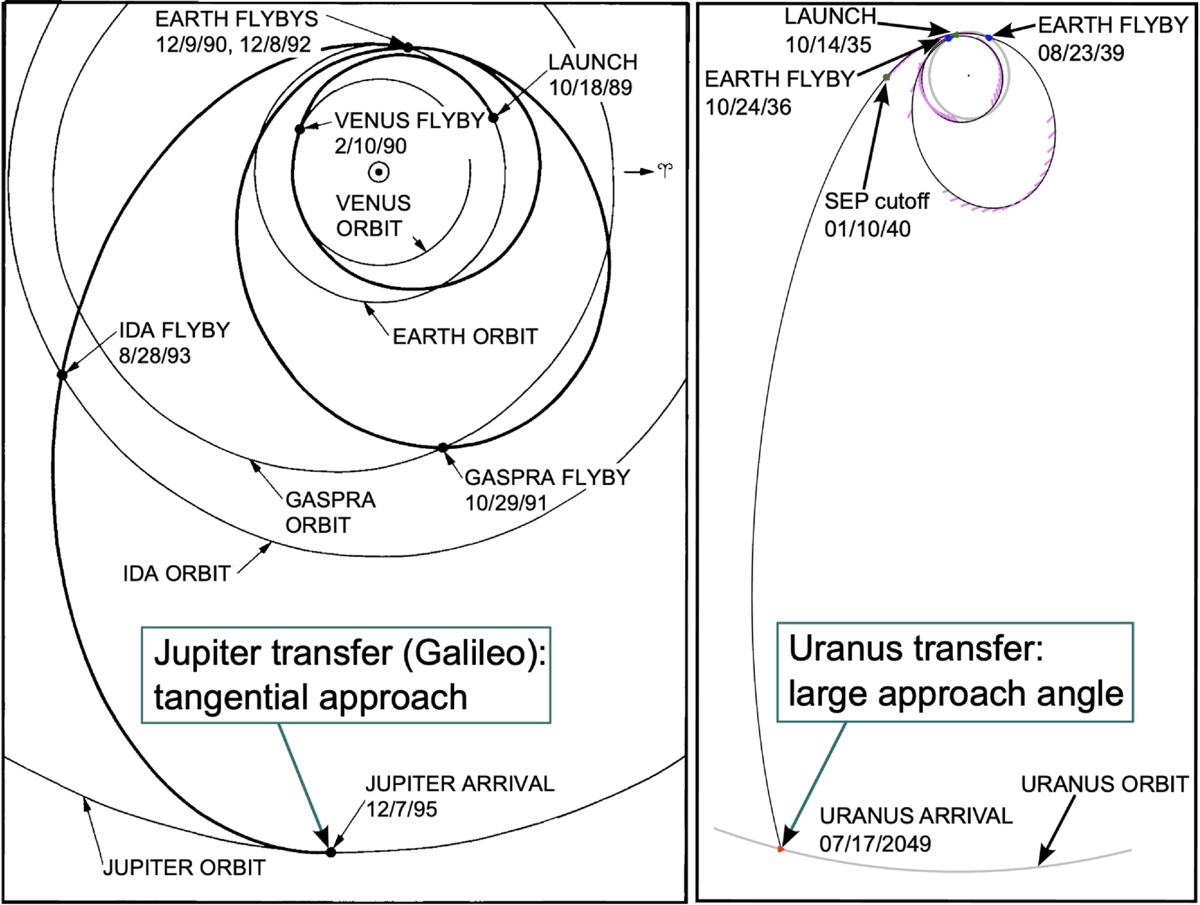
Schematics of different trajectories within the solar system. Left: The path the Galileo spacecraft took to Jupiter. This path arrived nearly parallel to the planet’s motion. Right: One of the proposed paths to Uranus. This path will intersect the planet’s orbit at a much steeper angle to shorten the flight time. Click to enlarge. [Simon et al. 2026]

So it was no surprise when a panel of scientists and engineers charged with setting scientific exploration priorities between 2023 and 2032 recommended finally sending a spacecraft to Uranus, depositing it into orbit around the planet, and keeping it there for a while to collect data. The study itself suggested a basic design for the mission: a pair of spacecraft, one orbiter and one sacrificial atmospheric probe, collectively weighing about 4,000 kg.

Getting these spacecraft to their destination will be a challenge The thriftiest path to get to Uranus, a trajectory called a Hohmann transfer that’s been used for other missions aimed elsewhere in the solar system, would take 16–17 years. Rather than accept the long wait, the original authors suggested that the mission instead fly toward Jupiter, using the giant planet’s massive gravitational tug to slingshot the spacecraft toward Uranus.

However, this plan relied on Jupiter being in just the right place when the spacecraft approached. This in turn relied on the mission launching sometime in 2031 or 2032: any earlier or later, the slingshot would be aimed in the wrong direction. Now that timelines and budgets have slipped for this flagship mission, hitting this launch window seems unlikely. And, without the boost from Jupiter, the mission will have to cross 20 au of open interplanetary space on its own.

Solar Electric Propulsion to the Rescue

A 3-row figure showing the same interplanetary probe flanked by every-growing sets of solar panels.

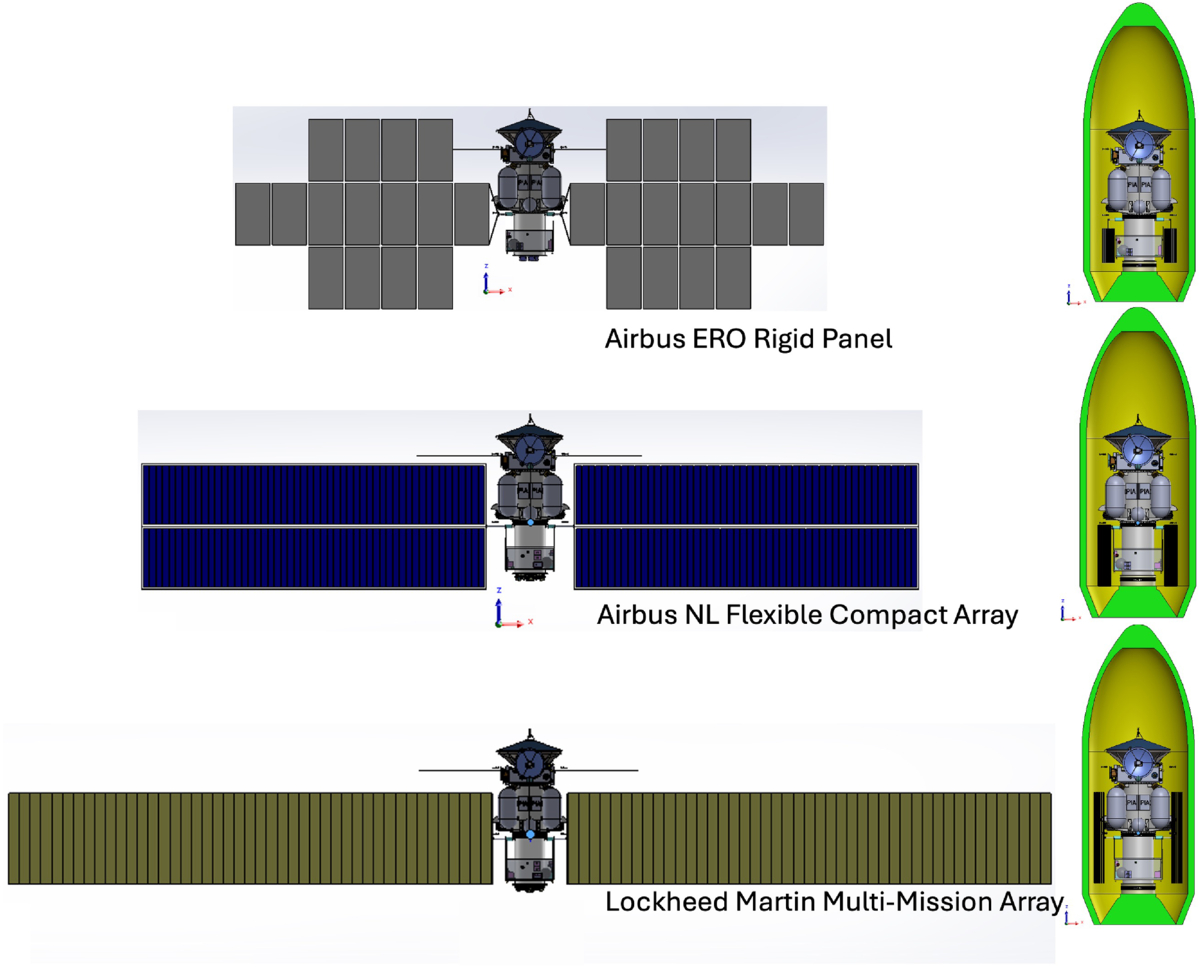
Several proof-of-concept designs for the mission’s SEP components. How these designs would be packaged into a rocket fairing for launch is shown at right. Click to enlarge. [Simon et al. 2026]

Recently, a team led by Amy Simon, NASA Goddard Space Flight Center, took on this challenge and tried to chart a new path through the solar system. The team realized that solar electric propulsion (SEP), a technique that relies on using solar panels to create electricity and accelerate ions to create thrust, might offer a path forward. By using SEP, the mission could leave Earth, unfurl wings of solar panels, then gradually accelerate for as long as there was enough sunlight to power the engine.

The power levels would likely get too low just a few astronomical units into their journey, but that would be enough: after discarding the SEP stage, the mission could coast to Uranus on a journey that would take only 13 years. Even better, this technology has a proven flight history and would require little maturation or development. The BepiColombo mission to Mercury is currently using SEP, and similar techniques are used on satellites in Earth orbit today.

Simon and collaborators also took on a number of other challenges that have cropped up since the mission was proposed, including fewer available plutonium power sources and a re-assessment of Uranus’s rings that revealed hazards in the original flight path. Their work brings the mission closer to the launch pad and illustrates how much iteration goes into the spacecraft that finally takes to the stars.

Citation

“Uranus Orbiter and Probe: Mission Challenges and Concept Updates Since the Origins, Worlds, and Life Decadal Survey,” Amy A. Simon et al 2026 Planet Sci. J. 7 143. doi:10.3847/PSJ/ae680c

The post Who Needs Jupiter? appeared first on AAS Nova.

  •  

Without new landers or rovers, it's helicopters or bust for NASA's Mars program

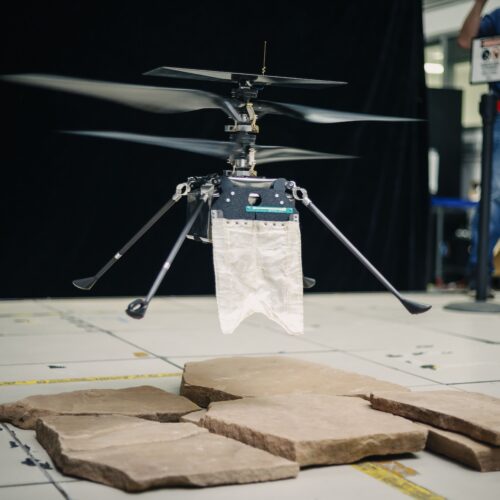
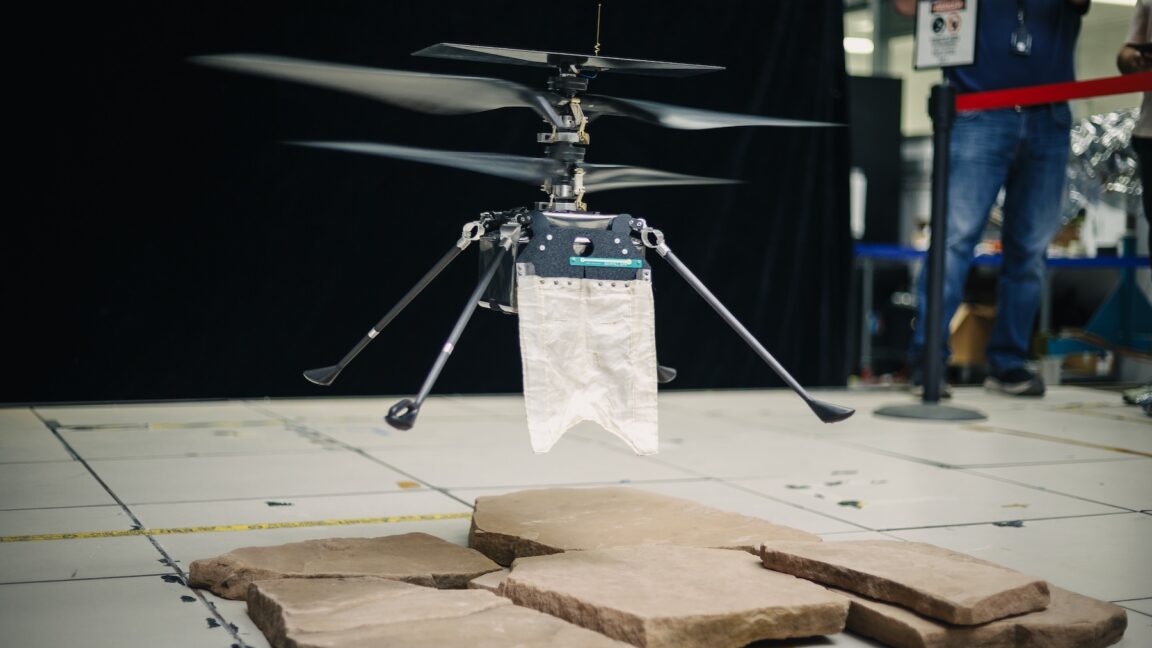
For the first time in more than 30 years, NASA has no firm plans to send any new landers or rovers to Mars. Instead, the agency's near-term focus at the red planet is on aerial drones, a pioneering mode of exploration that didn't seem realistic until a few years ago.

The first real use of drones for science at Mars will come with the SkyFall mission, a fleet of three helicopters set for launch as soon as late 2028. SkyFall's helicopters will ride to the red planet with NASA's Space Reactor-1 "Freedom" mission, which has the primary objective of demonstrating nuclear electric propulsion in deep space.

The launch schedule is aggressive for SR-1 Freedom and SkyFall, projects that didn't even exist in NASA's portfolio six months ago. NASA's plan for the SR-1 Freedom mission, estimated to cost $2.1 billion, calls for repurposing the core module of the canceled Gateway lunar space station into a testbed for nuclear electric propulsion. SkyFall will build on NASA's success with the Ingenuity helicopter, an experimental vehicle that became the first rotorcraft to fly on another world in 2021.

Read full article

Comments

© AeroVironment

  •  

China’s Moon mission to find water ice is unlike anything NASA has done

Author: Richard de Grijs, Professor of Astrophysics, Macquarie University

Chang’e-7
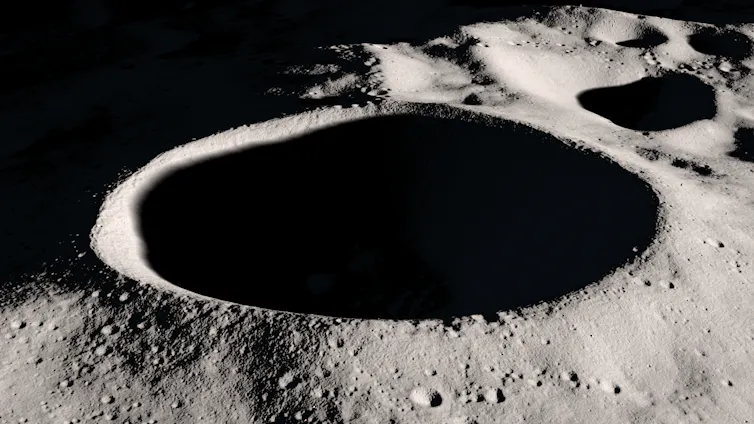
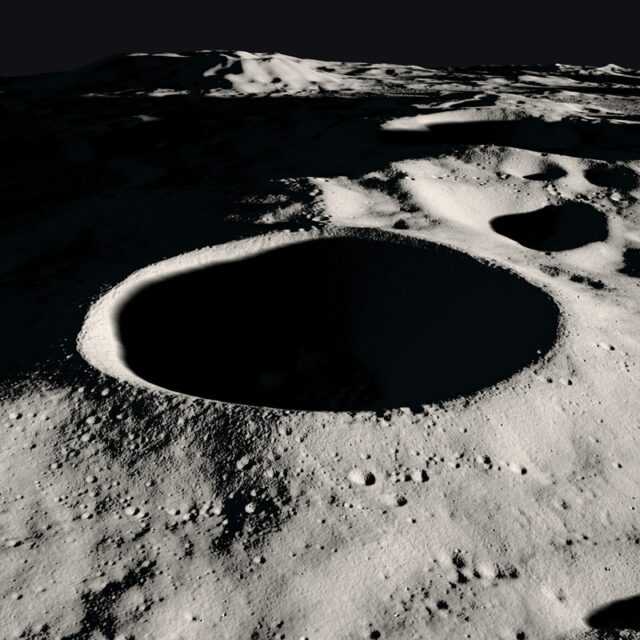
Shackleton crater on the Lunar South Pole.
NASA’s Scientific Visualization Studio


How do you explore a place where the Sun never shines? China’s space programme will soon embark on one of the most innovative lunar exploration missions in recent years.

We’ve known for nearly two decades that some form of water exists on the Moon. What we still don’t know is exactly how much accessible water ice lies inside permanently shadowed craters, how deeply it is buried or what form it takes.

What we do know is that accessing that water ice will be a real challenge: it is found at the bottom of deep, hard-to-traverse craters where the Sun never shines, remaining untouched for billions of years at temperatures well below –200°C. These are among the most valuable places on the Moon, but the hardest to reach and explore.

Lunar exploration has come a long way since the Soviet Union’s Luna-1 probe reached the Moon’s vicinity in January 1959. The Apollo missions and their successors showed the challenge is no longer simply to reach the Moon. It is to explore places human and conventional rovers cannot easily go, and ultimately determine whether the Moon itself can provide some of the resources that future explorers will need.

China has spent two decades building an increasingly ambitious lunar exploration programme, named after Chang’e, the ancient Chinese goddess of the Moon. The Chang’e-7 mission is expected to set course for our celestial neighbour later this month, although a recent failure involving a different Chinese rocket has introduced some uncertainty over the launch date. Here’s what makes this latest mission so interesting.

What is Chang’e-7 set to achieve?

The mission will test several novel approaches to lunar exploration. It will consist of an orbiter, a lander, a rover and a hopper.

In addition, the Queqiao-2 lunar relay satellite is already in place. Launched separately in March 2024, it subsequently supported the Chang’e-6 mission and will facilitate communication between Earth and the lunar surface during the Chang’e-7 mission.

We don’t know precisely where the mission will land, but a site on or near an illuminated ridge close to the Shackleton crater in the Lunar South Pole’s Aitken region is a prime candidate.

The hopper will be the mission’s real star. Unlike a wheeled rover, it’s designed to leap over broken terrain and descend into craters where sunlight never reaches, places conventional vehicles may simply be unable to enter.

Adding it to the mission makes sense, given the steep crater walls, broken terrain, permanent shadow and the need for autonomous navigation and communications.

Chinese scientists won’t be looking for signs of water; we already have compelling evidence for lunar polar water. The question at the mission’s core is where exactly that water is located, in what form and concentration, and whether it could realistically be accessed.

This marks a transition from simply exploring the Moon to determining whether its resources can actually be used.

Chang’e-7
Mosaic of the Moon’s south polar region, width approximately 600 km. The south pole is at the centre of the intersecting lines.
NASA/GSFC/Arizona State University

How NASA is taking a different tack

Other nations are similarly interested in addressing that same question. The United States is pursuing the same longer-term objective of making sustained lunar operations possible. Although NASA will be confronted by the same physical problems, the American space agency has opted for a different solution.

Chang’e-7 is a coordinated state mission whose elements have been designed around a single, specific objective and which can use the already operational Queqiao-2 infrastructure.

NASA, by contrast, is deliberately trying something different: building a lunar marketplace through its Commercial Lunar Payload Services (CLPS) programme. The agency buys lunar delivery, mobility and technology services from companies that own and operate their own spacecraft.

NASA currently has 17 contracted deliveries carrying more than 60 instruments.

And the American effort has already yielded useful experience: Intuitive Machines’ IM-2 mission, Athena, attempted strikingly similar undertakings to Chang’e-7. It carried a drill and mass spectrometer looking for volatiles, a small hopping vehicle intended to explore difficult terrain and an experimental mobile communications network. However, the lander fell over at the landing site and was powered down just one day after arriving.

In essence, the destination dictates the problems; different space programmes are experimenting with different ways to resolve them.

Learning how to live on the Moon

Finding lunar resources is only the first step. Chang’e-7 will attempt to determine where useful lunar resources are found near the Moon’s South Pole and characterise their nature.

Chang’e-8, slated for potential launch in 2028, will move towards demonstrating how they might actually be used.

Crewed exploration will likely follow, culminating in the construction of the International Lunar Research Station, jointly led by the China National Space Administration and Russia’s Roscosmos space agency.

On the other side of the Pacific, the CLPS will feed technology and science into the broader NASA-led Artemis programme, which the agency explicitly describes as laying the foundation for sustained lunar exploration.

Ultimately, the lunar South Pole doesn’t care which flag is on a spacecraft. Any explorer entering its permanently shadowed craters faces the same darkness, severe cold, broken terrain and communications problems.

Getting to the Moon was one of the great technological challenges of the 20th century. Learning how to live and work there may be one of the great challenges of the 21st.The Conversation


This article is republished from The Conversation under a Creative Commons license. Original article.

The post China’s Moon mission to find water ice is unlike anything NASA has done appeared first on Mapping Ignorance.

  •  
❌