❌

Reading view

Hubble Tension | Still an Unsolved Big Bang Mystery

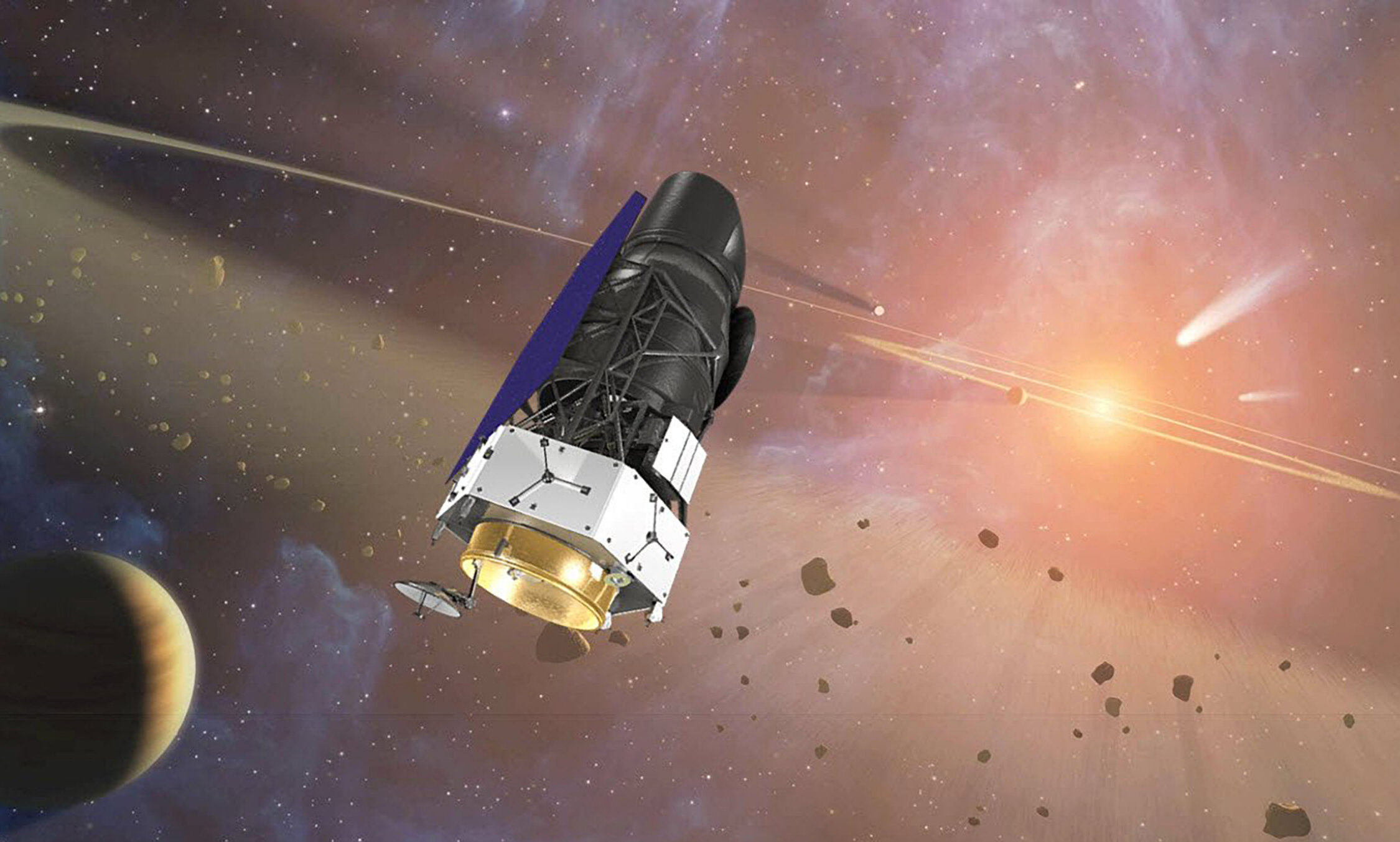
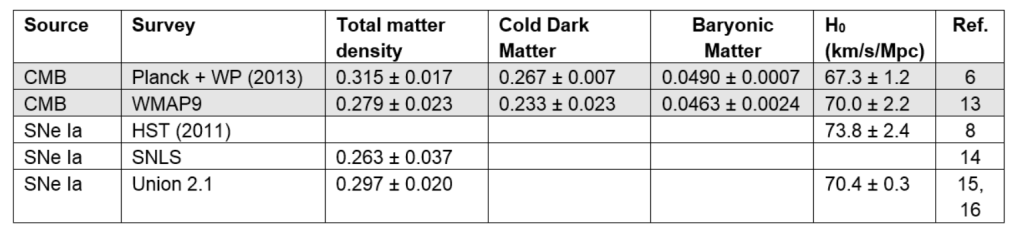
The Nancy Grace Roman Space Telescope, set to launch into orbit, aims to explore dark energy and dark matter, potentially addressing the unresolved Hubble Tension. This discrepancy highlights conflicting measurements of the universe's expansion rate. Some scientists believe Roman may confirm flaws in the standard cosmological model, leading to new physics.

  •  

NASA’s Two Most Powerful Space Telescopes Will Share the Same Region of Space. Here’s Why That’s Not a Problem

When NASA announced that the new Nancy Grace Roman Space Telescope will perform its science duties from a point in space known as Lagrange 2, many observers noted that the space agency’s current state-of-the-art space observatory, the James Webb Space Telescope, shares this same orbital location.

Due to the extremely sensitive nature of both satellites and their sensors, and the irreplaceable scientific value they will provide in the future, it might seem natural to wonder whether these two space observatories are at risk of a deep-space collision.

Fortunately, that’s a very unlikely prospect, and here’s a look at all the space separating Roman and Webb—and how NASA will ensure the two observatories remain safely apart.

Nancy Grace Roman Space Telescope Heading for Lagrange 2

Many scientific satellites reside a little over 200 miles above Earth in an orbital plane called Low Earth Orbit (LEO). This proximity enables communication with Earth and offers the potential for future servicing missions.

For example, NASA’s groundbreaking Hubble Space Telescope orbits LEO at about 300 miles above Earth. This proximity enabled servicing missions that have kept Hubble delivering valuable scientific data for over three and a half decades since its 1990 launch. Still, LEO also limits which missions Hubble can undertake.

More recently, NASA launched JWST. However, unlike Hubble, Webb rocketed roughly one million miles from Earth before arriving at Lagrange 2. According to a NASA fact sheet detailing the Roman Space Telescope’s mission, this location offers several benefits over LEO.

“At L2, the gravity of the Sun and Earth, together with an object’s motion around the Sun, let it stay lined up with Earth as they orbit,” NASA explains, “allowing Roman to have a relatively steady orbit without using much fuel.”

NASA also notes that heat from Earth, the Sun, and the Moon has less impact on infrared telescopes designed to “see” heat. L2 also offers JWST and Roman, “a constant, unobstructed view of a wide swath of the sky.”

“Earth won’t block much of Roman’s view since it will be so distant,” NASA explains.

Is There a Danger of a Roman-JWST Collision?

Instead of sitting still at the heart of L2, NASA notes that Webb “traces out a large orbit around the actual L2 point.” For comparison, the space agency noted that JWST’s orbit around L2 is “much larger than the Moon’s orbit around Earth.”

Like Webb, the Nancy Grace Roman Space Telescope is also destined for L2. The new space telescope will also trace out an orbit around L2 rather than remaining comparatively stationary.

Because of the wide orbits of both spacecraft and the efforts of the mission’s controllers, NASA said the two valuable space telescopes “will easily be kept far apart.”

Five-Year Mission Could Stretch to Ten or Beyond with Refueling

Like previous NASA missions, Roman will have a primary lifetime and a backup plan if the observatory remains viable after the first mission ends. For Roman, both the primary and secondary missions are slated for five years, bringing the observatory’s planned potential lifetime up to a possible ten years.

Notably, several NASA missions have continued to deliver scientific data well beyond their planned primary and secondary missions. Perhaps the most famous example is Voyager 1. Launched in 1977, the interplanetary mission has since left the solar system and continues to return data from beyond the heliopause, an area of deep space over 14 billion miles from Earth.

When discussing what obstacles may result in a shorter mission profile, NASA said that “fuel is expected to be the mission’s life-limiting resource.”

“While NASA does not currently have an ability to service observatories at L2, Roman is designed to be refuellable,” they added.

Christopher Plain is a Science Fiction and Fantasy novelist and has spent the last six years as Associate News Editor and Head Science Writer at The Debrief. Follow and connect with him on X, learn about his books at plainfiction.com, or email him at christopher@thedebrief.org.

  •  

‘Little Red Dots’ Remain a Cosmic Mystery—and New Research Reveals They May Be Keeping a Very Big Secret

Little red dots, an astronomical mystery unveiled by NASA’s James Webb Space Telescope, have perplexed researchers since their discovery—and now, according to new findings, we may be closer than ever to unraveling their mystery.

According to new research that appeared in Nature Astronomy, the enigmatic little red dots could be residents of very small, but also very dense galaxies with masses close to a billion times our Sun’s mass.

If confirmed, the new research may set the pace for unraveling how these cosmic curiosities, first detected in 2023, first came to be in the early stages of the universe’s development. Not only that, it could hint at the possibility that these “little” cosmic curiosities may also be keeping a big secret.

What Are Little Red Dots?

One of the reasons little red dots remained unknown until recent years has to do with their great distances from Earth. With the help of the Webb telescope’s powerful eye, these tiny objects were initially detected three years ago and detailed in a formal scientific paper in 2024.

The nature of these objects remains unknown, and astronomers still aren’t certain about what the exact source of the light they produce might be. In past research, some clues have pointed to the possibility of material around these objects at ultraviolet wavelengths—this would potentially offer a strong hint that these faint, distant objects are galaxies, or are at least related to them in some way.

One of the challenges astronomers have encountered is the lack of optical light measurements indicating the presence of galactic material. Because of this, questions remain about the mass that could be present in stellar bodies associated with the little red dots.

Capturing Optical Emissions from Enigmatic Objects

Now, in new research by Xuheng Ding, Lilan Yang, and colleagues, imagery captured by the James Webb Space Telescope of 217 examples of little red dots has produced new clues about their mysterious origin.

A key component of the new imagery includes the detection of optical emissions, albeit faint ones, observed beyond the primary central objects themselves. The detections are strong enough to be clearly observed, and based on the team’s models, these emission lines are indeed most likely linked to the presence of stellar mass, meaning that the little red dots are good candidates for star-forming galaxies, as many astronomers have suspected.

If correct, this would help confirm a potentially big secret about these objects, since it would also mean the little red dots reside at the centers of these galaxies—as supermassive black holes.

Anatomy of a Little Red Dot

Additional clues about these objects include new estimates for their size, clocking in with a radius of about 210 parsecs—roughly 685 light-years—on average. This means that the little red dots are far more compact than the kinds of star-generating galaxies expected to possess comparable mass, which date to around the same time in our universe’s development that the dots are believed to originate.

Based on the new research, little red dots are more than just unusual light sources in the distant universe, and their likely association with star-forming galaxies offers a significant clue toward revealing their exact nature.

Still, a few questions remain, and the team cautions that their analysis deals with the average properties based on the recent collection of Webb imagery of these cosmic features, since many of the individual characteristics of the little red dots remain too faint to characterize on an individual basis.

Going forward, the team believes additional observations that include spectrographic analysis of the light produced by little red dots will offer more clues about not only their origins, but will also help astronomers determine clearer estimates for their distances.

The recent study, “Extended components of little red dots in the rest-frame optical,” appeared in Nature on August 24, 2026.

Micah Hanks is the Editor-in-Chief and Co-Founder of The Debrief. A longtime reporter on science, defense, and technology with a focus on space and astronomy, he can be reached at micah@thedebrief.org. Follow him on X @MicahHanks, and at micahhanks.com.

  •  

James Webb Space Telescope Discovery Reveals Hidden Stars Massively Expanding Early Galaxies

James Webb Space Telescope (JWST) data have revealed hidden stars that astronomers say are unexpectedly increasing the mass of early galaxies.

JWST‘s ability to see deep into the cosmos gives astronomers insight into the early universe and challenges prior expectations of what they would find there. Now,  an international team led by astronomers from the Netherlands’ Leiden University recently reported the discovery of new stars in a paper published in Nature Astronomy.

With the discovery of these many previously unknown small stars, the researchers say astronomers may need to reconsider the expected mass of these early galaxies, as JWST reveals unexpected levels of development shortly after the Big Bang.

James Webb Space Telescope Observations

For their new work, the astronomers focused on nine massive galaxies in the early universe that had completed their main star-formation period. They combined JWST data with earlier observations from the Very Large Telescope in Chile, operated by the European Southern Observatory.

Spectroscopy is a crucial element of JWST data, breaking light down into separate spectra that allow astronomers to study stars and even planetary atmospheres across extreme distances. However, the smaller, fainter stars revealed in this new research can be much harder to detect than the brighter, more powerful ones. 

“If a galaxy were a city, the brightest stars would be the skyscrapers you can immediately see from far away,” said first author Chloe Cheng. “Our models show that behind the brightest stars there is a much larger population of small stars, like houses among the skyscrapers. This means that the galaxy as a whole is much more massive than previous estimates suggested.”

Stellar Birth

Working with data limited by the sensitivity of tools, researchers previously were unable to see as many smaller stellar objects. Researchers then assumed a similar ratio of small to large stars across the universe, which these new findings are now challenging.

Instead, they found ancient massive galaxies filled with many more small stars than previously expected, and far more than in our own Milky Way galaxy today, which is a smaller galaxy. The mass differences produced by this glut of tiny stars increased the expected mass of the galaxy under 1.5 billion years old by fourfold. 

“Measurements like these were simply not possible until recently,” explained co-author Martje Slob. “We needed not only a telescope capable of collecting enough light, but also exceptionally high-quality spectra and new analysis techniques. Only then could we reliably distinguish the subtle features of small stars from the light of much brighter stars.”

JWST Discoveries

Launched almost five years ago, JWST has continually defied what astronomers expected to find in the ancient universe. It turns out that the universe shortly after the Big Bang was more massive and had undergone more development than previously considered possible. The new findings add to those ongoing discoveries.

“This result shows that much more mass than we thought is hidden in small stars,” said study lead Professor Mariska Kriek. “It has implications for many areas of astronomy. Small stars often have planets orbiting them, so if there were many more small stars in the early Universe than we thought, there may also have been more planets.”

To follow up on this exciting discovery, the team plans to look even further back into the universe’s past in future observations that will study some of the universe’s very earliest stars.

The paper, “Hidden Mass in Early Galaxies Revealed by Bottom-Heavy Initial Mass Functions,” appeared in Nature Astronomy on August 18, 2026.

Ryan Whalen covers science and technology for The Debrief. He holds an MA in History and a Master of Library and Information Science with a certificate in Data Science. He can be contacted at ryan@thedebrief.org.

  •  
❌