Physicists around the world remain deeply divided on key mysteries of the universe, from dark matter to quantum gravity. The standard cosmological model failed to gain majority support, and no leading theory dominated the survey results. The largest survey ever conducted among physicists worldwide reveals surprisingly little agreement on some of the field’s biggest mysteries, [...]
In a promising advancement in the search for dark matter, scientists have transformed a tiny magnet into a detector that can sense some of nature’s faintest forces—with a little help from levitation.
The research could help researchers detect some of the heaviest particles that are believed to have ever inhabited the universe, according to physicists.
Led by Rice University physicist Christopher Tunnell, the achievement was made using a tiny permanent magnet—one around the size of a grain of sand—which they levitated over a superconductor that was chilled to freezing cold temperatures just above absolute zero.
Since the magnet floats without encountering any surfaces, this dramatically reduces friction, allowing the Rice team to carefully monitor its movements, some of which are as small as around one-hundredth of a single atom. Such subtleties of its motion offer a novel possibility: that the magnet’s faint movements could serve as an effective signal if a massive dark matter particle passed through the detector.
The tiny magnet used by the Rice University research team (Image Credit: Christopher Tunnell/Rice University).
Unusual Candidates for Dark Matter Particles
“Dark matter could be hiding at masses that our traditional experiments were never built to reach,” Tunnell said in a recent statement, noting that by leveraging the team’s novel detector, “we can begin searching a part of the dark matter landscape that has largely been out of experimental reach despite being the focus of extensive theoretical study by my Rice cosmology colleague Andrew Long.”
Among the most mysterious phenomena in the universe, dark matter is believed to comprise most of the matter that populates the cosmos and exerts gravitational effects that influence the formation and behavior of galaxies. Despite this, scientists have remained unsuccessful in detecting it or even determining what it is comprised of.
There are several experiments that hunt for hypothetical dark matter particles, which scientists believe have masses that are similar to those of atoms or subatomic particles. Still, there are some theoretical models which suggest much heavier particles could also qualify—some approaching sizes as large as a human cell.
A Novel Means of Detecting Dark Matter
Detecting something so large would require a very different kind of dark matter detector. To search for the kinds of interactions that smaller particles would be expected to generate, the Rice researchers instead looked for an impulse—one more likely to result from such an “ultraheavy” dark matter particle as it interacted with the detector.
“Instead of looking for a steady signal, we are waiting for very small knocks,” explained Rice postdoctoral researcher Juehang Qin.
The Rice research unit, led by associate professor Christopher Tunnel (left).
Over the course of one month, the team collected observations that focused mainly on quiet overnight periods when vibrations and other environmental disturbances were minimized. Unfortunately, no promising detections were made during this time.
Still, important results can also be derived from a lack of any definitive discoveries, especially when it comes to a field like particle physics. In this case, that’s because the absence of a signal allowed the researchers to place a few constraints on the combinations of dark matter masses and interaction strengths that should have been expected to produce detectable effects.
Altogether, the team’s experiment looked at nine orders of magnitude in its search for possible dark matter particle passes, which included searches for particles as much as 10 million times heavier than those investigated in past similar experiments.
Next Steps
Going forward, the next step would be to increase the experiment’s sensitivity by cooling the magnet even further, observing for longer periods, and eventually successfully levitating several magnets simultaneously. Multiple detectors could also help scientists determine whether real interactions involving dark matter are occurring, as opposed to false positives that might arise from vibrations or other kinds of interference.
Although the Rice team’s work is only a first step, their experiments with a tiny levitating magnet mark a promising pathway toward future potential detections, which may finally unlock new clues to the universe’s mysterious dark matter landscape.
The team’s research was detailed at the 2026 International Conference on Particle Physics and Cosmology, and additional details can be found here.
Micah Hanks is the Editor-in-Chief and Co-Founder of The Debrief. A longtime reporter on science, defense, and technology with a focus on space and astronomy, he can be reached atmicah@thedebrief.org. Follow him on X @MicahHanks, and at micahhanks.com.
Dark matter, the invisible substance thought to make up around 85 percent of all mass in the universe, forms an essential part of the standard cosmological model, providing the gravitational glue that holds together entire galaxies. What it actually is, though — and even if it truly exists — remains one of the great mysteries of science.
Now, a bizarre event that occurred nearly a mile underground at the world’s largest dark matter detector in South Dakota, the LZ detector, could be the first direct evidence of the substance. Or it could be something else entirely. Either way, it has scientists mystified and excited.
In a new paper published Tuesday and has been submitted to the journal Physical Review Letters, physicists running the LZ Dark Matter Experiment say that their detector recorded a stunning subatomic interaction that doesn’t fit anything else ever documented in physics.
Again, it’s not necessarily a dark matter discovery — but it’s so unusual that it warranted sharing.
“How do you even make sense of one event?” Tom Shutt, a particle astrophysicist at SLAC National Accelerator Laboratory and cofounder of the LZ project, told Science magazine. “We just decided we should publish and think really, really, really hard about what that event could be.”
Dark matter is a sort of ghost haunting the cosmos. We can’t see it because it doesn’t emit, absorb, or reflect light, or otherwise interact with any ordinary matter — except through gravity.
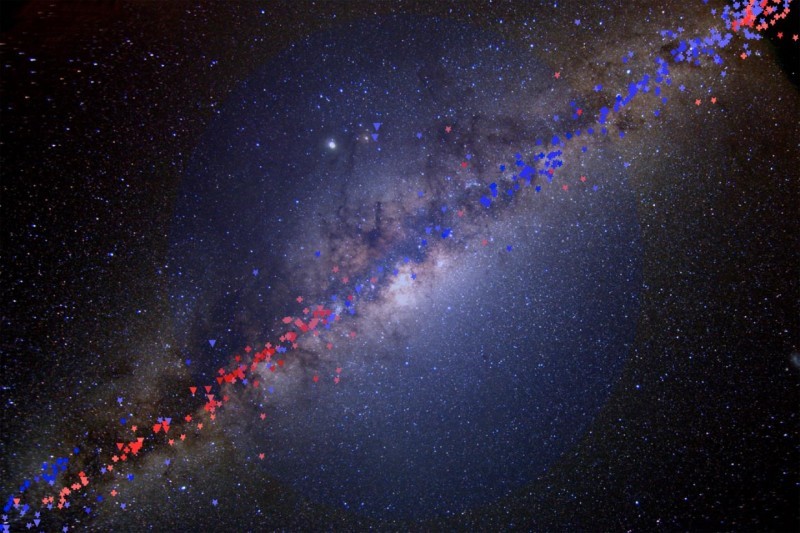
We see the fingerprints of its gravitational pull all around the universe, in fact. Galaxies aren’t massive enough to hold themselves together with their own gravity, so without the invisible presence of something with incredible mass, the very realms that define the universe, and which we call home, would fly apart.
There are countless candidates for what dark matter is, but the prevailing theory is that it’s made up of weakly interacting massive particles, or WIMPs. As their feeble acronym suggests, WIMPs are thought to be a hundred times as massive as a proton, but have such a weak nuclear force that they don’t interact with ordinary particles.
Because of their mass, they move much slower than ordinary particles, too, allowing them to clump together and form giant “halos” that provide the gravitational pull for galaxies to form in. There is no single agreed-upon definition of a WIMP, though, and it’s possible that WIMPs could be a whole family of particles, rather than just one.
If these theories are correct, then every once in a while, errant WIMPs can bump into the nucleus of an unsuspecting atom and create a trace amount of energy.
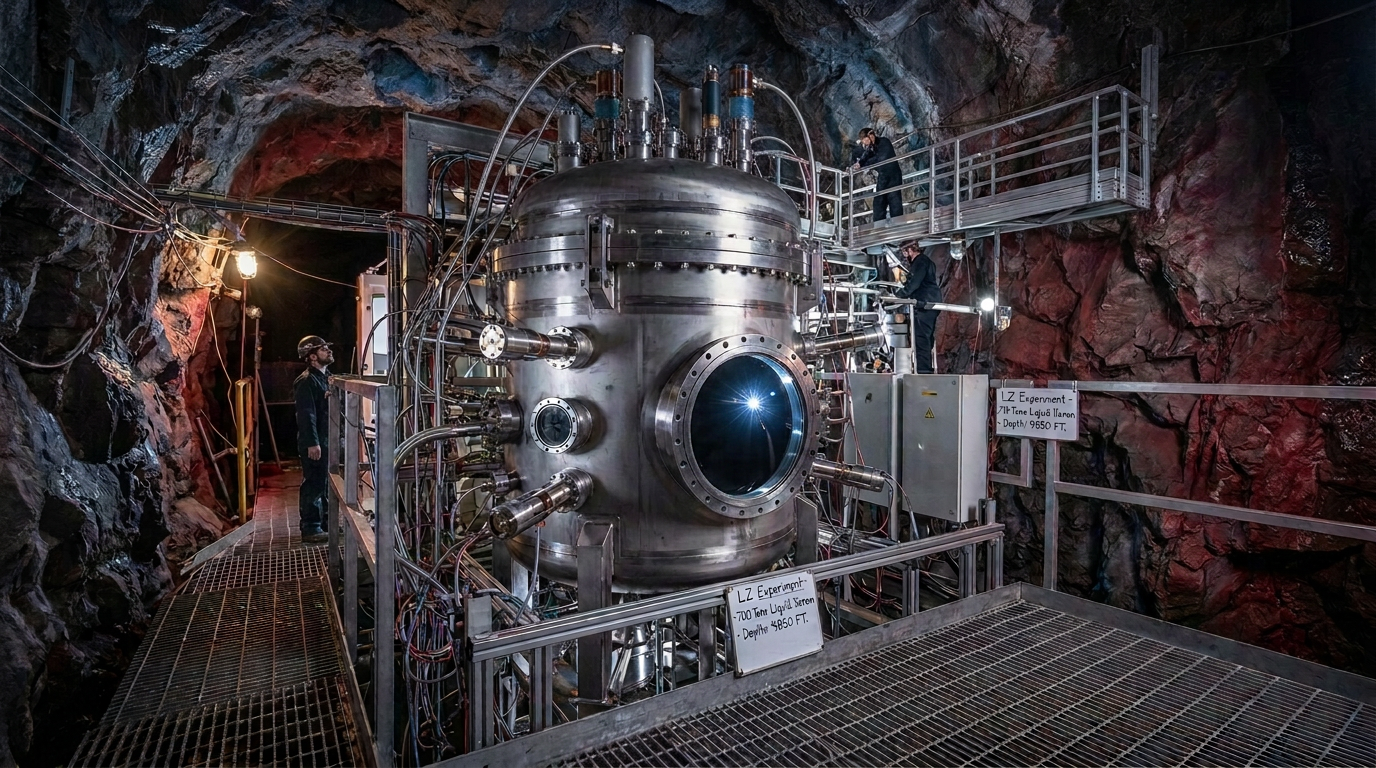
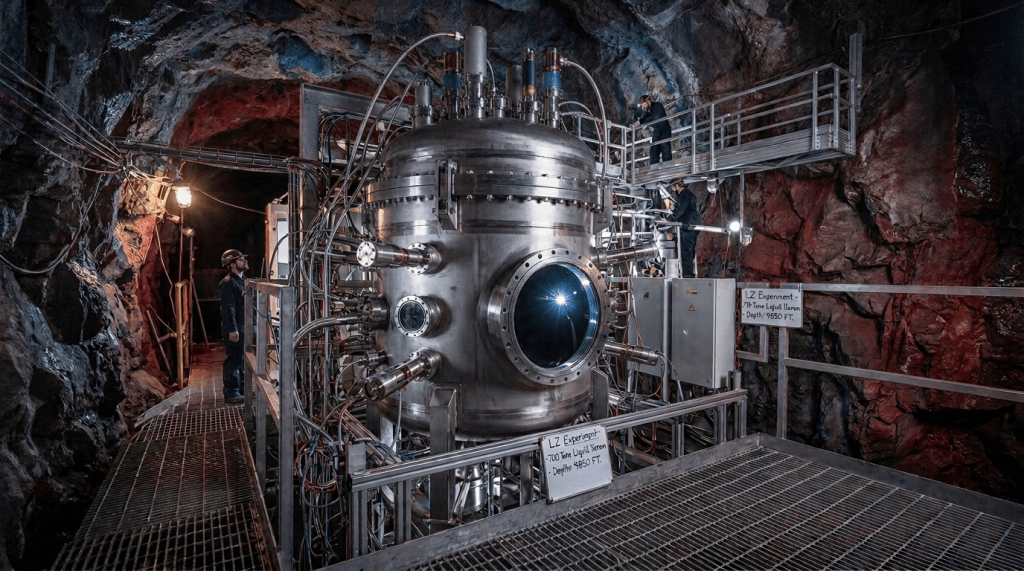
This is what the LZ detector is built to find. It’s essentially a tank filled with seven tons of liquid xenon, placed 1,480 meters underground in a former gold mine. At such a depth, the preponderance of xenon is shielded from the space radiation that our planet is routinely bombarded with (though there is a still a background level of other interactions that scientists can’t control, but can account for.) Anything that causes a a big enough stir in this controlled, quiet environment would be significant.
After spending years poring over the data the detector has collected so far, the physicists found a striking interaction that took place in 2023. Something, we don’t know what, smashed into a xenon particle, and produced a flash of light. If it was dark matter, it produced more energy than traditional WIMP models predict.
The scientists say that the detection has about a one in 400 chance of being a fluke. Scientific discoveries, though, need to meet at least a five sigma threshold, meaning that there should be only as roughly one in 3.5 million that it’s a fluke.
Still, physicists are absolutely thrilled. Even if this event isn’t a smoking gun by itself, there are other, larger dark matter detectors coming online, such as China’s PandaX experiment and Italy’s XENONnT, that should be able to hunt for the same high energy type of event.
“We can perform this study independently with a blind analysis to validate or invalidate LZ’s claim,” Elena Aprile, a physicist at Columbia University and spokesperson for the XENON experiment, told Science.
The LUX-ZEPLIN experiment in South Dakota recorded an unexplained flash of light in 2023, suggesting a potential dark matter particle interaction. While the statistical significance of 2.6-sigma indicates low odds of error, much more evidence is needed before confirming a dark matter discovery, which remains elusive despite ongoing research.
Physicists using the LUX-ZEPLIN (LZ) dark matter detector deep underground in a former South Dakota gold mine say they’ve recorded a single particle interaction that they can’t easily explain, but they’re a long way from claiming a discovery.
Dark matter may finally be coming into focus thanks to a recent LUX-ZEPLIN (LZ) experiment, which detected a particle interaction that is difficult to explain as arising from ordinary matter.
Physicists believe that 85% of the matter in the universe is dark matter rather than ordinary matter, but because it neither emits nor reflects light, the mysterious substance effectively remains invisible.
The new findings, described in a recent paper submitted to Physical Review Letters and in a talk at Japan’s 2026 TeV Particle Astrophysics conference, detail the work of dozens of researchers that may constitute an intriguing hint in advance of a confirmed dark matter detection.
LUX-ZEPLIN
A massive international team of 250 scientists and engineers across 39 institutions makes up the LZ project, which conducts its experiment at a facility in South Dakota, almost a mile below ground. This facility, the Sanford Underground Research Facility (SURF), houses the detector, which is optimized to search for weakly interacting massive particles (WIMPS), one of the primary candidates for dark matter.
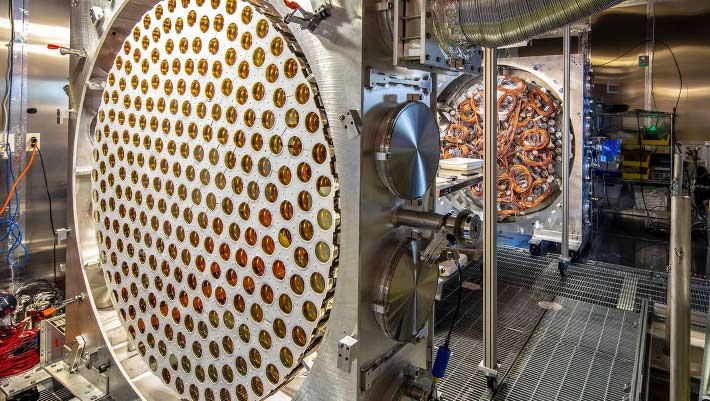
It does so using ten metric tons of ultrapure liquid xenon in a cylindrical detector. Layers surrounding the chamber block or detect background particles during the dark matter search. If WIMPs collide with xenon atoms, they should produce tiny flashes of light and electrons that can be detected within the chamber.
The nearly mile of rock above the facility helps prevent cosmic rays and other surface radiation from interfering with the experiments. A water tank and outer detectors help shield the central detector from background neutrons, while computational tools separate particle interactions to identify events that may mimic a dark matter observation.
The detector senses flashes of light at the top and bottom of the liquid xenon chamber produced in dark matter collisions. Image: Greg Stewart/SLAC National Accelerator Laboratory
Dark Matter Data
“This was a detailed study in a region we hadn’t explored within this dataset, and we spent months of additional effort to understand all the possible causes of background events,” said lead author Sam Eriksen, a senior research associate at the University of Bristol in the UK.
“We understand our detector and the backgrounds so well that even a single outstanding event, like the one we found, is important. We expect dark-matter events to be extremely rare, so only a handful could mark the first detection of WIMP dark matter,” Eriksen added.
Measurements used in the study were collected between March 2023 and April 2024, totaling 220 live days. The new work wasn’t the first pass on this dataset, as researchers had previously searched it for faint signals from the simplest kinds of WIMP interactions. This time, the team expanded its search to a broader range of possible interactions that could deposit more energy in the detector.
A Possible Dark Matter Detection
“We’re very intrigued to see this event in the data, in the region where we expect dark matter to show up and the competing backgrounds are very low,” said LZ spokesperson Rick Gaitskell, a professor at Brown University. “With only one event, we don’t want to get ahead of ourselves. We are not claiming to have seen dark matter. But we have seen something interesting that we want to share with the scientific community for their input.”
According to researchers, the event was an outlier from other LZ measurements and is consistent with one of the dark matter models the team explored. However, increasingly sensitive technology can ironically reveal previously unseen background processes alongside potentially interesting new signals. The sensitivity of the detectors used at LZ may therefore be measuring a background that earlier instruments missed rather than dark matter.
This detection is rated at 2.6 sigma, about half of the 5-sigma threshold needed to ensure the signal is not background noise. Further observations will be needed to push certainty toward that 5-sigma goal, but this could be a major step in that direction.
The paper, “Search for Dark Matter Particle Interactions in an Extended Nuclear Recoil Energy Window with the LUX-ZEPLIN (LZ) Experiment,” is currently available on the LUX-ZEPLIN website.
Ryan Whalen covers science and technology for The Debrief. He holds an MA in History and a Master of Library and Information Science with a certificate in Data Science. He can be contacted at ryan@thedebrief.org, and follow him on Twitter @mdntwvlf.
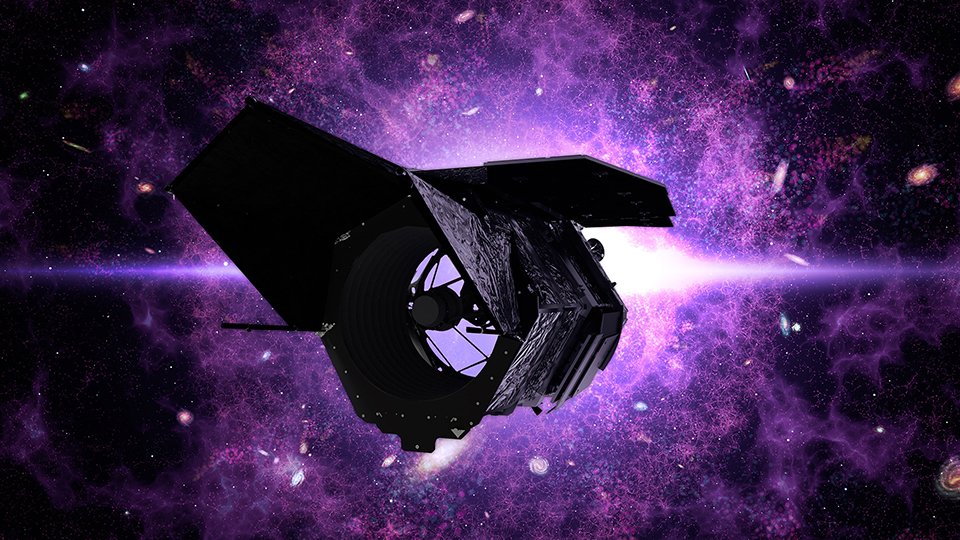
Artist’s concept of the Nancy Grace Roman Space Telescope (Credit: NASA).
Welcome to this special edition of The Intelligence Brief… This week, NASA is preparing to launch the Nancy Grace Roman Space Telescope, its next flagship space observatory and a mission poised to transform our understanding of distant worlds and some of the universe’s greatest mysteries. In our analysis, we’ll be looking at 1) how Roman’s powerful Wide Field and Coronagraph instruments will survey the cosmos on an unprecedented scale, 2) how the telescope could discover thousands of new exoplanets—including elusive rogue worlds—and directly image planets around other stars, 3) how Roman will survey more than a billion galaxies in search of new clues about dark matter and dark energy, and 4) why its combination of Hubble-like image quality and an enormously wider field of view could usher in a new era of astronomical discovery.
Quote of the Week
“We are poised at the brink of unfathomable scientific discovery.”
– Julie McEnery, Roman’s senior project scientist at NASA Goddard
If you enjoy the news and perspectives offered by The Debrief, make sure that you aren’t missing our stories by making us one of your “preferred sources” on Google News. You can simply follow this link to add The Debrief to your list of favorites, and you can read more about Google’s preferred sources in our article here.
Get all the latest stories from The Debrief, with more breaking stories at the end of this week’s newsletter.
NASA’s Nancy Grace Roman Space Telescope Prepares for Lift-Off
On Sunday morning, NASA will set a new milestone with the launch of the Nancy Grace Roman Space Telescope, setting the course for discoveries that may include new insights into some of the universe’s greatest mysteries.
As NASA’s next flagship space observatory, this powerful new telescope is designed to discover thousands of distant worlds while also probing the lingering mysteries of dark matter and dark energy. Named after Nancy Grace Roman, NASA’s first chief of astronomy and an early advocate for the efforts that led to the launch of the Hubble Space Telescope, the new space observatory bearing her name is poised to offer one of the most detailed views of our universe ever captured.
Scheduled to lift off aboard a SpaceX Falcon Heavy rocket on August 30, 2026, at 7:26 a.m. EDT, the Roman telescope’s mission is comparable in ambition to those of the Hubble and James Webb Space Telescopes, but also very different in many respects. Here’s a look at what to know about this historic mission, what it may help researchers uncover, and why it could set the pace for a range of important scientific advancements in the coming years.
Roman’s Historic Mission to Observe the Cosmos
At the heart of its mission, Roman will offer astronomers a remarkably wide view of the cosmos. Surveying immense portions of the sky, the powerful instruments on board the telescope will capture high-resolution imagery comparable to Hubble at certain optical and infrared wavelengths—imagery that could dramatically reshape scientists’ understanding of both planets and the universe they inhabit.
In terms of the technologies it will carry with it into space, Nancy Grace Roman Space Telescope will rely on two primary instruments: its Wide Field Instrument (WFI) and Coronagraph Instrument. The WFI is equipped with a 300-megapixel near-infrared camera enabling wide-area imaging and spectroscopy, allowing Roman to conduct large-scale surveys with great precision and sensitivity—all of which make it ideal for use in the hunt for dark energy, exoplanets, and other hard-to-spot cosmic phenomena.
Meanwhile, Roman’s Coronagraph Instrument is designed specifically for imaging and studying exoplanets. Equipped for both imaging and spectroscopy, the coronagraph will suppress the overwhelming glare of distant stars, potentially making much fainter planets orbiting nearby visible. According to NASA, Roman’s powerful Coronagraph will be the first instrument deployed on a space observatory to leverage “numerically optimized, precision-fabricated coronagraph masks.”
By suppressing the overwhelming glare of distant stars so that much fainter planets around them become visible, Roman’s Coronagraph could achieve as much as 100 times the performance of existing facilities, offering a promising chance that some of the faintest planets in the cosmos—some as much as a billion times fainter than their host stars—could become visible.
With a little luck, Roman could also break new ground with the first direct imagery of an exoplanet possessing rings. Going beyond its immediate discoveries, the coronagraph will also demonstrate technologies that could eventually be incorporated into future observatories, including NASA’s proposed Habitable Worlds Observatory.
A New Era of Planet Hunting
Presently, astronomers have confirmed roughly 6,000 planets beyond our Solar System. However, once Roman’s mission gets underway, that number could see a dramatic increase.
One of the ways it will achieve such landmark detections will be with the help of gravitational microlensing, which relies on detecting how the gravity of a foreground object can magnify light from a source much farther away. Using microlensing alone, there is a good chance Roman may discover several hundred—but more likely thousands—of planets, which may include worlds small enough that they have eluded previous detection using existing methods.
Along with the planets it discovers, astronomers anticipate that Roman will also find several new additions to the growing catalog of “rogue planets,” mysterious planetary bodies that wander through the cosmos without orbiting a star.
Additionally, NASA says that anywhere from 60,000 to 200,000 additional candidate planets could be revealed through transit observations, though only a fraction of these are expected to be confirmed through additional observations.
Mapping the Dark Universe
Arguably, one of the most significant components of Roman’s mission involves its study of the unseen side of the cosmos: the mysterious phenomena known as dark energy and dark matter.
In search of answers to such mysteries, Roman will soon begin scanning more than a billion galaxies as it maps the structure and evolution of the universe throughout cosmic history, providing data that will at the very least help researchers narrow down the most promising interpretations among a range of competing explanations for dark energy.
Simultaneously, the telescope will probe dark matter, the unseen material whose gravitational effects are currently needed to explain phenomena in our universe that include the motions of galaxies, as well as the evolution of some of the largest structures in the cosmos.
Hubble’s Vision, But at Far Greater Scale
In many ways, what Roman is expected to achieve will be comparable to its predecessor, the Hubble Space Telescope, although at a far greater scale.
At some wavelengths, Roman will be capable of producing images that approach the clarity of Hubble’s iconic views of our universe, all while capturing as much as 100 times more of the sky with each observation. By capturing more of the sky with each image it produces, Roman’s efforts to map the universe could occur at a remarkable pace—perhaps a thousand times faster than those of its predecessor.
A Historic Mission Lifts Off This Sunday
If all goes according to plan, Roman will be launched aboard a SpaceX Falcon Heavy rocket at 7:26 a.m. EDT this Sunday, Aug. 30. NASA will begin live coverage of Roman’s launch on Sunday at 6:20 a.m. Eastern Time, and you can follow the updates online with NASA’s free streaming platforms.
Once it lifts off, Roman will be carried 930,000 miles from Earth to the Sun-Earth Lagrange Point 2 region, which is the same location where the James Webb Space Telescope is currently operating. After it reaches orbit, for the next 90 days, Roman will undergo commissioning, after which science operations are expected to begin sometime in early 2027.
The observatory’s primary mission will last five years, although Roman could potentially remain operational for more than a decade, offering astronomers an unprecedented look at our universe and possibly a few answers to some of the most baffling questions about our universe.
In the 1970s, astronomer Vera Rubin analyzed a series of observations of how quickly different galaxies rotated around their centers. She found that these galaxies rotated much faster than they should have, given the amount of material visible through starlight. She concluded that a large fraction of these galaxies’ masses must therefore consist of some kind of unseen material.
Scientists have since observed galaxies to more precisely measure this unseen material, which they now call dark matter. They’ve shown that dark matter moves much more slowly than the speed of light. Unlike most celestial objects, it can’t emit or block any light, meaning it doesn’t interact with the electromagnetic force. Even though it doesn’t interact with a fundamental force in the universe, dark matter constitutes over 80% of the mass of an average galaxy.
In the prevailing model of cosmology, known as ΛCDM (pronounced “Lambda-CDM”), dark matter determined where galaxies formed. The theory is that gravity pulled dark matter together more quickly than regular matter in the primordial universe. This redistribution led to regions of space with greater mass density, which collected chaotic, regular matter into pools that eventually formed galaxies, stars, and planets.
In the present universe, dark matter and regular matter coexist in galaxies, though generally separated. Regular matter pools in the very center of galaxies, forming the more familiar galactic disks. Dark matter stays towards the edges of galaxies, enveloping the regular matter disks in what are known as dark matter halos. Because these halos make up so much of the mass of the average galaxy, researchers Guangze Sun, Fangzhou Jiang, and Jing Wang conducted a series of simulations to test how dark matter halos affect regular matter in galaxies. Specifically, they examined what characteristics of dark matter halos determine galaxy sizes.
The force of gravity works such that more massive dark matter halos draw in more regular matter and produce larger galaxies. So these researchers fixed the total mass of the galaxies they simulated at 100 billion times that of the Sun to determine which properties of the dark matter halos would produce the widest galaxies. They selected 4 variables to test: the total density of dark matter in the galactic halo, the density of dark matter in the innermost 1% of the halo, how fast the halo spun, and the ratio of regular matter to dark matter in the entire galaxy. For each variable, they tested 3 to 4 inputs representing low, moderate, and high values against a standard reference value and ran 132 total simulations to generate enough data for statistical analyses.
To simulate the complex physics of dark matter halos, the team used the modeling software GIZMO to model gravity, magnetism, and fluid dynamics. They combined this with a second model, called FIRE-3, which modeled how stars explode at the end of their lives, how much metal these explosions produce, and how gases heat up and cool down over time. The researchers ran the dynamic simulations for 3 billion model years, then used a program they developed based on the existing Pynbody to measure the radii of the simulated galaxies.
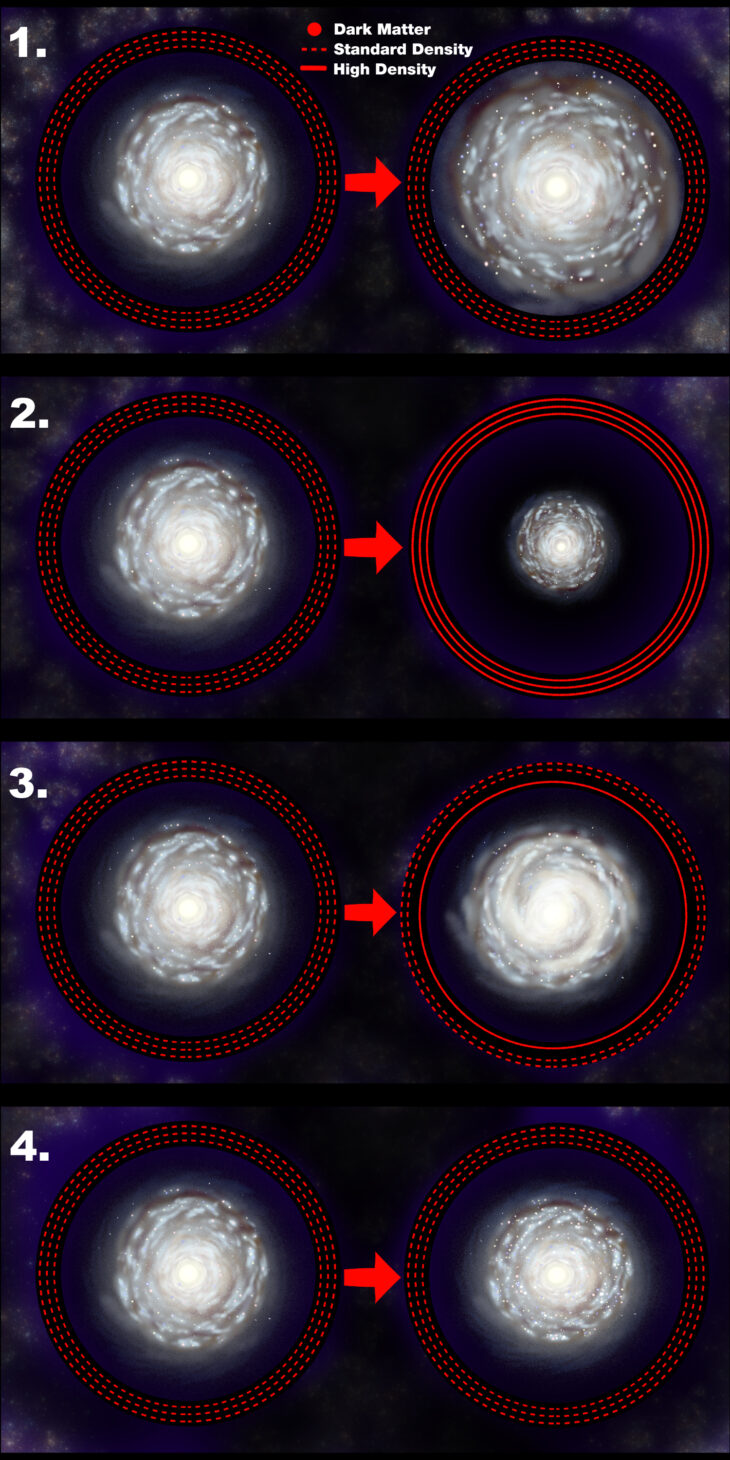
The team found that the faster a dark matter halo spun around a simulated galaxy, the larger the galaxy became, as shown in scenario 1 in the figure below. By contrast, in scenario 2, increasing the halo’s total dark matter concentration caused the central galaxy to shrink. Increasing only the innermost dark matter density in the halo had a smaller effect but generally reduced the galaxy’s size, as shown in scenario 3. And lastly, increasing the ratio of regular matter to dark matter in galaxies resulted in smaller galaxies that formed stars closer to their centers, as shown by a greater concentration of stars in scenario 4.
This diagram showcases the team’s results across 4 broad scenarios. The left column depicts a default galaxy under the baseline parameters. The right column depicts how the galaxies changed when the team varied a single experimental factor, including 1) increasing how fast the dark matter halo spun, 2) increasing the total density of the dark matter halo, 3) increasing the density of dark matter in the innermost halo, and 4) increasing the ratio of regular matter to dark matter in the entire galaxy. The dark matter haloes are represented as red rings surrounding the galaxies, not to scale. Illustration by Andrew Bizal.
The team’s results suggest a previously unknown connection between the properties of dark matter halos and galactic disks. However, they cautioned that their simulations were all run on galaxies in isolation, unlike in the actual ΛCDM universe, where their interactions are complicated by galaxies tugging on one another or by material moving from one to another. To further test their results for single galaxies, the researchers plan to run follow-up experiments with halos of different sizes, as well as with galaxies with different shapes and features, such as clumps, gaps, and lopsidedness.

 Login

 Physicists around the world remain deeply divided on key mysteries of the universe, from dark matter to quantum gravity. The standard cosmological model failed to gain majority support, and no leading theory dominated the survey results. The largest survey ever conducted among physicists worldwide reveals surprisingly little agreement on some of the field’s biggest mysteries, [...]