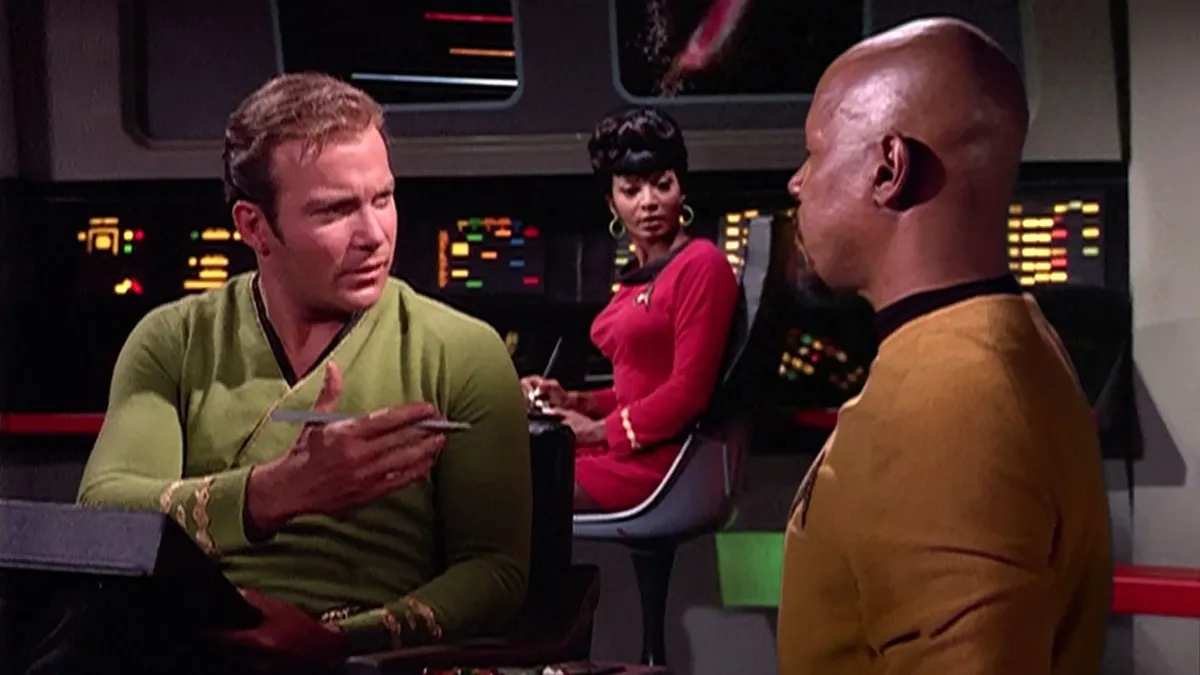
September 8th, 1966 was a Thursday. Not a fresh-start-Monday or an exciting Saturday. A regular old Thursday; except that this one catalysed a cultural phenomenon. This was the Thursday that "Star Trek" was first broadcast, drawing viewers across the United States into a space-age world that revolutionised television.
The thing is, in 1966 no exoplanets (planets beyond our Solar System) had actually been discovered. Yet the franchise gave audiences a galaxy brimming with desert planets, ocean worlds, binary sunsets, and countless versions of Earth. Sixty years later, astronomers have confirmed more than 6,000 planets beyond the Solar System, known as exoplanets.
But how well do "Star Trek"’s fictional worlds compare with those astronomers have actually discovered?
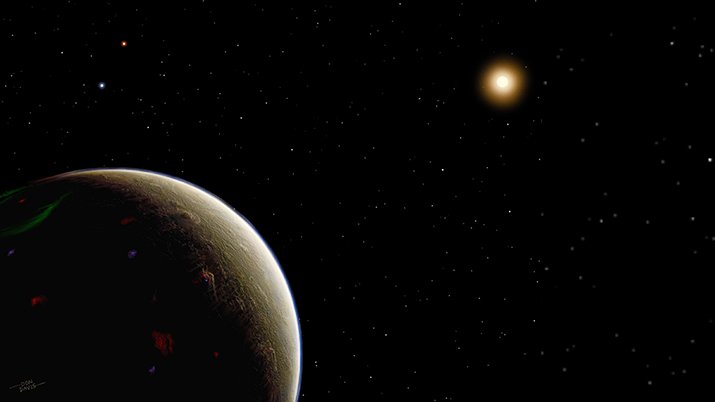
When many of us think "Star Trek", the first planet that comes to mind is the dry, hot, and rocky Vulcan. Canonically, it orbits 40 Eridani A, a real star around 16 light-years from Earth. Real stars invite real observations, which led to astronomers announcing a possible planet in orbit in 2018. Of course, this was nicknamed Vulcan. However, later work has shown that this apparent signal was likely caused by stellar activity, rather than a planet in orbit.
This is, unfortunately, a common issue. Stellar activity, such as starspots, convection, and other magnetic activity, is very good at producing signals that look incredibly planetary.
(Image credit: Don Davis)
Although the candidate planet was ultimately discredited, genuine hot, rocky planets do exist around other stars. Many of them orbit extremely close, completing an orbit in less than an Earth day. Some may have molten surfaces, atmospheres poisoned with vapourised rock, or even permanent day and night sides. While Vulcan itself may not be real, nature has produced rocky worlds considerably more hostile than Spock’s birthplace.
In contrast to Vulcan, "Star Trek" also gave us planets almost entirely covered with water. One particularly intriguing case is The Waters, from Voyager’s Thirty Days episode. The Waters is a sphere of water, with no solid core, kept together by a containment field. This is a little different to what an astronomer would refer to as a water world, but a planet-sized mass of water could theoretically be held together by its own gravity, without the need for a containment field.
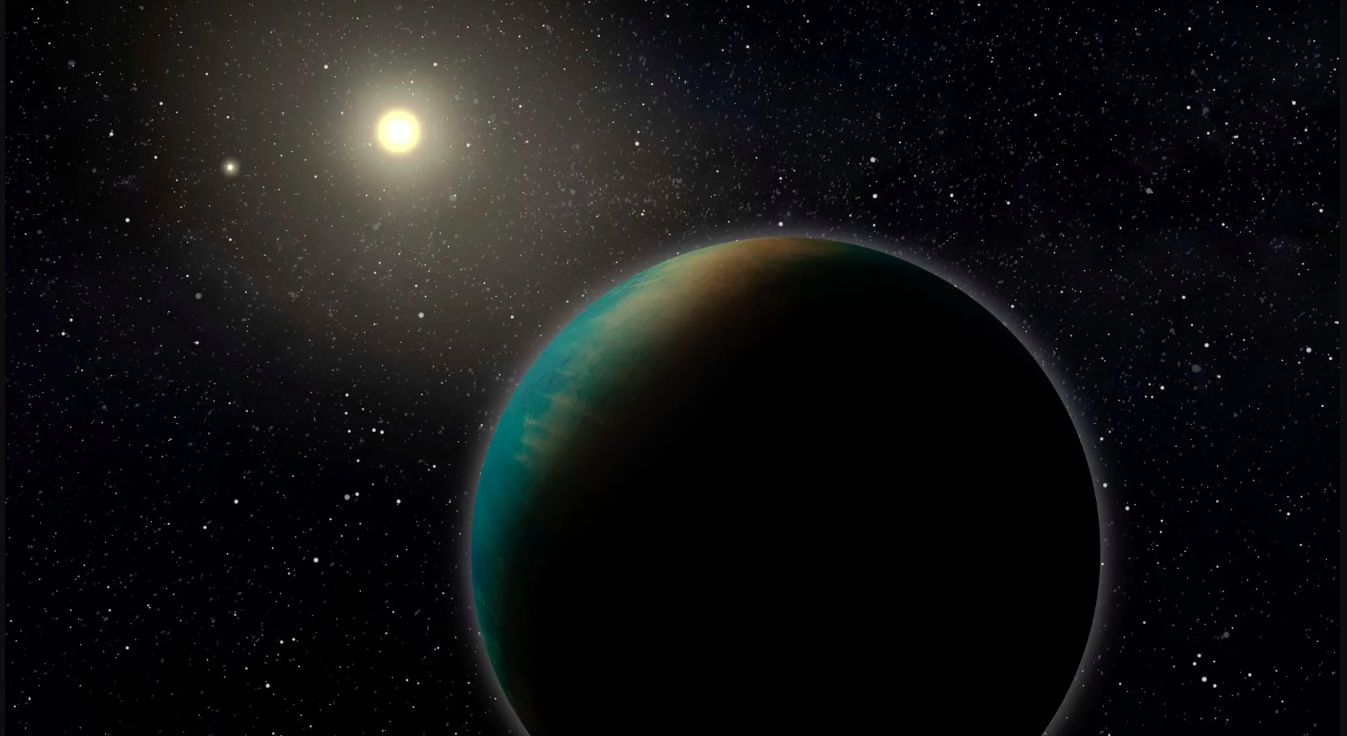
However, the immense pressure deep inside this would transform much of the water into high-pressure ice rather than leaving it as one enormous liquid ocean. While no exoplanet has been definitively proven to have a global ocean, there are candidates like TOI-1452 b — a super-Earth orbiting a red dwarf star — that could contain a much larger proportion of water than Earth. It’s important to keep in mind, however, that a water-rich planet doesn’t necessarily make a good home. Water could exist beneath a chokingly thick atmosphere, as high-pressure ice, or sitting above an inhospitable interior.
(Image credit: Benoit Gougeon, Université de Montréal, CC BY-ND)
Something "Star Trek" got very right is planets with two or more suns, such as Risa under its twin stars. The first confirmed planet orbiting two stars — known as a circumbinary planet — was Kepler-16 b. As it orbits a binary star system, it would experience a double sunset from the surface…if a surface existed.
Unlike many of the fictional planets in "Star Trek", Kepler-16b is a cold, gas giant; not somewhere we could sit and admire the view. In 1966, not only had exoplanets not yet been discovered, but astronomers had no observational evidence that planets could form and remain stable in dynamically complicated multiple star systems.
There are, however, many circumstances where reality goes far beyond what was imagined in "Star Trek".
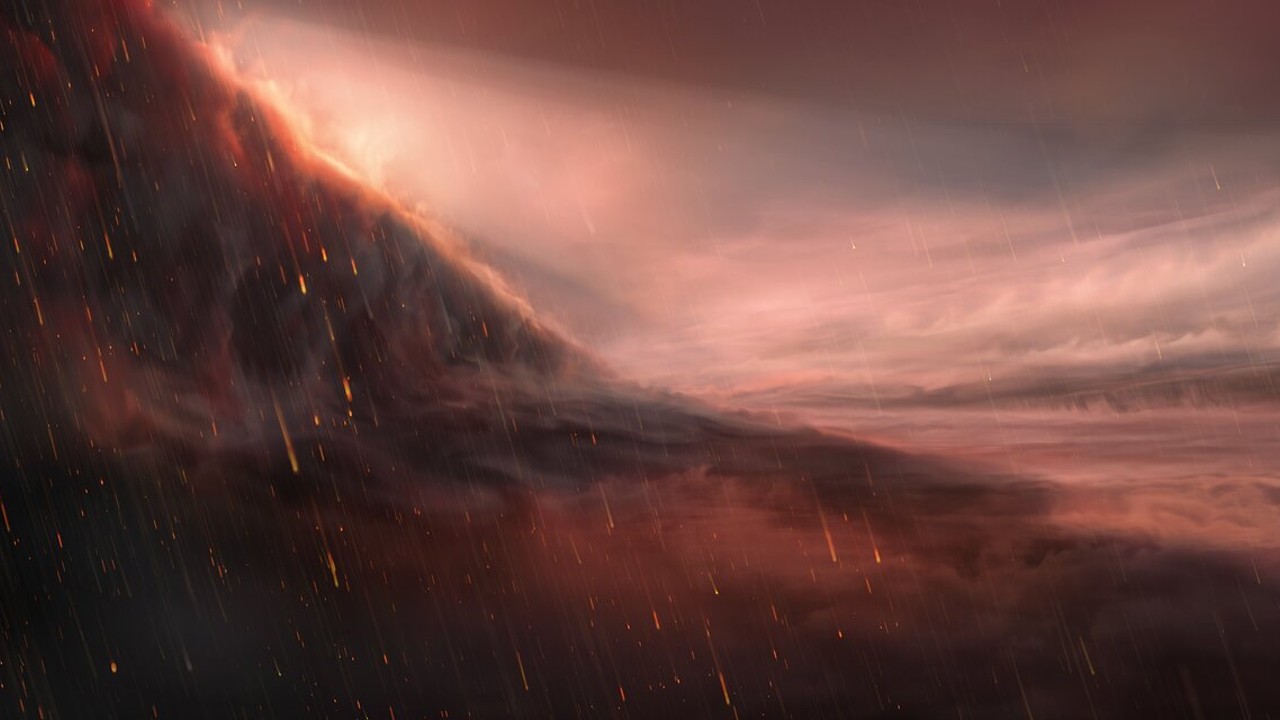
(Image credit: ESO/M. Kornmesser)
Take WASP-76 b, an ultra-hot gas giant around 640 light-years away. The planet has a dayside so hot that iron vaporises, and it could be re-condensing into iron-rain on the cooler nightside. KELT-9 b is similarly hot, with molecules torn apart by the heat and metals existing in the atmosphere. 55 Cancri e is a super-Earth that orbits its host star every 18 hours, and could be covered by a magma ocean. There are also rogue planets, wandering through space with no host star.
"Star Trek" frequently invented strange planets by changing one familiar feature, but nature stared at the rulebook and ripped it to shreds. We’ve observed planets that have combinations of temperature, gravity, chemistry, and orbital architecture that writers in 1966 never could have anticipated.
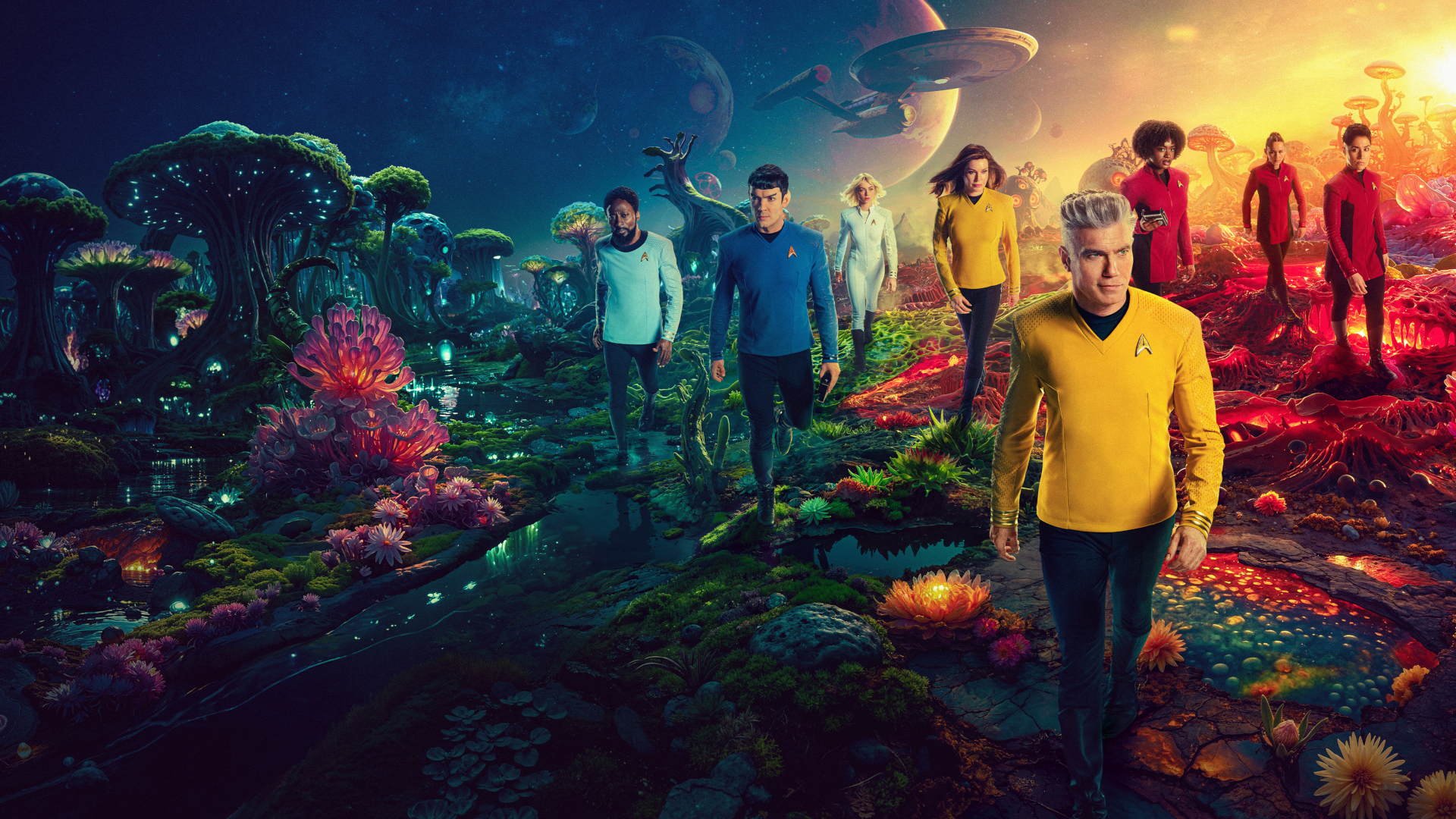
The greatest scientific accuracy in "Star Trek" wasn’t the description of any given planet. Instead, it beautifully predicted that we live in a galaxy in which planets are abundant, gorgeously varied, found around a huge range of stars, and worth investigating even when they are nothing like Earth.
(Image credit: Paramount)
The necessity of a large population of conveniently habitable, human-safe worlds for "Star Trek"’s storytelling definitely set a limitation on the types of planets explored throughout the franchise. Our discoveries so far show that finding planets with Earth-like conditions is incredibly difficult, but not that they aren’t out there, somewhere.
"Star Trek" gave us a galaxy teeming with strange new worlds. Sixty years later, the surprise isn’t that these worlds exist, but that the real ones are even stranger than writers dared to imagine.
The date of 'Star Wars Day' is based on a "May the fourth be with you" pun. The date of 'Alien Day' (April 26), meanwhile, is inspired by an extremely tenuous link to LV-426, a moon pivotal to the first two movies.
'Star Trek Day', however, is based on an actual date; September 8 is the anniversary of the Original Series' very first broadcast in 1966. This year's birthday is more important than most, as the "Star Trek" franchise reaches the ripe old age of 60 — Kirk and Spock's diamond jubilee.
Birthdays are traditionally a time to take stock of past, present and future, so we've taken this opportunity to deliver a status report on the legendary franchise, via TV, movies and 60th anniversary celebrations — including commemorative coins and record-breaking Vulcan salutes.
Will "Star Trek" continue to live long and prosper, or would Dr McCoy deliver one of his more pessimistic assessments, Jim?
It's time to give the veteran franchise a health check…
TV shows
(Image credit: Paramount)
Television is where the voyages of the starship Enterprise began, and still feels like the franchise's natural home. There have now been 12 separate TV shows set in the "Star Trek" continuity — 14 if you throw in "Short Treks" and pre-school YouTube series "Star Trek: Scouts" — and the final frontier has flourished on the small screen over the last decade.
Indeed, since "Discovery" first spooled up the spore drive in 2017, we've enjoyed the most bountiful period of "Trek" since the glory days of the '90s, when "The Next Generation", "Deep Space Nine" and "Voyager" became appointment viewing. In many ways it's been a masterclass of universe-building, as executive producer Alex Kurtzman (with his Secret Hideout production company) has overseen an impressively large and varied fleet of shows.
Although Disney+'s "Star Wars" TV adventures have all — with the notable exception of "Andor" — tended to be relatively uniform in tone, "Trek" has generally taken much bigger swings. "Discovery" warped off to the undiscovered country of the 32nd century, while "Lower Decks" proved that "Star Trek" and out-and-out comedy can be natural bedfellows.
"Star Trek: Picard"'s peerless final run of episodes (arguably the best season of "Trek" ever made) skilfully mixed masterful storytelling with unashamed "TNG"-era nostalgia. "Strange New Worlds" managed to recruit the franchise's best ensemble since the '90s. "Prodigy" was a kids' show grown-up fans could enjoy, too.
(Image credit: Paramount Plus)
And for a brief period between May 2022 and April 2023, there were five active "Star Trek" shows at various stages of the production/release cycle. Little did we realize that would be a peak for the franchise and that — a little over three years later — we'd be facing the prospect of a future without any "Star Trek" TV at all.
At present, there are no "Trek" shows in production. "Strange New Worlds"' fifth season and "Starfleet Academy"'s second are already in the can, but both will be their respective show's final voyages; the sets have been dismantled, the casts have moved on to new projects.
Meanwhile, rumored spin-offs like "Picard" follow-up "Legacy" and "Strange New Worlds" sequel "Year One" seem destined to remain in the realms of Trekkie fantasy.
As "SNW" co-showrunner Henry Alonso Myers told TrekMovie in August 2026, "We haven't been told anything [about 'Year One']. It's not up to us. It's up to Paramount. We stand by and are ready to work at their discretion. We love 'Star Trek'. We'd be happy to do it again. It is out of our hands."
(Image credit: Paramount+)
Rights holder Paramount (and its CBS subsidiary) is the unknown factor here. Skydance Media bought the studio last year, and — perhaps unsurprisingly — execs have been hesitant to invest in major new projects as they wait to learn the new regime's direction of travel.
Skydance's impending acquisition of Warner Bros may also be a factor — if, say, Paramount and Warner were to merge their respective streaming platforms, would "Trek" get as much prominence on HBO Max as it currently does on Paramount+?
Reports in early 2026 suggested that Kurtzman was in early negotiations to renew his production deal (the previous one expired with "Starfleet Academy"), but it's looking increasingly unlikely he'll return. Paramount, however, has reiterated the ongoing importance of the franchise to its bottom line.
"It's one of the reasons why Chris [Parnell, executive vice president of Paramount+ Originals] is here as the resident number one fan of the 'Star Trek' franchise," said head of Paramount+ Originals Jane Wiseman in an August 2026 interview with Deadline.
"And there’s so many people in this building, by the way, that are. It is our goal and it is our job to figure out what the next bounce of 'Star Trek' is. We're talking to a lot of writers, we are leaning on [production company] CBS Studios, and it is imperative that we figure out what the next iteration is in this franchise because it's just too important. We also are in touch with Paramount Pictures; they have a 'Star Trek' movie that’s in development." (More on that below…)
(Image credit: Paramount)
That still leaves an awful lot of questions. Would a new iteration of "Trek" stick with the current 10-episode format, or go back to the longer 20+ runs of the '90s? Has the disappointing "Section 31" killed the prospect of another "Trek" TV movie stone dead? Will Paramount see more value in its massive library of legacy "Trek" content? And how will "Trek"'s famously progressive and liberal outlook mesh with a new-look company whose CEO, David Ellison, is close to President Trump?
Nearly seven years elapsed between "The Rise of Skywalker" and "The Mandalorian and Grogu", but that's small fry next to the extended wait for a new "Star Trek" movie. It's now 10 years (and counting) since "Star Trek Beyond" brought the Kelvin-verse adventures of alt-Kirk and alt-Spock to a close, as movies from the final frontier took a backseat to their TV counterparts.
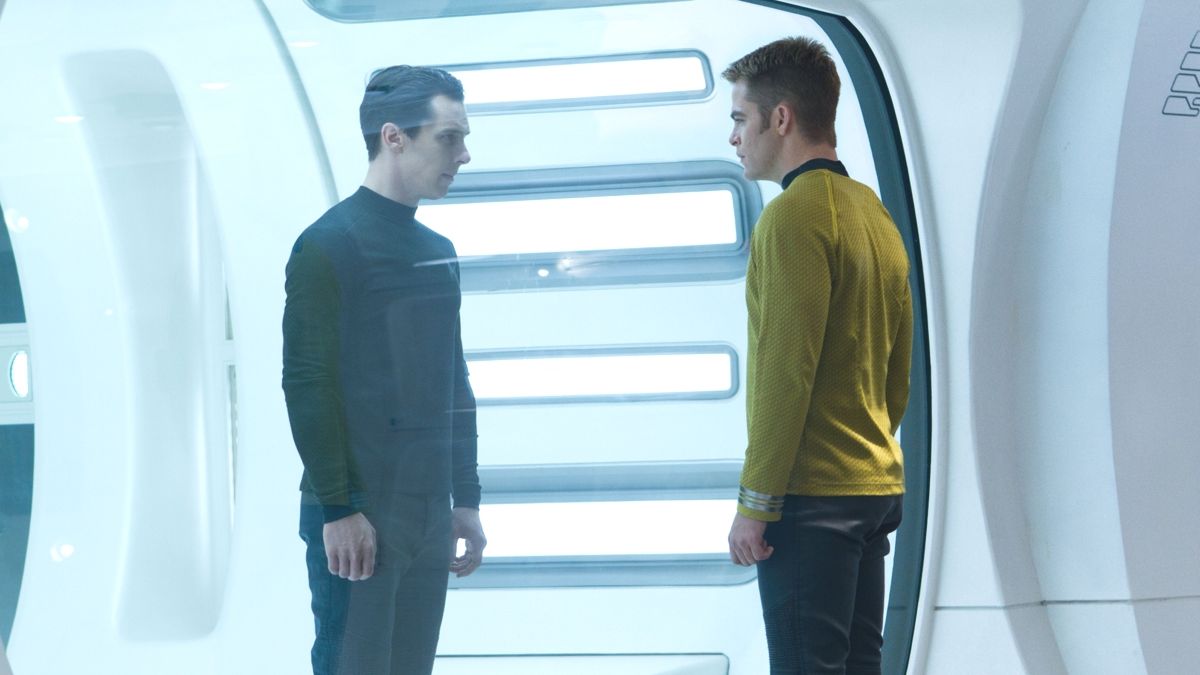
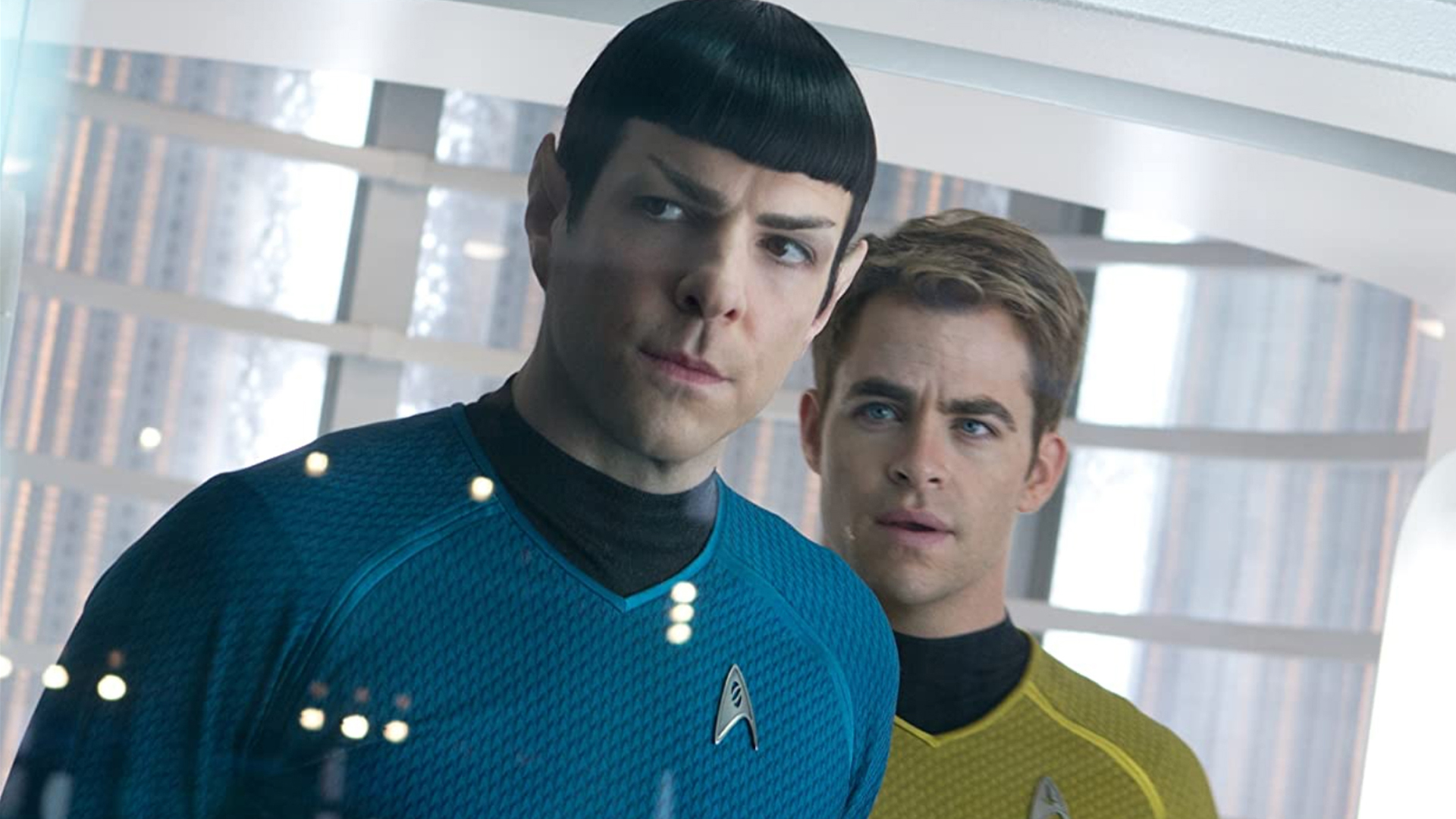
Having made a critically acclaimed start in 2009 — director JJ Abrams ramped up the fun, effectively using "Trek" as a calling card for "The Force Awakens" — this self-contained "Trek" offshoot gradually ran out of momentum. Released four years later, "Star Trek Into Darkness" made more money than its predecessor, but felt like a tired retread of past glories. "Star Trek Beyond" (2016) made less money than either, offering an enjoyable (though hardly memorable) planet-based romp that set up the crew for more voyages… voyages that would ultimately never happen.
JD Payne and Patrick McKay (now showrunners on "The Lord of the Rings: The Rings of Power") were hired to write a script, while SJ Clarkson ("Madame Web") and Matt Shakman ("The Fantastic Four: First Steps") were both attached as directors at one stage or another. One iteration would have seen timey-wimey stuff uniting two of the Hollywood Chrises, Pine and Hemsworth, bringing James T Kirk face-to-face with late dad George.
(Image credit: Paramount Pictures)
"The conceit was that through a cosmic quirk in the 'Star Trek' world, they were the same age," McKay told Esquire. "It was going to be a grandfather-son space adventure — think 'Indiana Jones and the Last Crusade' in space. We were really thrilled about it."
"Alien: Earth" boss Noah Hawley also worked on a new story entirely separate from the Kelvin-verse, and even Quentin Tarantino pitched his take on "Trek" to the Paramount suits. The "Pulp Fiction" writer/director's Earth-bound story would reportedly have taken its cues from "A Piece of the Action", a 1920s-inspired episode from the Original Series.
"I think [Tarantino's] vision was just to go hard. It was a hard R. It was going to be some 'Pulp Fiction' violence," recalled "The Revenant" screenwriter Mark L Smith, who worked with Tarantino on the script (h/t Collider). "Not a lot of the language; we saved a couple things for just special characters to kind of drop that into the 'Star Trek' world, but it was just really the edginess and the kind of that Tarantino flair, man, that he was bringing to it. It would have been cool."
(Image credit: Paramount+)
But after all those false starts, Paramount is seemingly moving ahead with another film, currently — as far as we know — the only "Trek" screen project in active development.
The as-yet-untitled movie is scripted by "Dungeons & Dragons: Honor Among Thieves" writer/director duo Jonathan Goldstein and John Francis Daley, will feature an entirely new group of characters, and will apparently be inspired by a pair of hit movies from the '90s and '00s.
"Two movies we cite as [comparisons] for what we're hoping to do are 'Training Day' and 'Crimson Tide'," Goldstein toldInverse on the recent press tour for Apple TV+'s "Mayday".
(Image credit: Paramount Pictures)
"I think the portrayal of Starfleet and the people that work within it have always been generally idealized versions of what the future could be," added Daley. "And while this [script] isn’t a cynical or nihilistic take on it, I think it does acknowledge that there are some bad apples in every institution that can have a strong voice and can really make an impact on that institution and everything it stands for."
It's hoped that the new film will launch a new franchise of its own, though it seems to be a riskier franchise relaunch option than a TV show. Although "Trek" has spawned a long-running and successful movie franchise, its films have rarely ranked among the biggest earners in Hollywood — not since 1986's "The Voyage Home" has a "Trek" outing made it into an end-of-year top 10 in the US.
Maybe Paramount is eyeing up this "Training Day"/"Crimson Tide" format as an excuse to cast a pair of high-profile A-listers in the lead roles, following Disney/Lucasfilm's lead in recruiting Ryan Gosling for the upcoming "Star Wars: Starfighter". But with IP-based, space-set adventures "The Mandalorian and Grogu", "Masters of the Universe" and "Supergirl" all having floundered in multiplexes this summer, this film could be a gamble — especially as it'll need to appeal far beyond the traditional "Star Trek" heartlands to become a hit.
Beyond movies and TV
(Image credit: Bloober Team)
As "Doctor Who" proved when it was off air between 1989 and 2005, a lack of new screen "product" can be good news for other platforms.
In other words, there's little chance of a shortage of new stories across media, old (novelisations and comics) and new (Webtoons, audiobooks and videogames) — way too much to list here, in fact.
You can also get stuck into some"Star Trek" Lego, which is a pretty good way to fill that Starfleet-shaped hole.
The 60th anniversary
(Image credit: Paramount)
A media franchise reaching its 60th anniversary is a massive deal, but is Paramount doing enough to celebrate one of its crown jewels becoming a sexagenarian?
The 30th birthday was marked by a couple of special episodes: "Voyager"'s literally titled "Flashback" saw Tuvok remembering his days on the USS Excelsior alongside a certain Captain Sulu, while "Deep Space Nine"'s "Trials and Tribble-ations" spliced Sisko and the gang with footage from Original Series episode "The Trouble with Tribbles".
But now, even though we're seven episodes into a run of "Strange New Worlds", there's no special birthday episode on the cards — it's no spoiler to say that this week's tense instalment, "Orders of Magnitude", is not very party-ish at all. It feels like a missed opportunity, seeing as "Doctor Who"'s 50th and 60th anniversary outings — most notably 2013's multi-Doctor "The Day of the Doctor" — have been memorable in their own right.
(Image credit: Paramount)
"The days of being able to know when your show was going to be on television are maybe behind us," "SNW" co-showrunner Akiva Goldsman lamented to SFX magazine. "God knows nothing would have been more fun than a 'Strange New Worlds' Christmas episode, and yet there'll not be one."
And if you want to mark the occasion yourself, there are nearly 1,000 episodes of "Star Trek" — plus 13 movies — to enjoy, most of them on Paramount+. That's one hell of a legacy.
On Episode 226 of This Week In Space, Rod Pyle and Tariq Malik are joined by Dr. Rainer Zitelmann to discuss the history of capitalism and how it applies to our future in space.
Capitalism — and a strong profit motivation — has driven enterprise for centuries. Two notable examples are the East India Company and the US transcontinental railroad, and the various tycoons who built it. In neither case, by today's standards, were the operations fair or ethical on a number of fronts. Can we do better in space?
Zitelmann joins us to discuss capitalism and the importance of extraterrestrial land ownership as an enabler of human expansion off-Earth. He's got a lot to say, and not all of it is what you might expect. Join us for this fascinating and informative look at one business case for newspace.
This Week in Space covers the new space age. Every Friday we take a deep dive into a fascinating topic. What's happening with the new race to the moon and other planets? When will SpaceX really send people to Mars?
Join Rod Pyle and Tariq Malik from Space.com as they tackle those questions and more each week on Friday afternoons. You can subscribe today on your favorite podcatcher.
Creator Gene Roddenberry's "Wagon Train To The Stars," has certainly lived long and prospered since "Star Trek" first launched on the NBC Television Network on Sept. 8, 1966 with the hour-long debut episode titled "The Man Trap."
Since then, this hopeful space fantasy franchise flourished and grew to encompass a total of 9 live-action series, 3 animated series, and 14 feature films across six decades, inspiring multiple generations with its adventurous spirit, enduring optimism, and thoughtful humanism.
Now, as its 60th anniversary approaches, Paramount and its crew of worldwide partners are celebrating the milestone occasion with global fan events, theatrical screenings, special TV programming, and even a voyage into orbit.
Here’s a short list of some of the more notable "Star Trek" festivities planned for Earth:
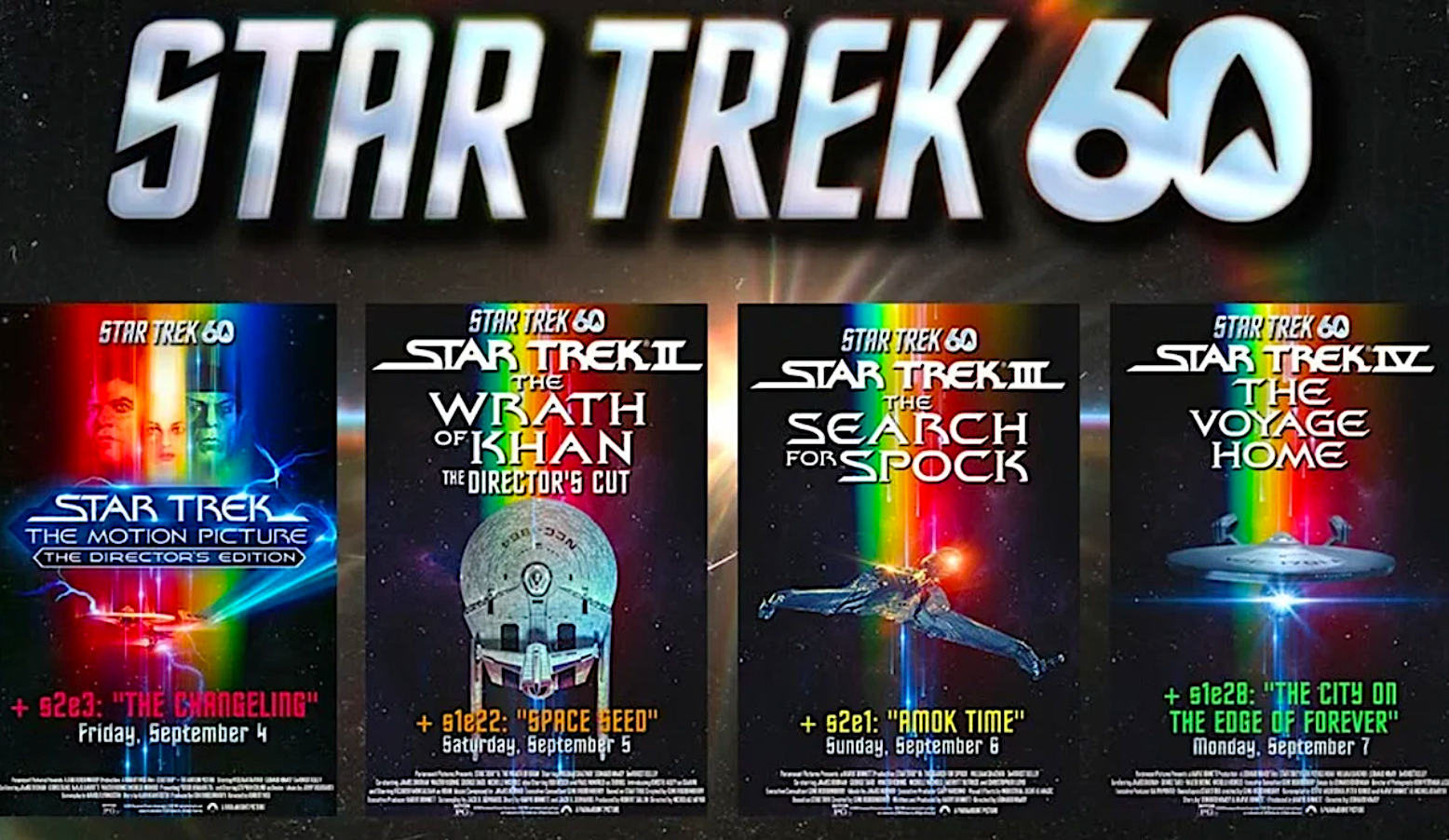
Firstly, limited-release restored 4K screenings of the initial four "Star Trek" feature films will blaze across the big screen at 750 AMC, Cinemark Alamo Drafthouse, and Regal Cinemas across the country from Sept. 4-8, perfectly paired with the "Star Trek: The Original Series" episodes they were inspired by.
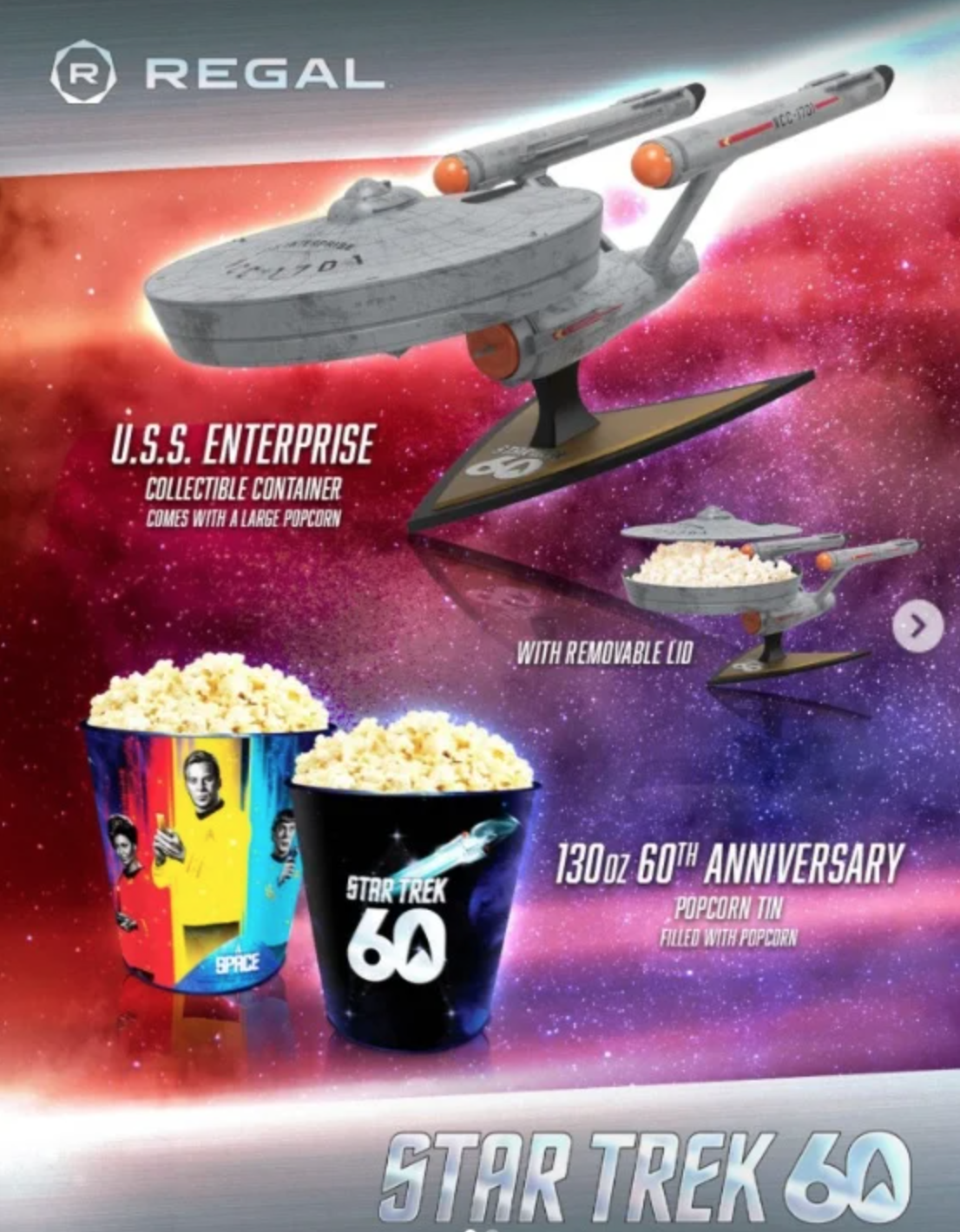
Each of these monumental showings will offer limited-edition "Star Trek" Enterprise popcorn buckets and cool multi-colored anniversary drink cups at most participating theaters... until they're all gobbled up!
Special 4K "Star Trek" feature films will be matched with "The Original Series" TV episodes for the very first time (Image credit: Paramount)
On Sept. 7, "Entertainment Tonight" is broadcasting an "ET Vault Unlocked" episode showcasing archival interviews with Gene Roddenberry and cast luminaries from the franchise.
If you’re into game shows, both "The Price Is Right" and "Let’s Make a Deal" will air special "Star Trek" themed episodes Sept. 8 on CBS and Paramount+, including guest appearances by "Strange New Worlds"' Rebecca Romijn and Ethan Peck.
Not to be left out of the party, Nick at Nite delivers a marathon of "The Big Bang Theory's" most geeky “Star Trek” episodes that same day.
For fans across the pond, Trekkies can participate in a free live world record attempt on Sept. 8 at the Science Museum in London when loyal fans try to break the Guinness World Record for the most humans flashing the "Star Trek" Vulcan Salute at once!
In Tinsel Town, Gene Roddenberry’s Hollywood Walk of Fame star will receive a polished-up restored plaque on Hollywood Boulevard for the "Star Trek" creator courtesy of the Roddenberry family, the Hollywood Historic Trust and the Hollywood Chamber of Commerce.
Please beam us up a pricey Enterprise popcorn bucket! (Image credit: Regal)
Finally, and most appropriately, the European Space Agency will bring "Star Trek" up into the final frontier with ESA astronaut Sophie Adenot adorning her uniform with the Captain’s Delta badge from "Star Trek: Strange New Worlds" while aboard the International Space Station on Sept. 8, accompanied by commemorative content.
You know you want one of those $80 USS Enterprise popcorn vessels! Resistance is futile! However you celebrate "Star Trek's" anniversary, here's to another 60 years of "Star Trek"... or perhaps we should say, may it live long and prosper!
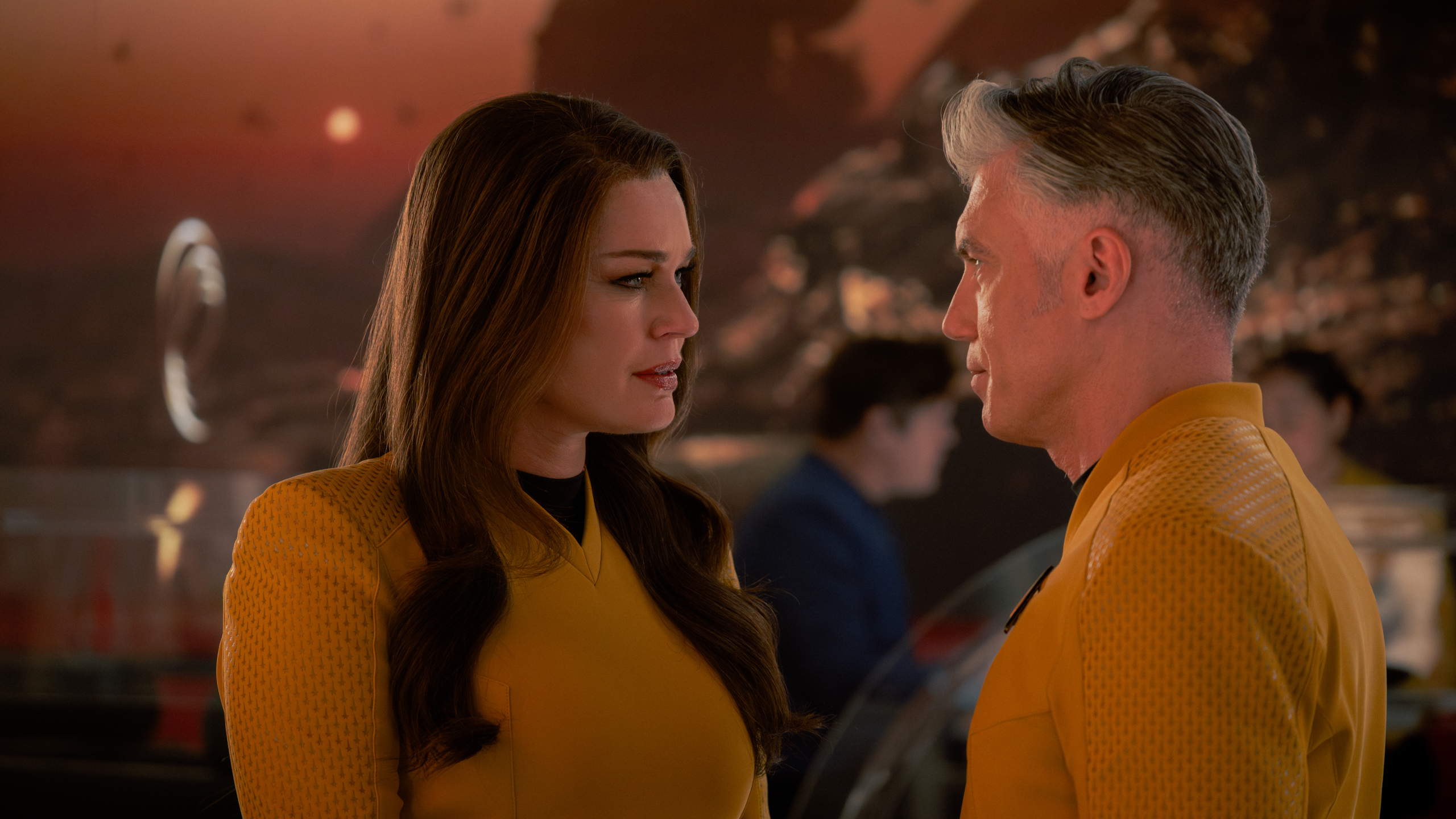
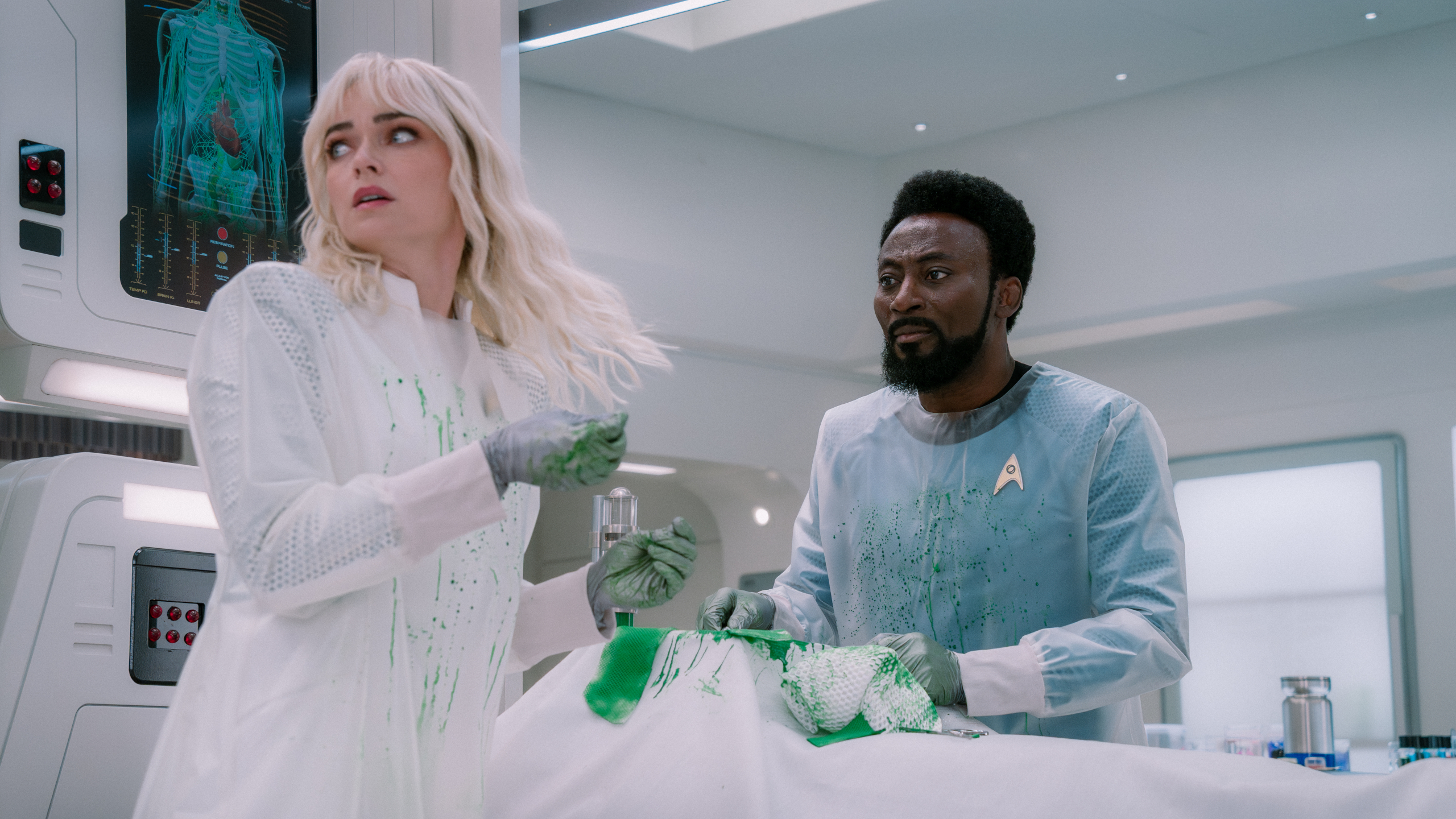
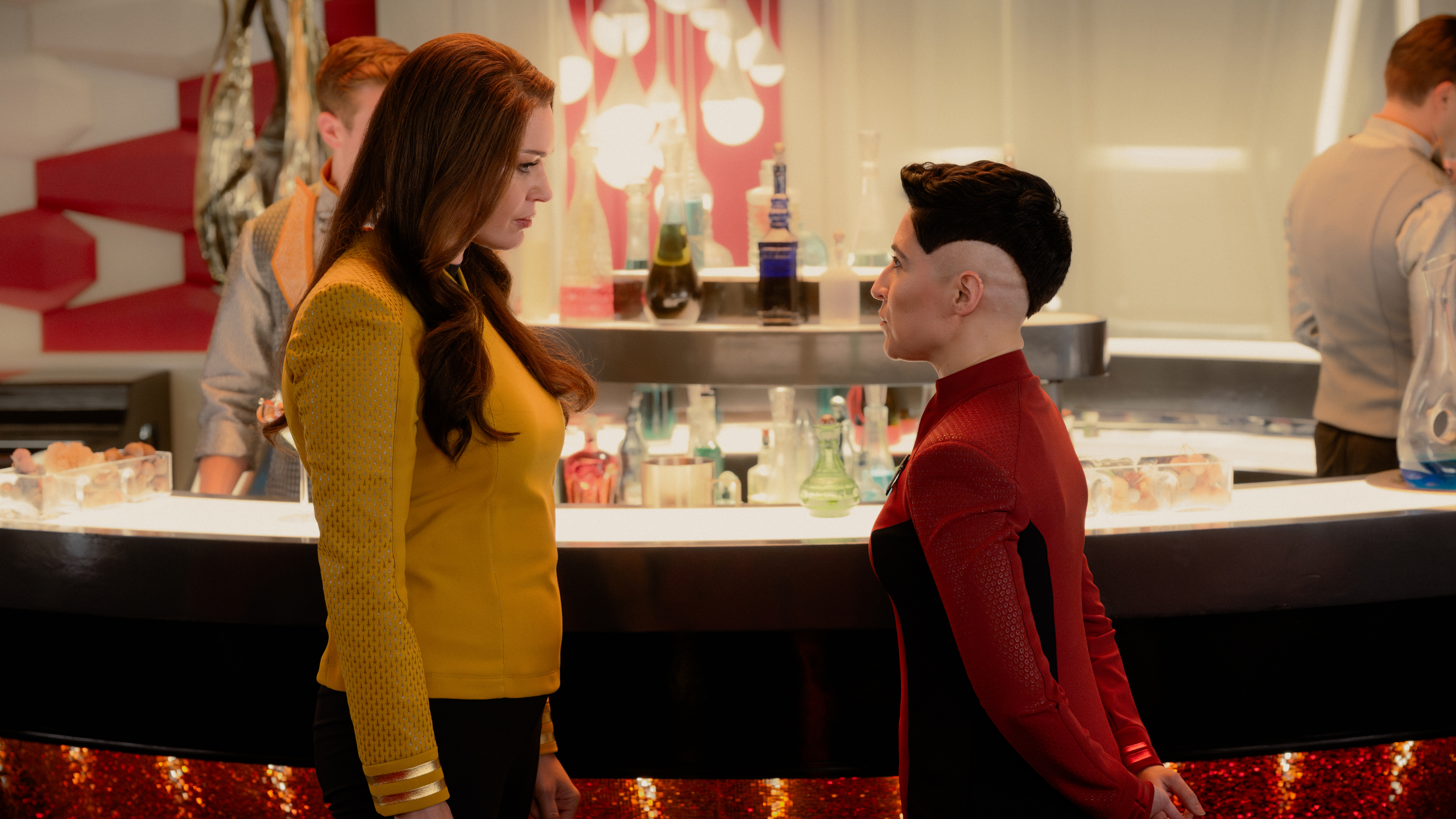
So far the Enterprise has encountered Martians, hangovers and Muppets, and now its latest mission, "Like Chronitons Through the Hourglass", has made a detour into full-on soap opera territory.
Thanks to the meddling of Q junior Trelane (Rhys Darby), the ship's lighting is slightly off, day-to-day operations are punctuated by ad breaks, and the crew has developed a tendency to stare wistfully into the middle distance. Reminders that Starfleet's finest are living out their very own "Days of Our Lives"-style TV show are everywhere, but — for all the deliberate overacting and pauses. In. All the. Wrong. Places — is it really that different from regular life on a starship? Isn't "Star Trek" essentially a soap opera anyway?
Dictionary definitions of soap operas vary, but the general gist is that they follow the daily lives of a bunch of characters over an extended period of time. They're a broad church — the more glamorous US soaps are very different to their gritty, slice-of-life UK counterparts — but they're usually characterized by interpersonal dramas and a long-running nature.
So, aside from the fact that episodes of "Star Trek" are bunched into seasons, and there's usually a story of the week, the franchise effectively fits the bill.
(Image credit: Paramount)
That wasn't so much the case in the Original Series days, where episodes were resolutely standalone and most of the regulars on the bridge — even Sulu, Uhura and Chekov — were given minimal character development. Even Uhura's famous kiss with Captain Kirk was a one-off affair.
But by the time "The Next Generation" left Spacedock, interpersonal relationships were very much on the agenda — so much so that the Enterprise-D needed a counselor on the ship's manifest.
(Image credit: Paramount)
From day one, the show was getting busy establishing the backstories of the characters, with Commander Riker's previous relationship with Counselor Troi a matter of record, and Captain Picard's complicated past with Dr Beverly Crusher (her late husband, Jack, was Jean-Luc's best friend) adding an extra frisson to their working relationship.
Even as the show adhered, more or less, to its adventure-of-the-week format, these will they/won't they romances sizzled in the background (albeit on a very low heat), until belatedly coming to fruition in "Star Trek: Insurrection" and "Star Trek: Picard", respectively. We also met various members of Picard, Troi, and Worf's families, while Troi and Worf found the time for a brief fling — much to Riker's annoyance.
The more serialized nature of "Deep Space Nine" was even more suited to space opera-meets-soap opera storytelling. As the Dominion War rumbled on in the background, Worf and Jadzia Dax found love (and later married) against a backdrop of the Bajoran Wormhole, before widower Captain Sisko and new flame Kasidy Yates said "I do" for themselves, and became parents.
(Image credit: Paramount)
Romantic sparks also flew between Colonel Kira Nerys and shapeshifting security chief Odo, and Dr Julian Bashir and Ezri Dax. (The latter took on the Dax symbiont after Jadzia Dax's death, a complication that not even the craziest US soaps have dared to explore.) And then there was Chief O'Brien, the first "Trek" regular to juggle his Starfleet duties with a settled home life.
Meanwhile, "Voyager"'s journey through the Delta Quadrant was punctuated by various births, deaths, and marriages, alongside the various unlikely friendships that developed among the marooned crew. On "Enterprise", Trip Tucker managed to find his way past T'Pol's logical exterior to share a romance with the ship's resident Vulcan — though only after his captain had experienced some rather awkward feelings towards his First Officer in "A Night in Sickbay".
Crews in more recent "Trek" series have tended to be more in touch with their feelings than their predecessors. "Discovery" may be packed with 31st-century tech so advanced it resembles magic, but the crew hasn't evolved past old-school interpersonal drama (and hugging). And at "Starfleet Academy", dealing with hormones tends to be as important to the curriculum as learning to handle the Borg or Nus Braka.
(Image credit: Paramount)
The difference with "Like Chronitons Through the Hourglass" is simply that it's more blatant in its references to soap operas, which — based on Pike's reaction to Trelane's shipwide experiment — are apparently still a thing in the 23rd century. Which raises the awkward question of why no one on the Enterprise has noticed that ship's counselor, Dr Chivers, looks a lot like Marlena Evans from "Days of Our Lives"? Both characters are played by actor Deidre Hall.
Overblown medical conditions like "cosmic amnesia" and "space madness" — or Pike learning he's Uhura's long-lost father — intentionally push the episode into the realms of ridiculousness.
Tone down the silliness, however, and these twists wouldn't look out of place as "Trek" B-plots. Indeed, while La'an's meeting with Spock's "evil twin" Sybok is right out of the American soap opera handbook — remember Hans Ramoray, Dr Drake Ramoray's morally dubious sibling in the "Friends" version of "Days of Our Lives"? — a similar storyline has also played out in "Star Trek", courtesy of Data and his dodgy big brother Lore.
(Image credit: Paramount)
Ultimately, this episode exists as an excuse for Pike to confront long-buried feelings about the loss of partner Marie Batel, and Juliet, the daughter he had in an imaginary existence.
That the captain can actually hear the episode's incidental music is kinda weird (that stuff's supposed to be non-diegetic), but "Like Chronitons through the Hourglass"'s soap opera stylings should otherwise be all in a day's work for the captain of the Enterprise.
New episodes of "Star Trek: Strange New Worlds" debut on Paramount+ on Thursdays.

 Login