❌

Reading view

Data Center Caught Watering Its Lavish Lawn While Human Neighbors Are on Year-Long Water Restriction

When the Denver board of Water Commissioners approved stage one drought restrictions back in March, they did so facing some of the driest conditions in decades. According to the US Drought Monitor, the watershed sourced for Denver’s water utility is experiencing a “severe to exceptional drought,” while the Denver metropolitan area has been in a “severe drought.”

As a result, residents and businesses have been asked to scale back. Denverites now have to limit watering their lawns to two days a week, chosen by address. And even on those days, customers are prohibited from watering between the hours of 10am and 6pm, Gadget Review reports.

Yet as some 1.5 million customers honor the restrictions, one major customer is evidently refusing to close the tap: a brand new AI data center.

In a now-viral video circulating on social media, an unidentified resident of Denver’s Elyria-Swansea neighborhood filmed the massive lawn of a data center being sprayed with copious amounts of water.

“You better believe that they are watering their entire green with so many sprinklers that it’s literally making a giant pond,” the woman says.

Denver residents see local DATA CENTER water its massive lawns while the whole are faces drought restrictions pic.twitter.com/rrj7vMrhpt

— The Gulag (@WelcomeTheGulag) September 4, 2026

The identity of the data center in question is unconfirmed, but it’s likely the new 18 megawatt facility owned by the cloud computing company CoreSite. At around 170,000 square feet in size, the mammoth facility recently went live in Elyria-Swansea, though not without sparking a wide-ranging debate around Denver’s zoning regulations.

It isn’t known which tech companies are renting out space in CoreSite’s Denver facility, but elsewhere the company has proudly partnered with tech giants like Amazon, Google, and Microsoft.

As for the water use, it’s impossible to say whether the lawn sprinklers were in violation of the city’s drought restrictions without knowing the exact time and date that the reel was filmed. It’s also possible that the facility is using recycled water to irrigate its grass, though that approach has proved disastrous in other cities.

Going forward, Gadget Review notes that all lawn sprinklers will be fully restricted as of October 1, with a ban set to last until Spring of next year. If Denver’s data centers are still spewing after the cut-off, it remains to be seen how — or even if — local leaders plan to hold the facility’s owners accountable.

More on data centers: AI Will Consume as Much Water as a Billion People By 2030, UN Report Estimates

The post Data Center Caught Watering Its Lavish Lawn While Human Neighbors Are on Year-Long Water Restriction appeared first on Futurism.

  •  

Scientists Detect Strange New Structures Deep Inside the Earth

Drilling thousands of miles into the Earth to study our planet’s inner layers — its thin crust, rigid mantle, liquid outer core, and solid inner core — simply isn’t feasible given technological limitations.

Instead, geologists typically use clever tricks to explore our planet’s interior, like probing seismic activity triggered by the dynamics of these shifting layers to plumb their mysteries.

And much like these layers, that picture continues to evolve. As detailed in a new study published in the Journal of Geophysical Research: Solid Earth, researchers at the Chinese Academy of Sciences analyzed data from over two million earthquakes across the planet that took place between 1990 and 2024, using a machine learning algorithm to identify structures lurking several thousand miles below the surface.

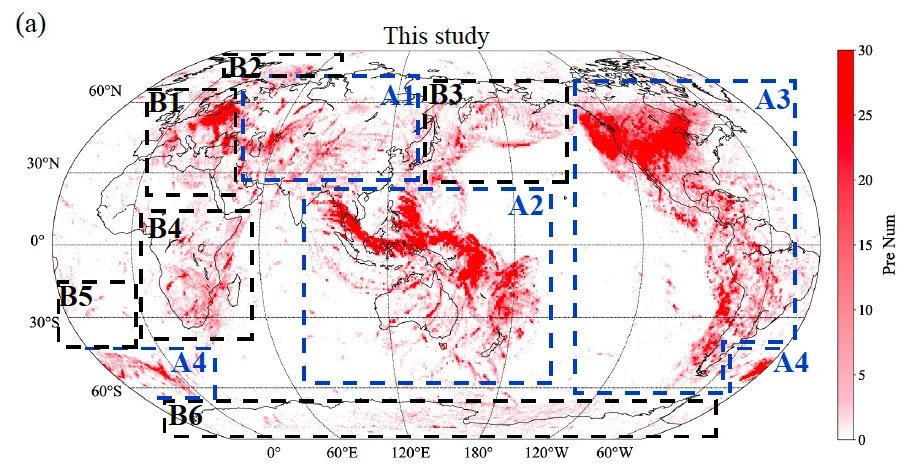
They identified almost 175,000 “PKP precursors,” mysterious seismic signals that arrive at earthquake detectors before the main event, which can allow scientists to map the Earth’s innermost structures. More specifically, scientists believe the precursors are triggered by “small heterogeneities” just above the region where the Earth’s solid mantle meets its liquid iron core, roughly 1,800 miles below the surface.

While identifying these precursors has “traditionally required painstaking manual screening, a slow and laborious process,” the researchers noted, the new algorithm allowed them to identify “roughly ten times more” PKP precursors “than all previous studies combined.”

With this data in hand, the scientists set out to create what they claim to be the “most complete global map to date of potential small-scale heterogeneities in the Earth’s deep interior,” which includes six new areas that “host significant heterogeneities that had never been documented before.”

“Whereas previous studies could only identify sparse, isolated patches sampled by precursors, our results reveal that these potential heterogeneities may extend across broad regions in the form of continuous bands,” the researchers concluded.

A map of six PKP precursors across the Earth.

The scientists suggest that these ancient structures — six larger groups spread out across the interior of the globe, as seen in the image above — could be related to subduction zones, where material that gets dragged deep below the surface is chemically altered by the extreme pressure and temperature of the core-mantle boundary. As Science Alert points out, this can spur the material take on vastly different physical properties.

The data could help us identify the time or severity of future seismic activity — and bring us one small step closer in unraveling the mysteries surrounding the formation of the Earth’s various layers and how tectonic plates formed.

More on the Earth’s layers: Scientists Say They Detected Something Huge Shifting Inside the Earth

The post Scientists Detect Strange New Structures Deep Inside the Earth appeared first on Futurism.

  •  

Former Obama Admin Official Says It’s Time To Consider Military Strikes on Chinese Data Centers to Prevent Them From Reaching AGI

While American tech billionaires fret over the capabilities of Chinese AI, one national security advisor has a brilliant idea to flatten the competition: simply bomb their data centers to smithereens.

In a new report titled “Superpowers and AGI,” former Obama-era national security official Jacob Stokes calls for United States to begin preparing readiness drills in response to Chinese AI development — up to and including military strikes on the nation’s data centers, the South China Morning Post reported.

AGI, or artificial general intelligence, refers to the theoretical point at which an AI model achieves human, or superhuman, levels of reasoning and intelligence. Though the science is still out on whether such a system is even possible, Stokes’ report begins from the assumption that AGI is inevitable, and that if the US can’t get to it first, its military needs to prepare to take drastic action.

Referring to the US as a hypothetical “laggard state” behind China’s achievement of AGI, Stokes — now the deputy director of the Indo-Pacific Security Program at the Center for a New American Security, a prominent DC think tank — writes that the country could “try to sabotage the leading state’s AGI systems, either through physical infiltration or offensive cyber operations; that is, cyberattack.”

“Cyberattacks to sabotage AGI might not provoke large-scale retaliation,” Stokes considers, given that “cyberattacks are already to some extent considered normal state behavior below [the] threshold of war.”

But waging an unprecedented cyberwar is just one of many scenarios he outlines. As Stokes observes, AI doesn’t just live online; it also requires immense computing power from physical facilities to run.

“The final option,” therefore, “would be the most dangerous and carry the most escalation risk: kinetic attacks, meaning destroying things with missiles and bombs.”

“Data centers can be bombed with conventional munitions,” Stokes writes. (He’s not the first thinker to suggest bombings to stop powerful AI; in 2023, AI critic Eliezer Yudkowsky suggested that countries needed to be ready to “destroy a rogue data center by airstrike.”)

Of course, the China hawk isn’t numb to what such an attack would mean for the world.

“Bombing would cross a major threshold that heretofore has not been crossed in US-China relations,” Stokes continues. “Trying to think through the particulars of that will be especially important, in part because it will help policymakers… start to work backwards based on the unique nature of the technology, in the same way that in a past era, policymakers would learn about nuclear weapons.”

The difference is that nuclear weapons are physical objects which can be empirically observed. AGI, in contrast, remains a fantasy — albeit one which can evidently justify preparations to make war — not unlike the fiction of weapons of mass destruction which justified the brutal invasion and occupation of Iraq in 2003.

And that’s not to mention the fact that China’s approach to AI development is dramatically different than the United States’, which currently leads the world in most large language model (LLM) benchmarks. If anybody is chasing AGI, it’s the US — which surely wouldn’t take kindly to news that Chinese leaders were organizing war games around its own AI development.

Even so, Stokes is undeterred in painting China as the ultimate boogeyman. He warns that Chinese AI companies could make a “surprise technological breakthrough” that brings it closer to AGI, and thus the ability to produce cutting-edge “offensive cyber tools — in other words, cyber weapons.”

Stokes, who previously served as national security advisor to then-vice president Joe Biden as well as the Department of Homeland Security, has long worried about the economic strength of the US relative to its chosen adversaries. Still, his latest comments mark a severe escalation, even for the US national security establishment.

While making a mountain out of a Chinese molehill, Stokes’ report also takes a blind eye to the present-day use of AI by his own country’s military. In Iran, for example, US forces have used LLMs like Claude and Grok to help plan out bombing campaigns — which may have played a role in the Shajareh Tayyebeh girls’ school bombing, which killed over 150 elementary students and staff.

More on Chinese AI: US Companies Are Realizing That Chinese AI Models Are Way Cheaper, Ditch American Ones

The post Former Obama Admin Official Says It’s Time To Consider Military Strikes on Chinese Data Centers to Prevent Them From Reaching AGI appeared first on Futurism.

  •  

United Nations Concedes That Efforts to Arrest Climate Change Have Failed, and the Planet Is Now Spiraling Into Environmental Catastrophe

With so many climate projections and mitigation strategies eyeing far-away years like 2050, it can be tempting to assume there’s still time to reverse the worst impacts of an ever-warming planet.

Unfortunately, that’s no longer in the cards — at least according to the United Nations Environment Programme, which just released a dismal report calling for the “world to face the inevitability of exceeding global warming of 1.5 degrees Celsius” above pre-industrial levels.

That’s significant, because the 1.5 degree threshold has long been associated with a range of grim climate tipping points at which the planet will experience irreversible consequences such as the “breakdowns of major ocean circulation systems, abrupt thawing of boreal permafrost, and collapse of tropical coral reef systems,” per a UN climate explainer.

The new UN paper, coming on the heels of the hottest summer on record and pessimistically titled “Limiting Overshoot,” identifies the consequences of this reality, and recommends some immediate actions to keep things from spiraling even further.

Though most scientists agree we’re hovering around the 1.4 degree point at the moment, the UN notes that even in the best case scenario, where “all climate commitments and policies are implemented, warming is projected to reach 1.8 degrees Celsius at a minimum.” If we follow our current track, however, the report highlights the distinct possibility of hitting 2.6 degrees by the year 2100.

That catastrophic future is far from certain, although drastic intervention is becoming increasingly urgent if we hope to stave it off. Underscoring the severity of the present moment, the UN frames the situation in terms of maintaining warming at the 1.5 degree mark — no longer a theoretical ceiling, but the new floor going forward. Doing so, the report authors write, depends “on achieving sustained net-negative CO2 emissions at global scale in the second half of this century, and potentially further reductions of non-CO2 emissions.”

“Decisions taken this decade will determine whether viable options remain to gradually reverse warming back to 1.5 degrees Celsius,” they explain.

Speaking to CBC News, UN Environment Programme executive director Inger Andersen said “let’s be very clear, 1.5 target is still the goal.”

“But now we need to approach it differently from above,” Andersen explained. “Every tenth of a degree we avoid still means less damage.”

More on climate change: It’s Official: This Is the Hottest America Has Ever Been

The post United Nations Concedes That Efforts to Arrest Climate Change Have Failed, and the Planet Is Now Spiraling Into Environmental Catastrophe appeared first on Futurism.

  •  

China Installing Huge Facility That Turns Plastic Waste Into Jet Fuel

Around the world, the demand for cleaner alternatives to petroleum-based jet fuel is rising.

By 2030, the European Union will require a minimum sustainable aviation fuel (SAF) blend of 6 percent, which will rise to 70 percent by 2050. Countries like the United Kingdom, Singapore, Japan, and Brazil are instituting similar policies, putting pressure on players in the global energy trade to ease reliance on crude oil.

SAF can come from all kinds of recycled waste byproducts like plant material, animal fat, and used cooking oil — the latter of which has already become a major source for existing SAF supplies. Unfortunately, the flow of extra spent fry oil is already slowing to a trickle as refiners swoop in to secure the gloop.

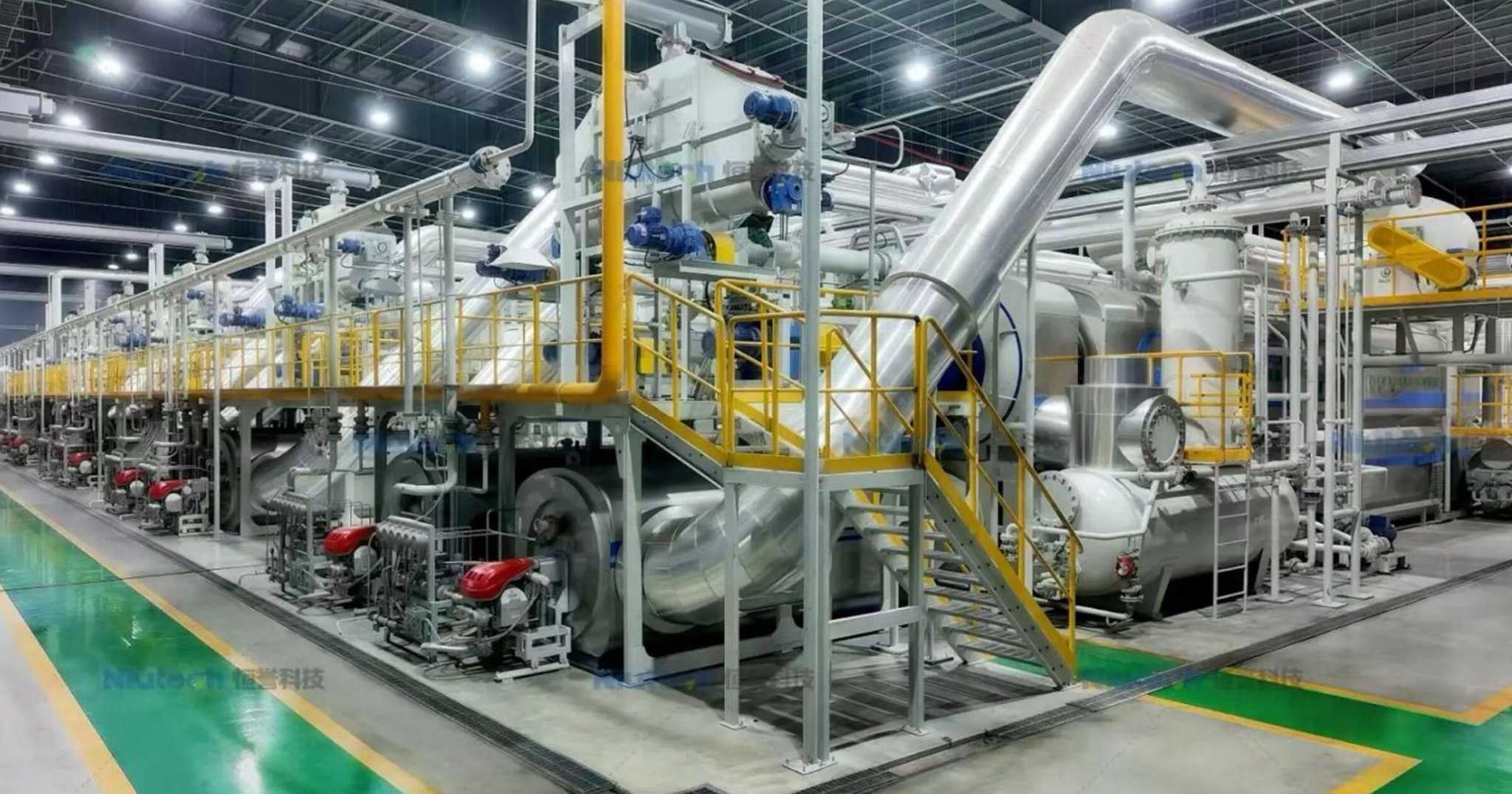
That’s where Chinese company Niutech comes in. In a new press release, first spotted by Interesting Engineering, Niutech announced a massive contract with an anonymous “global energy major” to build out an “industrial continuous waste plastic pyrolysis production line” capable of churning out 10,000 to 50,000 tons of plastic-derived SAF each year.

That might seem like a lot to unpack, but it’s really pretty simple. Basically, the Chinese firm is announcing the development of a massive supply line that turns plastic garbage into usable jet fuel. It plans to do so using a thermal decomposition process called pyrolysis, in which plastic waste is heated to extraordinary temperatures in an oxygen-free environment.

Though it isn’t new, pyrolysis remains something of a niche for the industrial-grade plastics-recycling space. For this approach to meet the growing need for SAF, it first has to graduate beyond the realm of small eco-startups into a widely-accepted industry standard — which appears to be Niutech’s goal.

Unlike previous SAF initiatives involving plastics, this particular production line will all be under one roof, cutting down on the need for costly shipping and handling. The Niutech refinery is also said to make use of a smorgasbord of plastics like polyethylene, nylon, polypropylene, and ABS, all “without complex pre-treatment such as washing, sorting or drying” — streamlining the complex process of sorting plastic and converting it to refinable oil at this kind of scale.

Should Niutech and its anonymous industry partner succeed in bringing the system online, it would undoubtedly serve as a constant source of plastics-based SAF for the global aviation industry, and as a role model for other refineries to follow.

“Large-scale pyrolysis projects impose stringent requirements on continuous operational capability,” a Niutech spokesperson said in the company’s press release. “Niutech has focused on pyrolysis technology for nearly 40 years and brings mature equipment and extensive project experience. This partnership is another validation of the strength of our industrial continuous technology.”

More on China: American Tech Companies Are Suddenly Sweating Bullets as China Catches Up on AI

The post China Installing Huge Facility That Turns Plastic Waste Into Jet Fuel appeared first on Futurism.

  •  

An Entire Forested Island Appeared and Disappeared So Inexplicably That Officials Thought It Was AI

In a lake in northern British Columbia, an island suddenly appeared, almost out of thin air, thickly covered in fully-grown trees. When a boater posted footage of the new island on social media, incredulous officials thought the video was AI-generated, according to the New York Times.

But it was no hoax. Satellite imagery of Williston Lake, an artificial reservoir and Canada’s largest body of freshwater, confirmed that the nearly two-and-a-half acre island was real.

“This is a first for us, for this reservoir,” Bob Gammer, a spokesman for BC Hydro, the government-owned utility that operates the reservoir, told the NYT.

Speaking to The Guardian, he added: “In the days of AI, you really needed another form of verification or evidence like a corroborating eyewitness account. And soon, we got that.”

'According to estimates, it's bigger than the size of a Canadian football field and nearly the size of two NFL fields' https://t.co/zhFI83WOeu pic.twitter.com/AxulAa7qtW

— philip lewis (@Phil_Lewis_) August 30, 2026

The island was floating roughly 60 miles west of the reservoir’s WAC Bennett dam. BC Hydro believes the island is a chunk of the reservoir that broke off from a sheltered piece of shoreline due to water levels that are the highest in 14 years. Over the course of several years, logs and woody debris could have accumulated in this area, Gammer explained, forming a sort of raft on which trees can grow — and embark on naval expeditions, apparently.

“We could easily see that a mass of woody debris with live vegetation on top of it rises up, floats and breaks free from the shoreline,” Gammer told the NYT. “Then the winds in the reservoir carry it out into open water. So that’s our best guess at how this all came to be.”

Just as experts began coming to terms with the new island, it showed it had another trick up its sleeve. Sometime around August 5, the island disappeared, according to Scientific American. Then on August 15, fresh satellite imagery showed that it had reappeared again — some 20 miles northwest of where it was first spotted, hugging the shore.

Did the island swink, swim, or — we find ourselves asking because of its incredible powers — turn invisible? It’s likely that it temporarily drifted to shore, blending in with the shoreline before drifting out to the water again.

More on the environment: Freak Landslide Completely Swallows Entire Mountain Village

The post An Entire Forested Island Appeared and Disappeared So Inexplicably That Officials Thought It Was AI appeared first on Futurism.

  •  

FBI Now Allowing History of Bestiality Among New Recruits

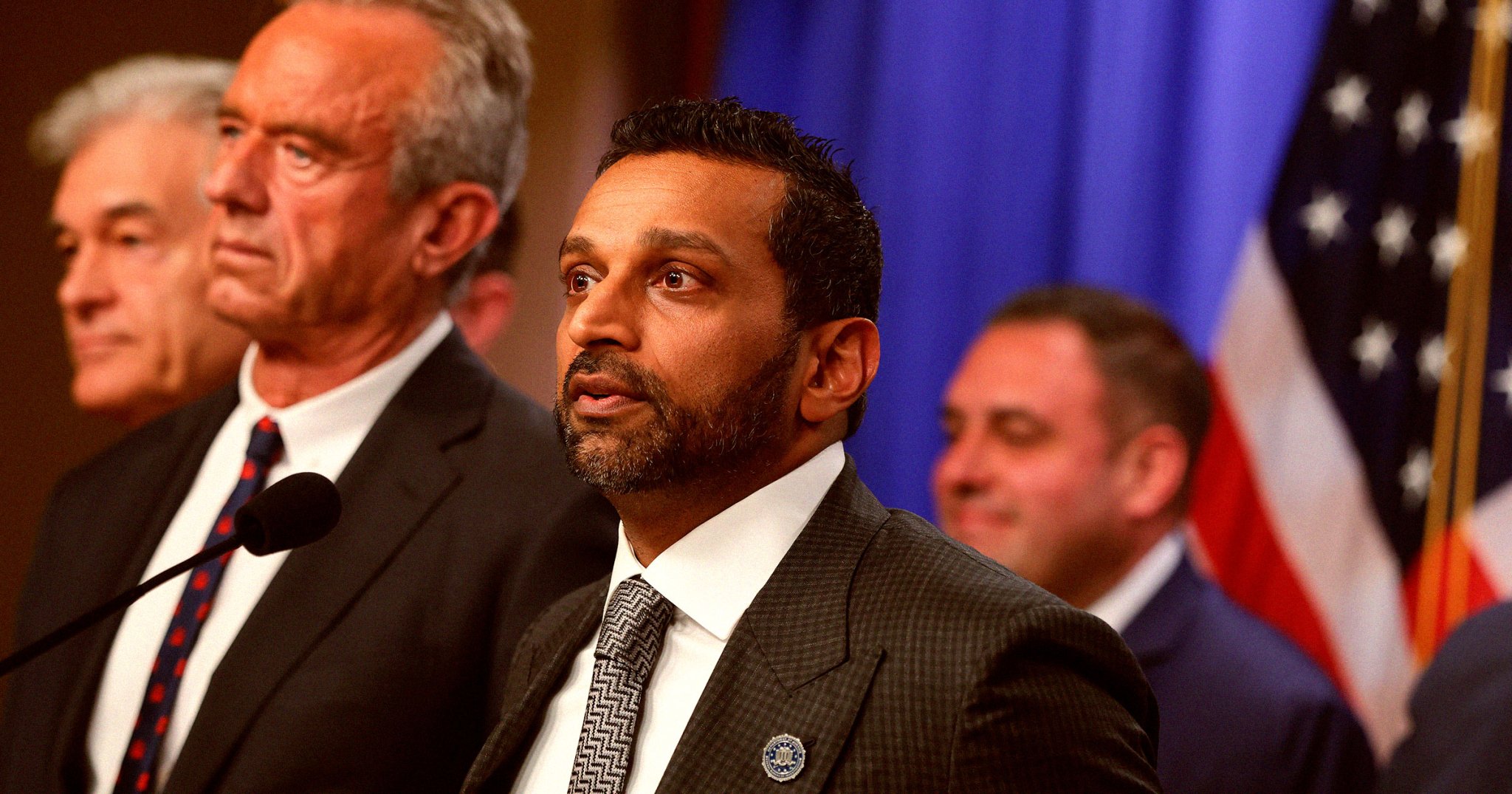
The Federal Bureau of Investigation looks almost unrecognizable under director Kash Patel’s leadership.

The agency’s head has been embroiled in a seemingly endless list of controversies, from allegations of excessive drinking to buying up location data on everyday American citizens to furthering of harebrained conspiracies.

Patel lacked virtually any degree of relevant working experience for the job before the Senate confirmed him — and now, the agency is opening the doors for even more highly questionable hirings.

As inside sources told CBS News, the FBI has quietly lowered standards of its background checks for potential federal agents and other personnel. The bureau is now officially looking the other way when it comes to prostitution, for instance — as long as recruits didn’t hire sex workers over three times.

Even more eyebrow-raising is that the FBI is even allowing the consideration of candidates who engaged in bestiality or animal cruelty, according to CBS‘ sources. However, any such incidents would’ve had to have taken place before the candidate turned 18.

The broadcaster’s sources also said there was no distinction between candidates who were forced into sexual activity with animals or if they did so willingly. An FBI spokesperson claimed that eligibility requirements were limited to a “narrow set of circumstances, such as in cases where a person was sexually abused with animals as a child.”

Experts, however, were appalled at the news, arguing that the FBI is undermining its responsibility in vetting applicants by changing background check standards.

“Bestiality is clearly a potential indication of a more serious emotional issue, and even in a circumstance where it is not, the pool of candidates should be extensive enough that the criteria should certainly not be eliminated,” former FBI agent James Davidson told CBS.

Before the changes, which were reportedly implemented earlier this summer, the FBI’s webpage was clear about automatically disqualifying special agents who engaged in “prostitution or bestiality.”

Both current and former FBI employees told the CBS that the bureau could now be hiring “people with questionable backgrounds,” allowing them to undermine the integrity of the service. Others warned that the news was evidence of a major “recruiting problem.”

Considering the fact that the agency is being helmed by a personality as controversial as Patel, these changes shouldn’t come as too much of a shock.

While he hasn’t personally acknowledged the latest changes, Patel has frequently called for new hiring standards at the bureau, arguing that “we are losing too many qualified candidates to the rigors of the requirements from yesteryear” in a July interview with former FBI agent John Nantz.

Patel’s motivation for lowering standards could be to bring in his closest associates. As ProPublica reported in November, his personal assistant didn’t clear their polygraph test and required a waiver, claims the FBI has since denied.

More on Patel: The Head of the FBI Just Admitted Something Moderately Horrifying

The post FBI Now Allowing History of Bestiality Among New Recruits appeared first on Futurism.

  •  

Marijuana Factory Explodes, Causing Two Deaths

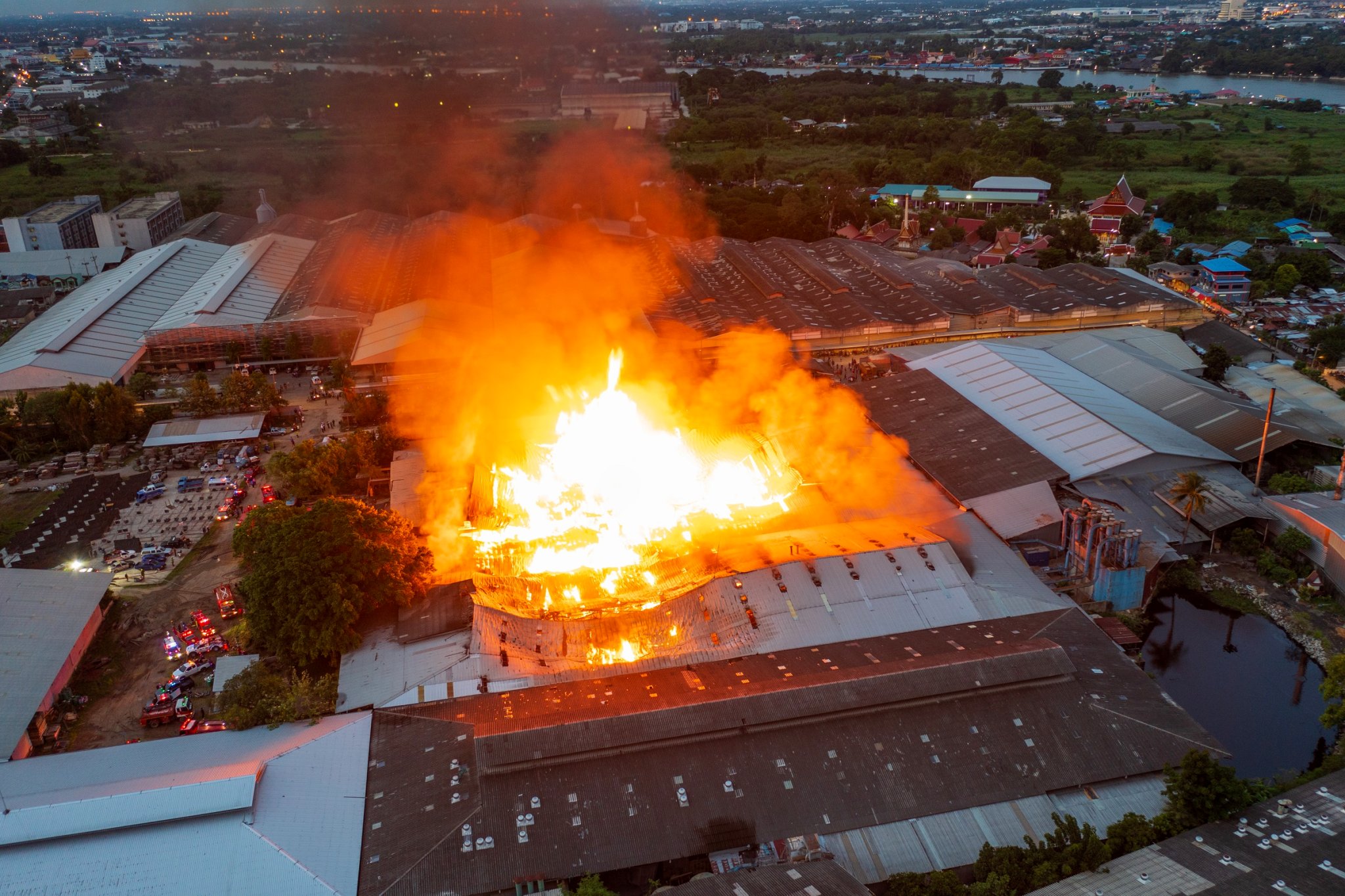
Two are dead and over 25 buildings damaged after a cataclysmic explosion at a cannabis facility in Sand Springs, Oklahoma last week.

According to initial reporting by KTUL, the blast happened at 1:30am, and literally blew the roof off the building, sending out shockwaves that could be felt up to 30 to 40 miles away.

“It was like around 1:20, 1:25. And it was just a big boom,” local man Donovan Ruffin, who lives a mile away from the blast, told the news channel. “Me and my wife woke up at the same time. And as soon as I heard it, I woke up… I have a window right by my bed, so I seen a flash.”

Ryan Bassham, the owner of the THC facility where the explosion occurred, was later arrested on murder charges, People reported, after defying an order from the fire marshal to halt extraction operations.

One explanation being offered up — though not officially confirmed — is that the explosion traces back to the use of butane to produce THC concentrate.

One of the more popular methods by which the cannabis industry produces concentrated products like rosin is through a process known as butane hash oil (BHO) extraction. Basically, producers use liquid butane as a solvent, pouring it over raw plants at temperatures in the ballpark of -40 degrees Fahrenheit.

Because liquid butane has an exceptionally low boiling point — 30.02 degrees Fahrenheit to be exact — the solvent can be easily cooked off after mixing with the plant matter, leaving just the dissolved cannabinoids behind. Though this is said to be one of the most straightforward methods for concentrating cannabis, the use of highly flammable butane makes it one of the most dangerous.

As the publisher Technology Networks explained in a blog post on BHO extraction, a “faulty gasket or improper check could lead to disaster.”

Overall, there is no national count of BHO-related explosions or injuries, so it’s difficult to say how common an occurrence it is. According to one clinical study conducted at the burn unit of the University of California, Davis Medical Center, there were at least eight BHO-related hospitalizations between 2011 and 2012, though that number is likely higher today after a decade of legalization and cannabis industry growth.

More on THC: Research Suggests the Older You Get, the More Weed You Should Smoke

The post Marijuana Factory Explodes, Causing Two Deaths appeared first on Futurism.

  •  
❌