Why California Is Reconsidering Its Decision to Shun Nuclear Power


Across the stories today, a common thread emerges: the gap between what protects us on paper and what protects us in practice. Again and again, communities are discovering that designations, promises, and permits only matter when someone is willing to enforce them — and that when systems fail, it’s ordinary people, and often the most vulnerable, who absorb the shock.
Nowhere is that clearer than in Jackson, Mississippi, where a federal appeals court ruled this week that the Constitution guarantees no right to clean water. For residents who have lived through years of contaminated taps and boil-water notices, the decision lands as a gut-punch reminder that legal frameworks haven’t caught up to environmental reality. A similar tension runs through the Guardian’s reporting on datacenter wastewater in Wyoming, where testing turned up a rare, potentially hazardous bacterium, and on English golf clubs, where one in twelve have quietly broken water extraction rules amid growing drought stress. Behind the numbers are real communities adapting in real time — often without knowing what’s actually flowing through their pipes or being pulled from their aquifers.
That same gap between promise and delivery surfaces in the UK’s datacentre boom, which new analysis suggests will produce only a quarter of the jobs once advertised, even as it strains the national grid. It echoes in Georgia, where a once-booming EV manufacturing corridor is hitting turbulence under shifting federal policy — a reminder that industrial transitions built on incentives can be as fragile as the politics that fund them.
Yet the day’s coverage also points to growing momentum around care, restoration, and reckoning. Hurricane Lowell’s damage across Hawaii’s western islands — toppled trees, flooded roads, thousands without power — sits alongside quieter stories of renewal: Gloucestershire’s proposal to reintroduce beavers as a defense against drought and flooding, Douglas Head’s new conservation status on the Isle of Man, and Coventry’s investment in Longford Nature Park. These are small, deliberate acts of stewardship, the kind Wendell Berry spent his life advocating for. His death last week, at 92, feels newly resonant this week — a farmer-poet who insisted that loving a place well was itself a form of environmental action, long before it became policy language.
Farther afield, the human cost of extraction runs deep. In Peru and Brazil, mercury from illegal gold mining is showing up in children’s blood and in fish that families have eaten for generations, forcing painful dietary changes in communities that did little to cause the contamination. In Indonesia, El Niño-fueled fires are pushing orangutans out of burning forests, while in Uttarakhand, India, women — who gather firewood and fodder — are bearing the brunt of increasingly long fire seasons. In Colombia, the Wiwa community’s decision to relocate their village down the mountain is less retreat than adaptation, a recognition that sacred land is changing faster than tradition can hold still.
It’s a reminder that progress and pressure often arrive together — a new spaceport investment in Shetland, a badger vaccination program under scientific scrutiny, a push for a Natural History GCSE to reconnect children with the outdoors. Each represents a small bet on the future, even as larger systems strain under climate and economic pressure.
As the week unfolds, watch whether the Jackson ruling prompts congressional attention, whether Britain’s Green Party succeeds in forcing transparency around ecosystem collapse risks, and whether Gloucestershire’s beavers get their chance to prove that sometimes the oldest solutions are still the best ones.
The post Hurricane Lowell Floods Western Hawaii, New Forest Wildfire Threatens Woodland — Today’s Environmental Briefing for Wed, Sep 9 2026 first appeared on EnviroLink Network.
The offshore windfarm at Berwick Bank is predicted to kill more than 4,000 birds in its first year alone – among them gannets, puffins and kittiwakes, writes Ashley Davies
Lev Parikian paints a vivid picture of the gannets of the Bass Rock and the impact that avian flu has had on their numbers (Country diary, 31 August). There’s another threat, though, and it’s one that puts some supporters of renewable energy like me in a novel situation: protesting against the construction of a windfarm.
Berwick Bank will be one of the biggest offshore windfarms in the world – a few kilometres from the Bass. This is perilously close, and the RSPB has calculated that it will kill more than 4,000 seabirds in its first year alone, among them gannets, puffins and endangered kittiwakes.
Continue reading...
© Photograph: Sally Anderson/Alamy

© Photograph: Sally Anderson/Alamy

© Photograph: Sally Anderson/Alamy
Around the world, the demand for cleaner alternatives to petroleum-based jet fuel is rising.
By 2030, the European Union will require a minimum sustainable aviation fuel (SAF) blend of 6 percent, which will rise to 70 percent by 2050. Countries like the United Kingdom, Singapore, Japan, and Brazil are instituting similar policies, putting pressure on players in the global energy trade to ease reliance on crude oil.
SAF can come from all kinds of recycled waste byproducts like plant material, animal fat, and used cooking oil — the latter of which has already become a major source for existing SAF supplies. Unfortunately, the flow of extra spent fry oil is already slowing to a trickle as refiners swoop in to secure the gloop.
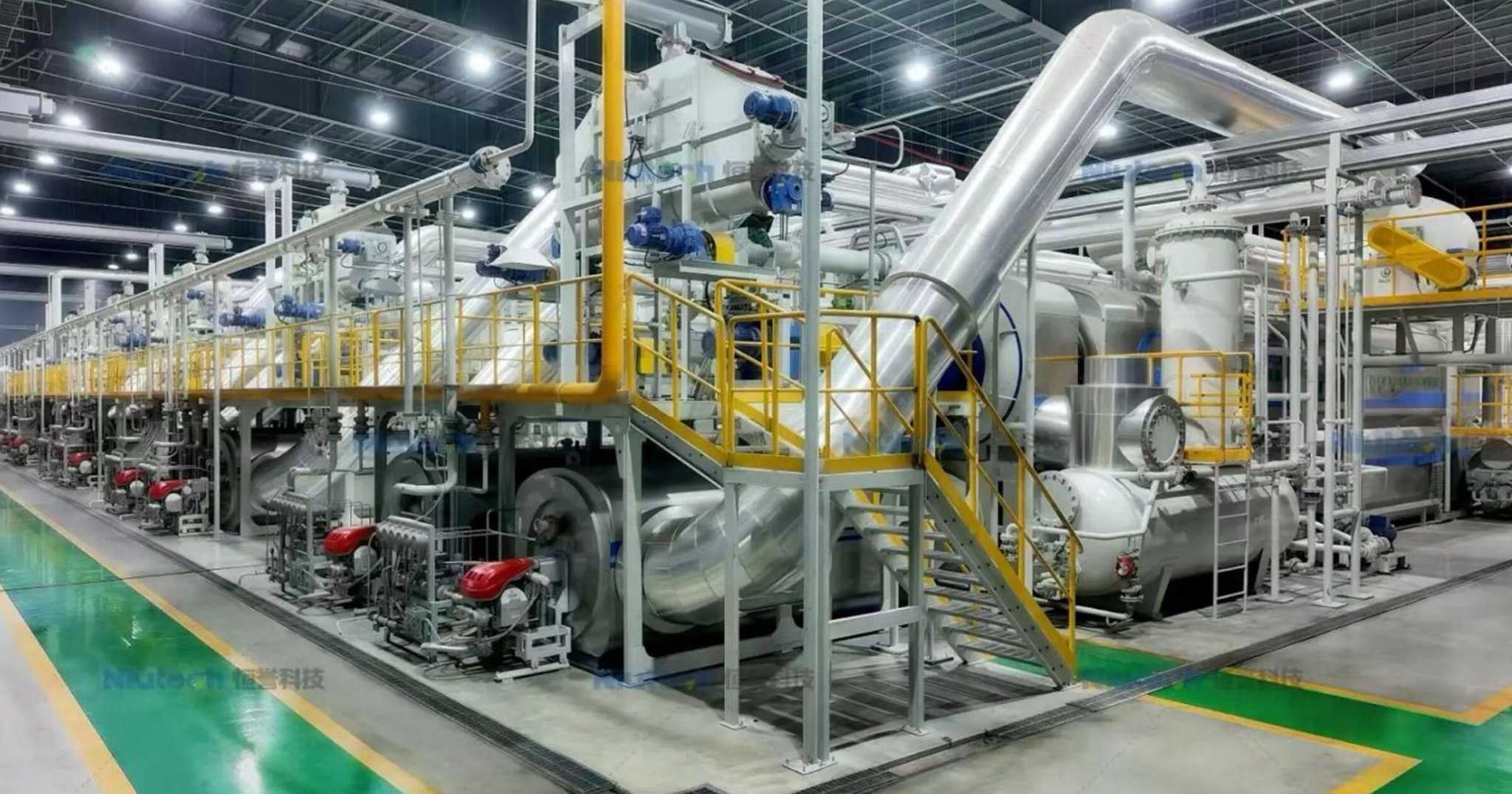
That’s where Chinese company Niutech comes in. In a new press release, first spotted by Interesting Engineering, Niutech announced a massive contract with an anonymous “global energy major” to build out an “industrial continuous waste plastic pyrolysis production line” capable of churning out 10,000 to 50,000 tons of plastic-derived SAF each year.
That might seem like a lot to unpack, but it’s really pretty simple. Basically, the Chinese firm is announcing the development of a massive supply line that turns plastic garbage into usable jet fuel. It plans to do so using a thermal decomposition process called pyrolysis, in which plastic waste is heated to extraordinary temperatures in an oxygen-free environment.
Though it isn’t new, pyrolysis remains something of a niche for the industrial-grade plastics-recycling space. For this approach to meet the growing need for SAF, it first has to graduate beyond the realm of small eco-startups into a widely-accepted industry standard — which appears to be Niutech’s goal.
Unlike previous SAF initiatives involving plastics, this particular production line will all be under one roof, cutting down on the need for costly shipping and handling. The Niutech refinery is also said to make use of a smorgasbord of plastics like polyethylene, nylon, polypropylene, and ABS, all “without complex pre-treatment such as washing, sorting or drying” — streamlining the complex process of sorting plastic and converting it to refinable oil at this kind of scale.
Should Niutech and its anonymous industry partner succeed in bringing the system online, it would undoubtedly serve as a constant source of plastics-based SAF for the global aviation industry, and as a role model for other refineries to follow.
“Large-scale pyrolysis projects impose stringent requirements on continuous operational capability,” a Niutech spokesperson said in the company’s press release. “Niutech has focused on pyrolysis technology for nearly 40 years and brings mature equipment and extensive project experience. This partnership is another validation of the strength of our industrial continuous technology.”
More on China: American Tech Companies Are Suddenly Sweating Bullets as China Catches Up on AI
The post China Installing Huge Facility That Turns Plastic Waste Into Jet Fuel appeared first on Futurism.

Savings grow as energy prices in Great Britain rise and cost of panel installation falls, analysis finds
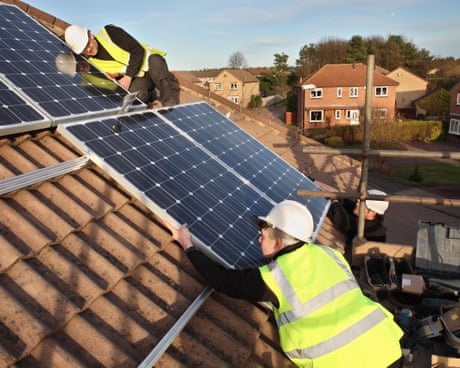
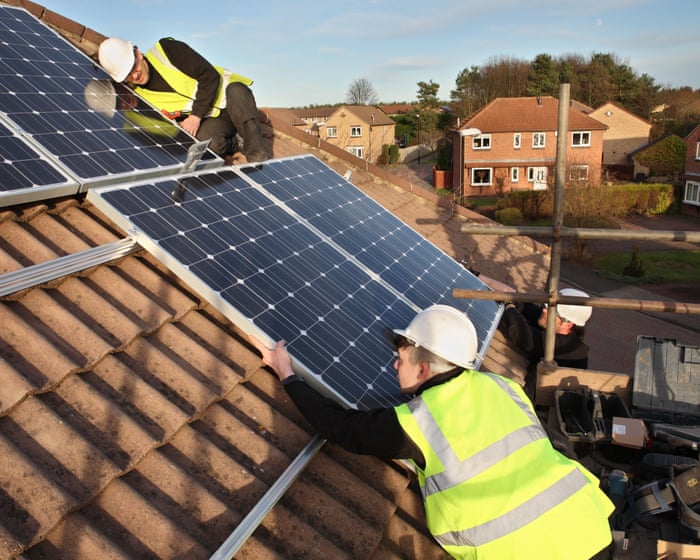
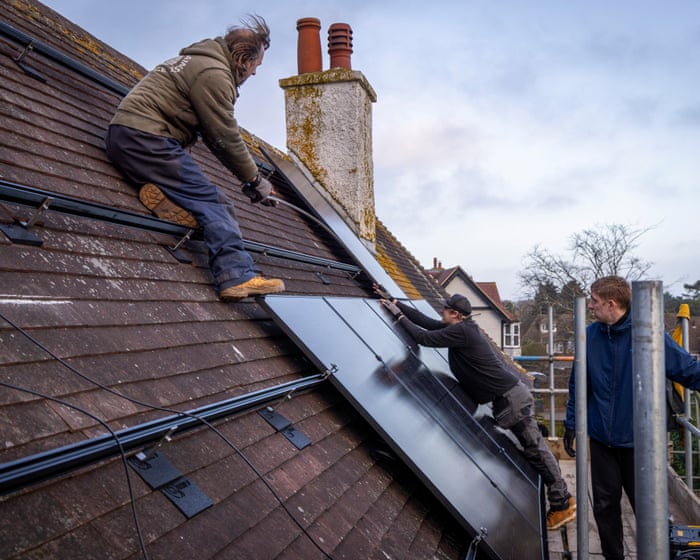
Households in Great Britain’s cloudiest regions could still save more than £400 a year on their energy bills by installing rooftop solar panels, research has found.
Rising wholesale energy prices mean the potential savings from a home solar panel system have climbed in recent years, as the cost of installation has continued to fall, leading to increased demand.
Continue reading...
© Photograph: Washington Imaging/Alamy

© Photograph: Washington Imaging/Alamy

© Photograph: Washington Imaging/Alamy
A financial model that could cut the cost of installing solar panels for many homeowners is welcomed by Alexis Abramson
The UK proposal to use “solar bonds” to make rooftop solar more affordable is a smart solution to a fundamental problem: the rising cost of capital (Cut cost of loans for solar panels on UK homes, ministers urged, 21 August).
A household that can pay for solar upfront saves money from day one. For everyone else, high-interest financing can consume much of those savings and ultimately deter people from installing the technology. A solar bond structure changes that equation: investors receive a modest, guaranteed return, and homeowners get access to cheaper capital. Because the loan is attached to the property rather than the individual, there’s no issue if the person moves.
Continue reading...
© Photograph: Andrew Aitchison/In Pictures/Getty Images

© Photograph: Andrew Aitchison/In Pictures/Getty Images

© Photograph: Andrew Aitchison/In Pictures/Getty Images
Energy minister says states can apply to use coal and gas supply to power datacentres but must prove it is cheaper than renewables
Get our breaking news email, free app or daily news podcast
Chris Bowen insists federal Labor’s new national laws on datacentre power supply will not include carve-outs for Queensland and the Northern Territory, with states that are eager to use coal and gas required to make their case to the national regulator.
The energy minister told Guardian Australia on Friday the only concession agreed at Wednesday’s meeting of national cabinet was that existing coal and gas supply could be used on the condition it could be shown to be cheaper than renewables.
Continue reading...
© Photograph: Sarah Wilson/AAP

© Photograph: Sarah Wilson/AAP

© Photograph: Sarah Wilson/AAP
A zero-emission compact hydrogen power plant will drive the two stages at Clifton Down in Bristol
When Lorde, Little Simz and Wet Leg stride on to stages in Bristol this weekend, they will not only be entertaining tens of thousands of festivalgoers but taking part in what is being billed as a world-first clean power project.
The two stages at Forwards festival on Clifton Down are being driven almost entirely by green power – a combination of hydrogen and mobile batteries charged with sustainable energy.
Continue reading...
© Photograph: Kristian Buus/In Pictures/Getty Images

© Photograph: Kristian Buus/In Pictures/Getty Images

© Photograph: Kristian Buus/In Pictures/Getty Images
Researchers say an untapped source of clean energy has been hiding beneath Western Australian soil, where some of the world’s largest iron deposits could harbor an unexpected secret.
These deposits, according to researchers at Edith Cowan University (ECU), are also rich in magnetite capable of producing hydrogen when it interacts with hot water, under conditions that mirror those which occur naturally deep underground.
Such processes, the researchers say, could be stimulated in magnetite-rich locations like Western Australia’s naturally reddish Pilbara region, stimulating hydrogen production and potentially unleashing a valuable, untapped clean energy source.
Magnetite is abundant within the Pilbara’s vast banded iron formations, and when subsurface temperatures rise, the naturally occurring interactions between this iron-rich mineral and water lead to chemical reactions—the same kind which can produce molecular hydrogen.
“Australia could be sitting on a massive, untapped energy reserve,” said ECU Associate Professor Alireza Keshavarz of the team’s recent discovery, “and the potential is enormous.”
To better understand the processes that may hold the key to unlocking Australia’s untapped subsurface energy reserves, the ECU team began by placing samples of magnetite in water heated to 200 degrees Celsius and under extreme pressure. The experiments continued for close to two months, during which time the researchers were able to recreate some of the same conditions that occur naturally deep within the Earth.
Doing so allowed the team to look at how hydrogen naturally forms, as well as what geological conditions help to sustain its production.
“Western Australia has some of the world’s largest banded iron formations,” said Kaveh Moghanirahimi, the lead author of a recent study detailing the team’s findings.
“If we can unlock this resource at scale, it could be transformative for our energy future,” he adds.
Significantly, the team says they found that just having large amounts of magnetite in subsurface deposits may not be all that is required for significant hydrogen production. Another key component is having enough water present to be able to reach fresh mineral surfaces for the hydrogen-producing reactions to continue.
Importantly, the researchers found that simply having large quantities of magnetite underground may not be enough. Water must also be able to reach fresh mineral surfaces for the hydrogen-producing reactions to continue.
“Our findings show that hydrogen production depends not only on the amount of magnetite present, but also on how easily water can access fresh mineral surfaces through fractures, pores, and permeable pathways,” said Professor Stefan Iglauer, a researcher with ECU’s School of Engineering.
The researchers also say they have identified a potential method for stimulating hydrogen generation by injecting a solution into banded iron formations. This, they say, points to a novel possibility: that geological deposits of the right specific kind may also one day function as sites for engineered production of naturally generated hydrogen.
That possibility, the researchers argue, could prove to be significant as governments and industries seek lower-emission alternatives to hydrogen currently produced mainly using fossil fuels. Also, unlike conventional methods of hydrogen manufacturing, tapping geological hydrogen only requires leveraging natural reactions that occur underground.
Presently, the research remains an early step toward determining whether the process can be translated from lab experiments into a commercially viable method of producing clean energy with the resources present in natural geological formations.
However, if researchers can continue to capitalize on methods that allow hydrogen to be generated and recovered at economical scales, there are already remarkable possibilities in terms of what Western Australia’s enormous iron formations could one day help provide.
“This work helps bridge the gap between laboratory experiments and real geological systems,” Iglauer said.
The team recently reported its findings in the paper, “Geometry-driven controls on hydrothermal natural hydrogen generation from magnetite mineral,” published in the International Journal of Hydrogen Energy.
Micah Hanks is the Editor-in-Chief and Co-Founder of The Debrief. A longtime reporter on science, defense, and technology with a focus on space and astronomy, he can be reached at micah@thedebrief.org. Follow him on X @MicahHanks, and at micahhanks.com.