❌

Reading view

Britain is OK with public ownership, but only by foreign powers. Why?

Arthur Downing, author of Power and the People: A History of British Energy, says all-encompassing rapid transition will need a mutualised system

Have you ever wondered why it is that most houses in the UK are reliant on gas boilers? Not what’s stopping more people from replacing them with heat pumps, but instead why and how the gas boiler became so ubiquitous in the first place?

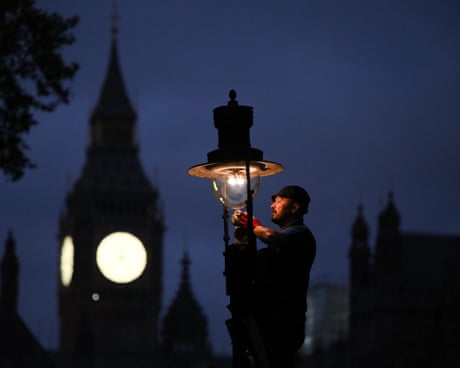
Arthur Downing, the author of the new book Power and the People: A History of British Energy, can tell you exactly why. β€œWe only have boilers in our houses because of a state-owned enterprise that went into everybody’s home and installed natural gas-suitable appliances at no direct cost,” he says. The nationalised gas industry of the 1940s to the 1980s, which oversaw this huge project, was for three decades one of the β€œmost dynamic, innovative, efficient industries in Britain”, Downing says. Yet few of us would use these terms to describe it as such now.

Continue reading...

Β© Photograph: Daniel Leal/AFP/Getty Images
Β© Photograph: Daniel Leal/AFP/Getty Images

Β© Photograph: Daniel Leal/AFP/Getty Images
  •  

Solar cuts β€˜at least Β£400 from bills in even the cloudiest British areas’

Savings grow as energy prices in Great Britain rise and cost of panel installation falls, analysis finds

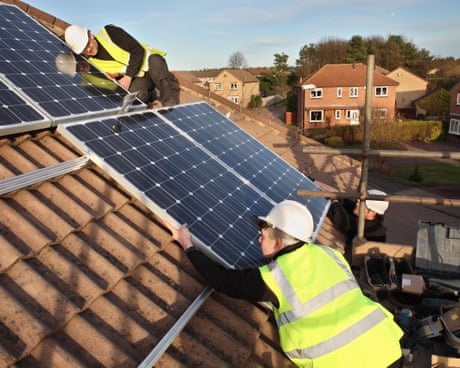
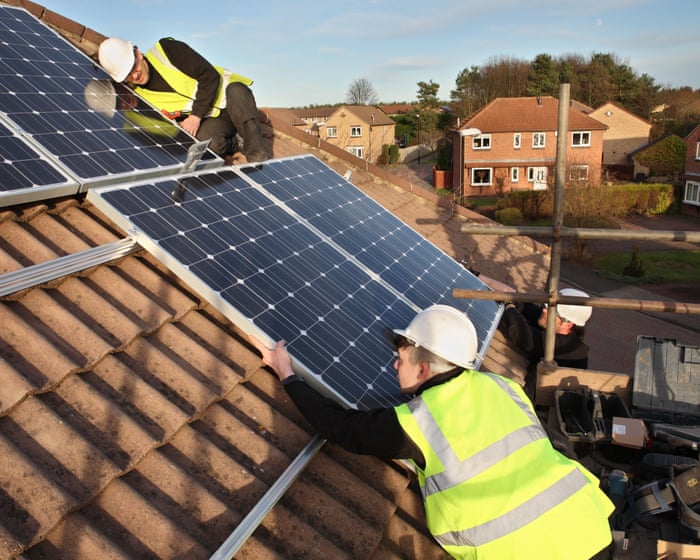
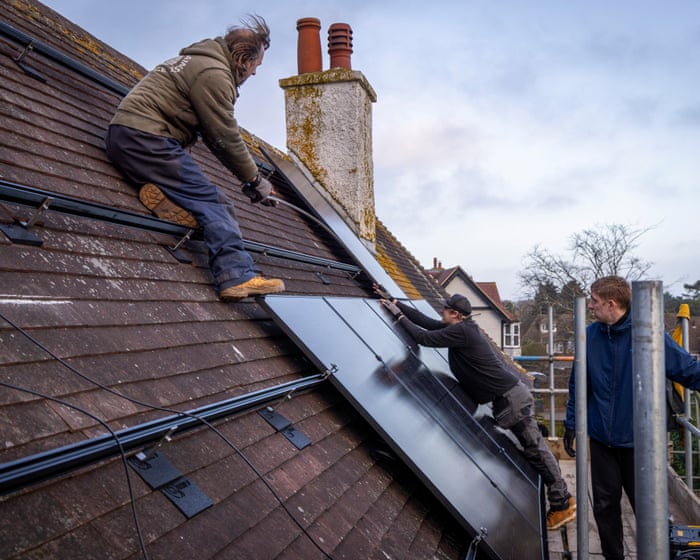
Households in Great Britain’s cloudiest regions could still save more than Β£400 a year on their energy bills by installing rooftop solar panels, research has found.

Rising wholesale energy prices mean the potential savings from a home solar panel system have climbed in recent years, as the cost of installation has continued to fall, leading to increased demand.

Continue reading...

Β© Photograph: Washington Imaging/Alamy

Β© Photograph: Washington Imaging/Alamy

Β© Photograph: Washington Imaging/Alamy

  •  

Why solar bonds are a bright idea | Letter

A financial model that could cut the cost of installing solar panels for many homeowners is welcomed by Alexis Abramson

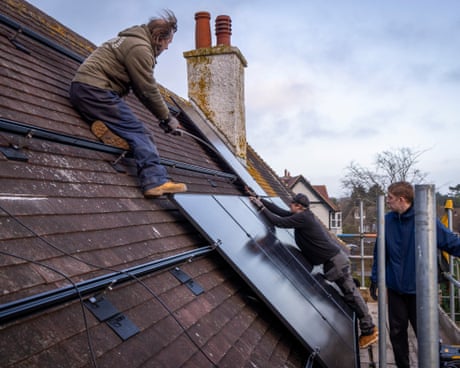
The UK proposal to use β€œsolar bonds” to make rooftop solar more affordable is a smart solution to a fundamental problem: the rising cost of capital (Cut cost of loans for solar panels on UK homes, ministers urged, 21 August).

A household that can pay for solar upfront saves money from day one. For everyone else, high-interest financing can consume much of those savings and ultimately deter people from installing the technology. A solar bond structure changes that equation: investors receive a modest, guaranteed return, and homeowners get access to cheaper capital. Because the loan is attached to the property rather than the individual, there’s no issue if the person moves.

Continue reading...

Β© Photograph: Andrew Aitchison/In Pictures/Getty Images

Β© Photograph: Andrew Aitchison/In Pictures/Getty Images

Β© Photograph: Andrew Aitchison/In Pictures/Getty Images

  •  

The Guardian view on energy costs: vulnerable households need help with their bills | Editorial

Soaring prices are plunging struggling families into debt. The government must support them in the short term as it invests in a clean energy future

Fuelled by the consequences of Donald Trump’s disastrous war on Iran, household energy debt in Britain is continuing to soar, rising to a record Β£6bn by the end of June. That figure is set to hit Β£7bn by the end of the year, as the government’s cap on gas and electricity prices goes up to a three-year high in October. The human cost among the less well off will be more people regularly choosing whether to skip meals, ignore other bills or stay cold this winter.

Such is life at the sharp end of the cost of living crisis, which Andy Burnham has made it his priority to address since arriving in Downing Street. The day after he became prime minister, Mr Burnham announced that VAT would be removed from electricity bills from the beginning of October. But the Middle East-related rise in the price cap, announced on Wednesday, more than wipes out the effect of his cut. In an era of geopolitical volatility, high energy costs have become the new normal.

Do you have an opinion on the issues raised in this article? If you would like to submit a response of up to 300 words by email to be considered for publication in our letters section, please click here.

Continue reading...

Β© Photograph: Dan Kitwood/Getty Images

Β© Photograph: Dan Kitwood/Getty Images

Β© Photograph: Dan Kitwood/Getty Images

  •  
❌