 Login

Denver Residents Were Told to Let Their Lawns Die. Then They Saw Sprinklers Running Outside a Data Center and All Hell Broke Loose
 A viral video shows sprinklers soaking a green lawn outside a denver data center during severe water restrictions.
 A viral video shows sprinklers soaking a green lawn outside a denver data center during severe water restrictions.

© Nick Rohlman/The Gazette, via Associated Press
Patagonia, a region of Argentina with 17,300 glaciers, has the potential to turn into a data center hotspot. The cool climate and abundant energy resources there are drawing interest from the likes of Amazon, Google, and OpenAI, according to Reuters. However, there needs to be more work on tapping into the resources and equipping high-speed networking, like fiber, to make the place irresistible. There’s also the question of political stability with a presidential election next year.
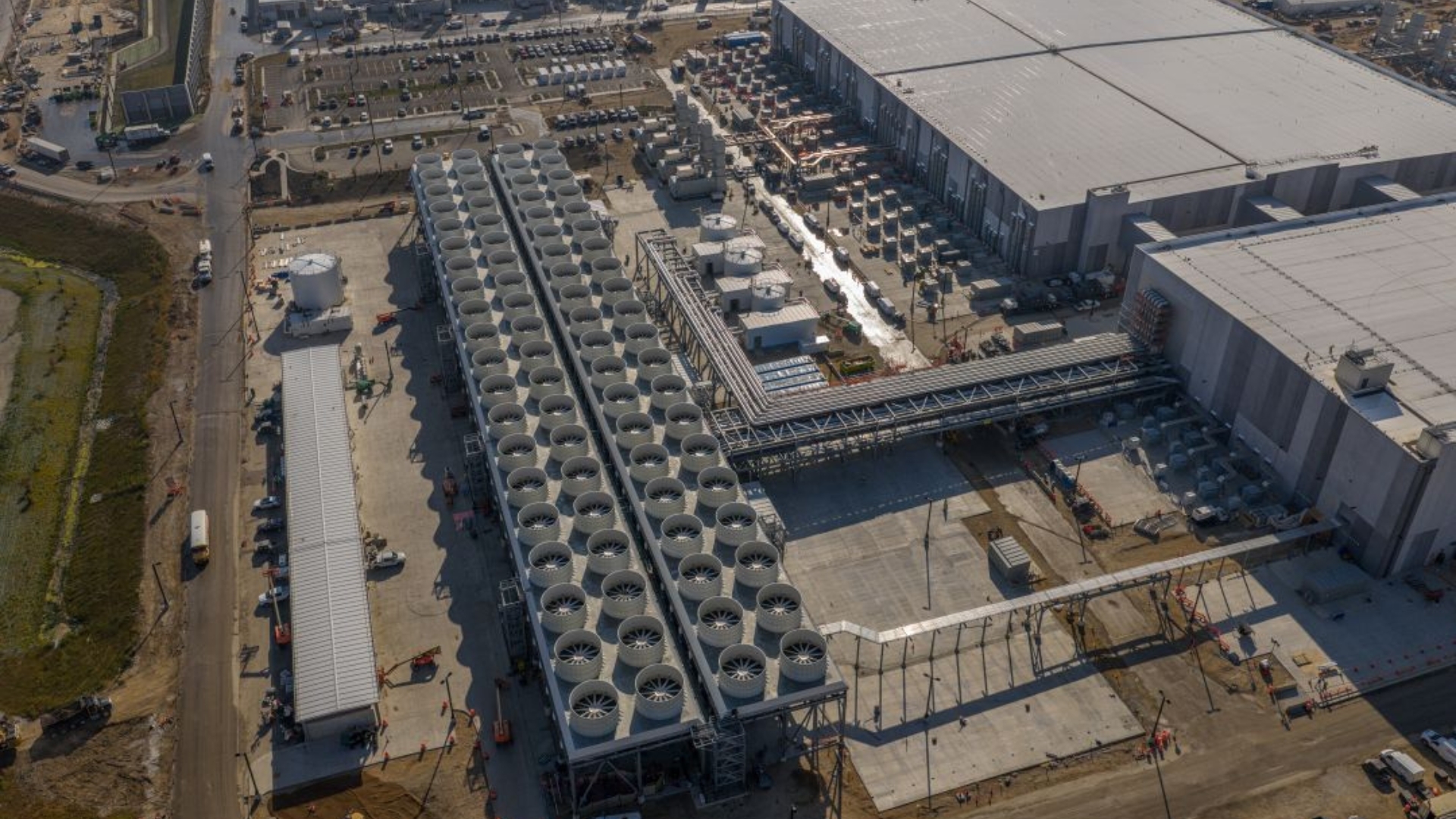
Argentina, and Patagonia in particular, has some juicy lures for potential hyperscale data center operators, and the cold climate is a bonus. That environment helps keep data centers cool and use less power while maintaining agreeable thermals. Patagonia has tens of thousands of glaciers across the Northern Patagonian Ice Field and the Southern Patagonian Ice Field combined.
Another bonus to would-be Patagonian data center operators are the range of energy sources there. Reuters mentions hydroelectric power, wind, and shale gas, but some operators who are already established are also adding solar.
Then, the social and political climate looks good for data centers in Argentina. According to the source, the populace doesn't hate data centers yet. At least there seems to be no campaign groups or public backlash. It is also reported that President Javier Milei has been making changes to court Big Tech. That’s a positive, and may be a negative. Positive in that the Argentines are now being accommodating to the needs of huge AI data centers. Negative, as there’s a presidential election next year, where things could take a dramatic turn, or not. There are also some regions in Patagonia where data center expansions may be complicated by the wishes and needs of indigenous communities. Businesses offering sizable, long-term investments aren’t keen on uncertainty.
With the pretty good environment for hyperscale buildouts established, it isn’t that surprising to see Reuters say OpenAI has confirmed a $25B and 500MW clean energy data center in the country. Lesser-known (to us) companies like Poland's Green Capital also plan a $3B and 300MW data center in Patagonia. It is also reported that FlexDomes, a U.S.-based green data center company, is planning the first stage of a 120MW facility.
Meanwhile, in neighboring South American countries, there are large developments from the likes of Amazon, Google, and others. Argentina must have these data center whales in its sights, as they are known to be scouting for expansion into new locations.
As well as political / business risk, Argentina has some structural weaknesses that need to be addressed by those developing in the country. It is said to have connectivity and power grid infrastructure deficiencies, for example. In other locations, we have seen these addressed on almost a per-project basis, with some state intervention, but it adds some high costs to setting up.

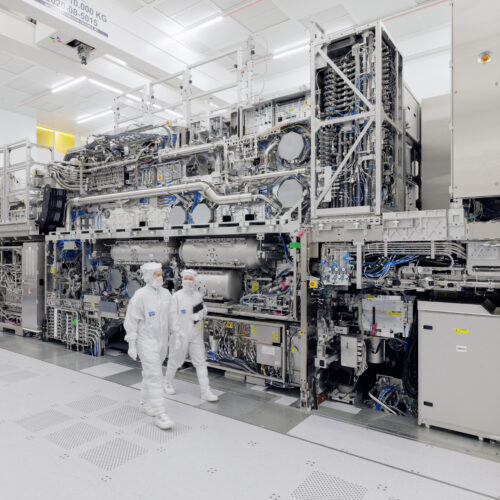
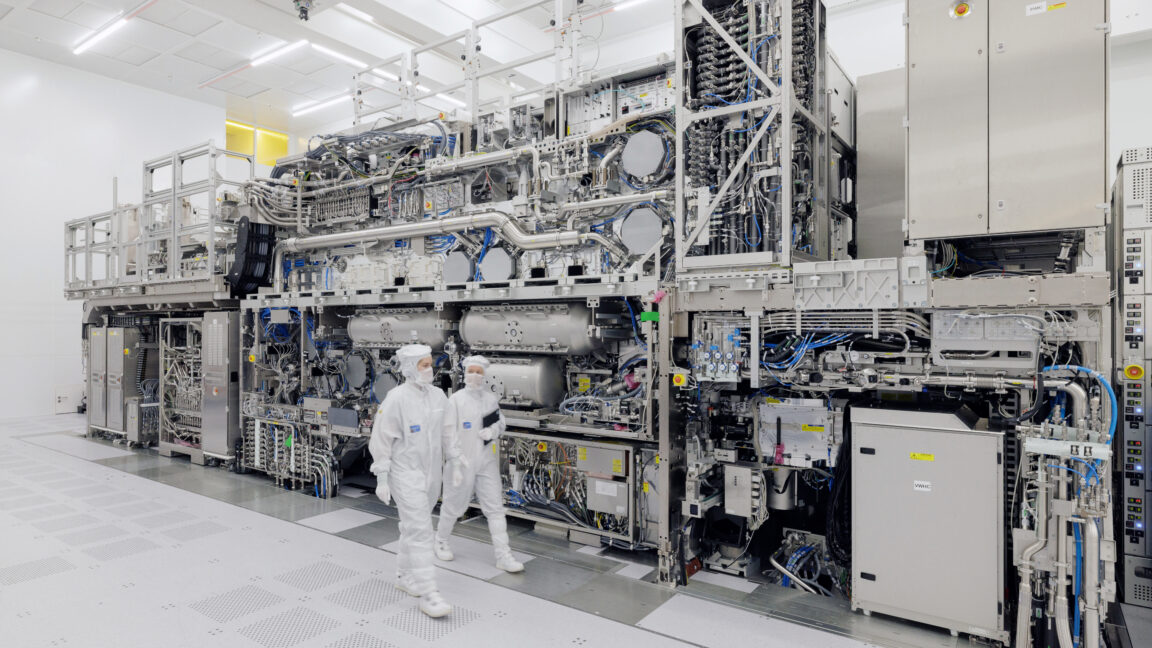
Leading chipmakers Samsung Electronics and Taiwan Semiconductor Manufacturing Co. announced plans to adopt ASML’s latest chipmaking machines in the next several years—and they also joined Intel in agreeing to a crucial technology change that could boost chip production on the new machines by 40 percent.
This signifies the semiconductor industry’s broader embrace of high NA EUV photolithography technology that can cost up to $400 million per machine and is only provided by the Dutch technology company ASML, Bloomberg reports. The technology would allow chip designers to implement even smaller features in potentially more powerful and efficient next-generation chips produced for AI data centers and consumer electronics such as smartphones, tablets, and laptops.
ASML’s EUV (extreme ultraviolet) lithography machines enable chipmakers to use powerful laser light to imprint patterns in silicon wafers, layer by layer, and gradually form the computer circuitry that makes silicon chips work. Compared to older deep ultraviolet lithography, EUV technology harnesses a more powerful source of light with a shorter wavelength to create even smaller features on silicon wafers.
© Michel de Heer | ASML
Leading chipmakers Samsung Electronics and Taiwan Semiconductor Manufacturing Co. announced plans to adopt ASML’s latest chipmaking machines in the next several years—and they also joined Intel in agreeing to a crucial technology change that could boost chip production on the new machines by 40 percent.
This signifies the semiconductor industry’s broader embrace of high NA EUV photolithography technology that can cost up to $400 million per machine and is only provided by the Dutch technology company ASML, Bloomberg reports. The technology would allow chip designers to implement even smaller features in potentially more powerful and efficient next-generation chips produced for AI data centers and consumer electronics such as smartphones, tablets, and laptops.
ASML’s EUV (extreme ultraviolet) lithography machines enable chipmakers to use powerful laser light to imprint patterns in silicon wafers, layer by layer, and gradually form the computer circuitry that makes silicon chips work. Compared to older deep ultraviolet lithography, EUV technology harnesses a more powerful source of light with a shorter wavelength to create even smaller features on silicon wafers.
© Michel de Heer | ASML
Data center builds are one of the hotly contested items worldwide. Many states and cities have upheld moratoriums on new buildouts due to power usage, water consumption, and noise concerns. Thailand is the latest nation to pump the proverbial brakes, with the government requesting that existing buildouts hit the pause button while coming up with a more precise regulatory framework.
Government heads requested that agencies compile information about current and future data centers during this week, in a bid to create unified legislation. The country currently has few laws specific to data centers, leading to legal voids like zoning a data center as a "warehouse" right next to a hospital. Much like everywhere else, the country has seen growing complaints about data centers' water and power usage.
After the week is out on September 11, the government expects to take about a month to come up with a regulatory draft, making the pause technically an indeterminate timeframe — though further delays wouldn't benefit either party, as Thailand considers the industry critical to the country’s competitiveness. The catch is that pausing construction isn't enforceable, so companies can elect to plow ahead regardless while the legislation is discussed.
NESDC (National Economic and Social Development Council) secretary-general Danucha Pichayanan is very specific: "we don't have the power to suspend the construction of the 49 data centers" currently under construction. However, when the legislation arrives, it will apply retroactively to ongoing projects, though with an adjustment period for in-progress builds. New builds will naturally need to comply with the legislation from the get-go.
Some companies may elect to soldier on with the belief their buildouts will be in compliance with the reasonably predictable content of the new laws, or betting that they could win future legal challenges — a dynamic that's already in play elsewhere with Project Jupiter. The incoming legislation is expected to cover power consumption (and possibly generation), closed-loop cooling, and water-surplus guarantees, meaning builders already have a fairly good idea of what they'll need to do.
Not complying with the request for a pause might be a game of political chicken, though, as the government may retaliate with regulatory delays and additional costs to power connections. Just last Thursday, Thailand's energy ministry raised concerns over a Bangkok data center that may be planning to hold diesel stockpiles far in excess of the 200,000 liters it has permission to.
On that topic, Thailand revised laws on industrial power delivery last July, and among other requirements, demands a bank guarantee of ฿4.5 million ($134,000) per megawatt. Half the money will be refunded when the actual usage reaches 50% of proposed utilization, and the rest when usage hits 70%. This mechanism is meant to stop preemptive allocation of power delivery capacity that might remain unused for months, years, or not at all — once again, mirroring datacenter playbooks elsewhere around the world.
At face value, the amount of $134k per megawatt sounds like a small price to pay for a builder to get ahead of the pack, but its per-megawatt nature means that a hyperscale facility pulling 200 MW or more needs to place around $27 million in escrow.
With the power laws recently revised, water consumption is seemingly the largest concern, as the current legal framework allows companies to make deals directly with utilities without additional safeguards. For example, in Chonburi, an operator signed a decade-long deal with Eastwater Stecon Utilities for 3.3 million cubic meters annually, or about 36,900 residents. It's expected that the new laws will add much stricter requirements to avoid localized deserts.

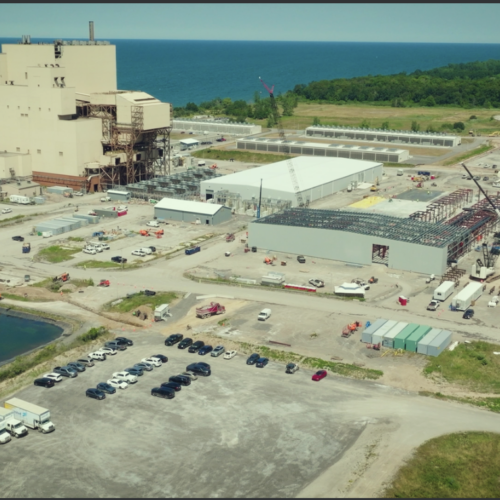
In early June, a fire broke out in a still-unfinished building at the Lake Mariner data center in Somerset, New York, exposing just how little the local fire department knew about what it was walking into. Firefighters reportedly found no working alarm, no suppression system, and three dead hydrants; the safety documents they’re legally entitled to see reportedly burned up in the blaze.
Steve Matisz, chief of the Barker Fire Department, said his crew went into the building “kind of blind,” facing heavy black smoke from chemicals they couldn’t identify because the safety sheets meant to inform them had apparently burned up. “It’s been a difficult situation,” Matisz said. He wasn't sure what to think about the claim that the safety sheets had burned in the fire.
The site is a former coal mine on Lake Ontario. The $3.2 billion campus is one of the largest AI data center buildouts in New York, and it has many stakeholders. A company called TeraWulf owns and operates the data center on land it leases from a company owned by its own CEO; Fluidstack, a UK-based AI company, will run the center; Google holds warrants for a future 14 percent equity stake and has agreed to guarantee Fluidstack’s lease payments; and Anthropic is among the AI companies whose compute demand the facility exists to serve.
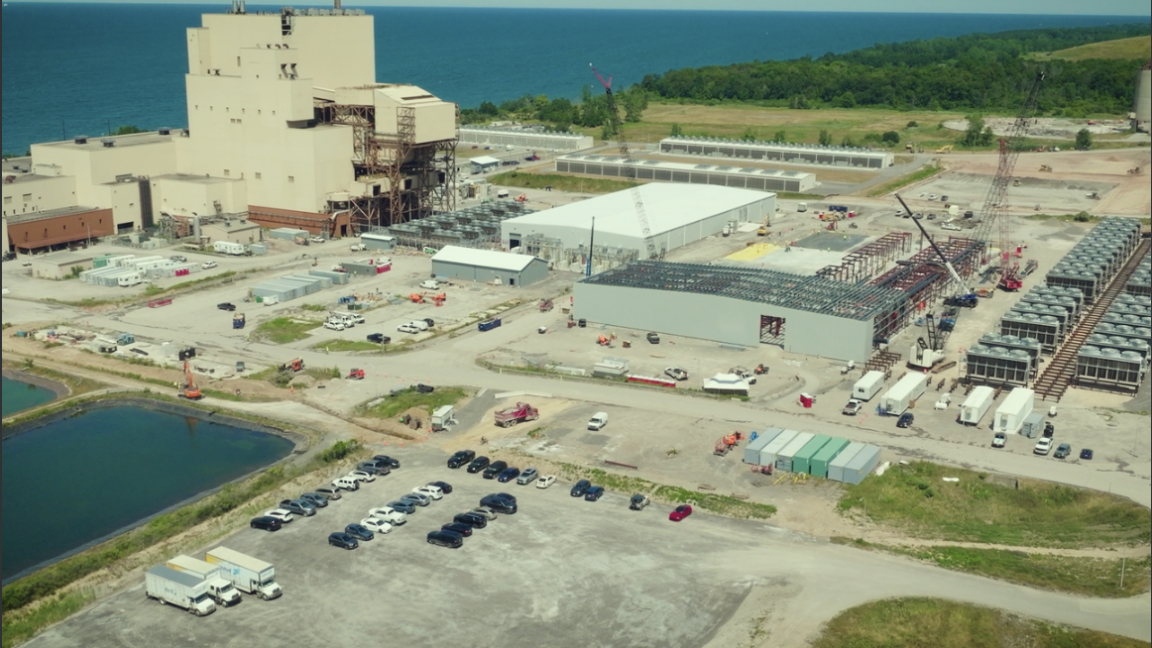

© Clayton Steward for The New York Times

© Kristian Thacker for The New York Times
Meta is testing robots that can plug in cables, reset servers, and handle other tasks inside its data centers, according to several current and former workers familiar with the projects. The ongoing effort, which has not been previously reported, may eventually allow Meta to operate its rapidly expanding data center footprint with fewer humans, keeping labor costs in check as its spending on AI infrastructure soars.
Meta is using robots and related hardware from several different vendors, including Watney Robotics, Kinova, and ABB, according to the same workers, who asked to remain anonymous because they weren’t authorized to speak to the media. Kinova and ABB declined to comment. Watney didn’t respond to requests for comment.
In one experiment, Meta is evaluating whether a Kinova Gen3 robotic arm could be used for power cycling or cutting off electricity to servers. The company is also testing a different robot to swap networking cables. One Meta data center worker estimates that if it’s successful, the bot could replace up to 80 percent of some people’s workloads. “We thought those of us performing the physical tasks were safe for a while, but not anymore,” says the worker. “It’s coming for us all, unfortunately.”

© Getty Images
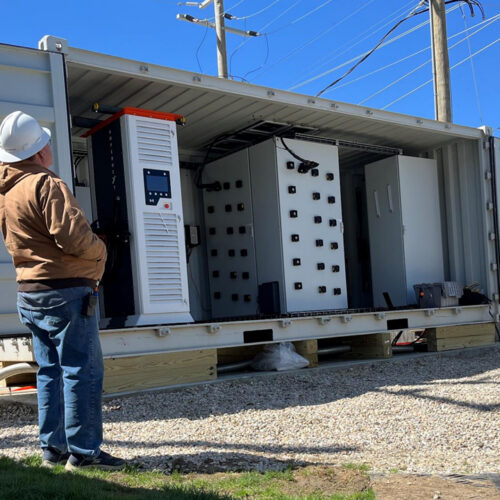
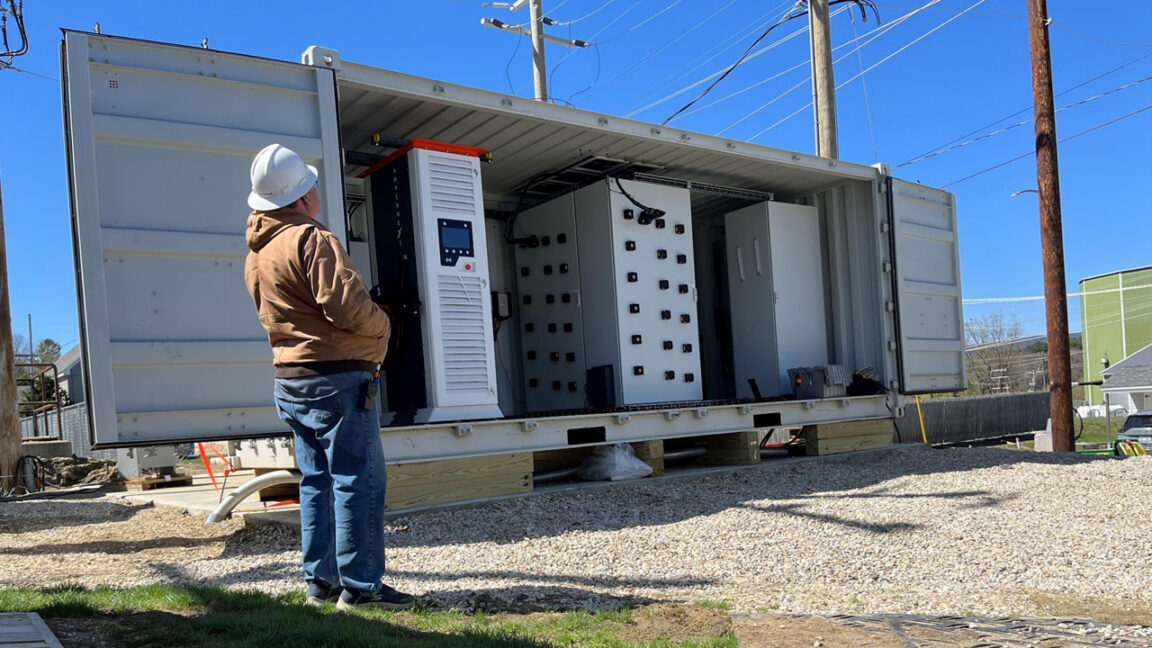
Data centers have become the largest driver of a surging electricity demand that is straining US power grids. But the AI data center boom has also accelerated investment in a technology that could provide a silver lining for everyone—solid-state power transformers that replace industrial-age technology with modern power electronics.
Power grids currently rely on conventional transformer technology that is painstakingly assembled by hand and has a fundamental design dating back to the 1880s. Two copper wire coils manually wound around a steel core create electromagnetic fields that help step up voltage levels of alternating current electricity for long-distance transmission or step down voltage levels for the electricity use of homes and businesses. The largest power transformers cannot be mass-manufactured but are instead custom-built for each utility company’s electrical substations.
Manufacturing constraints, coupled with the scramble to upgrade US power infrastructure, have meant utility companies and other customers must wait up to several years for delivery of new power transformers. That not only hinders power grid infrastructure expansion needed to support growing electricity demand, but also delays the process of replacing aging power transformers.
© EPRI
