Login

Flock Cameras Are Dividing U.S. Cities. Here’s What to Know About Them.
Flock Safety’s automated license plate-reading cameras, used by thousands of law enforcement agencies in the U.S., have drawn intense criticism from civil liberties groups.



Read more of this story at Slashdot.
Talal Haj Bakry and Tommy Mysk (Mastodon, Hacker News, MacRumors, Mac Power Users):
WebKit-based browsers on iOS and macOS can be configured to route all web traffic through proxy servers, which is how Tor browsers on iOS and our own Psylo work. We found three WebKit features — DNS prefetching, WebAuthn Related Origin Requests, and WebTransport — that bypass the configured proxy and send traffic directly from the device, which exposes the user’s real network. The same leaks also affect Apple’s iCloud Private Relay.
[…]
It must be noted that VPNs are not affected, since they tunnel the device’s entire network traffic at the system level.
[…]
We’ve addressed all three leaks in Psylo 1.3.1[…] Passkeys and WebTransport have legitimate uses, so both can be re-enabled at any time through per-silo toggles. This keeps Psylo leak-free out of the box, while users who need one of these features on a given site can opt in explicitly, with a clear understanding of the trade-off.
In an ideal world, we’d report the issues to Apple, they acknowledge the issue, and ship a fix in a timely manner. Unfortunately, our past experience with Apple tells us that reporting this issue would involve months of delays, inconsistent communication, and in some cases, denying the issue’s impact entirely.
We weren’t willing to wait months, or upwards of a year, sitting on bugs that undermine the core privacy guarantees of Psylo and iOS Tor browsers while saying or doing nothing.
[…]
Should we knowingly leave our users exposed while waiting for a system-level fix? We didn’t think that was acceptable or fair to our users. Or should we quietly ship our own mitigations without telling anyone? We didn’t think that was acceptable either. Security fixes deserve transparency, especially when they involve tradeoffs.
Soon after we published the blog, we sent a link to the blog and demo website to Apple in a security report to make them aware of it. Now the report is already in the status “We’re planning to address the issue you reported.” and a fix is planned for Fall 2026 🤯🤯🤯
Mysk:
It used to take months and months to reach this status. We got there in less than 24h
Running to the press always helps…
Previously:
Update (2026-08-11): Ben Lovejoy (MacRumors):
A class action lawsuit accusing Apple of false advertising, misrepresentation, and fraud has now been filed by Clarkson Law Firm – the same lawyers who previously obtained a $250M settlement over the delayed launch of Siri AI.
Flock had a devious plan to expand its surveillance network past its army of AI-powered license plate scanners.
As 404 Media reports, the controversial company drew up plans to use the dashcams installed in Uber and Lyft drivers’ cars to scan the license plates of every vehicle that drove past them — in effect turning hundreds of thousands of rideshare and delivery drivers into a network of what the reporting describes as “roaming surveillance vehicles.”
These plans were first revealed last August as part of an intended partnership between Flock and the AI-powered dashcam company Nexar. Now, a presentation document obtained by 404 Media shows that Flock was actively pitching this partnership to potential customers at the time. The presentation, which was intended to be shown to the Georgia Office of the Attorney General, was obtained by a Georgia resident through a public records request.
Flock told 404 that the partnership never went through, but the presentation still shows the company’s plans to turn rideshare and delivery drivers into mobile surveillance apparatuses — and the sheer scale is astonishing.
“Hundreds of Commercial Business and HOA [home owners associations] in GA [Georgia] are part of the network,” the Flock presentation stated. “Plus Nexar partnership which includes 350k Uber/Lyft and other delivery service devices.”
Expanding to rideshare drivers would’ve added a new dimension to Flock’s already far-reaching surveillance network. Most of its cameras are mounted on stationary poles that survey a fixed area. In addition to providing more coverage, using cars could help Flock keep a lower profile; one of the main problems Flock is facing amid overwhelming public backlash is that protestors are vandalizing or blocking its surveillance pylons.
Another murky area of Flock’s plans was that it’s unclear if the Uber and Lyft drivers would’ve been aware they were participating in surveillance efforts, 404 noted.
Flock didn’t discount the possibility of these plans being realized through another partnership in the future. If they do, it’ll only fuel the massive privacy and safety concerns already posed by its cameras. The footage it collects into a centralized network can be accessed by cops across the country, often with little accountability. At least 50 police officers have been accused of using the cameras to stalk women, according to a recent Washington Post tally.
Several people have also been swarmed by cops after Flock wrongly identified them as suspects.
The dashcam partnership wasn’t the only plan that Flock had to deepen its surveillance. Last month, it officially cancelled a “human distress detection” pilot program, a network of always-on acoustic sensors that monitored public places for sounds of “screaming.”
More on surveillance: Public Offers Implausible Number of Alibis for Man Accused of Destroying Flock Cameras
The post Flock’s Secret Surveillance Plan Will Make You Gasp appeared first on Futurism.
Cory Solovewicz receives more unwanted emails than you. Seriously—it’s a lot more. Since December 2024, one of the domains at which the security researcher receives email has registered 401,796 messages—by his calculations that’s an average of 699.99 pings per day.
This deluge isn’t the regular flood of spam, newsletters, and unwanted deals that fill many people’s inboxes. Instead, companies and other organizations are inadvertently sending Solovewicz other people’s private information and company secrets. Over the last few years, he’s received injury reports from a city government, confirmation of people’s pizza orders, and account setup emails from a school platform. “I get service orders for people that need repairs. I get lots of test platform credentials,” says Solovewicz, a security researcher and consultant.
Solovewicz is receiving the avalanche of messages as he’s the owner of the domains noreply.us and noreply.net, which he purchased in 2020 and 2024, respectively. After originally planning to use the noreply.us domain as a catch-all email—which receives mail sent to any @ address on that domain—to filter messages and enhance his privacy, the researcher quickly noticed that other systems were sending mail to @noreply.us addresses. “I created an accidental honeypot,” Solovewicz tells WIRED. “I had no idea it was going to turn into this.”


© Richard Drury via Getty
Read more of this story at Slashdot.
In a time of rising skepticism against tech surveillance, it seems not even the best intentions can spare you from backlash.
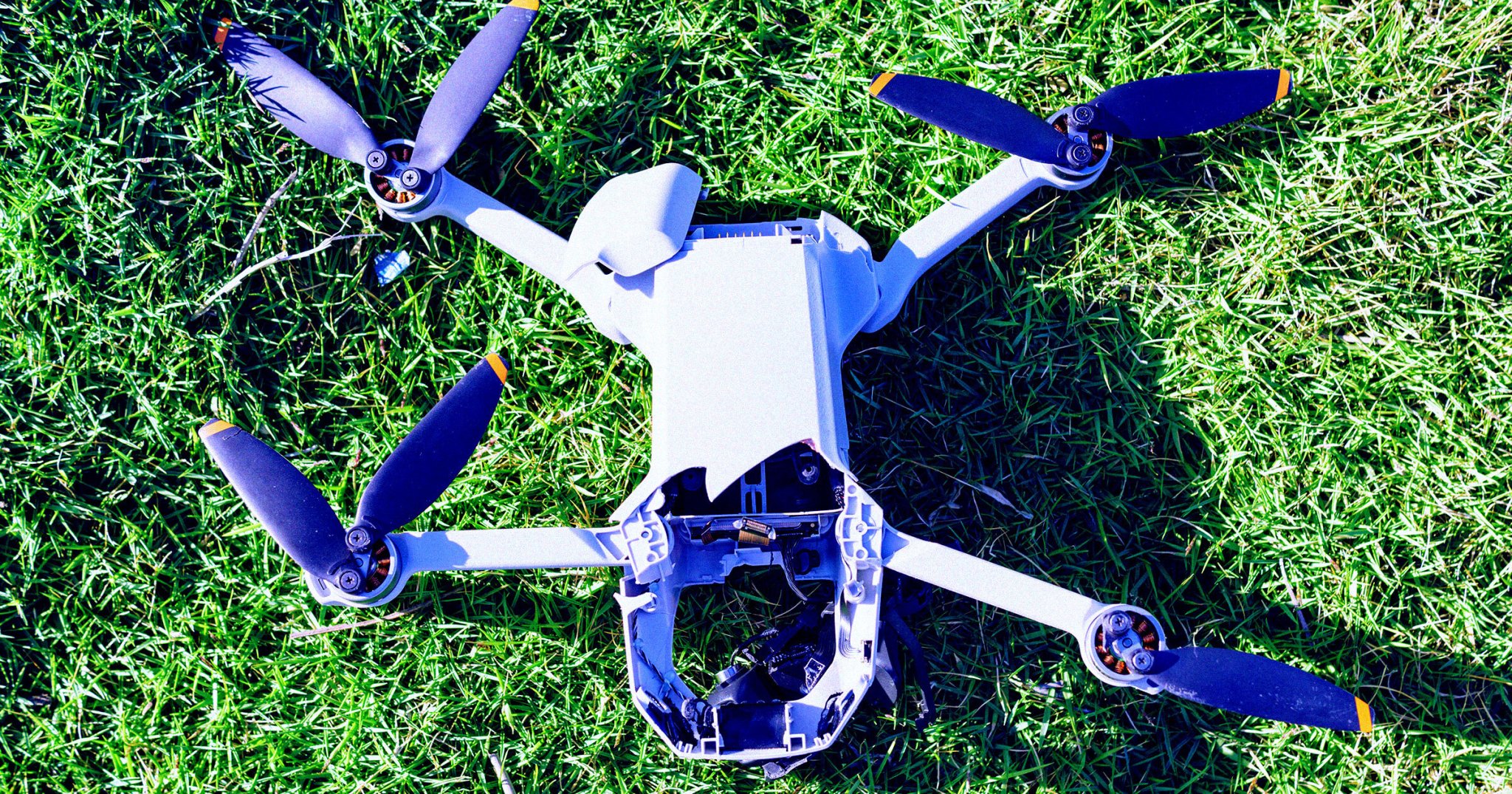
That’s a lesson some good samaritans in Los Vegas learned the hard way, after a thermal imaging drone they were using to track a runaway dog was trashed by a group of unidentified vandals.
According to to Las Vegas station FOX5, the volunteer animal rescue group Paws Patrol LV has been scrambling to replace a $7,000 camera drone after it suddenly went offline while tracking an injured dog.
“For the past couple of days, we’ve been searching for a dog we believe was hit by a car,” the group wrote in a post on Facebook. “We searched on foot, but the vegetation was simply too dense to see through with flashlights. So we launched our thermal drone… one of the most valuable rescue tools we’ve ever owned.”
“Less than a minute after it took off,” the post continues, “a group of unhoused individuals knocked it out of the sky, smashed it, and threw it into the water.”
The animal-rescue group wasn’t left empty-handed for long, however, as a business owner from Montana chipped in to donate a brand new thermal imaging drone, per an update on the original post.
While it would be easy to blame a group of unwashed Luddites for the damage, it’s important to keep in mind that the true identity of the vandal or vandals remains unknown. If the vandals really are homeless, as Paws Patrol LV volunteers suggest, then their aversion to strange drones makes sense — elsewhere, surveillance drones have been deployed by police officers to clear homeless camps, while private citizens have used drones to drop dog feces on homeless populations struggling to survive.
And one doesn’t necessarily have to be homeless to have an aversion to the growing number of surveillance drones surfing our skies. In some parts of the US, malicious operators have used drones to harass random suburbanites and poach wildlife, while insurance adjusters are increasingly conducting secretive drone flights to find excuses to penalize homeowners and sometimes even drop customers altogether.
While we hope the dog gets found, the episode underscores a larger point: the skies have become a contested space, with drone operators both benevolent and vindictive jockeying for control — not just of the airspace itself, but over how their drones are perceived.
More on drones: We’re Admittedly Terrified That They’ve Now Invented Invisible Drones
The post Volunteers Tracking Lost Dog Baffled When Locals Trash Thermal Imaging Drone appeared first on Futurism.