Rocket launches this week On Monday, Aug. 10, a Long March 7A rocket carrying an undisclosed payload broke apart roughly one minute and 27 seconds after lifting off from Wenchang Space Launch Site at 8:02 a.m. EST. Footage from online livestreams captured the failure in real time; Chinese state media had not released any informationContinue reading "A Long March 7A failure opens a week of Starlink launches"
An unusual dead star displaying one of the strongest magnetic fields astronomers have ever seen may offer the clearest evidence yet that regions of space appearing to be void of matter are anything but empty.
An international team of astronomers has revealed that the magnetar 1E 1547-5408 displays behavior consistent with vacuum birefringence, a phenomenon first predicted almost a century ago, but never directly observed—until now.
The findings, detailed in a new study published in the journal Nature, were the product of more than 140 hours of observations in 2025 using NASA’s Imaging X-ray Polarimetry Explorer (IXPE), the Neutron Star Interior Composition Explorer (NICER), and Australia’s Murriyang radio telescope.
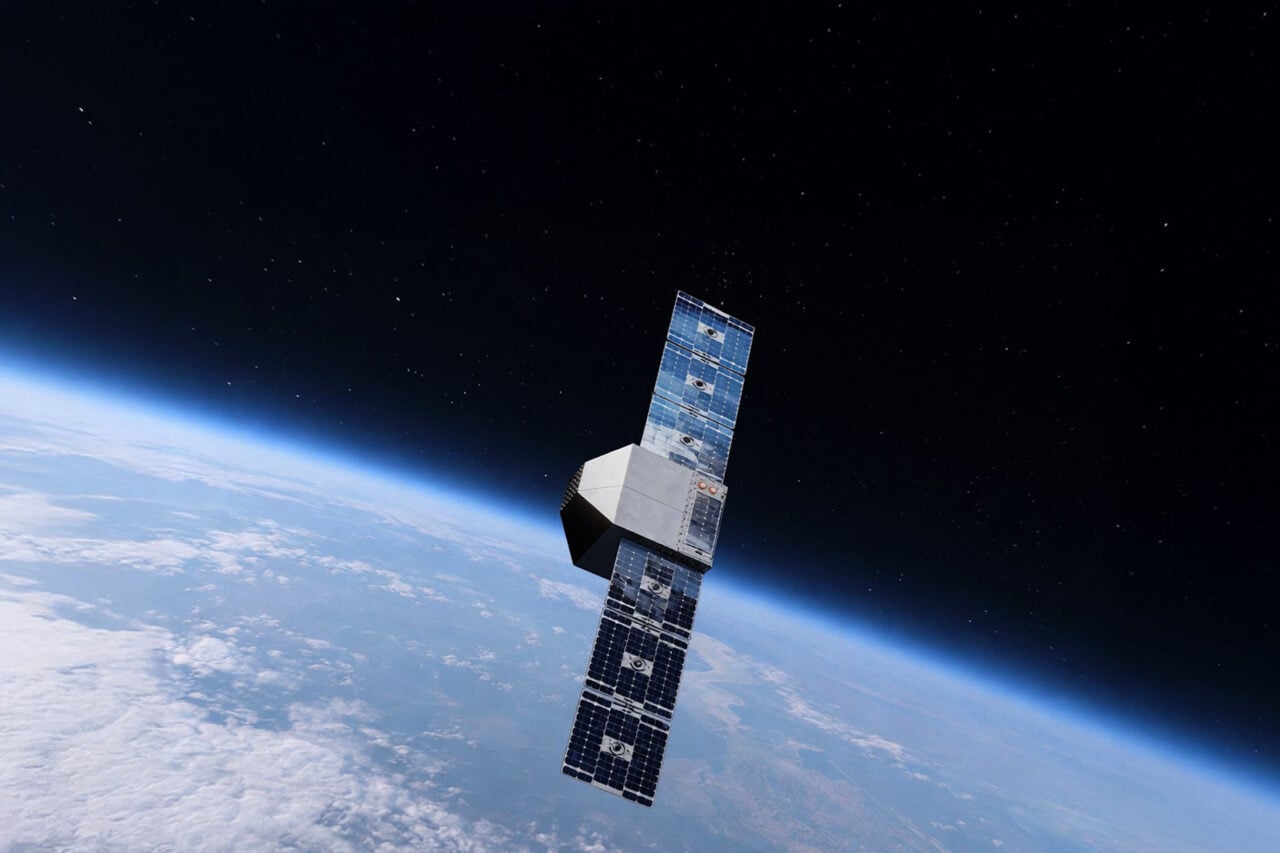
Artist’s concept of NASA’s Imaging X-ray Polarimetry Explorer (IXPE), one of the platforms that made the recent magnetar discoveries possible (Image Credit: NASA)
Spying on the Universe’s Most Extreme Objects
Ranking among the most extreme objects known to astronomers, magnetars are a variety of neutron stars that display unusually strong magnetic fields.
These extreme celestial objects pack more mass than our Sun into a region of space spanning only a few miles; yet they also manage to generate magnetic fields that are sometimes as much as trillions of times that of our planet.
For the recent study, scientists focused on 1E 1547-5408, a magnetar that spins once every two seconds. This magnetar is atypical since it also emits both intense X-rays and bright radio waves. Measuring the polarization of light it produces, researchers were able to discern that X-ray polarization was almost three times stronger than expected, based on current models that characterize the star’s surface, as well as the geometry of its magnetic field.
An Unusual Signal Emerges
The observed characteristics were unexpected, and to explain this, the researchers looked to the concept of vacuum birefringence, a phenomenon originally predicted in 1936. This predicts that magnetic fields possessing enough power could potentially alter the vacuum of space.
According to quantum theory, the vacuum of space isn’t truly empty—it is filled with fleeting “virtual” particles, and when subjected to the influence of such a strong magnetic field, the quantum vacuum is predicted to behave like an extremely large optical filter, whereby light that passes through it is subtly changed, with its polarization increasing.
Based on computer simulations, the researchers found that the proposed vacuum birefringence phenomenon produced results that appeared to be consistent with both the X-ray and radio observations.
Hoa Dinh Thi, a researcher at Rice University and the recent study’s co-lead author, said the team’s model “suggests that reproducing the observed X-ray polarization signatures, while also satisfying the constraints set by radio observations, requires the presence of vacuum birefringence in the neutron star’s environment.”
“This finding exemplifies how neutron stars enable us to test fundamental physics in environments not replicable in labs on Earth,” Thi added.
Although the team says further observations will be required to confirm their findings, their current results offer the strongest evidence to date for one of the longest-standing predictions in quantum physics.
If confirmed through future observations of magnetars, such findings could reveal the presence of other exotic phenomena that may provide astronomers with a unique opportunity to explore the fundamental nature of space itself—and potentially even more surprises in regions of the cosmos that were long assumed to be “empty.”
Micah Hanks is the Editor-in-Chief and Co-Founder of The Debrief. A longtime reporter on science, defense, and technology with a focus on space and astronomy, he can be reached atmicah@thedebrief.org. Follow him on X @MicahHanks, and at micahhanks.com.
On Aug. 10, 1990, the Magellan orbiter arrived at Venus and was inserted into orbit. Its goal was to map the surface of the planet, using radar to peer beneath the cloudy atmosphere. Launched aboard the Space Shuttle Atlantis in May 1989, Magellan was the first deep space probe launched from a shuttle. Budget constraintsContinue reading "Aug. 10, 1990: Magellan enters venusian orbit"
WARSAW, Poland — The Lithuanian space laser communications company Astrolight has signed a memorandum of understanding with ATMOS Space Cargo, to demonstrate in-flight optical communications link between a reentry spacecraft […]
 Login