OpenAI expands Daybreak with Blue and Red tiers for defensive cyber work
New GPT‑5.6‑Cyber model offers high compliance for authorized vulnerability research
Access remains restricted due to dual‑use risks and reduced safeguard operation
OpenAI has announced two new tiers for its Daybreak dedicated cybersecurity project, each offering a different model with different levels of compliance. It also used the opportunity to introduce a new security-focused AI model, as well.
Hackers and criminals are increasingly abusing AI to improve and speed up the creation of phishing emails and malicious code, and with the introduction of AI agents, they’ve also used it to automate entire attack processes. The AI community responded by placing strong guardrails, making sure their models do not comply with requests to build malware, or hack other companies.
These guardrails ended up being a two-edged sword, because as they slowed down attackers, they also slowed down the defenders.
What is Daybreak?
To give the cybersecurity community the upper edge, companies like OpenAI started creating dedicated cybersecurity initiatives that provide a vetted list of companies state-of-the-art models, free of guardrails. The company also provided them with pre-trained AI agents, as well as access to a pool of shared knowledge.
Initially launched in June 2026, Daybreak originally included GPT.5-5-Cyber (a model optimized for security work), Codex Security (an agent that can analyze codebases, identify vulnerabilities, validate findings, and help develop patches), Patch the Planet (an initiative with Trail of Bits to find and fix vulnerabilities in open-source software), Daybreak Cyber Partner Program (lets approved cybersecurity companies such as Cloudflare or Cisco integrate OpenAI's cyber capabilities into their own products and services), and Trusted Access for Cyber (the governance/access system for organizations doing authorized cybersecurity work with these capabilities).
Now, OpenAI has expanded Daybreak with two access tiers, Daybreak Blue, and Daybreak Red.
The company says Daybreak Blue is “the recommended starting point for most defenders, supporting vulnerability discovery, secure code review, malware analysis, incident response, and patch validation. Companies opting for this tier can expect access to frontier general-purpose models, including GPT‑5.6 Sol, whose safeguards have been tailored to authorized defensive security work.
Daybreak Red, on the other hand, provides access to OpenAI’s “purpose-trained cybersecurity models for authorized vulnerability research, exploit validation, and security testing.” This tier offers the brand new GPT‑5.6‑Cyber, built on GPT‑5.6 Sol and trained to improve capabilities on several specialized cybersecurity tasks such as finding zero-day vulnerabilities and developing exploit chains.
This model is also more compliant and less likely to refuse certain higher-risk, dual-use cyber tasks.
Complying with "dangerous" requests
Request compliance is the name of the game here. OpenAI says the new model addresses feedback from security researchers who “encountered persistent refusals with the earlier model.” General-purpose GPT-5.6 Sol, for example, will comply with just 1.5% of the requests usually given by cyber-defenders working on codebase analysis or vulnerability identification. This percentage increases to 2.0% with Daybreak Blue access.
GPT-5.6-Cyber, on the other hand, completes 95.0% of requests, OpenAI says, up from 57.3% of the previous model, GPT-5.5-Cyber. We weren’t able to independently verify these claims, though.
While it doesn’t outright say it, OpenAI considers these models relatively dangerous to use, which is why they’re locked behind the Daybreak Cyber Partner Program. However, the program is now expanding, allowing these companies to embed the models behind their own products, managed services, or cybersecurity engagements, and offer them to clients of their own.
Those who wish to be a part of the program directly can do so by applying to join online now.
“Models running with reduced safeguards carry risks beyond standard model usage, whether from misuse or misalignment. Despite these risks, we believe that democratizing access to frontier intelligence for defenders is crucial to accelerating and automating cyber defense,” OpenAI said.
“Daybreak Blue and Daybreak Red access are available for approved individuals and organizations conducting authorized work. We control access through identity verification, account security, monitoring, approved-use restrictions, and legal attestations.”
Also: Google executives jump ship in race for AI dominance
Hello, TechScape readers! Danielle Abril, editor of the Guardian’s Reworked series on AI and the future of work, filling in for Blake Montgomery this week. Major legal battles against Meta over child safety are playing out in courts across the US – and the tech giant is losing. Recent rulings raise big questions about social media companies’ responsibility to their youngest users. Meanwhile, more key executives have jumped ship from Google as it battles OpenAI and Anthropic in the race for AI dominance, and Meta’s smart glasses face a fearsome backlash. Let’s dig in!
A modder has taken the innards of a Steam Deck and put them into a Game Boy-style case
The end result is the 'SteamBoy', although it's not quite finished (the screen doesn't yet work)
There's a lot of excitement about this DIY project, and some gamers have even said they'd be keen to buy a retro handheld like this
Ever wished the Steam Deck looked a bit more retro — or indeed a lot more retro? Meet the 'SteamBoy', which takes the innards of Valve's handheld and transplants them into a case styled on the Game Boy.
The SteamBoy uses the motherboard, controller, buttons, speakers, and battery from the Steam Deck, fitting the components into a case which the maker says is the same dimensions as an original Game Boy, with a thickness of 32mm (yes, it's thick).
PhyFawkes explains: "The battery is the original battery, and it basically takes up the whole width of the device on the inside. It's sandwiched between the motherboard and the display. The motherboard and controller boards are completely intact as well."
The only element that isn't functional yet is the screen, so this device is still a work in progress. The Redditor has demonstrated it working on an external monitor, though.
Analysis: next stop Kickstarter?
(Image credit: PhyFawkes on Reddit)
The snag with getting the screen going is that the motherboard firmware reports the display properties directly to SteamOS, and so the firmware details must be updated with the info for the new screen. The Redditor says it hopefully it won't take too long to sort this out.
Another part of the recipe that's missing is the triggers, but PhyFawkes says that they might be able to add them eventually, but that space constraints with the case could make this too tricky a proposition.
Apparently the handheld runs cool enough with some slight under-volting. All in all, this a very smart-looking project, and I'm seriously impressed. The case itself is 3D-printed, with the Redditor noting that they're going to provide the details on how to make one for those who might want to try their hand at this enterprising piece of handheld DIY.
Of course, constructing something like this is well beyond the scope of your average gamer, and there are fans of this concept out there who'd be willing to pay money for a SteamBoy of their own. Plenty of them, in fact, as the reception for this project has been nothing short of glowing.
As someone on Reddit put it: "This is legitimately so cool. I would totally back something like this on Kickstarter."
CEVA Logistics hack disrupted European warehouses and exposed some customer data
Retailers and Valve reported compromised delivery information and service delays
Clients warned of targeted scams while awaiting fuller incident details from CEVA
CEVA Logistics, one of the biggest shipping and logistics companies in the world, has suffered a major cyberattack, the effects of which are trickling down to many of its clients.
The details of the hack itself, however, are not yet publicly available and what little information is out there came from the affected clients themselves.
CEVA has not yet issued an official statement, or filed a report with the regulators, but confirmed to TechCrunch that the attack most likely started on July 29, 2026, and affected at least eight warehouses across Europe.
CEVA Logistics is a global logistics and supply-chain company and a wholly owned subsidiary of CMA CGM, a French shipping giant. It provides freight forwarding, contract logistics, warehousing and transportation services to thousands of customers, including major companies in the consumer and retail, automotive, industrial and aerospace sectors.
The company operates in more than 170 countries around the world and last year it generated $18.3 billion in gross revenue, so it is a major player and a key target for attackers.
The details about the incident itself are scarce right now. We don’t know how the crooks broke in (via a successful social engineering attack, or by abusing a software vulnerability, for example), how much data they stole, or if they demanded a ransom payment in exchange for deleting the stolen goods. From one of the victims, though, we have learned that some data was most likely compromised.
When the effects of a cyberattack spill into the physical realm (as is the case here with eight affected warehouses) we can speculate the attack was either ransomware, or disruptive malware. Companies shut down parts of their IT infrastructure only when there is no other way to clear an infection or remove malicious outsiders.
In the meantime, a small number of CEVA’s customers confirmed suffering an attack and losing sensitive data.
Among them is Bol, a Dutch online retail company, which said the incident affected two systems used for processing orders from one of its fulfillment
“No bol systems were affected,” it said. “However, data of customers whose orders were processed via this location may have been viewed or copied.”
Bol also said restoring operations at one of CEVA’s locations was taking longer than anticipated. As a result, the assortment stored at the affected location was taken offline, and the products were unavailable for sale. Also, Bol is currently unable to receive goods from suppliers and sales partners at that location.
A similar announcement was given by De Bijenkorf, another Dutch luxury retailer, who said that order processing, returns, and refunds, might take longer, but stressed that its stores remained open. It also said that some customer data may have been compromised, including names, contact details, online orders data and, in some cases, VAT numbers. Payment information, bank account numbers (IBANs), credit card information, usernames, or passwords, were not compromised, it was confirmed.
Valve steps forward
Retail giants aside, PC gaming powerhouse Valve also notified its customers about the incident. It said CEVA ships Steam hardware to its European customers and as such, receives specific delivery-related information from Steam.
This information, which CEVA retains for up to 90 days after the order, was most likely compromised. It includes names, street addresses, phone numbers, email addresses, and the type and price of ordered products.
Valve warned its customers to expect fake messages, either via email, SMS, or phone, that might mention recent hardware orders.
“They may quote your address back to you to prove they're genuine. They may ask you to confirm a delivery, pay a small customs or redelivery fee, or sign in somewhere to “verify” your order. Treat all of them as fake,” Valve warned. The company also stressed that customer accounts are safe and that users need not do anything to secure them.
Other details are missing, not just for the general public, but for the affected CEVA clients, as well. Valve said it was “pressing” the company for the full scope of what was taken and how, and added that it is notifying the relevant authorities, as well.
A spokesperson of the Dutch data protection authority, Mark Schenkel, told TechCrunch the agency so far received 10 incident reports. Given the size of CEVA, it’s safe to assume there will be others.
Seeing the red 'limited-time deal' banner on some DDR5 RAM at Amazon should elicit some excitement given the rarity of price cuts lately. But when you click through and see the price for this 32GB Corsair Vengeance kit, you'll wonder if there's genuinely a deal here at all — and other wannabe buyers aren't wholly convinced, either.
"It's 'only' 4x the price it should be," wrote one user named Technikal on HotUKDeals, a community that shares deals from across the web and asks the community to vote whether they think they are hot or cold. "The current average is 5x," he continues, "so, in that sense it's a good deal...I guess."
A muted response, that's for sure. And while it may be true that the deal price of the RAM kit is technically one of the lowest prices available right now, it's so far from the much lower prices we saw before the RAM crisis turned buying memory for your PC into a depressing exercise.
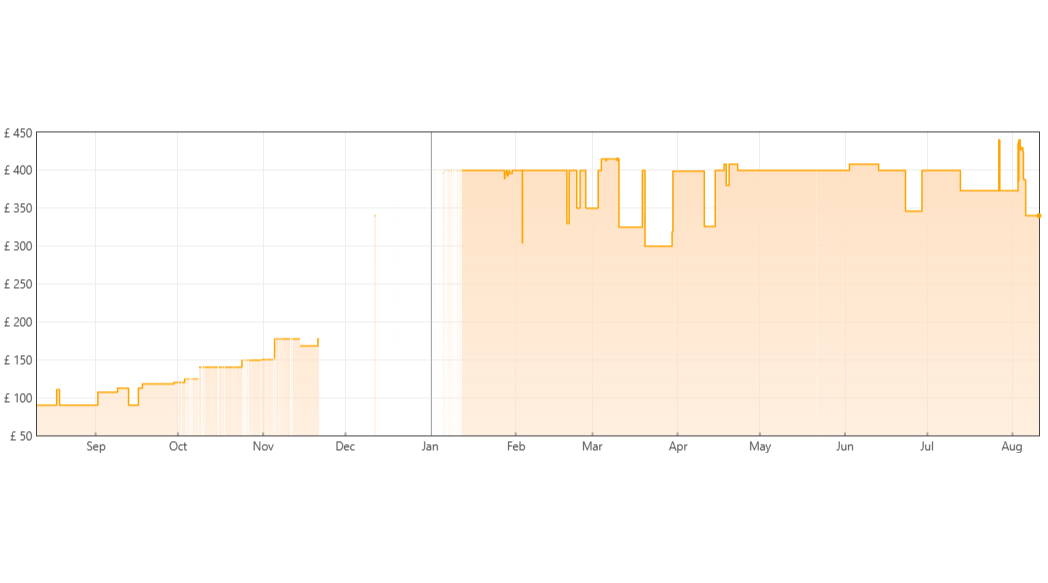
The price for this specific RAM kit has increased dramatically over the last 12 months at Amazon. (Image credit: Future / Keepa)
In fact, even just a year ago, this very same RAM kit was available for £99.99 when it wasn't even on sale, according to price history information from Keepa.
Given that, it's no surprise that shoppers have reacted negatively to Amazon's flash deal. Unfortunately, though, it doesn't look like things are getting any better when it comes to RAM prices. A report from Samsung suggests the RAM crisis is just getting started, and it could extend to other components in the near future.
Sadly, the news is grim, and these prices could be with us for a while yet. So, yes, it may be difficult to feel happy about seeing supposed RAM deals like this, but from what I'm seeing and hearing, I don't think they're going to get any better, either.
Amazon has launched a limited-time deal on a set of much-sought-after Corsair Vengeance 32GB DDR5 6000MHz CL36 RAM — the sweet spot for most PC gaming builds. Even though you could technically argue this is a deal, as it's the lowest price we've seen in months, it's still astronomically more expensive than the record-lows of under £100 from last year. However, with the ongoing PC component price crisis showing no signs of ending, this is likely one of the better offers we'll see for some time.View Deal
Back in 2023 and into 2024, as the hyperscalers announced massive data center expansions and plans for gigawatt-scale facilities, I was in boardrooms explaining why these timelines were unrealistic. The response was often a polite dismissal. The vendors were confident. The press was enthusiastic. And I was, well, the guy asking uncomfortable questions about power grids and infrastructure realities.
It wasn’t a mysterious formula to crack. It was simple math. And the math said the timeline was impossible.
Enterprises left holding the bag
If your AI road map relies on the abundant cloud capacity vendors promised, you’re likely facing tough conversations right now, and your AI growth plans are feeling pain. The promised compute doesn’t exist as advertised, and you’re scrambling to decide next steps. Looking inward is the only option at this point.
The vendors had every incentive to sell their vision with confidence and enthusiasm. When you’re a hyperscaler announcing a 10-billion-dollar data center campus, you’re in the business of capturing mindshare and customer commitment. While this strategy boosts sales, it fosters dangerous assumptions from customers. The enterprises that are struggling right now relied on vendor promises without doing their own analysis. They trusted the vendors to be right or, at least, close enough. They built their plans around the promises. When reality doesn’t match up, they are left holding the bag.
I speak frankly with my clients, and I’ll say it plainly here. You must do your own analysis. Vendors aren’t malicious, but their incentives don’t perfectly align with yours. They want your business, which means painting rosy pictures of capacity and timelines. You need someone to look out for your interests, and that person must be internal or a trusted advisor without a stake in selling you cloud services.
Two years ago, I was warning clients that the promised AI capacity was a fantasy for most organizations within the stated time frames. My advice was to plan for constraints, to build flexibility into infrastructure strategy, and to assume that the needed compute would be harder to get than the vendors suggested. Many clients nodded politely and went back to assuming the vendors would deliver. Some suggested I was too pessimistic.
The enterprises that took my advice seriously are in a much better position today. They planned for constraints. They chose hybrid strategies. They didn’t bet everything on hyperscaler promises that were never realistic. They’re not happy with the situation, but they’re not panicking either. For enterprises still scrambling, the first step is to admit that the old plan is dead. You cannot execute an infrastructure strategy built on vendor promises that never materialized. You need a new plan that accounts for real power constraints, real timeline challenges, and real competition for limited compute resources.
So, how should enterprises plan for future infrastructure growth? Let me offer three realities that need to be part of your planning process going forward.
First, assume constraints. Every infrastructure plan should assume you won’t get the power, space, or compute you want within the time frame you need. Build your strategies around limitations, not abundance. This isn’t pessimism; it’s realism. If the limitations hit, you’re ahead of the game. If they don’t materialize, you’ve simply over-engineered your solution and you can scale back.
Second, build for flexibility. The days of locking into single-vendor strategies based on promised capacity are over. You need infrastructure strategies that can adapt as reality unfolds. That means maintaining options, keeping relationships with multiple providers, and building architectures that can shift workloads as conditions change. The enterprises that will succeed aren’t the ones who picked the right hyperscaler. They’re the ones who didn’t put all their eggs in one basket.
Third, do the math yourself. When a vendor shares future capacity plans, analyze whether they’re realistic. Review power infrastructure constraints. Review construction timelines. Review historical patterns of delivery versus promises. Make vendors substantiate their commitments in writing with enforceable accountability clauses. Protect your organization from optimistic sales projections that don’t align with operational realities.
Hype never stops
The AI capacity crisis we’re living through was predictable. Those who predicted it were largely ignored because the message wasn’t what people wanted to hear. But that’s always the way infrastructure reality works. The grid can only expand so fast. Power capacity has real limits. Massive new demands create real bottlenecks.
The vendors will keep selling the vision. The press will keep covering the announcements. And the hype will continue to outpace reality. Your job is to be skeptical. Your job is to build infrastructure strategies that work in the world that actually exists, not the world that vendors are selling.
My warnings two years ago about the data center capacity crisis were right. I expect to continue being right. The question is whether enterprises will finally start listening before the next wave of unrealistic vendor and media promises leads to the next round of painful corrections.
Every five years, the Australian Bureau of Statistics (ABS) takes a snapshot of Australia through the Census. The last one was held in 2021, which means households across the country are being contacted again in 2026.
The information collected helps show how Australia's population and households are changing and is used to plan services and infrastructure, from schools and hospitals to transport and housing.
This guide answers the key questions about the 2026 Census, including when to complete it, who needs to be counted, what happens if you're late, fines, privacy and what to do if you're away from home.
The ABS also has a handy guide to doing the Census. It's a useful overview, but we've gone a little further below by answering some of the practical questions it doesn't cover.
If you're unsure how the Census rules apply to your situation, call the Census Contact Centre on 1800 181 227 for advice.
When is the 2026 Census in Australia?
Census night for the 2026 Census is Tuesday August 11 2026. Think of it as the snapshot date: questions about where you're staying and who's in your household should reflect Tuesday night.
You can complete the form earlier if you've received your instructions and already know where you'll be on August 11. If your plans are still up in the air, it's better to wait until you know where you'll be staying.
Can you complete the Census after Census night?
Census night isn't a hard submission deadline. If you haven't completed the form on Tuesday August 11, you can still submit it on Wednesday, Thursday, Friday or later.
The ABS continues collecting forms and following up with households after Census night, so if you're late, complete it as soon as you can.
(Image credit: Australian Bureau of Statistics (ABS))
Is the 2026 Census compulsory in Australia?
Yes. Completing and submitting the 2026 Census is compulsory under the Census and Statistics Act 1905. But being late doesn't automatically mean you'll be fined.
The ABS first follows up with people who haven't completed their form. If someone still doesn't respond, they may be sent a written direction formally requiring them to provide the information. Ignoring that direction can lead to prosecution and a fine.
How much is the fine for not completing the Census?
If you've received a written direction and still don't comply, you can face a fine of up to AU$364 for each day you don't comply.
The Census is designed to count everyone who's in Australia on Census night. That includes babies and children, international students, visitors and visa holders.
That doesn't mean everyone fills out their own form. In most homes, one person completes the household form for everyone staying there that night.
What if you don't have a fixed address?
You should still be included in the Census. If you're experiencing homelessness, the ABS provides Census field staff and other support to help you take part. If you're staying with someone on Census night, you can be included on their household form.
If you're travelling around Australia without a fixed or return address, such as camping, or in a caravan or boat, you still need to be included in the Census.
You'll generally be counted where you're staying on Census night. A caravan, tent or boat can be counted as your dwelling for the night, including at a caravan park, camping ground or marina.
If you don't have a usual address, the 2026 Census form lets you record that. For the usual-address question, the ABS says to select Elsewhere in Australia, choose Enter address manually and enter None in the suburb/locality box.
How do you complete the 2026 Census?
For most households, the process starts with instructions to complete the Census online. These include a Census number and temporary password you can use to access the form.
The ABS says the average household takes about 30 minutes to complete it.
What if you haven't received or have lost your Census letter?
Yes. Paper forms are available to anyone who wants one. Some households will receive a paper form automatically, while others can request one if they'd rather not complete the Census online.
If you need help completing the Census, the Census website has support options, including language and accessibility support. You can also contact the Census Contact Centre on 1800 181 227.
What if there are more than six people in your household?
A paper Census form can include up to six people. If more than six people are staying at your address on Census night, you can complete the Census online or request an extra paper form.
Can you complete your Census answers privately?
Yes. If you don't want other people in your household to see your answers, you can request a separate Census form and complete your information privately. The ABS explains how this works in its 2026 Census collection notice.
Can you change your Census answers after submitting the form?
Once a Census form has been submitted, the ABS says it can't be reopened or edited.
We couldn't find specific online guidance for what happens if you complete the Census early and your plans later change, so we called the ABS media line to clarify. The advice was to contact the Census Contact Centre on 1800 181 227. They'll talk you through the options if your plans have changed or you've realised you made a significant mistake.
Separately, the ABS has processes for dealing with multiple responses. If more than one Census form is submitted for the same person, it keeps the one containing the most complete information about that person.
(Image credit: Australian Bureau of Statistics (ABS))
What if you're away from home on Census night?
If you're away from your usual home on Census night, you'll generally be counted where you actually spend the night. Your usual address can record you as temporarily away.
That can include staying with friends or family or spending the night in a hotel, hospital or aged care home. The ABS also has arrangements for people travelling overnight by plane, train or bus.
If you're temporarily overseas on Census night, you won't be counted in the Census for that night.
What if you're working on Census night?
If you're working overnight but will return to your usual home on Wednesday August 12 and won't be included on a Census form elsewhere, the ABS says you can be included on the form for your usual home.
How are FIFO workers counted in the Census?
Fly-in, fly-out (FIFO) workers who are staying at a worksite or camp on Census night should generally be counted there. For example, if you normally live in Perth but you're at a mining camp in the Pilbara, you'd be counted at the camp and listed as temporarily away from your usual address in Perth.
Why might a Census field officer visit your home?
Census field officers may visit homes to deliver letters or forms, help people complete the Census or follow up after Census night where a completed form hasn't been received.
So a knock at the door doesn't automatically mean there's a problem. In some areas, field visits are simply part of how the Census is carried out.
How can you check if a Census worker is genuine?
If someone claiming to work for the Census contacts you and you're unsure whether they're genuine, verify them through official ABS channels rather than relying on the contact details they give you. Use the official Census website or call the Census Contact Centre on 1800 181 227.
How can you tell if a Census text, email or website is genuine?
The same caution applies to texts, emails and websites. The ABS says genuine Census text messages use the sender ID CENSUS, while texts about other ABS surveys use ABSGov. The official Census website uses a .gov.au address.
(Image credit: Australian Bureau of Statistics (ABS))
What questions are on the 2026 Census?
The 2026 Census contains 66 questions covering areas such as your household, age, cultural background, education, work and income, housing, religion and people who are away on Census night.
One of the biggest changes in 2026 is the addition of questions about gender and sexual orientation. Everyone is asked about their sex as recorded at birth, while people aged 16 and over are also asked about their gender and how they describe their sexual orientation.
The ABS says the change is intended to build a clearer picture of Australia's LGBTQ+ population and help inform health and community services. If you'd prefer not to answer, both the gender and sexual orientation questions include a prefer not to answer option.
People can also report up to four ancestries in the 2026 Census.
Do you have to answer every Census question?
No. The question about religion is explicitly marked as optional on the 2026 Census form.
The gender and sexual orientation questions for people aged 16 and over also include a "prefer not to answer" option. So, while taking part in the Census itself is compulsory, that doesn't mean every question requires you to provide a particular answer.
Is your 2026 Census information private?
Yes. Census information is protected by law, and the ABS says it doesn't share identifiable information from your Census form with other government departments or direct marketing companies.
That means your individual Census answers aren't handed to the Australian Taxation Office (ATO) to check your tax return or to Centrelink to check your eligibility for a payment.
No. The Census isn't anonymous because it asks for names and addresses. However, the ABS separates names and addresses from other Census information after processing.
When will the 2026 Census results be released?
The first 2026 Census results are due to be released in June 2027, with further data releases continuing into 2028.
Census data will be free to access through ABS tools including QuickStats, TableBuilder and ABS Data Maps.
(Image credit: Australian Bureau of Statistics (ABS))
Adding more fuel to the fire over which city is actually Australia’s best place to live, those residing in the all-seasons-in-a-day city of Melbourne have a new statistic on their side — and it all relates to fixed-line broadband speed.
Ookla, the company behind the hugely popular Speedtest tool that helps anyone diagnose their home internet speeds, has published its latest Global Index rankings, revealing median fixed-broadband download speeds by country and city.
As a country, Australia is slowly but surely moving up the table. There was a time we ranked as low as 86th, but we now sit at 50th, with a median fixed-broadband download speed of 162.34Mbps.
That improvement follows NBN Co’s September 2025 speed-tier shake-up, which introduced a 2Gbps wholesale option for eligible FTTP and HFC premises, alongside faster speeds on several existing higher-end tiers. Of course, not every Australian can access 2Gbps just yet — and, as we’ll see, the plan you choose is only one part of the equation.
For context, Singapore takes the crown with a median download speed of 447.75Mbps. One can only dream of a day when that becomes a reality Down Under.
Why the huge gap?
There are several reasons why Australia trails the pack so dramatically — although with 141 other countries clocking slower speeds, things could certainly be worse — and, in my mind, one of the most obvious is that many Australians are still connected to comparatively slow NBN plans.
The most recent report, covering the March quarter of 2026 and published in July, revealed there were just over 2.665 million active 50Mbps NBN connections, out of a total of 8.839 million residential broadband services. That works out to around 30.2%.
A 50Mbps plan naturally puts a ceiling on the speed a customer can record in a Speedtest. If enough users on lower-speed tiers are represented in Ookla’s sample, that will bring the national median down.
One relatively straightforward way for Australia’s international standing to improve, then, is for more eligible households to take advantage of NBN Co’s free fibre upgrade. The program is open to millions of eligible FTTN and FTTC premises, allowing them to upgrade to FTTP if they take out an eligible high-speed service — such as one of the best NBN 500 plans.
A fixed-line civil war
Move the slider over to ‘City’ and the results become much more varied, with cities from North and South America, Asia and Europe all jostling for position. Valparaíso in Chile takes the crown with a huge 425.84Mbps, followed by Abu Dhabi with 399.92Mbps, for example.
Australian cities evidently have some work to do. Scroll down to position 64 and you hit Melbourne with a median download speed of 177.69Mbps — faster than Australia’s national median, it must be said — while Sydney trails behind in position 76 with a meagre 149.91Mbps.
A difference of 27.78Mbps might not sound like much, but Melbourne’s median result is around 18.5% faster than Sydney’s. When intercity tensions are already high, that’s a huge bragging right for the southerners.
Wait, we can (try to) explain
Nobody ever wants to be seen as the weaker of two, and while the reported figures are great news for people in Victoria, there is potentially a plethora of factors at play that pave the way for a Melbourne victory.
We’re not here to make excuses, of course, but there are plenty of unknowns.
Firstly, there could simply be a larger proportion of Melburnians connected via superior fibre-to-the-premises infrastructure. FTTP allows households to access the fastest NBN plans, including the newer multi-gigabit options where available.
While it’s not totally conclusive, there is some evidence to support this idea. That evidence is publicly available technology-mix figures, although they’re reported at a state level, rather than for Greater Melbourne and Greater Sydney specifically. Data compiled from NBN rollout information indicates Victoria has a higher share of premises using FTTP than NSW — roughly 66% versus 60% — while it also indicates there are more active connections on the inferior fibre to the node (FTTN) connection type in NSW too.
This doesn’t completely settle the argument. The figures not only include regional areas, but they also show the technology available to a property, as opposed to an active plan supplying an address.
All fixed-line connections are welcome
Furthermore, on the subject of NBN, Ookla’s Speedtest results don’t only capture NBN connections, but fixed-broadband tests from other fixed networks too, including private fibre operators. Both Melbourne and Sydney are home to several such networks, including Vocus, GigaComm and OptiComm, while Melbourne also has DGtek — a private FTTP network concentrated in the city’s CBD and inner south-east.
Exact figures for active connections on those networks are tricky to come by. But if Melbourne has a higher concentration of people connected to these kinds of high-speed private fibre services, they could be recording considerably quicker test results and helping push its city median upwards.
Not telling the complete story?
Another excuse potential explainer is the way Ookla collects its data. Whereas the ACCC’s Measuring Broadband Report — which published its final instalment in June 2026 — monitors a selected group of Australian homes across nine popular ISPs, Ookla receives data when people choose to run a Speedtest.
This doesn’t mean someone repeatedly checking their connection can single-handedly skew the data, as Ookla averages each unique user’s results into a single sample for the relevant time period and location. Still, the results are dependent on who chooses to test. Melbourne’s sample could contain a different mix of internet plans, connection technologies, devices and Wi-Fi setups than Sydney’s.
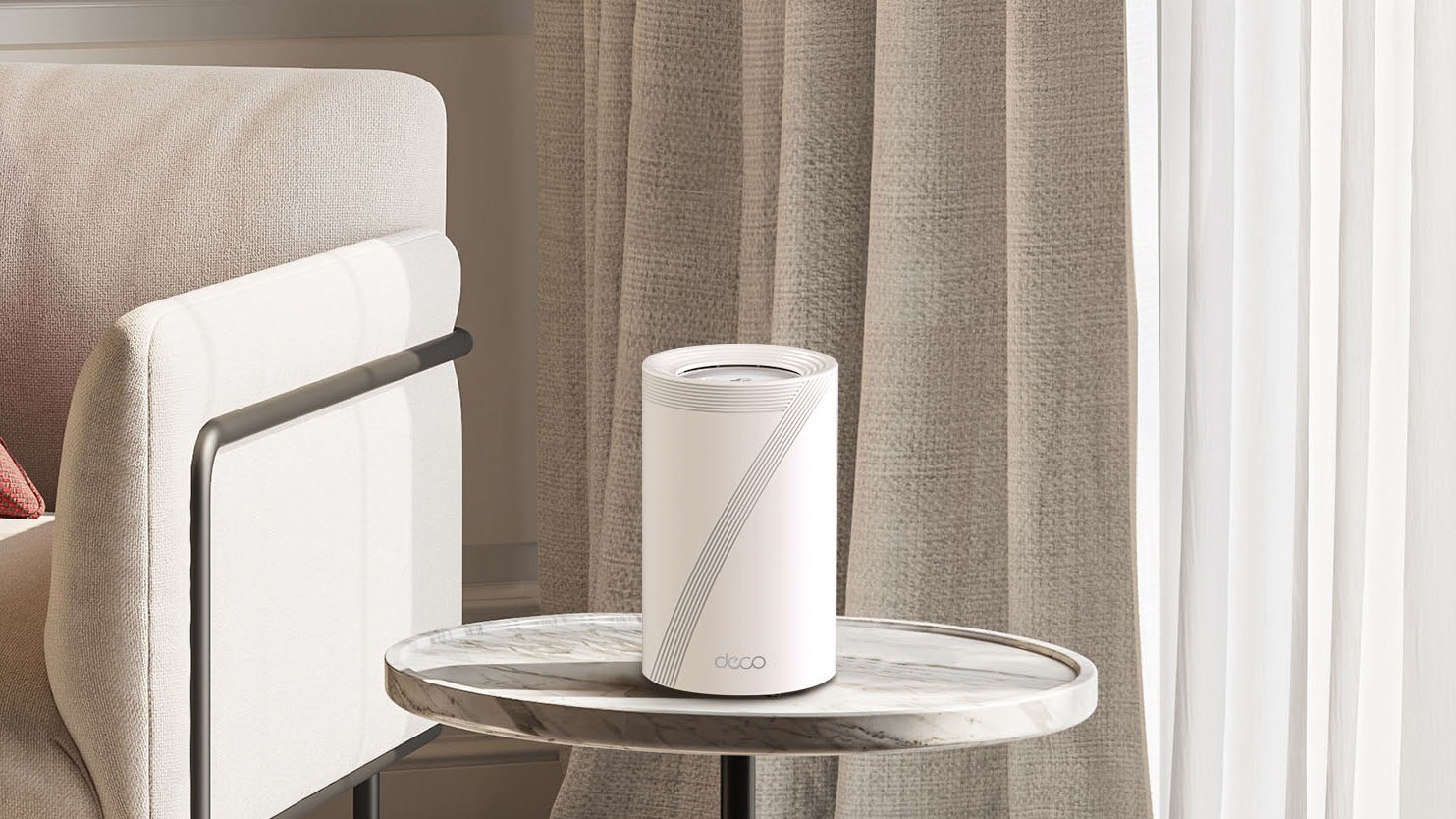
(Image credit: TP-Link)
When did you last check your Wi-Fi router?
Home equipment can make a considerable difference too. A household with a Wi-Fi 5 router tucked away in a cupboard, a busy 2.4GHz network and a phone testing from the other end of the house could record a much slower result than the same connection tested over Ethernet.
On the flip side, a newer Wi-Fi 6E or Wi-Fi 7 router, a properly positioned mesh system and a compatible device can give a household a far better chance of getting close to the speeds it actually pays for. That doesn’t make the underlying internet plan any faster, of course — it simply means the home network is less likely to be the bottleneck.
If your own Speedtest result seems suspiciously low, it may be worth checking out our guide to the best mesh Wi-Fi systems to find out if your home could benefit from an upgrade.
And, trying to claw a point back for Sydney, it can be argued that people often run a speed test when their internet connection starts lagging. While Melbourne’s median tested speed is higher, that doesn’t necessarily mean every connection in the city is consistently faster or more reliable.
A new NYT Strands puzzle appears at midnight each day for your time zone – which means that some people are always playing 'today's game' while others are playing 'yesterday's'. If you're looking for Monday's puzzle instead then click here: NYT Strands hints and answers for Monday, August 10 (game #890).
Strands is the NYT's latest word game after the likes of Wordle, Spelling Bee and Connections – and it's great fun. It can be difficult, though, so read on for my Strands hints.
Want more word-based fun? Then check out my NYT Connections today and Quordle today pages for hints and answers for those games, and Marc's Wordle today page for the original viral word game.
SPOILER WARNING: Information about NYT Strands today is below, so don't read on if you don't want to know the answers.
NYT Strands today (game #891) - hint #1 - today's theme
What is the theme of today's NYT Strands?
• Today's NYT Strands theme is… Fresh from the market
NYT Strands today (game #891) - hint #2 - clue words
Play any of these words to unlock the in-game hints system.
CHEEP
HINTS
CHIVE
COME
TRACE
MANOR
NYT Strands today (game #891) - hint #3 - spangram letters
How many letters are in today's spangram?
• Spangram has 13 letters
NYT Strands today (game #891) - hint #4 - spangram position
What are two sides of the board that today's spangram touches?
• First side: left, 5th row
• Last side: right, 8th row
Right, the answers are below, so DO NOT SCROLL ANY FURTHER IF YOU DON'T WANT TO SEE THEM.
NYT Strands today (game #891) - the answers
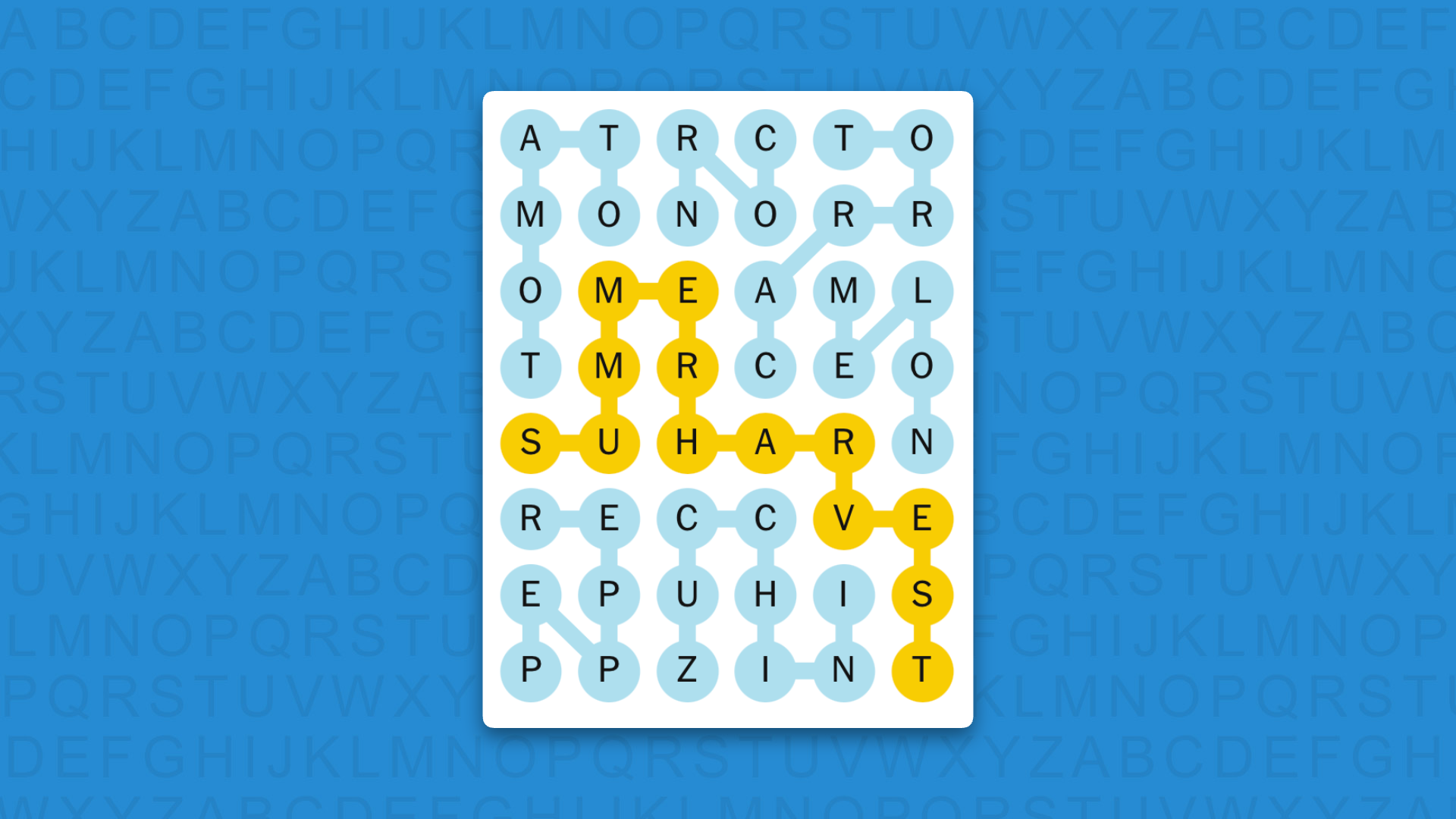
(Image credit: New York Times)
The answers to today's Strands, game #891, are…
TOMATO
ZUCCHINI
PEPPER
MELON
CORN
CARROT
SPANGRAM: SUMMERHARVEST
My rating: Easy
My score: Perfect
One for the veggie lovers among us.
ZUCCHINI took me a while to put together, in part because I come from a land where we call zucchini courgettes, but mainly because I can’t spell and missed the double C.
This misstep aside I sped through today’s game, finding it harder to find a decent crop of non-game words.
Yesterday's NYT Strands answers (Monday, August 10, game #890)
DATA
FACTS
FIGURES
STATISTICS
SPECIFICS
SPANGRAM: PROOFPOSITIVE
What is NYT Strands?
Strands is the NYT's not-so-new-any-more word game, following Wordle and Connections. It's now a fully fledged member of the NYT's games stable that has been running for a year and which can be played on the NYT Games site on desktop or mobile.
I've got a full guide to how to play NYT Strands, complete with tips for solving it, so check that out if you're struggling to beat it each day.
A new Quordle puzzle appears at midnight each day for your time zone – which means that some people are always playing 'today's game' while others are playing 'yesterday's'. If you're looking for Monday's puzzle instead then click here: Quordle hints and answers for Monday, August 10 (game #1659).
Quordle was one of the original Wordle alternatives and is still going strong now more than 1,500 games later. It offers a genuine challenge, though, so read on if you need some Quordle hints today — or scroll down further for the answers.
Enjoy playing word games? You can also check out my NYT Connections today and NYT Strands today pages for hints and answers for those puzzles, while Marc's Wordle today column covers the original viral word game.
SPOILER WARNING: Information about Quordle today is below, so don't read on if you don't want to know the answers.
Quordle today (game #1660) — hint #1 — Vowels
How many different vowels are in Quordle today?
• The number of different vowels in Quordle today is 4*.
* Note that by vowel we mean the five standard vowels (A, E, I, O, U), not Y (which is sometimes counted as a vowel too).
Quordle today (game #1660) — hint #2 — repeated letters
Do any of today's Quordle answers contain repeated letters?
• The number of Quordle answers containing a repeated letter today is 0.
Quordle today (game #1660) — hint #3 — uncommon letters
Do the letters Q, Z, X or J appear in Quordle today?
• No. None of Q, Z, X or J appear among today's Quordle answers.
What letters do today's Quordle answers start with?
• O
• B
• T
• S
Right, the answers are below, so DO NOT SCROLL ANY FURTHER IF YOU DON'T WANT TO SEE THEM.
Quordle today (game #1660) — the answers
(Image credit: Merriam-Webster)
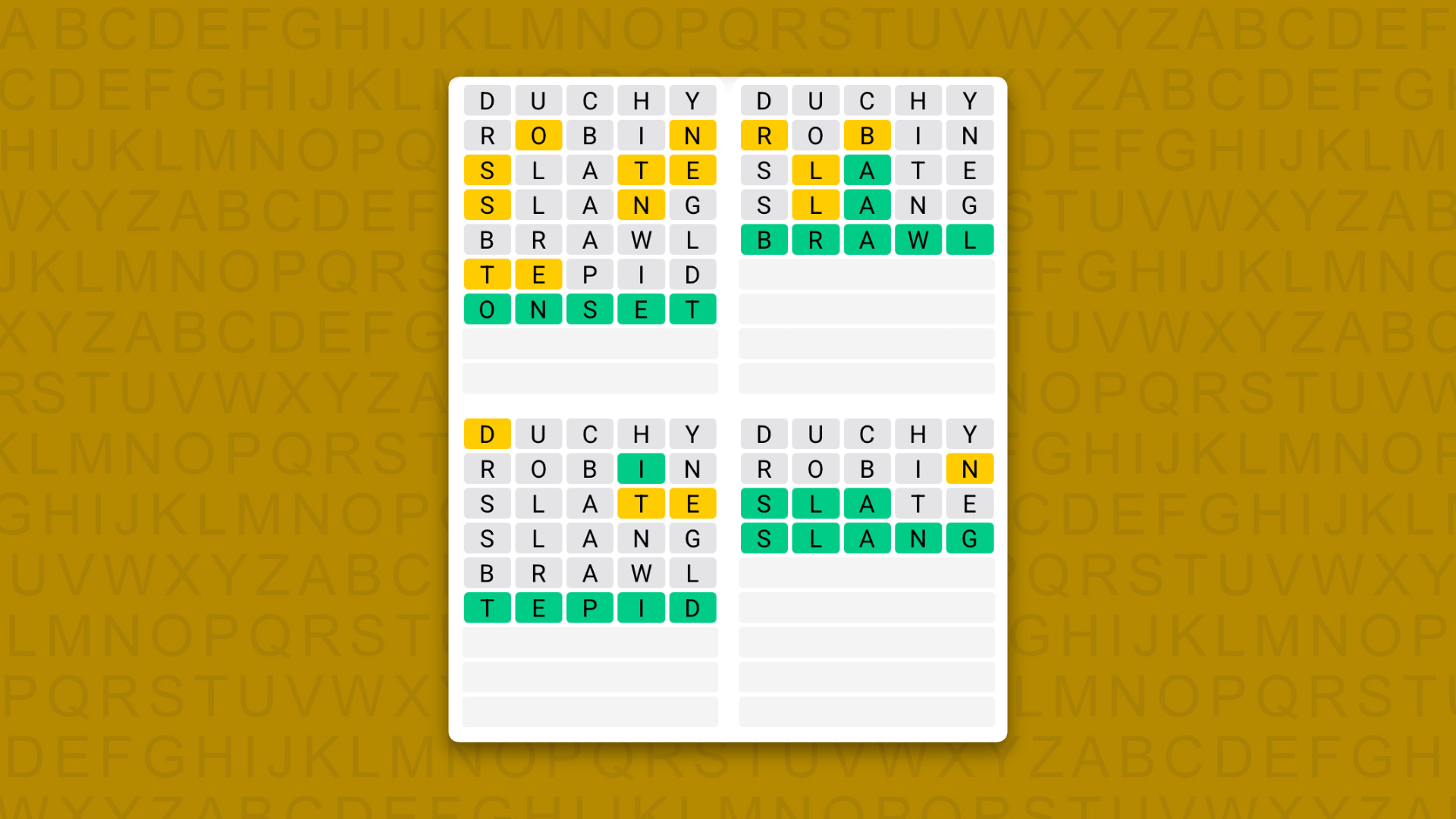
The answers to today's Quordle, game #1660, are…
ONSET
BRAWL
TEPID
SLANG
Sometimes I like to look at the four Quordle words as a creative writing task and imagine a story, or the opening of a story based on them.
Most days, it’s impossible but today is a good one — an urban tale of young men who are quick with their fists but whose lack of streetwise vernacular is embarrassingly poor.
Daily Sequence today (game #1660) — the answers
(Image credit: Merriam-Webster)
The answers to today's Quordle Daily Sequence, game #1660, are…
Meta CEO presents utopian vision of AI in 6,000-word essay amid Silicon Valley debate over government regulation
Mark Zuckerberg published a lengthy essay on Monday detailing his views on artificial intelligence and announced several plans for how Meta would develop the technology in the future. The CEO’s essay went online the same day as Meta released a new, open-source AI model that seeks to rival Anthropic and OpenAI’s products called Muse Glimmer.
Over the course of more than 6,000 words in a post titled “The Future is for Everyone,” Zuckerberg addressed a range of topics related to AI that included datacenters, government regulation, cybersecurity, the creation of bioweapons, labor market disruption, surveillance powers and more. The essay presented a utopian vision of AI as a personalized “superintelligence” – using the word 60 times.
Microsoft is betting that the integration of HorizonDB, the cloud-native PostgreSQL alternative it is developing, with Azure will attract more enterprise AI and agentic workloads to its cloud services.
Enterprises may not be willing to take that bet.
It’s been nine months since Microsoft unveiled HorizonDB, but the service remains in public preview with no announced general availability date. Why put AI projects on hold waiting for HorizonDB to arrive, when AWS, Google, Databricks, Snowflake, and others already have production-ready PostgreSQL services positioned for the same AI workloads that Microsoft says it is building HorizonDB to handle?
AWS has had the longest head start. Aurora PostgreSQL became generally available in 2017 and has since evolved from a cloud-native PostgreSQL database into an AI-ready service with vector search and integrations with Amazon Bedrock. Similarly, Google’s AlloyDB, which followed in 2022, now includes AlloyDB AI with vector search, embeddings and model interaction for generative AI and agentic applications.
Databricks and Snowflake, too, have their own platform-centric services in the form of Lakebase, which became generally available on AWS and Azure this year, and Snowflake Postgres, which was made generally available in February 2026.
As the latecomer, when Microsoft pitched HorizonDB at Ignite in November 2025 it talked up its new architectural approach to cloud-native PostgreSQL, built around disaggregated compute and storage and a database-as-log design. The hyperscaler also positioned native vector search and deep integration with Foundry and Fabric as key differentiators for AI-heavy workloads.
No reason to wait
Those architectural differences may not be compelling enough for CIOs to wait for HorizonDB to become generally available, though.
“Most enterprises with urgent needs will not wait. A long preview window creates uncertainty around SLAs, pricing, operational maturity, and roadmap confidence,” said David Linthicum, an independent cloud consultant.
And, said Stephanie Walter, practice lead of AI stack at Hyperframe Research, enterprises cannot build mission-critical production plans around an undefined GA date, regional footprint or support commitment.
Given the difficulty of unwinding a poor database choice, enterprises will approach unknown quantities with caution.
“Database platforms eventually become sticky control points. Once the database is connected to the rest of the application, analytics, AI, and governance stack, switching becomes a business transformation rather than just an infrastructure swap,” said Michael Ni, principal analyst at Constellation Research.
In the case of a cloud database, there’s also the unwelcome possibility of “huge egress fees” in case of change, said Bradley Shimmin, lead of the data and analytics practice at The Futurum Group.
All that uncertainty is likely to lead enterprises to restrict HorizonDB to experimental use cases for now, Shimmin added.
Performance anxiety
Analysts also questioned whether HorizonDB’s technical differences will show up in performance benchmarks.
Microsoft has said HorizonDB can deliver up to three times the throughput of open-source PostgreSQL, but makes no comparisons with rival offerings such as Aurora or AlloyDB that it will compete with, Walter said.
The bigger question, according to Igor Ikonnikov, advisory fellow at Info-Tech Research Group, is whether those performance advantages, still largely on paper, translate into a meaningful difference in production.
“A database with a better compute benchmark can still be more expensive once resilience and ecosystem costs are included,” Ikonnikov said.
The economics also point to another HorizonDB limitation, particularly for workloads that are not continuously running, said Advait Patel, senior site reliability engineer at Broadcom.
HorizonDB currently uses provisioned compute rather than a serverless, scale-to-zero model, meaning customers continue to incur compute charges while an instance is provisioned, even if its workload is intermittent or idle, Patel said.
There are developer considerations too.
HorizonDB’s PostgreSQL compatibility does not necessarily mean every existing PostgreSQL application will move cleanly as in its current form the database supports only an approved set of PostgreSQL extensions rather than arbitrary ones, Walter said.
Who should wait?
For enterprises already deeply invested in Microsoft’s Azure ecosystem, those limitations may not be enough to rule out waiting for HorizonDB, Patel said: The chance to integrate the database with AI services and the wider Microsoft stack may outweigh immediate availability, he added.
That calculus also reflects how enterprises typically make database decisions in the first place: not by comparing databases in isolation, but by weighing how well they fit into the broader technology stack, including the cloud platform they have standardized on, Ikonnikov said.
For Azure shops, the choice may therefore be less about moving an existing workload away from Aurora or AlloyDB and more about whether a new Azure workload should start on Azure Database for PostgreSQL today or wait for HorizonDB when it becomes available, he said.
That may be an open question for some enterprises, said Devin Pratt, research director at IDC. “Plenty of organizations are still mid-decision, not locked in,” he said.
Microsoft finally offers a timeframe
Microsoft still won’t say exactly when HorizonDB will launch, with Shireesh Thota, corporate vice president for Azure Databases at Microsoft, saying only, “General availability for Azure HorizonDB is currently targeted for the second half of 2026.”
That narrows it down to a period of a little over four months, including Microsoft’s FabCon and Ignite conferences — an eternity in AI.
Big companies describe being under constant threat but only half have a plan in place to respond to an attack
Nearly a third of British manufacturers have been hit by a cyber-attack on them or a company in their supply chain, according to a survey that highlighted the growing hacking risk to companies.
The findings come almost a year after Britain’s largest automotive employer, JLR, was hit by an attack that forced it to halt production for weeks.

 Login