❌

Reading view

In 1868, French astronomer Pierre Janssen pointed a spectroscope at a solar eclipse in India and saw a yellow line that matched no known element on Earth, and the gas he identified in the Sun’s chromosphere — named helium, after helios — would not be found on this planet for another 27 years, when a Scottish chemist finally coaxed it from a lump of uranium ore
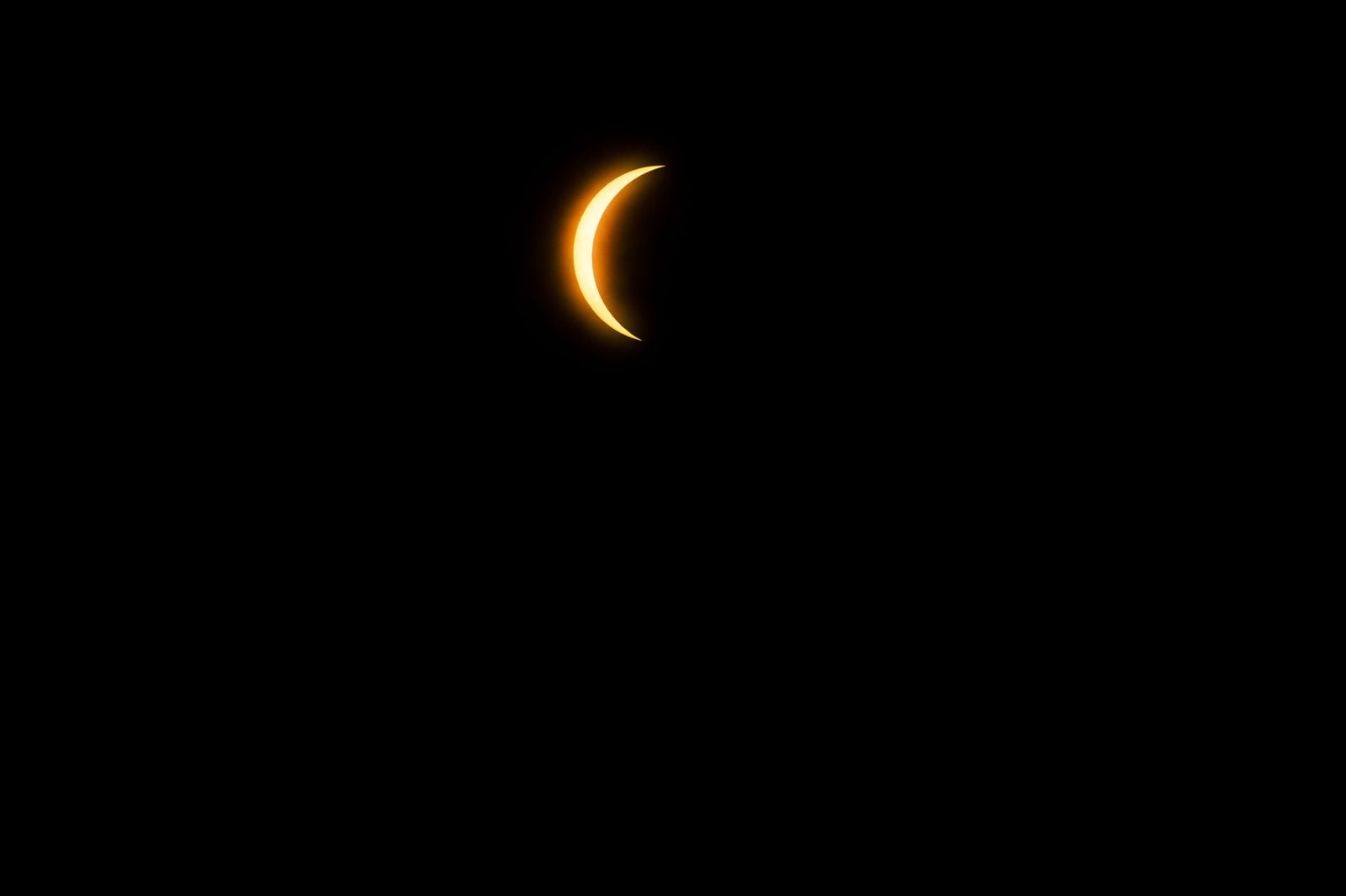
In 1868, French astronomer Pierre Janssen pointed a spectroscope at a solar eclipse in India and saw a yellow line that matched no known element on Earth, and the gas he identified in the Sun's chromosphere — named helium, after helios — would not be found on this planet for another 27 years, when a Scottish chemist finally coaxed it from a lump of uranium ore

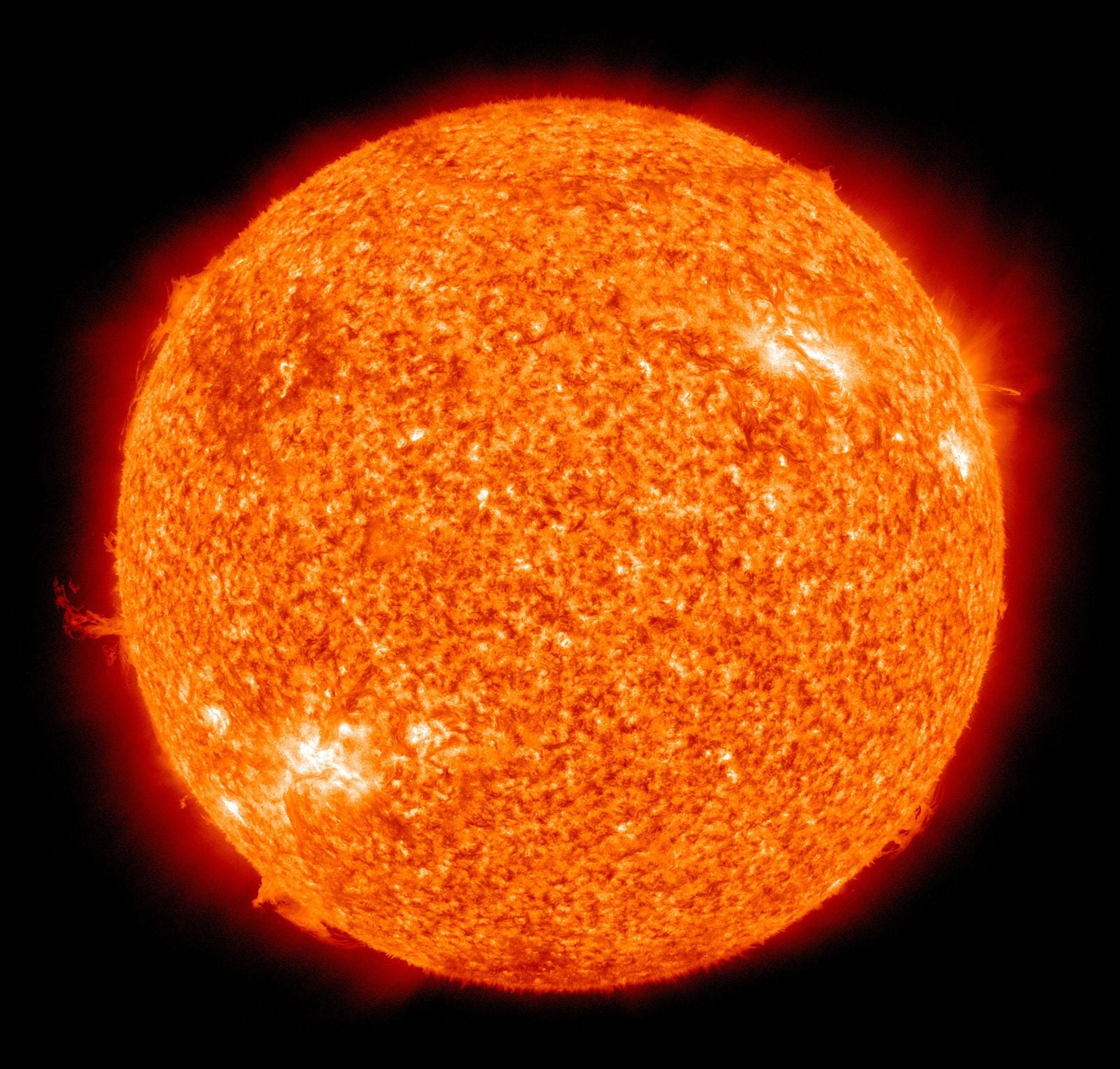
On 18 August 1868, a French astronomer named Pierre Janssen stood in Guntur, on the eastern coast of India, and watched the Moon slide across the Sun. Totality ran for roughly six minutes, an exceptionally long window by the standards of eclipse work. He pointed a spectroscope at a solar prominence — one of those enormous loops of glowing gas that arc off the Sun’s edge — and split its light into a rainbow of thin coloured lines. Among them was a bright yellow line at 587.5 nanometres that matched nothing in any laboratory on Earth.

The gas that produced that line would not be isolated on this planet for another 27 years.

When it finally was — coaxed from a lump of uranium ore by a Scottish chemist named William Ramsay in 1895 — it was named for the place where it had first been seen. Helios. The Sun. Helium is the only element on the periodic table first discovered somewhere other than Earth.
1868 solar eclipse spectroscope

What Janssen actually saw

The instrument Janssen carried to Guntur was a spectroscope — a prism, essentially, mounted so that sunlight passing through it fanned out into a spectrum. Nine years earlier, the German physicist Gustav Kirchhoff, working with the chemist Robert Bunsen, had shown that each element, when heated, emits light at its own signature set of wavelengths. Sodium glows a particular yellow. Hydrogen glows a particular red. If you could split the light of a distant object and read the pattern, you could read its chemistry.

Astronomers had been waiting for a total eclipse to try this on the Sun. The corona and the pink prominences at the Sun’s edge are normally drowned out by the glare of the disk. Only when the Moon covers that disk do they become visible, and on most eclipse days that window is two or three minutes at best.

Janssen got six. In the spectrum of a solar prominence he saw a bright yellow line sitting near, but not quite on, the familiar sodium doublet. According to the account preserved by Science Friday, the line was so bright that Janssen suspected it might be observable in ordinary daylight, without waiting for another eclipse.

He was right, and he did not wait long to prove it. By ten o’clock the next morning, 19 August 1868, he was observing prominences against the undarkened Sun, using the spectroscope alone to isolate their light from the glare — a result documented in Françoise Launay’s study of the Guntoor observations in the Journal of Astronomical History and Heritage.

The Englishman who arrived at the same line

Five thousand miles away in England, Joseph Norman Lockyer had been working on the same problem — how to see prominences without an eclipse — and had arrived at the same technique independently. On 20 October 1868, two months after Janssen’s observations in India, Lockyer saw the same yellow line in ordinary daylight.

Both men’s reports reached the French Academy of Sciences on the same day. The Academy struck a commemorative medal carrying both their profiles, with Apollo’s chariot crossing the face of the Sun.

Lockyer went further than Janssen in one respect. After failing, with the chemist Edward Frankland, to reproduce the line in the laboratory, he proposed that it came from an element that did not exist — or had not yet been found — on Earth. He gave it a name: helium, from helios, the Greek word for the Sun.

Naming an element on the basis of a single unexplained line was audacious, and Lockyer knew it. In print he mostly called the line D3, after its position beside the sodium D1 and D2 lines. For the next quarter century, plenty of chemists refused to accept there was an element behind it at all.
solar prominence chromosphere

Why chemists would not accept it

The problem was not that Lockyer’s spectroscopy was wrong. The problem was that no one could put the gas on a bench.

Nineteenth-century chemistry was built on samples you could weigh, dissolve, heat, and combine. An element you could only see in the light of a body 150 million kilometres away was, to many working chemists, not really an element at all. It was a line. The line might belong to some familiar element behaving strangely at high temperature. It might belong to something in the Earth’s atmosphere that the light had passed through on its way to the spectroscope. It might belong to an instrumental artefact.

The 27-year figure also flattens a middle chapter. As Space Daily has noted in its account of the gap between helium’s detection and its terrestrial isolation, the Italian physicist Luigi Palmieri recorded the same 587.5-nanometre line in Vesuvian lava in 1882. That was the first sighting of helium in earthly material. What nobody had, for another thirteen years, was the gas itself.

Janssen, meanwhile, kept chasing eclipses. In 1870, hoping to observe totality from Algeria while Paris was under siege in the Franco-Prussian War, he escaped the city by balloon. Clouds obscured his view.

The uranium ore that finally settled it

The gas came out of a rock.

In 1895, in London, William Ramsay was hunting for argon in minerals when he turned to cleveite, a variety of uraninite that released an unknown gas when treated with acid. An American chemist, William Francis Hillebrand, had already noticed the gas a few years earlier and taken it for nitrogen. Ramsay ran it through a spectroscope.

There was the yellow line.

Ramsay sent a sample to Lockyer for confirmation. Lockyer wrote of watching the discharge tube light up: “When I received it from him, the glorious yellow effulgence of the capillary, while the current was passing, was a sight to see.” The element named for the Sun had been sitting inside a lump of ore dug out of a Norwegian mine.

What Ramsay was really seeing, though no one at the time understood it in these terms, was radioactive decay. Uranium and thorium atoms in the Earth’s crust break down slowly over hundreds of millions of years, and one product of that decay is an alpha particle — which, once it captures a pair of electrons, is a helium atom. The helium in Ramsay’s flask had been accumulating in the ore since the rock formed.

The sequence that followed rearranged the periodic table, though helium was not the element that cracked it open. Argon came first: Ramsay and Lord Rayleigh announced it in August 1894, and it fit nowhere in Mendeleev’s 1869 chart. Helium, isolated seven months later, told Ramsay that argon was not an anomaly but the second member of a family. Working with Morris Travers, he pulled neon, krypton and xenon out of liquefied air in the summer of 1898, and took the 1904 Nobel Prize in Chemistry for the whole column.

The chemistry of a solitary yellow line in an Indian sky turned out to be the chemistry of an entire family of elements no one had suspected existed.

Why helium was hiding on Earth

Helium is the second most abundant element in the universe — roughly 24% of ordinary matter by mass, behind hydrogen’s 75%. Almost everything else, from the iron in blood to the oxygen in the air, makes up the remaining one to two per cent.

On Earth it is vanishingly rare. Helium makes up about 5 parts per million of the atmosphere, roughly 0.0005%. The reason is gravity. Helium atoms are so light and so fast that in the thin upper atmosphere a steady fraction of them exceed escape velocity and drift off into space. The Earth cannot hold on to them.

What helium exists here is trapped underground, produced by the same radioactive decay that filled Ramsay’s flask and captured in the same geological formations that trap natural gas. Nearly all commercial helium is separated from that gas, a by-product of drilling for methane. The United States, Qatar, Algeria and Russia dominate supply, and the chain is brittle: when Qatar was blockaded in 2017, laboratories and hospitals began running down stocks within weeks.

The strange thing about the element named for the Sun is that most of what modern civilisation uses it for happens near absolute zero. Liquid helium boils at 4.2 kelvin, about −269°C, lower than any other substance. That makes it the only practical coolant for the superconducting magnets inside MRI scanners, NMR spectrometers, and particle accelerators like the Large Hadron Collider. A conventional hospital MRI holds somewhere between 1,500 and 1,700 litres of liquid helium in a cryostat wrapped around its main magnet. Let the magnet warm and it loses superconductivity, and the machine stops working.

Spacecraft use it too. Rocket engines are purged with helium before and after firing to clear residual fuel and oxidiser, and liquid hydrogen tanks are pressurised with it. The Saturn V used helium to pressurise the tanks that carried Apollo to the Moon. SpaceX’s Falcon 9 uses helium for the same job, stored in composite overwrapped pressure vessels; the failure of one such vessel inside the second-stage liquid oxygen tank destroyed a Falcon 9 and the Amos-6 satellite on the pad at Cape Canaveral on 1 September 2016, during propellant loading ahead of a static fire test.

Balloons are the least of it.

The eclipse legacy

Janssen’s 1868 observation began a tradition. Total solar eclipses became laboratories. In 1919, British teams organised by Frank Watson Dyson and Arthur Eddington photographed stars near the eclipsed Sun from two sites, Príncipe off West Africa and Sobral in Brazil, and measured the deflection of their light by the Sun’s gravity. The error bars were wide and the precise confirmation would take decades more, but the result supported Einstein’s general theory of relativity and made him a public figure almost overnight.

The son of Norman Lockyer, W. J. S. Lockyer, was quoted in The New York Times after the 1919 result, dismissing its practical importance: the discoveries, he said, did not personally concern ordinary human beings, and only astronomers were affected. General relativity is now the correction that keeps GPS satellites accurate. Every smartphone navigation fix depends on it.

Eclipses had produced, within a fifty-year span, a new element and a new theory of gravity. And the technique Janssen used — splitting the light of a distant object to read its chemistry — is now the backbone of astronomy. Every exoplanet atmosphere characterised by the James Webb Space Telescope, every distant quasar analysed for its composition, every star sorted by spectral type, is being read by the method he pointed at a solar prominence in Guntur.

The gas he identified is now leaking, atom by atom, out of the Earth’s atmosphere and back into space. Some of it drifted up from balloons at children’s birthdays. Some of it boiled off from MRI machines in hospital basements. Some of it vented from rocket pads at Cape Canaveral. All of it is going the same place — up, and out, and eventually back toward the Sun that gave it its name.

The post In 1868, French astronomer Pierre Janssen pointed a spectroscope at a solar eclipse in India and saw a yellow line that matched no known element on Earth, and the gas he identified in the Sun’s chromosphere — named helium, after helios — would not be found on this planet for another 27 years, when a Scottish chemist finally coaxed it from a lump of uranium ore appeared first on Space Daily.

  •  

In 1977, Carl Sagan and Frank Drake sat in a Cornell office arguing over what to put on the Voyager Golden Record, and among the greetings in 55 languages, the whale song, and the Bach they included the sound of a young woman’s brainwaves recorded while she thought about being in love.

In 1977, Carl Sagan and Frank Drake sat in a Cornell office arguing over what to put on the Voyager Golden Record, and among the greetings in 55 languages, the whale song, and the Bach they included the sound of a young woman's brainwaves recorded while she thought about being in love.

On the afternoon of 3 June 1977, a young woman lay on a table at Bellevue Hospital in New York while a computer converted the electrical activity of her brain into sound. Her name was Ann Druyan. She was 27, creative director of the Voyager Golden Record project, and two days earlier she had agreed by telephone to marry Carl Sagan. The hour of EEG and EKG data captured that afternoon — compressed to about a minute — was pressed into the grooves of a gold-plated copper disc, bolted to the side of two spacecraft, and launched toward the outer planets. It is now more than 25 billion kilometres from Earth.

The team had less than six weeks. Sagan, astronomer Frank Drake, writer Timothy Ferris, artist Jon Lomberg, and Druyan worked against a launch window that would not move, arguing over greetings, whale song, Bach, Chuck Berry, and what, exactly, a human being sounds like from the inside. The folklorist Alan Lomax, working from New York rather than Ithaca, selected the bulk of the field recordings.

What actually went onto the disc

The Golden Record is a 12-inch phonographic gold-plated copper disc, shipped with a stylus and cartridge and a diagram etched into its aluminium cover explaining how to play it. Each Voyager carries an identical copy. According to an account published by The Conversation on the record’s 40th anniversary, the grooves hold both ordinary audio and 115 encoded images, along with greetings in 55 languages and a curated tour of terrestrial sound.

The audio runs from a Georgian men’s chorus to Blind Willie Johnson’s Dark Was the Night, Cold Was the Ground. It includes Bach’s Brandenburg Concerto No. 2, Mozart’s Magic Flute, Louis Armstrong, Chuck Berry’s Johnny B. Goode, and honkyoku shakuhachi. It includes the sound of a kiss, a mother speaking to her newborn, thunder, surf, a chimpanzee, and a humpback whale. Ferris also wanted one mark made directly by a human hand, and JPL’s archive records the phrase he had etched between the label and the grooves: “To the makers of music – all worlds, all times.”

And then, near the end, the brainwaves.

Voyager Golden Record cover

How Druyan’s EEG got onto a spacecraft

The idea was Druyan’s. She had asked Sagan whether, if she recorded her brainwaves, a civilisation a billion years from now could conceivably read them. He did not know. He suggested they try anyway. The committee volunteered her to supply the signal, and she booked a laboratory at Bellevue where a technician captured an electroencephalogram, an electrocardiogram, eye movement and other bodily signals across a single hour.

She went in with a script. According to a 40th-anniversary panel at Caltech reported by the Orange County Register, Druyan tried to hold a mental itinerary of Earth’s history in her head during the recording — the movement of continents, the rise of civilisations, the invention of writing.

Her thoughts drifted.

Two days earlier, she and Sagan had ended a phone call by agreeing to marry. They had not yet kissed. Both were in other relationships. Writing years later in the epilogue to Sagan’s Billions and Billions, Druyan described entering the Bellevue laboratory and being hooked to a computer that turned the data from her brain and heart into sound. In an account of the recording session published by Futurism, she is quoted saying that “my feelings as a 27 year old woman, madly fallen in love, they’re on that record” — and that the permanence of it, on a timescale of a hundred million years, is the part she finds it hard to be afraid of.

The six weeks at Cornell

The selection process was compressed and contentious. Sagan had been given the assignment by NASA with a launch window that would not wait. NASA’s own account of the project puts it plainly: the group had less than six weeks to assemble something meant to represent the entire population of Earth. Frank Drake, who had designed the earlier Pioneer plaques with Sagan, proposed the format and worked out the technical encoding — how to press images into an audio groove so that a civilisation with no shared reference could reconstruct them. Ferris, writing in The New Yorker, described the production as a scramble of long-distance phone calls, borrowed studio time, and last-minute swaps.

Some choices were vetoed. NASA rejected a photograph of a nude man and pregnant woman; the team submitted a silhouette instead.

The most repeated story about the record is that the Beatles were nearly on it. In the usual telling, Here Comes the Sun was wanted, the band agreed, and EMI refused the rights. Ferris, who produced the record, has disputed the premise directly, writing in The New Yorker that the track was never a serious contender and that the wit of the title seemed unlikely to survive a billion years. The two accounts have never been reconciled. What is certain is that the song is not on the disc, and Chuck Berry is.

The Georgian folk song Tchakrulo made it on, but not before the committee found out what it said. Ferris has written that for all anyone on the team knew, the song could have been celebrating something indefensible. They located a Georgian speaker in Queens, Sandro Baratheli, and had him translate. It turned out to be a peasants’ protest against a feudal landlord. It stayed. Sagan, for his part, had come to Cornell after Harvard denied him tenure in the late 1960s, reportedly for being too public a scientist; Cornell named him David Duncan Professor of Astronomy and Space Sciences, and it was in a Space Sciences Building office there that much of the record was assembled.

What a brainwave actually is, and why it survived the trip

An EEG measures voltage differences between electrodes placed on the scalp — typically in the range of microvolts, oscillating at a few cycles to a few dozen cycles per second. It records the aggregate behaviour of large populations of neurons. It does not record thoughts. To fit an hour of that signal onto a record with finite groove length, the recording was heavily compressed, and what plays back is a burst of crackle and pulse with no intelligible content in it at all.

There is no way to extract Druyan’s actual thoughts from the disc. The signal is too coarse, and it was never a transcript to begin with. What survives is the fact of a nervous system, doing what nervous systems do, on a particular afternoon. We know what that minute meant only because Druyan later told us.

That is the object now travelling through interstellar space at roughly 17 kilometres per second.

Voyager spacecraft interstellar

Where the record is now

Voyager 1 crossed into interstellar space in 2012 and is currently the most distant human-made object. NASA’s mission tracker puts it past 25 billion kilometres, closing on a threshold it will cross in November 2026, when it becomes the first object built by humans to sit a full light-day from Earth. Voyager 2 crossed the heliopause in 2018 and trails behind. Both spacecraft are still transmitting on plutonium-238 radioisotope generators whose output falls a little each year, and NASA has been shutting down instruments to conserve the shrinking power budget.

The spacecraft themselves will eventually fall silent. The records will not. Gold-plated copper, in the near-vacuum of interstellar space, has no obvious mechanism of decay on any timescale that matters to human civilisation. Micrometeoroid strikes will pit the surface over millions of years. The information will remain readable for a very long time. The object was designed to outlive not only the spacecraft but plausibly the civilisation that made it.

There is no way to verify that any of it will be found. The nearest star to Voyager 1’s current trajectory is a red dwarf called Gliese 445, and the spacecraft will pass within about 1.6 light-years of it in roughly 40,000 years. Voyager 2 will pass Ross 248 on a similar timescale. Neither is a close approach in any meaningful sense. The odds of interception are effectively zero across any period a human being would care about.

The record is not really an experiment. It is a gesture whose meaning is fixed on the sending end.

The private layer inside a public artefact

The committee could have stopped at greetings, music, and images. The decision to include a physiological recording reflects a specific intuition Sagan and Druyan held about what a message to another mind should contain. Language would probably be unreadable. Music might be unrecognisable as music. But the electrical activity of a working brain is a physical signature that any technologically capable civilisation would, in principle, be able to identify as the output of a nervous system.

Whether or not that reasoning holds, it captures something about the project’s ambition. The record was not really designed for aliens. Sagan had said as much about the earlier Pioneer plaque, writing that its greater significance was not as a message to out there but as a message to back here.

Most of what went onto the record was chosen to represent humanity in the aggregate: many languages, many musics, many faces. The brainwave is the exception. It is one specific 27-year-old woman on one specific afternoon in June 1977, thinking about one specific man she had agreed to marry two days earlier.

Sagan and Druyan married in 1981 and stayed together until his death in 1996. Druyan has spoken openly about the recording in the decades since — at Caltech, on Radiolab, in interviews around the release of a Kickstarter-funded vinyl edition of the record that Business Insider covered in its explainer on the record’s contents. That reissue, as NPR reported, raised more than $1.3 million from backers who wanted to hear at home what had been sent to the stars. The personal layer inside the record was known to the team at the time but not widely publicised until decades later.

What is up there, exactly, is this. A 12-inch gold-plated copper disc. A stylus. A cartridge. An etched cover with a pulsar map and instructions. Bach, whale song, thunder, greetings in Akkadian and Mandarin and Wu, the sound of a kiss, a mother and child, a line scratched by hand to the makers of music in all worlds and all times, and — encoded near the end — the compressed electrical activity of a young woman’s brain during the hour she was thinking about the man she had just agreed to marry.

It is currently moving away from the Sun at roughly 61,000 kilometres per hour. It will keep going long after the transmitter goes dark, long after the last engineer who worked on Voyager is gone, and long after the Cornell office where the arguments happened is no longer standing. NASA expects the power budget to narrow through the late 2020s and into the 2030s. The record will not notice. Somewhere out past the heliopause, in the dark between stars, a minute of a June afternoon in 1977 is still travelling.

The post In 1977, Carl Sagan and Frank Drake sat in a Cornell office arguing over what to put on the Voyager Golden Record, and among the greetings in 55 languages, the whale song, and the Bach they included the sound of a young woman’s brainwaves recorded while she thought about being in love. appeared first on Space Daily.

  •  
❌