❌

Reading view

Scientists Genetically Engineer High-Protein Lettuce

Scientists have finally created what might be the only thing that can get meatheads to eat their veggies: protein lettuce.

By literally shooting pig genes into the chloroplasts of lettuce and tobacco cells, an international team of researchers were able to grow produce that contained the animal protein myoglobin, they report in a new study published in the journal Frontiers in Plant Science.

Is this the pathway to the next ridiculous protein-infused snack? (We’re looking at you, protein popcorn.) Not quite. Instead, the scientists say their findings could pave the way to weaning ourselves off of environmentally-destructive meat.

“Our study demonstrates, for the first time, that higher plants can stably produce myoglobin, one of the key proteins responsible for many of meat’s desirable properties,” study lead atuhor Alexia Groff, a plant biotechnology researcher at Imperial College London, told ScienceAlert. “This is very relevant at a time when the demand for sustainable food production platforms is greater than ever.”

To combine pig genes with plant DNA, the researchers used a machine called a biolistic particle delivery system, or a “gene gun.” The nickname is apt: it works by firing microscopic metal particles covered in genes into their target. (Biolistic, by the way, is a portmanteau of “biological ballistics.”)

The target, this time, were the chloroplasts of lettuce and tobacco seedlings. Because of their “bacterial ancestry and their high number of copies per cell,” Groff explained in a statement about the work, “chloroplasts are generally much better at making large amounts of protein than the cell nucleus.”

Their genetic bullets hit the bullseye. In followup tests, the seedlings showed they had incorporated the pig DNA into the chloroplast genome. When the plants grew into adulthood and produced seeds, their offspring still possessed the transferred genes.

In all, the lettuce and tobacco plants yielded about 800 mg and 810 mg of myoglobin protein per kilogram of their dry weight. That’s ten times less than beef, but because growing plants is far more efficient than raising animals, the tradeoff could be worth it.

“Plant cultivation is far more resource-efficient than livestock production; consequently, plant-derived myoglobin could achieve protein yields per hectare that rival — or even potentially exceed — those of animal agriculture,” the authors wrote in the study, “whilst also benefiting from substantially lower water use and greenhouse gas emissions.”

If this gets adopted at scale, these protein-infused plants could be dried up and be used to bolster the protein in plant-based meats.

Other researchers caution that the food still needs to be proven safe to eat and sustainable to produce, but are optimistic about the findings.

“This an important advance on earlier plant and algal research.  Demonstrating stable myoglobin production in plant chloroplasts, including in an edible crop, raises the possibility of using plants as scalable, low-input production platforms alongside microbial fermentation,” Rodrigo Ledesma-Amaro, director of the ICL’s Bezos Center for Sustainable Protein, said in a statement. “In the longer term, this could diversify how and where these ingredients are produced.”

More on lettuce: Trump’s Explosive Diarrhea Scandal Is Getting Worse and Worse

The post Scientists Genetically Engineer High-Protein Lettuce appeared first on Futurism.

  •  

Elon Musk’s Efforts to Cut Spending in the Government Were So Incompetent That It’s Shocking, Internal Analysis Finds

In terms of demoralizing the federal workforce and demolishing the public sector, Elon Musk’s Department of Government Efficiency was a success.

In terms of actually saving money, though — its ostensible raison d’être — it was a dismal failure.

Musk vowed to slash $2 trillion in government “waste and fraud.” Then he lowered that target to $1 trillion, and behind the scenes reportedly promised Trump to save just a tenth of that figure. In the end, DOGE boasted on its website’s “Wall of Receipts” that it had saved around $215 billion — peanuts compared to its original promise.

But the actual amount of spending it slashed may be even lower than that. In a sweeping audit, the Government Accountability Office looked through the $110 billion that DOGE claimed it saved between January and July 2025, and found a trail of staggering incompetency that let loads of supposedly saved money fall through the cracks. That framing, though, could be too generous to Musk and his pimple-faced lackeys. You could also take the view that DOGE, in all likelihood, was deliberately cooking the books.

Per the GAO’s new report, released this month, DOGE claimed it terminated 13,476 contracts, but nearly 2,000 of them weren’t actually terminated. Spending-wise, about $27.4 billion of the purported savings came from these contracts that DOGE botched the terminations of.

The clumsy — or deceptive — bookkeeping didn’t end there. The receipts “includes leases identified for termination before [the group] was established,” the report states, as quoted by The Washington Post. And 108 of 264 of the leases it claimed it nixed “were already in process for termination.”

In all, the GAO found that over half of DOGE’s claimed $61 billion in contract savings couldn’t be verified or came from contracts that weren’t actually terminated. Similarly, 96 percent of the savings that it claimed came from grants couldn’t be verified by the accountability office, either.

Last August, an investigation by Politico found that of the $52.8 billion that DOGE had claimed to save by cancelling contracts at the time, its actual savings were closer to just $1.4 billion. To calculate how it saved money, DOGE dubiously used the maximum spending limit listed on the contracts it axed, figures that in practice are much higher than what the government ends up spending.

At the time, government procurement expert Jessica Tillipman told the outlet that the practice was akin to “taking out a credit card with a $20,000 credit limit, cancelling it and then saying, ‘I’ve just saved $20,000.'”

More on Elon Musk: Columbia Economist Baffled as to Why the Masses Aren’t Rising Up Against Elon Musk

The post Elon Musk’s Efforts to Cut Spending in the Government Were So Incompetent That It’s Shocking, Internal Analysis Finds appeared first on Futurism.

  •  

USA Today Partners With Palantir to Gain “Actionable Intelligence” On Its Audiences

When you read the newspaper, does it read you back?

On Thursday, USA Today Co — formerly known as Gannett, the publisher of its eponymous newspaper USA Today— announced that it was partnering with the AI surveillance firm Palantir to monetize and gain “actionable intelligence” on its audiences, Nieman Lab reports.

The largest newspaper publisher in the nation’s partnership was revealed in its second quarter earnings call. After extolling Palantir’s AI-powered platform, USA Today CEO Mike Reed said that it would allow the paper to “build a common intelligence layer” on the data it collects on its readers.

“Every visit, every session, and every moment of attention creates a signal,” Reed told investors Thursday morning, as quoted by Nieman. “When we connect those signals, they become actionable intelligence that allows us to engage users more effectively and monetize those relationships faster and at much greater value.”

The optics of partnering with Palantir — a company that provides military targeting software and wields a vast surveillance panopticon — are undeniably touchy. It’s worked hand in hand with ICE, secretly providing the agency a tool that scours citizen’s Medicaid and other government data to create a map of people it could potentially deport. It also supplies the Israeli military with an AI battlefield decision-making tool that can analyze enemy targets for elimination.

Still, it’s unclear how much more invasive the USA Today’s partnership will be compared to the routine data gathering and audience analysis that websites typically perform. One example of what Palantir’s platform could do, according to president of USA Today Media Kristin Roberts, was automatically identify partnerships to make money through affiliate links.

“Historically, much of our commerce business has relied on manual processes to connect affiliate opportunities with our content,” Roberts added.

It’s the latest deal Palantir has struck with media outlets as they struggle to bring in traffic from search engines in an increasingly AI-dominated web ecosystem. It’s also partnered with Axel Springer, the publisher which owns Politico, Business Insider, and the German newspaper BILD. Thomson Reuters’ partnership in particular is a case study in the dangers of letting online brands act as data brokers: 404 Media found that the Reuters publisher had supplied personal data to ICE, and some employees are protesting its $125 million deal to sell the agency voter data.

USA Today, it’s worth noting, has spent the past few years shoving AI into its operations and ruthless monetizing its content. It was caught using the tech to generate parts of its articles, and published automated sports stories that served up heaps of targeted gambling ads.

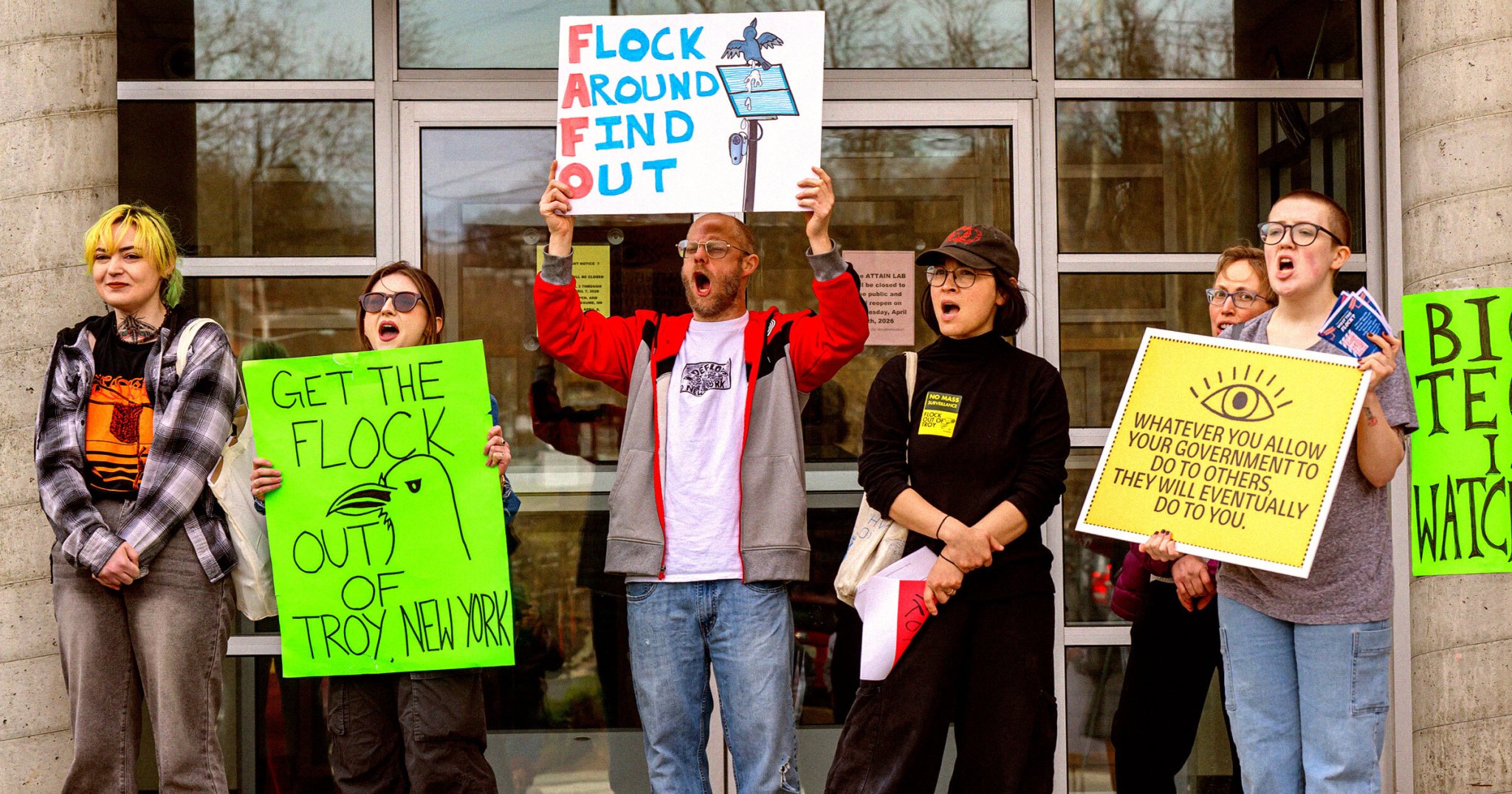
More on privacy: Flock Is Losing Dozens of Contracts as Controversy Grows

The post USA Today Partners With Palantir to Gain “Actionable Intelligence” On Its Audiences appeared first on Futurism.

  •  

The Real Victims of the AI Surveillance Panopticon? Crime Fiction Writers

AI-powered Flock cameras are blanketing the country. Data brokers are selling veritable dossiers worth of information on everyone to shady government agencies. And your neighbors are all spying on each other, unintentionally or otherwise, with their doorbell cameras.

All this is a nightmare for any of us that care about our privacy, sure. But it’s also quite the headache for crime novelists.

Gone are the days that a fictional criminal could don a mustache and wig to get away with murder. Or wipe the gun they just used to shoot someone and plant it to make it look like a suicide. 

To keep their stories grounded, writers of crime fiction have to keep up with the surveillance tech of the times almost as much as an actual master criminal might. If they don’t account for the omnipresence of modern surveillance, they’ve lost their audience.

“Readers will not let you get away with it,” Samantha Downing, author of the bestselling thriller “Too Old for This,” told The Mercury News. “If you’re writing a story that has a murder mystery, you have to consider all that. I try to use it to my advantage. It would be easier if it didn’t exist.”

In her 2025 novel “Too Old for This,” Downing cleverly makes this tension the conceit of her story. The protagonist, a 75-year-old serial killer, makes a conscious effort to keep surveillance tech off her back, like by covering her license plate to avoid license plate cameras that have surged across the country.

“When she’s going to go do something bad, she leaves her phone — she has a little note: ‘Leave phone,'” Downing told the newspaper. “Because she’s 75 and she forgets.”

In his stories, detective fiction author Mark Coggins, a former software engineer at multiple Silicon Valley firms including Mozilla, Netscape, and HP, mulls over how the technology can easily be used to perpetrate crime, too.

In one book, he described “this tech bro killing another tech bro and framing a third party for the murder using AI to create phony footage,” he told the Mercury News. Personally, he was worried about how surveillance could be used to target protestors, imagining a potential book where a detective tries to exonerate someone framed by surveillance tech.

We’re already seeing how this new crop of AI-powered video cameras are being abused. At least 50 police officers across the US have been accused of using Flock and other license plate scanning cameras to stalk women, according to a Washington Post tally. Flock in particular has become a lightning rod for the public’s discomfort with surveillance, and despite overwhelming backlash from residents, local city leaders are resistant to dropping the tech.

“You sort of feel that the noose is tightening with all this stuff,” Coggins told the newspaper.

The real horror for writers, though, is having to do extra research to keep themselves apprised of how all these systems work.

“You need, as a writer, to do enough homework, and talk to an expert,” Tim Maleeny, a crime writer, told the newspaper.

More on AI: Public Offers Implausible Number of Alibis for Man Accused of Destroying Flock Cameras

The post The Real Victims of the AI Surveillance Panopticon? Crime Fiction Writers appeared first on Futurism.

  •  

Labor Union Sues Over Self-Driving Trucks

Self-driving trucks could be hauling cargo across highways in the near future. But not without the Teamsters having a say in the matter first.

As Politico reports, the California branch of the nation’s largest union is suing state lawmakers, accusing them of rushing out new regulations that’re friendly to the autonomous vehicle industry without considering their impact on workers’ jobs.

The lawsuit, filed Wednesday, takes aim at several state agencies including the Department of Motor Vehicles, and governor Gavin Newsom’s administration. The union contends that the new regulations are an “existential threat” to hundreds of thousands of union jobs, and is demanding that the DMV should be blocked from enforcing the new rules.

“The DMV irresponsibly, carelessly, and unlawfully kept the public in the dark about the true economic and human costs of the amended Autonomous Vehicle regulations,” Julie Gutman Dickinson, an attorney representing the Teamsters, said in a statement, per Politico. 

“The only way to protect the public’s right to properly scrutinize regulations that will transform transportation in California is for the Court to order the DMV to immediately rescind the illegally enacted regulations,” Gutman added.

California regulators have played hardball with autonomous vehicle companies in the past, including Elon Musk’s Tesla. And previously, Politico noted, it was the only state that prohibited large self-driving vehicles.

That changed in April. Snuck into a sweeping bill that imposed tighter limits on how driverless cars should operate was a clause that allowed testing of autonomous semi-trucks and other heavy duty vehicles, so long as the pilot programs go through an approval process.

At the crux of the suit, the Teamsters say that the DMV didn’t conduct a mandatory economic study to gauge the effects of the new regulations. Instead, the lawmakers expediently used a process meant to fast-track minor updates that have minimal economic impact, they allege. 

The DMV, puzzlingly, calculated that no jobs would be eliminated by self-driving trucks. Fat chance, according to the Teamsters: by its own count, over 200,000 semi-truck drivers could be put out of work.

The Teamsters also raised the danger posed by allowing computer systems to control a vehicle weighing tens of thousands of pounds, compared to the smaller threat posed by a robotaxi. A Tesla Semi — a vehicle that’s envisioned as having autonomous driving capabilities — was involved in a grisly crash that killed two people, though it doesn’t appear that self-driving features were being tested at the time of the accident.

More on self-driving vehicles: Tesla Whistleblower Describes Wildly Dangerous Safety Lapses While Developing Full Self-Driving

The post Labor Union Sues Over Self-Driving Trucks appeared first on Futurism.

  •  

Meta Caught Paying Nazis to Post on Facebook

Meta was paying out-and-out neo-Nazis to post on Facebook, an investigation from Australia’s ABC News found.

These pages and individual creators posted content that appeared to be in clear violation of Facebook’s own hate speech policies. Nonetheless, they were able to earn money on their posts through the platform’s “Content Monetization” program — which is invitation-only.

One receiving payouts from Meta was Hugo Lennon, a known far-right agitator and white nationalist with ties to neo-Nazi groups. Lennon was taken away by police for hurling racial abuse at India’s prime minister Narendra Modi during his stay at a Melbourne hotel, and is believed to be one of the organizers behind an “anti-immigration” march on a sacred Indigenous site in the city last year.

Lennon, in other words, was a known quantity, and Meta should’ve been under no illusions about who they were paying to drive engagement on the platform. Still, the investigation found that he’s been receiving payments from Facebook since September 2025.

Meanwhile, the Facebook page for the Australian white supremacist site The Noticer has been making money through the revenue program since November 2025. Underscoring how much Meta has dropped the ball on this one, even X — owned by Elon Musk, who performed two suspiciously Sieg Heil-looking salutes back in 2025 — has banned The Noticer for violating its “hateful profile policy.”

Facebook’s monetization program can be quite lucrative, though it’s unclear how much each of these pages made individually. In 2025, Facebook doled out nearly $3 billion to 16 million accounts, the reporting notes. The platform periodically discloses data on these monetized accounts, which has been collated into a searchable database by the tech accountability non-profit What to Fix.

What To Fix executive director Victoire Rio didn’t mince words when it came to Meta’s culpability.

“If we consider that Meta is in a direct commercial relationship with its publishers, insofar that they’re paying them royalties and that they have a monetization agreement with them,” Rio told ABC, “then you could argue that they are liable for the content that gets produced by their business partner in some ways.”

Hate, unfortunately, sells. Right-wing extremism researcher Kaz Ross told ABC that Meta’s “financial model is to reward content creators who get engagement, and as we know, the best way of getting engagement is to produce rage bait, extremist material, aggravating material: anything that will get people upset and arguing is the best way to get engagement.”

It’s another example of how quickly Meta dropped its once-stricter content moderation policies when Donald Trump returned to the White House. Shortly before his second inauguration, Meta loosened its standards around hate speech, particularly on topics like gender identity and immigration, two of the far right’s favorite issues.

Facebook is far from the only platform that’s gotten alarmingly chummy with extremists. Earlier this year, X awarded the $1 million first place prize of its article writing contest to a proudly self-proclaimed Nazi.

In a statement, Meta didn’t address specific questions about the pages it was awarding money to, but said it was “important to distinguish between speech that is offensive and content that could potentially lead to offline violence”.

“Such speech may be offensive to many, but it is not Meta’s role to police offensiveness,” the company added.

More on Meta: FTC Concerned About Meta Surveillance of Users of Erectile Dysfunction Apps

The post Meta Caught Paying Nazis to Post on Facebook appeared first on Futurism.

  •  

Weird Town Begs for AI Data Center

Municipalities across the country are fighting tooth and nail to stop data center construction. But not Jay, Maine.

The town with a population of just 4,600 people has been so desperate for one of these power-hungry facilities that the state governor Janet Mills vetoed a bill that would’ve banned new data centers of a certain size for the sole reason that it didn’t make an exception for Jay.

But why? According to a new piece in The Atlantic from a reporter who visited the town, it’s for a fairly simple reason, but with an elaborate backstory. The summary: Jay is a dead-end backwater whose biggest employer literally went up in smoke. The data center, supposedly, could be an economic boon to rescue it from slow ruin.

The developer pushing the project, Tony McDonald, wants to build the data center on a 1,000 acre plot of land that was once the site of the town’s lifeblood, the Androscoggin Mill. Once the site, because the mill that employed over 1,500 people suddenly exploded in 2020. The whole sprawling complex was reduced to smithereens, though thankfully no one died: when the explosion struck, everyone was on their lunch break.

McDonald, according to The Atlantic, has heavily mined the nostalgia for the mill’s past to paint an even rosier picture of a data center driven future.

Summarizing the arguments he deployed, the magazine wrote: “Would a data center be loud? Can’t be as loud as the mill! Could it smell bad? The mill smelled like rotten eggs! Would it pollute the environment? The river was covered in toxic foam in the mill days!“

The data center would use just a fraction of the tens of millions of gallons of water per day the mill used, McDonald claims. And it could use 82 megawatts of power the mill was already permitted to use, and rely on solar panels to generate the rest of the electricity it needed, thereby protecting the town from additional energy costs.

All this charming rhetoric worked. When McDonald first conceived of his plan to get the data center firm Sentinel to build on his land, he didn’t bother to tell the town’s five-member board, at least not at first. But when he heard that the state was going to pass a moratorium on new data centers, he ran to them for help. Less than an hour after McDonald told the board of his plans — and apologized for not mentioning it before — they voted to draft a letter to send to governor Mills.

It was a bewildering moment.

“Analyze the footage as much as you like,” The Atlantic reporter write, “it will provide no clear answers as to why, in this moment of bipartisan resistance to new data-center construction, these town leaders would go from total ignorance to unanimous support in the time it takes to bake a lasagna.”

But for all the mining of the mill’s legacy McDonald has done to sell his project, the completed thing will only create between 125 to 150 full-time high-paying jobs, he admitted. That’s just a tenth of the old mill’s workforce.

In what may be the final plot twist in this saga, the data center project may be dead in the water after all. On June 11, the town announced that the data center firm Sentinel had backed out, and McDonald’s dreams have been put on indefinite hold.

More on AI: The Number of Regular People Being Arrested for Protesting Data Centers Is Astounding

The post Weird Town Begs for AI Data Center appeared first on Futurism.

  •  

Roku Unleashes 24/7 AI Slop Channel

Roku is giving the masses what they never asked for: an unending conveyor belt of AI slop.

Those exploring the mines of the free channels that Roku has to offer — yes, there are people that actually tune in to them — may have noticed a new one called “Fairground AI,” which was quietly added earlier this week and spotted by Cord Cutters News.

It broadcasts AI-generated abominations 24 hours a day, seven days a week. The only interruption to this slop flow state are intermittent ads — which are also AI-generated. It sounds more like a concept for a sci-fi torture device than it does a source of genuine entertainment, but it is, unfortunately, real.

Some Roku users took notice of the channel, grimly joking on social media that the “future of entertainment is here.”

In one clip that gives an idea of the bottom-of-the-barrel slop that it’s force feeding viewers, we see an AI movie that’s apparently meant to be some sort of medieval drama, only with laggy physics that makes it look like it takes place on the Moon. If there is a plot, it’s masterfully hidden underneath the bizarre way it cuts to different scenes, not to mention dialog that’s delivered with the cadence and awkward pauses of a mid-2000s video game cutscene. No one blinks when they talk.

There’s also classic cases of AI-mangled imagery. At point, some grunt manning the castle wall whips out a weapon that is an incomprehensible fusion of crossbow and rifle, and fires. When it does, the arrow — not a bolt — travels backward onto the bizarre chimera of a weapon. Our guess is that this was not an intentional homage to Christopher Nolan’s 2020 time travel clunker “Tenet.”

“Finally, AI can unleash the creative potential of people who can’t write, don’t understand pacing or transitions, are unfamiliar with human facial expressions, etc,” one observer joked.

“Shame they didn’t use the ‘with good acting’ prompt,” jeered another.

The future of entertainment is here. https://t.co/QYEluVNjH2 pic.twitter.com/jKgnBNKMmp

— Capital-O Opinions (@damespjuffy) August 5, 2026

Imagine this low quality content, only on a constant loop. When we tuned in on a whim, the first thing we saw was a giant cosmic octopus smashing together spaceships, which was intercut with the destruction being wreaked by another huge octopus on a sci-fi city, while a futuristic ninja heroine runs from the carnage amid crowds of uncanny humans and grotesque aliens.

Fairground AI’s creator, Colin Petrie-Norris Fairground, teased its launch last week, calling it the first fully ad-supported streaming TV channel dedicated to AI content. According to Variety, the AI content is made by creators that Petrie-Norris found on social media, including Kelly Boesch, Kavan the Kid’s Phantom X Studio, filmmaker Ryan Phillips, Wonder Studios and Massive Studios. If you aren’t familiar with any of those names, consider it a good thing.

At the time of the interview, Petrie-Norris didn’t reveal what platforms would be distributing his channel, but promised “massive reach.” He also promised that the “gorgeous things” it’d be showing would be far removed the terrible AI slop you see on social media because of their attention to story details, per Variety. The evidence collected by our eyeballs suggests otherwise.

More on AI: Parents Horrified as Boomer Mawmaws Gift Children Blatant AI Slop Picture Books

The post Roku Unleashes 24/7 AI Slop Channel appeared first on Futurism.

  •  

AI Model Invents Completely New Viruses Unknown to Nature

In case you weren’t already feeling paranoid about how AI is shaping our future, scientists for the first time have used an AI model to create new and viable viruses that have never been seen in nature.

Before you panic, the work, detailed in a study published in the journal Science, involved creating viruses that only target bacteria and are harmless to humans. Bacteriophages, as they’re called, are an important medical intervention for targeting drug-resistant pathogens.

“This is an important milestone,” Patrick Cai, a synthetic biologist at the University of Manchester who was not involved in the study, told The New York Times.

Still, it’s an alarming testament to AI’s power and trajectory. The researchers at Stanford University and the Arc Institute trained an AI model to recognize patterns of genetic structure in nature to create new DNA molecules. These molecules were inserted into bacteria that, over time, turned into wholly new viruses, at the expense of killing their hosts.

In their research, which first gained attention last year but has now been peer-reviewed, the scientists used an AI model called Evo. Unlike a general purpose large language model, Evo is trained on billions of lines of genetic sequences, and for this work in particular, millions of bacteriophage genomes. But it still functions like an LLM, predicting what DNA building blocks — nucleotides — should follow each other like a chatbot predicts what words to spit out to finish a sentence.

The researchers chose to focus on a E. coli-killing virus called Phi X-174, a variant that’s so well studied that it serves as the equivalent of a lab rat in virology. Viruses in general are simple compared to complex cellular life, making them an ideal platform to test AI’s capabilities.

They used Evo to create new viruses based on Phi X-174, and it generated 700,000 candidates. They then narrowed it down to just 300 that they would recreate in the lab. Of those 300, 16 proved to be viable, infecting and killing their bacterial hosts.

There’s clear medical merit to using AI to create bacteria-slaying viruses, but there’s already fears that the technology could be abused to crank out pathogens that are deadly to humans.

“Although this is promising for life sciences applications, it also raises urgent biosafety and biosecurity questions. The ability to compose viral genomes using generative AI now exists; the governance to safely steer it does not,” warned Tom Inglesby and Moritz Hanke at the Center for Health Security at Johns Hopkins University in Baltimore in a perspective article.

Tom Ellis, a professor of synthetic genome engineering at Imperial College London who was not involved in the research, acknowledged this threat, but told The Guardian that it would be much harder to create more complex genomes and that controlling access to genetic data could stymy the threat.

And if someone were to deliberately engineer deadly viruses, he added, doing it by hand would probably be more practical.

“But honestly, the threat from full AI design and writing of a genome of a virus or bacteria is very overblown when we consider that just taking existing pathogens and making gain-of-function changes to their genomes is so much easier and much more likely to be a real pathogenic threat,” he said.

More on pathogens: America Getting Lesson in Consequences of Trump’s War on Public Health as Rare Disease Outbreaks Ravage the Country

The post AI Model Invents Completely New Viruses Unknown to Nature appeared first on Futurism.

  •  

OpenAI Tried to Hire Influencers to Spread Love for Its Products, But It Backfired Horrendously

OpenAI’s attempt to boost its image by hiring influencers collided against a harsh reality: that it’s already become a fundamentally uncool company.

The Verge details how influencers recruited by the ChatGPT maker were flown out to its “first ever brand trip” at a nature retreat outside New York City. But rather than creating buzz for OpenAI, gaining widespread attention, or at least showcasing its products, the content that came out of its “Summer Club” campaign sparked fierce backlash against the influencers, who were branded “sellouts.” 

“People will literally sell their soul and their planet down the river for a nice free hotel room,” one TikTok commenter quoted by the reporting seethed. 

“Wow! Beautiful greenery! They should put a data center there!” another jeered. 

It’s not uncommon for companies to rely on engagement bait — and even rage bait — to gain attention. But this didn’t appear to be an intentional maneuver on OpenAI’s part. 

Most of these posts and videos barely get any attention, racking up only, at best, a few hundred likes and a few thousand views. But videos criticizing the OpenAI influencers — or “creators,” as the company prefers to refer to them — have racked up hundreds of thousands of views, including from other influencers who didn’t take the AI bag.

“They’re all a bunch of f*cking phony sellouts,” Meredith Lynch, a comedian known for her TikTok content, said in one viral call-out video.

As the influencers, most of them women, toted around branded merch and reveled in their bucolic surroundings, many couldn’t help but point out the hypocrisy of laundering the image of an industry whose data centers have perilous effects on the environment. The choice to select mostly women feels noteworthy, given that, as the Verge‘s reporting observes, women tend to view AI more negatively than men do.

What’s particularly baffling was how relatively little content came out of the trip, according to The Verge, with almost none of it actually about OpenAI’s chief product, ChatGPT. Instead it was “largely aspirational lifestyle content focused on the free swag and pretty setting” — with no clear idea on how it’s supposed to reflect on the company, other than the fact it’s willing to comp expensive trips for a small group of extremely vain people.

The company has made a big push recently to gain some cultural cachet. A few weeks ago, it launched a new line of clothing in a minimalist, trendy style — or at least trendy for five years ago, as if its fashion department had a knowledge cutoff date like its AI models. That, just like its influencer brand trip, was also met with mockery.

In a statement to The Verge, OpenAI defended its influencer marketing scheme and said the event was meant to be educational.

“Creators are an important part of our community and how people get information and learn about our products today,” a spokesperson told the outlet. “We welcome healthy debate as AI becomes more prevalent, and we value creators who choose to engage with us, attend our events, ask tough questions, and learn alongside everyone else. We’ll continue to value them, just as we do traditional media and other marketing partners.”

More on OpenAI: Sam Altman’s Parenting Strategy Sounds Low Key Horrifying

The post OpenAI Tried to Hire Influencers to Spread Love for Its Products, But It Backfired Horrendously appeared first on Futurism.

  •  

Gen Z Helicopter Parents Are So Intense That They’re Calling Hiring Managers to Interfere

Few things are as mortifying to a youngster than their parents trying to butt in on their behalf: a dad berating the coach for not playing his kid more, for instance, or a mom showing up unannounced to their dorm and embarrassing them in front of your roommates.

So-called “helicopter” parents have always existed, but they’re now sticking their nose into their kid’s professional lives in ways that sound vaguely ludicrous.

At least, that’s according to bosses and recruiters that the Wall Street Journal spoke to, who complain that their Gen Z new hires are coming with the hefty baggage of overbearing parents.

These not-so-genial genitors are hounding hiring managers, shadowing their kid’s Zoom calls off-camera, and even applying for jobs on their behalf, per the paper’s reporting, leaving their employers flabbergasted. One said that some parents are even calling in sick for their adult children.

Steven Clark, CEO of an Alaska-based staffing firm, said he’s gotten calls from parents demanding to know why their child didn’t get a job.

“The first time it happened, I was appalled,” he told the WSJ. “Since then it’s become more of a here-we-go-again reaction.”

When he fired a 24-year-old who kept showing up late on his first week at a construction job, the kid’s mother called to confront him.

“I said, ‘Look, you know, this is between us and your son. He’s the employee,'” Clark recalled.

Per the reporting, Clark’s experience has become such a recurring phenomenon that it was discussed at the human resources group SHRM’s conference, the largest HR group in the world, earlier this summer. More than half of the 250 professionals in the room raised their hands when asked if a parent had called them on behalf of a young employee or job candidate, per the WSJ.

Jasmine Escalera, head career coach at the résumé service Zety, called the phenomenon “co-piloting.” In a recent survey of 1,000 Gen Zers, the company found that a mind-boggling 20 percent had a parent come with them to a job interview.

Again, helicopter parents aren’t new, and there’s a risk that this gets turned into even more Gen Z bashing. But maybe in an age when smartphones keep them in constant contact with their children, helicopter parents have become more extreme and emboldened. (Just ask the teachers who had to deal with parents freaking out when their kid’s phones were taken away.) And maybe some Gen Zers are undersocialized and under-prepared after their education was disrupted by a global pandemic. There’s also the small matter of their corhort entering what’s one of the worst job markets in decades. Anxieties are high for young jobseekers and their parents alike.

This all may be true, but sometimes moms and dads just need to let their baby birds leave the nest.

“Parents should not be calling employers to check on their application status or ask questions on behalf of their child,” Lynne Alba, a director of talent acquisition and physician recruitment at a large health system on Long Island, told the WSJ.

More on generational trends: Gen Z Appears to Be Reversing No-Drinking Trend, Now Lurching Toward Alcoholism

The post Gen Z Helicopter Parents Are So Intense That They’re Calling Hiring Managers to Interfere appeared first on Futurism.

  •  

Trump Cabinet Doctor Boasts of Ability to Soil Himself During Dinner Parties Without Detection

In case you need any more evidence that the Trump administration is run and advised by cranks, here’s the cabinet’s meat-mainlining doctor’s unvarnished thoughts on the incredible skill he displays while defecating, which he says is down to his diet.

The doctor, Sean O’Mara, is reportedly the reason why the likes of JD Vance, Robert F Kennedy Jr, and Sean Duffy have all adopted a diet based almost entirely on eating steak and fermented foods like kimchi.

When New York Times reporter Willy Staley tried out the diet and spoke to O’Mara, the 63-year-old physician — who describes himself as the only one “in the world specializing in Health and Performance Optimization” — suddenly steered the topic to his bowel movements. As one does during casual conversation, he pulled up the Bristol Stool Chart, which categorizes different kinds of poop, and said his was Type 4 (“smooth, soft, like a snake.”)

“When you start eating healthy, you don’t need toilet paper,” he claimed, per the NYT. “Animals in the wild have no residual stool on their anus.” 

A proper number two, he explained to Staley, would be odorless, wipe-free, take just a few seconds, and be “nearly orgasmic.”

That’s when Staley boasted about his stealthy rectal ability. 

“I could have a bowel movement behind a sheet at a dinner party in the corner of the room and nobody would know,” O’Mara declared.

Whether or not it endows its followers with fantastic defecation powers, doctors are generally pretty skeptical about O’Mara’s diet, which, as a reminder, asks you to only eat beef — preferably steak — and fermented foods like kimchi, sauerkraut, and cheese. 

Marion Nestle of New York University told Staley that the diet would be effective for temporary weight loss, because of how lean and satiating the meat is. But one of O’Mara key claims is that the bacteria of fermented foods help repopulate your gut bacteria and drive up your metabolism — something that the science is more iffy on. There’s also the clear cancer risk of consuming so much red meat.

Dodgy dietary advice reigns supreme in this administration, though. It’s obsessed with pushing people to drink raw milk, and has relaxed alcohol guidelines. The president himself apparently forages exclusively on McDonald’s and Diet Coke, and supposedly believes the soda kills cancer.

More on health: America Getting Lesson in Consequences of Trump’s War on Public Health as Rare Disease Outbreaks Ravage the Country

The post Trump Cabinet Doctor Boasts of Ability to Soil Himself During Dinner Parties Without Detection appeared first on Futurism.

  •  

It’s So Hot in Japan That Zoo Animals Are Dropping Dead

Temperatures in Japan have gotten so extreme that zoo animals are dropping dead — though this may be as much an indictment of the conditions that the animals are made to live in as it is climate change.

On Monday, Tokyo’s Tama Zoological park announced that three of its female lions had died of what’s suspected to be heat-related illness. Their deaths occurred within five days of each other, as the country is gripped by a grueling spell of intense heat.

Per multiple reports, preliminary autopsies showed that the lions, named Mugi, Ichigo, and Ruena, had suffered from systemic dehydration and multiple organ failure before dying.

“We believe heat stress was a contributing factor,” the zoo said in a statement.

Japan experienced its first “cruelly hot day” toward the end of July, in a historic heat wave that caused multiple cities to be scorched with temperatures over 104 degrees Fahrenheit. Tokyo’s average daily temperature that month was 90 degrees Fahrenheit, which would feel like 110 degrees when accounting for humidity. 

The “cruelly hot day,” by the way, was introduced by Japan’s meteorological agency this year in anticipation of a sweltering summer. It’s no exaggeration to say that it’s now so hot in Japan that the country invented a new word for it: “kokushobi.”

On the first day to receive this official designation, at least 260 people in Tokyo were taken to the hospital, according to local reports. Between July 20 and 26, some 18,600 people across Japan were hospitalized for heatstroke, with 45 of them pronounced dead on arrival, the country’s Fire and Disaster Management Agency said.

While temperatures have temporarily fallen, the overall heat hasn’t relented, as this Wednesday Japan’s Environment Ministry issued a heatstroke alert for most of western and southern Japan, per the Associated Press.

It’s brutal for humans, and no less so for animals in captivity. According to the Tama zoo, one of the lions, the three year old Mugi, began showing signs of appetite loss in mid-July and was unable to stand the day after the symptoms appeared. 

The zoo staff tried to cool her off by spraying her with water and providing her fluids with intravenous dips, but Mugi eventually died on July 28. The 11-year-old Ichigo died three days later, and 15-year-old Ruena two days after that.

Four other lions who were ill are showing signs of recovery, the zoo said, with six others that have appeared to be in good health throughout the ordeal.

Experts say that along with the extreme temperatures, it’s the high humidity that makes it difficult for the lions to stay cool. Rather than sweating, they regulate their body temperature by panting, pushing hot moisture out of their airways.

“Lions are more used to a dry heat environment,” Aaron Whitnall, a zookeeper in England who cares for 11 lions, told the New York Times, though he said it was to early to speculate on the exact cause of the lions’ deaths.

During spells of extreme heat and humidity, zoos should give lions ample shade, deploy cooling pads, and mist them with water, Whitnall said. At his Big Cat Sanctuary in England, zookeepers gave the animals popsicles made with frozen animal blood to help them stay cool.

The Tama Zoo has suspended its lion exhibit since last month, and hasn’t announced when it’ll re-open.

More on heat: Global Warming Is Rapidly Accelerating, New Paper Finds

The post It’s So Hot in Japan That Zoo Animals Are Dropping Dead appeared first on Futurism.

  •  

Elon Musk Allegedly Stiffing Contractors on Huge Bills

Being unbelievably wealthy comes with powerful perks — like getting away with being too cheap to pay people the money they’re owed.

This, allegedly, is what Elon Musk is doing with one of the contractors who helped build his sprawling Colossus data centers near Memphis. 

The contractor, Ohio-based Darana Hybrid, has filed two liens against SpaceXAI — formerly known as xAI, before being merged into SpaceX — demanding that Musk’s firm pay more than $136 million for the work it’s done since 2024, the Memphis Business Journal first reported.

“The contractors are alleging they haven’t been paid for years of construction work,” Dima Amro, the reporter who broke the story, told Action 5 News.

Musk’s rapid construction of the two Colossus data centers in the Greater Memphis area has been the center of controversy. To quickly get the facilities online, the company brought in heavily polluting gas turbines that residents complain is making the air hard to breathe. Laggardly payments could be further evidence of the expedient means SpaceXAI took to get the data centers operational as quickly as possible.

According to the Shelby County Register of Deeds website, Darana Hybrid has filed two liens against SpaceXAI, one demanding $18 million for construction at the first Colossus facility near Boxtown, and another for more than $118 million for work at the second facility in Whitehaven.

And that could be just the start. Darryl Cuttell, Darana Hybrid’s owner, is reportedly expected to file more liens, bringing the total money owed to over half a billion dollars.

“So it looks like more liens are going to be coming to the surface,” Amro told Action 5 News. “About $400 million more worth of liens. I was told that that would be filed in Mississippi for the SpaceXAI facilities there.”

According to the reporting, two other companies, USW-Menard Inc and TorcSill Foundations, have also filed liens totalling more than $2.2 million for work done at SpaceXAI’s data center facilities.

The alleged hundreds of millions of dollars in missing money is upending Cuttell’s life, Amro says.

“He said he hasn’t slept in over four months. He’s lost a lot of weight. And he feels like there’s no future right now after filing those liens,” she told Action 5 News.

This isn’t the first time Musk has been accused of ripping off the smaller companies that helped build his business empire. A 2025 investigation by CNN found that contractors for Musk’s automaker Tesla had filed liens for more than $110 million of unpaid money in the past five years, with many of the contractors being small mom-and-pop operations.

More on Elon Musk: Columbia Economist Baffled as to Why the Masses Aren’t Rising Up Against Elon Musk

The post Elon Musk Allegedly Stiffing Contractors on Huge Bills appeared first on Futurism.

  •  

SpaceX Achieves Its First Moon Landing by Accidentally Crashing Into It at 5,400 Miles Per Hour, Causing Huge Explosion and 60-Foot Crater

At long last, a Moon landing for SpaceX — just not the kind it was hoping for.

After months of anticipation, a discarded upper stage of a SpaceX Falcon 9 rocket is believed to have careened into the Moon on early Wednesday morning. It exploded on impact, causing a flash that may have been visible from Earth, and created a large crater.

Astronomers, who have been closely monitoring the stray rocket, projected it would smash into the lunar surface at 5,400 miles per hour, which is about seven times the speed of sound here on our home planet. At such a velocity, NASA estimated it would blow open a crater about 60 feet wide and 12 feet deep, though others have estimated that it could be up to 100 feet wide.

SpaceX CEO Elon Musk has been promising the Moon when it comes to SpaceX’s lunar ambitions. Its Starship megarocket is being built to bring cargo to the lunar surface, and hopefully deposit NASA astronauts there in a historic return. He even plans to construct a Moon base with a factory that can churn out AI satellites. But so far, no SpaceX craft has made it into the Moon’s orbit, let alone land on it.

The discarded Falcon 9 rocket part had been lingering in space for over a year. It was jettisoned during a January 2025 mission that brought two lunar landers, Firefly’s Blue Ghost and ispace’s Hakuto-R, to the Moon. Astronomers soon suspected that it would fall into the Moon’s orbit, and in late April, a report more or less confirmed suspicions that it would slam into the rocky satellite.

Because the explosion — or in SpaceX’s euphemistic parlance, the rapid unscheduled disassembly — was difficult to observe in the moment, it might take some time before scientists can piece together everything that happened.

Another crater will make little difference to the Moon. Because it has no protective atmosphere, it’s surface is bombarded by meteoroids on a daily basis. One “with the same energy as the upper stage hits the Moon about every six days,” according to NASA.

Still, the impact will raise questions about the best practices for space junk and whether it’s negligent to discard spent rocket parts near the Moon’s orbit.

This isn’t the first time that human debris has smashed into the lunar surface. NASA deliberately steered the discarded stages of its Saturn V rockets into the Moon during the Apollo missions in the 1970s. And in 2009, it also crashed a rocket part into the Moon to study the impact.

Scientists will similarly hope to learn more from the accidental SpaceX crash landing, including insights into the physics of the material kicked up by the explosion in a low gravity environment, where ejecta could travel for miles.

“This may be of some — probably minor — scientific interest, and we may learn some things from it,” Bill Gray, an astronomer who created the Project Pluto software used to track near-Earth objects, and who published the report predicting the rocket part’s crash landing, wrote on his website. “It doesn’t present any danger to anyone, though it does highlight a certain carelessness about how ​leftover space hardware (space junk) is disposed of.”

More on SpaceX: SpaceX Stock Hammered After Starship Booster Fails in First Launch Since IPO

The post SpaceX Achieves Its First Moon Landing by Accidentally Crashing Into It at 5,400 Miles Per Hour, Causing Huge Explosion and 60-Foot Crater appeared first on Futurism.

  •  

Anthropic CEO Says His Employees Are a Bunch of Untrustworthy Rats

Anthropic CEO Dario Amodei apparently can’t believe that not everyone at the company is as noble-minded as he is.

According to new reporting from Axios, which cites a source familiar with the matter, Amodei is concerned that the new hires at the $965 billion AI firm are joining for the money instead of its greater mission.

Shocker, right? Anthropic pays some of the best salaries in the business, and now Amodei fears it’s becoming a victim of its own success. Being the most valuable AI firm in the world sure sounds tough.

But it’s also a sentiment tinged with irony. Anthropic’s professed mission is to safely build advanced AI systems. When Amodei left OpenAI to pursue this goal, part of his gripe with his old company was that it was getting too commercial by partnering with Microsoft.

Now, seemingly contrary to this “safety-first” mission, Anthropic has been moving to take itself public in an anticipated trillion-dollar IPO. This would rake in untold billions of dollars for the company — and all but ensure that its lofty, moral duty would forever be subjugated the money-making whims of Wall Street.

Other controversies have underscored the dubiousness of Anthropic’s commitment to its mission and the hypocrisy of its goodie-two-shoes act. Earlier this year, it dropped a critical safety pledge to stop training an AI model if it couldn’t guarantee it had proper guardrails in place. And despite making a show of clashing with the Pentagon over concerns about the safe deployment of its AI systems, Anthropic also let the military use its Claude AI to select targets in Iran. 

Behind the scenes, it’s reportedly helping the US National Security Agency use its Mythos model, which Anthropic has emphasized is extremely dangerous, to wage cyberwarfare against China. It was also recently caught using hidden code to secretly spy on Chinese users of its products.

Let’s not forget that Amodei has promised that AI will wipe out half of all entry-level office jobs in the next few years. If he’s right, who can blame his new hires for joining the winning side and getting that bag while their jobs still exist?

More on Anthropic: A Whole Bunch of People’s Claude Chats Are Publicly Accessible Online, and There’s Some Wildly Private Stuff in There

The post Anthropic CEO Says His Employees Are a Bunch of Untrustworthy Rats appeared first on Futurism.

  •  

BMW Suddenly Blasts Its Cars’ Internal Screens With Aggressive Advertisements

For certain BMW owners, enormous car payments aren’t the only rude reminder that they don’t actually own their ride yet: now, irritating in-vehicle commercials will send them the same message.

Starting last week, the German automaker started blasting a promotion for the new Spider-Man movie into its customers’ cars without warning — because nothing says riding in luxury like a full-vehicle pop-up ad. BMW, showing that it was about as in-touch as its drivers are familiar with turn signals, teased the promotion as a “special surprise.” 

According to The Autopian‘s coverage and the heaps of complaints online, the ad appears on the center console screen when you start up the car. When the ad’s done playing — a cheap looking animation that doesn’t come close to warranting all this hubbub — it even has the gall to ask you to scan a QR code.

While it does give you the option to play or skip the “festive animation,” it’s still an annoying extra step drivers have to take before pulling up the map they need or the music they want to listen to. It’s also a breach of trust: drivers keep their cars connected so they receive critical software updates, not unexpectedly see ads when they’re trying to hit the road.

Few owners were pleased. Enthusiasts in the r/BMW subreddit had a veritable meltdown when someone posted footage of the ad playing on their infotainment system.

“BMW should stop with this sh*t,” one user fumed.

“F*ck everything about this,” another said.

According to a BMW press release, this latest ad campaign has been available in more than 70 markets since July 27 and is scheduled to keep playing through August 10.

If any automaker would have the temerity to pull a shameless stunt like this, it’d be BMW, which has a history of monetizing the digital and hardware features in its cars with video game-style microtransactions. It previously demanded customers pay a monthly subscription fee to unlock their heated seats that were already installed in their vehicles, and an additional fee for heated steering wheels. 

It also tried paywalling the widely popular Apple CarPlay and Android Auto smartphone integration features — something no other automaker charges for — but backed off after massive backlash.

It’s not the only carmaker that’s gotten into hot water for repurposing infotainment screens into ad real estate. Last year, Jeep drivers were livid after the company’s vehicles started showing giant pop-up ads that badgered them into buying an extended warranty.

More on advertising hell: The Economy Is So Off the Rails That They’re Trying to Figure Out How to Make Ads Specifically Targeted at AI Bots

The post BMW Suddenly Blasts Its Cars’ Internal Screens With Aggressive Advertisements appeared first on Futurism.

  •  

Parents Horrified as Boomer Mawmaws Gift Children Blatant AI Slop Picture Books

Nothing escapes the sloppifying tentacles of AI. Not even precious parent-child reading time.

As Wired reports, moms and dads across the country are having AI-generated children’s books inflicted on them by the tots’ well-meaning grandparents, sometimes creating tensions within the family. 

Grandma and grampa think it’s cute to use AI to churn out a picture book with their grandchildren in it. But the parents often aren’t impressed, on top of being horrified by the implications of their kids being fed into an AI model in the first place.

One parent fumed about this scenario in a Reddit post spotted by Wired, distraught that their mother wouldn’t take the hint.

“I have reiterated countless times that I do not support AI-generated art, and drew a hard line that she is absolutely not to feed any of our photos into AI or use our identifying information in any way,” they wrote. “However, she is creating these storylines based on experiences with my kid and modeling her characters to have similar attributes as my kid, and us[ing] our family’s first names so that they represent us and my kid will ‘see her family reflected.'”

An entire industry has popped up to support — or AI-generate — this niche, Wired noted. Multiple services like Imagitime, StoryWonderBook, and Childbook.ai, all offer an easy way to insert kids straight into an imagined AI story.

Like their parents, the kids don’t seem impressed by the AI creations, either. One dad with a seven and three year old kid told Wired that the tykes were “bored” by the “personalized” AI-generated books they received from friends and family members.

“They are so long and wordy that, after one time through, each of my kids was like, ‘Yeah, OK, let’s read Little Blue Truck,'” he says, naming a best-selling children’s series by author Alice Schertle.

For Daozhi Xu, a researcher at Macquarie University who published an analysis of the “AI children’s book boom,” this isn’t surprising.

“Children do not love a storybook simply because their name or image appears in the story; they love the book because the story itself is interesting,” Xu told Wired.

“Compared with human-authored books,” Xu adds, the AI-generated versions “often lack humor, memorable characters, and dramatic tension.”

Brandon Kirman, a comedian and artist, told  Wired his parents gifted an AI-generated book about the stuff they enjoyed doing with his four and two year old daughter.

It was “well-meaning on their end, but f**king yikes,” he said, adding that the kids seemed underwhelmed compared to their enthusiasm for other books.

The most nefarious aspect of this trend, though, is the lack of transparency on how “children’s photos are used and stored on AI platforms,” Xu told Wired, “potentially shared with third parties or used to train AI models.”

Try explaining that to mawmaw.

More on AI: AI-Powered Toys Caught Telling 5-Year-Olds How to Find Knives and Start Fires With Matches

The post Parents Horrified as Boomer Mawmaws Gift Children Blatant AI Slop Picture Books appeared first on Futurism.
  •  

Business World Stunned That a Restaurant Chain Is Doing Well Without Mindlessly Embracing AI

Not immediately jumping on the AI bandwagon like everyone else is? It says something that Chili’s doing this— yes, the casual dining chain with the big red pepper logo — is being seen as shrewd decision making and not just common sense.

Chris Caldwell, the chief information officer at Chili’s owner Brinker International, emphasized in recent interviews how the company wasn’t “all in” on AI, and is instead focused on overhauling its tech in more practical ways.

“I’m not chasing AI to go, ‘Guys, Anthropic just released a new LLM, and we need to use it because it’s cool,'” he told Business Insider.

The ethos: any tech being deployed should be improving food service and atmosphere. Sound like a dig at AI, anyone?

Caldwell’s overhauls have been pretty mundane compared to the almost sci-fi sounding rhetoric coming out of the tech industry, which promises businesses that embracing its AI tools will magically optimize operations, supercharge productivity, and woo customers. He did stuff like buying thousands of new iPads to replace locations’ aging tablets, overhauled the chain’s WiFi network, bought a new laptop for every location’s manager, and implemented a new payment system.

He also ditched the company’s impractical experiments with using robot servers that began before he joined in 2024.

“If a robot’s getting in the way and not helping us deliver a great guest experience, we’re going to get rid of them,” Caldwell told the Wall Street Journal (did we mention that he’s clearly on a media blitz?)

Sara Senatore, senior restaurants analyst with Bank of America, sounded stunned at just how well Chili’s AI-agnostic tech overhaul has worked.

“The Chili’s turnaround has been nothing short of remarkable,” Senatore told the WSJ.

Needless to say, it’s bizarre that this is seen as newsworthy. Did anyone expect Chili’s to be on the cutting-edge of deploying AI in a business setting? 

Then again, plenty of restaurants have been swept up in the AI hype. Taco Bell was on the receiving end of loads of backlash for deploying a shoddy AI-powered drive-thru system. Starbucks scrapped an AI inventory management tool after it kept miscounting and mislabeling items. And one disgruntled Pizza Hut franchisee has sued the chain because the AI-powered kitchen management system that the chain mandated locations use allegedly caused it to lose over $100 million.

Forrester retail analyst Sucharita Kodali, calling for sanity in this age of AI boosterism, said she hasn’t seen any game-changing uses of generative AI in restaurants yet. Eateries instead “need to focus on the things that actually drive their business, like making sure they have good operations,” she told the WSJ.

More on AI: Sam Altman Says Even the Power of AI Will Never Lead to a Shorter Work Week

The post Business World Stunned That a Restaurant Chain Is Doing Well Without Mindlessly Embracing AI appeared first on Futurism.

  •  

Flock Employee Quits In Disgust, Saying the Company Is Silencing Protestors

A former Flock employee has quit the company in disgust, saying it lied to workers about how its surveillance cameras were used and that it used dirty tricks to silence its critics.

The employee, Jonathan Paz, joined the company as a government affairs manager two years ago. Nominally, his job was to represent Flock’s “product as best as possible making sure that we can get approved at council,” he told 404 Media in a new interview. Or in other words, his gig was to convince cities to buy and deploy its AI-powered cameras.

Paz maintains that he earnestly believed at the time that its license-plating scanning cameras would help find missing persons, not to conduct mass surveillance. As part of his job, he flew out to towns and cities to help Flock get approved by local lawmakers.

But his belief in the company’s vision was shattered when he was confronted by locals who strongly opposed Flock cameras being set up in their communities. That’s when he realized his job was, in reality, to “make sure that this resistance doesn’t become a vote reflected in the vote of the council.”

“That’s kind of what started unraveling for me very quickly: this facade that we were helping these democratically elected boards” represent their constituents, he added.

According to Paz, Flock repeatedly insisted that it wasn’t collaborating with agencies like ICE, a possibility he was deeply concerned with as the son of immigrants. The view of his colleagues, and the company’s ostensible mission, was that it was helping solve crime.

Flock’s stance, he says, turned out to be a lie. Multiple outlets reported that ICE as well as Customs and Border Protection could tap into Flock’s cameras, and Flock eventually admitted to giving these agencies access to its surveillance network as part of a pilot program.

“That was what I was sold and lied to about,” Paz told 404. “I didn’t know that there were these mechanisms inside the company that were essentially fighting to get this pilot to happen.”

Before joining Flock, Paz had worked as an activist, a union organizer, and an elected city councillor. Given his background, it seems either staggeringly naive or willfully ignorant on his part to think that Flock, a company aiming to deploy AI-powered video cameras across the country, “had a deep respect for civil rights and liberties,” as he once believed, and wouldn’t be wielding it as a giant surveillance drag net.

To his credit, he quit in July 2025, saying he rejected a juicy severance package, and went on to found an organization providing help to help to people affected by ICE’s mass deportations. He’s now running for Congress in Massachusetts’ 5th District.

More on surveillance: Flock Cameras Screw Up, Swarm Innocent Man With Armed Police

The post Flock Employee Quits In Disgust, Saying the Company Is Silencing Protestors appeared first on Futurism.

  •  
❌