❌

Reading view

Há exatamente 20 anos, o primeiro Mac Pro era anunciado!

Já tendo completado a passagem para o mundo dos mortos, o icônico Mac Pro (antigo desktop topo-de-linha da Apple) foi revelado ao mundo pela primeira vez há exatos 20 anos, durante Worldwide Developers Conference (WWDC) de 2006.

Último Mac a trocar os chips PowerPC pelos processadores da Intel (transição que havia sido iniciada em 2005), ele chegou com o dobro de performance do Power Mac G5, seu antecessor direto — e de quem herdou a primeira iteração do design de “ralador de queijo”, que com certeza marcou época.

Mac Pro (2006)

Com um preço inicial de US$2.500 (ou US$4.140, levando em conta a inflação até os dias de hoje), ele era parrudíssimo — tanto em termos de performance bruta quanto de conectividade. Extremamente “upgradeável”, ele vinha com dois processadores Intel Xeon de dois núcleos (2,0GHz, 2,66GHz ou 3,0GHz, dependendo da versão escolhida), bem como com a placa gráfica GeForce 7300 GT, da NVIDIA — componente que podia ser trocado por uma Quadro FX 4500 (também da NVIDIA) ou uma ATI Radeon X1900 XT (da AMD).

Contando com quatro espaços para unidades Serial ATA (dois a mais que o Power Mac G5), o Mac Pro de primeira geração também permita a instalação de até quatro GPUs 1Graphics processing units, ou unidades de processamento gráfico. via PCIe, além suportar até 32GB de RAM 2Random access memory, ou memória de acesso aleatório. — por padrão, ele vinha com “apenas” 1GB. O desktop também era equipado com 5 portas USB 2.0 e 4 FireWire 800, padrão ainda muito popular na época.

Mac Pro (2006)

O queridinho de profissionais criativos, o Mac Pro parecia ser feito sob medida (ou vice-versa) para softwares como o Final Cut Pro, além de vir de fábrica com o clássico Mac OS X Tiger, lançado mais cedo naquele ano. Nem tudo eram flores, no entanto, já que alguns apps, como os da popular Adobe Creative Suite, ainda precisavam da camada de tradução Rosetta para rodar adequadamente em Macs com processadores x86, o que resultava em gargalos de performance — problema que foi solucionado com o passar dos meses.

Desde então, o Mac Pro original foi atualizado algumas vezes; o primeiro upgrade veio já em abril 2007, seguido por outro em janeiro de 2008. No início de 2009, o computador ganhou os processadores Intel Xeon 5500 e, um ano depois, passou a suportar até 64GB de memória e até 8TB de armazenamento — além de ter adotado os processadores da linha Intel Xeon 5600, é claro. A última dança desse primeiro design do desktop veio em 2012, com dois processadores Intel Xeon Westmere-EP de seis núcleos (2,4GHz).

O primeiro tropeço

O ano de 2013 foi difícil para o Mac Pro, que recebeu um novo design tão compacto quanto polêmico. Cilíndrica, a nova geração do Mac Pro instigou comparações com latas de lixo, principalmente por conta da abertura para ventilação na parte de cima do computador.

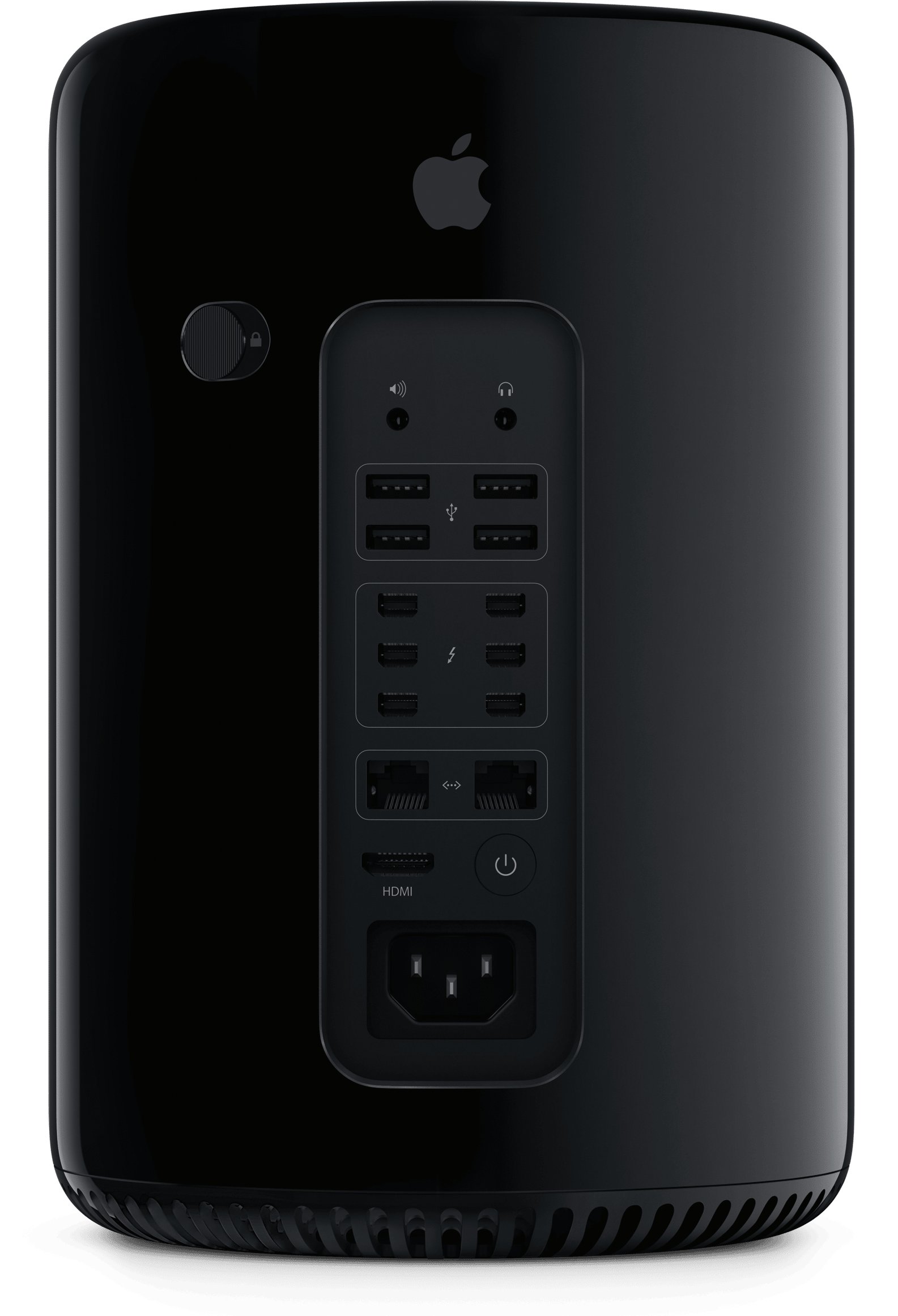
Mac Pro de frente
Mac Pro de trás
Divulgação/Apple

Por falar em ventilação, é nessa área onde reside a maior fraqueza desse novo modelo: o sistema de resfriamento, construído em volta de um “núcleo térmico unificado” central que, embora fosse, sim, um conceito muito interessante, não era o suficiente para resfriar o seu processador Intel Xeon e as duas GPUs AMD FirePro.

O novo design também fez a Apple abrir mão de duas outras características importantíssimas do Mac Pro: a vasta seleção de portas e a possibilidade de trocar praticamente todos os principais componentes do computador. Caso o usuário quisesse realizar algum upgrade, ele era obrigado a fazer isso por meio de uma das suas portas Thunderbolt 2, o que estava longe de ser o ideal.

Mac Pro desmontado pela iFixit
Foto: iFixit

A má recepção fez o Mac Pro “lata de lixo” cair no ostracismo e ficar sem receber novas atualizações por nada menos que seis anos — um contraste e tanto em relação ao modelo anterior. A situação chegou até mesmo ao ponto de a própria Apple admitir, em 2017, que errou a mão na hora de projetar a mais nova versão do seu desktop profissional — atitude que foi seguida pelo lançamento do iMac Pro, que serviu como uma espécie de “tapa buraco” até o lançamento do último grande redesign do Mac Pro.

Um breve renascimento

Em 2019, a Apple colocou ordem na casa ao lançar um novo Mac Pro muito mais parecido com o modelo original do que com o computador que o precedeu — ou seja, com um formato de torre tradicional.

Apostando mais uma vez no alumínio como seu material principal, o desktop passou a contar com furos para ventilação que, mais uma vez, provocaram comparações com raladores de queijo. Dentro, foram adicionada três ventoinhas bem parrudas, as quais davam conta de resfriar todos os componentes do computador, já que eles não contavam com coolers individuais.

Novo Mac Pro com aspecto de ralador de queijo
Divulgação/Apple

Equipado com um processador Intel Xeon de até 28 núcleos, ele suportava até 1,5TB de memória — número surpreendente até para os dias de hoje. Contando com nada menos que oito slots PCIe, ele podia ser configurado com as GPUs Radeon Pro 580X ou Radeon Pro Vega II, da AMD, bem como com a novíssima placa aceleradora Apple Afterburner, para a edição de vídeos.

O otimismo introduzido por esse novo design, porém, foi logo suplantado pela introdução, apenas um ano depois, dos chips da família Apple Silicon, bem mais rápidos e eficientes que os da Intel e que passariam a substituir os processadores da fabricante estadunidense nos Macs. Em outras palavras, isso fez com que muita gente pensasse duas vezes antes de adquirir um Mac Pro — afinal, uma versão bem mais poderosa com um chip ARM 3Advanced RISC Machine. provavelmente já estava nos planos da Apple.
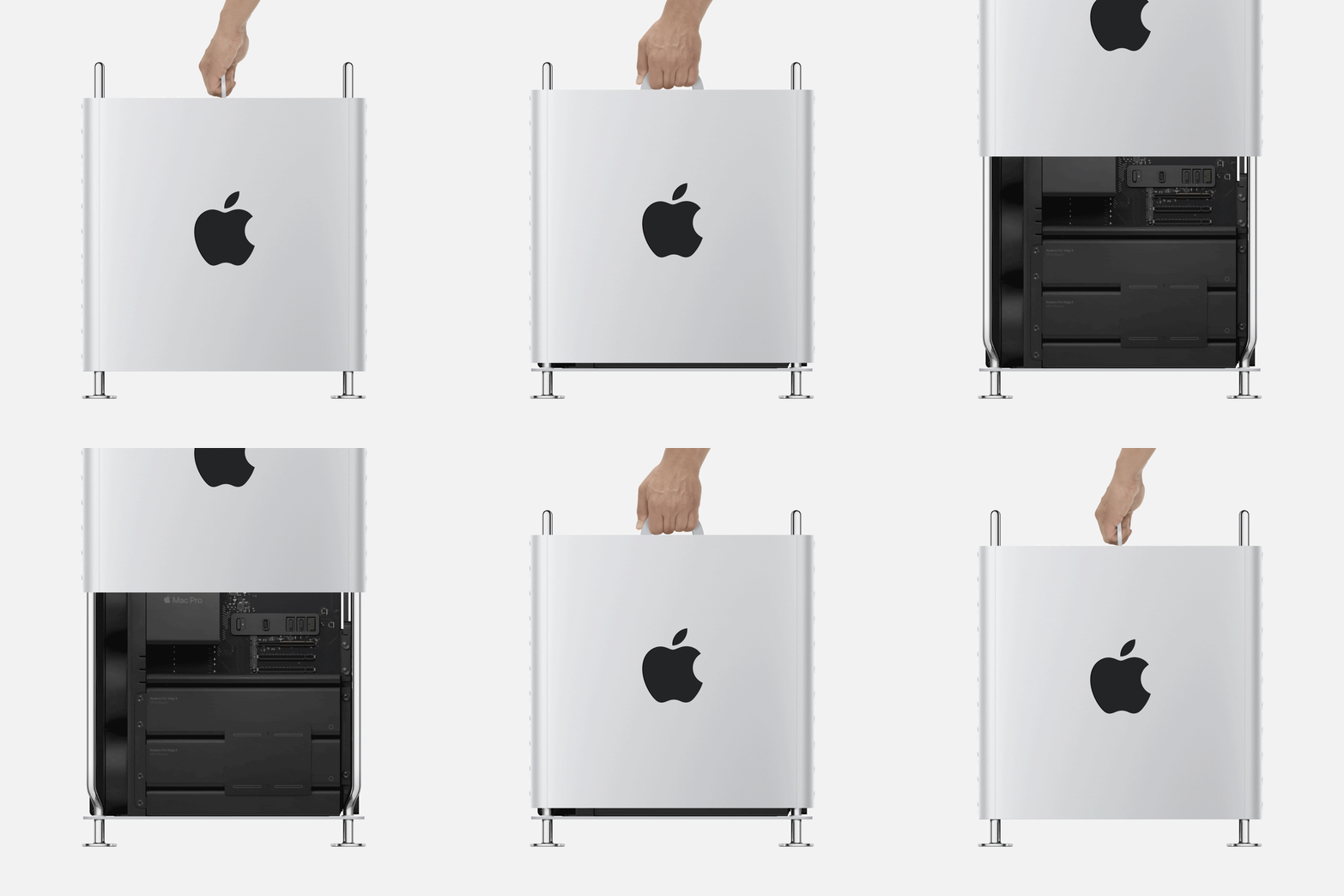
GIF animado da abertura do novo Mac Pro

Isso, no entanto, só foi acontecer em 2023 — e de um jeito um tanto… agridoce. Embora a adoção do chip M2 Ultra tenha sido bem-vinda, o computador perdeu muitas das características que o faziam ser uma boa opção para usuários profissionais, como a possibilidade de fazer upgrades nas suas peças — uma consequência da natureza centralizada dos SoCs 4System on a chip, ou sistema em um chip. da Apple.

Além disso, a essa altura do campeonato, o Mac Studio (outro computador voltado a profissionais) já estava no mercado há cerca de um ano e oferecia a mesma performance de ponta que muitos esperavam do Mac Pro, além de ser bem mais compacto e, principalmente, “acessível” (a partir de US$7.000 vs. a partir de US$2.000).
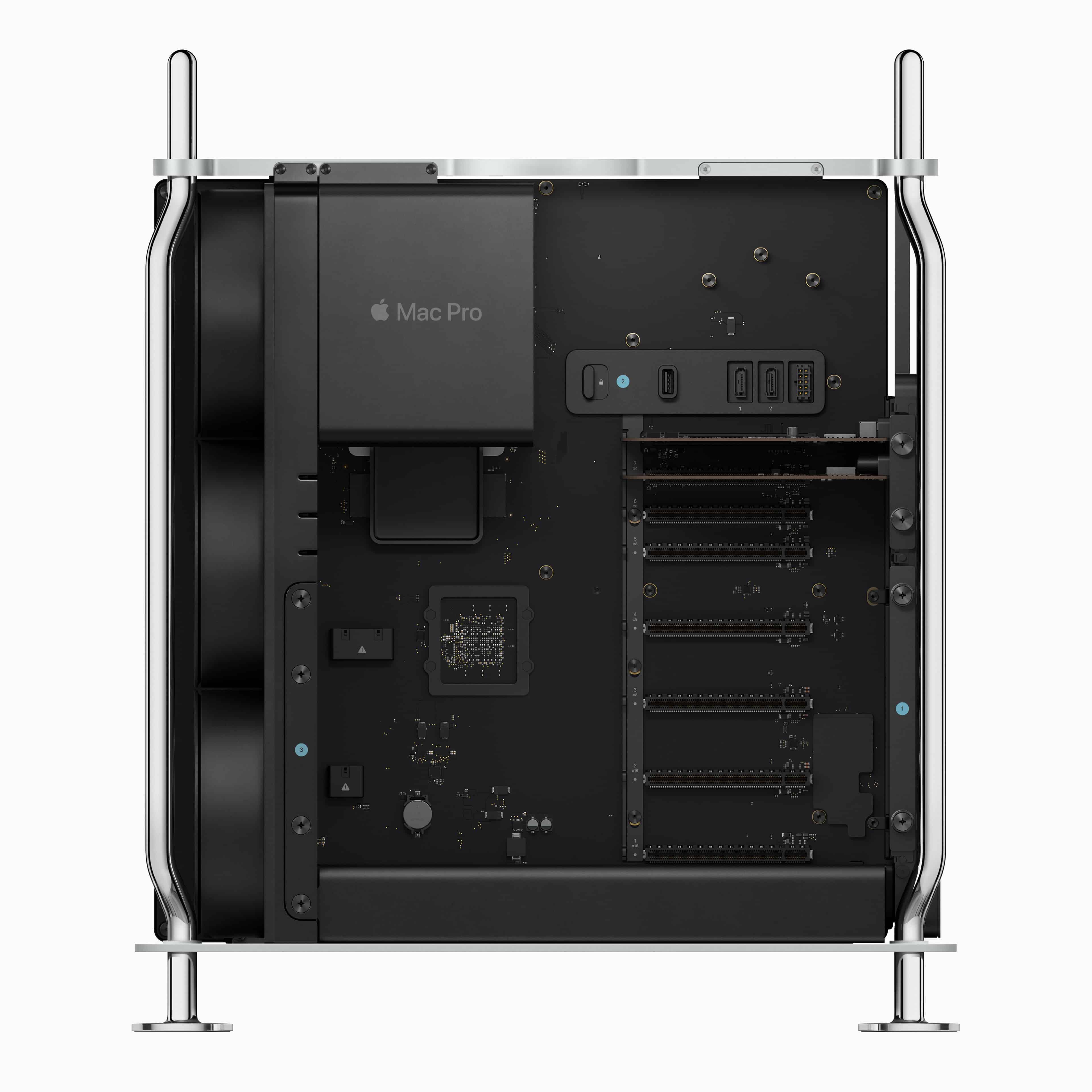
As entranhas do Mac Pro com M2 Ultra

Embora rumores de uma atualização tenham circulado nos últimos anos, tudo isso levou a Apple a finalmente aposentar o Mac Pro em março de 2026, pouco meses antes do seu aniversário de 20 anos. No momento, os esforços da Apple parecem estar completamente voltados ao Mac Studio, que tomou o posto de “computador para profissionais” da Maçã.
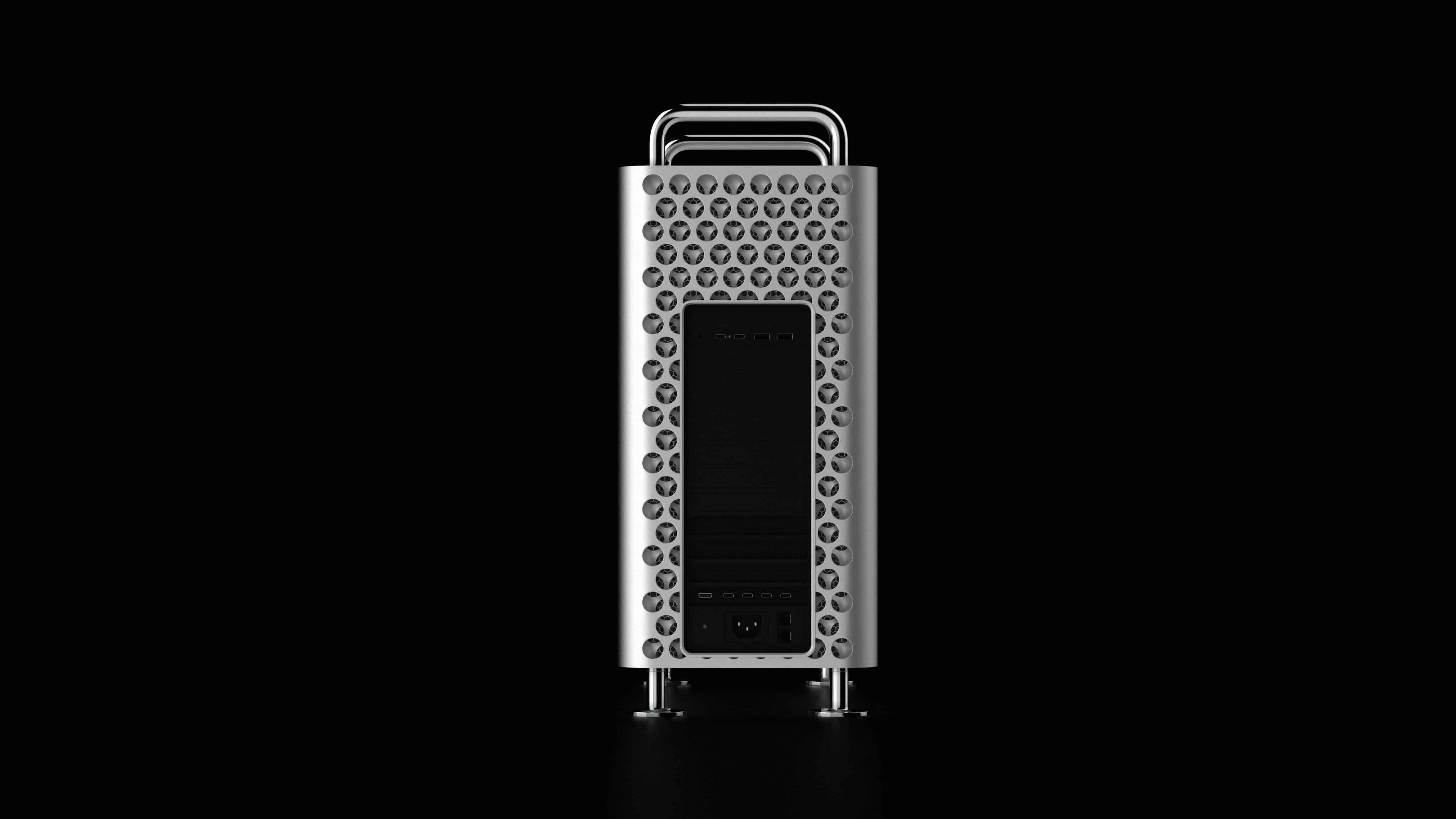
E vocês, já estão com saudades do Mac Pro ou a Apple fez certo em descontinuá-lo? Comentem!

via MacRumors, Cult of Mac, AppleInsider

Notas de rodapé

  • 1
    Graphics processing units, ou unidades de processamento gráfico.
  • 2
    Random access memory, ou memória de acesso aleatório.
  • 3
    Advanced RISC Machine.
  • 4
    System on a chip, ou sistema em um chip.

  •  

FaceTime Dual Capture: iOS 27’s Biggest Video Call Upgrade

FaceTime Dual Capture is bringing simultaneous front-and-rear camera streaming to video calls in iOS 27, allowing compatible iPhones to show the caller and their surroundings without repeatedly switching between cameras.

The feature expands technology Apple introduced with the iPhone 17 family. Dual Capture already allows the Camera app to record through the Center Stage front camera and a rear camera at the same time. iOS 27 brings a similar capability directly into live FaceTime calls.

During a call, the front camera can continue showing the speaker while the rear camera displays whatever the iPhone is pointing toward. Someone attending a concert can share the performance and remain visible. A parent can show a child playing without disappearing from the conversation. A person asking for technical assistance can remain on screen while directing the rear camera toward the equipment causing the problem.

Dual Capture removes the awkward sequence of switching to the rear camera, showing something, and switching back to continue speaking face to face. Both perspectives remain available inside the same call.

Close-up of the FaceTime app icon on a screen, showing a green background with a white video camera symbol and the label “FaceTime” below it. Highlighted in this iOS 27 interface, a finger is partially visible near the icon.
Image Credit: Thomas Trutschel Photothek/Getty Images

FaceTime Dual Capture Changes Camera Switching

The normal FaceTime camera control changes from a simple front-or-rear choice on supported iPhones. When the caller activates the rear camera, iOS 27 keeps the front camera visible by default.

The main view displays the rear camera feed while a smaller window contains the front camera image. This picture-in-picture arrangement gives the other participant a continuous view of the caller’s reaction, commentary, or explanation.

To activate both cameras during a supported FaceTime call:

FaceTime > Start a video call > Tap the Flip button

Tapping the Flip button turns on the rear camera without immediately removing the front view. The other participant begins receiving both perspectives as part of the FaceTime stream.

The caller can disable the front view when it is no longer needed. This provides a conventional rear-camera presentation for situations where the surroundings should occupy the complete image.

To return to a single camera view:

FaceTime > Tap the camera view > Disable the front camera

The exact labels and placement may change before the public release of iOS 27 because the feature is still being tested in beta software. Its basic behavior is already established: the Flip control activates the rear camera while retaining the front camera feed.

Dual Capture does not create two independent FaceTime calls. Both images belong to one video stream, so the caller does not need a second account, device, or invitation.

The feature also differs from screen sharing. FaceTime screen sharing transmits applications and interface activity from the iPhone display. Dual Capture transmits live video from two physical cameras.

A hand holds a smartphone, recording a video of four people in costume outdoors. A small FaceTime Dual Capture window at the top shows two people smiling during the call. The phone’s screen displays camera controls, powered by iOS 27.
Image Source: Google

Which iPhones Support Dual Capture

Apple has limited FaceTime Dual Capture transmission to the iPhone 17, iPhone 17 Pro, iPhone 17 Pro Max, and iPhone Air. Each model includes Apple’s 18MP Center Stage front camera and the Dual Capture capability introduced in the Camera app.

An older iPhone that supports iOS 27 cannot originate a Dual Capture stream. It continues to use the normal option of selecting either the front camera or a rear camera during a call.

Older models can still receive and display a Dual Capture feed when they are running iOS 27. This allows an iPhone 16 or another supported device to see both views transmitted from an iPhone 17, even though it cannot send the same presentation back.

Both participants need iOS 27 for the new FaceTime layout to work as intended. The transmitting device must also be one of the supported iPhone 17-generation models.

This limitation is based on Apple’s official feature support rather than the simple presence of front and rear cameras. Earlier iPhones have camera hardware capable of operating in several multi-camera applications, but Apple has not extended its native Dual Capture implementation to them.

Third-party applications have offered forms of simultaneous multi-camera recording for years through Apple’s developer frameworks. The difference is that iOS 27 integrates the experience into FaceTime, where users can activate it through the familiar camera-switching control.

iPhone 17 Owners Receive a Second Dual Capture Feature

Describing FaceTime Dual Capture as retro-compatible with the iPhone 17 does not fully explain its relationship with the hardware. The iPhone 17 family introduced Apple’s native Dual Capture recording in 2025, and iOS 27 now gives that existing camera system another purpose.

Inside the Camera app, Dual Capture produces a saved video containing front and rear views. Apple lists support for recording at up to 4K Dolby Vision at 30 frames per second on the iPhone 17.

FaceTime uses the camera pairing for live communication instead. Network quality, bandwidth, device temperature, and FaceTime processing can affect the transmitted resolution, so users should not assume that a call will preserve the Camera app’s maximum 4K recording specification.

The Center Stage front camera also contributes more than resolution. Its square sensor gives the iPhone greater freedom to adjust framing without requiring the device to be physically rotated. Center Stage can help keep the caller positioned inside the smaller front-camera view while the rear camera follows the subject being shared.

That combination makes Dual Capture more useful than placing two untreated camera feeds beside each other. FaceTime can preserve the speaker’s presence while directing most of the screen toward the event, object, or location being discussed.

The feature may require more processing power and energy than an ordinary single-camera call. Running two camera sensors while encoding and transmitting live video can increase battery consumption and device temperature, especially during long calls over cellular data.

Apple has not published separate battery estimates for Dual Capture FaceTime calls. Users planning extended sessions may want access to power and a stable Wi-Fi connection.

FaceTime

iOS 27 Prepares FaceTime for iPhone 18

FaceTime Dual Capture arrives shortly before Apple’s expected iPhone 18 generation, making it likely to become part of how the company demonstrates the new phones’ camera and communication abilities.

Apple has not announced the iPhone 18 lineup or confirmed its final camera specifications. Compatibility with FaceTime Dual Capture is therefore expected from the software’s “iPhone 17 and newer” positioning, but individual iPhone 18 models should not be treated as confirmed until Apple presents them.

The software release gives existing iPhone 17 owners access without requiring another hardware purchase. That approach also provides Apple with a working FaceTime feature before the next iPhone launch rather than introducing the camera mode and communication interface at the same moment.

Future hardware could improve the experience through faster processors, stronger image stabilization, upgraded sensors, or more efficient video encoding. None of those additions is required for the supported iPhone 17 family, which already contains the camera system needed to transmit both views.

Dual Capture is only one part of the FaceTime update. Apple is also improving video-call quality when the network connection is weak, addressing a problem that becomes especially relevant when two live camera views require transmission. Traditional Chinese support is joining FaceTime Live Captions as well.

The weak-connection improvement may determine how dependable Dual Capture becomes away from Wi-Fi. A feature designed for travel, events, repairs, and outdoor calls needs to tolerate changes in cellular bandwidth without freezing both views or forcing the session to end.

FaceTime Dual Capture remains part of the iOS 27 beta as Apple prepares the public update for September. Apple can still adjust the interface, performance, device requirements, and picture-in-picture behavior before the completed software reaches iPhone 17 owners.

The post FaceTime Dual Capture: iOS 27’s Biggest Video Call Upgrade appeared first on AppleMagazine.

  •  

iPhone Ultra Price Could Take Apple’s Foldable Beyond $2,000

The iPhone Ultra price could establish an entirely new tier within Apple’s smartphone range. Current estimates place the company’s first foldable iPhone above $2,000, with some industry forecasts suggesting an average selling price near $2,500 and higher-storage configurations approaching $3,000.

Apple has not confirmed the device, its name, or its retail price. The iPhone Ultra branding also remains unofficial, although it has appeared repeatedly in reports concerning Apple’s planned expansion beyond the Pro and Pro Max levels.

The foldable is expected to join the iPhone 18 Pro family during Apple’s fall hardware cycle. Rather than replacing the iPhone Pro Max, it would sit above it as a separate model built around a book-style design and a display that expands to approximately the size of a small tablet.

A price beyond $2,000 would make it the most expensive iPhone Apple has released. The current iPhone 17 Pro Max starts at $1,199 in the United States, leaving a difference of at least $800 between Apple’s established flagship and the lowest estimates for the foldable.

Recent projections have pushed that gap even wider. Reports citing analyst Ming-Chi Kuo have discussed a possible range between $2,300 and $2,500, while an IDC estimate cited in supply-chain coverage placed the average selling price at approximately $2,500. Storage upgrades could take selected configurations closer to $3,000.

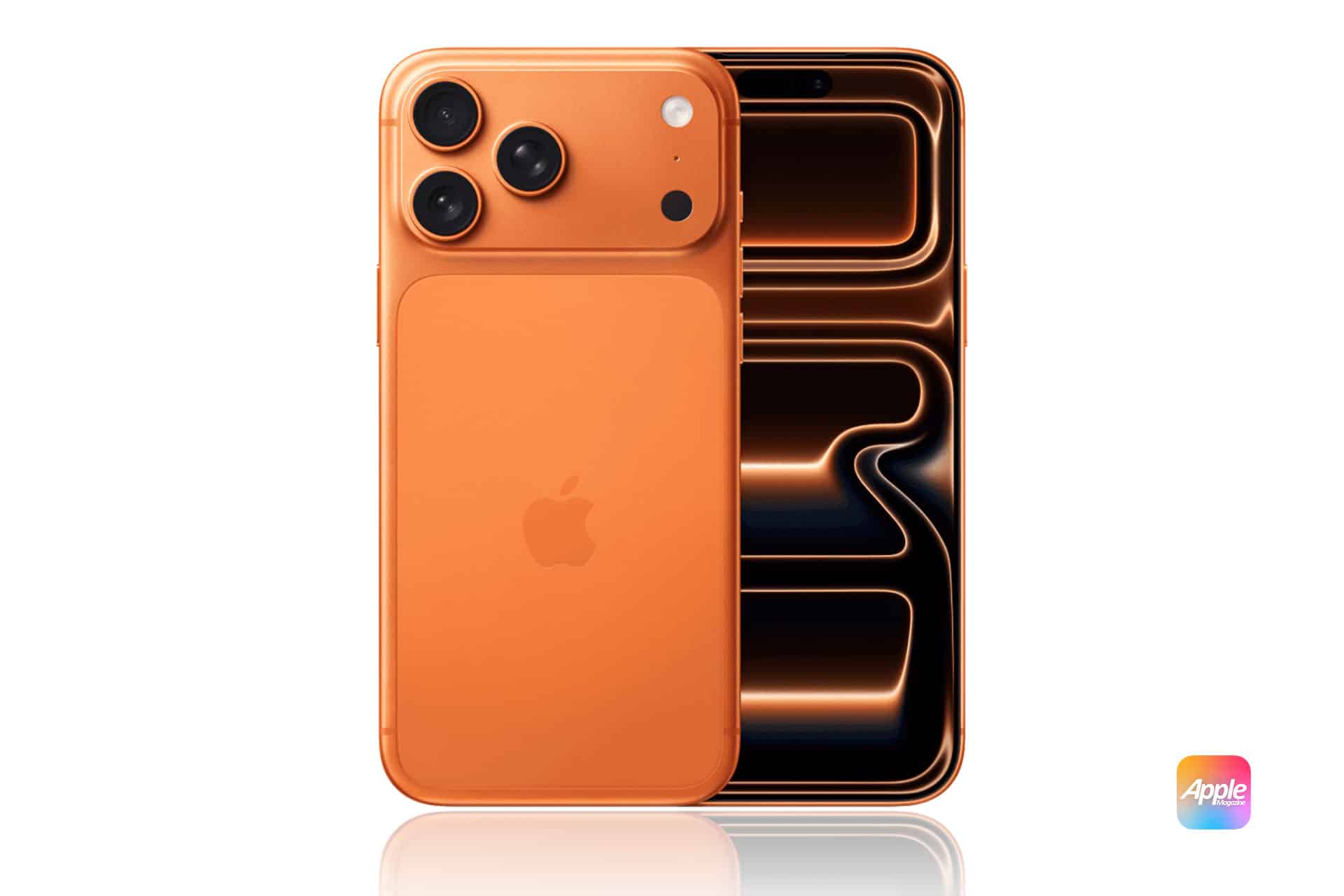
An orange smartphone, resembling an iPhone, is shown with both its front and back visible. The screen glows with an abstract pattern, and a small, colorful Apple logo appears—ideal for Belgian consumers exploring iPhone contracts or Lyca Mobile eSIM.

iPhone Ultra Price Creates a New Flagship Tier

Apple has spent years arranging the iPhone range around a price ladder. Standard models serve the center of the market, while Air and Pro devices address different preferences involving weight, cameras, materials, performance, and display size.

A foldable iPhone would require another level. Its internal display, hinge, structural materials, battery arrangement, and manufacturing tolerances introduce costs that do not exist in a conventional iPhone.

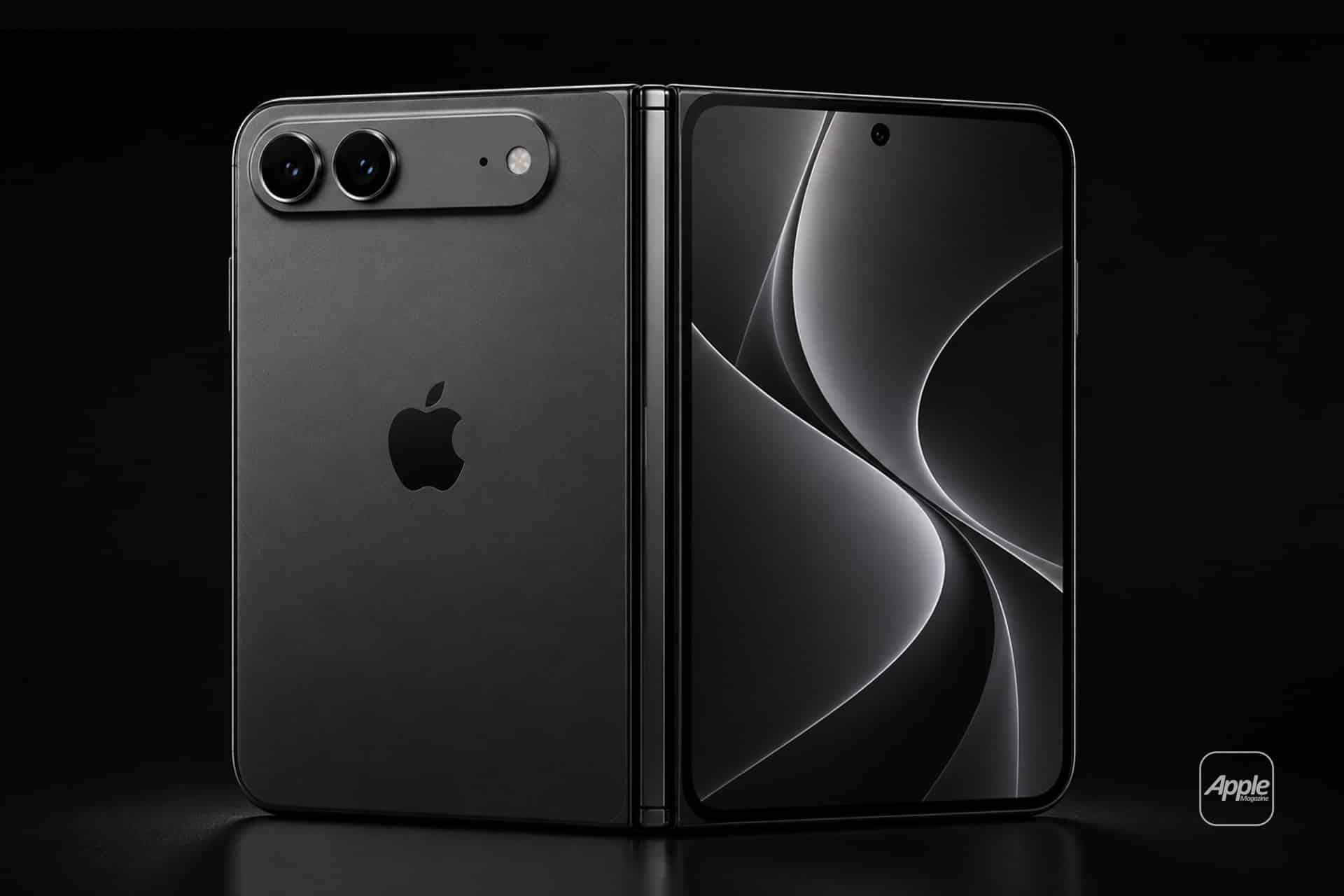
The rumored hardware points to a device intended to combine phone and tablet functions. Reports describe an outer screen measuring about 5.5 inches and an internal display of approximately 7.8 inches. When closed, the product would operate as a compact iPhone. Opening it would provide enough space for larger applications, side-by-side content, expanded video, and an iPad-style software interface.

Apple is reportedly developing interface changes that would let applications take greater advantage of the internal display instead of simply enlarging an iPhone layout. That software work may become one of the main distinctions between the device and existing foldables, particularly if Apple can connect it closely with iPad multitasking conventions.

The hinge is expected to use liquid metal, an amorphous alloy chosen for strength and resistance to deformation. Apple has also reportedly focused on reducing the visible display crease, one of the most recognizable compromises found on current folding phones.

Those elements help explain a premium price without guaranteeing that customers will accept it. A $2,000-plus phone would compete for spending that could otherwise purchase an iPhone and an iPad, a high-end Mac, or several years of conventional smartphone upgrades.

The device would therefore need to offer more than the novelty of a folding screen. Durability, battery life, camera performance, application behavior, repair costs, and long-term display reliability will influence whether buyers view the iPhone Ultra as a versatile computer or an unusually expensive phone.

Costly Engineering Behind the Fold

Rumors suggest Apple may use Touch ID in the side button instead of Face ID. The change would not necessarily represent a retreat from facial authentication across the rest of the iPhone range. A foldable chassis has limited internal space, and eliminating the TrueDepth camera hardware could help Apple manage thickness around the outer and inner displays.

The reported design includes two rear cameras and front-facing cameras accessible in both folded and unfolded positions. That arrangement may leave the iPhone 18 Pro Max with the more extensive photography system, despite the foldable carrying a much higher price.

Such a decision would position the iPhone Ultra around form factor and productivity rather than making it the automatic leader in every specification. Apple has used similar distinctions elsewhere, allowing one product to command a premium for its design while another retains advantages in cameras, battery endurance, or sustained performance.

Display production is another source of expense. Folding OLED panels require flexible materials, protective layers, specialized hinges, and tighter assembly controls. Apple’s reported pursuit of a nearly crease-free screen may increase component costs and reduce early manufacturing yields.

The company is also entering the category after competitors have spent several generations addressing hinge failures, screen damage, dust protection, and application scaling. Arriving later gives Apple access to a more mature supply chain, but its design standards may create additional production challenges.

Industry estimates suggest Apple’s arrival could help raise the average selling price of book-style foldables throughout 2026. Competitors already sell premium folding phones, yet a model priced near $2,500 would push the category further away from mainstream flagship pricing.

iPhone Ultra price - A sleek, black, foldable iPhone with the Apple logo, shown half-open with dual rear cameras and a modern abstract wallpaper on the inner display, set against a dark background.
Image Credit: AppleMagazine

Apple Upgrade Softens the Monthly Number

Apple Upgrade could make the iPhone Ultra price appear less intimidating at checkout. The Klarna-backed program lets eligible US customers lease selected Apple devices through fixed monthly payments rather than covering the entire retail price upfront.

Current iPhones can be leased for 12 or 24 months. At the end of the term, customers may return the device, move into another eligible Apple product, or pay the remaining amount required to keep it.

That structure can produce lower monthly payments than traditional financing because the customer is not necessarily paying the entire purchase price during the lease. Part of the product’s value remains in the device at the end of the agreement.

A future iPhone Ultra could fit naturally into this model. Its high retail price and expected resale value would give Apple and Klarna room to separate the cost of using the phone for two years from the cost of owning it permanently.

No monthly figure has been announced for the foldable. Apple cannot price an Apple Upgrade lease until it establishes the phone’s retail cost, residual value, eligible term, and trade-in conditions. A simple calculation that divides $2,000 or $2,500 by 24 months would therefore be misleading.

The monthly charge may be considerably lower than a standard purchase installment, but the customer does not automatically own the iPhone after making the scheduled lease payments. Keeping it requires an additional payment based on the remaining value specified by the agreement.

AppleCare+ is also separate from the current Apple Upgrade lease price. That differs from the former iPhone Upgrade Program, which bundled AppleCare+ coverage into its monthly payments. Protection could be particularly relevant for an expensive first-generation foldable containing a flexible display and complex hinge.

Trade-in credit may reduce the monthly charge, while storage selection would push it higher. Sales tax, cellular service, accessories, and optional protection would remain additional costs. Apple Upgrade changes when and how customers pay, but it does not turn a $2,000-plus product into a lower-priced iPhone.

Limited Supply Could Intensify Early Demand

Apple is reportedly preparing millions of foldable units, but production may be heavily weighted toward the final months of 2026 and 2027. Supply-chain estimates have ranged from 7 million to 10 million devices, with different reports using different production periods and assumptions.

The foldable may be announced alongside the iPhone 18 Pro and iPhone 18 Pro Max but reach customers later. That would resemble the 2017 launch of the iPhone X, which was introduced with the iPhone 8 family in September and released in November.

A delayed retail date would give Apple more time to accumulate inventory while preserving the device’s place in its fall presentation. It could also place the iPhone Ultra into the holiday quarter with considerable demand concentrated around a relatively small supply.

High pricing does not necessarily prevent shortages during the first weeks of an Apple product launch. Early adopters, developers, collectors, and customers waiting specifically for an Apple foldable represent a smaller audience than the conventional iPhone market, but they may still outnumber the units available at release.

Apple Upgrade could add another source of demand by replacing the full retail figure with a monthly lease price inside the Apple Store. That presentation may make the phone accessible to customers who would reject a $2,500 purchase while accepting a recurring payment and returning the device later.

Kuo expects only 500,000 to 1 million foldable iPhones to ship during the third quarter, a supply level that could push some deliveries four to six weeks beyond the opening preorder window.

The post iPhone Ultra Price Could Take Apple’s Foldable Beyond $2,000 appeared first on AppleMagazine.

  •  

Apple Upgrade: Paying monthly for a MacBook Pro might actually save you hundreds of dollars

Apple Upgrade — a new hardware leasing program — is available on the Apple Store online, in the Apple Store app, and at Apple Store locations in the United States.

Apple’s new Upgrade leasing program lets you pay a low monthly fee for an iPhone, Mac, iPad, or Watch instead of the full price upfront. Max Tech creator Vadim Yuryev ran the numbers on a $2,999 MacBook Pro and claims that leasing, buying out the residual, and reselling can leave you hundreds ahead of purchasing outright — with zero interest. Here’s how the math works (and the caveats that still apply).

Chance Townsend for Mashable:
‎

In a post on X in response to Bloomberg’s Apple expert Mark Gurman, Yuryev walked through the math, using a $2,999 MacBook Pro as an example.

Explained this in today’s YouTube video. If you lease a $2,999 Mac, you pay $58 a month for 36 months. At the end, you owe $911 to pay it off or return it.

However, Apple gives you 6 more months to decide. Meanwhile, you continue paying monthly payments of $53.

You now have 6… https://t.co/ZFm37Bnc5t pic.twitter.com/hH45E2rWvg

— Vadim Yuryev (@VadimYuryev) August 2, 2026

He said a 36-month lease would run $58 per month, leaving a $911 balance due at the end — though Apple gives lessees six additional months to decide, during which payments drop to $53 per month. Yuryev argued that paying off that final balance makes sense because the device could then be resold for “$1,500+ on eBay or Facebook marketplace,” rather than the customer simply losing the amount paid in over the life of the lease.

Yuryev emphasized that “you never pay more” than the device’s MSRP, since Apple Upgrade carries no interest or lease fees. He added that the primary risk is failing to keep up with payments or falling short on the final balance, and noted that once a device is paid off, users can start a new lease while keeping the original one.

‎
MacDailyNews Take: While, as AAPL shareholders, we wish Apple every success with their Apple Upgrade program via Klarna, in an age of zero-interest financing, “buy now, pay later,” and glossy leasing schemes dressed up as smart upgrades, a simple truth keeps getting buried (caution, soap box sermon ahead):

The surest way to build lasting wealth is to avoid debt entirely, buy only what you can afford outright, and live within your means.

Leasing expensive hardware, stretching payments over years, may feel painless month to month. It is still debt. You are paying for the privilege of using something you do not fully own, often while assuming residual balances, credit checks, and the risk that the used-market value collapses when everyone else is dumping the same leased devices. The math can be made to look attractive on a YouTube whiteboard. Reality is less forgiving.

Paying cash for what you can actually afford forces discipline. It prioritizes value over status. It eliminates interest, fees, and the quiet stress of monthly obligations. When the device eventually ages, you own it free and clear — you can sell it, keep it, or pass it on without a lender’s permission. That freedom compounds.

Financial success is not about maximizing monthly cash flow or chasing the newest model every two years. It’s not about keeping up with The Joneses. It is about keeping more of what you earn, avoiding the traps that turn consumers into lifelong renters, and building genuine ownership over time.

Debt is easy. Discipline is harder. The latter is the only reliable route to real financial independence.


‎
Please help support MacDailyNews — and enjoy subscriber-only articles, comments, chat, and more — by subscribing to our Substack: macdailynews.substack.com. Thank you!

Support MacDailyNews at no extra cost to you by using this link to shop at Amazon.

[Thanks to MacDailyNews Reader “Fred Mertz” for the heads up.]

The post Apple Upgrade: Paying monthly for a MacBook Pro might actually save you hundreds of dollars appeared first on MacDailyNews.

  •  

Apple turns devices into subscriptions: New ‘Apple Upgrade’ leasing program marks shift to hardware-as-a-service

Apple Upgrade — a new hardware leasing program — is available on the Apple Store online, in the Apple Store app, and at Apple Store locations in the United States.

Apple has launched a major new program that lets customers lease its hardware on monthly payments instead of buying outright, positioning the company more firmly as a subscription-driven business.

On July 28th, Apple introduced Apple Upgrade in the United States, a Klarna-backed leasing service available online and in Apple Stores. It replaces the older iPhone Upgrade Program and extends subscription-style access across most iPhones, iPads, Apple Watches, and Macs.

How it works

Customers choose lease terms of 12 or 24 months for phones and watches, or 24 or 36 months for tablets and computers. Starting prices are roughly:

• iPhone: from about $17.99–$18 per month

• Apple Watch and iPad: from about $11.99–$12 per month

• Mac: from about $24.99–$25 per month

Exact amounts vary by model, configuration, and term length. Higher-end devices cost more (for example, certain MacBook Pros start in the high $30s to $50s range). A soft credit check is required. Trade-ins can lower monthly payments, and Apple Card users may earn Daily Cash on payments.

At the end of the term, users can upgrade to a newer device, pay a one-time fee to keep the current one, or return it. Early upgrades, early payoffs, or terminations can incur extra fees. AppleCare is not included and must be purchased separately. Some lower-cost models (such as the Apple Watch SE, entry-level iPad, certain older iPhones, and the MacBook Neo) and business/education purchases are excluded.

Why it matters

The program arrives as Apple’s services business continues to grow strongly and as hardware prices have risen amid industry-wide memory and storage shortages driven by AI demand, Bloomberg News‘ Mark Gurman notes in his most-recent newsletter. By partnering with Klarna, Apple offers lower monthly outlays and easier access to the latest devices without taking on the full financing risk itself.

This move answers a long-standing question about Apple’s next growth phase. Combined with its existing software and media subscriptions (now totaling well over a billion paid subscriptions across Apple services and App Store apps), Apple Upgrade pushes the company closer to a full hardware-plus-services subscription model. Customers stay in the ecosystem longer, upgrade more frequently, and generate recurring revenue rather than one-time hardware sales.

In short, Apple is no longer just selling products, it’s increasingly selling ongoing access to them. The new leasing program is the clearest signal yet of that strategic shift.

MacDailyNews Take: Apple just made the smartest move in years. By turning hardware into a true subscription via Apple Upgrade + Klarna, Cupertino locks customers into the ecosystem, smooths out lumpy iPhone cycles, and rakes in predictable revenue while competitors still chase one-time sales. Yet, if you still want to buy outright, you can! Welcome to the optional Apple-as-a-Service era.


‎
Please help support MacDailyNews — and enjoy subscriber-only articles, comments, chat, and more — by subscribing to our Substack: macdailynews.substack.com. Thank you!

Support MacDailyNews at no extra cost to you by using this link to shop at Amazon.

The post Apple turns devices into subscriptions: New ‘Apple Upgrade’ leasing program marks shift to hardware-as-a-service appeared first on MacDailyNews.

  •  
❌