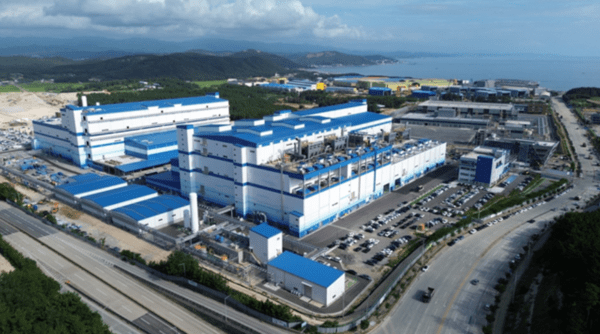
POSCO Future M's cathode material plant located in the Yeongilman 4 Industrial Complex in Pohang.
POSCO Future M's cathode material plant located in the Yeongilman 4 Industrial Complex in Pohang.
POSCO Future M has reached an agreement with a South Korean battery manufacturer to supply more than 190,000 metric tons of lithium iron phosphate (LFP) cathode materials under a long-term contract.
The company said on Aug. 6 that it agreed to supply more than 190,000 tons of LFP cathode materials over a six-year period from 2027 through 2032. The two companies plan to finalize detailed terms and sign a definitive supply agreement during the third quarter.
To support the supply program, POSCO Future M recently converted part of a high-nickel cathode production line at its Pohang plant into an LFP cathode production line. The company is currently conducting customer qualification procedures for prototype products and plans to begin mass-production shipments by the end of this year.
POSCO Future M said it will strengthen price competitiveness by leveraging raw-material advantages within the POSCO Group. The company plans to lower production costs by utilizing iron oxide generated as a byproduct of steelmaking processes and lithium produced from salt lake operations in Argentina.
The company is also in discussions with other battery manufacturers regarding additional LFP cathode material supply agreements. It said production capacity will be expanded in line with future order intake.
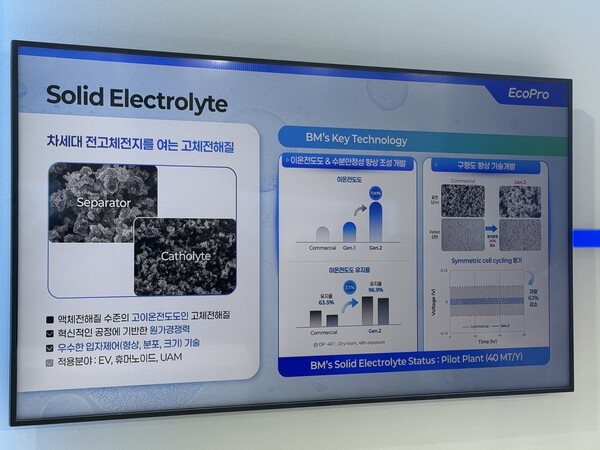
EcoPro BM's solid electrolyte technology showcased at InterBattery 2026 in March. (Photo: THE ELEC)
EcoPro BM's solid electrolyte technology showcased at InterBattery 2026 in March. (Photo: THE ELEC)
EcoPro BM said its sulfide-based solid electrolyte development project for all-solid-state batteries has been selected for South Korea's third-generation "Super Eul" program, a government initiative led by the Ministry of Trade, Industry and Resources to foster globally competitive materials, components and equipment technologies.
The company said on Aug. 6 that its sulfide-based solid electrolyte project was chosen as a beneficiary of the program. The Super Eul initiative is a research and development (R&D) support scheme designed to cultivate key companies capable of securing world-leading technologies in strategic materials, components and equipment sectors. Selected projects can receive up to 20 billion won in R&D funding over a period of more than seven years.
Sulfide-based solid electrolytes are a key material for all-solid-state batteries. They are considered a promising next-generation battery material due to their high ionic conductivity and strong safety characteristics.
EcoPro BM currently operates a pilot plant with annual production capacity of 40 metric tons of sulfide-based solid electrolytes. The company said it has completed qualification processes with major battery manufacturers and is targeting mass production in 2027. It has finalized the design of its commercial production line and plans to build manufacturing facilities in line with customer demand.
In addition to solid electrolytes, EcoPro BM is also developing cathode materials for all-solid-state batteries. The company aims to strengthen its competitiveness in next-generation battery materials by leveraging its existing expertise in high-nickel cathode technologies.
"Discussions are under way with major customers regarding pilot-scale production, and the earliest timeline for mass production is expected to be 2027," said Gong Bo-hyun, vice president of research and development at EcoPro BM. "We have completed the design of the production line and are prepared to begin construction immediately once customer demand is confirmed."
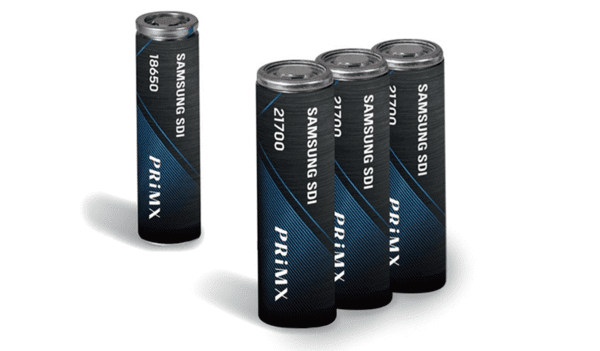
Samsung SDI's 18650 and 21700 cylindrical batteries.
Samsung SDI's 18650 and 21700 cylindrical batteries.
Shinheung SEC, a key supplier to Samsung SDI, is increasing production capacity for cylindrical battery components by 20% as demand for battery backup units (BBUs) used in artificial intelligence (AI) data centers drives a shortage of cylindrical batteries.
According to industry sources on Aug. 6, Shinheung SEC is expanding production facilities for cylindrical battery current interrupt devices (CIDs) at its Malaysian plant. Monthly production capacity will increase from 80 million cylindrical-cell components to 100 million units.
Shinheung SEC supplies 80% to 90% of the cap assemblies and core CID components used in Samsung SDI's cylindrical batteries. The company is the exclusive supplier for Samsung SDI's Malaysian cylindrical battery plant.
Batteries are generally categorized into cylindrical, prismatic and pouch formats. Cylindrical batteries consist of electrodes housed within a metal cylinder. The cap assembly serves as the battery's top cover and contains safety components such as the CID, a positive temperature coefficient (PTC) device that controls overcurrent, and a vent for gas release.
Among these components, the CID is a critical safety device that disconnects electrical current and releases internal gas when battery pressure rises, reducing the risk of explosion.
The expansion is being driven by Samsung SDI's growing cylindrical battery production. Malaysia serves as the company's main production base for cylindrical cells. Since 2022, Samsung SDI has invested approximately 1.7 trillion won to establish production lines for 2170 cylindrical batteries, which measure 21 millimeters in diameter and 70 millimeters in height.
Following the expansion, production and sales at the Malaysian battery plant initially fell short of expectations due to slowing demand in power tools and micromobility applications such as electric bicycles. However, market conditions have changed as demand for AI data center BBUs has surged.
BBUs provide emergency power for server racks in data centers. Because server environments require compact form factors and high instantaneous power output, high-performance cylindrical batteries are commonly used.
"Samsung SDI expanded its Malaysian production capacity first, but when output remained weak in the early stages, there was little need for suppliers to increase component capacity," an industry source said. "Recently, demand from AI data centers has risen sharply, significantly boosting cylindrical battery production, and Shinheung SEC is now accelerating facility expansion to keep pace."
Based on the supply capacity of Shinheung SEC's Malaysian operations, Samsung SDI's Malaysian plant is estimated to have annual cylindrical-cell production capacity exceeding 1.2 billion cells. Using an industry assumption that 100 million cylindrical cells correspond to roughly 2 gigawatt-hours (GWh), annual capacity is estimated at more than 24 GWh.
Samsung SDI Energy Malaysia (SDIEM) reported first-quarter revenue of 311.3 billion won this year, more than doubling from 142.0 billion won a year earlier. Annual revenue reached 1.06 trillion won last year, surpassing the 1 trillion won mark again for the first time since 2023.
Shinheung SEC's Malaysian subsidiary also posted strong growth. First-quarter revenue increased to 11.2 billion won from 2.6 billion won a year earlier. Revenue from its small cylindrical CID business rose from 11.0 billion won, representing 10.6% of total sales, in the first quarter of last year to 25.3 billion won, or 20.5% of total sales, in the first quarter of this year.
The company's earnings are expected to improve further beginning in the fourth quarter. Samsung SDI is scheduled to begin mass production of lithium iron phosphate (LFP) prismatic batteries for energy storage systems (ESS) in October at StarPlus Energy (SPE), its joint venture with Stellantis in Indiana.
Shinheung SEC will supply prismatic battery cap assemblies for those batteries. Prismatic cap assemblies are the company's core business, generating first-quarter revenue of 88.5 billion won, up about 6% from 83.5 billion won a year earlier.
The Korea IR Council projects that Shinheung SEC's operating profit will increase from 5.9 billion won in 2025 to more than 20 billion won in 2026, driven by expanding prismatic cap assembly shipments to SPE and rising demand for cylindrical battery components used in AI data centers.
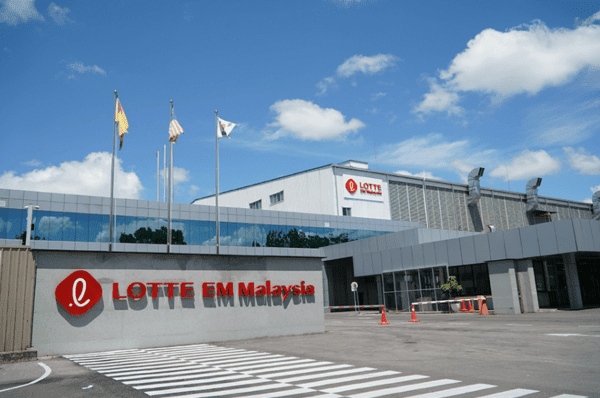
Lotte Energy Materials' manufacturing facility in Malaysia.
Lotte Energy Materials' manufacturing facility in Malaysia.
Lotte Energy Materials plans to bring its Malaysian battery copper foil manufacturing operations to full production capacity by the end of this year.
The company reported second-quarter revenue of 194.2 billion won and an operating loss of 16.9 billion won on Aug. 6. Revenue increased 21.5% from the previous quarter, driven by higher sales of high-power small batteries, copper foil for North American energy storage systems (ESS), and circuit foil products.
Demand from battery backup units (BBUs) and high-power batteries used in power tools supported performance during the quarter. Sales of copper foil for North American ESS applications and circuit foil used in artificial intelligence (AI) substrates also remained solid.
Lotte Energy Materials plans to expand production capacity at its Malaysian facilities. The company began operations at its fifth Malaysian plant in July and intends to move forward the start-up of its sixth plant from next year to the fourth quarter of this year. It aims to transition its Malaysian operations to a fully operational production and sales system within 2026.
Demand for high-performance circuit foil is also increasing as investment in AI data centers accelerates. The circuit foil market is shifting away from products primarily used in conventional information technology devices toward higher-end offerings, including reverse-treated foil (RTF), high-voltage low-profile (HVLP) foil and ultra-thin copper foil.
The company said demand for non-China products is growing, particularly among customers in North America.
“We will respond to demand from the AI data industry through our portfolio of advanced circuit foil and battery copper foil products,” Chief Executive Officer Kim Yeon-seop said. “We will strengthen our production capabilities and pursue earnings growth.
America’s 250th birthday on July 4th marked the last day to “safe harbor” a new solar project and still get the 30% solar tax credit – a milestone that many feared would mean the death of home solar. 28 days (ish) later, though, the industry is anything but dead.
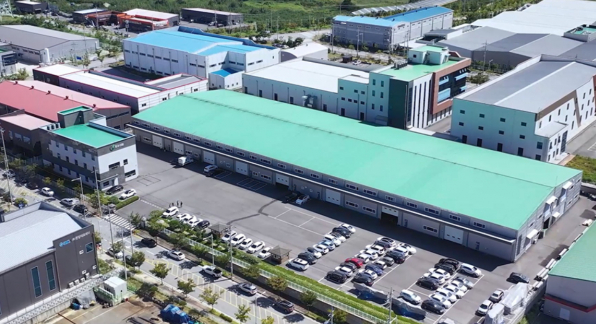
GI Tech headquarters in Asan, South Chungcheong Province (Photo: GI Tech)
GI Tech headquarters in Asan, South Chungcheong Province (Photo: GI Tech)
GI Tech Chief Executive Officer Lee Sang-kwon has purchased 12,000 shares of the company on the open market.
GI Tech said on Aug. 4 that Lee acquired an additional 6,000 shares on Aug. 3, following a purchase of 6,000 shares in June.
The company said Lee decided to increase his stake after concluding that the recent share price does not fully reflect GI Tech's intrinsic value.
"Through the CEO's share purchase, we will continue to demonstrate responsible management and work toward sustainable growth and enhanced corporate value," a company official said. "Building on the competitiveness of our core business, we plan to maintain earnings growth while pursuing a range of shareholder-friendly initiatives."
GI Tech reported consolidated first-quarter revenue of 10.1 billion won and operating profit of 500 million won. Revenue increased 75.7% from a year earlier, while operating profit returned to positive territory.
The earnings improvement was driven by increased shipments of slot-die equipment for energy storage systems (ESS) used in US battery plants, as well as higher sales of pump systems.
The company plans to strengthen its presence in North America by commencing full-scale operations at its Crown Point, Indiana facility in the second half of this year.

 Login