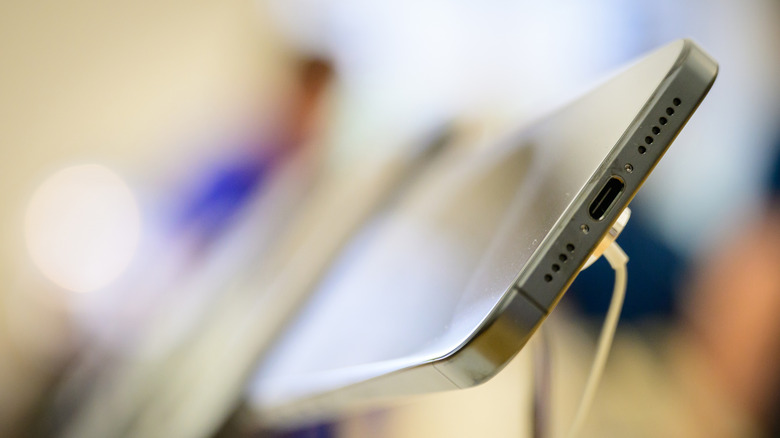
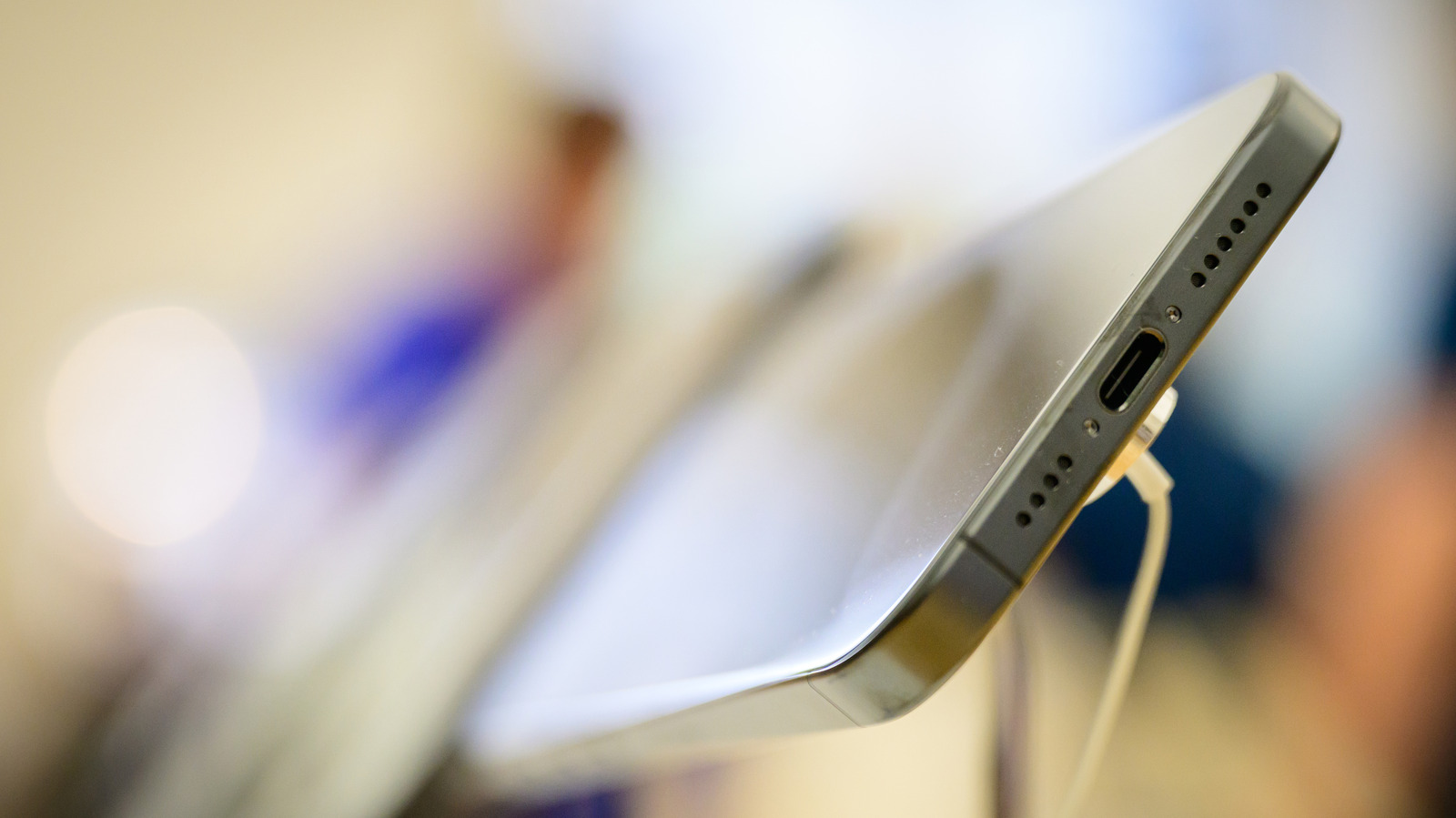
A USB-C port presents a lot of options for data transfer and connecting to accessories. Let's talk about some of the most useful ways to employ your USB-C port.
Apple dominated the premium smartphone segment in the first half of 2026, holding a commanding 65% market share, according to Counterpoint Research. The Cupertino company outpaced the broader industry as devices priced at $600 and above (wholesale average selling price) accounted for a record 29% of overall global smartphone sales.
Premium smartphone unit sales grew 5% year-over-year in H1 2026, outperforming the overall market. This marked a rise from 25% share in H1 2025 and 20% in H1 2022. Counterpoint attributed much of the latest jump to rising memory and component costs, which hit low- and mid-tier devices harder. As prices for mid-range Android phones climbed, the gap with premium models—including older or discounted flagships—narrowed, making higher-end upgrades more attractive. Manufacturers also expanded financing, trade-in, and buyback programs to improve affordability.
Apple’s premium segment shipments rose 9% year-over-year, fueled by strong demand for the iPhone 17 series, particularly the base model. This reversed a prior-year slowdown linked to intensified competition in China, the world’s largest premium smartphone market. Apple’s share edged up from 63% in H1 2025 but remains below the 74% peak recorded in H1 2022.
Global Smartphone Premium Segment Brand Unit Sales Share H1 2022 to H1 2026 Source: Counterpoint Research Global Handset Model Sales Tracker, Jun 2026 (Prelim). Premium Segment includes smartphones with a wholesale price of $600 and above.
Samsung held steady at 19% of the premium market (up from 17% in 2022) and posted 3% year-over-year growth despite a later-than-usual launch of the Galaxy S26 series. Together, Apple and Samsung controlled 84% of global premium smartphone sales, up from 82% a year earlier.
Among other players, OPPO recorded the fastest growth at 69% year-over-year, driven by its Find X9 series, while Vivo grew 20%. The remaining 16% of the premium segment was shared among Chinese brands including Huawei, Xiaomi, OPPO, and Vivo.
“Rising memory and component costs are reshaping smartphone pricing and creating opportunities for OEMs to accelerate premiumization,” said Counterpoint Senior Analyst Harshit Rastogi in a statement. “As mid-segment Android smartphone prices rise, the price gap with premium devices, especially older or discounted flagship models, is narrowing. This trend makes flagship smartphones a better upgrade option for consumers. To support this shift, OEMs are expanding financing, trade-in and buyback programs to improve affordability.”
MacDailyNews Take: The data underscores a continued shift toward higher-priced devices even as the broader smartphone market faces volume pressures. Premiumization is expected to persist, supported by better component access for leading brands, steady demand among higher-income consumers, and expanded financing options. In other words; More great news for Apple!
Please help support MacDailyNews — and enjoy subscriber-only articles, comments, chat, and more — by subscribing to our Substack: macdailynews.substack.com. Thank you!
Da Xiaomi à Realme, reunimos os smartphones com as maiores baterias à venda no mercado português, todos equipados com a tecnologia de silício-carbono que tem vindo a redefinir a autonomia da última geração de smartphones.
Sem grandes "trocas de cadeiras", o mais recente ranking da AnTuTu, dedicado aos smartphones Android mais poderosos de julho, continua a ser liderado pelo iQOO 15 Ultra, numa lista dominada por modelos equipados com o processador Snapdragon 8 Elite Gen 5.
Google will reveal the Pixel 11 series later this month, but leaks and teasers so far have painted a picture of phones that have barely changed since last year. One notable exception seems to be the illuminated dot from some of the teasers. This has been rumored as "Pixel Glow," but a new leak all but confirms a different (and less interesting) name. Say hello to HiLight.
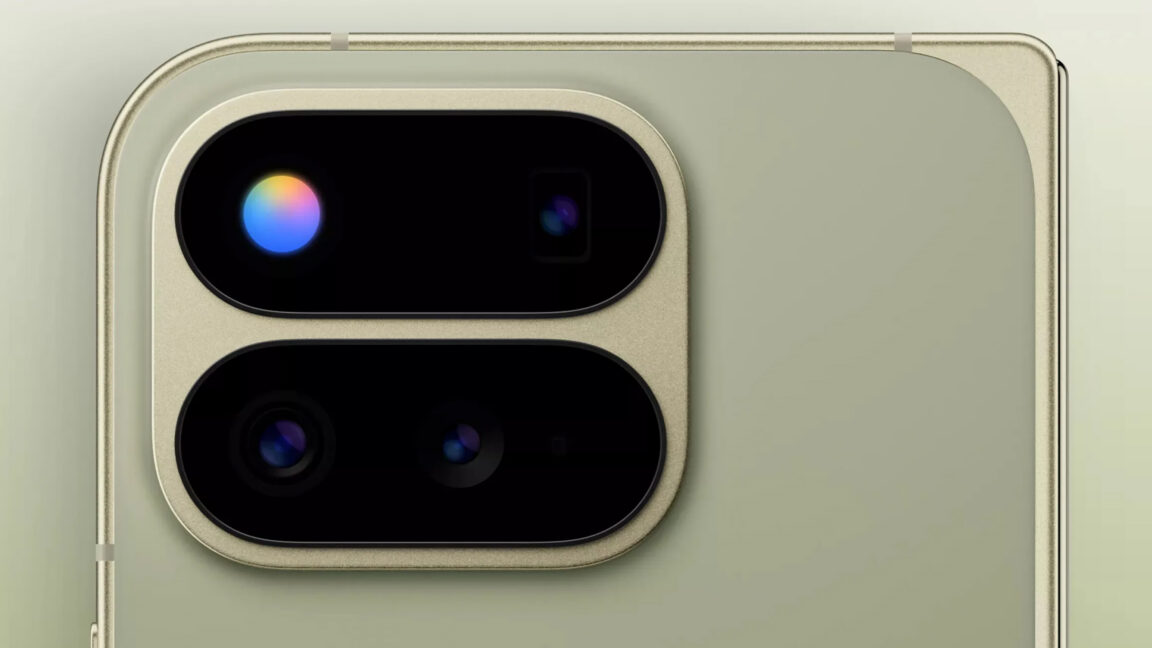
A post on Bluesky by WinFuture's Roland Quandt shows the new LED inside the camera module of the Pixel 11 Pro Fold. We can see the actual body of the device rather than a shadowy outline as in Google's teasers, and it does look a bit different than the previous Pixel Fold.
The camera bump on the Pixel 11 Pro Fold is smaller, with no separate section for the flash off to the right. It appears that HiLight is the flash. Presumably, it still works as a flashlight and camera flash, but it can also produce a range of colors.
Chinese smartphone makers have been followers in the global market, embracing the concepts and paradigms set in the past 20 years by Apple and Google. But AI may be giving the Chinese an opportunity to break away and set their own path forward.
Specifically, Chinese companies are integrating AI more fully into smartphones, and also using AI for limited robotics in phones. Here’s what you need to know about these emerging trends.
China’s ZTE recently showed its Nubia NaviX Ultra. The phone runs ByteDance’s Doubao AI agent, which users can access with voice commands or by pressing a button on the phone. The phone has no home screen and no conventional app store.
Another Chinese company, called StepFun — it was founded in 2023 by Jiang Daxin, a former Microsoft vice president and chief scientist at Microsoft’s Software Technology Center Asia — sells a phone called the StepX Neo. It runs a proprietary operating system called Step AOS based on Android, Linux, and an RTOS containing a built-in AI agent called Step Amoo. The StepX Neo splits phone functions into four primitives (communication, apps, files, system tools) that the agent recombines based on the stated goals of the user.
Honor, a phone maker spun off from Huawei, has an AI agent the company built with input from Alibaba called the YOYO Intelligent Agent. It ships on Honor’s entire MagicOS 10-eligible lineup.
Note: an American company is enabling this. All three phones use Anthropic’s Model Context Protocol (MCP) to give system-level access to the agents.
None of these phones will become available in the United States. ZTE is banned from the US by the FCC over national-security concerns, while the StepFun and Honor phones are built for the Chinese market with no US version planned.
All modern smartphones can run AI. By simply visiting the Apple App Store or the Google Play Store, anyone can download dozens of AI apps, including those offered by the frontier model companies. Or they can use the AI services and tools built in to phones by Apple and Google.
How agentic AI phones are different
What’s different about the new agentic AI phones in China is that the operating system itself has an agentic AI layer that enables it to function across apps and instead of apps.
While agentic AI phones represent a minority of the current market, they feel like the future. And that future is consequential. First, it’s a another step toward independence from Android. Google’s services layer is already gone from China. Now the Android app layer is being replaced by vertically integrated agent stacks owned by Chinese super-app companies.
Despite building agentic features that cross app boundaries to a limited degree, Apple and Google are unlikely to allow third-party agents to replace the app layer of their mobile OSs anytime soon.
Apple takes 15% to 30% of app revenue. And (according to an estimate introduced during the Epic v. Apple/Google litigation but not confirmed by Google), the Play Store has historically accounted for somewhere between 17% and 26% of Google’s operating income. The entire economic logic of iOS and Android depends on apps. An agentic layer that dissolves those apps into tasks isn’t something either company wants to think about. The Chinese OEMs can blow up the app model because they had no stake in it.
Meanwhile, the AI trend is suffocating mobile app in-app purchases, which dropped by roughly 40% by early 2026, even as people pay more for those purchases compared to a few years ago (because they’re dominated by subscriptions to AI and vibe-coded apps). In other words, even inside the app stores, there’s a shift from the old app model to AI replacements.
AI is not only changing the software model, but the hardware model, too.
Robot phones
Another categorical way China is splitting off from the global smartphone concept is the nascent market of robot phones. A robot phone is one that uses AI to control physical robotic components on an actual phone.
The leading contender in this field is a device called the Honor Robot Phone, which I wrote about in March. A leaked unboxing video of the Honor Robot Phone appeared this week on the Chinese social network Weibo.
The robotic element is a gimbal with a 200-megapixel camera on it. One basic use is that the phone can remain stationary while propped up on a table or clamped to a tripod, while the camera tracks a moving subject using AI. Another use is to walk while using it and let the gimbal smooth out the jiggling and movement. Software on the phone also enables automated cinematic special effects.
But the real leap forward is in “self expression” for the phone. The Honor Robot Phone exhibits subtle Attachment Economy features. It shakes its “head” no and nods yes. And it can do a “backflip” to “cheer you up.” The phone gets a personality.
Honor plans to launch the phone on Aug. 12 in China.
So-called “robot phones” are even more rare in China than agentic AI phones. Still, the Honor Robot Phone represents another Chinese departure from the Silicon Valley smartphone hardware model of a static pane of glass. The Honor Robot Phone has a body. It feels like the future, too, as it’s one of the rare products in the emerging Attachment Economy, where humanlike attributes (in this case, gestures and body language) are deployed to make the consumer more “attached” to devices that seem like they have thoughts and feelings.
The AI future of phones
As the Chinese smartphone market splits off from the American one, it presents an alternative for the world. Because if the agentic AI phones succeed in China, they’ll almost certainly be offered internationally.
That represents not only hardware sales, but the penetration of Chinese super-apps, Chinese financial services, Chinese AI-based information (and along with it, the Chinese government’s world view, we can expect).
The only question is: Will the world prefer the Chinese agentic AI approach or the US AI app model?
Adding to the complexity is the coming wave of AI wearables, most of which will likely be wirelessly “tethered” to smartphones that provide intelligence and connectivity. Soon, we’ll be conversing with our glasses and watches. Our glasses and watches will be “conversing” with our phones. And our phones will be conversing with AI models that represent the values, beliefs and biases of their creators.
The Chinese agentic AI movement represents a split in how phones work and how the people worldwide interact with information, technology and each other.
AI disclosures: This article is 100% human-written by the author, Mike Elgan. Some research, ideation, and fact- and grammar-checking was performed using AI tools.
 Login