❌

Reading view

La Brea Tar Pits Yield New Species of Ice Age Toad

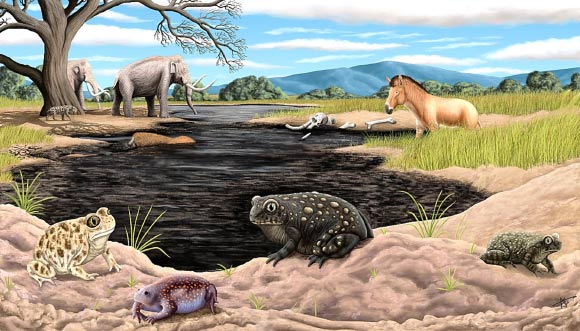
Reconstruction of Spea labreae (center and right) in La Brea Tar Pits compared with Spea hammondii (left), the species currently present in the area, and the presence of the Mexican burrowing toad (bottom). Image credit: Arturo DΓ‘valos.

Paleontologists studying the La Brea Tar Pits, one of the world’s richest Ice Age fossil sites, have identified a previously unknown species of spadefoot toad that lived in what is now California during the latest Ice Age.

The post La Brea Tar Pits Yield New Species of Ice Age Toad appeared first on Sci.News: Breaking Science News.
  •  

Tiny New Primate Species Emerges from 50-Million-Year-Old Wyoming Sandstone

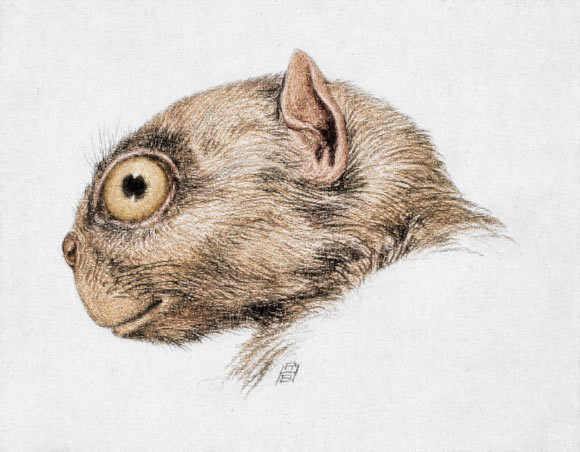
Tetonius homunculus (colorized) by R. Bruce Horsfall from W.B. Scott’s History of Land Mammals in the Western Hemisphere.

Paleontologists working in southern Wyoming have identified a previously unknown species of omomyid primate, adding a new chapter to the story of one of the best-studied fossil lineages in North America.

The post Tiny New Primate Species Emerges from 50-Million-Year-Old Wyoming Sandstone appeared first on Sci.News: Breaking Science News.
  •  
  •  

244-Million-Year-Old Fossil Preserves Earliest Reptilian Digestive System

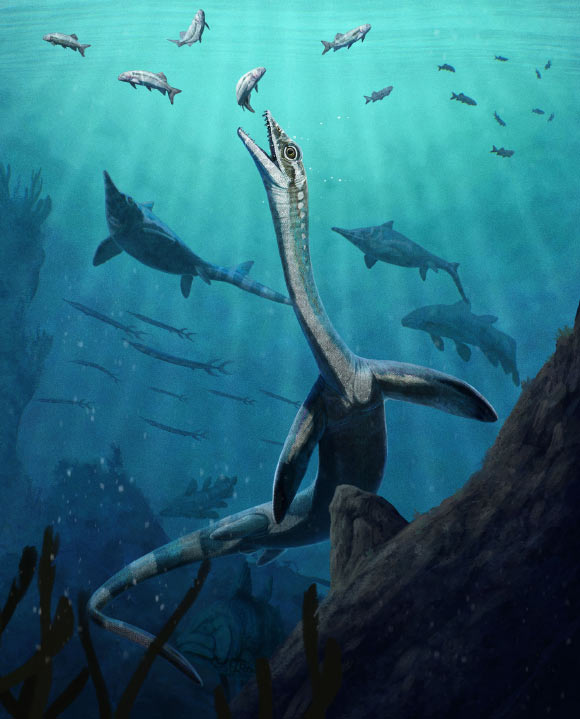
Life reconstruction of Austronaga minuta. Image credit: Gabriel Ugueto.

An exquisitely preserved specimen of Austronaga minuta, a small, long-necked marine reptile from the Triassic of China, contains a fossilized stomach, liver and intestines, offering paleontologists their oldest detailed glimpse yet of how early reptiles digested food.

The post 244-Million-Year-Old Fossil Preserves Earliest Reptilian Digestive System appeared first on Sci.News: Breaking Science News.
  •  
❌