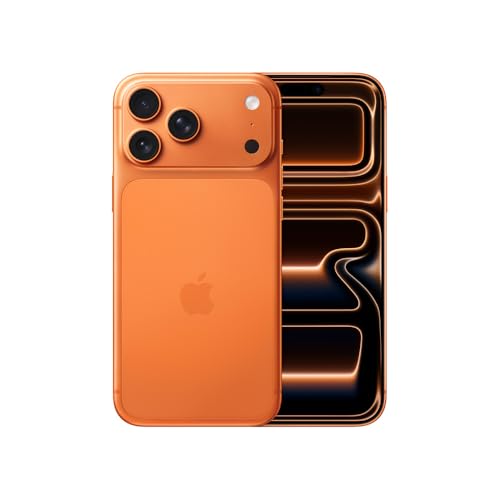
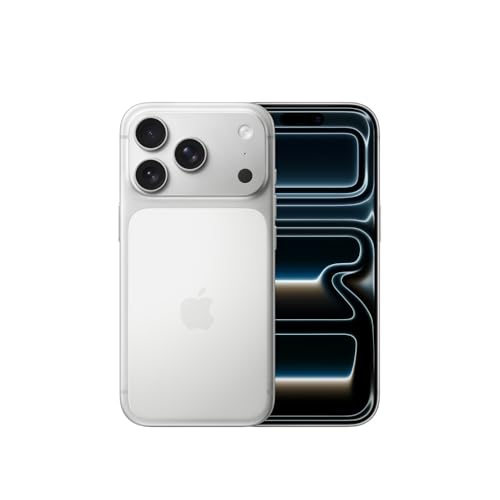
Após o aumento dos preços de iPads e Macs — e até de Apple TVs e HomePods — em decorrência da crise dos componentes de memória, muito foi especulado sobre quando os iPhones poderiam ganhar o mesmo destino.
No entanto, o leaker conhecido como Fixed Focus Digital repercutiu, em uma publicação no Weibo, a possibilidade de a empresa aumentar o preço do iPhone 17 já no dia 10 de agosto (próxima segunda-feira).
O leaker não é a fonte da informação propriamente dita; de fato, segundo ele, “há rumores de que o iPhone 17 aumentará os preços em 10 de agosto”, apontando ainda que “é difícil dizer se vai subir [o preço] ou não.”
Também não é possível confirmar se os rumores fazem referência apenas ao iPhone 17 em si ou à linha atual como um todo — o que é bem mais provável. Entretanto, considerando que o modelo base poderá permanecer à venda por mais tempo do que os iPhones 17 Pro, é possível que apenas ele tenha o preço reajustado — e quem sabe o iPhone Air.
De qualquer forma, caso essa possibilidade se concretize, tal reajuste poderá “amenizar” os aumentos previstos com os “iPhones 18 Pro” — que, na pior das hipóteses, poderão chegar a US$300.
iPhone 17 Pro Max
Cores: prateado, laranja-cósmico ou azul-intenso Armazenamento: 256GB, 512GB, 1TB ou 2TB
NOTA DE TRANSPARÊNCIA: O MacMagazine recebe uma pequena comissão sobre vendas concluídas por meio de links deste post, mas você, como consumidor, não paga nada mais pelos produtos/serviços usando os nossos links de afiliado.
The iPhone Air reaches one year on sale next month, and Apple is now closer to launching its successor than it is to the original's debut. On this week's episode of The MacRumors Show, we discuss what's next for the device.
The first-generation model has had a difficult run. A KeyBanc Capital Markets survey found virtually no demand for the device within weeks of its September 2025 launch, supply chain analyst Ming-Chi Kuo reported that suppliers were asked to cut capacity by more than 80% between launch and early 2026, and Luxshare and Foxconn both wound down production, leaving the phone believed to be entirely out of manufacture. Apple discounted it heavily in March, and SellCell data put its ten-week depreciation at 44.3% on average, against 34.6% for the iPhone 17 series. The Weibo leaker known as "Digital Chat Station" said in May that the device had barely surpassed 700,000 activations even after multiple rounds of price cuts.
A single rear camera left a $999 phone looking less capable than the cheaper iPhone 17, which has two, and the absence of the iPhone 17 Pro's vapor chamber cooling means the Air runs warmer under load. It also lacks stereo speakers. Battery life falls short of a full day for many users, mitigated in part by the dedicated MagSafe battery accessory Apple sells alongside it. With the iPhone 17 Pro starting at $1,099, the Air occupies a $100 gap that gave buyers little reason to stop there.
Almost every change rumored for the second-generation model targets one of those points. Bloomberg reported in June that Apple will add an Ultra Wide lens alongside the existing 48-megapixel Fusion camera, and that the dual-lens design has reached advanced testing with the same exterior as the current model save for the extra lens.
Almost everything other than the battery sits inside the iPhone Air's camera plateau, and Apple has reportedly asked suppliers for an ultra-thin Face ID module to free up space. The company also plans to adopt Samsung's CoE display technology, which is thinner and brighter than the current panel and debuts first on the foldable iPhone. Digital Chat Station expects a 3,500mAh battery, up from 3,149mAh, and The Information reported that Apple wants the device to be lighter and to gain vapor chamber cooling despite the added hardware.
The device will also likely feature the A20 Pro chip, binned in some form like its predecessor, along with Apple's second-generation N2 wireless networking chip, the C2 modem, and 12GB of RAM, unchanged from the current model. Externally, little is expected to change beyond the additional rear camera, but Pu expects a slightly smaller Dynamic Island, in line with the wider iPhone 18 lineup. A lavender color option could replace Sky Blue.
Pricing is the biggest open question. The Information reported that Apple is considering a lower price for the second model, but the surrounding lineup is moving too. Pu expects the iPhone 18 Pro and Pro Max to cost $250 to $300 more than the current Pro models owing to 2nm silicon and memory costs, and the foldable iPhone is rumored to start somewhere between roughly $2,000 and $2,500. A widened gap between the Air and the Pro tier could change the calculation that undermined the original, particularly once the camera disparity with the standard iPhone disappears.
Apple's confidence in the fall lineup appears to be growing in the meantime. The company reportedly told suppliers to prepare roughly 10 million foldable iPhones this year, up from an earlier forecast of seven to eight million, and has booked parts for around 80 million smartphones in the second half of 2026. Samsung, meanwhile, says the Galaxy Z Fold 8, Z Fold 8 Ultra, and Z Flip 8 drew 1.44 million pre-orders in South Korea across seven days, a company record, with the redesigned Z Fold 8 accounting for close to half of them.
The iPhone 18 Pro, iPhone 18 Pro Max, and foldable iPhone are expected in September, and Apple has already begun preparing for the event, opening a lottery for U.S. retail employees to staff it. The MacRumors Show has its own YouTube channel, so make sure you're subscribed to keep up with new episodes and clips.
If you haven't already listened to the previous episode of The MacRumors Show, catch up to hear our discussion about the iOS 27 beta, talking through our experiences with Siri AI, Liquid Glass refinements, and more.
The MacRumors Show is on X @MacRumorsShow, so be sure to give us a follow to keep up with the podcast. You can also email us at podcast@macrumors.com or head over to The MacRumors Show forum thread. Remember to rate and review the podcast, and let us know what subjects and guests you would like to see in the future.
FaceTime Dual Capture is bringing simultaneous front-and-rear camera streaming to video calls in iOS 27, allowing compatible iPhones to show the caller and their surroundings without repeatedly switching between cameras.
The feature expands technology Apple introduced with the iPhone 17 family. Dual Capture already allows the Camera app to record through the Center Stage front camera and a rear camera at the same time. iOS 27 brings a similar capability directly into live FaceTime calls.
During a call, the front camera can continue showing the speaker while the rear camera displays whatever the iPhone is pointing toward. Someone attending a concert can share the performance and remain visible. A parent can show a child playing without disappearing from the conversation. A person asking for technical assistance can remain on screen while directing the rear camera toward the equipment causing the problem.
Dual Capture removes the awkward sequence of switching to the rear camera, showing something, and switching back to continue speaking face to face. Both perspectives remain available inside the same call.
Image Credit: Thomas Trutschel Photothek/Getty Images
FaceTime Dual Capture Changes Camera Switching
The normal FaceTime camera control changes from a simple front-or-rear choice on supported iPhones. When the caller activates the rear camera, iOS 27 keeps the front camera visible by default.
The main view displays the rear camera feed while a smaller window contains the front camera image. This picture-in-picture arrangement gives the other participant a continuous view of the caller’s reaction, commentary, or explanation.
To activate both cameras during a supported FaceTime call:
FaceTime > Start a video call > Tap the Flip button
Tapping the Flip button turns on the rear camera without immediately removing the front view. The other participant begins receiving both perspectives as part of the FaceTime stream.
The caller can disable the front view when it is no longer needed. This provides a conventional rear-camera presentation for situations where the surroundings should occupy the complete image.
To return to a single camera view:
FaceTime > Tap the camera view > Disable the front camera
The exact labels and placement may change before the public release of iOS 27 because the feature is still being tested in beta software. Its basic behavior is already established: the Flip control activates the rear camera while retaining the front camera feed.
Dual Capture does not create two independent FaceTime calls. Both images belong to one video stream, so the caller does not need a second account, device, or invitation.
The feature also differs from screen sharing. FaceTime screen sharing transmits applications and interface activity from the iPhone display. Dual Capture transmits live video from two physical cameras.
Image Source: Google
Which iPhones Support Dual Capture
Apple has limited FaceTime Dual Capture transmission to the iPhone 17, iPhone 17 Pro, iPhone 17 Pro Max, and iPhone Air. Each model includes Apple’s 18MP Center Stage front camera and the Dual Capture capability introduced in the Camera app.
An older iPhone that supports iOS 27 cannot originate a Dual Capture stream. It continues to use the normal option of selecting either the front camera or a rear camera during a call.
Older models can still receive and display a Dual Capture feed when they are running iOS 27. This allows an iPhone 16 or another supported device to see both views transmitted from an iPhone 17, even though it cannot send the same presentation back.
Both participants need iOS 27 for the new FaceTime layout to work as intended. The transmitting device must also be one of the supported iPhone 17-generation models.
This limitation is based on Apple’s official feature support rather than the simple presence of front and rear cameras. Earlier iPhones have camera hardware capable of operating in several multi-camera applications, but Apple has not extended its native Dual Capture implementation to them.
Third-party applications have offered forms of simultaneous multi-camera recording for years through Apple’s developer frameworks. The difference is that iOS 27 integrates the experience into FaceTime, where users can activate it through the familiar camera-switching control.
iPhone 17 Owners Receive a Second Dual Capture Feature
Describing FaceTime Dual Capture as retro-compatible with the iPhone 17 does not fully explain its relationship with the hardware. The iPhone 17 family introduced Apple’s native Dual Capture recording in 2025, and iOS 27 now gives that existing camera system another purpose.
Inside the Camera app, Dual Capture produces a saved video containing front and rear views. Apple lists support for recording at up to 4K Dolby Vision at 30 frames per second on the iPhone 17.
FaceTime uses the camera pairing for live communication instead. Network quality, bandwidth, device temperature, and FaceTime processing can affect the transmitted resolution, so users should not assume that a call will preserve the Camera app’s maximum 4K recording specification.
The Center Stage front camera also contributes more than resolution. Its square sensor gives the iPhone greater freedom to adjust framing without requiring the device to be physically rotated. Center Stage can help keep the caller positioned inside the smaller front-camera view while the rear camera follows the subject being shared.
That combination makes Dual Capture more useful than placing two untreated camera feeds beside each other. FaceTime can preserve the speaker’s presence while directing most of the screen toward the event, object, or location being discussed.
The feature may require more processing power and energy than an ordinary single-camera call. Running two camera sensors while encoding and transmitting live video can increase battery consumption and device temperature, especially during long calls over cellular data.
Apple has not published separate battery estimates for Dual Capture FaceTime calls. Users planning extended sessions may want access to power and a stable Wi-Fi connection.
iOS 27 Prepares FaceTime for iPhone 18
FaceTime Dual Capture arrives shortly before Apple’s expected iPhone 18 generation, making it likely to become part of how the company demonstrates the new phones’ camera and communication abilities.
Apple has not announced the iPhone 18 lineup or confirmed its final camera specifications. Compatibility with FaceTime Dual Capture is therefore expected from the software’s “iPhone 17 and newer” positioning, but individual iPhone 18 models should not be treated as confirmed until Apple presents them.
The software release gives existing iPhone 17 owners access without requiring another hardware purchase. That approach also provides Apple with a working FaceTime feature before the next iPhone launch rather than introducing the camera mode and communication interface at the same moment.
Future hardware could improve the experience through faster processors, stronger image stabilization, upgraded sensors, or more efficient video encoding. None of those additions is required for the supported iPhone 17 family, which already contains the camera system needed to transmit both views.
Dual Capture is only one part of the FaceTime update. Apple is also improving video-call quality when the network connection is weak, addressing a problem that becomes especially relevant when two live camera views require transmission. Traditional Chinese support is joining FaceTime Live Captions as well.
The weak-connection improvement may determine how dependable Dual Capture becomes away from Wi-Fi. A feature designed for travel, events, repairs, and outdoor calls needs to tolerate changes in cellular bandwidth without freezing both views or forcing the session to end.
FaceTime Dual Capture remains part of the iOS 27 beta as Apple prepares the public update for September. Apple can still adjust the interface, performance, device requirements, and picture-in-picture behavior before the completed software reaches iPhone 17 owners.

 Login