
❌

Reading view

Daeduck Electronics Posts Record Quarter as Operating Profit Surges 3,599%
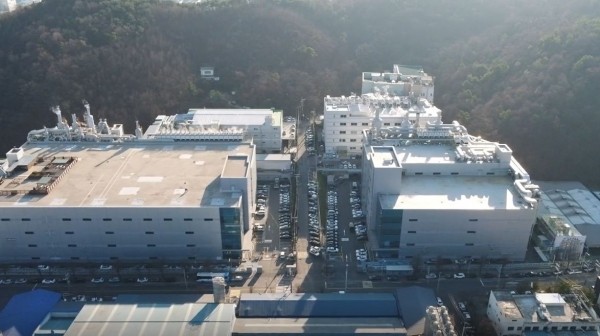
Daeduck Electronics' flip-chip ball grid array (FC-BGA) manufacturing facility at its headquarters.

Daeduck Electronics reported record quarterly results as demand for semiconductor substrates used in artificial intelligence (AI) servers and data centers continued to expand. Operating profit surged 3,599% from a year earlier.

The company said on July 31 that it posted consolidated revenue of 401.0 billion won and operating profit of 70.3 billion won for the second quarter of 2026. Revenue increased 63% year over year, while operating profit jumped 3,599%. Compared with the previous quarter, revenue rose 16% and operating profit increased 37%.

Operating margin reached 17.5%, up 2.7 percentage points from 14.8% in the first quarter.

Growth was driven by higher sales of high-value semiconductor substrates for AI and data center applications.

"Performance continued to improve on the back of growing demand for high-performance semiconductors in AI and data center markets and strengthened business competitiveness," the company said.

Revenue from the company's core package substrate (PKG) business reached 343.5 billion won, up 65% from a year earlier and 18% from the previous quarter. Demand increased for controllers, optical modules and networking products used in AI data centers. Sales of automotive radar and advanced driver assistance system (ADAS) products also expanded. Improved product mix, higher productivity and favorable foreign exchange rates contributed to profitability.

Revenue from the multilayer board (MLB) business totaled 57.5 billion won, rising 53% year over year and 4% sequentially. The company began mass production of next-generation AI products and saw increased sales for semiconductor inspection equipment and electronic design automation (EDA) applications. Demand for high-margin products in aerospace and defense markets also remained stable.

The company's revenue mix continued to shift toward AI-related products. Flip-chip ball grid array (FC-BGA) substrates accounted for 26% of revenue, up from 23% in the previous quarter. Flip-chip chip-scale package (FC-CSP) products represented 48% of revenue, compared with 46% in the prior quarter, reflecting stronger sales of high-value products for AI servers and data centers.

By contrast, the share of memory-related chip-scale package (CSP) productsβ€”including NAND flash, low-power DRAM (LPDDR5), SOCAMM and Compute Express Link (CXL) productsβ€”declined to 23% from 25%.

Daeduck Electronics expects growth to continue in the third quarter. The company plans to expand mass production of large-area substrates for AI data centers and accelerate new product development. It also aims to address growing demand for high-performance networking products and physical AI-related applications.
  •  

SK hynix Says ADR Regulations Prevented Disclosure of Shareholder Return Plans

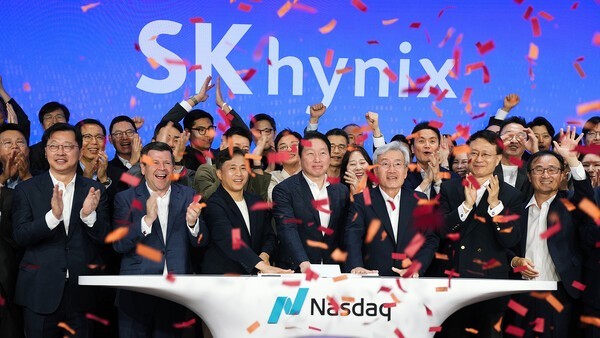
SK Group Chairman Chey Tae-won rings the opening bell to mark the start of SK hynix ADR trading on the Nasdaq market. (Photo: SK hynix)

SK hynix said it was unable to disclose additional shareholder return plans because of restrictions related to its American depositary receipt (ADR) offering and US securities regulations. The company expects to provide more specific details after the ADR process is completed in early August.

During the company's second-quarter earnings conference call on July 29, Song Hyun-jong, president of SK hynix's Corporate Center, said regulatory requirements tied to the ADR offering limited the company's ability to disclose new material information.

"Due to regulations and procedures related to the ADR offering, there are restrictions on providing additional material information that was not disclosed during the offering process," Song said. "We are reviewing various shareholder return options and will share specific plans with the market once they are finalized."

The restrictions are understood to stem from communication rules under Section 5 of the US Securities Act of 1933, which limit communications that could be interpreted as an offer to investors during a registered securities offering.

The US Securities and Exchange Commission (SEC) broadly interprets communications that could stimulate public interest in an issuer or its securities as potential offers. Violations of these restrictions are commonly referred to as "gun jumping."

The term originates from track-and-field competitions, where an athlete starts running before the starting gun is fired. In securities markets, it refers to the disclosure of new material information not included in an offering prospectus before the registration process is completed, potentially influencing investor decisions or market sentiment.

Because shareholder return measures such as share buybacks or special dividends could affect investment decisions, SK hynix was limited in what it could disclose while the registered offering remained in progress.

The company is expected to provide more detailed shareholder return plans after the ADR-related procedures conclude in early August.

Under Rule 174 of US securities regulations, prospectus delivery requirements remain in effect for up to 25 days after a newly registered public offering. During that period, investors must continue to receive offering-related information while post-offering procedures are completed.

An SK hynix spokesperson said the company expects to announce more specific shareholder return measures once the ADR process is finalized. The remaining post-offering procedures are expected to be completed on August 4.

SK hynix reported record quarterly results in the second quarter, posting revenue of 79.3187 trillion won and operating profit of 60.5426 trillion won. Despite the strong earnings, the company's share price fell nearly 10% on the day of the announcement, as investors were disappointed by the absence of additional shareholder return plans.

At the company's annual shareholders meeting earlier this year, Kwak Noh-jung, president of SK hynix, said the company aims to strengthen its financial position by building net cash to 100 trillion won over the long term while continuing to consider dividends and share repurchases.

As of the end of June, SK hynix held 69.37 trillion won in net cash, up from 35.01 trillion won at the end of March. The company is expected to reach 100 trillion won in net cash by the end of the third quarter.

  •  

SK Group Chairman Chey Tae-won Makes First-Ever Open-Market Purchase of SK hynix Shares

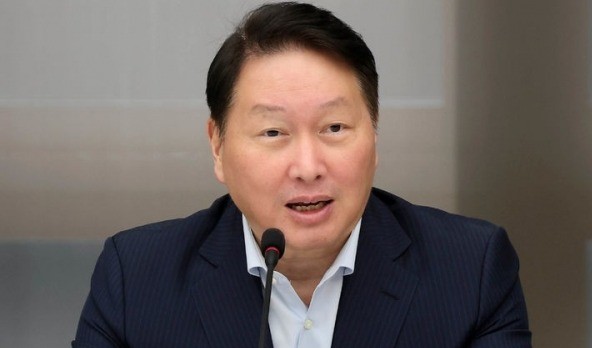
SK Group Chairman Chey Tae-won. (Photo: Korea Chamber of Commerce and Industry)

SK Group Chairman Chey Tae-won has made his first-ever direct open-market purchase of SK hynix shares, a move interpreted as a display of his commitment to responsible management following the company's record quarterly earnings.

According to a regulatory filing on DART, the Financial Supervisory Service's electronic disclosure system, Chey purchased 3,620 common shares of SK hynix on the open market on July 30. Based on the stock's closing price of 1,322,000 won that day, the purchase was valued at approximately 4.79 billion won.

The transaction increased Chey's direct ownership of SK hynix shares from zero to 3,620 shares. Total holdings by the company's largest shareholder and related parties increased from 146,124,531 shares to 146,128,151 shares, while the ownership stake remained unchanged at 20.00%.

The purchase marks the first time Chey has directly acquired SK hynix shares in the open market. The move is seen as a display of responsible management, reflecting confidence in the company's mid- to long-term growth potential and corporate value amid the recent decline in the share price.

SK hynix reported record quarterly results on July 29, posting revenue of 79.3187 trillion won and operating profit of 60.5426 trillion won for the second quarter, both all-time highs on a quarterly basis. After the announcement, however, the shares weakened as profit-taking coincided with a correction in the South Korean stock market.

The purchase has also drawn attention because it came after the Seoul High Court, in a remanded case on July 24, ordered Chey to pay 944 billion won in property division to Roh Soh-yeong, director of Art Center Nabi. Analysts said the move demonstrates Chey's willingness to invest in a key group affiliate despite the substantial financial burden from the ruling.

  •  
❌