❌

Reading view

HD Hyundai Posts More Than 4 Trillion Won in Quarterly Operating Profit
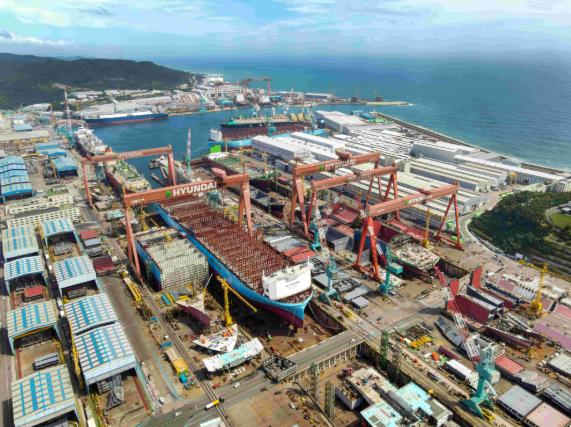
HD Hyundai reported second-quarter operating profit exceeding 4 trillion won, supported by strong performance across its shipbuilding, construction equipment, refining and power equipment businesses.

The company said on July 31 that it posted consolidated revenue of 22.4094 trillion won and operating profit of 4.1246 trillion won for the second quarter of 2026. Revenue increased 30.2% from a year earlier, while operating profit surged 262.2%.

For the first half of the year, cumulative revenue reached 42.0113 trillion won and operating profit totaled 6.9594 trillion won.

HD Korea Shipbuilding & Offshore Engineering, the group’s shipbuilding and marine holding company, reported revenue of 8.9270 trillion won and operating profit of 1.6451 trillion won. The results were driven by higher productivity and increased sales of high-margin vessels. Revenue rose 20.2% year over year, while operating profit increased 72.5%.

HD Hyundai Marine Solution generated revenue of 580.4 billion won and operating profit of 97.6 billion won, benefiting from growth in its ship aftermarket (AM), eco-friendly retrofit and digital solutions businesses. Revenue and operating profit increased 24.1% and 17.6%, respectively, from a year earlier.

HD Hyundai Site Solutions, the group’s construction equipment unit, posted revenue of 2.5235 trillion won and operating profit of 272.0 billion won. Results were supported by improving global market conditions, stronger sales of next-generation excavators and increased demand for industrial and defense engines. Revenue rose 17.9% and operating profit climbed 79.6% from the same period last year.

HD Hyundai Oilbank recorded revenue of 9.4774 trillion won and operating profit of 1.8241 trillion won. Improved profitability in lubricant base oils and petrochemicals helped offset volatility in international crude oil prices.

HD Hyundai Electric reported revenue of 1.1418 trillion won and operating profit of 287.0 billion won. Growth was driven by higher sales in its power distribution business and improved profitability in overseas markets. Revenue increased 26.0% year over year, while operating profit rose 37.3%.

An HD Hyundai representative said earnings improved across the group’s major businesses, including shipbuilding, construction equipment, refining and power equipment.

The company said it plans to continue enhancing profitability through selective orders focused on high-value-added vessels, expansion into new markets and ongoing improvements in product mix.
  •  

EcoPro BM to Add Second Hungary Cathode Line in September

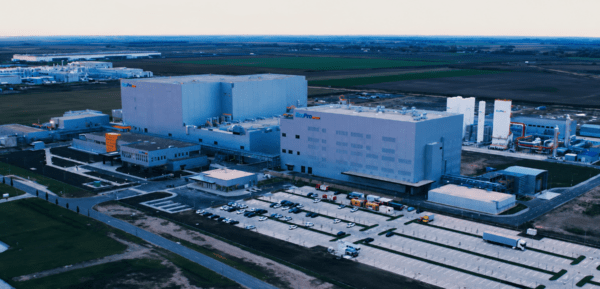
EcoPro's manufacturing facility in Hungary.

EcoPro BM plans to begin operating a second production line at its Hungary cathode materials plant in September as it seeks to turn its Hungarian subsidiary profitable in the second half of the year.

The company reported consolidated second-quarter revenue of 576.7 billion won and operating profit of 18.0 billion won on July 31. Revenue declined 5% from the previous quarter, while operating profit fell 14%.

Performance was affected by temporary demand disruptions caused by model transitions at European automotive original equipment manufacturers (OEMs) and a slowdown in the North American electric vehicle market.

By business segment, revenue from energy storage system (ESS) materials fell 54% from the previous quarter due to stagnant European electric vehicle demand and a shift in North American ESS supply chains. Revenue from electric vehicle cathode materials increased only 1%.

In contrast, revenue from power applications rose 28%, supported by expanding investment in artificial intelligence (AI) data centers and growing demand for power tools and electric bicycles.

The company plans to accelerate its European expansion through its Hungary facility. After launching the first production line in June, EcoPro BM will begin operating a second line in September. Production is expected to reach 10,000 metric tons this year and expand to 30,000 tons in 2027.

EcoPro BM said the plant's utilization rate and production yield have already reached target levels. While the subsidiary recorded losses in the first half because of depreciation expenses and labor costs associated with initial mass production, the company aims to achieve quarterly profitability in the second half through higher output, improved operating efficiency and cost reductions.

New European projects have also entered mass production. The company recently began manufacturing products for a newly secured European customer and is preparing several additional projects for volume production. EcoPro BM expects growth to gradually recover as shipments from both existing contracts and new programs increase.

The company is also proceeding with its investment in the BNSI nickel smelter project in Indonesia, which is intended to strengthen raw material cost competitiveness. Trial operations are scheduled to begin later this year, with commercial production targeted for the second quarter of 2027.

Once operating at a stable level, the smelter is expected to generate approximately $1.7 billion in annual revenue and achieve a double-digit operating margin, according to the company. Through its 39% stake in BNSI, EcoPro BM expects to secure approximately 36,000 tons of intermediate nickel materials annually.

The company is continuing development of next-generation battery materials. Its sulfide-based solid-state electrolyte has completed customer quality verification and is targeted for mass production in 2027. Lithium manganese-rich (LMR) cathode materials are undergoing customer qualification processes, while sodium-ion cathodes and silicon anodes are also being prepared for commercialization.

EcoPro BM said it remains on track with the 1.2 trillion-won rights offering announced in June. The company plans to determine the preliminary offering price in September, finalize the subscription price in October and list the newly issued shares in November.

  •  

KAI Selected to Lead Domestic AI Chip-Powered Drone Development Program

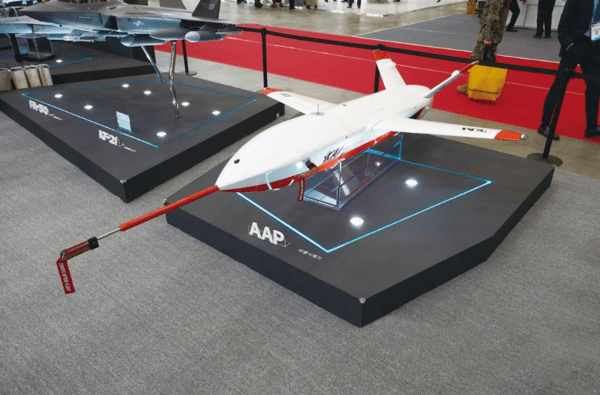
A full-scale prototype of the AAP unmanned aircraft displayed at ADEX 2025.

Korea Aerospace Industries (KAI) has been selected to lead a government-backed defense project aimed at developing on-device artificial intelligence (AI) semiconductors and validating their performance on unmanned aerial vehicles.

KAI announced on July 31 that it had been named the preferred bidder in the defense segment of the Ministry of Trade, Industry and Resources' K-On-Device AI Semiconductor Technology Development Program. The project has a total budget of 95.3 billion won and will run for five years.

The program seeks to develop a defense-grade system-on-chip (SoC) and an autonomous control system (ACS) incorporating the chip, then integrate the technologies into an unmanned aircraft platform for performance verification.

The project consists of three subprograms. KAI will serve as the overall project coordinator and lead the first and third subprojects, which include development of a high-speed expendable unmanned aerial vehicle, autonomous control systems, system integration and flight testing. The second subproject, focused on AI semiconductor development, will be led by a domestic fabless semiconductor company.

The consortium includes South Korean AI semiconductor developers, AI model companies and research institutions. Samsung Electronics will be responsible for semiconductor manufacturing.

KAI plans to incorporate the AI chip developed through the project into its proprietary AI pilot system, known as K-AILOT. The company also intends to expand the technology to satellite applications, enabling onboard AI chips to analyze data in real time before transmitting it to ground stations.

KAI has been strengthening its AI ecosystem through partnerships. The company signed a memorandum of understanding with Samsung Electronics last year and another with Team Naver—comprising Naver and Naver Cloud—earlier this month. KAI said it is pursuing the development of a sovereign AI framework that combines AI semiconductors, large language AI models and cloud technologies.

  •  

Hanwha Aerospace Posts Record Quarterly Operating Profit Above 1 Trillion Won

Hanwha Aerospace reported quarterly operating profit exceeding 1 trillion won for the first time, supported by strong defense exports and improved performance from its subsidiaries.

The company said on July 31 that it posted consolidated revenue of 9.2929 trillion won and operating profit of 1.3655 trillion won for the second quarter of 2026. Revenue increased 47% from a year earlier, while operating profit rose 59%.

The ground defense business generated revenue of 2.1075 trillion won and operating profit of 533.0 billion won. Revenue rose 19% year over year, while operating profit increased 2%. In South Korea, growth was driven by higher production volumes of the Cheonho wheeled anti-aircraft gun and the Cheongeom. Overseas, shipments to Poland, Egypt and Middle Eastern customers contributed to earnings.

Hanwha Aerospace said its order backlog expanded to 38.3 trillion won following an additional K9 self-propelled howitzer export contract with Finland signed in April and a supplementary Chunmoo multiple launch rocket system supply agreement with Estonia signed in May.

The aerospace business recorded revenue of 760.0 billion won and operating profit of 37.0 billion won. Revenue increased 17% from a year earlier on higher military program volumes, while the division returned to profitability.

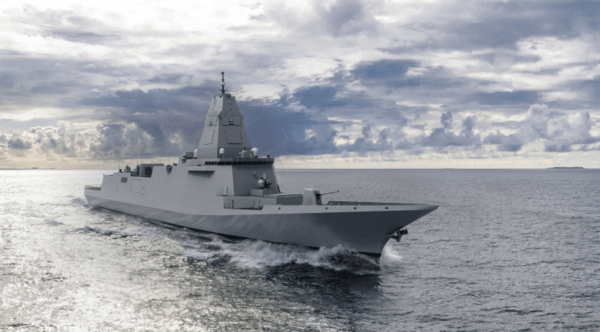
Consolidated subsidiary Hanwha Ocean also contributed significantly to earnings growth. Benefiting from a higher proportion of high-margin vessels, including liquefied natural gas (LNG) carriers, Hanwha Ocean posted revenue of 5.4432 trillion won and operating profit of 736.1 billion won. Revenue rose 65% year over year and operating profit increased 98%.

Hanwha Systems reported revenue of 1.1176 trillion won and operating profit of 103.7 billion won, supported by growing defense exports, including multifunction radar (MFR) systems.

In the second half, Hanwha Aerospace plans to continue production under the second execution contract for Poland's K9 program and proceed with K9 deliveries to Egypt and Australia. The company also plans to participate in the South Korean government's advanced aircraft engine development program based on a prototype unmanned aerial vehicle engine it recently unveiled.

  •  

Hanwha Ocean Wins 838 Billion-Won KDDX Lead Destroyer Contract

A rendering of Hanwha Ocean's next-generation destroyer (KDDX).

Hanwha Ocean has secured a contract worth 838 billion won to complete the detailed design and construct the lead ship of South Korea's next-generation destroyer program, known as KDDX.

The company disclosed on July 31 that it signed a contract with the Defense Acquisition Program Administration (DAPA) for the KDDX detailed design and lead ship construction project. The contract is valued at 838 billion won and runs through June 30, 2032.

DAPA issued the tender in March and selected Hanwha Ocean as the preferred bidder on July 1 following site inspections and proposal evaluations. Hanwha Ocean subsequently completed negotiations covering technical requirements, contract terms and pricing before signing the final agreement.

KDDX is South Korea's first Aegis-class destroyer program to develop both the hull and combat system using domestic technologies. The government plans to invest approximately 7.8 trillion won to acquire six 6,000-ton destroyers. The Republic of Korea Navy plans to commission the lead ship in 2032 and deploy all six vessels by 2036.

Hanwha Ocean and HD Hyundai Heavy Industries competed for the KDDX contract. HD Hyundai Heavy Industries scored 0.6425 points higher than Hanwha Ocean in the technical evaluation. However, a 1.2-point security penalty related to a military secrets leak case reversed the ranking. Hanwha Ocean ultimately received 93.9542 points, compared with 93.3675 points for HD Hyundai Heavy Industries, a margin of 0.5867 points.

The timing and procurement method for the five follow-on vessels have not yet been determined. An industry official said the remaining ships are expected to be ordered around 2028, although authorities have not decided whether they will be procured through a single package or multiple contracts.

Hanwha Ocean plans to equip the KDDX destroyer with nine domestically developed systems. The design will also incorporate a manned-unmanned integrated combat system, a multi-layered defense architecture and a cyber defense framework. Ship automation technologies aimed at reducing crew requirements will also be included.

Since its launch in 2023, Hanwha Ocean has won contracts for the fifth and sixth Ulsan-class Batch-III frigates and the first and second Batch-IV frigates. The KDDX lead ship award further expands the company's surface combatant shipbuilding portfolio.

  •  

Dongwon Systems Reports 21% Rise in Q2 Operating Profit

Dongwon Systems posted stronger second-quarter earnings, supported by growing exports of high-value-added packaging materials and improved performance at its overseas subsidiaries.

The company disclosed on July 31 that it recorded consolidated revenue of 402.2 billion won and operating profit of 31.4 billion won for the second quarter. Revenue increased 9.8% from a year earlier, while operating profit rose 21.1%.

First-half cumulative revenue reached 740.0 billion won, up 5.2% year over year. Operating profit increased 15.5% to 44.4 billion won. The company said expanded exports of high-value packaging materials and improved profitability at overseas subsidiaries contributed to the earnings growth.

In its materials business, Dongwon Systems expanded exports of its recyclable polyethylene (PE)-based mono-material packaging products to North America, Asia and Africa. Exports of the products increased by about 20% from the same period last year.

Its Vietnamese subsidiary, Tan Tien Packaging (TTP), also posted stronger sales as shipments to North American markets, including the United States and Canada, increased. Revenue at the subsidiary rose by approximately 20% year over year.

A Dongwon Systems representative said the company plans to further expand overseas packaging material sales in the second half while fostering new businesses, including battery materials and advanced films.

  •  

POSCO Holdings Posts 819 Billion Won Operating Profit in Q2

POSCO Holdings improved profitability in the second quarter, supported by stronger performance from its lithium and liquefied natural gas (LNG) businesses. The company's battery materials segment also returned to profitability, contributing to overall earnings growth.

The company reported revenue of 19.259 trillion won and operating profit of 819 billion won for the second quarter, according to results released on July 30. Net profit totaled 761 billion won. Major businesses, including steel, battery materials and energy, all improved from the previous quarter.

In the battery materials segment, POSCO Future M benefited from inventory valuation gains on cathode materials and a recovery in anode material sales. The company reported revenue of 679.5 billion won and operating profit of 26.7 billion won on a consolidated basis in the second quarter. Operating profit surged 3,351.2% from a year earlier.

The battery materials business posted revenue of 327.9 billion won and operating profit of 2.5 billion won, returning to profitability from the previous quarter. Improved earnings were driven by inventory valuation gains on cathode materials and increased anode material sales to key customers. The basic materials business recorded revenue of 351.6 billion won and operating profit of 24.2 billion won, with operating profit rising 28.7% from the previous quarter.

The lithium business also continued to improve. POSCO Argentina achieved its first quarterly profit after stabilizing operations and improving facilities at its first lithium brine plant. POSCO Pilbara Lithium Solution also reported stronger profitability, supported by higher sales volumes and rising lithium prices. Battery recycling subsidiary POSCO HY Clean Metal has remained profitable every month since December 2025, driven by high utilization rates.

In the infrastructure segment, POSCO International posted its highest-ever quarterly operating profit, supported by strong performance from gas fields in Myanmar and Australia and its palm oil business in Indonesia. POSCO E&C maintained stable profitability on the back of increased construction orders.

  •  

KAI Partners With Embraer on Aircraft Structures

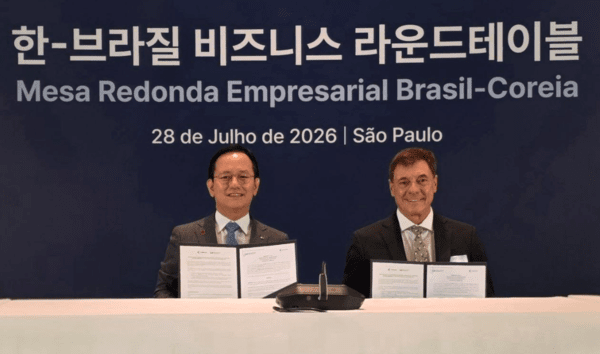
KAI President Kim Jong-chul and Embraer President Francisco Gomes Neto. (Photo: KAI)

Korea Aerospace Industries (KAI) has entered into a strategic partnership with Brazilian aerospace manufacturer Embraer to collaborate on aircraft structures.

KAI announced on July 30 that it signed a memorandum of understanding (MOU) with Embraer on July 28 to pursue strategic cooperation in the aircraft structures business.

Under the agreement, the two companies will expand collaboration in research and development (R&D) of new technologies, with an initial focus on aircraft structures. KAI aims to combine its aerospace engineering expertise with Embraer's aircraft development and manufacturing capabilities to strengthen technological competitiveness and improve manufacturing efficiency.

The companies will also explore cooperation in aircraft design, engineering, manufacturing and quality management. In addition, they plan to identify joint initiatives to optimize manufacturing processes and enhance cost competitiveness.

Kim Jong-chul, president of KAI, said the partnership with Embraer represents an important step in expanding the company's collaboration with leading global aerospace manufacturers.

  •  
❌