
❌

Reading view

Deep brain stimulation restores social behavior after early-life pain by rebalancing circuits

A new study suggests that deep brain stimulation may do more than control movement disorders: it could also help repair social behavior disrupted by pain experienced early in life. In research published in Translational Psychiatry, Wan, Du, Yang and colleagues report that stimulating the brain’s anterior cingulate cortex alleviated social deficits associated with early-life pain. The proposed mechanism is a restoration of the balance between excitatory and inhibitory neural signals, a fundamental process that determines how brain circuits respond, adapt and communicate.

Early-life pain has effects that can extend far beyond the moment of injury or medical treatment. During development, the nervous system is rapidly building connections, refining sensory pathways and establishing the networks that support emotion and social behavior. Excessive or poorly regulated pain signals during this period may alter that process. Instead of remaining confined to pain-processing circuits, these changes can influence stress responses, emotional regulation and the ability to interact with other individuals later in life.

The anterior cingulate cortex, or ACC, is particularly important in this story. Located in the frontal region of the brain, it helps integrate emotional information with attention, motivation and decision-making. It is also involved in processing the unpleasantness of pain and in evaluating social experiences. Because the ACC sits at the intersection of pain, emotion and social behavior, disturbances in its activity could provide a neural explanation for why early-life pain is linked to later difficulties with social interaction.

At the cellular level, the brain depends on a delicate equilibrium between excitation and inhibition. Excitatory neurons generally increase the likelihood that neighboring cells will fire, while inhibitory neurons suppress or constrain that activity. This excitatory/inhibitory, or E/I, balance allows neural circuits to remain flexible without becoming either silent or excessively active. If excitation dominates, networks may become unstable and hypersensitive; if inhibition dominates, communication and behavioral responses may be weakened. The study connects social deficits after early-life pain with disruption of this balance in the ACC.

Deep brain stimulation offers a way to influence such malfunctioning circuits directly. The technique uses electrical pulses delivered through precisely positioned electrodes to modify activity in targeted brain regions. Although DBS is best known clinically for treating Parkinson’s disease, essential tremor and several other neurological conditions, researchers are increasingly investigating whether it can reshape circuits involved in mood, motivation and social behavior. The new findings place the ACC among the brain regions that may be responsive to this approach.

According to the study, stimulation of the ACC improved social abnormalities linked to early-life pain while also normalizing indicators of excitatory and inhibitory signaling. This is important because it suggests that the behavioral improvement was not simply a generalized effect of activating the brain. Instead, the intervention may have acted on a specific circuit-level disturbance. By bringing opposing neural forces back toward equilibrium, DBS could make the ACC more capable of processing social information and generating appropriate responses.

The result also highlights a shift in how scientists understand the consequences of pain during development. Pain is often treated as a temporary sensory event, but developing neural systems can interpret repeated or intense pain as an organizing signal. That signal may alter synaptic strength, neuronal excitability and communication between brain regions. Over time, these changes could become embedded in circuits that regulate social engagement. The study’s emphasis on E/I balance suggests that developmental pain may produce lasting behavioral effects through measurable changes in network physiology rather than through an unexplained psychological process.

The findings are likely to attract attention because social deficits are difficult to treat and can appear across many neurological and psychiatric conditions. However, DBS is an invasive therapy involving neurosurgical implantation, and the study does not mean that the treatment is ready for routine use in people affected by early-life pain. Translating a circuit-level discovery into a safe human therapy requires extensive work, including confirmation in independent models, determination of the most effective stimulation parameters and careful assessment of possible side effects. The ACC is involved in many functions, so altering its activity could influence emotion, attention or pain perception in unwanted ways.

Even with those limitations, the research offers a potentially powerful framework for future therapies. If social difficulties can be linked to a specific imbalance between excitation and inhibition, treatments might eventually be designed to correct that imbalance with greater precision. DBS is only one possibility. Noninvasive stimulation, pharmacological treatments that selectively influence inhibitory or excitatory signaling, and therapies combining behavioral training with neuromodulation could also emerge from the same biological insight.

The study’s central message is that the developing brain may retain a capacity for repair, even after early adverse experiences have changed its circuitry. By targeting the ACC and restoring the neural balance that supports its function, deep brain stimulation improved social behavior in the reported research. The work does not erase the complexity of developmental pain, but it identifies a concrete biological pathway connecting early injury, altered brain networks and later social difficulties. That connection could help move the field closer to treatments that address not only pain itself, but also the long-term social consequences it can leave behind.

Subject of Research: Deep brain stimulation, early-life pain, social deficits, and excitatory/inhibitory balance in the anterior cingulate cortex

Article Title: Deep brain stimulation ameliorates social deficits from early-life pain by restoring excitatory/inhibitory balance in the anterior cingulate cortex

Article References: Wan, X., Du, T., Yang, D. et al. Deep brain stimulation ameliorates social deficits from early-life pain by restoring excitatory/inhibitory balance in the anterior cingulate cortex. Transl Psychiatry (2026). https://doi.org/10.1038/s41398-026-04311-z

Image Credits: AI Generated

DOI: https://doi.org/10.1038/s41398-026-04311-z

Keywords: deep brain stimulation, early-life pain, social deficits, anterior cingulate cortex, excitatory/inhibitory balance, neuroscience, brain stimulation, developmental pain, social behavior
  •  

Underwater Cameras Expose the Secret Lives of Whale Sharks

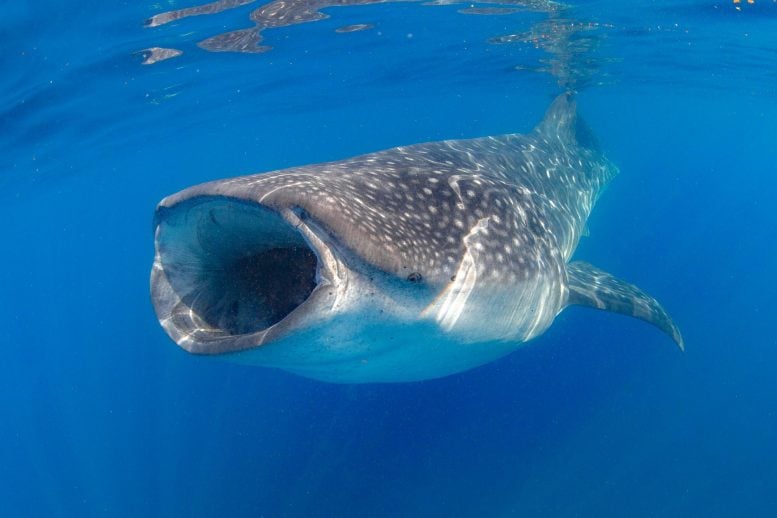
Whale Shark Swimming UnderwaterWhale sharks use a wider range of feeding strategies and depths than surface observations previously revealed. A whale shark can vanish beneath the surface in seconds, leaving researchers with little idea of what the world’s largest fish does once it disappears from view. Whale sharks (Rhincodon typus) are among the ocean’s most recognizable animals, inspiring [...]
  •  

Ancient Footprints in Kenya Hint at Bigger Bodies and Group Behavior among Early Human Relatives

One of 1.43-million-year-old footprints found at the GaJi10 site in the Koobi Fora Formation in northern Kenya; a 15-cm (6-inch) ruler is shown for scale. Image credit: Kay Behrensmeyer.

A set of 1.43-million-year-old fossil footprints preserved along the margin of an ancient lake in northern Kenya is offering paleoanthropologists new evidence about the size, gait and social lives of the beings who made them and reopening questions about which species they belonged to.

The post Ancient Footprints in Kenya Hint at Bigger Bodies and Group Behavior among Early Human Relatives appeared first on Sci.News: Breaking Science News.

  •  

“The Sizes of the Footprints Indicate Human-Like Body Sizes”: Origin of 1.4-Million-Year-Old Fossilized Footprints Stuns Scientists

A new analysis of a set of 1.4-million-year-old fossilized footprints found along the shore of an ancient Kenyan lake revealed that the hominins responsible for leaving them were much larger than previously believed, with some specimens approaching the height and body size of modern humans.

The new analysis also determined that discovering a group of footprints belonging to eight different adult males from distant human ‘cousin’ species Paranthropus boisei walking together suggests a complex societal dynamic where males likely competed for females but also worked together for the group’s benefit.

1.4-Million-Year-Old Fossilized Footprints Reveal Unexpectedly Large Body Size

According to a statement announcing the new fossilized footprint analysis, the team behind the research had previously “pioneered” methods allowing science to accurately identify the footprints as belonging to Paranthropus boisei in 2024.

However, lead author Kevin Hatala, of Chatham University and an associated researcher of the Department of Human Origins at the Max Planck Institute for Evolutionary Anthropology in Leipzig, said the new approach, which analyzes foot anatomy and movement patterns based on the fossilized footprints, revealed much larger individuals than expected.

1.4-million-year-old fossilized footprints
One of the large, 1.4-million-year-old footprints that the team excavated. A 6-inch (~15 cm) ruler is shown for scale. Image Credit: Kay Behrensmeyer.

“The sizes of the footprints indicate human-like body sizes – up to 1.8 meters tall and around 75 kilograms”, Hatala said, noting that scientists studying the rare fossils available for Paranthropus boisei had previously assumed the species was much smaller than the modern human ancestor and contemporary hominin, Homo erectus.

For example, the researchers explain, the “overwhelming majority” of previously identified Paranthropus boisei fossils were skulls with massive jaws and teeth. However, they add, little is known about this ancient hominin’s anatomy from the neck down.

“A Window into Hominin Behavior and Group Dynamics”

Although indirect evidence compared to actual bones, the team notes that fossilized footprints form “very quickly.” This rapid formation helps preserve critical movement and anatomy data that the team notes “can be a useful window into hominin behavior and group dynamics.”

“The fact that eight, mostly adult male, Paranthropus boisei individuals seemingly traveled together as a group, without females or children, hints at a complex social structure in this species”, explained study co-author Neil Roach of Harvard University.

1.4-million-year-old fossilized footprints
Approximately 1.43-million-year-old hominin footprint from Koobi Fora, Kenya. Image Credit: Kevin G. Hatala.

For example, Roach said the ancient footprint makers may have lived in large groups, “where males competed for mates.” However, he notes, the same footprints suggest these competing males “also tolerated each other at times for safety in a dangerous environment.”

“This discovery adds an important behavioral dimension to the fossil record of Paranthropus boisei, a species that lived alongside early members of the genus Homo, yet took a different evolutionary path,” they explain.

Proximity and Environmental Conditions Could Offer More Behavioral Clues

Although the study focused on the 1.4-million-year-old footprints found on the shore of an ancient Kenyan lake, the work joins a growing catalog of ancient hominin footprints left on equally ancient lake shores. To date, the team has documented hundreds of hominin footprints across more than a half-dozen sites in the local region.

When discussing the significance of their findings, the team noted that these 1.4-million-year-old footprints join this larger group in supporting ancient lakes as an “important habitat with critical resources” that our now-extinct relatives relied on for survival. Study co-author Kay Behrensmeyer of the Smithsonian Institution also highlighted the unexpected nature of the discovery of ancient footprint fossils so close to others from a similarly ancient time.

“To me, it is amazing that we have the same kind of lake margin deposits in two areas of East Turkana that are 40 kilometers apart, at about the same age”, the researcher explained.

1.4 million year old footprints fossilized
Kevin Hatala and colleagues discuss the ancient footprints excavated in northern Kenya in 2023. Image Credit: Kay Behrensmeyer.

Study co-author Anna K. Behrensmeyer from the Department of Paleobiology and Human Origins Program, National Museum of Natural History, Smithsonian Institution, said understanding the environment and local conditions when the footprints were left could fill in even more missing pieces about this enigmatic ancient hominin.

“If we can understand what geological conditions allowed these tracks to be preserved, we should know more about why hominins continued to return to the lake shore environment over more than 100,000 years,” Behrensmeyer said.

Building a Photo Album of Our Past

When detailing the significance of the new analysis, study co-author Purity Kiura of the National Museums of Kenya said finding these fossilized prints along the margins of Lake Turkana “reinforces the region’s global importance in understanding human evolution, preserving remarkable evidence of how our ancient relatives lived 1.4 million years ago.”

“It further strengthens Kenya’s position as one of the world’s leading paleoanthropological landscapes and highlights our responsibility to protect this irreplaceable heritage,” Kiura added.

fossilized footprints
Most Paranthropus boisei fossils are skulls. By Matt Celeskey from Albuquerque – Australopithecus boisei, CC BY-SA 2.0, https://commons.wikimedia.org/w/index.php?curid=32845963

From a methodology standpoint, the team noted the benefit of combining new analytical approaches with “exceptional” fossil footprints. They also point out that ancient tracks like the 1.4 million-year-old footprints found in Kenya “can reveal the anatomy and movement of extinct human relatives, while also providing rare insights into their social lives and environments.”

To follow up on their findings, the research team said they plan to return to Kenya later this year and conduct more analysis of the footprints. According to Hatala, this work will help archaeologists and anthropologists fill in missing pieces of hominin history, especially those extinct branches of the evolutionary tree.

“Each site represents a snapshot of our past, and we are quickly building a photo album with several different windows to hominin anatomy, locomotion, behavior, and environments during the Early Pleistocene,” the researcher explained.

The study “Insights into hominin body size, locomotion, and behavior from Early Pleistocene trackways in northern Kenya” was published in the Proceedings of the National Academy of Sciences.

Christopher Plain is a Science Fiction and Fantasy novelist and has spent the last six years as Associate News Editor and Head Science Writer at The Debrief. Follow and connect with him on X, learn about his books at plainfiction.com, or email him at christopher@thedebrief.org

  •  
❌