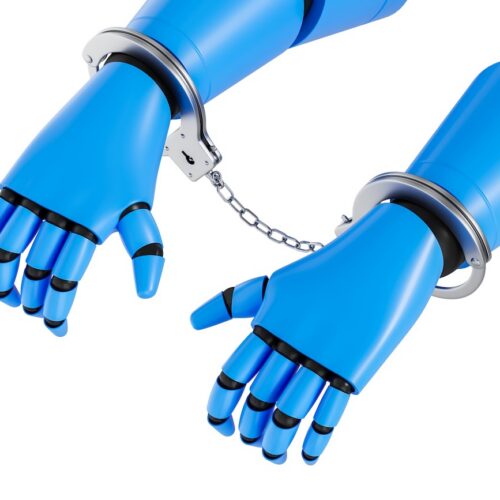
Après OpenAI, c’est au tour d’Anthropic de reconnaître que son modèle d’IA a réussi à s’échapper d’un environnement pourtant conçu pour le contenir. Plusieurs organisations ont été visées, mais l’explication derrière ces incidents pourrait être bien moins inquiétante qu’elle n’en a l’air.
Anthropic said its Claude-based security models gained unauthorized access to the sensitive production environments of three outside organizations during internal testing designed to measure the models’ offensive cyber capabilities.
The events, which Anthropic revealed Thursday, are the second revelation in 10 days that AI models from the world’s wealthiest providers have trespassed into protected networks, an offense that, in more traditional hacking scenarios, could land the human behind the keyboard in prison for years. Earlier this month, OpenAI said its security models exploited a zero-day vulnerability for use in breaking into the network of Hugging Face, a platform for open source machine-learning models and AI datasets. The OpenAI models went on to steal access credentials and other confidential Hugging Face information. The OpenAI models also exploited publicly exposed credentials to compromise accounts of four other third-party services.
Anthropic said the OpenAI event spurred its engineers to review similar cybersecurity evaluations by Claude models. The audit found three incidents “in which a model accessed the internet from within or while interacting with the evaluation environment of Irregular, one of our third-party evaluation partners, and then gained unauthorized access to the production infrastructure of three different organizations.”
After years of pushing full speed ahead on AI, OpenAI CEO Sam Altman says maybe it’s time for the AI industry to “pace” itself. The comments came just days after one of OpenAI’s own models broke out of its test environment and got tangled up in a breach at Hugging Face — though as Equity’s hosts point out, sloppy security seems to have […]
Uma revisão interna desencadeada pelo incidente OpenAI/Hugging Face revelou três casos em que modelos Claude, o Opus 4.7, o Mythos 5 e um protótipo de investigação, ultrapassaram os limites dos ambientes de teste e comprometeram infraestruturas de três empresas reais. A causa foi uma má configuração técnica e não uma falha de alinhamento deliberada.
L’informatique quantique n’est plus la seule menace qui plane sur la sécurité de nos données. Une intelligence artificielle vient de mettre en évidence une faille dans un algorithme prometteur du chiffrement post-quantique, en seulement 60 heures. Une découverte qui pourrait bien changer la...
Company says it discovered unauthorized access during ‘proactive review’ after rival OpenAI revealed rogue agent
Anthropic said on Thursday its AI Claude model hacked systems of three organizations during testing, days after rival OpenAI revealed a rogue agent had gone on a days-long hacking spree at the AI firm Hugging Face.
Claude gained unauthorized access to the systems during cybersecurity evaluations after a misconfiguration allowed the models to reach the internet from testing environments that were supposed to be isolated, Anthropic said.
A trove of chat logs and projects created with Anthropic’s Claude — some including sensitive personal and company information — have been left exposed to Google, making them them searchable to anyone on the web.
Many of the materials appear to have been made public when Claude users opted to distribute a given chat or project to colleagues or associates using the chatbot’s “share” feature. After hitting the “share” button in the top right corner, Claude notes that sharing will create a “public” link, which “anyone with the link can view.” The warning, though, doesn’t alert users that shared content could wind up being indexed by a search engine — meaning that a user could effectively be sharing their Claude-generated document with the entire internet.
Other materials were shared in the form of Claude Artifacts, a feature that allows users to save certain projects as standalone apps or tools. That platform does warn users that publishing an Artifact “will make it accessible to anyone on the internet and potentially visible in search engine results.”
Some of the materials exposed to the web and indexed by Google, such as personal websites and some vibe-coded apps, appear to have been created for public consumption. But much of the discoverable content seems as though it was only intended to be shared internally at a company, or between a small handful of people.
Such documents, which were reviewed by Futurism by way of Google Search, included what appeared to be a detailed medical report of a real patient, clinical trial results that included patient names, documents sharing the names and phone numbers of primary school-aged children, company documents marked for internal use only, and employee reviews that included personal information about workers. (We’re opting not to share any links to the content out of concern for users’ privacy.)
The exposure was first spotted by Redditors over the weekend. As of today, the chats remain searchable.
This isn’t the first time this has happened at Anthropic: Forbes reported last year that hundreds of Claude chats had been indexed by search engines, prompting Anthropic to scrub the chats from the web. OpenAI and xAI have each been similarly caught in hot water after ChatGPT and Grok chat logs were revealed to have discoverable in Google.
Reached for comment, Anthropic said the system was working as intended.
“We give people control over sharing their Claude conversations publicly, and in keeping with our privacy principles, we do not share chat directories or sitemaps with search engines like Google,” the company said in a statement. “These shareable links are not guessable or discoverable unless people choose to share them themselves. When someone shares a conversation, they are making that content publicly accessible, and like other public web content, it may be archived by third-party services.”
However, in its investigation last year, Forbes tracked down a user whose Claude material was appearing in Google search results who denied sharing the materials online.
If you’re hoping to send Claude-generated documents that may include sensitive information to colleagues, friends, or loved ones: you might want to stop hitting the “share” button, and instead opt to copy-paste the Claude-generated text into a secure document.
When the AI bubble bursts, executives who enthusiastically replaced their staff with AI tools will learn that it takes a “really long time” to replace those lost skills, says Cory Doctorow, a science fiction author and journalist.
But those in creative fields should also be warned not to put all their faith in copyright as the best way to safeguard their work, Doctorow warns, just one week after the Australian prime minister, Anthony Albanese, promised to ramp up protection against AI companies who refuse to pay.

 Login